I don’t know if any of you have noticed, but by 2026, the segmentation of the anime and manga market will have largely been completed.
Nowadays, the bar for top-tier products is getting higher and higher. There are more and more products that combine production capacity, artistry, and scale—a trifecta that has essentially captured the attention of the majority of the anime and manga fanbase. This is a good thing for gamers,as it greatly expands their options. No matter which one they pick, it’s a top-tier title—giving them the confidence to know that if one game doesn’t suit them, there’s always another that does.
However, on the supply side, competition has become fiercely intense. Setting aside the battle among the market leaders, mid-tier products—especially many latecomers—have either gone out of business or suffered heavy losses, which has rendered these two approaches obsolete.
First, “competition on equal footing.” Given the nature of second-tier products, once emotional attachment has been established, it becomes very difficult to lure users away from existing products—even with new products that require the same level of investment—unless there is a generational gap in design or technology.
Second, “unoriginal art”—for small-to-medium-sized products, it’s no longer possible to carve out a niche and thrive solely on art; they must offer sufficient differentiation, or they’re doomed to fail.
In other words, is there still potential in the anime and manga industry? Of course there is. As I mentioned, for various reasons, user churn in the anime and manga sector is an ongoing phenomenon. Although the overall user base has plateaued, there is still a steady influx of new users. Therefore, if we reverse-engineer the two outdated approaches mentioned above,the anime-themed games that will thrive in the future will either be top-tier, next-generation titles or one-of-a-kind “oddities” on the market.
"Chasing Kaledo," developed by Tencent's in-house studio "Feichi Hamli," falls into the latter category.
On August 2, the final day of CJ, the producer and head of operations for *Chasing Caledo* held a nearly two-hour discussion with several media outlets and influencers, including Teahouse.

The development team explained why *Chasing Caledo* chose to abandon the open-world concept and the ARPG design, and they laid out in detail how they shifted their focus to 3D anime-style cinematics and the character emotional bond system—all in an effort to create a unique experience centered on the “relationship between players and virtual characters.”
Based on the discussion, I believe *Chasing Caledo* possesses a level of internal consistency that is particularly rare for a mid-sized anime-style product.
01
Identifying Unmet Needs
First of all, the product logic behind *Chasing Caledo* begins with “self-awareness.”
During the presentation, the project team showed a diagram of three overlapping circles that had been displayed at milestone meetings since the project’s inception: player needs, competitor content, and their own product each formed one of the three circles.
Previously, manufacturers traditionally targeted the center of the overlapping circles, where market demand was most certain.
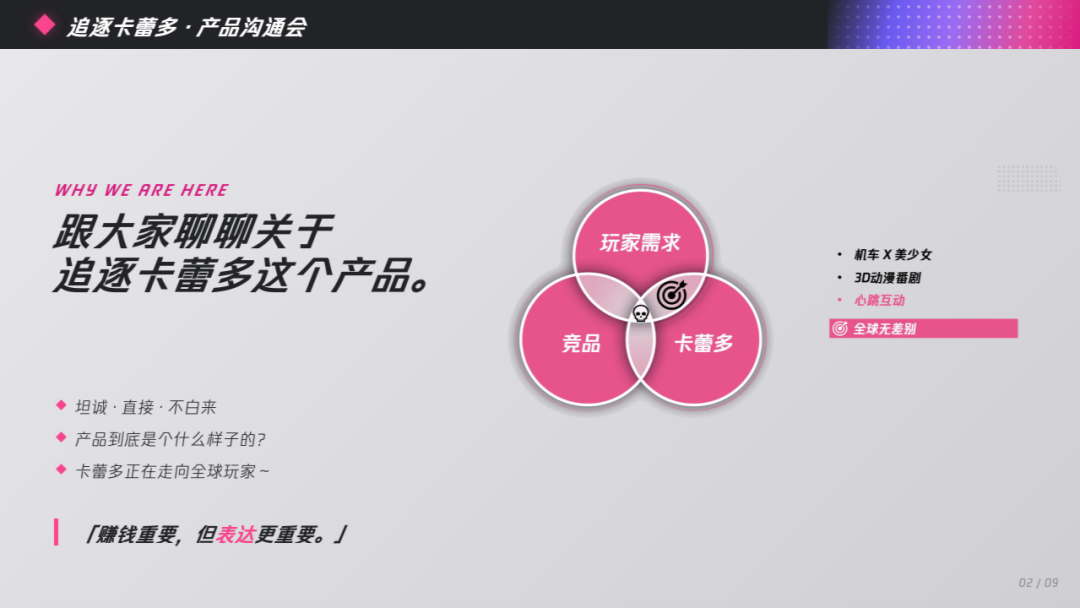
However, they candidly admitted, “We’re not qualified to compete there.” Currently, the *Chasing Caledo* team consists of fewer than 100 people, and the development cycle has only been three years; going head-to-head with those top-tier products, their chances of success are virtually zero.
The team ultimately zeroed in on areas where “players have needs that competing products have not yet met,” such as fostering a deeper emotional connection between virtual characters and players.
This actually makes a lot of sense. Amid the current trend of competing on technology and production capacity, there is a hidden issue in the second-tier game market: the high degree of homogeneity in the value of characters as content carriers.
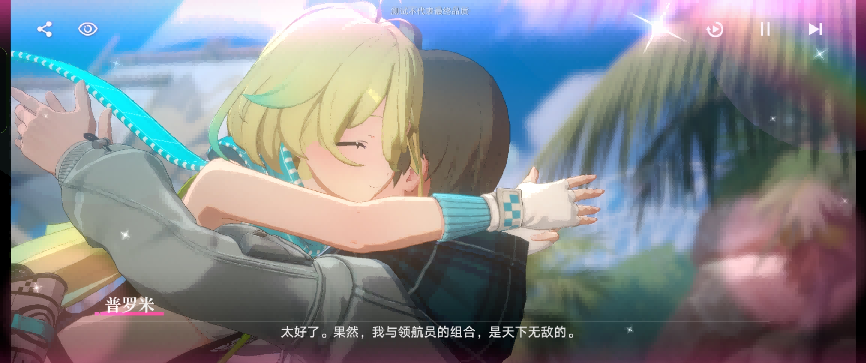
Feichi Clam realized that, regardless of a product’s quality, the way secondary characters are portrayed in games is largely similar: their presence centers on combat performance, supplemented by fragmented affinity quests and simple interactions outside of combat scenarios.
In this model, a character’s lifecycle is inherently limited by the duration of its gacha pool and numerical balancing. Once a new version is released, older characters face a precipitous drop in popularity. They say this is essentially due to the overly narrow scope of the connection between characters and players.
*Chasing Caledo* attempts to establish a second channel connecting the characters to players beyond combat. This channel consists of modules such as dates, companionship, and confessions; whenever a new character is released, they must come with a full set of relationship content, including date sequences at three locations, parade storylines, exclusive voice lines, and confession scenes.
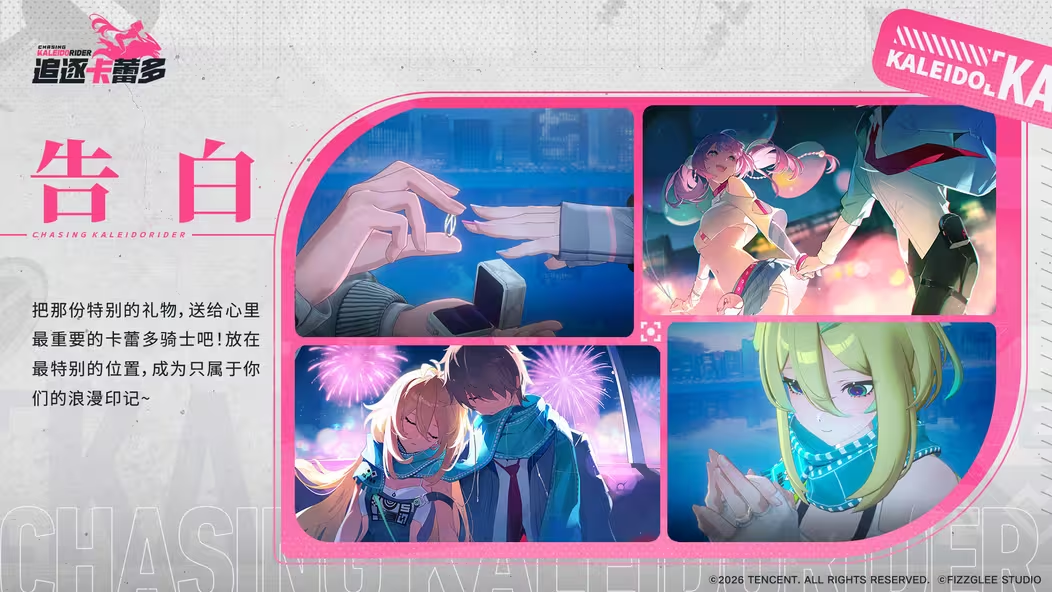
The producer views this entire journey—from the first meeting to the confession—as the true competitive advantage of *Chasing Caledo*.
They believe that the core strengths of *Chasing Kaledo* can be broken down into three layers: the visual distinctiveness of the motorcycle-riding heroines, the 3D anime-style content presentation, and the emotional interaction system centered on dating and confessions.
At the design level, the team made several noteworthy choices.
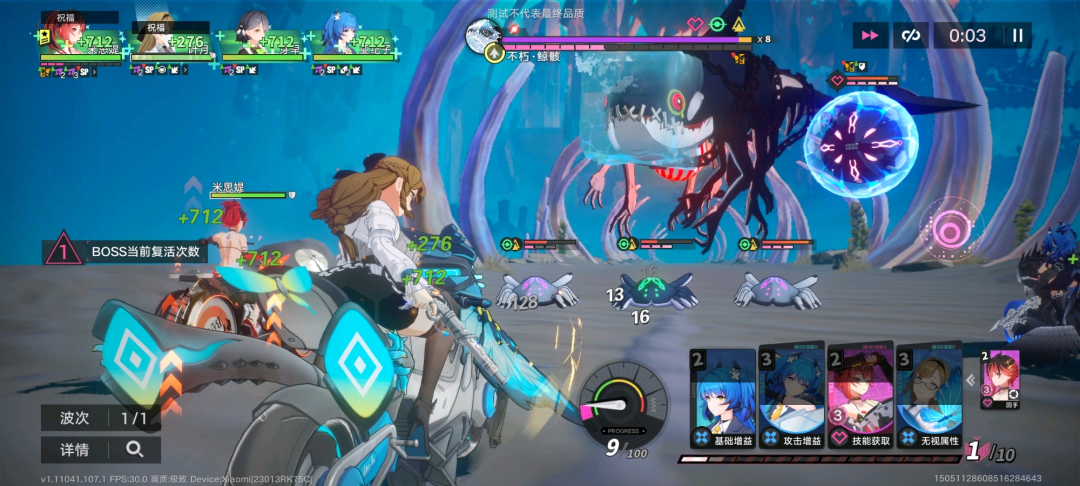
For example, in terms of the combat system, *Chasing Kaledo* employs a pseudo-turn-based card battle system and incorporates numerous streamlined features—such as auto-battle and sweep modes—with the goal of ensuring that these elements do not overshadow the companion system or the characters themselves.
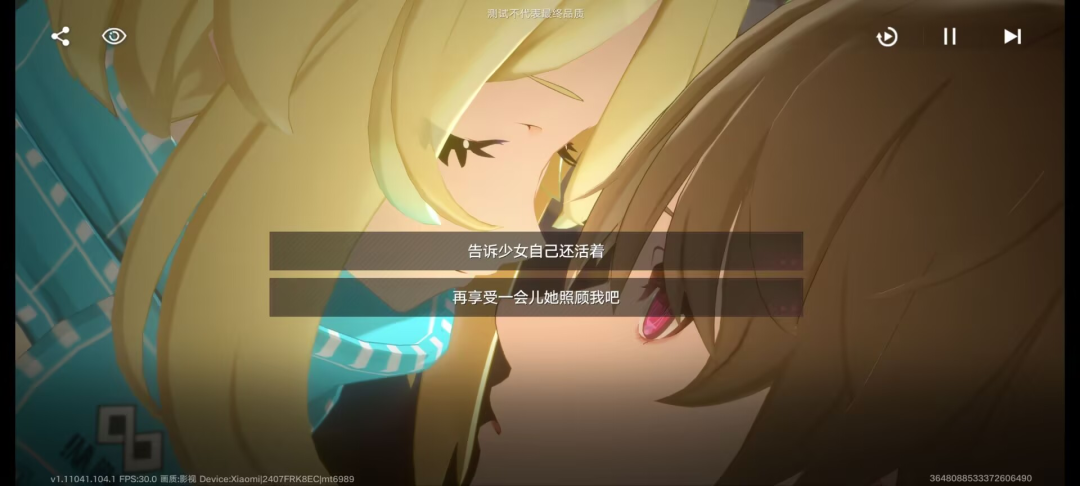
Another notable design decision is the 20-minute “companion” gameplay mode. The producer revealed that the team had repeatedly rejected this feature during the project’s early planning stages, citing the heavy development workload and lack of immediate feedback.
The reason the project team insisted on 30 minutes (later compromising to 20 minutes) was quite personal: he found that in other 2D games, when he truly grew fond of a character, the only things he could do were take her into battle, wander around the scenery, or tap around on the main menu.
What they're looking for is the feeling of spending time with a character—just like playing video games with your girlfriend on the weekend, when she nudges you with her foot to ask you to grab her a Coke—that kind of everyday sense of companionship.

Therefore, recreating these everyday scenarios forms the foundation of the system’s design. They also noted that the test data showed that engagement with this feature exceeded expectations, and the ASMR whisper content received excellent feedback from players.
Additionally, in terms of art style, the team opted for pure NPR cartoon rendering, eschewing PBR or hybrid rendering approaches that would have better captured the metallic texture of the motorcycles.
The project team explained: “The central question we’re discussing is: What is the ‘2D world’? The answer is fantasy and imagination. The cartoon rendering style allows for more exaggerated yet plausible expressions, which aligns with the imaginative space required by the product.”
This choice also reflects a pragmatic approach that prioritizes output over precision; given the constraints of objective conditions, selecting an art style that supports the production of a large volume of content is more in line with the product’s long-term interests than pursuing the ultimate visual quality of individual frames.
02
Candor
If the presentations in the first half of the event showcased the product’s vision and methodology, then during the subsequent roundtable discussion—in the face of a barrage of questions from more than a dozen media outlets—the production team behind *Chasing Caledo* demonstrated a level of candor that is quite rare in the industry.
When some media outlets pointed out that the progression system lacked “originality,” the project team immediately apologized, saying, “The design was indeed ill-conceived, and we will definitely roll out an update to address it very soon.”
One creator described the game’s UI design as “very tacky.” Using classic galgames such as Yuzu Studio and Seal Studio as points of reference, he pointed out that the fonts in *Chasing Kaledo*’s shop and gacha interfaces resemble the system’s default fonts, and the overall presentation looks like a Word document, lacking a sense of design that matches the game’s style.
The project team acknowledged that the current UI is still in the “get it up and running first” phase, and it will definitely be the top priority for a comprehensive overhaul once the system’s functionality has stabilized.
Furthermore, the project team proactively positioned the rendering quality of their product’s models as “average,” but he also offered a rather unique line of reasoning: he believed that for products taking a differentiated approach, technical shortcomings can be offset by the precision of the content.
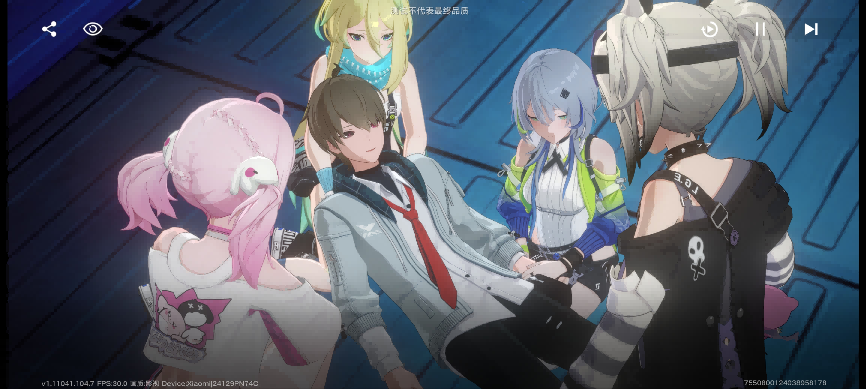
Questions rained down on the panel like a storm. It was hard to believe this was an official offline event hosted by Tencent: the redundancy of the early-game tutorial levels, the lack of guidance for the “Metropolis Patrol” gameplay, and the outdated feel of the three-star sweep mechanism… The development team provided clear responses to nearly every issue raised.
Overall, the development team behind *Chasing Caledo* has shown a remarkably sincere attitude—to a degree that’s even somewhat surprising. When faced with issues, they’re not afraid to address them or acknowledge their shortcomings.
On that note, I’d like to talk about a theme that runs throughout this entire discussion.
When the project team explained the rationale behind various design choices, one word came up with almost unusual frequency: “liking.”
Why did we choose this direction? Because we like it. Why did we choose the “Three-No Girl” as our mascot? Because we like her. Why did we design the male lead to have this softer look? Because the team felt that’s just how he should be. Why did we go ahead with the project even though the market data didn’t support it at the time? Because the creative team found the idea interesting and wanted to do it.
Perhaps this is precisely why *Chasing Caledo* was able to speak out with such conviction—or perhaps this is what makes it so unique.
These days, the industry certainly isn’t short on methodologies, and there are countless projects based on pure data-driven approaches and benchmarking analysis. Yet, products created simply because someone genuinely loves the idea—and is willing to invest the manpower, resources, and effort to bring them to life—have become a true rarity, accounting for only one in 99.

When I watched the project team discussing the product—for example, when they talked about the design details of a date scene, debating whether a character should blush first and then look at you, or look at you first and then blush, or that excitement about how Miti should kick you with her foot to get you to fetch a Coke while playing a game with the player—that excitement was definitely not an act.
This group of people has their own sense of XP and the spirit of the anime world.
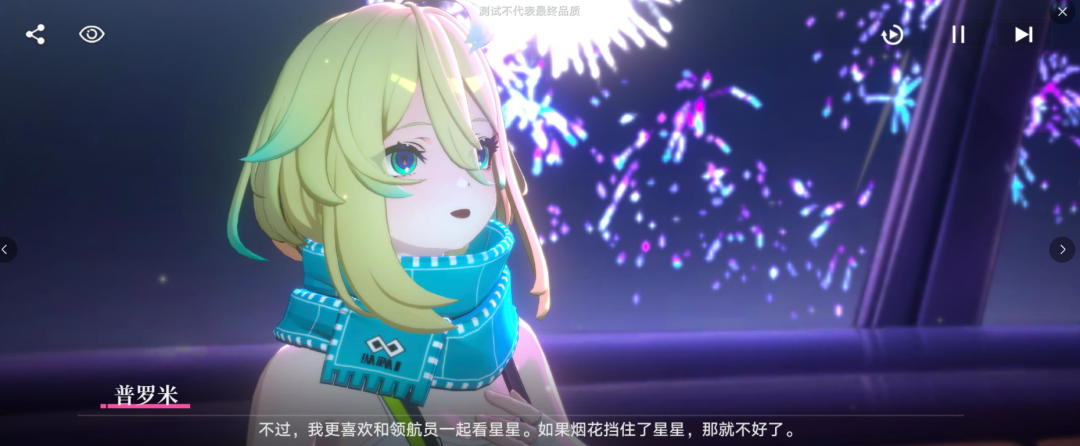
Furthermore, from an industry perspective, this means that during its development, *Chasing Caledo* maintained a creative core with a unified and clear aesthetic direction, and that direction has not shifted over the past three years—a rarity in an industry rife with vacillation and compromise.
However, realistically speaking, even if creative intuition can carry a product through the "zero-to-one" phase, once it enters the stage of large-scale operations, the scope for making decisions based purely on personal preference will inevitably narrow, and market feedback and commercial pressures will gradually influence every decision.
This also raises a more long-term question: How should we approach the long-term content for *Chasing Caledo*?
Traditional galge games have a defined endpoint: once you’ve completed all the routes, the story ends. However, service-based mobile games require continuous content updates, so there is no true “endgame.”
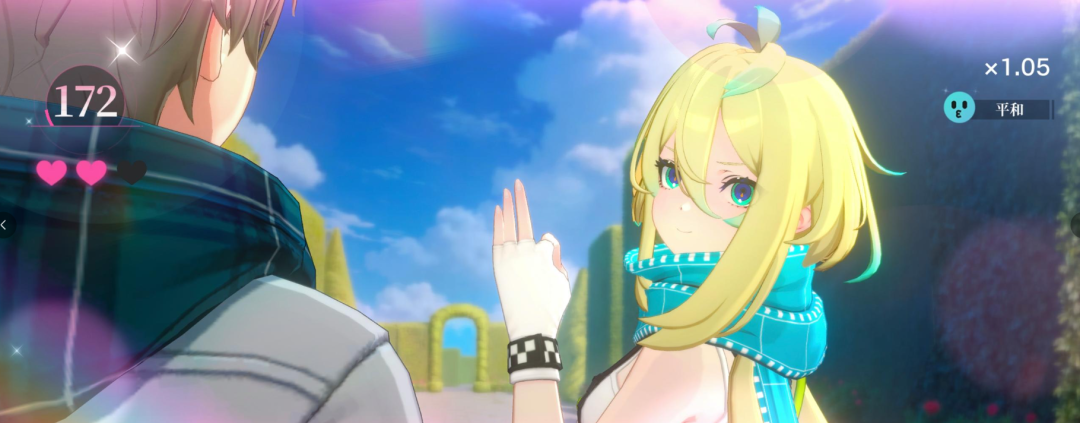
Regarding this issue, the project team responded that the "Confession" is a milestone in the current design, and new content will be added later, though the form and scale are still being explored.
In my view, the deeper challenge of *Chasing Caledo* actually lies in the issue of resource allocation resulting from the parallel development of multiple characters.Since the game centers on a deep dating system, as the operational period extends, content related to the characters must be expanded; otherwise, it would go against the game’s tone. However, the number of characters will inevitably continue to grow. So, how should production resources be allocated between new and existing characters? Won’t a character’s popularity level influence these allocation decisions?
If there isn't enough content to develop the characters' bonds, it's difficult for players to truly form an emotional connection.
The team itself acknowledges that finding a sustainable balance between these two extremes is one of the key issues to be validated during the testing phase.
Conclusion
Looking back on this discussion session, I feel that the state presented by *Chasing Caledo* is both contradictory and intriguing.
The contradiction lies in the contrast between its distinct creative flair—or, in other words, its authorial character—and the typical image of Tencent-affiliated products, as well as the gap between the product’s vision and the objective conditions.
What's interesting is that by observing its subsequent performance—both commercially and in terms of player engagement—we can determine whether focusing on emotional connections is a false premise in the anime and manga world.
In other words, the very existence of *Chasing Caledo* reflects a certain shift in the anime and manga trend. When competition in the market has become so fierce that many mid-sized projects see no hope of breaking through, pursuing a niche market may be the smartest choice.
I’m still quite optimistic about *Chasing Caledo* because it addresses a real user need, and there are currently no strong competitors in the market directly challenging it.
However, there is still a long way to go between theoretical value and commercial validation. The product’s technical foundation will not be competitive in the market after 2026, its level of completion falls short of the development team’s ideal launch standards, and a sustainable long-term production model for emotional content has yet to be established.
Let's leave it to time to answer these questions.
原创文章,作者:游茶妹儿,禁止转载:https://youxichaguan.com/en/archives/208818