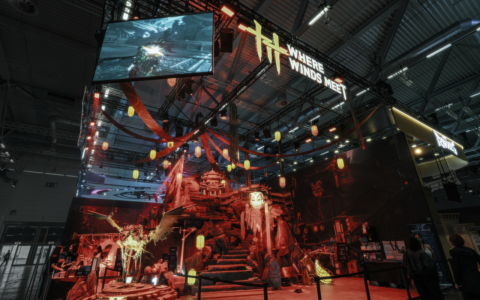
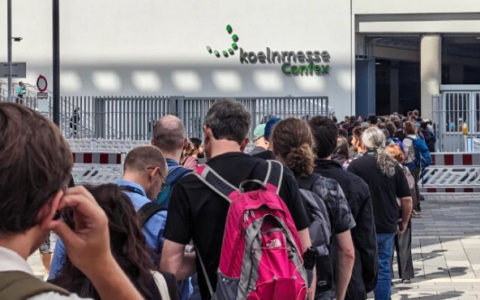
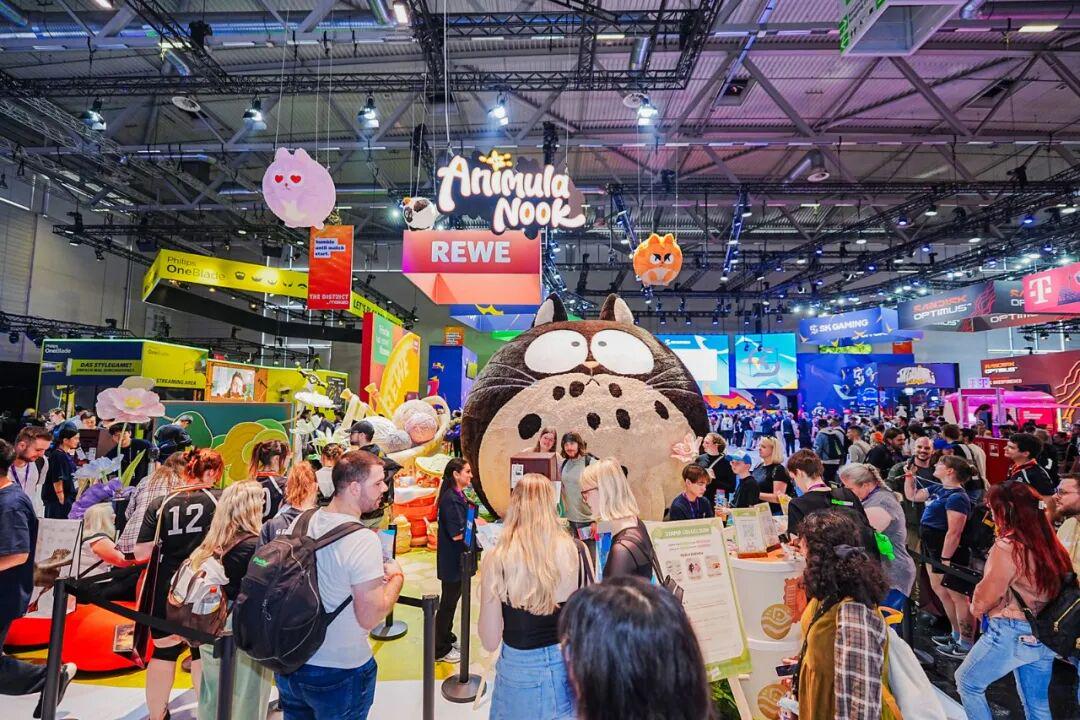
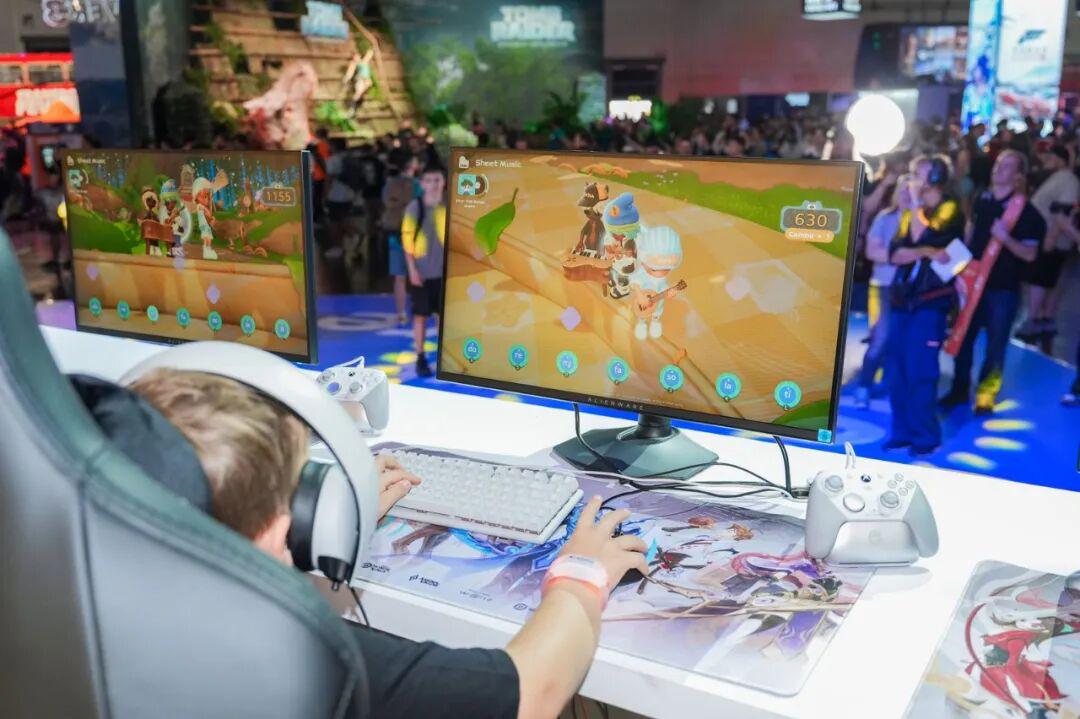
One day before the start of the Gamescom, Tencent’s Aurora Studio announced that recruitment for the second closed beta—“Freeze-Frame Test”—of *Grain’s Little World* had begun. The game was also showcased at Tencent Games’ booth at Gamescom, where it was presented to players worldwide, standing out as a rare, endearing “little” title at the massive event.The endearing “Upa” character also drew many overseas players to stop and take photos with it.
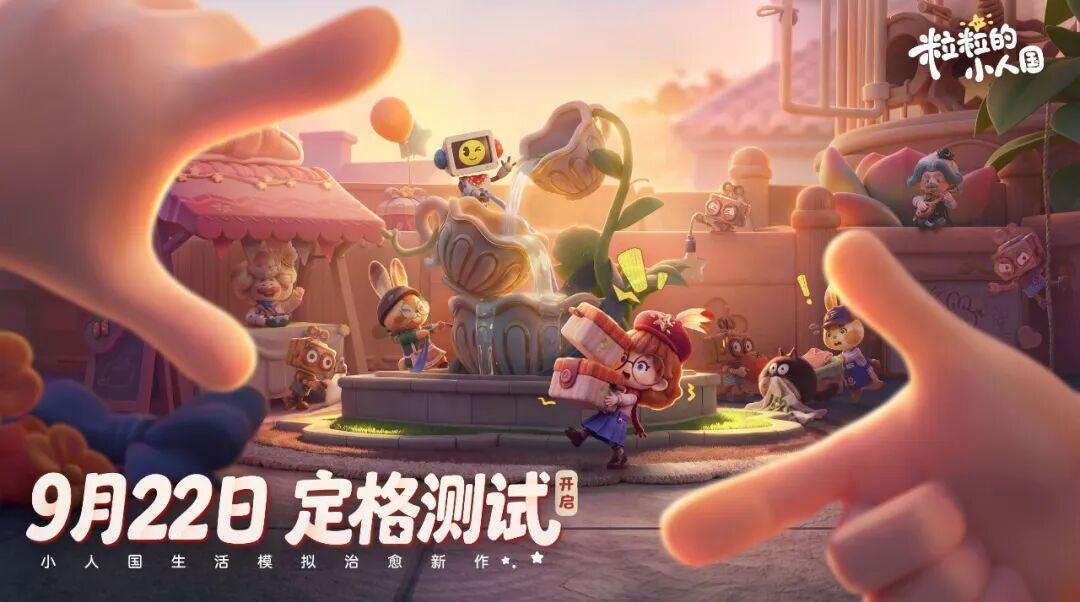
As a life simulation game, *Grain’s Little People* is entering a market that has become increasingly crowded in recent years.From its “cozy” and soothing atmosphere to lifestyle gameplay elements like farming, fishing, and building, this genre has developed an increasingly established set of conventions, making it seem increasingly difficult to differentiate one game from another.
At this year’s Gamescom in Cologne, Tea House and other media outlets had an in-depth discussion with the technical lead of *Grain’s Little World* and got a look at the game’s latest version. It’s clear that, compared to the first beta test half a year ago, the team now has a much clearer vision of how to create memorable game features and which type of players to target.
For example, building on the game’s signature “Lilliputian” perspective, they further refined their design approach—including the placement of props and scenery—to create a stronger sense of “displacement” and novelty, while also integrating the theme more deeply with core gameplay elements like farming to achieve a unique identity;They established the “place anything you want” building mechanic as one of the core gameplay elements, making the cycle of exploration, collection, planting, and construction much clearer than before.
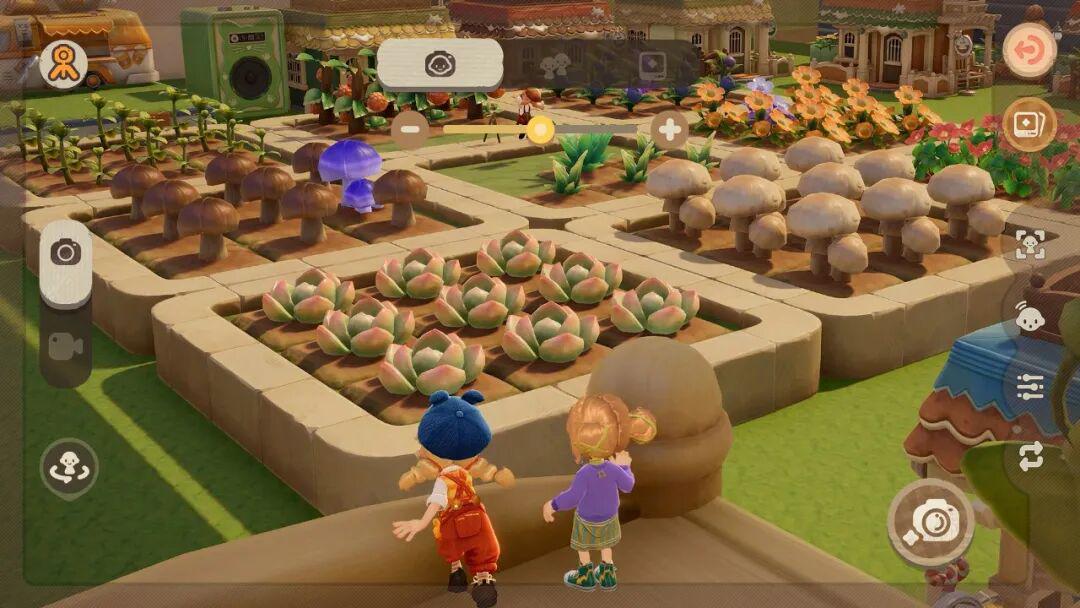
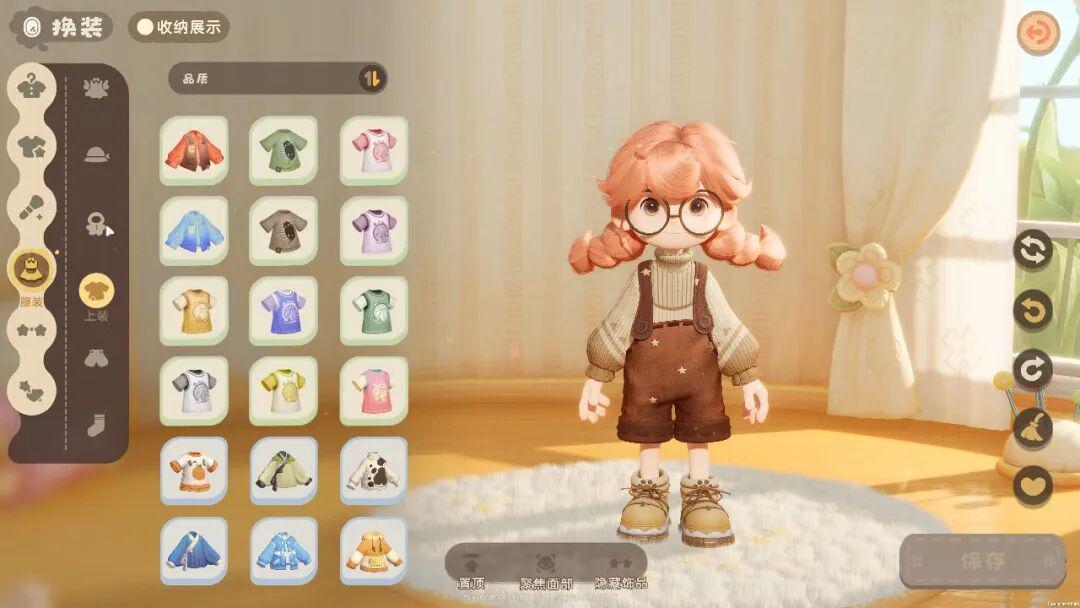
At the same time, they’ve also come up with solutions that better resonate with players regarding the in-game ecosystem of “lifelike” NPCs and the cultivation of player social interactions.Judging from the demo shown at the event, the most obvious changes in *Grain of a Little People’s World* compared to the first beta test are the improvements in overall art style and character animation. However, the evolution of the game’s core gameplay mechanics may be even more crucial.
In fact, the very fact that it was showcased at Gamescom is significant in itself. The technical lead told us that, as part of their product planning, they are already prepared to bring *Grainy’s Little World* to players worldwide. This also signifies that Chinese life simulation games are striving to reach new heights and expand into larger global markets.
The following is an edited and compiled transcript of a conversation between Tea House and the technical lead of *Lili’s Lilliput*.
01
A Life Simulation Where “Everything Can Be Displayed”
Q: What impressions do you hope players will take away from playing *Grainy's Lilliput*?
A: We hope players will see Lilliput as a space where they can find solace. When they’re feeling down, tired, or just want to take a break, they’ll naturally think, “It’s been a while since I’ve checked in on my desk.”When you return, an NPC might greet you with, “It’s been a while—where have you been lately?” making you feel as though time flows at the same pace in both the game world and the real world. You’ve probably all experienced this: sometimes, all it takes to lose your connection to a game is a single business trip. You might play it regularly, but if you don’t log in for a dozen or so days, you might lose that connection.We want to preserve this connection so that players will always think of this game.
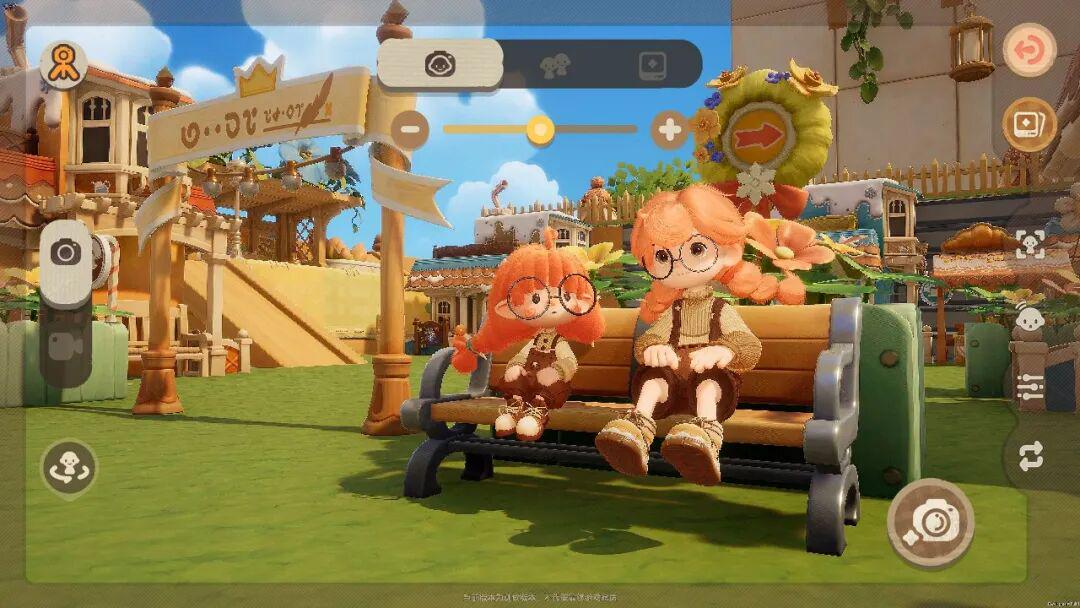
Q: There have been many games in the life simulation genre in the past, and “standard approaches” such as farming, fishing, and building have emerged. *Grain’s Little World* plays quite differently—how did you come up with the gameplay concepts?
A: We hope to build on the “Lilliput” experience, allowing players to discover differences within a setting that’s familiar enough to them.Many of our early ideas came from school supplies: building blocks on a desk could be assembled into castles and houses; candy could be turned into lollipop weapons; and erasers could become trampolines. Although these items are found in all kinds of games, changing the scale gives the same objects a different feel and a sense of novelty.
Gradually, we refined the theme further: focusing more on the simulation of daily life itself rather than on management, and steering clear of the whole efficiency and numerical loop approach. The entire building process is more decorative in nature—it’s about “arranging” things, much like tidying up a desk—and that, in itself, is what sets it apart.
In addition, we want players to see things from a different perspective and play in a stress-free environment, rather than treating the game as a replica of real life—where they’re busy farming or socializing with everyone.It’s not another version of you: after work or school, shrink down at your desk to relax—it’s a chance to experience your real life from a different perspective.
Q: But long-term retention in games usually requires a certain amount of pressure. If you don’t focus on the numbers, what is the logic behind retention?
A: We haven’t set any specific numerical goals. We didn’t want to put numerical pressure on players, and we spent a long time weighing the pros and cons of establishing “core objectives,” but ultimately decided to leave them out.We’d rather have players play however they want. But players do need a loop—in *Grain’s Little World*, the loop consists of exploring the open world → collecting materials → planting → building, and the crops you grow are used for building and decorating your tabletop. You can invite NPCs to live with you, or dance and make music with other players—it’s entirely up to you how you want to play.
*Grain by Grain: The Land of the Little People* has a core concept called “Everything Can Be Displayed”: anything you gather or find outdoors can be displayed in your home, allowing you to decorate and personalize your space.There are no absolute completion goals in this loop—no tasks like “collect a certain number of items” or “reach a certain level.” Everything starts with “how you want to play.”
Our farming system is simpler: you grow things to produce items with different appearances, which encourages collecting and ultimately turns into displayable ornaments and decorations—allowing you to showcase the time you’ve invested to other players. This cycle is stress-free and has a low barrier to re-engagement; you can even log in just to find a spot and enjoy the scenery.Farming is just the beginning; our goal is to ensure that every single item ultimately becomes a visible, displayable decoration for players.
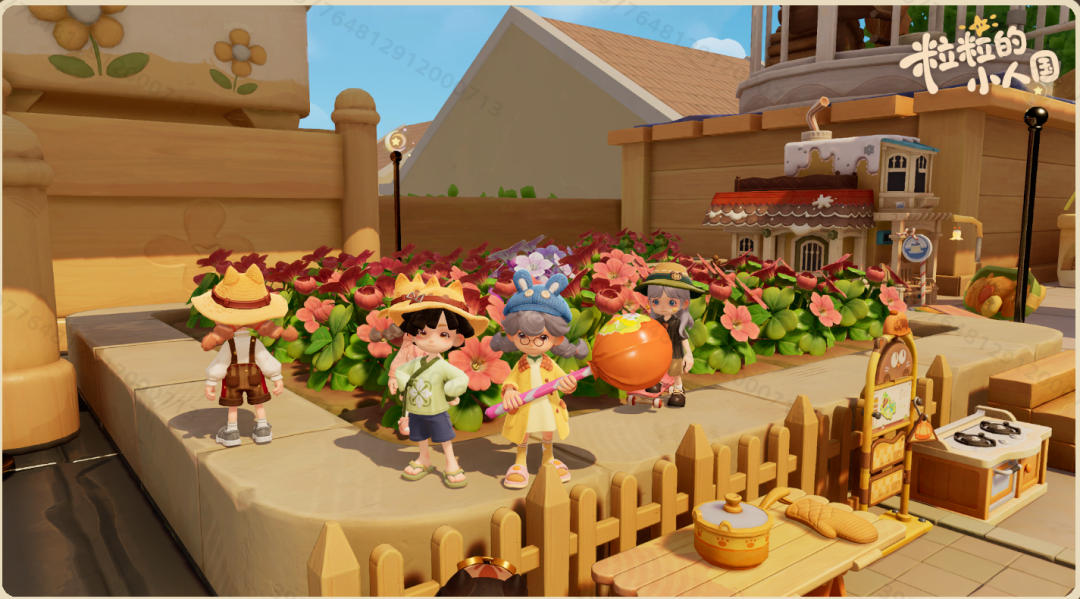
Q: “Everything can be displayed”—how is the scope of “everything” defined?
A: Our goal is simple: to be able to place any object within sight.Right now, we’re exploring how to implement intangible elements—such as sound and scent—and figure out how to display them. When adding new components, we also follow a key principle: since every object can potentially interact with all systems, we must carefully consider the implementation method during the design phase and verify each one individually.
There was also a rather interesting little incident during the development process: since scents and sounds were rendered using particle effects, some colleagues had filled their in-game homes with all sorts of scents and sounds. As a result, the sheer volume of effects caused the game to crash immediately for some colleagues as soon as they logged onto the public server. It took us a long time to figure out the cause. This is also one of the technical challenges we’re tackling.
Q: Can the decorative items be interacted with?
A: There are plenty of interactive objects: you can sit on chairs, turn lights and doors on and off, and use rubber bands as trampolines to bounce around. You can set up anchor points in your home and use the game’s “grappling hook” movement to design paths, allowing you to swing around like Spider-Man.Some players stack pieces of gum on top of each other to stack the bounce effect; placing a few by a doorway lets you jump very high, then climb down a wall to land. There are also teleportation points, which let you set where you want to appear and how to get there.
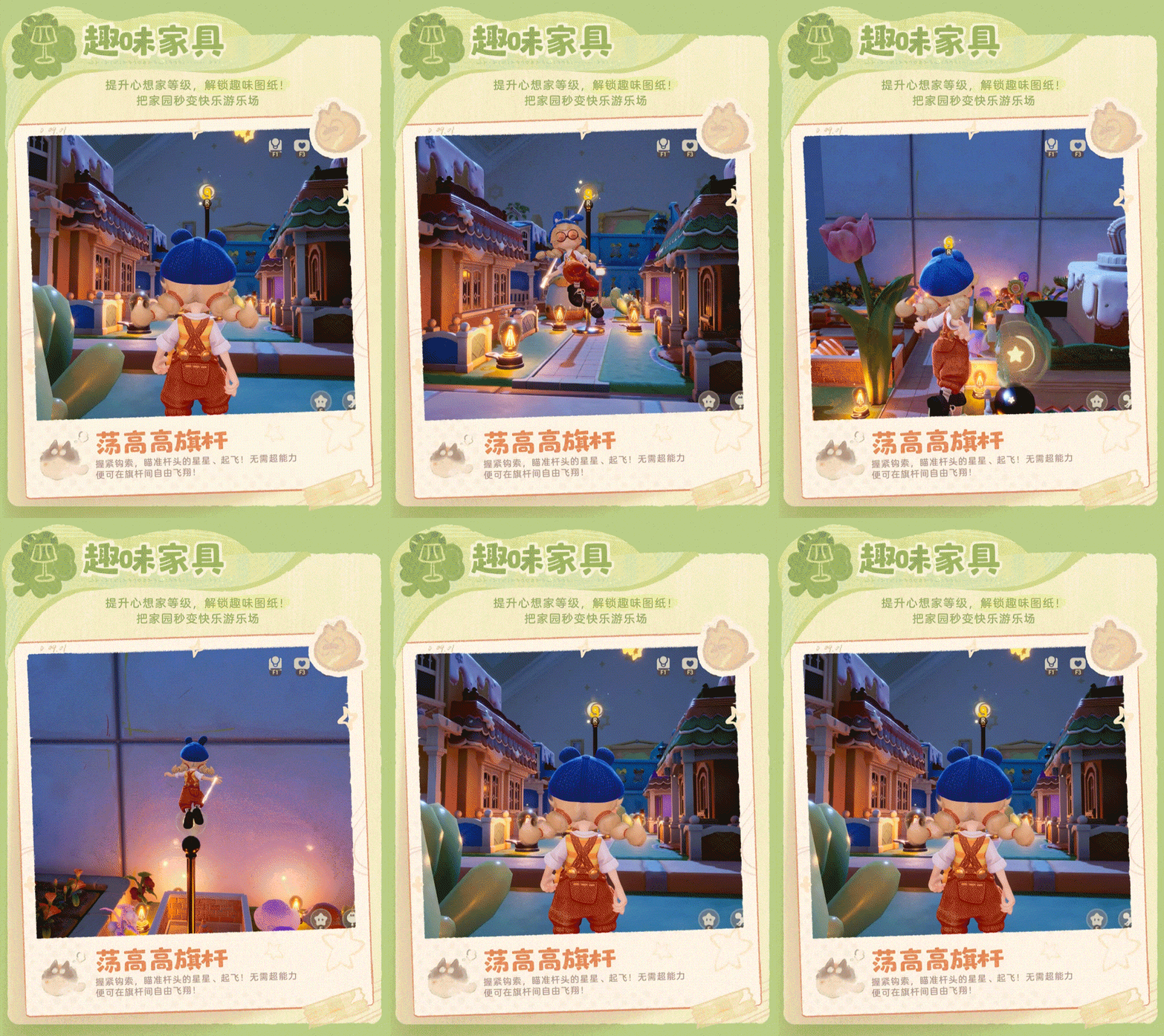
Q: When developing the placement system, what aspects of the player experience did the team focus on the most?
A: Adapting the gameplay to different platforms is our top priority, since we’re a multi-platform game. Additionally, the freedom of the building mechanics is very important.Most building games follow a four-directional, “block-stacking-on-top-of-another” model, but our game uses a first-person perspective, and we want players to “place” objects rather than “build” them: objects are placed in a natural way and can be freely rotated—this is a unique feature we’re specifically aiming to achieve.
However, free rotation complicates collision detection: if you place a wall and try to position a lamp on it, even a slight misalignment makes it look out of place. So we implemented a number of automated features to improve the success rate of interactions: objects automatically snap into place when near walls, building blocks snap together, and there are guide lines on the ground.While a mouse offers high precision, touchscreen input on mobile devices has significant margin of error, so auto-alignment and snapping are essential. The challenge lies in making it feel “natural”: it’s difficult to determine whether to snap to the wall, the floor, or the right side, and how close an object must be to trigger the snap. This requires constant debugging, and we’re still working on optimizing it.
02
Bringing the World to Life
Q: *Lili’s Lilliput* places a strong emphasis on “realism” and “a sense of healing.” From a technical standpoint, how did the team make this world appear more natural and vibrant?
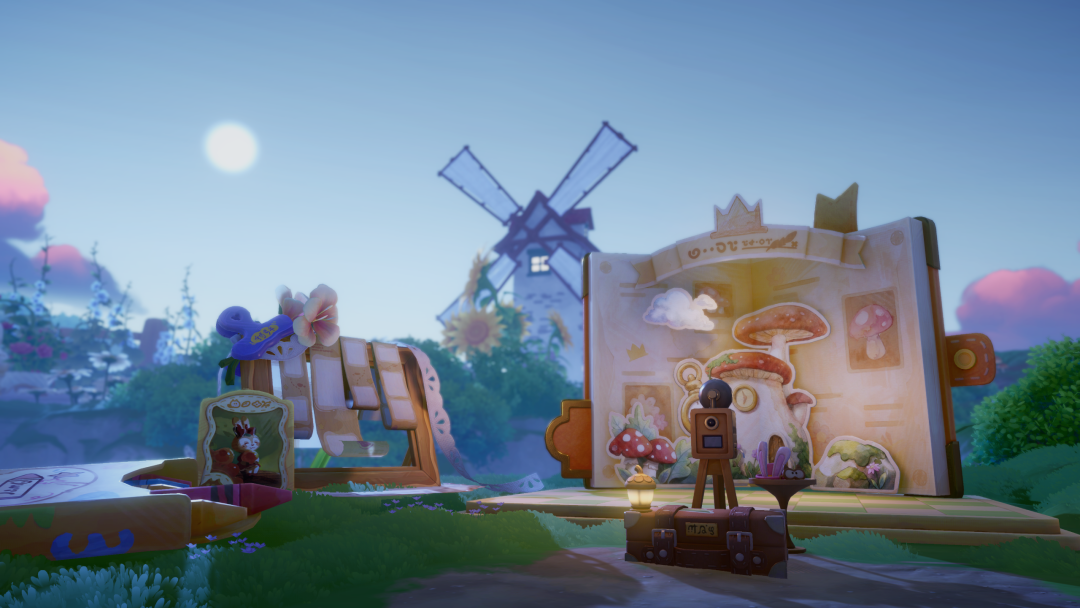
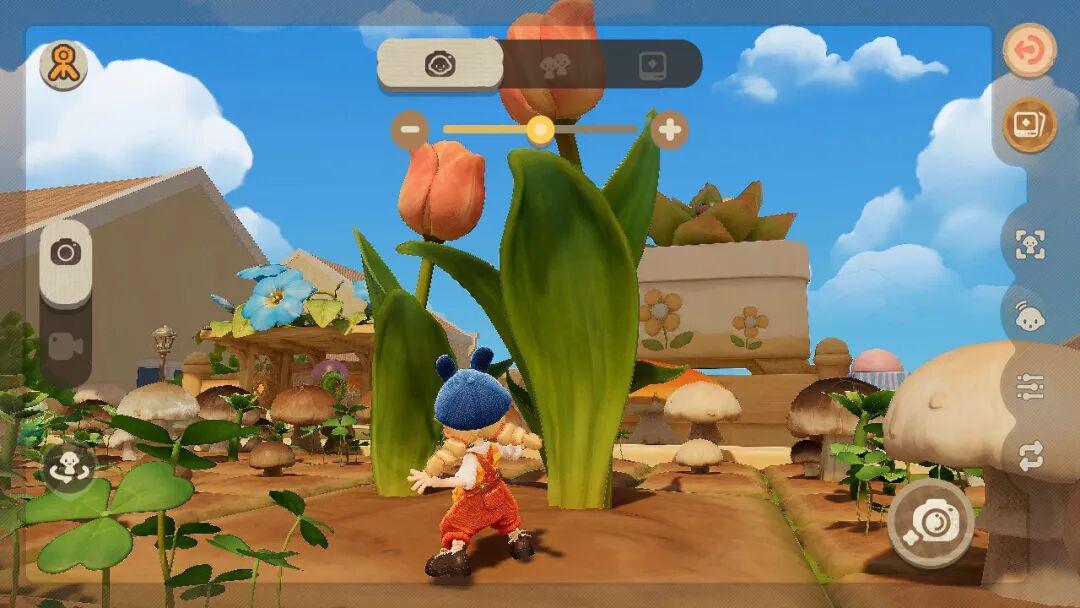
A: Technology has always played a supporting role, helping the designers and artists achieve their goals. In terms of art style, the “healing” aesthetic naturally evokes this feeling; in the design of Lilliput, we placed special emphasis on “familiar yet fresh”: a bottle of mineral water is familiar, but when you shrink down and stand next to it, the scale makes you feel as if you’ve actually gotten smaller.Familiar objects take on new uses when enlarged: a bottle of water can become a rolling log that flattens the ground; a hole poked in a milk tea cup can turn it into a house; a piano becomes a massive maze, with its internal mechanical structure serving as a puzzle to explore; you can grab a dandelion and fly away; and the insects trapped in amber are as large as fossil sculptures.When ordinary, everyday objects are scaled down, they offer novel experiences; and when surrounded by familiar things, they create a sense of relaxation and comfort.
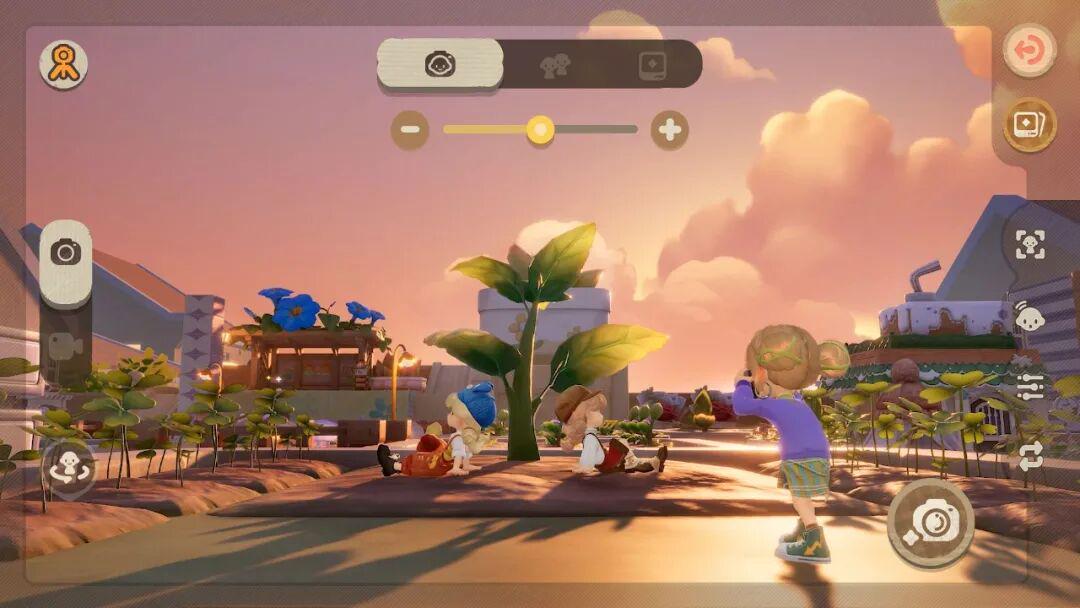
Q: From the technical team’s perspective, what are the challenges involved in making everyday objects gigantic while maintaining realistic details? And how were these challenges addressed?
A: If we didn’t do this and stuck to the traditional approach, the scene would look empty and lose the distinctive “Lilliput” feel.Some areas on the overworld map are created using traditional methods—such as green grassy fields—but we alter the surface appearance through other techniques: in a sea of flowers, the ground is completely covered with blooms, and by contrasting the scale of the flowers with the characters, we make players feel as though they’re in a miniature world; the outdoor sky remains open, which helps alleviate visual strain to some extent.A great deal of effort was also put into the layout of the homesteads, with the contact lines between large objects and the ground all specially treated.
Implementing these features on mobile devices is quite challenging, as it requires balancing content with performance demands. Many elements are created in multiple tiers—such as a high-definition version and an optimized version—and processed accordingly. Production begins with cross-platform compatibility in mind to ensure seamless integration across both platforms. The art style leans toward a cartoonish aesthetic, and the use of color and imagery helps ensure a more consistent visual experience across both platforms.
Q: How are the scaling rules for “shrinking” and “enlarging” determined?
A: This was an issue we struggled with repeatedly in the early stages: Should the proportions be absolutely accurate, or should there be some variation? We later realized that absolute accuracy actually makes the world boring—it needs imagination. Many things don’t have fixed sizes to begin with, such as doll clothes, LEGO bricks, and large building blocks.However, some objects do adhere to absolute proportions to remind players that “you’ve shrunk”: mineral water bottles—typically 350 ml or 500 ml—as well as items with clearly defined real-world dimensions, such as fried chicken buckets, cell phones, and keyboards, all maintain strict proportional accuracy.
Ambiguous details aren’t always clear-cut. Take an outdoor village scene, for example—just how big are the houses? We’ll blur those details, but by placing a field of flowers next to the village—and using the scale of the flowers relative to the characters (the flowers are about the size of a palm)—we let you know this is a small-scale world.We don’t strive for absolute accuracy; we just want the world to be interesting enough. However, by consistently using objects of a fixed scale, we constantly remind and reinforce the “shrunken” nature of this world.
Q: Are there any technical challenges involved in this process?
A: On the one hand, there’s the issue of defining rules and scales; on the other hand, there’s performance pressure. Many elements in the scene are assembled from objects, and with such a large number of objects, none of them can be simply processed in batches, which poses a significant challenge to performance.
Q: The NPCs' vitality and interaction details seem to be another highlight of the game. How did you implement them?
A: From the very beginning, we’ve been asking ourselves: What makes an NPC feel alive? The answer is whether or not they have their own daily routines and personalities. In many games, NPCs are just tools for quests: when I talk to them, they’re always standing there; if I don’t complete a quest, they’ll just keep waiting for me.We didn’t want that. We wanted NPCs to truly live in this world: with their own routines, personalities, and hobbies; with time passing naturally, not trapped in a time loop; and with your interactions affecting them and being recorded.
For example, impatient NPCs walk quickly; laid-back ones stroll around and soak up the sun; night owls don’t go out until late at night. Those with childlike personalities are lively and active—they’ll say hello when they see you; hardworking ones will take the initiative to water your plants if they notice they’re dry—none of this requires you to give commands.If you see two NPCs chatting, you can join in; if an NPC waters your plants for you, you can say, “Once the plants are ready, I’ll invite you over for a big meal.” The memory system will remember this, and the next time you run into them on the street, they might ask, “Didn’t you say last time that you’d treat me to a big meal?” These kinds of callbacks make it feel like the NPCs are truly living here.Even when a friend drops by, the NPC will tell you the next time your friend visited. These little details are what create the feeling of “living together.”
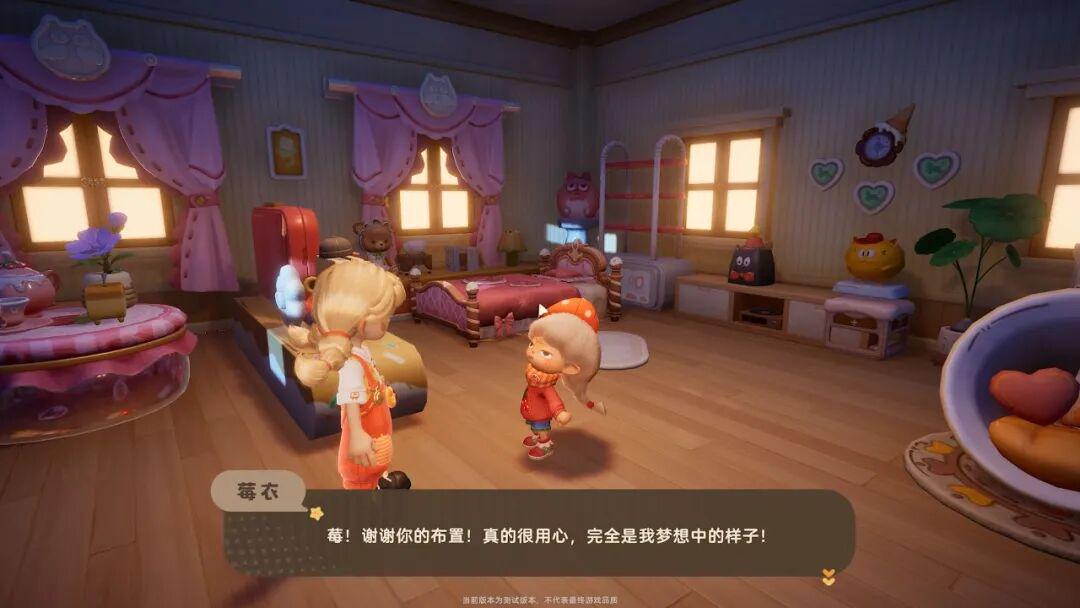
Q: NPCs provide feedback based on player behavior. What was the biggest challenge in implementing this feature?
A: The challenge lies in achieving the desired effects. To ensure the NPCs’ behavior is sufficiently varied, the project team manually crafted an extensive library of dialogues and behaviors. For example, an NPC might help you water your plants or trigger a specific action.Another system is used to introduce randomness: NPCs have different trigger thresholds for various events based on their personalities and preferences, which are dynamically matched with environmental factors such as the weather. As a result, the behaviors players observe become unpredictable yet internally consistent—for example, an NPC might only go out with an umbrella on a rainy day, or wear a raincoat and splash in puddles.
The most challenging part is parameter tuning: it takes a lot of trial and error to fine-tune the trigger conditions, scoring, and frequency density for each action to make it feel natural. The advantage of a manual approach is that it’s controllable—every action is predictable. We’re still continuously expanding the system, and the dialogue is supported by a comprehensive dialogue library.
Q: From a technical standpoint, what are the challenges involved in establishing relationships between NPCs and players and creating believable daily behaviors? Which departments need to collaborate to develop a complete set of routines, movement patterns, and interactive behaviors for an NPC?
A: The copywriter is responsible for establishing the NPC’s personality and backstory, while a dedicated game designer creates their daily routines and edits their behaviors. The artists then design the NPC’s appearance, clothing, and favorite items based on this background, which in turn influences the game designer’s behavior programming. For example, if an NPC is set to like ice cream, the game designer will program a behavior where the NPC eats ice cream while walking.
The technical challenge is to ensure that stories and behaviors align within the library, including adjusting trigger frequencies and setting affinity levels: some little secrets are only unlocked once intimacy reaches a certain level, which requires coordination between the intimacy system and the behavior library.
The entire development process isn’t a linear chain; from the design phase onward, it’s an interwoven, mesh-like structure with multiple steps providing mutual feedback, and rework is common before mass production. For example, to convey a laid-back personality: How does a laid-back person walk? The art and copywriting teams must collaborate to capture the right feel, and each NPC has a unique walking style.We have a dedicated Feature Team responsible for mass production.
Q: During the mass production of NPCs, which part is most likely to require rework?
A: The hardest part is still making the NPCs feel like real people in everyday interactions. The story background, visual design, and little quirks generally align well, but bringing out their personalities and ensuring their behavior matches those personalities requires repeated fine-tuning.
Q: Throughout the development process, did the technical team’s understanding of the product or their development approach change in any way?
A: When we first started developing this game, we faced two major challenges: the sheer volume of content and performance issues.Technology is always rational, and there are always trade-offs during development. Take free-form playing, for example: with high network latency, how do we make it sound natural? This process requires constant refinement—accepting conflicts and moving forward. But once it’s finished and we see players actually using it that way, even the programmers who built that feature feel that the effort was well worth it.
This is what it means to understand the ever-evolving nature of games. The technical team must constantly grapple with this process, where intuition and reason are always at odds. When they see the game improve, gain player recognition, and have its features actively used, the technical team knows that solving those challenges earlier was necessary.
03
Beyond the First Beta Test, Heading Toward a Global Launch
Q: You opened pre-registration last September, and it’s been almost a year since then—during which time you also conducted your first beta test. What has the development team’s journey been like over the past year?
A: Actually, the version from the first beta test wasn’t our official release yet; it was still in the early stages of development. For example, in terms of graphics, we hadn’t performed in-depth performance optimization on the first beta version, but we had to make some compromises to ensure it would run on the testers’ devices. The graphics in the second beta test are now much closer to what we had planned.
However, this genre really needs player feedback. We need to know whether players will accept the “shrinking” theme and gameplay, and we urgently need input from outside sources, so we’ve decided to brave the pressure and start gathering feedback first.
As a result, we’ve taken all of our players’ feedback to heart, and it has continuously driven us to refine our product over the past year. Players have shared a great deal of feedback with us, which essentially reflects their appreciation for the gameplay and their desire to keep playing. Over the years, players’ tastes have become increasingly sophisticated, so developing games in isolation simply won’t work. The pressure from our players is what drives us to improve.
Q: Aside from the improved graphics, what other player feedback during the initial testing phase made a strong impression on the project team?
A: Aside from the visuals, players’ feedback has largely focused on the farming mechanics. Many players felt that the farming gameplay at the time was too similar to ordinary farming. But players had higher expectations for the “Lilliput” concept: the crops you grow should be different—otherwise, how would it reflect the fact that you’re a “shrunken person”?So in this update, we’ve made a major evolution: crops are no longer just for food. Plant a pumpkin, and after you shrink, it’ll be bigger than you—it can even become your house. We’ve introduced pumpkin houses, and in the future, other crops will turn into chairs and more. The farming mechanics are now more deeply integrated with the “Lilliput” setting and are also linked to the building mechanics.
Q: In previous tests, did players come up with any gameplay strategies that surprised you?
A: Our impression is that every player approaches this game in a truly unique way. For example, there’s one player who likes to play the piano by the fountain in the village. The game features a free-play system, so any players passing by can hear him.He logs in at the same time almost every day and goes to the same spot to play, and more and more players are making a point of going there to listen. Some have even figured out how to join his server just so they don’t miss this “mini-concert” that players have spontaneously created.
He doesn’t seem to care about levels, quests, or other goals; he simply enjoys coming here every day to play the piano for everyone for a while, like a musician in this world with a set performance schedule. Players naturally gather around him and keep him company.This is also an inspiration to us: the goal we set from the beginning—“to let players develop their own playstyles, find the ways they enjoy, and feel no pressure”—seems to have been achieved through this player’s discovery. Everyone is flooding the world chat with messages like, “So-and-so the master is playing again—come check it out!”
Q: Today’s players are becoming increasingly individualistic and self-aware. Do you think players’ needs within the game—especially those related to their in-game lifestyle—are changing?
A: We’ve gradually stopped placing too much emphasis on user profiles. Ultimately, we realized that games exist to meet certain needs of players—if they have a need, they’ll play, regardless of labels. If there are many players with a certain label, it’s likely simply because something about the game resonated with them. So now we don’t focus on user labels; we focus solely on whether the game meets a specific need of the user.
Single-player gamers enjoy playing alone, so we provide a wealth of single-player content; some players need the feeling of “being seen by others,” just like someone who enjoys playing the guitar for an audience. As long as we can identify and meet enough player needs, our user base will grow.Today’s players know exactly what they want and are willing to stick with it—for example, logging in at the same time every day to play the guitar in the town square. It’s not that our data has changed; it’s that we’ve expanded our content to meet more needs, which naturally draws in more players.
Q: Do you think players now need more social distance than before? Successful games today all have a sense of “restraint” when it comes to social interaction: in a vast open world, it feels like there are a lot of people together, but no particularly close connections are formed.
A: The key is not to put pressure on players. The game itself has no mandatory objectives, and social interaction is optional: you can socialize or not—it has no impact on your gameplay. Playing with NPCs in the Desk Home can be a completely single-player experience.
When you feel like socializing, there are plenty of opportunities outside the game to meet other players and invite them over to your home. Some players even take the initiative to suggest collaborating on building projects and living together.
For us, there’s no such thing as “social distancing.” Distance is a choice each player makes; we simply provide a range—from the closest possible to the farthest possible—so everyone can find what works best for them.
Q: Given that you chose the Gamescom event as the launchpad for your global marketing campaign—and even planned a release on console platforms like PlayStation—how does the team view the opportunities for life simulation games in overseas markets?
A: The decision to choose Cologne for global marketing and distribution and to plan for console platforms stemmed from the same assessment: the creativity and core experience of *Grain of a Little People’s World* possess universality that transcends cultural and geographical boundaries.
At this year’s Gamescom in Cologne, we noticed something: whenever players from different countries and regions passed by the giant Upas, they would naturally gather around it—some would pet it, while others would pull their friends over for a photo. Though their languages differed, their smiles and affection were the same: the sense of comfort, companionship, and the longing for a better life can transcend language, culture, and geography.
Our understanding of globalization isn’t simply about replicating the same content across all markets. From the early stages of R&D, we use real player feedback to verify whether the core concept can be understood across different cultures, while staying true to the essence of the game and finding ways for local players to enter this world.The same applies to in-game items: domestic and international players may have different emotional associations with the same item, so we rely on variety to ensure everyone can find something they like. In the future, Grain Village will feature hundreds of “Grains,” and players will be able to invite their favorite Grains to live in their homes.
The feedback we received at the Cologne event has made it even clearer to us: life simulation games can’t just stop at “looking soothing”; ultimately, it’s the depth of interaction, the sense of real life, and the space for self-expression that keep emotional connections alive.
原创文章,作者:游茶妹儿,禁止转载:https://youxichaguan.com/en/archives/220689