The Demon Cai is back.
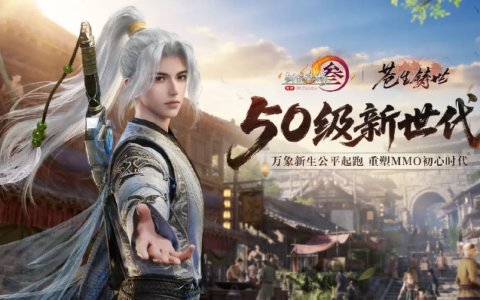
On September 8, 2026, during Bilibili’s “Game Preview” event, Cai Minghong made his return with his new title, *Tianji Xing: Shadows of the Ancient Dynasty*.This is the first all-new RPG released by Tsai Ming-hung since he left Softstar and the *Xuanyuan Sword* series. Development is currently in its final stages, with a release expected in 2027. Tsai Ming-hung serves as the executive producer on the project.
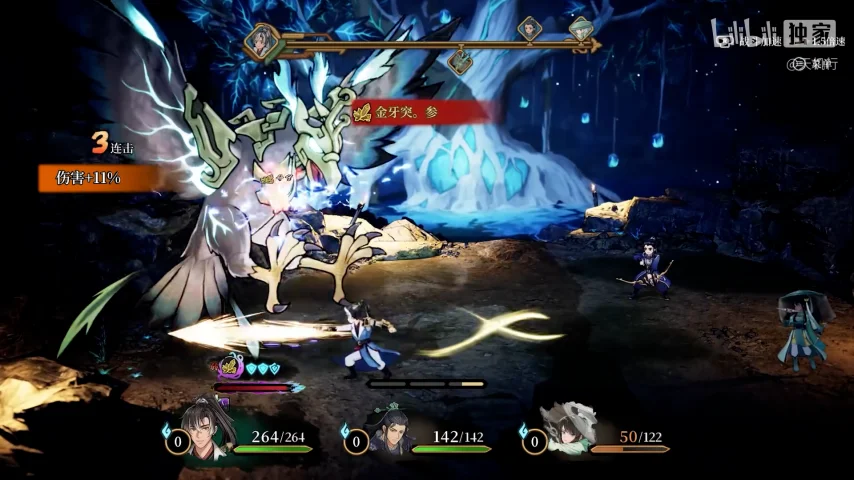
For fans of wuxia games, this promotional video offers plenty of highlights.Although the art style doesn’t meet AAA standards, the story—set in the golden age of wuxia and helmed by Cai Minghong—is certainly something to look forward to. In terms of gameplay, the game retains the underlying turn-based framework while innovating the combat rhythm, making it more fluid and dynamic than ever before:Players can use hotkeys to execute combos, follow-up attacks, interrupts, and blocks. By exploiting elemental weaknesses, they can weaken enemies and build up the combo meter, which can then be spent to unleash high-damage skills.

For fans of wuxia culture—and wuxia games in particular—there’s another key reason why this new title is so highly anticipated, aside from what’s already been shown in the trailer: their trust in Cai Minghong himself.
After all, over the past four decades, the *Xuanyuan Sword* series he led has achieved so many “firsts” in the history of Chinese gaming and, in terms of quality, reached the pinnacle of the RPG’s golden age—*Dance of the Maple* seamlessly integrated Mohist philosophy with mechanical puzzle-solving;*Beyond the Clouds and Mountains* tackled cross-cultural historical themes with a narrative scope spanning Eurasia, reaching the pinnacle of cultural depth and narrative charm;*Scar of the Sky* went even further, using a multi-ending system to expand the depth of player choice and offering strategic depth rarely seen at the time through the Demon-Refining Pot system… To this day, there is still a YouTube video titled “The RPG Masterpiece the Whole West Missed,” dedicated entirely to *Scar of the Sky*.
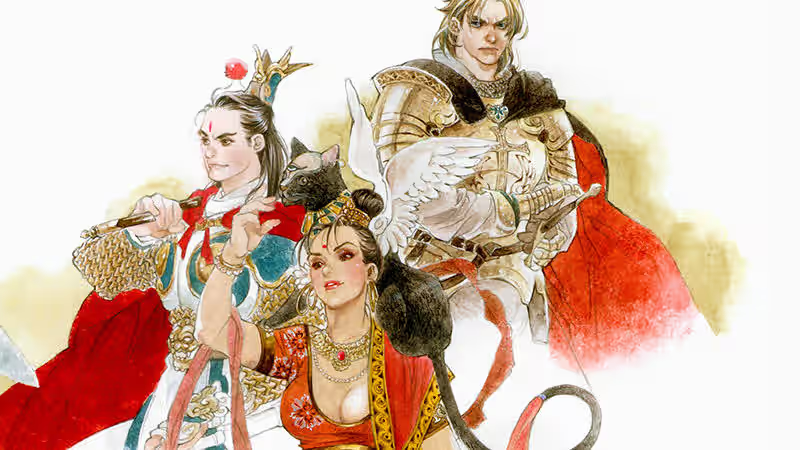
(Xuanyuan Sword: Beyond the Clouds and Mountains)
More importantly, it infused Chinese RPGs with a certain spiritual essence, blending individualistic introspection, the fate and ethics of the era, and unbridled imagination into two 1.2M floppy disks. The game’s atmosphere often evokes memories of the golden age of the genre—the late 1980s.as the White Terror gradually receded, the Hong Kong-style wuxia film and television aesthetic pioneered by Hu Chin-chuan reached new heights of popularity, and Ni Kuang, Jin Yong, and Gu Long once again took the world by storm following the lifting of bans. The young people of that era were eagerly forging their own cultural history…
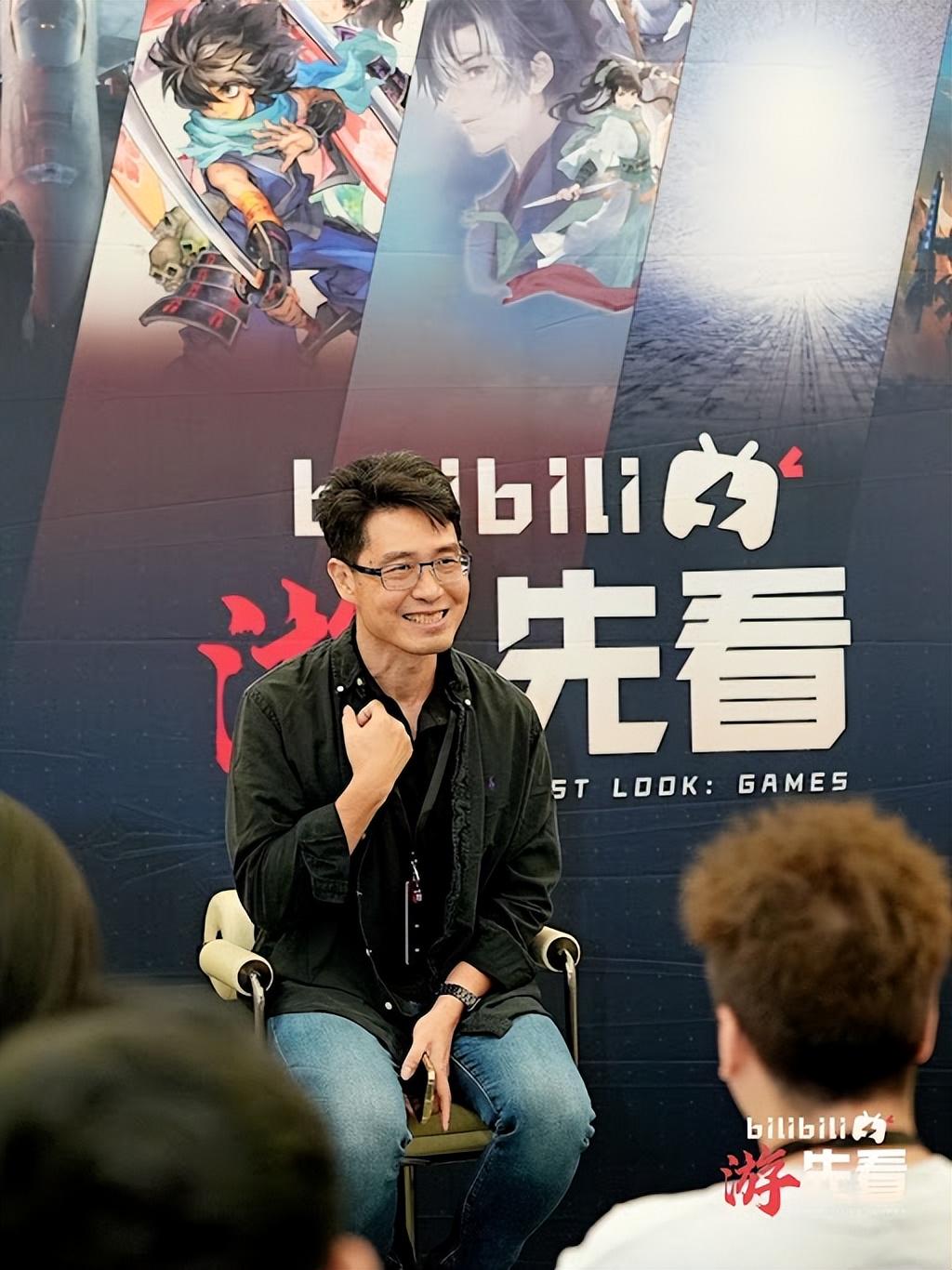
More importantly, as one of the earliest game creators in the Chinese-speaking world, Cai Minghong has remained active to this day—which is extremely rare.
Fourteen years ago, in an interview, Cai Minghong joked that only “someone out of their mind would make a single-player game.”However, from DOS to UE5, and from small teams of just a few people to modern industrial workflows, Cai Minghong has led his team through every stage of the Chinese single-player game industry, head-on confronting rampant piracy, the explosion of online games, the surge of browser games, and the mobile gaming wave…Through these changing cycles, he has consistently remained dedicated to single-player games—a genre that has never been particularly popular.
Last year, after leaving Daewoo, Jieshideng approached Cai Minghong, hoping he would create a new game, and the two sides discussed the matter at length. At the time, Cai Minghong wasn’t sure if he could continue making single-player games, but Jieshideng’s involvement convinced him to take another chance, and *Tianji Xing: Shadows of the Ancient Dynasty* was born.
Throughout the development of this game, Cai Minghong remained committed to his philosophy of “treating every installment as if it were the last.” When he left his former company, he wasn’t sure if he’d have the chance to work on the next installment after completing this one; therefore, every opportunity to start anew was incredibly precious.
The following is an interview conducted by Game Teahouse with three key members of the creative team—Executive Producer Cai Minghong, Producer Zhang Jiaqiang, and Associate Producer Wang Xiaoshuang. The text has been edited and revised:
01
“The real work only begins the moment a project is approved.”
Game Teahouse: What prompted Mr. Cai to decide to create *Journey of Divine Secrets: Shadows of the Ancient Dynasty*?
Cai Minghong: I’ve been working in the gaming industry for decades, and I’ve always focused on RPGs. I’m very happy to have this opportunity. Back when Jieshideng approached me to discuss developing another RPG, I had a thorough discussion with Ah Qiang about it.We wanted to channel the passion and ideas we had when developing single-player games back in the day into this new title, *Tianji Xing: Shadows of the Ancient Dynasty*. We spent a long time discussing it and finally decided to develop this game.
Game Teahouse: How long has the idea for a brand-new IP been brewing in your mind?
Cai Minghong: I’d say it’s been a long time. Whenever game developers are making a game—whether in the past or now—they often come up with a lot of ideas: “Could we do it this way?” or “Could we do it that way?” Sometimes what wasn’t possible in the past is now possible.
As game developers, aside from actually developing games, we also chat about game-related topics when we have some free time. That’s why I’ve been jotting down all sorts of things in my personal notebook over time. *Shadows of the Ancient Dynasty* is the result of us compiling some interesting ideas we’ve had over the years and then developing them when the time was right.
Game Teahouse: What core design principles were established at the outset of the project?
Cai Minghong: It didn’t quite reach the level of a mandatory requirement. Back then, when my team and I were discussing it, our top priority was actually to create a game that would immerse players—one where they could feel connected to the characters, the storyline, and the interactions within the game.Most importantly, we wanted the game’s overall design to encourage players to see it through to the end. So we based our entire design around this primary objective.
We just wanted to make a lighthearted, fun game that players can easily play through from start to finish. I think the most important thing about a game is that players find it enjoyable, connect with it, and come away with a lasting impression of the characters.
I think this is a very important aspect of developing RPGs. In every game I’ve worked on throughout my career, I’ve always wanted it to achieve this—to make players feel that the game is fun and enjoyable to play. We do our best to ensure that, in every aspect of the game, players can sense the care and dedication we’ve put into its development. That’s what I consider most important.
Game Teahouse: During the early stages of development, was there any idea that the team found particularly brilliant—or that was rejected the fastest?
Cai Minghong: Basically, during development, I rarely dismiss the ideas that come up within the team.If they’re willing, I believe they’ll give it a try, and sometimes their ideas turn out to be even better than I imagined. Take the combat in this game, for example—back when I first started designing games like *Xuan Yuan Jian II* or *Tian Zhi Hen*, I always used a turn-based combat system with a “stepping on landmines” mechanic.
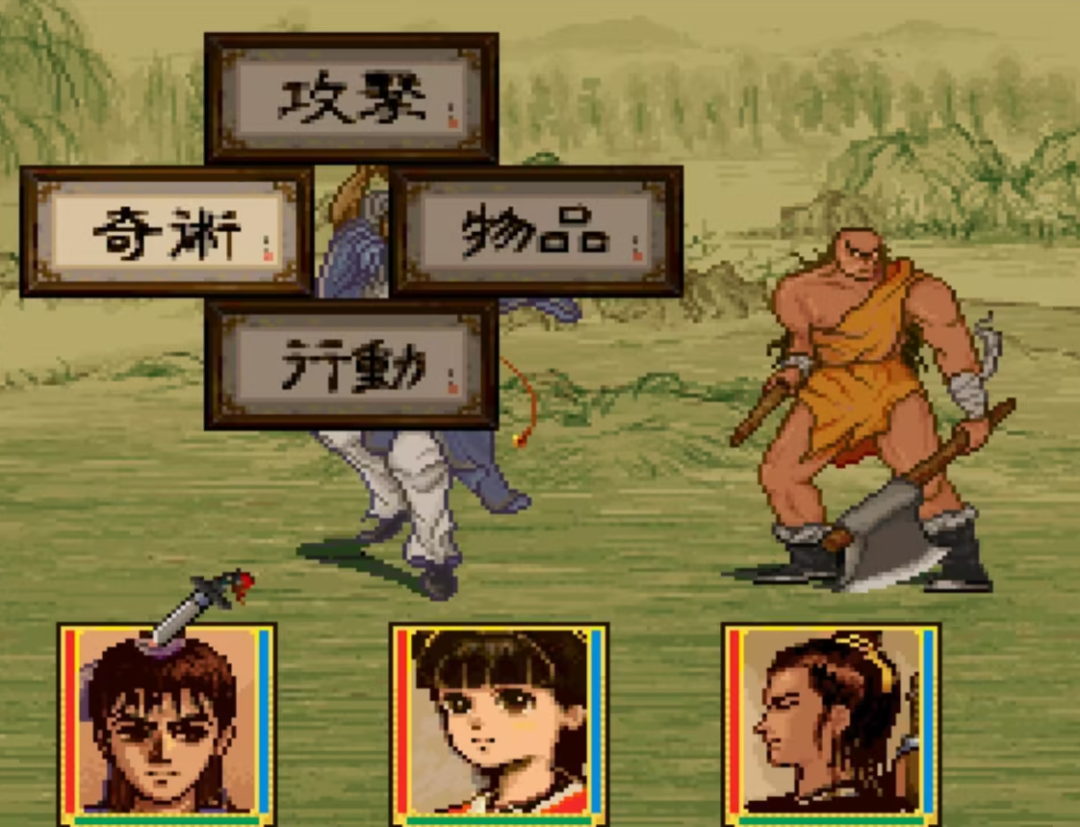
(Xuanyuan Sword II)
When designing this generation of the game, we felt that—given today’s players—if we wanted to include “open-terrain” sections, there shouldn’t be any monsters visible on the map, and we also didn’t want the combat to follow the traditional “turn-based” format of the past.At that time, Ah Qiang—Mr. Zhang Jiaqiang, whom we usually call Ah Qiang—offered some unique insights regarding combat. He wanted the combat to have a turn-based feel, but also be lighthearted and fast-paced, with some room for skill-based gameplay. So he proposed a rather unique concept for the entire combat system and designed it holistically.
When we finally put the game's combat system together, I felt that its design—particularly in terms of the flow of the combat and the feel of the controls—added a great deal of uniqueness to the game. That's what I think is truly special about the improvements made to the combat in this game.
Game Teahouse: What exactly does the title *Journey of Divine Secrets: Shadows of the Ancient Dynasty* refer to?
Wang Xiaoshuang: “Tianji Xing” refers to the “Tianji Guard,” a secret organization from the Tang Dynasty in which the protagonist is a member. Of course, the Tianji Guard isn’t a real historical organization; while we drew inspiration from history, part of it is our own creation and conception. The Tianji Guard is an organization imagined by our screenwriters—it’s somewhat similar to a secret military unit from the Tang Dynasty.
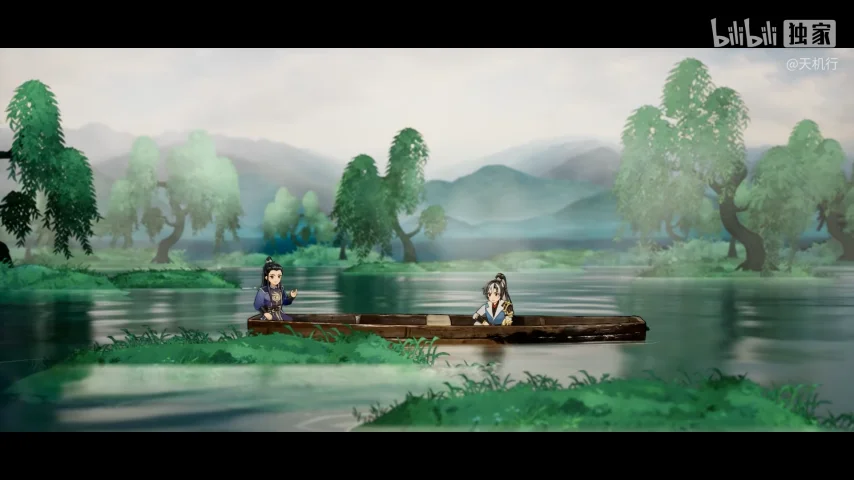
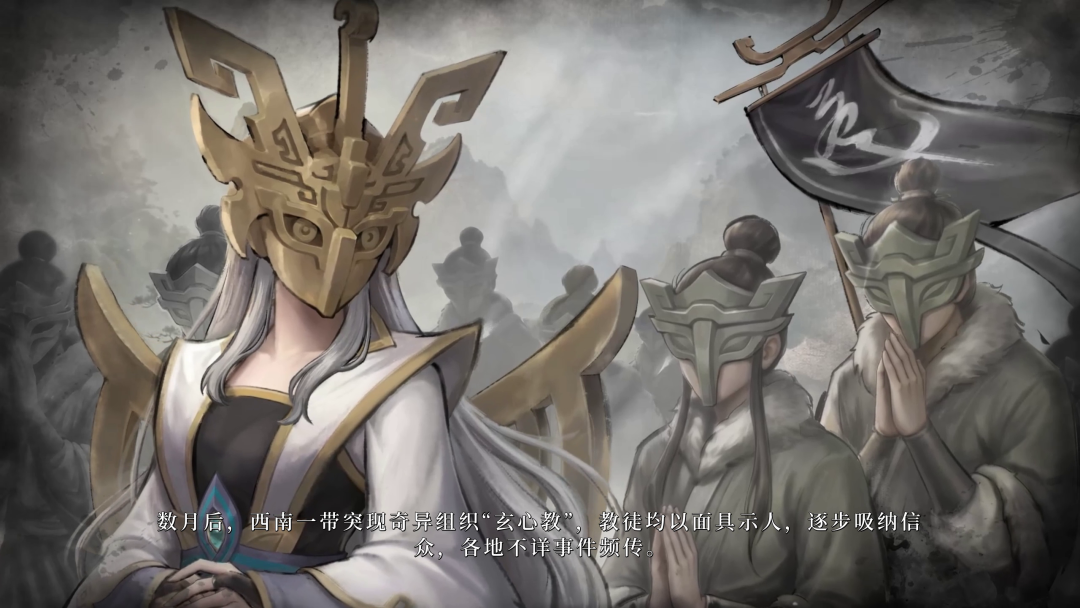
"Shadows of the Ancient Dynasty" refers to—in this main storyline, which is the most important one for the protagonist—the game begins with the protagonist waking up at a base of the Xuanxin Sect. Having lost his memory, he must set out to recover it.
On his journey to recover his memories, he stumbled upon secrets from a long-ago era—secrets that should only exist in an ancient capital from a thousand years ago—and discovered unexpected connections between himself and the Xuanxin Sect. “Shadows of an Ancient Dynasty” refers to this secret that the protagonist unearths while searching for his true identity.
Game Teahouse: What historical sources did the game draw upon?
Wang Xiaoshuang: In fact, we will definitely do this research. One text we must consult is the *Zizhi Tongjian*; we have read the section of the *Zizhi Tongjian* covering the Tianbao era of the Tang Dynasty.
But after all, what we’re creating is a work of entertainment, not actual historical research. So, in some cases, we’ll make certain compromises to make the plot more exciting or to make the overall story more plausible. However, we’ll stay true to the general direction and won’t stray too far from it.
Game Teahouse: How Do Historical Settings Integrate with Gameplay?
Zhang Jiaqiang: In terms of gameplay, we’ve focused primarily on two aspects. One is the trap mechanics we’ve been wanting to incorporate, and the other is a concept from the ancient dynasty—specifically, the use of spiritual energy.
This section leans more toward subtle fantasy elements, which we’ll use quite frequently to meet the game’s gameplay and visual requirements.
Wang Xiaoshuang: And then there are the weapons. We will definitely use weapons that are characteristic of ancient China, such as swords, knives, Tang swords, whips, and Emei daggers.
Game Teahouse: How would you define the game’s core audience?
Cai Minghong: RPG fans come in all ages.
Wang Xiaoshuang: Based on feedback surveys, veteran players’ tastes have also changed with the times, while new players are more at the cutting edge. Just because you create something very old-school doesn’t mean veteran players will necessarily go for it.
Game Teahouse: With the single-player game market picking up again, has your team noticed this trend?
Cai Minghong: I’m really happy about this. There are so many excellent single-player games being released these days, and the single-player game market is actually more vibrant now than it used to be. After all, in the past, discussions were almost exclusively about online games or mobile games, and single-player games really seemed like an afterthought.
Right now, across the entire market, the overall feedback and response seem to have grown significantly. But the challenges have also become greater. So, overall, I think this is a good thing for the single-player market—it’s a huge difference compared to how things used to be.
Game Teahouse: Looking back on the project approval process, how would you describe your feelings on the day the project was approved in one word?
Cai Minghong: I’d say being able to remake a game is a blessing, but when I think about actually creating the game and making sure today’s players will enjoy it, I feel a sense of caution and nervousness. After all, when you’re making a game today, I think that if you’re really going to do it, you want players to love it.
I’m incredibly grateful and happy that the team is willing to support me in making this game. But I’ve always felt that a game has to be good—and that’s been a very bumpy road. We’re constantly asking ourselves, “How can we make this game the best it can be?” and that’s what keeps driving us forward.
Zhang Jiaqiang: I’d say it’s a mix of pain and pleasure (laughs). I know exactly what it’s like to make a game, but I’m actually really looking forward to it. Every time this point comes around, the feeling becomes even stronger—because this is when you’re busiest, but also when you’re happiest.
After all, now that you’ve gone public, you’ll receive a lot of support from people, and sometimes that will really move you—which will give you the strength to keep going. After all, there’s no single right answer when it comes to refining our work, so right now it’s all about finding ways to carve out time to work on these things and achieve as much as possible—so that you won’t have any regrets before the launch.
Wang Xiaoshuang: Cai Maowang once said something that left a deep impression on me—namely, that when a project is approved, you might be overjoyed, and everyone will certainly feel elated, but in reality, the real work only begins at that very moment. We’ve only just taken the first step on our journey; there’s still a very, very long road ahead of us.
Game Teahouse: It used to be said that each generation should be treated as if it were the last. Has that mindset changed at all now?
Cai Minghong: It’s still the same. Basically, I’ve been in the game industry for a long time. Back when I was making single-player games, piracy was my biggest competitor; later, online games became the biggest competitor; then it shifted to browser games; and eventually, it became mobile games. Actually, I feel like the environment has been constantly changing every time I’ve worked on a single-player game.
As I mentioned earlier, I often tell my team that it takes us several years to develop a single-player game, and we don’t know if, once it’s finished, we’ve truly conveyed the vision behind this great game to the players.Looking ahead, we don’t know how the single-player game landscape will evolve. Will it be crushed by piracy, as it was back in the day? Will everyone switch to making online games, leaving no one to develop single-player titles anymore?We simply don’t know. That’s why I always tell my team: now that we have the opportunity to develop this single-player game, to be honest, we need to cherish this time. We should do our best to incorporate all our ideas, gameplay mechanics, and fun elements into the game—so we won’t have any regrets.
After completing this game, if we’ve truly managed to convey the passion behind our game to the players—and if they’ve supported and enjoyed it enough to give us the chance to make the next one—only then will we have a next installment.So, basically, when developing each game, we must treat it as if it were our last, doing our best to incorporate everything we want into it. That’s the mindset I’ve always maintained when making games.
02
“It looks like an old game,
"But when you actually play it, it still has the feel and gameplay of a new game."
Game Teahouse: What are the key features of the game's combat system?
Zhang Jiaqiang: My core idea is to have players spend more time thinking through their decisions, but execute them quickly.
For example, the way we’re currently operating is by using keyboard shortcuts. At that time, we’ll also discuss whether to add command-based operations—that is, a list-based approach where items are selected one by one.
However, since this mechanism is still relatively new, we’ll be taking into account the differences in play habits between veteran and new players in the near future. Our new control scheme doesn’t rely on traditional command-based controls, so there’s still a lot to figure out in terms of feedback and exploration. All we can do is come up with a method, have external players test it, gather their feedback, and then make adjustments.
Cai Minghong: The combat in this game is quite different from traditional turn-based systems. When we were designing the combat in the early stages, we actually had many back-and-forth discussions and made numerous changes.
We want to make combat feel more responsive. For example, during combat, you’ll receive a 1.2x bonus for completing a fight without taking any damage—if you play well, it’ll actually feel like an action game: you can string together combos, and you might even manage to finish the fight without taking any damage, earning those bonuses.
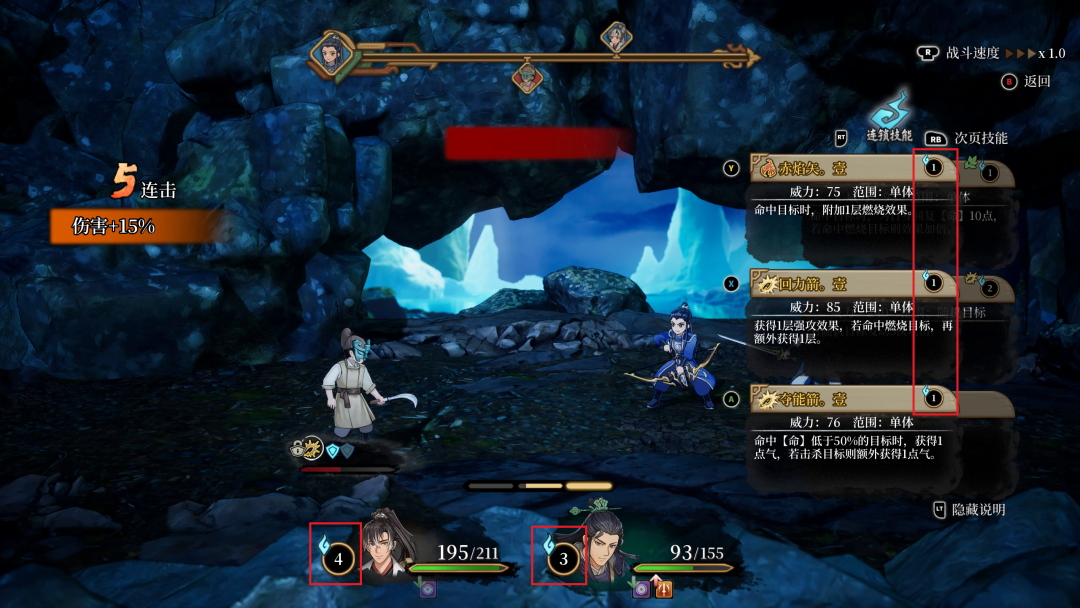
This wasn’t present in traditional turn-based games. Incorporating this kind of gameplay feel into combat actually requires a design approach that’s quite different from our traditional turn-based systems. On this point alone, I had many discussions with him back then—we even kept adding and removing elements, and made constant adjustments throughout the final design process.
So in this demo, everyone who plays it will find that even though it looks like an older game, when you actually play it, it feels and plays just like a new game. I think this is the result of the sparks that flew from our ongoing discussions—between me, the team, and Ah Qiang.
Game Teahouse: How has the way stories are told changed compared to the past?
Cai Minghong: The way we tell stories now—while our characters are essentially 2D—we’ve incorporated dynamic performances, which allows us to tell stories with greater detail. Back when we were first developing our earlier games, a lot of the narrative was actually conveyed through text.
But now, with this installment of *Tianji Xing: Shadows of the Ancient Dynasty*, we’re using voice acting. So when it comes to conveying the story—beyond just the characters’ movements—the way the voice actors bring the narrative to life actually creates a completely different experience from before. After all, the impact of a single line of dialogue is entirely different depending on whether it’s voiced or not.So in developing this title, we felt the challenges were greater than ever before.
Game Teahouse: Why is there such a strong emphasis on voice acting this time?
Cai Minghong: In older games, emotions had to be conveyed through the text itself because there was no voice acting. If a character was supposed to say a certain line today, you had to convey anger—you had to make sure the dialogue itself made it clear that the protagonist was speaking while very angry.That’s why dialogue in older games was always extremely extensive—especially for what might have been just a simple performance—but we still had to use a lot of text to describe it in order to convey that feeling to the player.Nowadays, however, since we’ve added voice acting, the pitch and tone of a character’s voice when delivering a line can convey their emotions. So, if it’s done well, we can reduce the amount of text while still allowing players to experience the same emotional impact while playing.
This means that in today’s RPGs, there’s actually a significant difference in how story sequences are presented. Especially since people these days don’t have much time—in older games, I might have been able to read through a story sequence slowly, word by word, spending a long time watching the text unfold.Nowadays, however, people tend to scroll through text faster and faster. If you use a lot of text to convey a story sequence, I’m concerned that today’s players won’t be able to tolerate such lengthy passages. But if we add voice acting, we can convey emotions and atmosphere, and communicate these scenarios to players without relying on so much text.I think this is a major change in the development of *Tianji Xing* right now.
Game Teahouse: How is the voice acting team selected?
Wang Xiaoshuang: We still prefer to work with a team of professional voice actors for our dubbing. After careful consideration of all factors, we decided to entrust the entire Chinese dubbing project to Yinxiong Lianmeng Studio.
Game Teahouse: How Can We Balance the Needs of Story-Oriented and Action-Oriented Players?
Cai Minghong: In terms of the storyline, we still want to present it very well. To make it feel contemporary, our dialogue needs to be compelling and rich, but we can’t have too much text. We hope to use voice acting to convey emotions, so that players can quickly immerse themselves in the story as they experience it.
When it came to the combat, Aqiang incorporated more interactive elements into the design so that players wouldn’t find turn-based games too tedious—or, put another way, so they wouldn’t get bored after playing for a while. We’ve also incorporated the fast-paced feel of more modern gameplay mechanics. These are the adjustments we’ve made to the combat system.
Wang Xiaoshuang: In terms of the storyline, we’ve placed some elements that might not have a significant impact on the main plot—including aspects of the world-building, the overall world structure, and less important character storylines—into side quests. We’ve also included some text that you might come across while exploring the world.
By including some text here, we allow exploratory players and those who aren’t focused on the story to skip lengthy cutscenes and long dialogue sequences. However, for players who enjoy the story, if they notice story-related text while exploring this world, they’ll be able to piece it all together and enjoy a richer narrative experience.
Game Teahouse: Is there a tiered difficulty system?
Zhang Jiaqiang: This feature will definitely be included. However, for now, our priority is to ensure it’s at a level that most people can accept. As for what comes next, we’ll need to discuss internally what form this feature should take—for example, whether to let players choose the difficulty level right from the start, or if there are other approaches.
Game Teahouse: Have you considered releasing the game overseas?
Wang Xiaoshuang: We’ve actually given this some thought for the European and North American markets. We’ll be releasing an English version simultaneously, along with a Japanese version and Japanese voice acting, since Japanese players are more accustomed to listening to Japanese voice acting.
Game Teahouse: Was there any part of the development process or any game mechanic that had to be scrapped and reworked from scratch?
Cai Minghong: When we first started designing the overworld map, our map environments were created in 3D, while the characters were 2D.When we were working on that overworld scene—we should be working on it now—it’s easier to make 3D look more realistic, but back then, when we were working on the overworld, we felt that the resulting scene didn’t capture the feel we were going for, so we ended up completely remaking the entire overworld scene.
We want to incorporate ink-wash painting elements. So if you see our master map in the presentation, that’s actually a version we’ve reworked from scratch two or three times.We want to design the scene so that it has an ink-wash feel, and when the protagonist moves through it, the ink-wash elements blend with the 3D environment and the 2D character.We’ve actually made numerous adjustments here, and we’ve scrapped about two or three different versions of the scene. The entire overworld map was completed, only to be discarded, and then we had to rebuild it from scratch. We spent a lot of time on this part.
Game Teahouse: Why wasn't AI used to assist with development?
Cai Minghong: We don’t have that here. We’re still basically handling development through our overall operations. That’s because there are some aspects we want to handle with greater precision, but when it comes to AI, the results simply don’t meet the level of detail we require.
Game Teahouse: What changes have there been in using the UE5 engine compared to earlier approaches?
Zhang Jiaqiang: Our team has actually had the most experience with the UE side of things. We’ve been developing in this area since the very beginning. As for how this compares to the very early days—well, that’s probably a world of difference. At this stage, of course, UE5 is very convenient; its editor already offers a wealth of features.The difference lies in the level of detail—it’s significantly higher now. In the past, things were simpler; a lot of work was done manually, and while the complexity was high, the process was relatively straightforward. For example, when we used to work on camera hardware, we had to manually adjust camera coordinates and such, but now we don’t have to do that anymore. Now we can simply use their built-in camera processing and performance systems.
Wang Xiaoshuang: Our team has actually been using UE all along, so we don't have much experience with it.
Cai Minghong: Let me add something. It’s not quite as we discussed earlier—we have some veteran team members and some new ones.Our veteran team members have actually been involved in the development of many game engines in the past, including Unity and Unreal Engine. So when we formed the new team, they took on the role of mentoring others or handling specific tasks. Basically, when it comes to engine implementation, we feel we’re doing just fine—we’re quite comfortable using Unreal Engine.
Game Teahouse: Since we started working together, have there been any details that left a lasting impression on you?
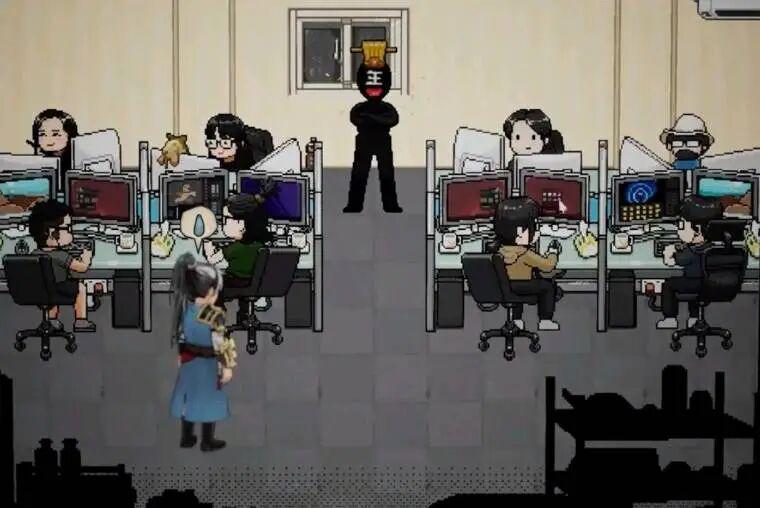
Wang Xiaoshuang: Yes. One morning before our demo was released, the “Demon King” brought it over and said, “That character jumps once right after the performance ends.” I looked at it for a long time, but I still couldn’t figure out exactly where it jumped, how it jumped, or when it jumped.
Then, until our city pointed out that if you stare at this character’s feet, he actually does jump about 335 pixels.So all of us stared at his feet—and it was true. Before Cai Maowang pointed it out, no one had noticed. But once he mentioned it, it seemed like every single one of them would jump—in every performance. That’s something that’s really stuck with me recently. Of course, we went back and reworked that part afterward.
Zhang Jiaqiang: That’s pretty much it on my end.We actually had the chapters all set from the start, but later on, to increase the intensity of the performance, we added an extra chapter to reinforce the earlier parts. Since we needed to release a demo at that time, the schedule was pretty tight—it was actually quite rushed—but after discussing it as a group, we decided to go ahead and include it anyway.
Game Teahouse: Have any player comments made a lasting impression on the team?
Cai Minghong: A player once told me that the games I’ve made have been a part of his life as he grew up. That really moved me. Since I love playing games myself—I grew up playing them—the fact that the games I’ve created can also be a part of many players’ lives as they grow up is something that truly touches me.
03
“If you’re joining this industry purely as a job,
"I'd suggest he try playing the mobile game."
Game Teahouse: What is the ratio of veteran to new colleagues on the team? Are there any differences in how you work?
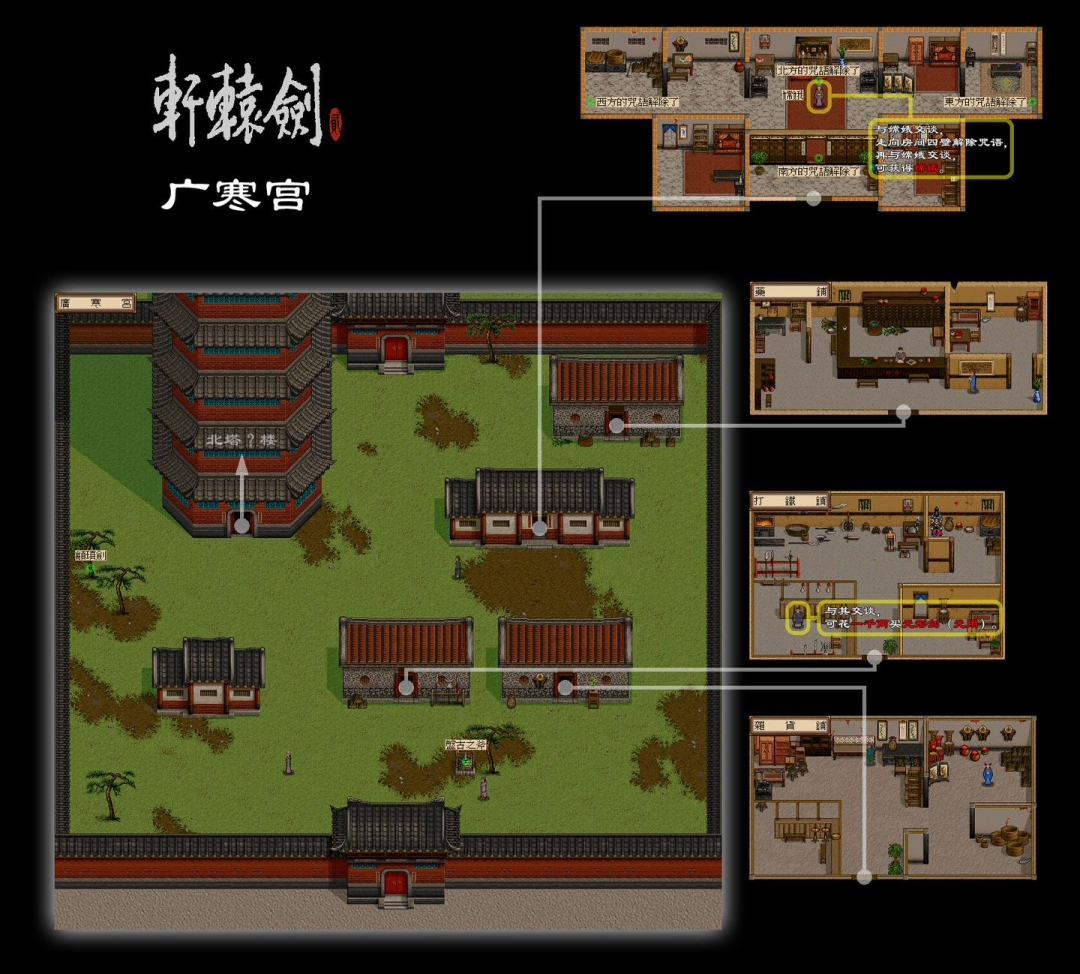
Cai Minghong: In terms of proportions, I’d say the ratio of veteran to new colleagues is about 1:3—with new colleagues making up roughly two-thirds of the team.There are definitely differences in how we work. When it comes to certain technical aspects or related areas, the veteran employees are more familiar with them. But when it comes to new development—including the use of tools and the overall feel of the game—I don’t think we can just take the same approach we used twenty or thirty years ago and apply it to today’s games, then release them for people to play.
For people today, playing this game might not require the same level of patience as it did in the past—or, to put it another way, they might not be willing to spend five hours wandering through a maze and still be exploring it. These days, games must align with the pace and controls typical of modern titles.
(Image source: "Xuanyuan Sword II" Guanghan Palace map)
A lot of this comes from our new employees, who often bring up topics for discussion and spark creative exchanges with us veteran employees.I believe that it’s only when this team can engage in such mutual exchange that we can create a great game. So within the development team, while veteran employees have more experience, new employees generally bring fresher, more contemporary ideas. By achieving the best possible blend of these two perspectives, the games we create will better align with current trends and be more likely to resonate with players.
Game Teahouse: Are there any positions in your team that are particularly difficult to fill?
Cai Minghong: It’s not easy to find the right people for any of these roles—special effects, animation, and many others. Since we’re currently developing an RPG, there are times during story sequences when we want to convey a lot of performance and emotion, so we have to be quite detailed—it’s not enough for it to just look pretty.Sometimes, when conveying a story, even a small gesture from a character—like lowering their head to match the scene—can make a big difference in the emotions it conveys.
So when it comes to the overall performance—or the dynamics, or the visual effects—we actually expect the production team not only to be technically proficient but also to be very familiar with the storyline—to know how to convey the emotions and sentiments effectively.So, in addition to technical skills, we look for people who have a genuine passion for single-player games. That way, when they join the project during development, they can get up to speed quickly. This is one of the more challenging aspects of our recruitment and screening process.
Game Teahouse: Is there a specific role dedicated to motion graphics?
Cai Minghong: Basically, we all need to participate in the discussion.
Game Teahouse: What qualities do you value most when hiring?
Cai Minghong: The most important quality we look for is a genuine passion for single-player games. When it comes to developing RPGs and similar genres, the developer must be personally committed to the project and feel that it’s worth the effort. I’ve always believed that when players enjoy a single-player game, to a certain extent—and I often tell my team this—creating single-player games is actually a form of artistic expression.You need to have passion for your own creation; only then can what you create truly resonate with players. So when we interview candidates, I always discuss this with them in detail: “Do you personally have the passion to work on this single-player game?”If you’re joining the industry purely as a job, I’d suggest you consider working on mobile games or in other areas—it might be a better fit for you than this line of work.
Game Teahouse: Now that Teacher Cai has returned to the front lines, how have his mindset and sense of responsibility toward his role changed?
Cai Minghong: I don’t think so. After all, I’ve been making games for three or four decades now, so I feel fine. I should say I’m very happy to have the opportunity to work with some old friends and new colleagues on the development of *Tianji Xing*—I consider this a truly joyful experience.I’ve been making games for three or four decades now, and I’m actually very grateful that I’m still able to be on the front lines developing games. I’m also grateful to all my colleagues on the development team for trusting me and joining me once again to collaborate on this game—I find that to be a truly fulfilling experience.
Game Teahouse: Which Parts Can You Safely Delegate to the Team, and Which Ones Still Require Your Personal Attention?
Cai Minghong: As mentioned earlier, Aqiang has been doing a great job with many aspects of the combat mechanics, so we’ll have him handle those parts.When I’m playing and find something isn’t fun, I’ll bring it up with him right away—I’ll tell him exactly what’s not working—and then I’ll leave that part to him to handle. As for the scriptwriting, Xiaoshuang—the one sitting right here next to us—has a much finer eye for detail in the plot than I do.
There are many aspects to consider. When it comes to the plot, I’ll first ask her to discuss it with the head writer, Ms. Wu Wanning. Then, as we work on the scenes, I’ll take another look to see if there are any parts where the acting could be improved, and if so, I’ll discuss them with Xiaoshuang and Director Li Peiqing.
In the early stages, Xiaoshuang helps me handle most of the story. That’s because games today are quite different from what they used to be—they’re much larger and more intricate, with a high degree of specialization. You need more time to understand the various aspects of the game, and you also need colleagues who can help shoulder more of the burden in their specific areas of expertise.
Wang Xiaoshuang: First, “Demon King” Cai decides the direction; second, “Demon King” Cai decides whether the quality meets the standards. If he feels it doesn’t meet his standards, he’ll go over every detail with us again to discuss and fine-tune it.
Game Teahouse: Mr. Cai has always been very strict about quality. Do you think he might ease up a little now?
Wang Xiaoshuang: I wasn’t very familiar with just how strict Teacher Cai used to be, since I was relatively new to the field. But when it comes to the “Tianji Xing,” there is absolutely no room for even the slightest relaxation.
Cai Minghong: As I mentioned earlier, I think making games can actually be considered a form of creative work at times. I often tell my team that making a game isn’t something that can be done in three months, half a year, or even a year.In reality, it might take us two or three years to create a game. And after spending so much time on a game, we certainly don’t want it to end up in players’ hands only to be filled with regret—thinking, “Oh, why did it turn out this way?”
I think that since we’ve spent so much time developing this game, I want us to make sure it’s the best we can possibly make at this point before we release it to players.I hope that every team member involved in *Tianji Xing* will be able to tell their friends—no matter how much time has passed—that they’re proud to have been part of the game’s development. I believe this is a very important philosophy for us as game developers.
Game Teahouse: Over the years, have any of the design principles you used to adhere to been overturned?
Cai Minghong: Actually, I’ve always felt that the environment is constantly changing; you can’t just keep using the same approach from decades ago. The gameplay, the feel, the pacing, and the storytelling methods are all different now. I love playing games, so even when I’m making them, I usually spend most of my time playing them.
So I play a lot of games, and basically, I feel like my ideas are constantly changing. I don’t have any set rules—I don’t think it has to be this way, or that way, or any particular way. The most important thing is how to make a game that’s fun to play.
Game Teahouse: What game have you played the most in recent years?
Cai Minghong: I play a lot of games—a whole lot. As long as people say a game is fun, I’ll try them all. I have very vivid memories of every single one. Plus, I’m the kind of person who basically plays through every game completely—meaning, if there’s a hidden “New Game+” mode, for example, I’ll make sure to finish it before moving on to the next one.
I don't stop playing halfway through a game—if I decide to play it. So basically, every game I've ever finished has left a deep impression on me. I collect everything, find everything I can, and take on every boss I can challenge.
Game Teahouse: Will it still be mainly RPGs? Will you also try your hand at strategy and casual games?
Cai Minghong: Basically, if I think a game looks fun, I’ll give it a try. All my games have taught me something, because I’ve played every game that’s been the talk of the town, so it’s hard for me to give a specific answer to this question.
Game Teahouse: Are there any new games that have caught your team’s eye and that you’d like to incorporate into your own game?
Cai Minghong: When I was designing *Tianji Xing*, I told my team that what I wanted most from the game I was creating was for players to—well, the most important thing to me was for them to be able to finish the game. If they can finish my game, I think that would be the most moving thing for the development team.
So whenever I play a game, whenever possible, I make sure to explore the entire game from start to finish. Then I try to figure out why the game designers chose to design it this way—why did they design it this way to create a certain experience or interaction for players?
To a certain extent, I also hope that other players will approach my games in this way. That’s why, when I play other people’s games, I always take this approach as well. So after finishing each game, I always express my deepest respect to the development team and reflect on their overall design philosophy.
Game Teahouse: What are the criteria for a good game in the eyes of Teacher Wang and Teacher Aqiang?
Wang Xiaoshuang: I think the most important thing is that you enjoy the testing process itself; that’s when you’ll feel that this approach has been successful. For example, when I’m testing, since I’m primarily responsible for the music, storyline, and performance aspects, most of my work should actually be focused on those areas.
But sometimes I get so absorbed in the combat experience designed by Teacher Aqiang that I forget to use the GM command to skip the battle. When that happens, I’ll tell Aqiang, “I think this is a really great way to play,” or “I think this is a really great system.”
Testing isn't just about following a workflow—it's about enjoying the game yourself.
Zhang Jiaqiang: When I’m evaluating a game, I tend to focus on what the core emphasis of the game actually is. For example, when I discuss the storyline with Xiaoshuang, I’ll ask her what the most important point of this scene is and what she’s trying to convey.Then we’d offer suggestions, such as whether we should emphasize that aspect more in the presentation.
For example, as we just discussed regarding the combat system, I want to make fast-paced gameplay the core focus. So my thinking has always revolved around this—I want players to spend their time thinking through their decisions, rather than executing them. Rich strategic gameplay paired with simple, quick controls—that’s the core concept behind my design for the combat system.
Game Teahouse: If *Tianji Xing* is well-received by the market, will you release DLC or a sequel next?
Cai Minghong: I haven’t thought that far ahead yet. We’re currently working on the mid-to-late stages of the game, and our top priority right now is figuring out how to polish this game to perfection. As for the other aspects—just like the question you asked earlier—our approach is to treat this as our final installment and do our absolute best to make it the best it can be.Next, it depends on whether we’ve successfully conveyed the fun elements and the warmth of our game to the players. If we have, then we’ll start thinking about what comes next.
原创文章,作者:游茶妹儿,禁止转载:https://youxichaguan.com/en/archives/221030