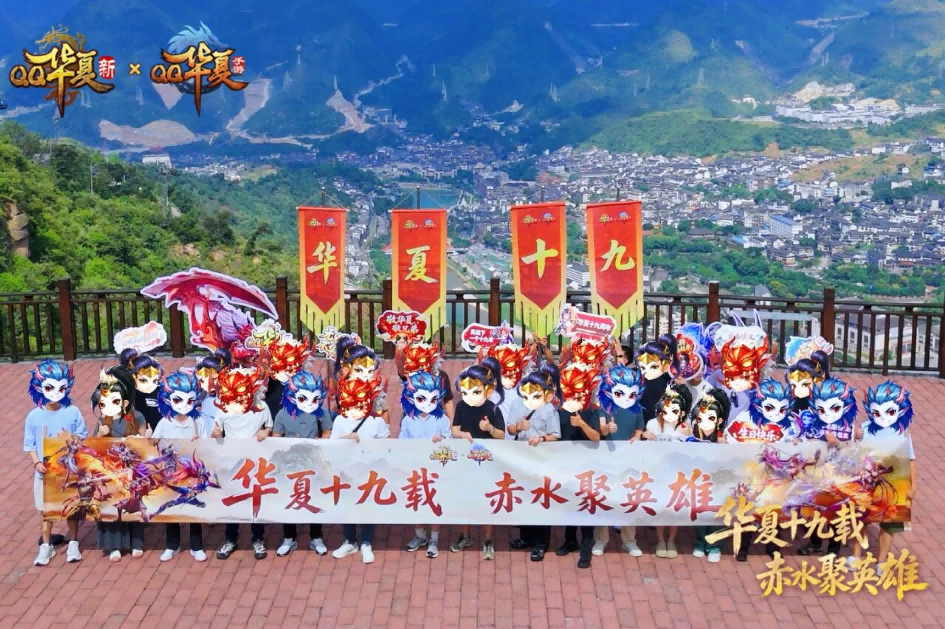
On the third day of the Maotai Town event, on the banks of the Chishui River, a fellow gamer who had traveled a long way clinked glasses with me,He told me he’d been playing the PC version on and off for no less than ten years. Earlier this year, he switched back to the mobile version and has no intention of quitting this time. When he saw the game was hosting an event, he signed up on his own and even flew all the way from Yunnan with a layover to attend.
He is not the only one. At the players’ dinner party, some drove over a thousand kilometers to attend, while others, despite their fear of flying, mustered the courage to travel a thousand kilometers to make it. More than thirty people gathered from all corners of the country.
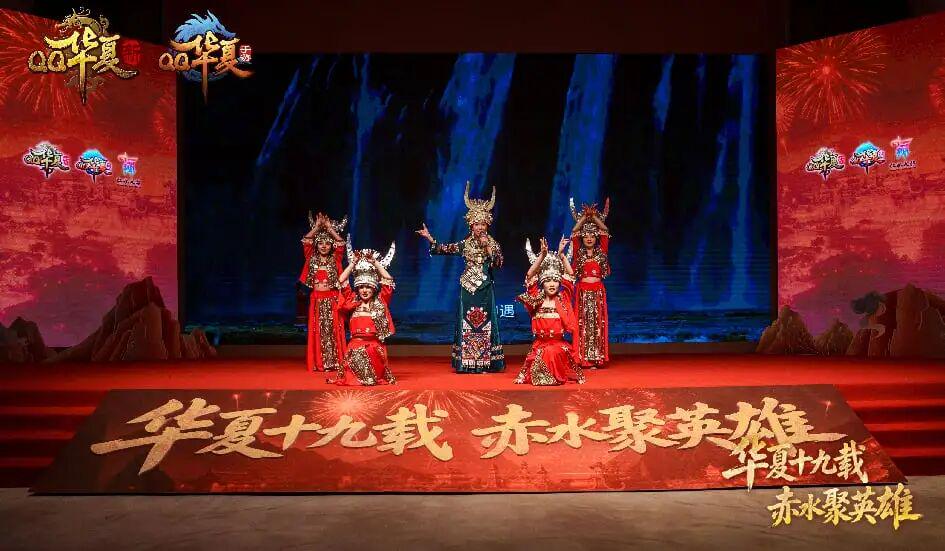
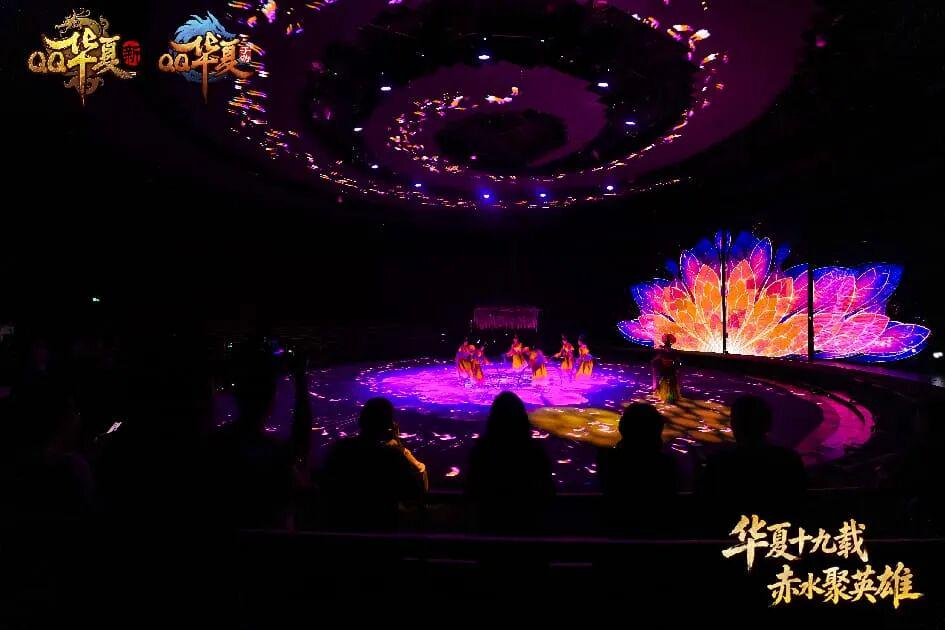
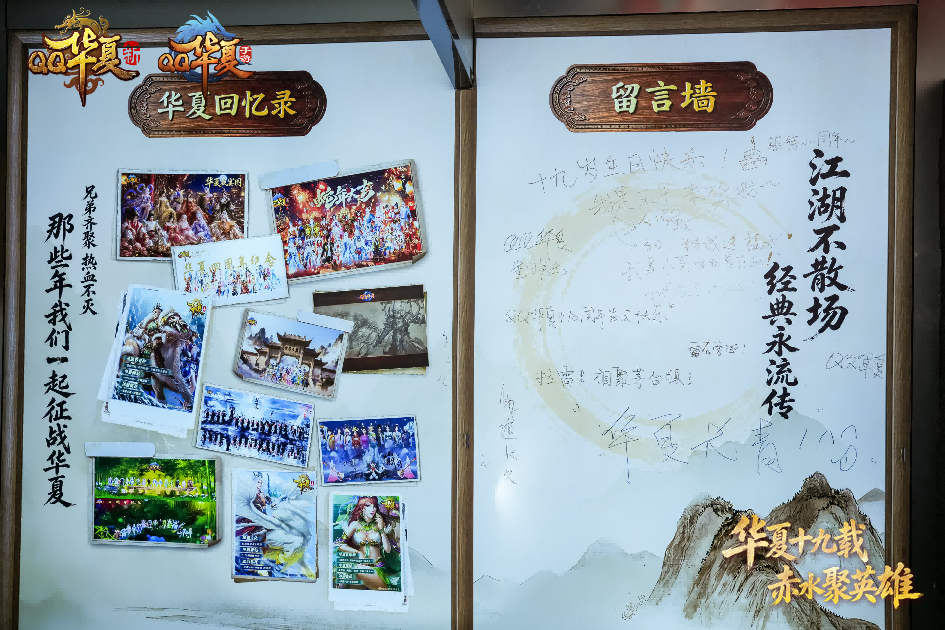
This is the scene from the QQ Huaxia 19th Anniversary Player Meetup. The project team organized a three-day itinerary for the more than 30 players who signed up, including face-to-face sessions with game designers, a tour of the Maotai Distillery, an exhibition match at an internet café, a Miao silver crafting workshop, and a guided retelling of the “Four Crossings of the Chishui River.”
It’s actually quite rare in the industry for an MMORPG—one that has been running for 19 years on PC and 8 years on mobile—to still be able to bring people together in this way in real life and maintain such vitality and player engagement.
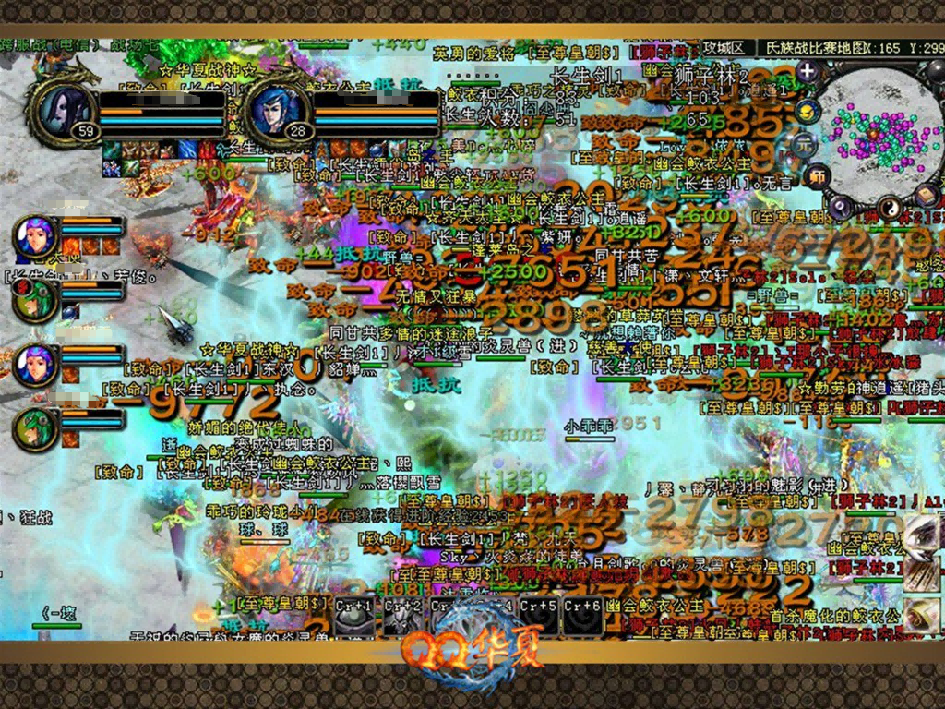
Back in the day, *QQ Huaxia* was renowned for its innovative gameplay:Open-world PvP with loot drops, free-for-all battles between players with differently colored names, clan castle sieges, and battles over open-world bosses all form classic memories for veteran players. Remarkably, the game also maintained a balance between PvE and PvP, distinguishing between different scenarios through PvP modes such as Normal, Good vs. Evil, Team, and Balanced, ensuring that players of all types could enjoy the experience.
Today, amid the impact of mobile games and the resurgence of PC games—a market that has experienced its ups and downs—*QQ Huaxia* continues to adapt rapidly to market trends and player needs, introducing features such as Level 100 servers, themed new servers, load-reduction designs, and cross-server integration. These initiatives have revitalized the game and successfully brought back a large number of former players.
It was precisely thanks to this invitation to participate in the event that Game Teahouse observed the unique ecosystem that has developed during the long-term operation of *QQ Huaxia*—a concept the project team refers to as “loyalty and camaraderie.”
The most obvious sign of this is the players’ spontaneity.During the tour, it’s common to see players in small groups of two or three gathered around designers to discuss game details—ranging from the number of inventory slots and in-game currency to resource pricing. Often, players and designers work together to break down problems without any sense of wariness toward one another. This level of involvement makes players feel more like long-term partners than mere passing visitors to the game world.
During face-to-face discussions with players, Nana, the project lead for *QQ Huaxia*, shared an insight: the social ecosystem of an MMO is a virtual social system that mirrors the real world. Players’ roles extend beyond the gaming experience itself to include various social roles, fostering more realistic connections that lead players to develop genuine emotions—and even a sense of responsibility—toward both other players and the game world.
This also reflects the situation of core gamers—whose real-life identities are already established and whose time is limited. In addition to the thrill of feedback, they also seek stable, long-term social relationships; indeed, for this group of gamers, the line between the online and offline worlds has become blurred.
To foster this sense of connection with players, *QQ Huaxia* has adopted an approach that fully acknowledges players’ agency and meticulously refines the game to meet the needs of long-time players.From May to July 2026, the mobile game development team distributed four rounds of surveys, receiving nearly 10,000 responses and implementing 15 version updates; since the beginning of the year, the PC game team has held four online live-streamed sessions where developers engaged directly with players, incorporating approximately 220 pieces of player feedback into the game—thereby allowing players to participate in shaping the game’s direction.
Today, while the graphics in *QQ Huaxia* may not stand out among the blockbusters powered by various next-generation engines, it still has an irreplaceable competitive advantage: its player base and the bonds of loyalty and trust they’ve built over time.
In the MMO industry, sustaining long-term success and effectively cultivating the existing user base are topics that have long been hotly debated but are difficult to address concretely. “QQ Huaxia,” however, has spent 19 years providing its own answer. After all, the social networks and emotional connections built with existing users are the only resources that do not require repeat purchases.
Based on these observations, Game Teahouse held an in-depth conversation with the project lead of *QQ Huaxia*, covering topics ranging from operational decisions made over the past 19 years to their understanding of the concept of “loyalty and camaraderie.” The following is an edited transcript of the conversation; some questions were supplemented with answers from the project team’s designers.
01
Finding a Foundation in a Changing Market
Game Teahouse: The average lifespan of domestic MMOs is typically between 3 and 5 years, and very few titles manage to stay in operation for more than 10 years. QQ Huaxia is now in its 19th year. Looking back from this point in time, what do you think has been the single most critical decision or commitment that has allowed this game to remain active to this day?
[Project Lead]: Our most fundamental commitment has been to treat QQ Huaxia as an “IP” rather than “just a product” from the very beginning. MMOs—especially stat-based MMOs—can quickly become outdated with each version update and be replaced by the next title;We have chosen a long-term approach, continuously refining our content with a spirit of craftsmanship and fostering a mutually enriching relationship built on genuine bonds with our players.
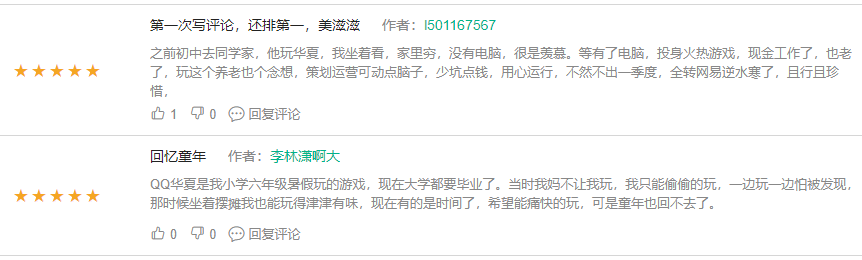
The two characters “Huaxia” carry profound cultural significance, which motivates us to develop it into a long-term IP—a “century-old institution”—and even to extend the IP’s vitality through new projects in the future.The PC version is now in its 19th year, and the mobile version has been around for 8 years. It’s truly rare for an MMO to last this long, but what’s even more remarkable is the team behind it—who have stood by it day in and day out for over a decade—as well as the players who have remained loyal and devoted, making the game an integral part of their lives.
Game Teahouse: The past 19 years have spanned the golden age of PC gaming, the growth phase of mobile gaming, and the current era of multi-platform coexistence. How have the project teams’ criteria for deciding “what to do and what not to do” evolved during these different phases?
[Project Lead]: The bottom line of “what we can’t do” has actually never changed; what has changed are the “adjustments for the times” made at each stage based on user needs and product maturity. There are several principles we’ve always adhered to. The first is balance among classes. In products like this, it’s inherent that different roles require varying amounts of time and resources, which leads to disparities in character progression.Once this gap reaches a certain point, players with lower combat power will lose the enjoyment of the battlefield. However, since everyone shares the same social environment and participates in the same battles, we must ensure that even players with lower combat power experience a basic sense of combat; otherwise, they won’t stick around."
Second is the balance within the ecosystem; players with high and low combat power should form a healthy "symbiotic relationship," with the leader supporting the clan and other players contributing resources, so that everyone can build positive social relationships through the flow of resources.
Game Teahouse: With 19 years of PC game operation and 8 years of mobile game operation, what is the relationship between these two platforms in current operations? In terms of player expectations, what similarities and differences exist between mobile players and long-time PC players? How does the project team address the differences and commonalities between the two platforms?
[Project Lead]: These are two independently operated products under the same IP.Many players have said, “I can’t get used to other games—I’ll only ever play Huaxia.” They may switch back and forth between the PC and mobile versions; when real life gets busy, they take a break, only to return after a while, but they’ve always kept an eye on the game’s content and their friends’ experiences.In terms of commonalities, the core “passionate PvP” mechanic remains unchanged; in terms of differences, the PC version leans toward pure PvP, features dozens of skills, and relies on keyboard and mouse controls, while the mobile version is more optimized for on-the-go play, offers richer PvE content, and features more complex systems.
The scale of social interaction has also shrunk over time—from the large-scale team battles of 100 players in the early days, to mobile games with dozens of players, and finally to the Level 100 servers we launched last year, which feature a leaner group of perhaps 20 to 30 players.To accommodate the varying time commitments of users across different eras, we’ve implemented a “multi-version on a single platform” approach for both PC and mobile games, allowing different player communities to find an experience that suits them. At the same time, we’re continuously lowering the barriers to returning to the game, giving veteran players more options while making it seamless for them to recover their accounts and reconnect with old friends.
Game Teahouse: What role do unique system designs—such as the Level 100 server in mobile games—play in today’s product lifecycle? What needs of which player segments do they address? How do these “return to classic gameplay” updates affect player enthusiasm and long-term engagement?
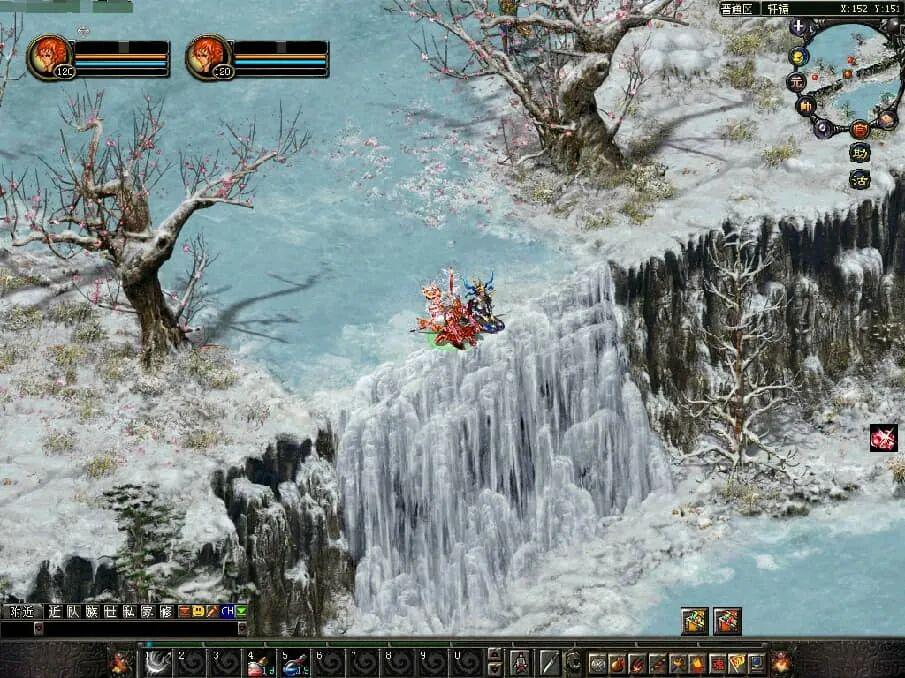
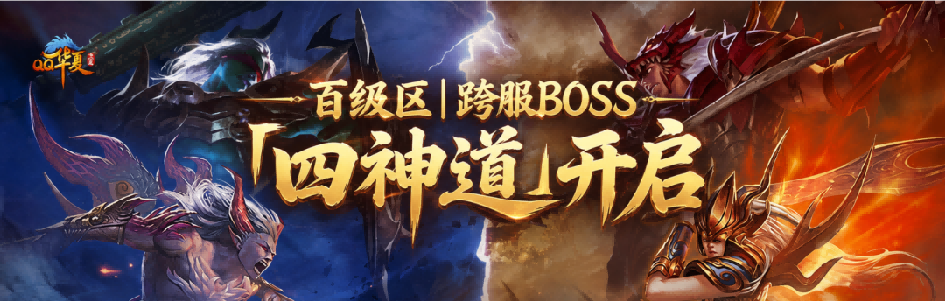
[Project Lead]: A "Level 100 Server" for mobile games can be understood as "starting at Level 100 right away." Players don’t need to start by leveling up; they can reach the max level in half a month and jump straight into the core gameplay.Its system design is very restrained, with a streamlined progression curve, because Chinese players have only one core demand: “intense PvP, fighting, and loot drops”—it’s ingrained in their very bones.
By removing unnecessary baggage from Level 100 servers in mobile games, veteran players can rediscover the authentic, uncluttered fun of the game, which significantly boosts player retention and brings back former players.Mechanics such as Frozen Gold, Guardian Spirits, and the City War Treasure Vault, on the other hand, safeguard the long-term ecosystem from both economic and social perspectives, ensuring that “looted items retain value and battles between brothers (PvP) can take place,” all in service of the ever-present core focus: hardcore PvP.
PC games feature a more open, free-market economy, where the value of equipment primarily comes from drops in the wild and transactions between players. Over the past 19 years, this has been achieved by continuously monitoring prices and the money supply through data, and dynamically regulating the three aspects of “production, consumption, and circulation”;Mobile games, on the other hand, employ more precise adjustments within independent economic environments—such as level-100 servers—and use rules to channel scarce resources into “healthy circulation” pathways.For example, in the Clan Torch Platform, rare materials circulate only within the clan; once claimed, they must be used within 24 hours and cannot be listed for sale. This ensures that “benefits stay within the clan,” strengthens mutual aid among clan members, and prevents rare materials from being endlessly speculated upon in external markets, which could disrupt overall prices.
Looking ahead, the economic refinement strategy for the Level 100 tier in mobile games centers on “circulation and symbiosis”: fully decomposing the eight tiers of crafting materials to build a self-sustaining trading ecosystem among players, allowing resources to flow naturally so that both seasoned players and newcomers can find their own pace. Behind this lies a closed-loop system of “listening to feedback and then making adjustments”—not just making decisions on a whim.From May to August of this year alone, the QQ Huaxia mobile game underwent 15 updates and 777 adjustments based on player feedback;Player feedback channels are a regular part of our operations: from May to August, we collected 704 pieces of feedback from core players through one-on-one interactions, 240 biweekly reports from community moderators, nearly 10,000 in-game survey responses (across four rounds), and 203 pieces of feedback from an offline meetup in Quanzhou—over 90% of which has been implemented.It is precisely because of this day-in, day-out data collection that we can confidently say the economic system is “dynamically regulated” rather than based on experience alone.
02
The microphone is in the player's hand
Game Teahouse: “Face-to-Face with Game Designers” is currently held almost once a month. How did this frequency come about? From the project team’s perspective, is the investment in staffing, scheduling, and topic preparation for a fixed monthly session worth it? How does the live-stream format differ from traditional forums and surveys?
[Project Lead]: I’d like to clarify something here: for our “Face-to-Face with Designers” events, we actually operate on two tracks—online and offline.We’ve been holding in-person meetups for eight years now—two sessions annually, each lasting about 3–4 days, with a scale similar to this event in Maotai Town. At each session, we receive three to four hundred suggestions from players, which we compile into a list on the spot. Once back at the office, we immediately prioritize and categorize them, and we consistently update players on our progress through game updates.The online “Face-to-Face with Designers” livestreams currently take place about twice a month and are ongoing.
The systems and gameplay complexity of MMOs far exceed those of casual games, so we must listen to player feedback continuously and frequently. Is it worth it? Absolutely.Some colleagues find it exhausting—spending so much time with players and holding meetings late into the night even on evenings when we’re traveling for events. But the most scarce commodity in long-term, emotionally engaging products is “trust.” By facing players head-on, accepting criticism, not shying from the spotlight, and resolving issues as they arise, we’re opening a direct channel of trust.When players say, “We’ve finally found a home—we’re not children left to fend for ourselves,” those words truly move the team. We could simply collect feedback through impersonal surveys, but we don’t want that cold, impersonal approach—we want our long-term commitment to be recognized.
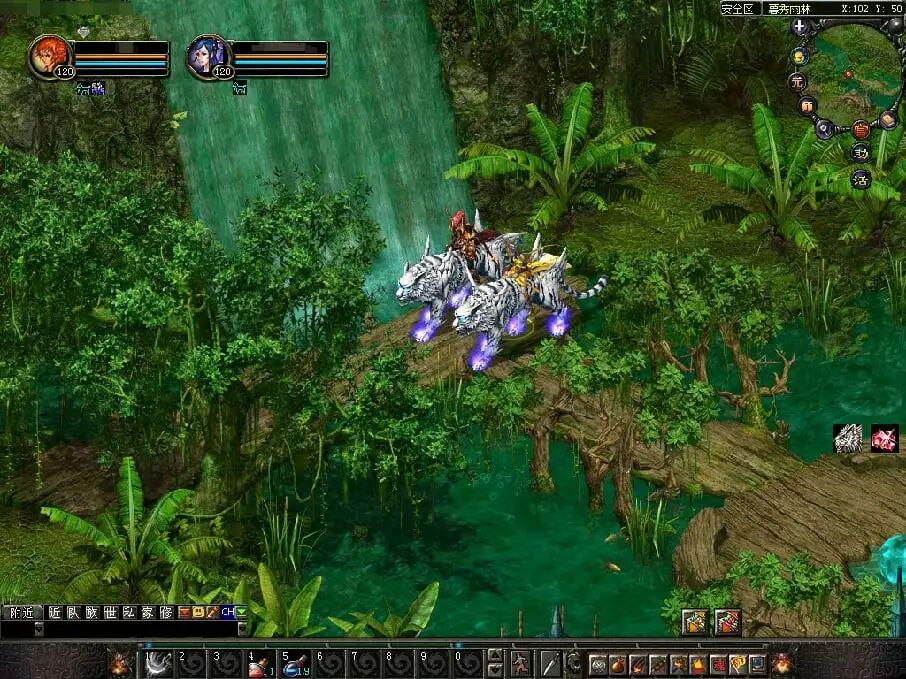
Game Teahouse: Could you share one or two specific examples of questions or suggestions that players raised during “Face-to-Face with the Design Team” sessions or meet-and-greets that actually changed the direction of a specific update, the design of game mechanics, or even led to the launch or cancellation of a feature? What was the entire process from when the suggestion was made to when it was implemented?
[Project Lead]: The most typical example is the mobile game “Time-Space Rift,” which was co-created with players during our meetup in Xi’an.In PvP games, players need opponents of equal skill levels. In the past, when players couldn’t find suitable opponents, they would request server merges. However, in niche hardcore game segments, there isn’t a steady stream of new players to support sustainable server merges, so merged servers often become “dead servers” within a few weeks.
At the time, players were constantly discussing this both in-game and privately, proposing a “cross-server parallel merger” gameplay feature: initially organized by server, and later by clan, players from different servers would periodically be merged to battle together. After two or three weeks, they would be separated, and a new set of opponents would be introduced in the next round. With this continuous rotation, players would always have new experiences.Our role was that of rule-makers, providing the framework for gameplay, but the resulting martial arts world—with its loves, hates, and alliances—was shaped entirely by the players themselves. Once this feature was implemented, the constantly changing opponents brought a sense of novelty, while the stable social relationships enhanced retention. It stands as a benchmark example of players collectively shaping the direction of the game’s updates.
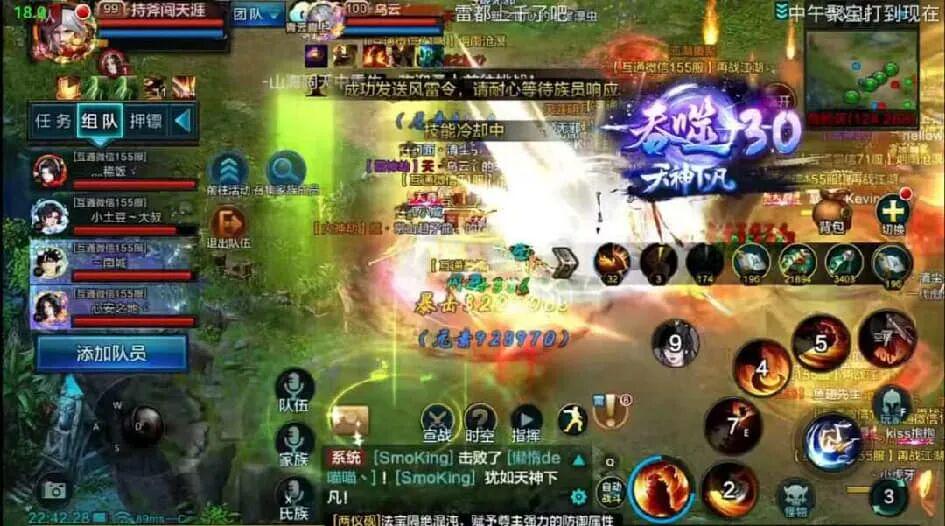
Game Teahouse: What is the approximate volume of player feedback received each month from various channels? How does the project team prioritize this feedback? In particular, when player feedback directly conflicts with the design team’s established plans, what is the approach to final negotiations and resolution?
[Project Lead]: The volume is enormous—we receive hundreds of pieces of feedback from a single in-person event, and online channels generate a constant, daily influx.Our approach is to prioritize feedback based on “importance and urgency.” Items that are both important and urgent are immediately scheduled for weekly updates; those that are important but not urgent are incorporated into major quarterly releases; and the rest are placed in a long-term observation pool. After compiling this data, we’ll announce the direction and plans for adjustments to users, ensuring a closed-loop process from feedback to implementation.
When player feedback conflicts with our established plans, we have an internal yardstick: Will this change ultimately benefit or harm users in the long run? If a short-term solution would undermine long-term user value, we prioritize the long-term over the short-term.This is also why we must maintain continuous, in-depth communication with players—because the relationship between product content and people is constantly evolving. Looking back two years from now, what was once considered the “right decision” may need to be adjusted, so we must remain responsive.
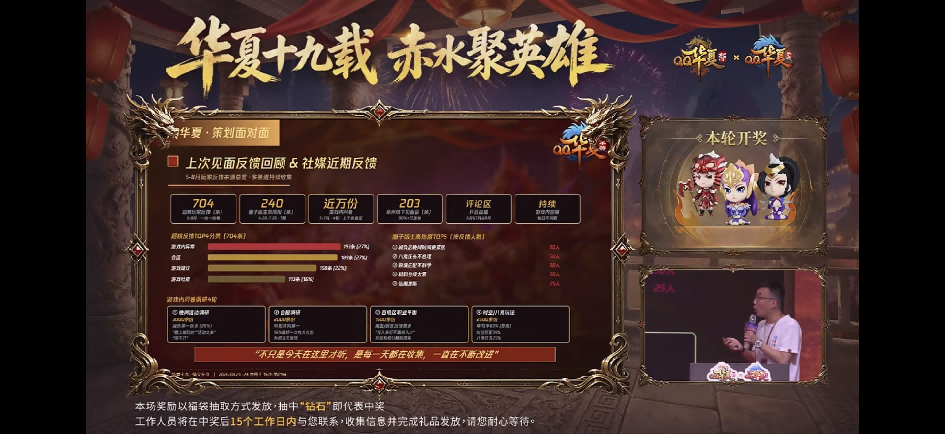
Game Teahouse: From the perspective of the project team, how much does this system contribute to the team’s morale and confidence in the product?
[Project Lead]: It makes a huge difference. The impact on combat activity and monetization in MMOs is clearly visible in the data. When players become more active through co-creation features, it naturally drives spending and revitalizes the game ecosystem, which provides the team with strong positive feedback.More importantly, it’s about mindset. Our team maintains a very open and inclusive attitude; when players propose ideas, if we assess that the “benefits outweigh the drawbacks,” we’re willing to try them out and implement the suggestions that players truly need. This “putting users first” isn’t just a slogan—it’s a belief that has been repeatedly validated by game mechanics and player feedback.
03
Friendship and loyalty only count when you meet in person.
Game Teahouse: QQ Huaxia has established a tradition of regular player meetups, from the hardcore player meetup in Xishuangbanna and the “Wind Rises in Citong” event in Quanzhou to this latest one in Maotai Town. From the project team’s perspective, what role do in-person meetups play within the overall product operations system? What issues do they address that cannot be resolved online?For an MMO that has been in operation for 19 years, what is the irreplaceable value of in-person meetups?
[Project Lead]: The goal is to serve as a “trust anchor” that bridges online connections to in-person meetings. No matter how efficient online communication may be, it still lacks two key elements: a sense of authenticity and a sense of ceremony.At every meet-and-greet event, our colleagues take great care to perfect every detail, demonstrating Tencent Games’ user-centric approach toward players. For the project team, this allows players to see that we are a group of humble, sincere people who are open to constructive criticism.
Dozens of players sign up for each event, and our core players—who serve as key opinion leaders (KOLs)—help amplify word-of-mouth, which spreads throughout the entire gaming community. This approach addresses the need to build trust through “face-to-face interactions with real people”—something the online world can never provide. This is irreplaceable, and it’s the core reason we remain committed to this endeavor.
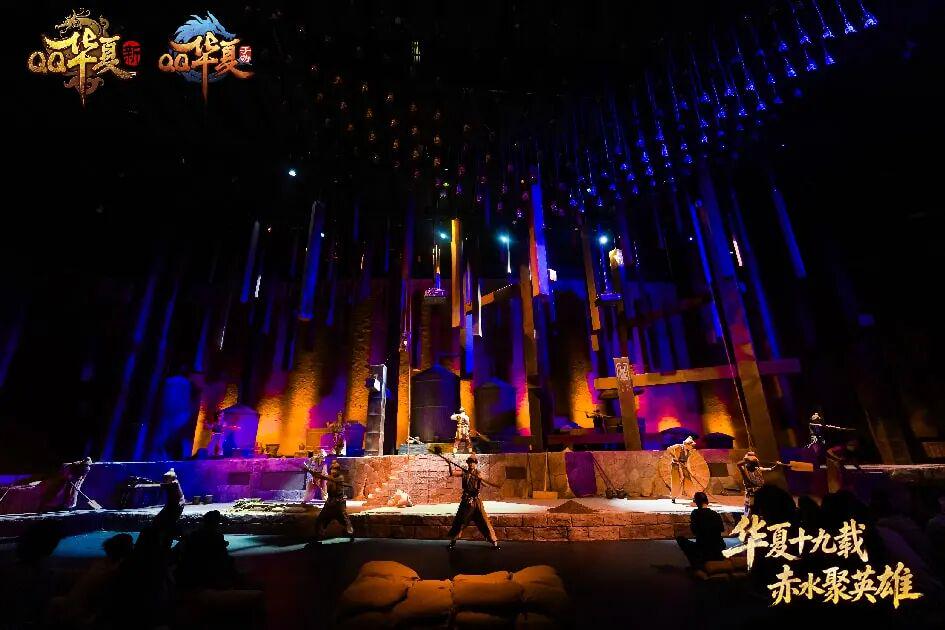
Game Teahouse: From Xishuangbanna (nature, ethnic groups) to Quanzhou (the Maritime Silk Road, the ancient city) to Maotai Town (wine culture, Miao intangible cultural heritage)—what is the underlying logic behind these location choices? How do they align with the game’s narrative framework and resonate with players’ emotions? After each event, how does the project team evaluate whether a meetup was “successful”?
[Project Leader]: The selection of each stop is rooted in the concept of “cultural depth,” as Chinese culture emphasizes national traditions and loyalty, and the setting is the grand “Chinese martial arts world.”For example, among the many locations chosen for these events, Xishuangbanna exudes a natural ethnic charm; Xi’an embodies the grandeur of Chang’an; Quanzhou is an ancient city on the Maritime Silk Road; and Maotai Town blends wine culture with the intangible cultural heritage of Miao silverwork—all are places capable of “carrying emotions and stories.”

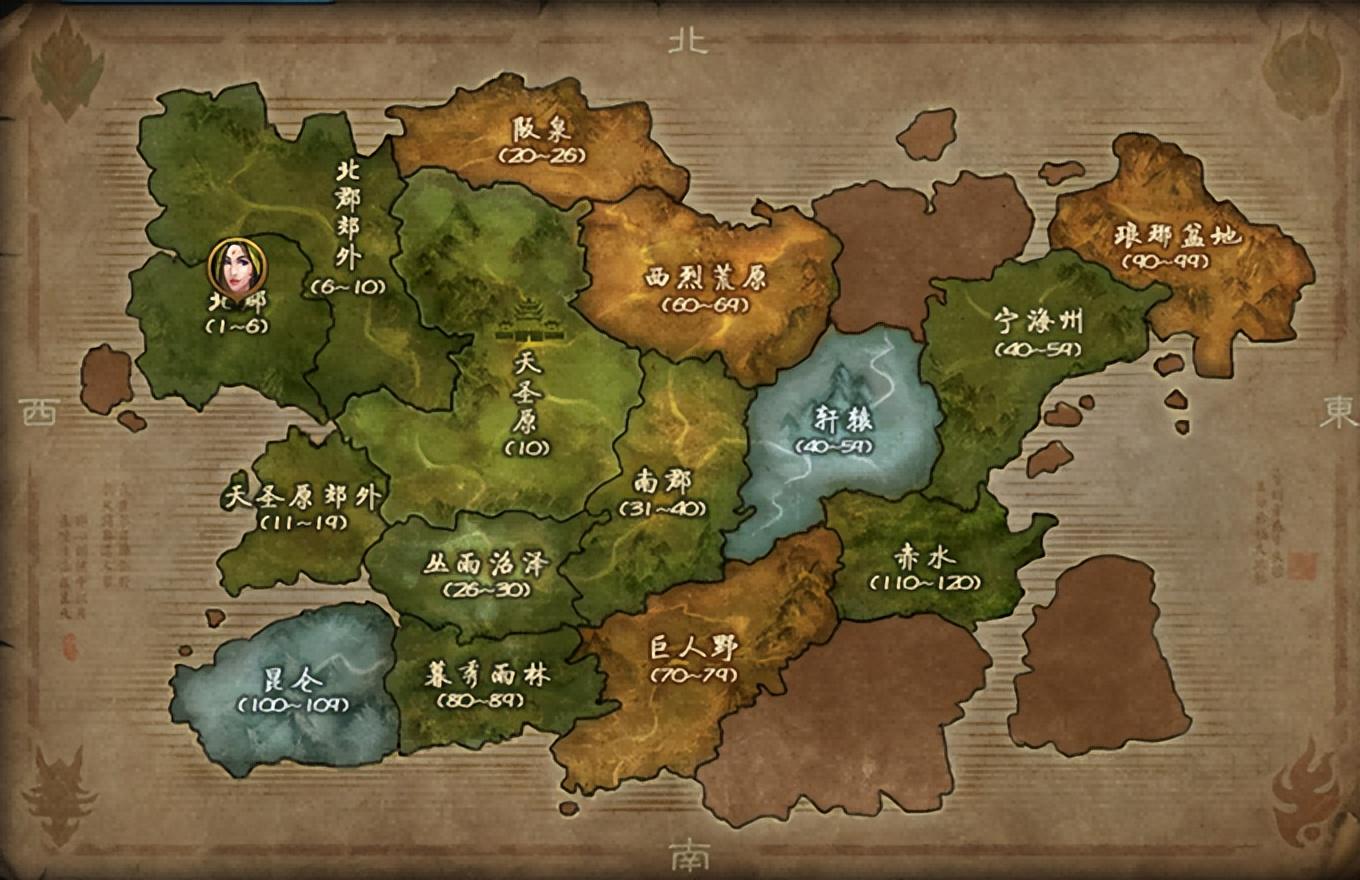
Take Chishui as an example: it is not only a core map that players visit daily in both the PC and mobile versions of the game, but it has also historically been a gathering place for heroes, naturally aligning with the spirit of the heroes of Huaxia. In our updates over the years, many locations have been inspired by real-world settings, transporting players to these places so they can authentically experience the cultural stories and historical significance behind them.We evaluate success based on three dimensions: first, the on-site atmosphere and player satisfaction (we conduct a brief follow-up survey after each event); second, the game suggestions we collect; and third, the positive impact on in-game activity, battlefield performance, and monetization. If all three dimensions show positive results, it’s an event that offers great value for money and is worth continuing.
Game Teahouse: This meetup in Maotai Town attracted a large number of players who signed up voluntarily, and a significant number of veteran players ultimately attended in person. Faced with such an enthusiastic player community, how will the project team use these in-person interactions to cherish and reciprocate this camaraderie, thereby better maintaining the health of our online community?
[Project Lead]: First of all, we’re definitely going to keep doing this, and we’ll make it even more diverse. This time we went to an internet café, and if no one told them to take a break, the players could compete all night long—that kind of joy is truly touching. So internet café settings might become a standard feature of our future meetups.
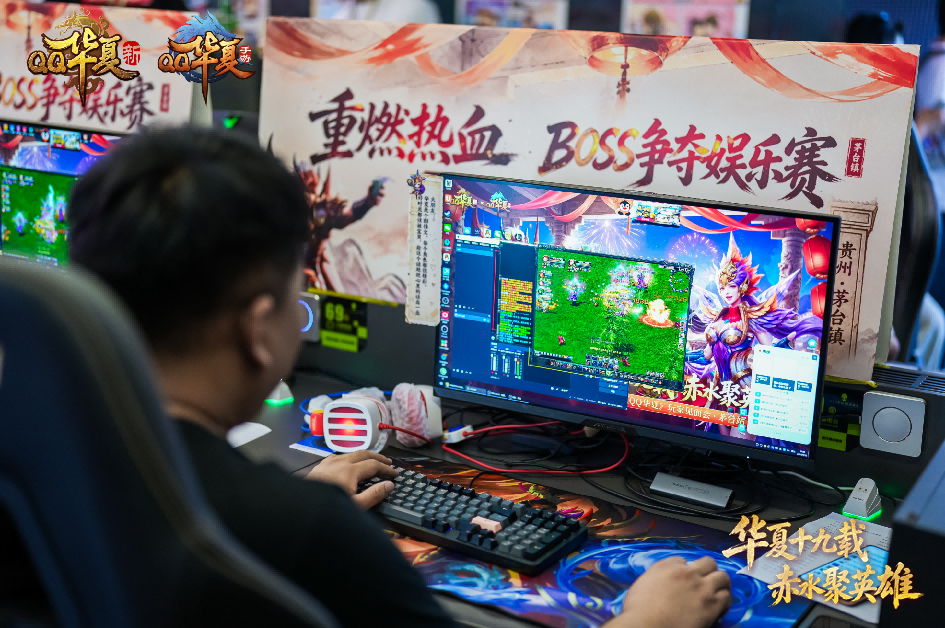
Moving forward, we’ll provide more refined services and continue to deepen our brand identity by focusing on brotherly bonds and collaborative project creation. Let me clarify one point: while we prioritize serving our core players—our “anchor of trust”—this doesn’t mean our events are limited to a specific type of player.On the contrary, the positive experiences and word-of-mouth from core players will be amplified through our private channels and community, ultimately benefiting the entire online ecosystem—including casual players and returning players. The Level 100 servers and workload-reduction features we’re simultaneously implementing are specifically designed to accommodate the time constraints and experience preferences of a broader player base.A healthy MMO is an ecosystem where both top players and casual players can enjoy themselves.
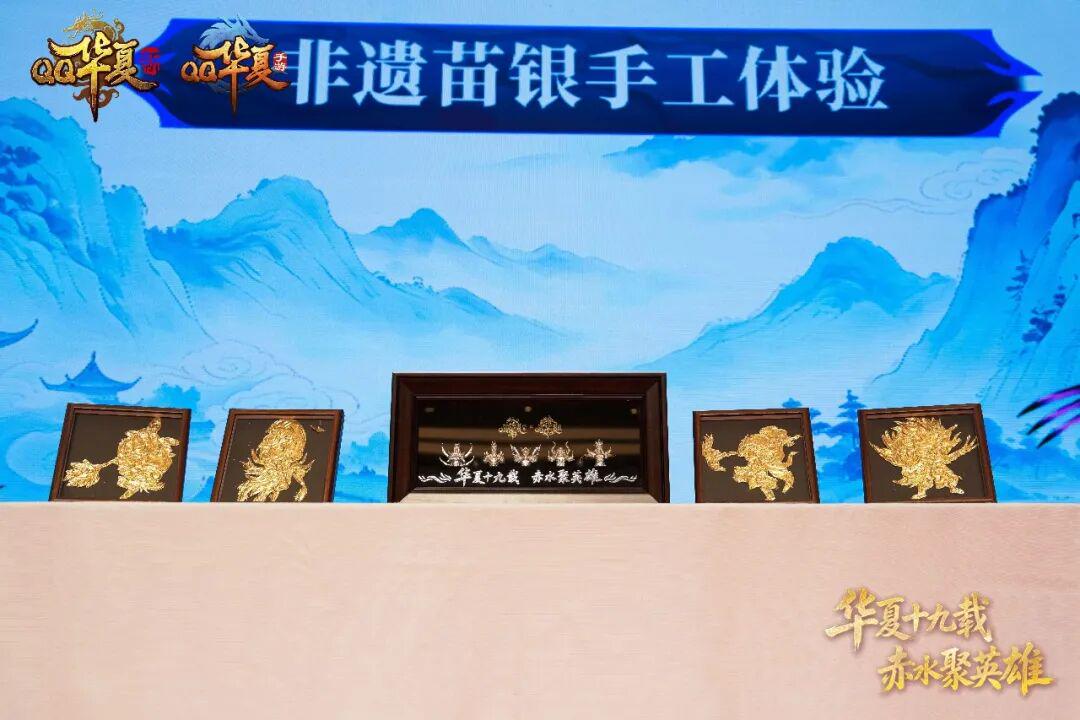
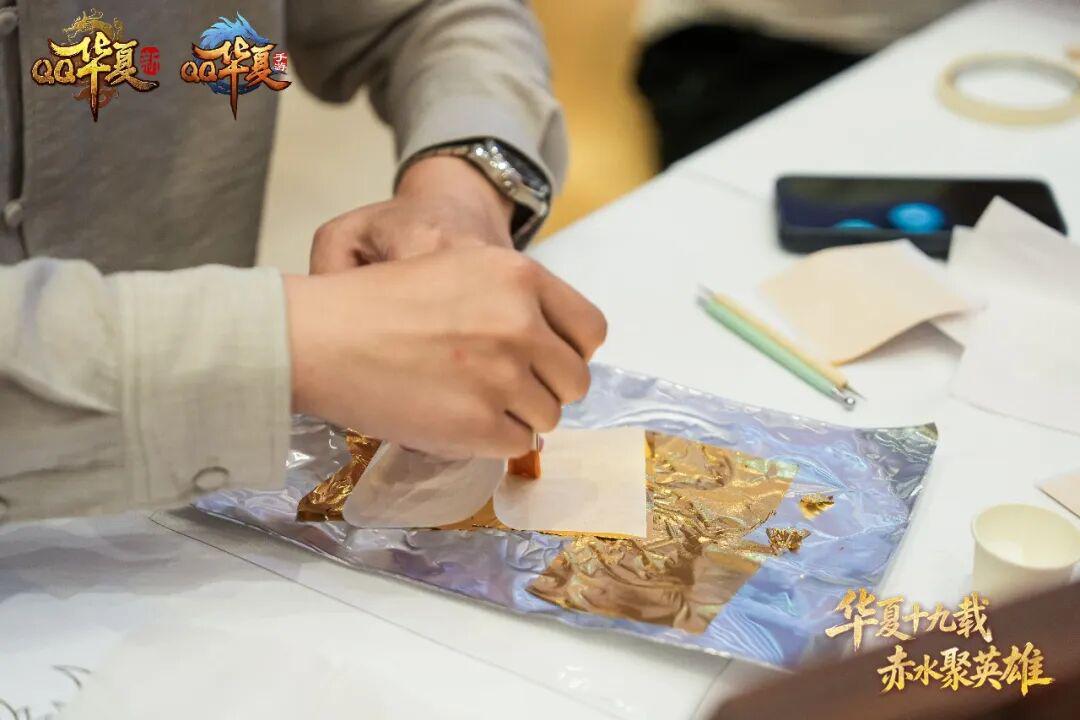
Game Teahouse: This time, the Maotai Town experience is noticeably different from previous ones—it features both wine culture (a tour of the Maotai Distillery) and intangible cultural heritage (pure silver figurines supervised by Zhang Jin, a provincial-level master of Miao silverwork, as well as hands-on Miao silver crafting workshops).QQ Huaxia has been exploring the “Intangible Cultural Heritage × Game IP” concept since 2018. With the launch of the Zhang Jin figurines this time, how did the project team consider the connection between these cultural crossovers and QQ Huaxia’s “19 Years of Friendship” theme?What value do ICH collaborations bring to the IP? And now that “ICH × Games” has become the industry norm, what sets your approach apart?
[Project Leader]: The parallel is very natural. In wine culture, there’s a saying that “the older it gets, the better it tastes”; similarly, the bond we’ve cultivated over 19 years grows stronger with time. Brotherhood is precisely “brewed bit by bit”—it’s not a superficial friendship that develops overnight, but rather one that’s built up little by little.Miao silver is a craft that involves slow, meticulous handwork passed down through generations, mirroring our own dedication to craftsmanship and heritage. We have consistently learned from our team of Miao silver masters the attitude of “meticulous refinement—better to take our time than to make a mistake.”
You could feel the atmosphere warming up right there: On the morning of the first day, everyone was still sitting there somewhat reserved, but as the event progressed, players offered more and more suggestions and shared more and more stories. This tangible warming-up process was, in itself, the best testament to the camaraderie.
For us, the essence of Intangible Cultural Heritage lies in “preservation” and “artisanal craftsmanship,” which are perfectly aligned with the long-term ethos that Huaxia has upheld for 19 years. We’ve been quietly working away—without fanfare or seeking credit—persevering bit by bit like a clear stream. The key to our differentiation lies in “genuine co-creation and genuine implementation”:This time, we invited Zhang Jin, a provincial-level Miao silverwork master, to create pure silver figurines for five characters in QQ Huaxia. If there is strong player demand, we will consider incorporating them into the game. In our previous collaboration with Fengxiang Woodblock New Year Paintings, we truly embedded Huaxia’s imagery into traditional craftsmanship and incorporated it into in-game cosmetic items such as celestial robes and mounts.Intangible cultural heritage organizations are eager to pursue mutually beneficial partnerships with us, and we remain very open to collaborating with more such groups.
04
Irreplaceable Player Time
Game Teahouse: We know that some players drove all the way from Shandong to Guizhou to attend this meetup, and others, despite their fear of flying, still made the thousand-li journey to be there. Over the course of 19 years of operation, what other player behaviors have left a lasting impression on the project team? Do these stories influence the team’s day-to-day development decisions?
[Project Leader]: There are so many stories of people traveling long distances to join us. Besides those who drove all the way from Shandong and even came despite their fear of flying, there’s also a young man born in 1998 who, despite his busy real-life schedule, picked up the PC game again after returning from abroad and resuming work.What moved me even more was a colleague on our team whose parents met through the early days of *Huaxia ONLINE*—that’s how he came to be. He watched his parents play the game from a young age, and after graduating from Xiamen University, our project team picked up his resume. I thought, “There’s no reason to turn down talent like this,”Now he’s holding his own and carrying on the bond that spans two generations in his family.
These stories serve as a constant reminder that polishing the details, ensuring stable versions, and designing rules with restraint are the most basic ways to show respect for this bond. The relationship between players and the development team is mutually enriching; what they give back to us touches our hearts and becomes part of our careers and lives.
Game Teahouse: Over the past 19 years, many players have gone from being teenagers to middle-aged adults, and some have even started families and had children. Has the development team observed any generational shifts within the core player base?How does the expression of “loyalty and camaraderie” differ between players in 2010 and those in 2026? For a game that has accompanied players through important stages of their lives, what sense of responsibility does the development team feel (or actively embrace)?
[Project Leader]: The changes are quite obvious.In the early days, players were driven purely by passion—they’d play PvP all night long. After starting families, the game became a “source of longing”; while they had less time, their attachment to the game remained, and when they returned after finishing their daily tasks, they were even more focused. We even have clan leaders who joke that now “their backs can’t take it anymore, and their shoulders and necks are killing them”—players’ needs simply change over time.
That’s why our version has consistently focused on reducing player burden and keeping pace with the times. In terms of our responsibilities, our top priority is to “strengthen the foundation”—ensuring technical stability, which is the basis for long-term engagement; secondly, we continuously adapt to user needs and changes in the ecosystem;third, we focus on “quality over quantity.” In the past, many designs were intended to keep players immersed for long periods, but now, based on players’ actual needs, we’re reducing the time commitment across both PC and mobile platforms. The development team hopes that every time a player logs into *Heroes of Huaxia*—whether for half an hour or an hour—they’ll have a joyful experience, leaving them with more energy to enjoy their real lives.We aim to be a companion, not an intruder.
Game Teahouse: The Current State of “Chinese-Style MMOs” in the Market. While themes from the *Classic of Mountains and Seas* and Chinese mythology have seen a resurgence in the past two years, the competitive landscape and user acquisition costs for Chinese-style MMOs are completely different from what they were a decade ago. As a Chinese-style MMO brand that has been around since 2019, does QQ Huaxia see more opportunities or more challenges in this cycle?Today, in what areas does QQ Huaxia’s established and irreplaceable IP value lie?
[Project Lead]: Challenges and opportunities go hand in hand. To be honest, our art style isn’t the most popular one right now, and the entire industry is facing the problem of rising customer acquisition costs; however, we’re focusing on a niche market and relying on “re-engaging” our massive existing user base, rather than going head-to-head with top-tier products in user acquisition battles.We’ll continue to bring back veteran players through content, word-of-mouth from our core player base, and a sense of community. The opportunity lies in the fact that as long as we stay the course, opportunities will always be there.
The irreplaceable value of this IP lies in this group of Huaxia heroes and the bonds of loyalty and trust they have forged over time. QQ Huaxia is a prime example of a “vivid and lifelike” game from the first generation of online games; countless core players have remained loyal to this single IP their entire lives—a level of loyalty that one-off, single-session experiences simply cannot provide.
Recently, we have also increased our efforts to communicate with players, and we’ve achieved significant results and received a lot of positive feedback. We firmly believe that the path of “player co-creation” is the right one. In the future, Huaxia will certainly continue to explore and move forward on the path of “Huaxia co-creation.” Thank you, everyone.
原创文章,作者:游茶妹儿,禁止转载:https://youxichaguan.com/en/archives/220640