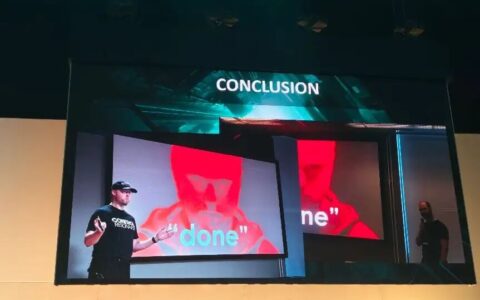
A 20-year veteran of the gaming industry, he previously served as general manager of Tencent’s Tianxing Studio, where he led the development of *QQ Tang**QQ Fantasy*, *QQ Pets*, and *Douzhan Shen*. After leaving Tencent, Liu Dan founded Chuangxiang Yuedong and developed the Youdoo Box, a gaming console designed for children aged 3 to 10, which the company defines as an “AI-powered motion-sensing growth console.”
In early August, I visited Chuangxiang Yuedong. Their office is located in the West Tower of the Skyworth Semiconductor Building. As a long-standing leader in China’s color TV industry, Skyworth not only set aside space for this new company in its own building but also invested 9 million yuan to provide hardware team support.It all began with a series of conversations between Liu Dan and He Min, President of Skyworth Digital. The two were classmates—one with expertise in hardware and the other with extensive experience in game development—and after a few discussions, they settled on a direction.
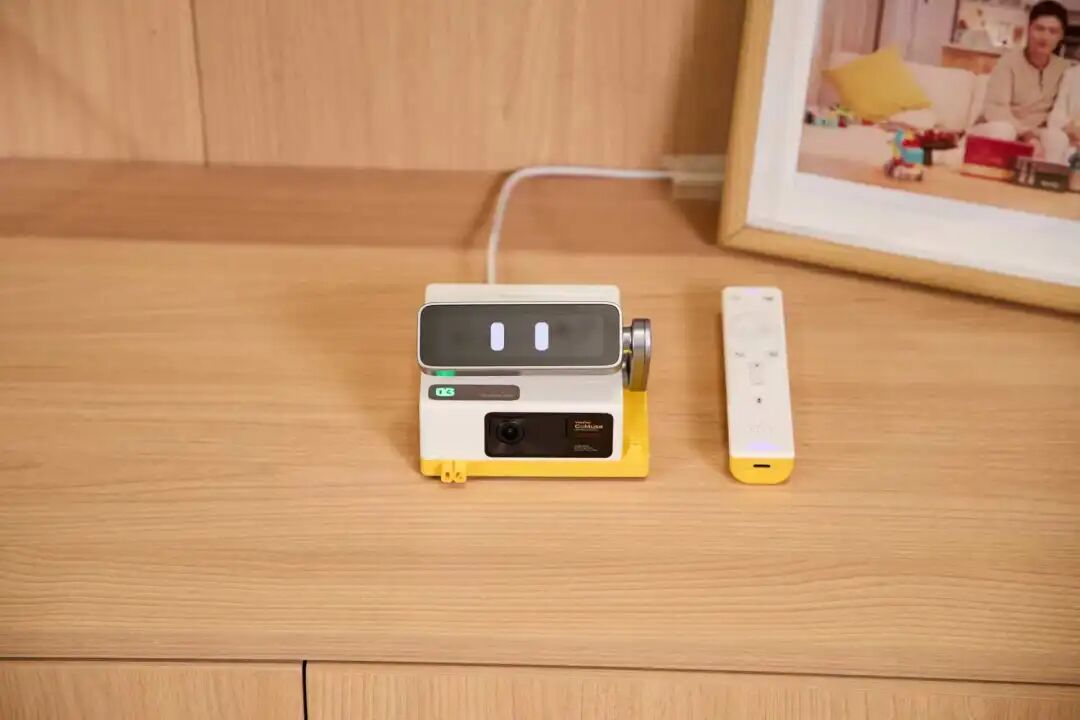
I was led into the product experience room. The room faced a large TV, with a yellow sofa placed to the side—it was set up like a family living room. The staff member brought out the Youdoo Box. I’d seen unboxing videos online and expected it to be a heavy device, but the actual product was much smaller than I’d imagined—it fit right in the palm of my hand.When the TV turned on, the Youdoo Box booted up as well. The arm on the side lifted, and two small dots on it lit up like eyes.
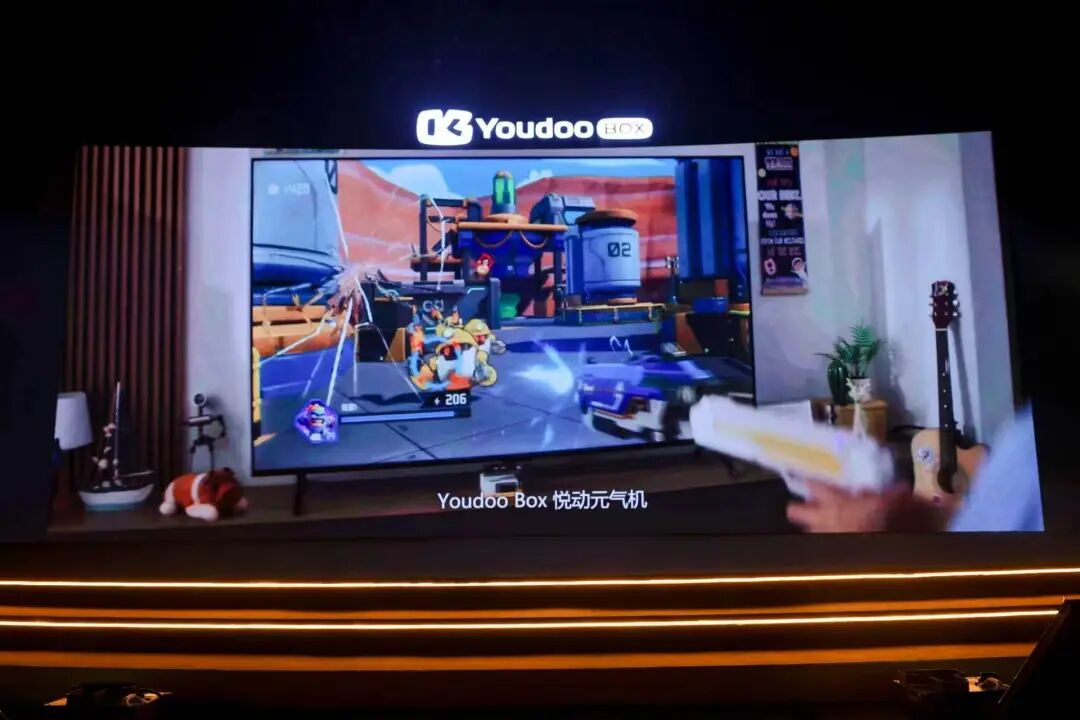
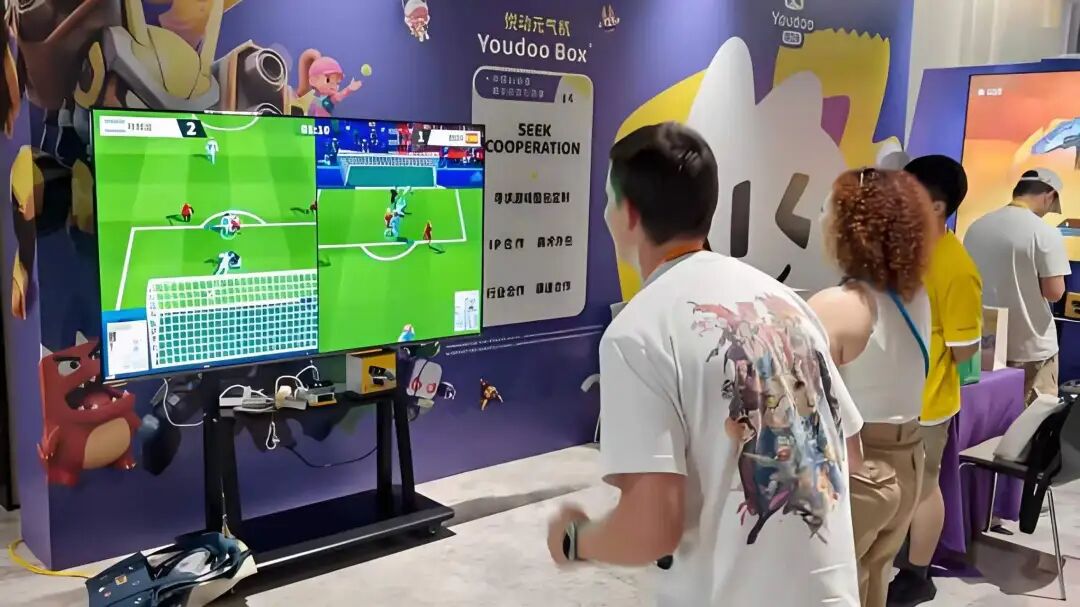
Two staff members from Chuangxiang Yuedong called over some company interns, and the four of us started playing in the experience room.The screen prompted players to step into the frame and raise their hands to confirm, so I followed the instructions and raised my hand. We then played “Carrot Squat,” boxing, soccer, and shooting. The four of us—who had just met—moved in sync with the screen, and in that moment, the social barriers between us vanished.
On August 8, 2025, Chuangxiang Yuedong was founded. In July of this year, the Youdoo Box was launched. In less than a year, this new company has already brought a product to market.
“The typical R&D cycle for similar products in the past has always started at five years,” said Shen Hua, CPO of Chuangxiang Yuedong. Compressing that five-year timeline into one year was made possible not only by the increased development efficiency brought about by advancements in AI technology but also by the entire team’s determination to make this happen.
At 7:00 p.m., just as I was about to leave, a group of young people had gathered at the company entrance, setting up for the upcoming first-anniversary celebration. Li Yang, the Chief Brand Officer, stood next to a newly erected commemorative sign and couldn’t resist joining in, playing along with the young people. This kind of enthusiasm is not uncommon among the executives at Chuangxiang Yuedong.
Most of the core team at Chuangxiang Yuedong consists of veterans of the gaming industry. Shen Hua, who previously worked with Liu Dan at Tencent, is one of them.With 20 years of experience in game development—spanning Sony, Nintendo, Tencent, and his own startups—he says this venture brings a long-lost sense of excitement. He is passionate about his work—whether attending meetings, traveling for business, or giving speeches. I scheduled three interviews with him, and we finally managed to squeeze in a conversation during a break in one of his speeches.
Many employees at Chuangxiang Yuedong bring their children to the office to try out the products, and there are often children playing in the demo room. What excites them is the conviction that they are doing something unique.When it comes to traditional gaming startups, both Liu Dan and Shen Hua have come to the same conclusion: in today’s era of fragmented traffic, even if they secure funding and develop a product, commercial success remains uncertain. It’s a gamble with an unclear outcome.

Nex Playground changed their perspective. By 2025, this overseas AI motion-controlled gaming console had sold over 1 million units. This figure made Shen Hua realize that motion-controlled gaming wasn’t a niche category—it was a market that they, as traditional game developers, had never seriously considered.Liu Dan’s realization was more personal: he saw his daughter obsessed with WeChat mini-games involving jump rope, yet convinced she was actually exercising. Since she couldn’t break her addiction to electronic devices, could he offer his child a better alternative?
When the product first launched, I spoke with Liu Dan, founder of Chuangxiang Yuedong, and Shen Hua, Chief Product Officer, about their company and product. This was a startup venture with a clear vision from the very beginning, and both of them are very confident in the product.
The following is a conversation between the teahouse and Liu Dan and Shen Hua (the two were interviewed separately; the content is presented in its original structure):
01
A Brand-New Race Track
Teahouse: You were the general manager of Tianxing Studio at Tencent—a very comfortable position. What made you feel it was time to leave?
Liu Dan: Tencent’s platform-oriented nature is becoming increasingly pronounced; it has evolved into a company that relies more on platform traffic to generate value than on its content ecosystem. It doesn’t need to create IPs, nor does it need to produce particularly strong content; under these circumstances, it relies primarily on traffic to develop top-tier products. For teams hoping to innovate in content, this makes it difficult for them to fully realize their potential.
I also feel that the traditional game development model has reached its limits and lacks room for further growth. I left the company at the time to take a break and reflect. I left Tencent in 2023 and stayed at home for over a year before this opportunity officially came along in 2024 and 2025.
Teahouse: Why did you ultimately decide to go with Youdoo Box?
Liu Dan: After I left the industry, I mainly observed that the entire content industry had shifted from a business model that relied on content to attract an existing audience to one where platforms sell traffic. Under this model, it’s difficult for content to remain truly independent; it merely caters to traffic.
It wasn’t like this a few decades ago. With games like *World of Warcraft* and *Fantasy Westward Journey*, as long as you created a successful content ecosystem and held the IP rights, you could choose your own distribution channels. But it’s rare to see such products emerge anymore. Many WeChat mini-games attract a lot of traffic, yet it’s hard to name their IPs—or even remember their names.
At the time, we were considering only two options: either to rebuild a content ecosystem with existing content within the current ecosystem, or to explore the possibility of creating a new platform.
Teahouse: Why did you decide to work with Mr. Liu on this project back then?
Shen Hua: We met at Tencent. We call President Liu “Walker.” He was one of the founding members of Photon Studio (formerly Quantum Studio). Although we weren’t on the same project team, he was my senior and former supervisor.
I left Tencent to start my own business between 2014 and 2015. In 2023, Walker came forward with some ideas, and our core team—including Walker, me, Art Director Bo Ge, Game Producer Tao Zi, and Head of Business Partnerships Simon—began meeting regularly each week to plan the project, discuss its direction, and finalize the team composition.
It wasn’t until 2025, when Walker, Simon, and I met with He Xuan, President of Skyworth Digital, to discuss the Next Playground product, that we realized something: motion-controlled gaming wasn’t a new category, so why had this product been so exceptionally successful?We began to carefully analyze its market segment and the reasons behind its success. Coincidentally, back in 2005, while interning in Japan, I had worked on several Nintendo motion-controlled gaming projects, so I had some familiarity with the category. We then began researching and evaluating the feasibility of launching such a project in China.
Once the proposal was finalized, things moved quickly. After my meeting with President He in June, the company was established in August. Looking back on it now, it really brings back a lot of memories.
02
The Overlooked Children's Market
Teahouse: While you were resting at home, you mentioned that watching your daughter play video games made a deep impression on you. What was she playing at the time?
Liu Dan: These are all kinds of WeChat mini-games—skipping rope, ball games, and other casual activities. The kids think they’re exercising, but I know full well that this isn’t real physical exercise at all, and as a parent, it makes me very anxious.
Teahouse: Seeing Nex Playground’s success overseas—doesn’t that confirm your initial assessment?
Liu Dan: When I first saw this product, my initial reaction was that it would be very difficult to make a success of it. Motion-controlled gaming has always been a niche segment in the gaming industry; mainstream users and the market have consistently favored controller-based gameplay. But after looking into it more deeply, I discovered that it has been extremely successful overseas, and that’s when I realized this had been a major blind spot in my past experience with game development.
The traditional gaming industry has always focused on adult users and the mainstream market, completely ignoring the genuine needs of the children’s and family markets. There is a consensus within the industry that games with truly high commercial value are generally unsuitable for minors. As a result, not only do we fail to pay attention to child users, but we also deliberately avoid this demographic.
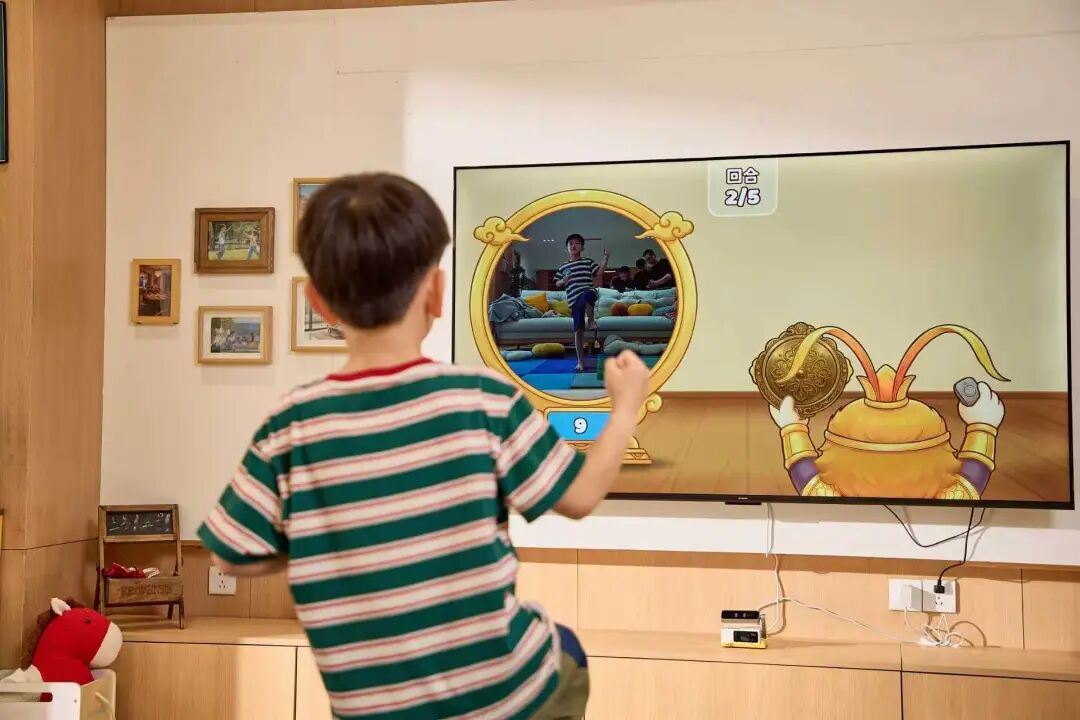
Adults use motion-controlled gaming only occasionally to try something new; they seek greater depth, a competitive edge, and immersion in games, and prefer the sense of accomplishment that comes from using controllers, keyboards, and mice. Therefore, motion-controlled gaming will not become a mainstream segment in the adult market.Children, however, are different. They are naturally active, enjoy immediate feedback, and love to engage their bodies—a trait that is a weakness in adult gaming but serves as a core attraction in the children’s market.
Teahouse: What did you research while assessing the project’s feasibility?
Shen Hua: We spoke with many people, including former colleagues from Tencent and Nintendo, as well as classmates of mine who worked on visual recognition at Qualcomm in the U.S. Our research focused primarily on: how many teams in the domestic market are working on this, the feasibility of developing our own technology, technical solutions, and potential market risks.
The entire process was also one of constantly expanding our understanding. Since there had never been a successful precedent for video game consoles or motion-controlled games in China, we were quite cautious at first. But precisely because there was no precedent, we felt we were pioneering a new category—and that it was the right time to do so.
Looking at the history of video games, every trend that has shaped an era has been accompanied by technological advancements.We believe we are now at a tipping point for chips and AI processing power. Only now that chip integration has reached this level is it possible to combine AI visual recognition algorithms to achieve a form of interaction that is completely hands-free and relies solely on body movements. This would not have been possible five or ten years ago.
Teahouse: Overseas, there’s a culture of hosting and a tradition of living-room entertainment, whereas these habits are actually quite weak in China. What’s your take on this difference?
Liu Dan: There are indeed differences. Overseas users have a well-established console gaming culture and enjoy better living conditions; playing games together as a family in the living room is a common occurrence, so there’s essentially no need for market education. Offline retail channels like Walmart and Target are concentrated and align well with the family weekend shopping experience, making market penetration extremely easy.
However, our research has shown that the domestic market holds even greater potential. First, the number of target families in China is four to five times that of the U.S., primarily consisting of middle-class families from the post-80s and post-90s generations with stable incomes and children, living in first-tier and new first-tier cities.Second, the pain points in the domestic market are more pronounced: children’s smartphone addiction, lack of physical activity, and a lack of parent-child interaction—these are widespread, pressing issues. The market potential is by no means inferior to that of North America.
03
From 5 Years to 1 Year: The Game Team’s Hardware Evolution
Teahouse: You have absolutely no experience with hardware, yet you managed to bring the product to market in just about a year. How were you able to be so efficient?
Liu Dan: The key was choosing Skyworth. Skyworth witnessed the entire journey of the Nex series overseas—from zero to one million units—and shares our perspective on the product’s commercial value, which has made it extremely easy to build trust as we’ve worked together.
In terms of division of labor, Skyworth is responsible for hardware design, ODM customization, and supply chain production, while we handle software R&D, content development, and product operations. Our teams work side by side in a shared office and collaborate on R&D; Skyworth’s hardware expertise has helped us overcome all our cross-industry shortcomings.
Teahouse: On a technical level, how can we shorten the traditional five-year R&D cycle to one year?
Shen Hua: Nintendo and Sony have taken two different paths.Nintendo opts for off-the-shelf chips rather than custom SoCs, which gives it the upper hand but makes deep collaboration difficult; Sony, on the other hand, forms close partnerships with chip manufacturers—for example, during the PS3 era, it established a joint venture with IBM to develop the Cell chip—resulting in strong synergy. However, the downside is difficulty in pivoting; the failure of the Cell chip led to massive losses for both companies.
Both approaches entail significant non-engineering costs. We were able to move quickly primarily due to three factors: First, advances in chip manufacturing technology; second, instead of jointly developing chips from scratch, we selected a mature architecture and built upon Google’s AOSP open-source system, avoiding the need to reinvent the wheel at the lower levels;third, and most crucially, by leveraging Skyworth’s accumulated hardware and supply chain capabilities, we finalized the entire hardware architecture in just four months after only two pilot production runs.
Teahouse: What is the biggest challenge you’ve faced in hardware development?
Shen Hua: The most unexpected challenge was the exterior design. We started working on this right after the company was founded in August, only to discover that game designers were completely incapable of designing hardware exteriors.Although both involve drawing and creating art, the gap between the two industries is enormous. Even if we had locked our game concept artists in a room, they still wouldn’t have been able to produce a passable hardware design. Eventually, we brought in a seasoned designer from the industry, and that’s how we settled on the current design—featuring a swing arm, an expression screen, and a robot-like form—which strikes a balance between cuteness, retro charm, and a futuristic feel.
In order to incorporate the jib and screen assembly—especially the motor components—into such a compact chassis, we visited nearly all of the major suppliers in China and also worked with Japanese motor manufacturers.
Since then, the entire team’s understanding of hardware has continued to grow. For example, when a device outputs a video signal to a TV, it needs to adapt to the TV’s specific color display logic, which is completely different from the display principles of smartphones and monitors.Then there’s latency optimization. Previously, when developing mobile games, we only needed to optimize rendering speed, but when developing hardware devices, we have to consider hardware data access and transmission efficiency—reducing latency by optimizing the transmission path. These are all entirely new insights we’ve gained through this project.
04
AI Motion-Sensing Growth Console
Teahouse: Do you really think it can replace cell phones and get kids to choose the Youdoo Box on their own?
Liu Dan: We never say that our product completely replaces cell phones. In the vast majority of households, cell phones are the only way for parents to soothe and entertain their children; we’re simply offering families a second, better option.
Children today have very few options for entertainment at home—they lack suitable toys and convenient opportunities for physical activity. The high-end toys, drones, and smart building blocks available on the market are either played with briefly before gathering dust, or they fail to encourage children to be active or foster parent-child interaction.When parents let their children play with smartphones, they gain only a brief moment of quiet, followed by impaired vision, negative effects on physical and mental health, and a family atmosphere where everyone is glued to their phones with zero communication.
Teahouse: Who is the core target audience for this product?
Liu Dan: While the primary users of our products are children, the decision-makers regarding payment are the parents. Our core user base consists of open-minded parents who are willing to spend time with their children and prioritize their well-rounded development. They are primarily concentrated in first-tier and new first-tier cities and consist of middle-class families from the post-80s and post-90s generations who have children.
Teahouse: Did you define the product as an “AI motion-sensing growth console” to break away from the stereotypes associated with traditional game consoles?
Liu Dan: That’s right. If we stick with the definition of a “game console,” it will immediately trigger resistance from parents. We offer a wide range of educational, health-focused, and parent-child bonding content, and the product itself is quite different from traditional game consoles, so we hope to define it with a new term.
Teahouse: Aside from brand positioning, what other localization efforts have been made for domestic users?
Liu Dan: Since our overseas products do not include parental control features, we have specifically developed a parental app, control keys, screen time management, and data viewing features to meet the parenting needs of parents in China.
Teahouse: The swing arm and expression screen on the exterior are designed to appeal to children’s tastes. Aside from that, what other design elements set this product apart from a smartphone?
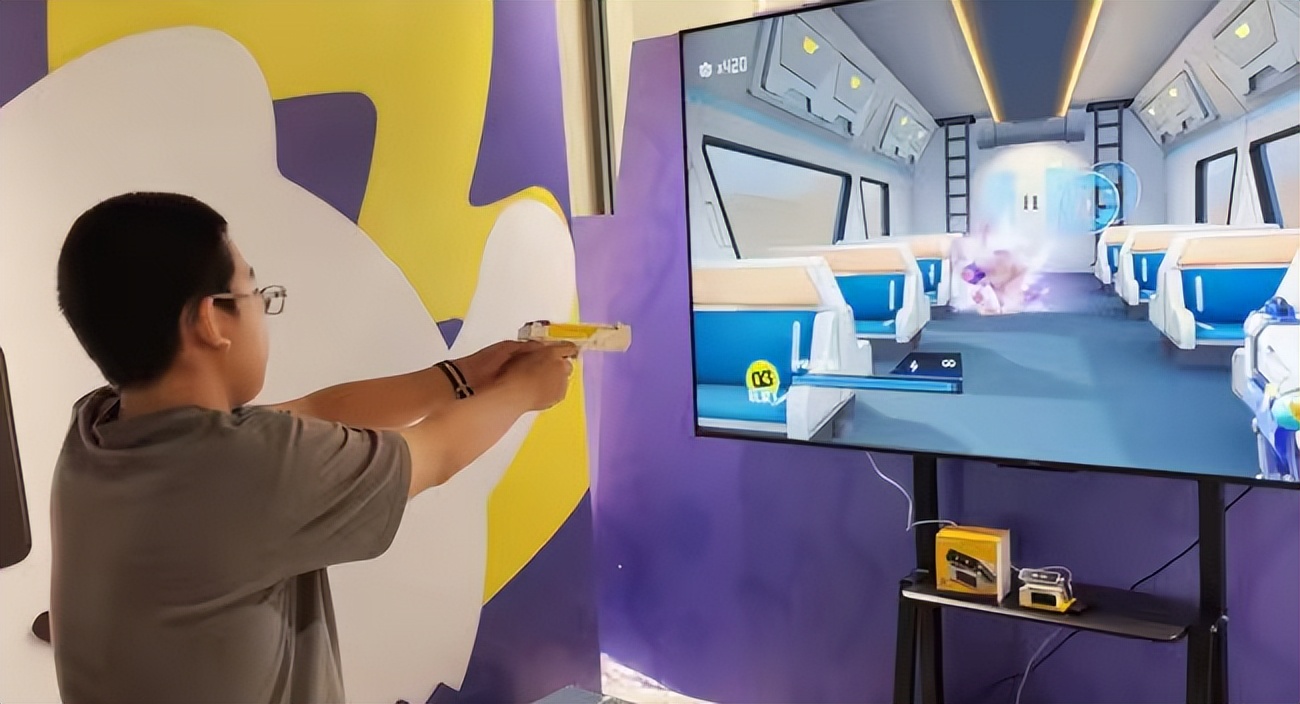
Shen Hua: We offer a wide range of physical peripherals—game guns, racquets, fishing rods, and steering wheels—all of which are hands-on props, and we’ll continue to add new ones.
Our core philosophy is not to create a product that’s even more addictive than a smartphone, but to deliver a novel experience that’s completely different from a smartphone. For children, learning and growth happen naturally through constant exposure to new things. We don’t want children to become hooked on the same content for long periods of time; instead, we focus on diverse, hands-on play that allows them to grow continuously through play.
In the future, we’ll also release DIY corrugated cardboard versions of firearms and various accessories. Kids can print, cut, and assemble them on their own, then insert a remote control into their homemade props to use them. This approach is somewhat similar to the educational gameplay on Steam—even if the handmade props break after just a few uses, it’s still a meaningful part of their growth.
There’s also the NFC Energy Card, which is one of the core differentiating features. Its main purpose is to help children develop healthy offline social interactions. Each card can be programmed with a unique special move, and children can share their card’s special move with friends. Every time the special move is used, it levels up, encouraging children to naturally exchange and lend their cards to one another.This is very similar to the design philosophy behind Pokémon back in the day: providing children with opportunities for in-person interaction and shared topics of conversation, fostering authentic and healthy offline social connections—which is the core goal we’ve specifically set for our younger users.
05
A Long-Term Battle in a Slow-Moving Market
Teahouse: The product has been on the market for over a month—how are sales going so far?
Liu Dan: We never planned for the product to be an instant hit upon launch. We’re currently in the phase of ramping up production capacity, conducting market testing, and refining our distribution channels, so we need time to build a solid reputation. Overall metrics are rising steadily, and most importantly, user feedback has been excellent—there are virtually no negative reviews across the entire internet, and satisfaction and recognition among our target audience are very high.
Shen Hua: The sales team has told me that in many households that have purchased the product, the children play for a set hour every day—working up a sweat—and even drag their parents into joining in. When the parents get tired, the children keep playing on their own. This way, the whole family gets to move around together every day, and users have given this aspect very high praise.
Teahouse: But the challenges you face in China are also very real.
Shen Hua: We have three clear disadvantages. First, raw material prices have risen—memory chip prices have increased sixfold, PCB prices have tripled, and the costs of other components are also on the rise. Second, as a white-label product, it’s difficult for us to secure traffic resources on major e-commerce platforms, so we have to rely on online word-of-mouth and offline channels.Third is the difference in consumer purchasing power. When Next launched in the U.S., it was priced at $249. For American consumers, the psychological barrier to spending $249 is roughly equivalent to us spending 249 yuan; but in China, very few people would casually give their child a gift worth 2,000 yuan.
Teahouse: How do you address the issue that children's hardware tends to gather dust?
Shen Hua: The most critical factor is content operations. If we keep releasing one new game every week, users will be eager to fire up the device regularly to try out the latest offerings. Second, we’ll continue to launch new peripherals, Energy Cards, and accompanying collection mechanics to constantly provide fresh ways to play.Third is lowering the barrier to entry—many traditional consoles end up gathering dust because the initial effort required is too high: you have to pick up the console and then try to remember your save progress and quests, which feels like a hassle. Our games are designed to be “pick up and play”—you can jump right in the moment you pick them up—and this is a key factor in maintaining user engagement.
Teahouse: How Should the Future Content Ecosystem Be Built?
Liu Dan: Currently, our approach focuses primarily on in-house development combined with collaborative R&D. We have partnered with 70 to 80 domestic developers and are developing multiple games in parallel. In the long term, we will gradually open up our UGC platform to build a comprehensive content ecosystem. Once the development kit is fully refined, small domestic development teams will be able to use AI to produce content efficiently.In the past, ByteDance, Tencent, and Xindong all sought to build game UGC platforms similar to JinYing, but none succeeded. Now, with AI, this initiative finally has a realistic chance of being implemented.
Tea House: Where do you think the market ceiling lies for this new category?
Liu Dan: It’s still too early to estimate the ceiling. However, if we want to secure a sufficiently stable user base in the domestic market, our projected target is approximately 300,000 units—which is the minimum threshold for truly establishing an ecosystem.True success means achieving stable sales in the millions, maintaining a core group of consistently active users, building a mature software and hardware ecosystem, and forming a complete, self-sustaining platform.
Based on the pace of development overseas, the domestic market has a longer learning curve; it will take at least 3 to 5 years to establish a stable and mature platform ecosystem.
原创文章,作者:游茶妹儿,禁止转载:https://youxichaguan.com/en/archives/219536