Casual games were once a unique and distinctive segment of China’s gaming market.
Leveraging the ecosystem advantages of platforms like WeChat and Douyin, China’s mini-games market has experienced rapid growth over the past few years, evolving from a once-overlooked niche sectorinto a core growth engine with revenue exceeding 50 billion, and has carved out an entirely new revenue-generating fast track beyond the traditional mobile gaming market. This has enabled countless small and medium-sized teams and developers to ride the wave of this trend, creating one inspiring success story after another.
Today, TikTok is taking this proven growth model to the global stage. It’s not hard to imagine that when the platform and developers “start from scratch” with their mature product strategies and operational experience, TikTok mini-games will undoubtedly replicate this growth miracle in global markets with the same—or even greater—momentum.
According to data from WiseGuy Reports, the TikTok mini-game market is projected to reach approximately $2.75 billion in 2025, and by 2035, this figure is expected to soar to $15 billion, representing a compound annual growth rate of 18.4 percent.
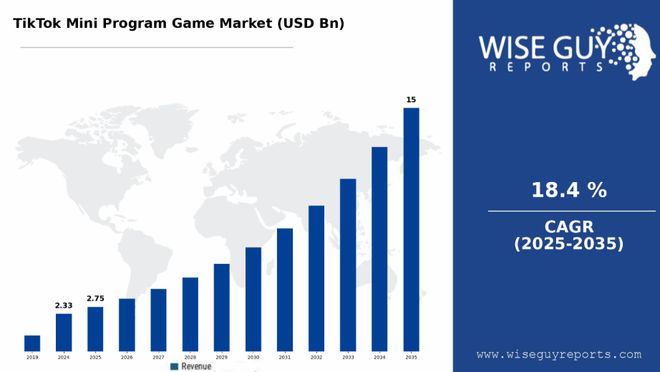
图源:WiseGuy Reports
What’s even more enticing is that while most global game developers are struggling with user acquisition costs, the cost per user on TikTok Mini Games—this brand-new battleground—can be as low as $0.30, or even $0.20.Furthermore, many top-performing titles have achieved a first-day ROAS (Return on Ad Spend) exceeding 100%, with some breakout hits like *Brain Puzzle Queen* reaching over 120%.
This means that TikTok mini-games not only allow for user acquisition at an extremely low cost but also enable “same-day return on investment”—a rare, low-risk, high-return opportunity that’s hard to ignore.
As a result, on the eve of this emerging market’s explosive growth, a large number of domestic teams have quietly entered the fray, seizing the initiative in the global mini-games market.So what kind of products are most likely to win over overseas players? And which teams have already achieved success on TikTok? The list of TikTok’s most popular mini-games may already hold the answer.
01
Simulation and puzzle-solving games dominate the market
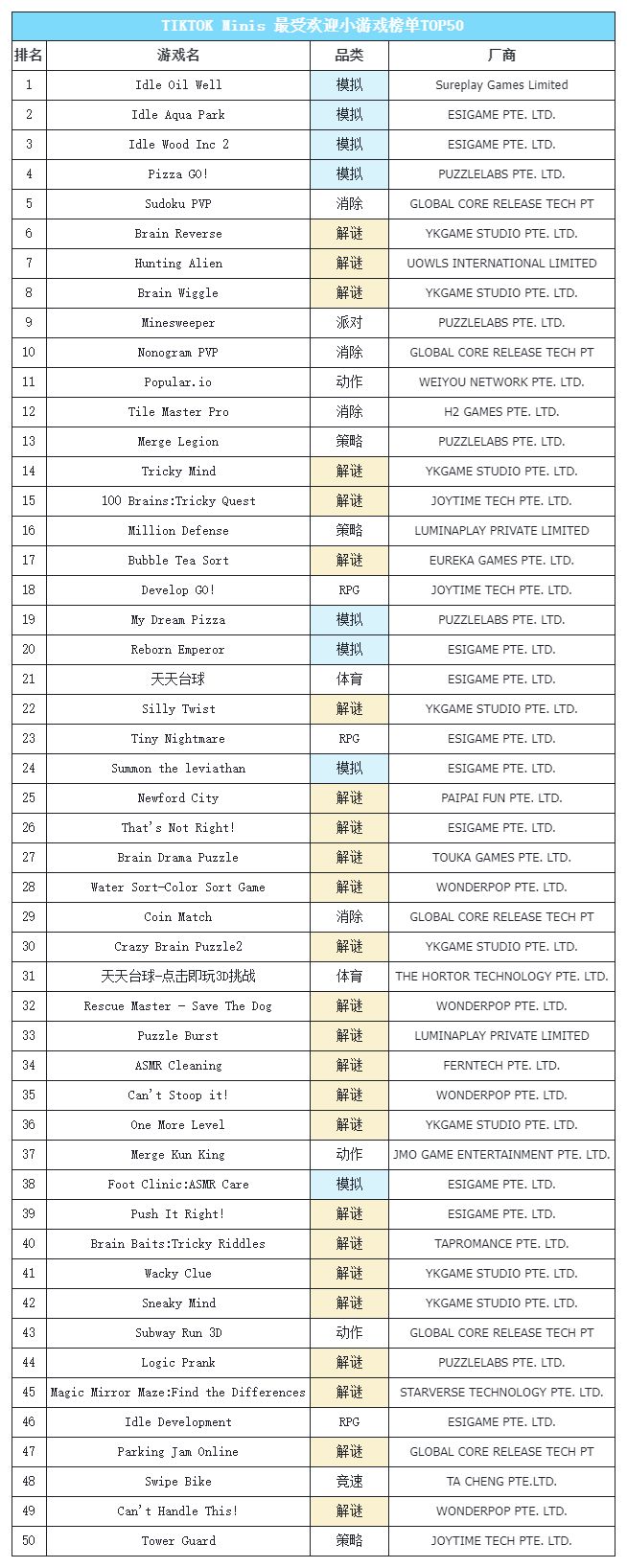
Data Source: TikTok Minis; Date of Statistics: April 10
Looking at the charts as a whole, it’s easy to spot certain patterns—for example, simulation and puzzle games make up a very large proportion of the top spots on TikTok’s mini-game charts.
Simulation games, in particular, have an extremely high rate of becoming major hits; although they account for only eight spots in the Top 50, they directly claim the top four spots in the Top 5, clearly demonstrating their dominance. Specifically, the simulation games favored by TikTok players are primarily idle and arcade-style games.
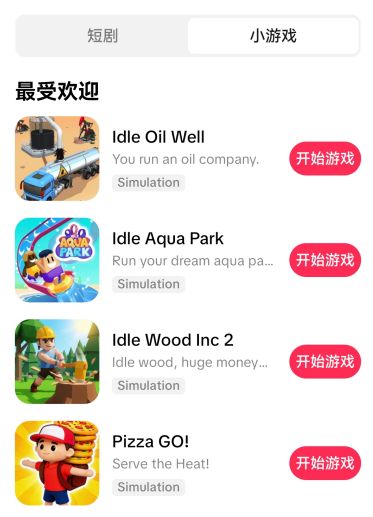
The core features of placement-based simulation games are low learning curves and automatic progression. In these games, players don’t need to perform frequent actions; they simply need to arrange and upgrade their setups to easily accumulate rewards, gradually expand their businesses, and “get stronger even while AFK.”This design—which combines minimal input with strong feedback—perfectly aligns with TikTok users’ need for entertainment during short, fragmented moments, which is why these games consistently stand out among TikTok’s mini-games. As a result, idle simulation games swept the top three spots in the most popular mini-games during the statistical period.
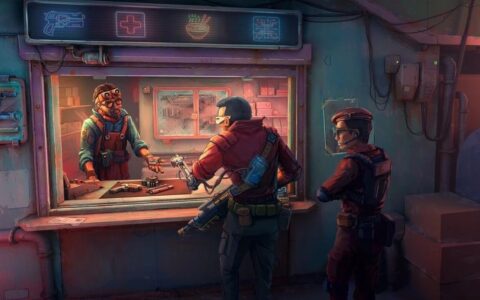
"Idle Oil Well," which tops the charts, is a prime example. The game is based on the theme of "oil drilling." During gameplay, players don’t need to constantly monitor the game; once the drilling equipment is set up, the system automatically produces oil and generates profits.The game continues to generate revenue even while offline. When players log back in, they simply need to collect their earnings and upgrade their equipment to easily experience the sense of accomplishment that comes from boosting production efficiency and accumulating wealth. Thanks to its simple numerical progression and intuitive, satisfying feedback, the game has successfully held the No. 1 spot on the charts for many consecutive days.
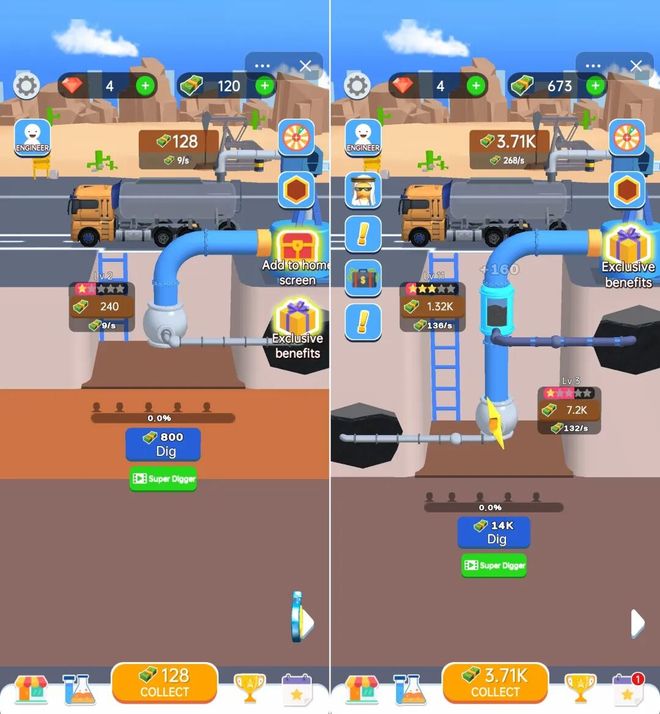
《Idle Oil Well》
Unlike “set-and-forget” idle simulation games, arcade simulation games place greater emphasis on player engagement. Amid high-intensity interaction and a fast-paced sequence of tasks, players must use flexible, real-time controls to quickly complete a series of sequences and challenges. This cycle of constantly encountering and solving problems provides players with a deeply addictive sense of accomplishment.
For example, in the game *My Dream Pizza*, players take on the role of a pizza shop owner and must personally handle a series of tasks—from taking orders to preparing, baking, serving, and cleaning up—to ensure the shop runs smoothly during peak hours. The fast-paced workflow not only provides players with immediate feedback on their actions but also offers the game a viable business model.
When facing a shortage of funds or a lack of resources, players can choose to watch ads to unlock bots and speed-boost items, thereby resolving their immediate predicament. This “emergency aid” approach to ad design significantly reduces users’ aversion to ads. According to reports from other media outlets, thanks to this strategy, the game has achieved an IAA ad penetration rate as high as 70% on TikTok.
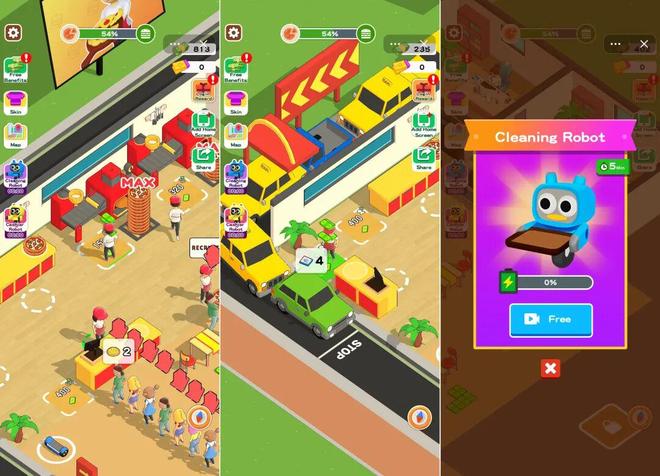
《My Dream Pizza》
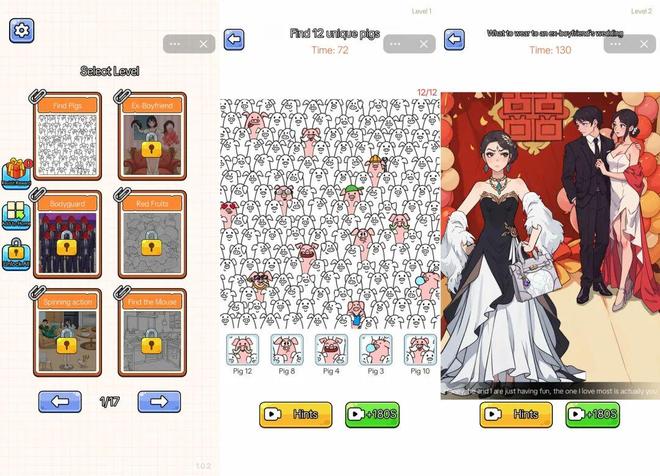
In addition to simulation games, puzzle games have also gained astonishing popularity on TikTok, accounting for half of the spots on the Top 50 chart—with as many as 25 titles making the list—making it currently the genre with the largest number of hit titles on the platform.
Among these, image-based puzzle games such as “Creative Spot-the-Difference” have performed particularly well. These games feature simple gameplay and appeal to a wide audience; as long as players are creative enough, they can solve the puzzles with simple taps and drags.More importantly, these games cover an extremely wide range of themes. By incorporating dramatic storylines, visually striking elements, and viral internet memes, they can instantly capture users’ attention in the short-video environment.
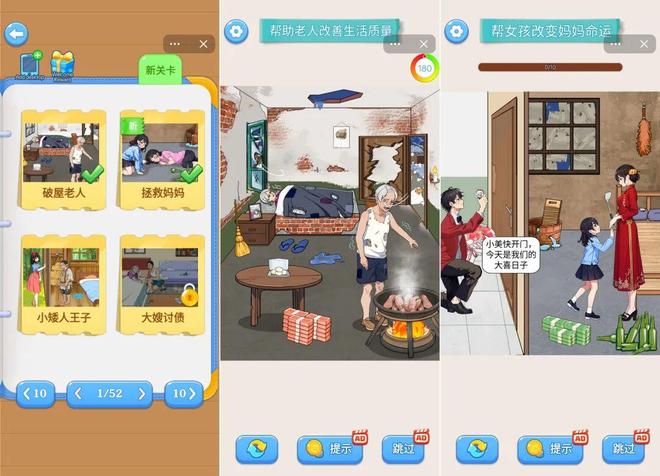
《Brain Reverse》
Consequently, as early as the beginning of this year, when TikTok mini-games experienced their first surge in popularity, a large number of creative “spot the difference” games achieved significant success on the platform. Some high-quality titles even recorded a first-day ROI as high as 130%, at one point accounting for nearly half of the platform’s total market share and becoming one of the strongest game genres on the platform.
In addition, mature genres that have taken the domestic mini-game market by storm—such as match-three, tower defense, and action games—have also produced hit titles on TikTok.This may indicate that the appeal of casual games shares certain universal traits across the globe. Developers with extensive experience in the domestic market stand a good chance of quickly gaining a foothold in the new blue ocean of TikTok casual games, provided they fully leverage their proven development approaches and operational strategies.
02
Domestic Manufacturers Launch a Collective Offensive
Looking at the developers behind the trending charts, quite a few domestic teams have already broken through and even become key players on the TikTok mini-games platform.
For example, Beijing-based ESIGAME had 10 games make it into the Top 50 during the reporting period.
It is understood that since its inception, Youlu Interactive has long focused on the casual gaming sector. Even in its early days, the team helped a large number of high-quality overseas casual games—such as *I’m a Pro at Building*—successfully enter the domestic market through partnerships.After accumulating extensive publishing and operational experience in the idle and simulation genres, the team subsequently launched *City of Light*, a hybrid monetization product, in the domestic market, which has also gained immense popularity among users on Douyin Mini Games.
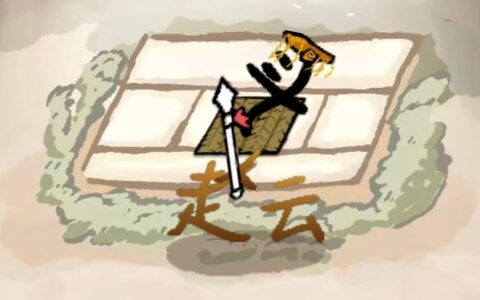
When entering the TikTok mini-games platform, Youlu Interactive focused on its team’s strengths and launched a large number of idle management games, such as *Idle Aqua Park* and *Idle Wood Inc 2*. At the same time, the company actively experimented with other popular genres, such as puzzle and tower defense games, and achieved solid results across the board.The company’s idle management mini-game *Reborn Emperor* performed particularly well, achieving a CPA below $0.30 and a first-day ROAS exceeding 100% in the U.S. region of TikTok.
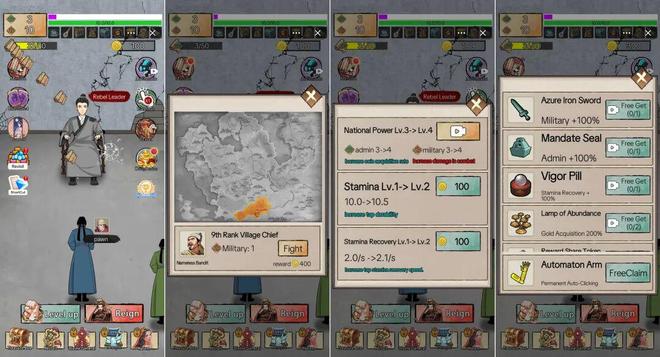
《Reborn Emperor》
Headquartered in Handan, Hebei, PUZZLELABS is a leading company in the IAA mini-game sector in North China.The company initially began by importing and distributing high-quality casual games from overseas, but later evolved into a casual game developer and publisher that integrates research and operations. Thanks to its efficient product iteration capabilities, it achieved the milestone of over 100 million in revenue as early as 2024.
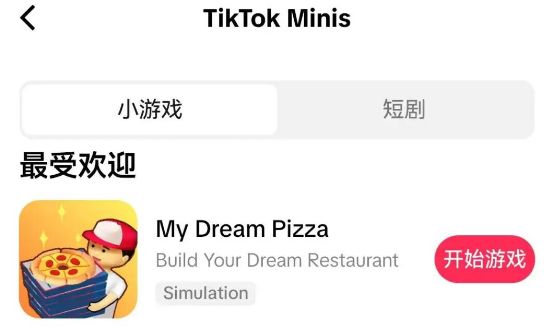
Leveraging its understanding of the preferences of casual gamers overseas, Spaceship expanded into TikTok and has since established a presence across a wide range of genres, including simulation, queue management, strategy, and puzzle games.“My Dream Pizza,” mentioned earlier, is one of Spaceship’s titles. With its fast-paced business simulation gameplay, the game quickly won over a large overseas player base, consistently topping TikTok’s most popular mini-games chart for an extended period. It achieved an IAA ad monetization penetration rate as high as 70%, which drew widespread attention and discussion within the industry.
Guangzhou Yongwang Technology (Wonder Game) has also achieved outstanding results on TikTok.This casual game developer began its global expansion earlier than most; as far back as 2020, Wonder Game started focusing on the overseas casual gaming market. Its puzzle mobile game *Save the Doge*, in which players must “save the Doge,” took the world by storm, with cumulative downloads exceeding 500 million.Subsequent releases—the “screw-turning” game *Screw Pin Jam Puzzle* and the “arrow-drawing” game *Girl Rescue: Dragon Out!*—have also achieved remarkable success.
After launching on the TikTok mini-games platform, the company continued to focus on the puzzle genre, releasing a large number of popular titles.Among them, *Brain Puzzle Queen*, a visual puzzle game, achieved a CPA of less than 0.2 and a first-day ROAS exceeding 120% directly on TikTok. With an ad penetration rate of 50%, it demonstrated monetization efficiency far surpassing the industry average.
In fact, there are far more Chinese teams than just the ones mentioned above that have achieved impressive results on TikTok. In fact, thanks to their mature R&D, user acquisition, and monetization capabilities, domestic mini-game developers have dominated the majority of spots on the platform’s charts across various genres—including simulation and puzzle games—and have become the undisputed leaders in this emerging sector.
03
Why TikTok?
When it comes to mini-game platforms, there are plenty of options overseas as well, such as YouTube Playables, Telegram Mini Apps, Facebook Instant Games, and Snap Games. So why has TikTok emerged as the most promising new opportunity right now?
First and foremost, we must mention the success of Douyin’s mini-games in China. Over the past two years, revenue from Douyin’s mini-games has continued to rise, with its share of the domestic mini-game market approaching 30%; it has long since become a core segment of the mini-game market that cannot be ignored.As a platform with the same roots, Douyin was the first to demonstrate the high compatibility between the short-video content ecosystem and mini-games, providing a reference case for the development of TikTok’s mini-game platform and ecosystem.
Furthermore, as a global super app, TikTok has over 1.5 billion monthly active users overseas, including a large number of potential casual game players seeking leisure and entertainment. The enduring popularity of special-effects challenges and interactive gameplay on TikTok also demonstrates that the platform’s users have a strong interest in casual entertainment, making it a fertile ground naturally suited for the growth of casual games.
More importantly, the TikTok mini-games platform has laid a solid foundation in its underlying technical infrastructure. In May 2025, during a low-key beta test of the “TikTok Minis” section, the platform fully integrated advertising monetization and in-app purchases (via TikTok Beans) to support the product’s commercialization.
In November of the same year, the platform completed another key technical adjustment, shifting its package size standard from “H5 within 200M”—commonly adopted by overseas mini-game platforms—to “native packages within 30M,” thereby fully aligning with domestic platforms such as WeChat Mini Games and Douyin Mini Games.This change means that domestic mini-game developers can migrate their products more quickly and at a lower cost, significantly lowering the technical barriers to going global.
Once the conditions are right, domestic teams with a keen sense of opportunity will rush in. These companies bring to TikTok both the extensive experience they’ve gained in the domestic market and their high-quality products. The increasingly diverse range of offerings, in turn, attracts more users and encourages them to develop the habit of playing casual games on the platform.
With everything fitting together seamlessly, it was only natural for TikTok mini-games to take off.
For domestic developers, at a time when the industry as a whole is grappling with traffic anxiety, the emergence of new platforms such as TikTok Mini-Games not only offers a new path for growth but, more importantly, enables the mature Chinese mini-game model to expand overseas and directly connect with the global traffic market. This will create an entirely new growth opportunity for the entire mini-game market—one with immense potential and substantial benefits.
However, challenges always go hand in hand with opportunities. There are significant differences across various regions and countries overseas in terms of content moderation, licensing policies, and privacy compliance. Coupled with practical issues such as localized operations and user preferences and habits, these factors place even higher demands on the team’s overall capabilities.This is particularly true in the U.S., where user monetization potential is higher and qualification reviews for developers are relatively stricter. Not only must the entity registering for the platform be based in the U.S. or Singapore, but mini-games launched in the U.S. region must also pass the USDS TPRM review.
Therefore, before officially entering the TikTok mini-games market, developers must make thorough preparations and plans across multiple fronts. After all, the globalization of mini-games is not merely a competition among products for user acquisition; it is also a comprehensive test of a team’s ability to operate globally and manage risks.
However, Teahouse believes that, thanks to the Chinese team’s extensive market experience and strong adaptability, more outstanding developers will certainly stand out in the global market in the future. And now, the era of globalization for mini-game developers has only just begun.
原创文章,作者:游茶妹儿,禁止转载:https://youxichaguan.com/en/archives/216216