In 2025, Tencent’s international gaming revenue surged by 33% to 77.4 billion yuan, surpassing the $10 billion mark for the first time in its history. This growth was driven not only by Supercell’s recovery and the strong performance of games like *Mingchao*, but also by a long-standing title that Tencent had just acquired in 2023—*Warframe*(Warframe).

He was even singled out for praise during the earnings call and in the official statement following the release of the financial report. Veterans never die; they just grow stronger with age.
In fact, the success of Warframe is quite rare in today’s market. In a landscape of evergreen games where premature decline is becoming increasingly evident and market segmentation is accelerating, it is one of the few that has defied the trend and found a second lease on life.
During the 2024–2025 fiscal year, the gaming industry found a lifeline in free-to-play evergreen games.
Whether it’s the various gaming research reports from Newzoo and Matthew Ball and others, or the financial reports from major industry leaders, they’re all eager to rekindle old relationships—tapping into older games for profits and mending ties with longtime players.
However, just as there is no one-size-fits-all answer in this world, the stones in shallow water are found more quickly. Operating Evergreen Games is not a simple, straightforward math problem either.
Several game franchises that were once thought to enjoy enduring glory have experienced an unexpected decline over the past year.
Take *Battlefield 6* as an example: after its release in October 2025, it briefly surged to the top of the best-seller charts thanks to the IP’s appeal, but due to severe matchmaking issues, unclear role definitions, and disastrous game balance, its retention rate never improved, and it failed to establish effective long-term player engagement.
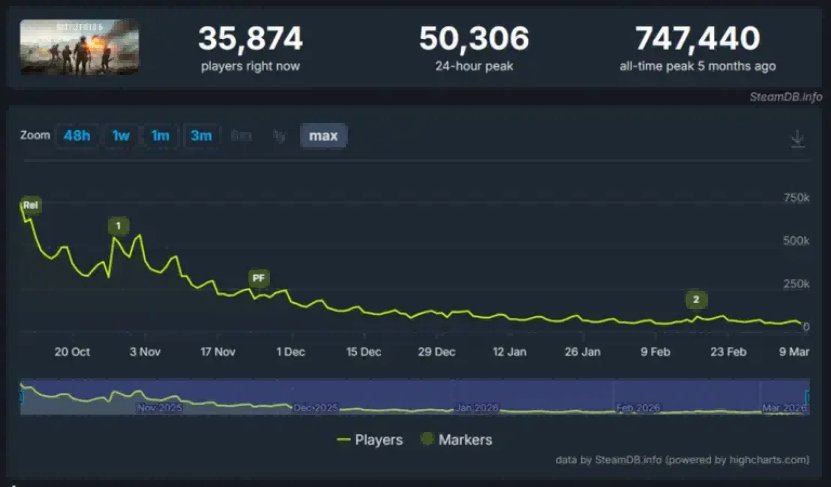
Of course, *Battlefield 6* isn’t the only one facing challenges; *Destiny 2*, which has also been struggling through its long-term operation, is in a similar boat.
However, despite being a game released thirteen years ago, *Warframe* has managed to make a remarkable comeback.
Thanks to the release of the major end-of-year expansion, *The Old Peace*, and the introduction of the new Warframe, Uriel, *Warframe* achieved record highs in daily active users and total revenue in December 2025—its twelfth year of operation—with total revenue to date showing an increase of over 30%.
Following the launch of the “Peace of the Past” update on December 10, 2025, *Warframe*’s concurrent players on Steam surged past 175,000, marking a 103% month-over-month increase and coming close to the all-time high of nearly 190,000 set in 2021.
Not only that, but you'll also find plenty of "coming back to the game" experience posts, fan-created story illustrations, and a wealth of guides for new players.


In 2025, with a flood of high-cost, free-to-play (F2P) new games rapidly burning through funds and established giants seeing their aging titles in decline and facing player attrition, what exactly did these older games—whose infrastructure dates back to 2013—do right?
01
From Contract Manufacturing to In-House Development: A Path Forced by Circumstances
Digital Extreme (hereinafter referred to as DE) was founded in 1993 by James Schmalz in London, Ontario, Canada. Its early DNA was rooted in geek culture, and the company focused on shareware—software that lets you try it out first and only pay for it if you like it.
From the 1990s to the early 21st century, DE leveraged its technical expertise to forge a close partnership with Epic Games. Together, they created classics in the first-person shooter genre, such as the *Unreal* series and *Unreal Tournament*, which sold over 15 million copies worldwide.This experience allowed them to build a solid foundation in 3D graphics rendering and game engine development. It was precisely this dedication to core technology that later drove them to invest heavily in developing their own next-generation engine—the Evolution Engine—which went on to serve as the cornerstone supporting *Warframe*’s continuous updates for over a decade.

But the good times didn’t last long; the gaming industry entered the HD era, and development costs skyrocketed.Before they knew it, DE had fallen into the outsourcing trap. To support their team of over a hundred people at the time, they had no choice but to take on projects like porting *BioShock* to the PS3 and developing *Dark Sector 2*—all based on other companies’ IPs. While outsourcing kept the company afloat,
But the most agonizing part for game developers is that they have absolutely no control over the game and won’t receive any royalties afterward.As Sheldon Carter, the general manager at the time, lamented, a game that took three years of hard work to create was, once released, like bread on a shelf—you could only watch it “go bad” because you had absolutely no authority to update or maintain it.
It was truly frustrating to work so hard for someone else’s benefit, and that became the main motivation behind their later decision to handle distribution and long-term operations on their own.
DE's first attempt to break free from its reliance on outsourcing was a project called *The Dark Zone*, conceived as early as 2004. At the time, Creative Director Steve Sinclair wanted to pitch a story to publishers about a space ninja that blended the stealth elements of *Metal Gear* with the sci-fi setting of *Dune*.
But at the time, World War II-themed games and modern warfare titles like *Call of Duty* were all the rage in the market. When mainstream publishers heard about this sci-fi setting, they all thought it was too obscure—they even pressured the developers to change the setting to the American Civil War or a modern, realistic style.
After a full year of trial and error and repeated compromises, *Dark Zone*, released in 2008, turned out to be a mediocre contemporary-setting shooter. Meanwhile, the sci-fi concepts involving the “Tenno” race and high-tech battle armor were shelved indefinitely.

That's right—that idea became the core concept behind *Warframe*.
By 2012, outsourcing contracts were becoming increasingly scarce, DE’s financial situation had taken a sharp turn for the worse, the company was on the brink of collapse, and layoffs had reached their limit.At this critical juncture, founder James Schmalz decided to take a gamble: he completely broke away from traditional publishers and, with only the remaining core team members, revisited the original concept behind 2004’s *Dark Zone*, reimagining it as a free-to-play, cooperative action game where players team up to fight monsters. That game was *Warframe*.
Since they didn’t have the funds for development, they created a “Founder’s Pack” and turned directly to core players for crowdfunding. Relying on the support and trust of casual players, they pulled the company back from the brink of bankruptcy—and, more importantly, completely transformed DE’s DNA.
As Sinclair said, “This has completely changed us. We no longer work for publishers; we work for players.”
After its release in 2013, *Warframe* quickly became a huge success, perfectly filling a gap in the market at the time.In an era when mainstream fantasy, realistic military, or 2D shooter MMOs still dominated the market, it pioneered a sci-fi ninja theme, seamlessly blending the futuristic feel of zero-gravity movement with the dynamic aesthetics of intense melee combat.Whether through the integrated control of power armor and firearms or the incredibly exhilarating movement mechanics, the game offered players a sense of ultimate freedom and a revolutionary gameplay experience. As a result, *Warframe* became a phenomenon and a long-running hit that year.
In a way, the essence of DE as a company is much like its games. They explain that it’s okay to take things a little slower sometimes—as long as you keep working and keep iterating, even things that weren’t initially well-received can gradually grow into towering trees.
02
Stand with the players, not against them
For Evergreen Games, figuring out how to maintain ongoing communication with players and build trust is a complete mystery. When operating a service-based game for an extended period, conflicts between the development team and players over issues such as update priorities, game balance, or monetization strategies are inevitable.
Traditional game publishers typically resort to defensive, one-way public relations strategies at this point.
DE has its own approach to this—and it’s a rather unconventional one. They’ve pioneered a way of engaging with the community that they call “extreme honesty.”
Since 2013, DE has established a community communication approach centered around “Developer Live” streams. Hosted by Community Director Rebecca Ford (who was also the former Creative Director of *Warframe*), these regular live streams—which often feature key developers, including CEO Steve Sinclair—reach players around the world.These livestreams aren’t just about showing off glossy trailers; they often feature early-development, bug-ridden beta code, and the team even openly discusses internal disagreements and mistakes on camera.

Sinclair elevated this approach to communication to the level of a core corporate value. He put it very clearly: “From the very beginning, *Warframe* was an experiment—we wanted to be extremely honest with our players. We wanted to look them in the eye and say, ‘We’re human, we messed up, and we’ll do our best to fix it.’We’d rather lay the problems out on the table than keep them hidden.”
This approach is particularly effective when dealing with major public relations crises. For example, during an early update to the game, the development team imposed a very strict line-of-sight restriction on a skill of the “Holy Sword” armor, which sparked widespread protests on the forums.
DE’s response was lightning-fast: not only did they issue a public apology during the Devstream 50 livestream and promptly reverse that unreasonable change, but they also laid out the entire decision-making process in full. Furthermore, after realizing that the wording of their initial apology was inadequate, they issued a second public apology.
In DE's experience, being open about problems and admitting mistakes actually builds more trust with players than keeping things under wraps.
Moreover, the back-and-forth between players and the development team can sometimes actually lead to improvements in the game. Operating a long-lasting game isn’t a one-way process driven solely by the development team; rather, it’s a years-long tug-of-war between design philosophy and the actual needs of players.
For example, the controversy over the “Absorb” mechanic that occurred between 2013 and 2016: at the time, the game featured a module called “Absorb” that could automatically collect items from the ground over a wide area, but it was an exclusive ability of a specific Guardian companion called the “Carrier.”Because *Warframe*’s core gameplay relies heavily on farming materials, over 80% of players across the entire server ended up using only “The Carrier.”
For three years in a row, the community has been calling for "global looting" on forums, Reddit, and developer livestreams, so that all party members can automatically pick up items.
However, within DE, including some executives, there was initially strong resistance to this request.From a traditional game design perspective, manually collecting loot provides immediate visual feedback and a sense of accomplishment; they believed that fully automating the collection process would undermine the game’s underlying dopamine-based reward system and even render other carefully designed item abilities meaningless.

(GLEN's Controversial Opinion: Only casual players like auto-looting, and then he got slammed for it.)
The community and the development team remained at an impasse.
In the end, DE did not act unilaterally nor did it make unconditional concessions; instead, it adopted a compromise in the “Within the Void” update:They separated the absorption function from specific guardians, creating a universal module that can be equipped by all guardians. Following a comprehensive community vote and approval regarding the detection radius (ranging from 6 meters to 12 meters), the current universal standard was finally established.
Operating a long-lasting game is, at its core, an art form filled with compromises. The development team must have the flexibility to adjust its initial vision at any time in order to maintain a dynamic balance with players throughout the game’s long lifecycle.

03
Perhaps the most balanced virtual economic system
For free-to-play games that aim to remain evergreen, there has long been one intractable issue: whether or not to implement a “pay-to-win” model.
It’s fair to say that the design of the economic system directly determines whether players come to enjoy the game or to complain about it.
If the underlying technology is the skeleton of *Warframe*, then its unique economic system is its lifeblood. *Warframe* is widely regarded as one of the most player-friendly business models among free-to-play games. The key reason for this is that it has established a decentralized player-to-player marketplace centered around the premium currency “Platinum.”
In most free-to-play online games, the premium currency earned through in-game purchases and the in-game resources you grind out exist on two parallel tracks; paying players and free-to-play players live in two different worlds.But in *Warframe*, free players can farm rare Mods, Prime-tier Warframes, and special weapons in-game, then sell them to other players on the trading channel in exchange for Platinum. The underlying logic of this system bridges the gap between wealth and time.
In other words, as long as you're willing to put in the effort, you'll get everything you're supposed to.

High-spending players use real money to buy Platinum from the game developers, then use that Platinum to purchase rare items—which have a low drop rate and are difficult to obtain through gameplay—from other players, effectively trading money for time.Free-to-play and micro-transaction players invest a significant amount of time clearing levels and obtaining rare items, which they then sell to high-spending players in exchange for Platinum. They use this Platinum to purchase items that were previously only available through in-app purchases, such as battle armor slots, color palettes, and stylish skins.
This design allows Platinum to circulate extremely quickly throughout the economy. Although the in-game real-time trading channel is opaque and inefficient, the external trading platforms set up by players themselves have greatly reduced the difficulty of trading, making the circulation of Platinum highly efficient.
The developers, by selling cosmetic bundles, slots, and speed-boost items, act as the “central bank” of the in-game economy, appropriately withdrawing platinum from circulation to prevent inflation. At the same time, allowing players to earn premium currency through normal gameplay greatly reduces their aversion to in-app purchases.
This design, which allows players with different spending habits to get what they want within the same system, fundamentally eliminates the sense of conflict found in free-to-play games—the idea that “if you don’t spend money, you’re just playing for others.”
In addition, deciding how to handle out-of-print items really puts the operations team’s wisdom to the test.
To prevent the proliferation of top-tier gear and preserve its value, DE introduced a “Vault” mechanism early in the game—periodically removing blueprints for older Prime armor and weapons from the in-game drop list, only to make them available for a limited time later as “Prime Vault” bundles.However, as the game entered its tenth year, the number of items in the vault continued to grow. New players looking to obtain a discontinued item not only had to wait several years but also had to endure an extremely grueling process of randomly farming dungeons.
To address this issue, DE made a business model adjustment in Update 32.0.3 in September 2022, decisively phasing out the old Prime Vault system and introducing the all-new “Prime Resurgence” system.

Under the old model, players had to rely on luck to collect relics through specific time-limited reward missions. To purchase a discontinued accessory, they often had to buy it as part of a bundle that included other unwanted items, using real-world currency for direct purchases—a model characterized by high average order values and bundled sales.
The new mode introduces "Aye Essence," which players can reliably earn by completing regular quests and use to specifically exchange for the relics they want in the current season. You can choose to purchase any armor, weapon, or specific component individually—it’s entirely up to you how much you want to spend.
Currency has also become “Imperial-Grade Aye Essence”—a standalone premium token purchased with money that directly corresponds to the value of replica items.

From a profit perspective, some veteran players have calculated that the absolute conversion rate for selling “Imperial-Grade Aye Essence” under the new system is likely about 25% lower than it was when selling bundle packs.However, in the long run, the new system gives players significant choice and purchasing freedom, completely eliminating that frustrating element of randomness. It has revitalized a large number of dormant “surplus” assets, transforming the impulse-driven sales model based on “fear of missing out” into a steady, experience-centered consumption ecosystem.
DE’s approach to managing the player community goes beyond one-way feedback; through the “TennoGen” program, they’ve directly integrated players into the revenue-sharing model.This program allows players in the community who are skilled in 3D modeling and texture design to create unique cosmetic skins for the game. Once a creation passes review by DE’s in-house art team and is officially added to the game, the creator receives 30% of the item’s sales revenue on Steam.
Through TennoGen, DE has not only greatly enriched the game’s “Star Warm Warm” gameplay at a very low cost, but more importantly, it has enabled artists in the community to earn a substantial income from it, creating a healthy, self-sustaining user-generated content ecosystem.

However, while integrating its cross-platform economy, TennoGen also encountered issues with platform barriers. On PC (Steam), TennoGen items can only be purchased directly with real money, as this ensures revenue sharing among Steam, DE, and the creators. However, the store policies on console platforms (such as PlayStation and Xbox) do not allow for this approach.As a compromise, DE adopted a model of purchasing the rights from creators through a one-time buyout, allowing console players to use in-game Platinum to purchase the same TennoGen items.
While this may seem unfair to some PC gamers, it also reflects the practical trade-off DE has had to make between the barriers of a closed console ecosystem and maintaining the stability of the cross-platform economic system.
04
Instead of stringing players along, they’ve gone the distance
By 2025, the most distinctive feature of *Warframe*’s operations was actually “anti-FOMO”—that is, the fear of missing out.
In many long-running games—whether traditional MMORPGs or seasonal shooter games—developers often use gear rotation to force players to reset their combat power, ensuring that if you stop playing, you’ll fall behind.
However, *Warframe* has instead adhered to one principle: it neither resets players’ armor and progress, nor uses any “season pass” mechanisms that fragment the player base.
After the update, the game’s “Nightwave” mode remains completely free, offering ways to unlock items but without any premium paths that require payment to unlock.
In terms of game content and experience, the updated version of *Warframe*—following the “Peace of the Past” update—doesn’t offer any major breakthroughs in gameplay, but it’s precisely this approach—one that “doesn’t force you to keep up with updates or commit heavily”—that has earned the game tremendous support from players.

DE even offers a highly flexible catch-up system with a very high degree of tolerance. In versions that follow a cycle of several months, even if you return near the end of the season, you can use the catch-up mechanism to complete any backlog of past weekly quests, quickly catch up on your progress, and earn the core rewards.
Sometimes, rather than actively creating setbacks and pressure, you can actually build a longer-lasting relationship with players. DE’s approach in this regard actually gives players a sense of security: no matter how long you’re away, there will always be a place for you here when you’re ready to come back.
When it comes to attracting new players and retaining existing ones, DE actually has two strategies.
All told, by the time the “Peace of Yesteryear” update arrives in 2025, *Warframe* will have been updated for twelve years. The fact that a child in elementary school can play through content designed for graduate students means the barrier to entry for newcomers has been raised to an unimaginable height.Creative Director Rebecca Ford and her team have repeatedly acknowledged that the onboarding experience has consistently been one of the game’s biggest challenges—new players are often left bewildered by the various reputation systems, resource types, and complex Mod configurations.
So how can we reduce the churn rate among new players without compromising veteran players' desire for a hardcore experience and high difficulty?
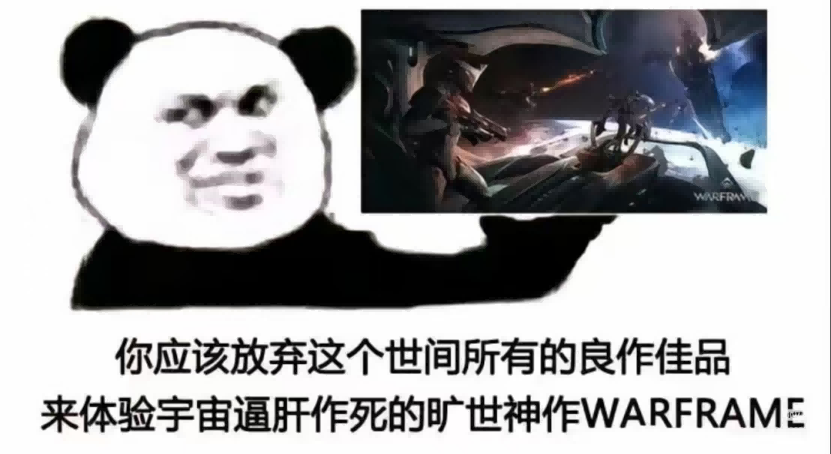
DE's choice is: I know you're in a hurry, but don't rush just yet.
The onboarding process shouldn’t be too simplistic, but it also shouldn’t trigger anxiety among players about their strength. There should be ample positive feedback early on, so that new players feel they have a place in the team; even if players in the early stages haven’t successfully integrated into the veteran community, they can still develop their characters by gradually progressing through the main story.Once you’re in the game, it’s easy to come across comments like, “You’ll figure it out as you grind.” At the same time, within this game logic—where “hard work equals strength”—players’ anxiety about exploration naturally diminishes quickly.
In the fall of 2025, the "The Vallis Undermind" update introduced a tutorial mission called "The Teacher," which was developed in the early stages by Sumo Digital in coordination with Tencent.It follows directly after the basic beginner quests, breaking down complex systems layer by layer and wrapping them in a narrative framework, thereby further reducing new players’ reluctance to engage with and experience the game.

For veteran players, *Warframe* has a different approach. For longtime fans of hack-and-slash games, overly inflated stats have lost their meaning. So, in the “Ancient Peace” update released in late 2025, the development team introduced two systems to expand the game’s gameplay in new directions: Deep Text and Tower Climb mode.
The benefit of the “Land of Decay” tower-climbing mode is that the rewards you receive for each run are very consistent and generous—such as components for the new Uriel armor, rare weapon blueprints, and resources used to exchange for max-level empowerments.As always, this avoids the anxiety caused by uncertainty. Although the grind and difficulty are extreme (for example, boss battles feature instant-death mechanics), the essence of this mode lies in the fact that while a single run doesn’t take long, repeated battles tie the high-intensity combat feedback to the story behind the deep text-based system.Through this kind of horizontal gameplay expansion, the development team has managed to keep veteran players’ online time at a consistently high level without simply cranking up the numbers.
The Deep Text System, on the other hand, is a rather unique social and story mechanic. Its unlock path is embedded within the game’s reputation and story systems.Take Rother from “The Three Demon Brothers” as an example: to unlock all of his storylines, you must defeat him a specific number of times—21 times in total—in “Land of Decay” mode to gradually unlock voice messages and memory fragments.There are even “dialogue branches” in conversations; different dialogue options lead to completely different story paths, giving it a bit of a dating sim feel—in a way, it’s also a kind of Galgame.

Not all players are willing to accept this type of expansion. Quite a few players aren’t buying it, feeling that these mandatory reading segments disrupt the flow of combat, and that the penalty system—where choosing the wrong option leads to mission failure—is very unsettling for players accustomed to pure, non-stop action (though, of course, many others can’t stand the design that requires flirting to advance the plot).However, from a long-term operational perspective, the in-depth text system—through its highly predictable two-dimensional feedback—has indeed extended the content consumption cycle and generated plenty of new topics for community discussion.
The core philosophy behind these two playstyles—one for new players and one for veterans—is actually the same: to avoid putting players under pressure to do certain things, while still offering enough depth for those who want to dive in.
05
Capital is coming in? That's a good thing.
In 2019, DE faced a major challenge in its operational history.
At the time, the studio had plunged headfirst into a development quagmire that lasted several years, releasing three consecutive updates—each riddled with randomness, bugs, and the question, “What the hell are you doing?”—which sent the player community’s morale plummeting.This update cycle—from “Kuva Lich” to “Channeler” to “Crimson Spear”—was even dubbed the “Notorious Trilogy.”
The problem lies in several areas. Take the “Navigation Star Ship” as an example: first, there are the resource requirements and time commitment. In the initial version, the ship-building process was extremely tedious, while mission rewards were extremely meager. Completing a single Navigation Star Ship mission often took over an hour, yet the rewards weren’t even as good as running a regular mission on the ground.Second, there were frequent technical glitches. During the early launch period, the spacecraft mode suffered from significant frame rate drops and crashes, as well as critical bugs such as “lag causing players to get stuck in the launcher” and “mission rewards failing to sync.”
Even more problematic is the isolation of the gameplay—the Star Ship system is almost completely disconnected from the original Warframe system, leaving players feeling as though they’re not playing *Warframe* but rather a low-quality space simulator.
Operational data is also sounding the alarm. In March 2019, when Season 1 of “Midnight Waves” launched, the game was still at the peak of its popularity, with daily active users on Steam reaching a high of 115,000.However, over the following six months, content updates virtually dried up, and by October 2019, the number of active players had fallen below 60,000—a decline of more than half.
The problem with DE isn't just that "they released a failed version," but that the entire content production schedule went awry—in pursuit of a grand new system, they put all other content lines on hold.

Ultimately, this comes down to a bottleneck in industrial production capacity. At the time, DE was still a medium-sized studio with a few hundred employees. As 3D asset precision continued to increase and content was consumed at an ever-faster rate, it became increasingly difficult for a single studio to simultaneously support both “developing new systems” and “maintaining existing content.”The disastrous launch of "Channel Star Ship" was, at its core, a concentrated manifestation of insufficient production capacity.
Faced with this slump, DE adopted an unusual strategy—"looking back." The "Warframe Revised" update, released in early 2020, spent several months addressing underlying issues that should have been fixed long ago—optimizing performance, adjusting the reward curve, and streamlining cumbersome systems.
Although this fix wasn’t exactly exciting, it pulled the game back from the brink of collapse. It also helped DE realize one thing when planning future content: they must focus on both content innovation and industrial-scale production capacity.
At the end of 2020, DE’s capital structure underwent a major transformation. Through a subsidiary, Tencent spent approximately $1.4 billion to acquire Leyou Group, DE’s core shareholder, in a full acquisition at a significant premium.
With the completion of this deal, DE, along with other assets under Leyou, was incorporated into Tencent’s vast empire. This news sent quite a shockwave through the *Warframe* player community. Many players expressed concerns about data privacy and security, fearing the game might veer down the path of “pay-to-win.”
On the very same day the acquisition was announced, DE issued an open letter to all players, in which it made three clear commitments: First, DE will absolutely maintain its creative independence; second, it will not alter any aspect of *Warframe*’s development direction or business model; and third, it will never allow external investors to interfere in the studio’s day-to-day operations.

As it turns out, this was not just PR rhetoric. Just as Tencent has done with its overseas subsidiaries—such as Riot Games, Supercell, and Epic Games—it has assumed the role of a purely financial investor, acting as a “strong support system in the background while maintaining a low profile on the front lines.”Tencent supports DE with its vast computing resources and AI capabilities, but it never interferes with specific system design, the pricing of in-game items, or the direction of the storyline. This clear demarcation of responsibilities is key to DE’s ability to remain unscathed amid the wave of cross-border capital mergers and acquisitions.
If creative independence is the soft condition that allows DE to maintain its core principles, then the industrial-scale production capacity provided by Tencent is the hard foundation that will enable *Warframe* to double its content update frequency by 2025.
In 2025, under Tencent’s coordination, Sumo Group—a UK-based company also controlled by Tencent—abandoned some high-risk original IP development projects and refocused its core production capacity on co-development, an area where it excels, becoming deeply involved in the content production pipeline for *Warframe*.The aforementioned “The Teacher” beginner quest was developed with direct involvement from Sumo Digital. This type of industrialized collaboration goes beyond simple art outsourcing; it involves joint development of level design, system implementation, and even underlying logic.

Sumo’s involvement has injected valuable, large-scale industrial production capacity into DE. Creative Director Rebecca Ford told Eurogamer in an interview that, in the history of TennoCon, they’ve never been able to review missions for the fall update right during the event as they can now.Manpower is power. Leveraging Tencent’s financial backing, Sumo Group and DE maintained a breakneck development pace, successfully doubling the quarterly content release frequency for *Warframe* and launching several major expansions throughout the year, including *Warframe: 1999*, *The Vallis Undermind*, and *The Old Peace*.
This form of industrial collaboration, underpinned by capital allocation, fundamentally resolves the issue of declining user engagement in established GaaS games caused by a lack of fresh content, and serves as the key factor enabling it to break records in 2025.
06
Hard Skills and Soft Design: Both Are Essential
According to research data from McKinsey, 20% to 40% of the value of a game company’s technical assets is actually technical debt.
Technical debt refers to the “code that’s just a mess” adopted in the pursuit of rapid time-to-market under the “get it up and running first” mentality. This immature code will eventually evolve into a legacy system that’s difficult to maintain, leading to system crashes, cybersecurity risks, and a precipitous drop in development efficiency.
"Warframe" has been in operation since 2013, and with over a decade of intensive updates, one can only imagine just how daunting the accumulated technical debt has become.DE’s approach is to take a forward-looking, step-by-step approach to refactoring the game from the ground up, willing to endure short-term growing pains in order to thoroughly eliminate the root causes of the problems.
Let’s start with the core gameplay.In the game’s early versions, both the movement and melee systems had serious structural issues. The early movement system relied heavily on the attack animation of a specific melee weapon, and players exploited a physics engine glitch known as the “helicopter” to achieve high-speed movement. While this mechanic was quite fun to use, it severely limited the vertical design of levels and players’ ability to use other weapons.
To that end, DE introduced “Parkour 2.0” in Update 17, completely eliminating the reliance on specific weapons and introducing a universal movement system for all Warframes that includes bullet jumps, wall jumps, and gliding.While this change initially upset some players accustomed to the old gameplay style, in the long run, it gave the game a unique level of extreme mobility, becoming one of *Warframe*’s most defining features.

Now, let’s talk about melee combat. The early melee system featured a mechanic called “Guidance,” which later gradually devolved into a monotonous “spin-and-slash” damage-dealing pattern—it was incredibly boring.To address this issue, DE spent several years implementing “Melee 3.0” in multiple phases, introducing all-new heavy attacks, aerial combos, and seamless, rapid switching between primary and secondary weapons.
The courage to completely overhaul a core combat system that has been in use for many years is rare in the entire gaming industry; the company is willing to take the risk of disrupting the habits of longtime players for the sake of the game’s long-term health.

In addition to its ongoing updates to gameplay, one of the most praised aspects of DE is its graphics; among players, *Warframe* has long been regarded as the online game with the best graphics.
Achieving this would not have been possible without the updates to DE’s underlying graphics engine, which also demonstrate remarkable engineering prowess. Since its debut in 2008 with *Dark Zone*, the Evolution Engine has continued to evolve.
By the time the "Battle for the New Era" expansion was released, they were already using the enhanced graphics engine. However, it wasn't until the "Dual Derivation Paradox" update in April 2023 that the enhanced engine became the default setting on PC.

In older, classic engines, lighting relied heavily on pre-calculated static maps, and the number of dynamic light sources was strictly limited—even adding a muzzle flash could cause the entire scene to be redrawn. Reflections and materials were also low-resolution, resulting in noticeable “jumps” when switching between them.In contrast, the Enhanced Engine fully supports deferred rendering, moving away from rigid static lighting. It supports a large number of dynamic light sources and shadow casting, significantly reducing the load on the CPU. Reflections have been upgraded to precise, real-time screen-space reflections, and materials now utilize physically based rendering technology.
This comprehensive set of upgrades enables level designers to create dynamic day-night cycles and complex light-and-shadow interactions, making large-scale special-effects scenes possible.
During the engine upgrade process, DE ran the engine in parallel for quite some time, and only gradually made it the default option once the optimization level of the enhanced engine met the required standards. It’s fair to say that this approach of technological inclusivity—ensuring that “no hardware user is left behind”—is the foundation for their ability to maintain a massive monthly active user base.
07
Focus, Focus, and Focus Again
As *Warframe* entered its 11th year of stable operation, DE executed a seamless internal leadership transition at the end of 2023. In October 2023, founder James Schmalz, who had led the company for exactly thirty years, stepped down from his role as CEO.The reins were smoothly handed over to Steve Sinclair, the driving force behind *Warframe* and its former Creative Director. Meanwhile, Rebecca Ford—known as “Lotus Mom” (the voice actress for Lotus)—who has accompanied players for over a decade and understands the community inside and out, took over as Creative Director, assuming full responsibility for the future of *Warframe*.
Unlike what often happens in many small and medium-sized teams, this leadership transition did not spell disaster.
On the contrary, after the transition—faced with the broader industry landscape and the previous issue of scattered resources—DE made a decisive decision that proved to be the right one in the long run: it completely shut down its external publishing division and terminated its publishing partnership with the third-party game *Pathfinder*.Instead of continuing to flounder in the publishing sector—an area where it lacked expertise—DE pulled all its funds, talent, and computing resources back in-house and focused them on its flagship IP: the main story updates for *Warframe* and the development of the all-new project, *Soulframe*.
By focusing on its strategy, DE can free up resources to address the ultimate challenges posed by a bloated system, “stat inflation,” and player burnout—all resulting from over a decade of accumulated gameplay mechanics.
Between 2024 and 2026, DE played two trump cards through a soft reboot.
The first entry is *Warframe 1999*. Following experiments like *The Duality Paradox*, which sought to push the boundaries of the game’s genre, DE released one of its boldest—and most popular—expansions to date in December 2024.
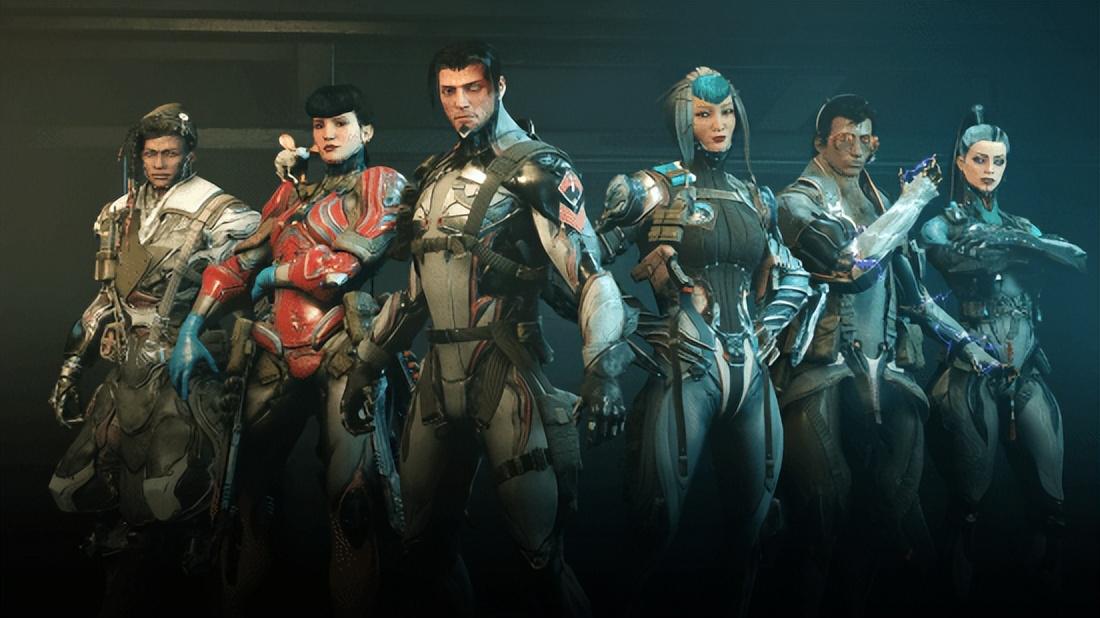
While retaining the existing Star Chart structure, this expansion introduces a parallel world trapped in time—the city of Höllvania on Earth in 1999.In this end-of-the-millennium apocalyptic world, trapped in a time loop due to an experiment conducted by Orokin scientist Albrecht Entrati, players will battle using “Prototype Juggernauts” featuring all-new mechanics.These prototype Juggernauts include Excalibur, Mag, Volt, Nyx, Trinity, and the Protoframe form of the 59th Juggernaut, Cyte-09.
From a system design perspective, in terms of gameplay, it has taken a bold step to free players from the various complex systems that have accumulated over the past few years.The expansion deliberately downplays overly complex star-system space combat, clunky Wraith Mechs, and commanders’ invincibility abilities, refocusing players’ attention on *Warframe*’s most core and pure combat loop—the coordination of gunfire and Warframe abilities.
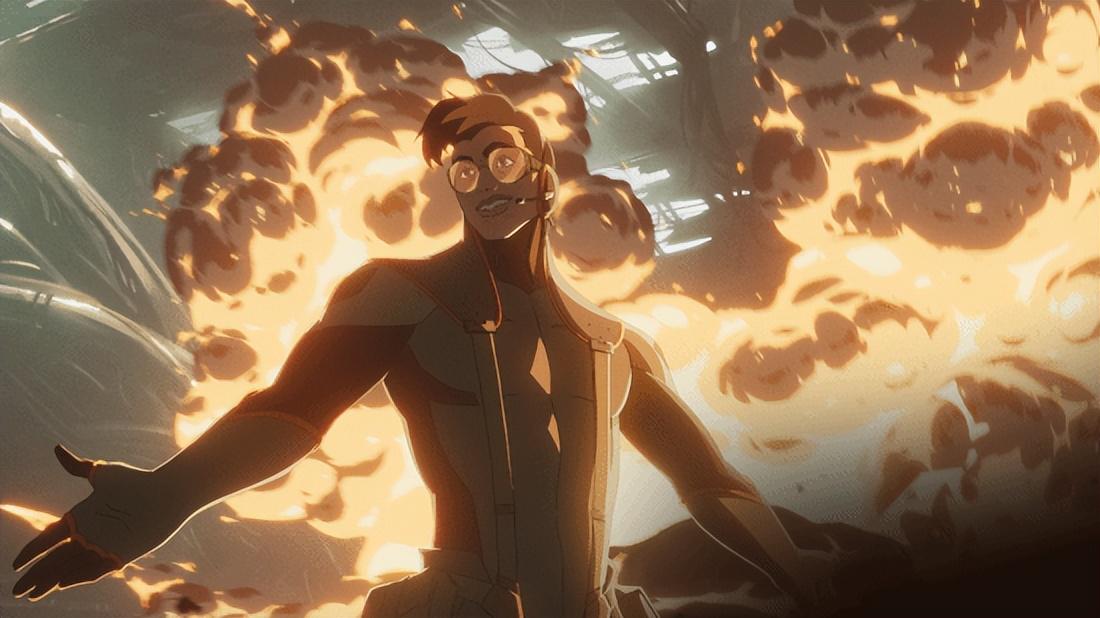
Second, in terms of emotion and immersion, *1999* breaks away from the cold, clinical feel of the past decade—where “silent war machines slaughter faceless grunts.”It introduces an NPC faction called “The Hex” and, for the first time, incorporates a millennium-era retro-style K.I.M. chat interface along with a romance and affinity system.This depth of text-based interaction and character development, paired with the era-appropriate music, has successfully breathed unprecedented vitality into this classic game.
It’s fair to say that without the groundwork laid by *1999*, *Peace of the Past* would never have come to fruition.
The second card is *Soulframe*.
DE's brand-new project—first unveiled in 2022 and set to launch its Founder Pioneer Test by the end of 2025—is their ultimate weapon for mitigating the risks associated with relying on a single IP.
As a “sister title” to *Warframe* rather than a direct sequel, this game—though built on the same Evolution Engine—represents a complete departure from its predecessor in terms of gameplay and art style.If the current ultimate experience in *Warframe* is high-speed maneuvering combined with screen-clearing carnage, then *Soulframe*’s core combat focuses on heavy, slow melee combat with cold weapons, centered on parrying and the dynamics of stun effects.
DE is well aware that, after numerous iterations of parkour and skill enhancements, the combat framework of *Warframe* has essentially reached its limit in terms of the skill ceiling and strategic depth of its melee system, making it difficult to create a breath-taking combat experience like that of *Elden Ring*.As a result, *Soulframe* carries two important strategic missions.

First, it resets numerical inflation. By starting from scratch, it offers a pure, cold-weapons fantasy haven for hardcore players who crave the challenge of pushing the limits of gameplay and have grown tired of screens filled with special effects and damage numbers.
Second, it helps spread commercial risks and share infrastructure. Developing a brand-new massively multiplayer online game typically involves enormous risks, but *Soulframe* shares the same server architecture, cross-platform engine, and global player account system with *Warframe*—all of which have been battle-tested over more than a decade—significantly reducing the trial-and-error costs associated with development and operations.
This strategy of simultaneously cultivating a second growth curve within the same massive user base may well be the foundation of DE’s rock-solid resilience in the face of industry volatility over the next decade.
For Evergreen Games, striking a balance between new and veteran players, balancing new ideas with established mechanics, and—most importantly—standing alongside players to combat the burnout that comes with long-term gameplay and the emotional crisis caused by accumulated mistrust—none of these tasks is any simpler than making a single game.
DE Over the years, everything we’ve done—constantly revolutionizing game technology from the ground up, designing a highly sophisticated economic system, and maintaining an ongoing dialogue with players—has ultimately been for one purpose: to build a set of deeply integrated, highly coherent, and nested systems, and to let players enjoy them.
Ultimately, the key to survival for service-oriented games has always been the word “service.”
原创文章,作者:游茶妹儿,禁止转载:https://youxichaguan.com/en/archives/216084