Note: All images related to Version 3.0 in this article are from early versions and do not represent the final quality.
Earlier today, the results of the 2025 TGA Awards were announced. Cygames’ *Umamusume* ultimately won the 2025 Best Mobile Game award, while *Naruto: Storm* was nominated for Best Mobile Game at the TGA for the second time but once again missed out on the trophy.
Fortunately, *Mingchao* still won the TGA 2025 Players' Choice Award, and when the results were announced, Bilibili’s official TGA livestream was flooded with comments from fans of the “Great Ming Dynasty.”

This doesn’t surprise me, because looking back over the past two years, *Mingchao* has consistently sought to forge its own path. With every update, *Mingchao* has continually strived to bring players new surprises:Whether through cinematic sequences, level design, or character development, from version 1.0 to 2.0, the game has truly made steady, incremental progress—and every effort has paid off.
That is precisely why *Mingchao* has garnered so much attention with its recent 3.0 teaser campaign,Earlier, the supporting character Mo Ning, with her unique transparent body design, racked up over 17 million views on Twitter, sparking widespread discussions and fan creations—including how to cosplay as Mo Ning. Meanwhile, on Bilibili,various 3.0 promotional videos and frame-by-frame analyses by KOLs have also taken the platform by storm.


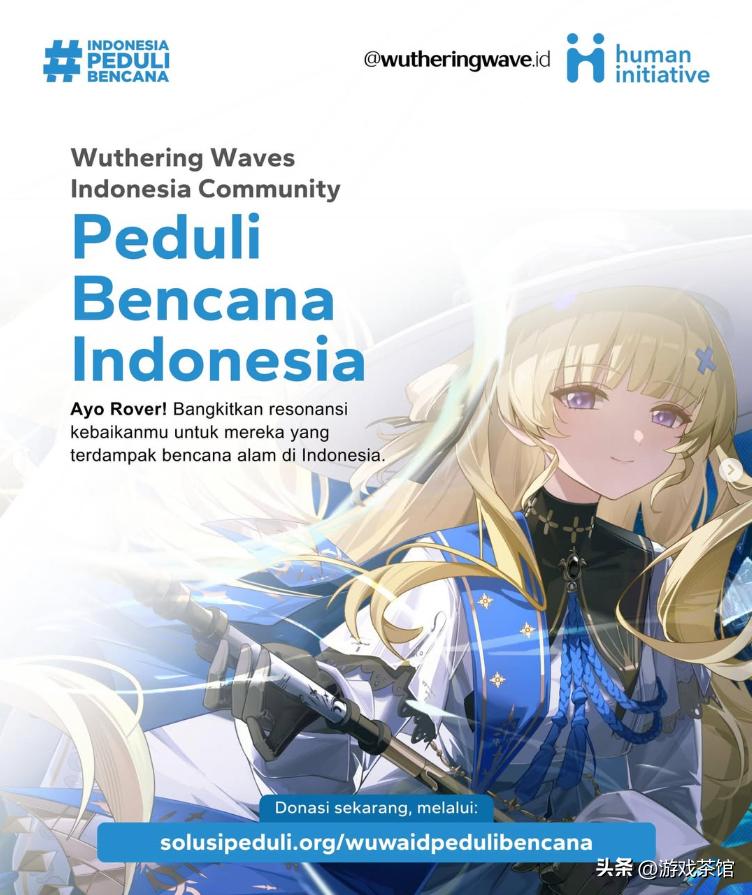
Beyond the game, in Southeast Asia, players have spontaneously organized multiple rounds of charitable donations in the name of Phoebe—one of the key characters in the *Mingchao* story of Li Na Xita. Whether in the form of drinking water, supplies, or funds, this goodwill has transcended dimensions, taken flight, and truly reached those in need in the real world.

With growing recognition from players and increasingly lively preview livestreams and offline events, wanderers from all over the world are connected through *Mingchao*.Therefore, it’s no surprise that *Rise of the Tides* won the TGA People’s Choice Award—it’s truly well-deserved. All of this is the result of *Rise of the Tides*’s meticulous, step-by-step accumulation and continuous refinement in character design, character development, and game quality—a genuine exchange of sincerity for sincerity.
At that time, with the arrival of Version 2.0, *Mingchao* surpassed itself with soaring, heart-stirring adventures. And now, ahead of the release of Version 3.0, countless players—myself included—have had their curiosity piqued by the information and promotional materials *Mingchao* has already released,This is hardly surprising—after all, with *Li Na Xi Tower* setting such a high bar, it was inevitable that player expectations would soar.


During the recently concluded 3.0 preview livestream, the screen was flooded with comments like “It’s the old Ku Shen!” and a dazzling array of SCs—the most vivid demonstration of this anticipation.


However, experience has taught me that in the gaming industry, expectations can sometimes be a double-edged sword. There are far too many examples and lessons that prove the saying, “Great fame often comes with great disappointment,” and managing expectations is absolutely essential to ensuring a product’s smooth launch.
"Tide of Voices" 3.0: Can It Live Up to All This Enthusiasm?
With this question in mind, at Kuro’s invitation, I traveled to Guangzhou this Tuesday (the 10th) to get an early look at some of the content in *Mingchao* 3.0.After the hands-on session, I felt that Kuro continues to explore and expand the “boundaries of *Mingchao*” in terms of content and gameplay. As *Mingchao* knocks on the door of Version 3.0, it has taken a step forward.
01
Inheritance and Transcendence
If I had to briefly summarize my experience with *Mingchao* 3.0, I’d say it can be summed up as “Everything you see is real, and you get more than you expect.”
What does “all true” mean? It means that all the content currently being showcased on social media regarding Version 3.0—including Linnae’s roller-skating mechanics, the vehicle system, and open-world interactions—is not just empty promises. So what does “there’s more to come” mean? It means that what the public can currently see is, at best, just the tip of the iceberg of the adventures in Lahaelo.
If we view 2.0 as a coordinate transformation of 1.0, then the overall experience of 3.0 is a unique extension of the entire *Mingchao* pipeline,Version 3.0 introduces a brand-new map-running mechanism, exploration elements, and the “Sound Skeleton” ecosystem, while the overall visual style of the Lahelo region has shifted from fantasy to retro-futurism.
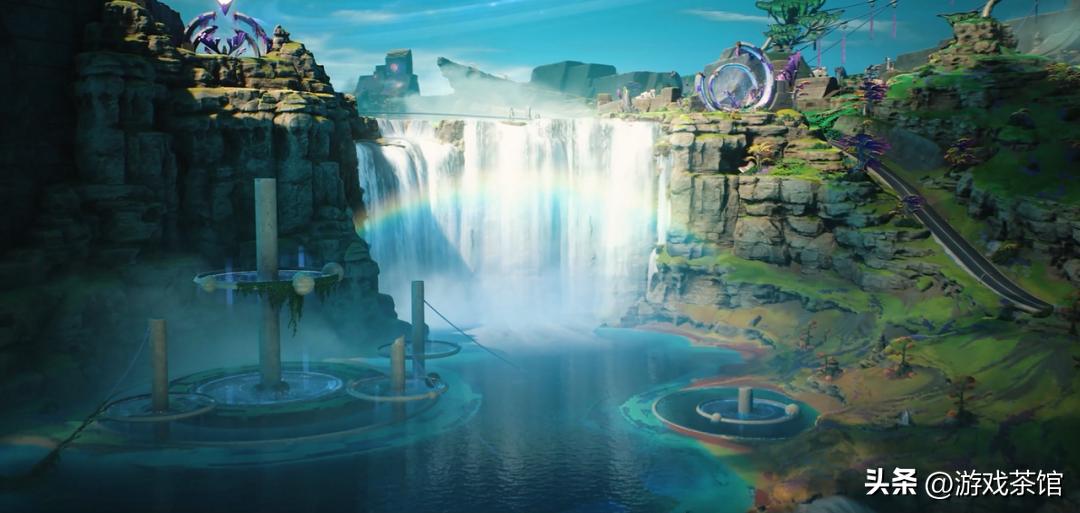
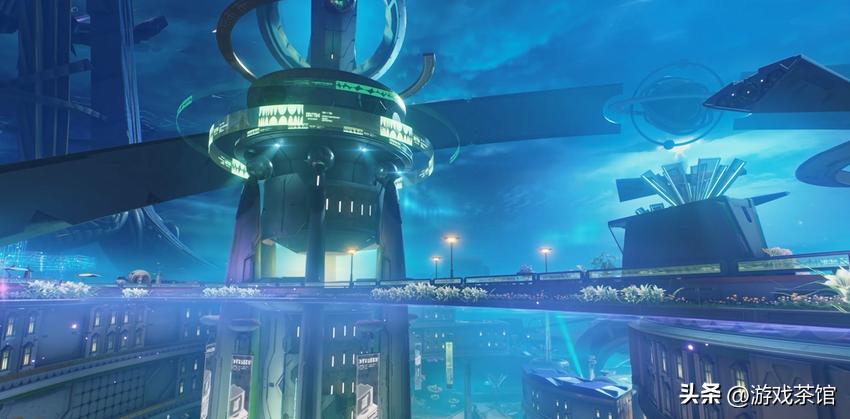
As is well known, since version 1.0, *Echo of the Tide* has been renowned for its spectacular map designs,not to mention the Purple Moon Banyan in the Hualong Region, the Mingu-style Colossus in Beiluo Wilds, the Data Light Pillars in the Black Coast Region, and the Linaxi Tower—not to mention the Qingliu Courtyard, with its ring-shaped aesthetics, Avenue Lin, and countless other examples.
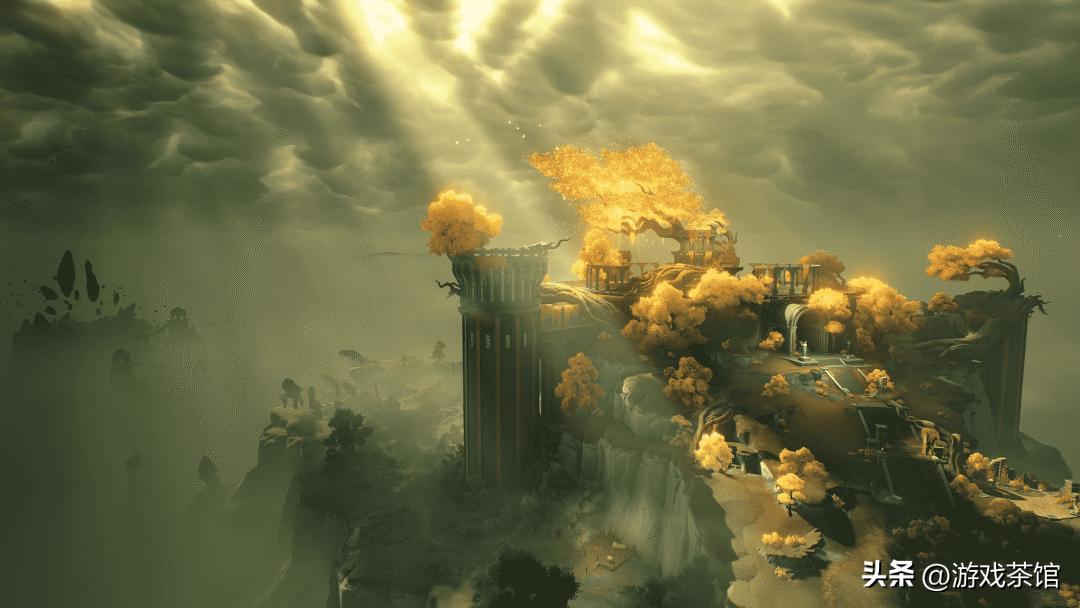
These visually striking shots are what give *Tidehunter*’s vast open world its epic feel. But to pull off this spectacle, simply piling on visual effects isn’t enough; the underlying logic actually lies in *Tidehunter*’s comprehensive terrain and exploration design, which revolves around its unique flight mechanics.
"Soaring" essentially fully unleashes the vertical dimension—the Z-axis—explored in *Mingchao*,and it is precisely for this reason that *Roar of the Tide* can stack numerous elevation differences within its open world, creating a sense of space centered on spectacular vistas. Through these striking landscapes, *Roar of the Tide* is able to guide players’ vertical lines of sight—and to a certain extent, control players who might otherwise fly around chaotically—making destinations clearly visible.
They serve as “signposts” on the map. From a design perspective, they are generally placed at the center of each zone, and Kuro then uses them as focal points to incorporate exploration elements, transforming the traditional linear ground-based map navigationbreaking it down into the liberation of vertical mobility and the decentralized concentration of resource points and gameplay mechanics—which is also the source of the fragmented yet never tedious exploration experience in Version 2.0, *Roar of the Tide*.

Forgive me for rambling on, but the bottom line is that because the flight mechanics were built into the foundation of the entire 2.0 mobility system from the very beginning, *Roar of the Tide* was able to confidently design maps with such significant vertical elevation differences during the 1.0–2.0 phases.
So, what I’m trying to say is that *Mingchao* is an open-world game, and the open world is undoubtedly the core and framework of its gameplay. Furthermore, in any open-world game, the player’s ability to move is the foundational logic of gameplay design.
First of all, as everyone knows by now, Lahiro can’t fly. The “Research Motorcycle” vehicle system has replaced the soaring mechanic as the primary means of movement.
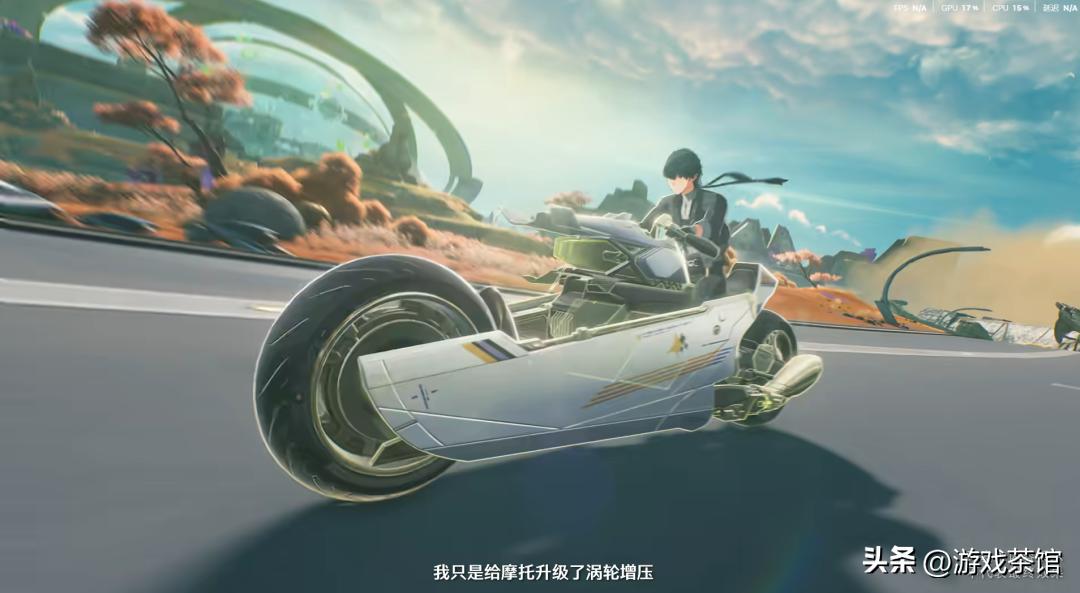
In terms of maneuverability, motorcycles today are relatively lacking in vertical performance compared to the Aoxiang, which has been optimized to take off from a standstill as if plucking a green onion from dry ground.
In the demo version I played, Kuro added a “dolphin jump” mechanic to the motorcycle—the only way for the motorcycle to traverse elevation differences without relying on map mechanics. However, the height the “jump” can reach is ultimately limited, so the vehicle cannot cross terrain with extreme elevation differences, such as that found in Seven Hills.
So, overall, the first impression of the La Helo map is that it is “flat.” Compared to the previous layout, which featured layer upon layer of spiraling ascents and was dominated by nearly vertical structures, most of La Helo consists of a combination of plains and gentle slopes.
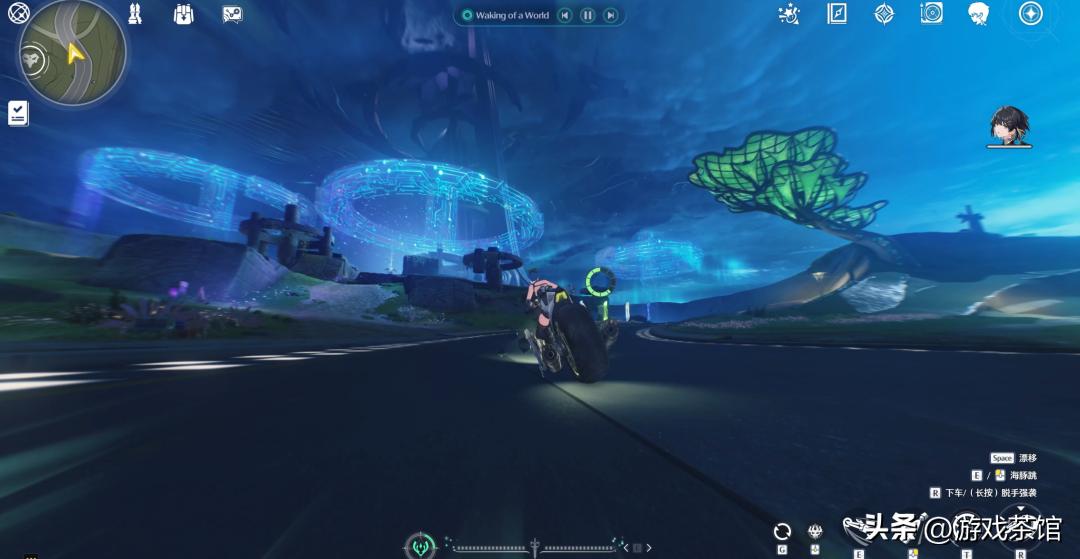
At first glance, this might give some players the impression that “the game isn’t as intense as it used to be.” In fact, I felt the same way when I first started playing, but once you get the hang of it, you’ll realize that the fun of moving around in a vehicle is on a completely different level from the fun of moving around using your character’s abilities.
Previously, in Li Na Xi Tower, the Cat Claw Dash and Soaring abilities emphasized point-to-point movement efficiency, with the player’s movement sequence being “teleport → take off → destination.”during which the player’s gaze would generally remain fixed on the endpoint—whether a wonder or an exploration point—while the details of the map assets in between were effectively blurred.
The movement of ground vehicles, on the other hand, resembles a continuous, flowing line; while this reduces efficiency, it offers players a richer array of details to observe. The "dolphin jump" is designed to extend this streamlined movement experience as much as possible within a controllable height range.
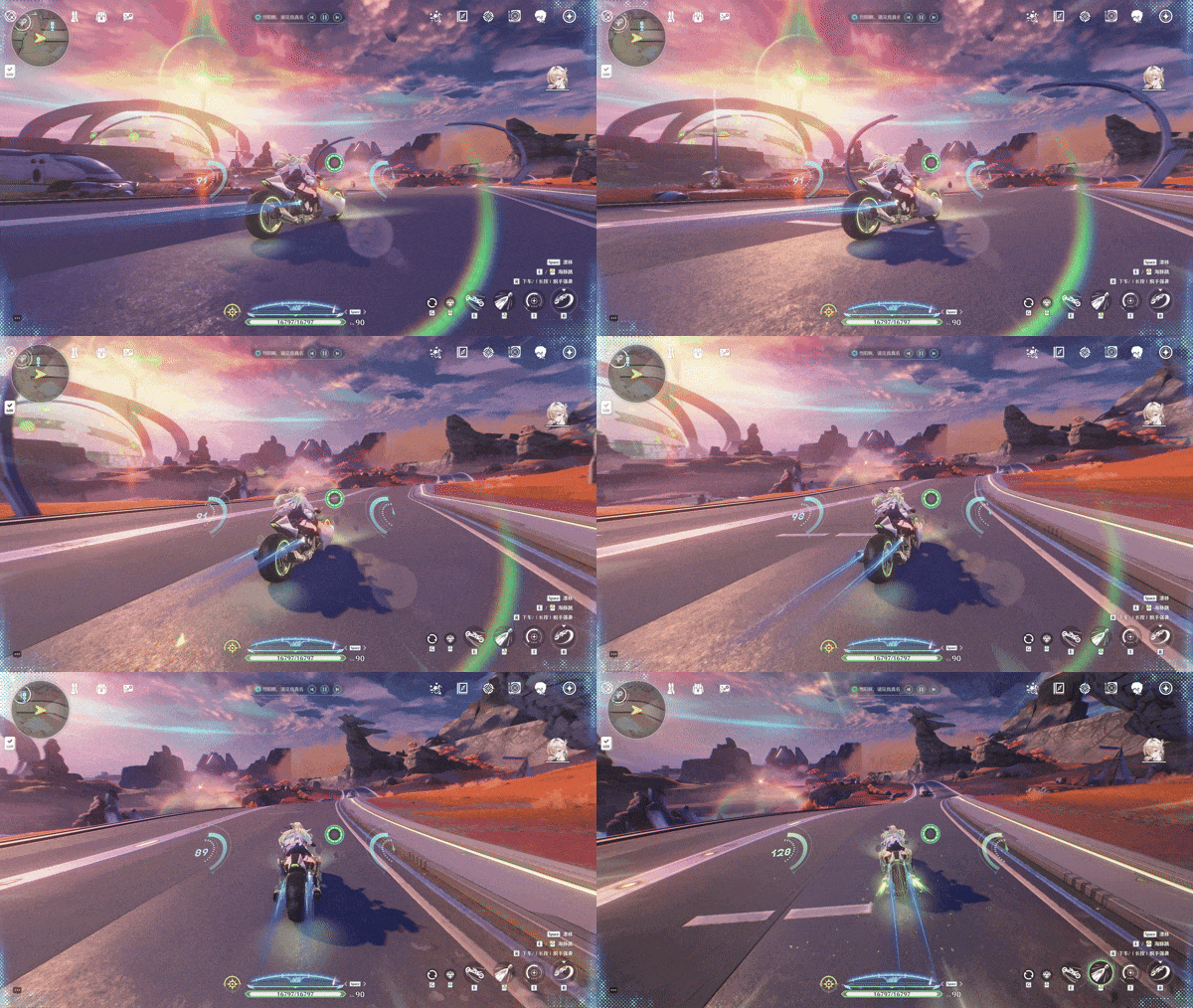
What's more, with the addition of first-person view and the in-car radio, the driving experience feels incredibly immersive.
The joy of driving a vehicle essentially lies in the sense of control and speed that comes from maneuvering a machine,which is also why racing games—one of the “three major genres” (shooters, racing, and sports)—have remained ever-popular. At least in *Roar*, I truly experienced the thrill of anticipating terrain, choosing the right cornering angle and speed, making split-second steering adjustments at the crest of a hill, and even executing a “dolphin jump” to transition smoothly into the next section of the track.
The only issue is that the motorcycle's steering and drifting feel a bit off right now, so there's still room for improvement.
In short, given these circumstances, the new map design for *Mingchao* follows three very intuitive design principles. First, the large elevation changes have been kept within the limits of motorcycle performance. Although Lahaelo looks flat, that’s only relative to previous maps;The elevation changes here no longer take the form of cliffs or steep, vertical sections, but are instead broken down into longer, gentler roads or slopes.
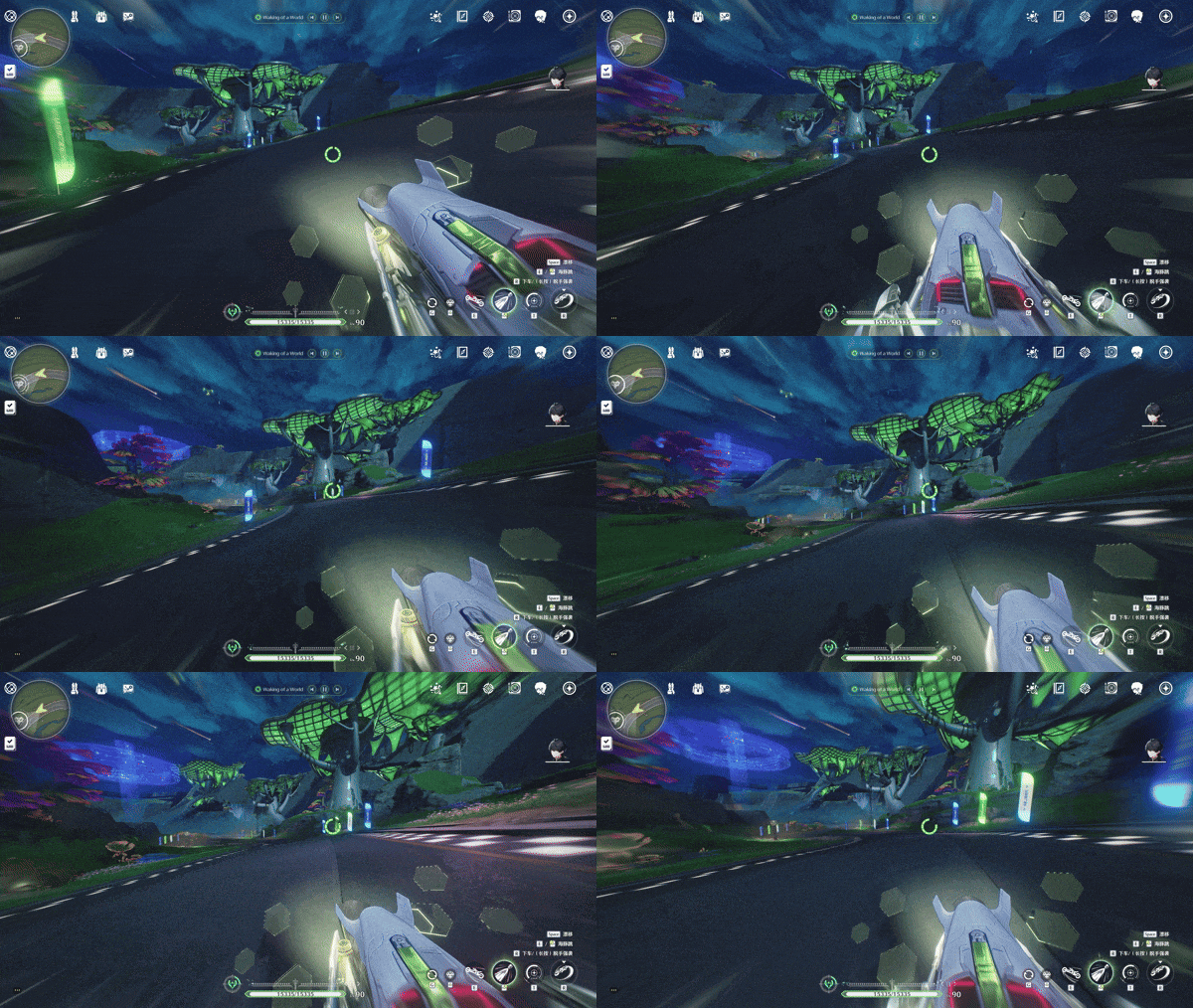
In many areas, it’s clear that the roads weren’t “squeezed” out of the complex terrain—rather, the terrain seems to have made way for the roads. The lanes, curves, and junctions in the distance are visually very distinct.This type of visual path design not only reduces cognitive load during high-speed driving but also makes the map appear “flatter” on a macro level, as the roads themselves require fewer steep elevation changes.
However, this does not mean that La Hailuo lacks elevation changes; it’s just that, compared to Linaxi Tower, the different elevation levels in La Hailuo are connected via a combination of roads and elevated bridges.
Much like Chongqing, many areas of Lahelu feature a blurred distinction between “above ground” and “at ground level.” A road that runs along the mountainside at ground level may, when it reaches its end, connect directly to an elevated bridge that spans over the rooftops of another neighborhood.
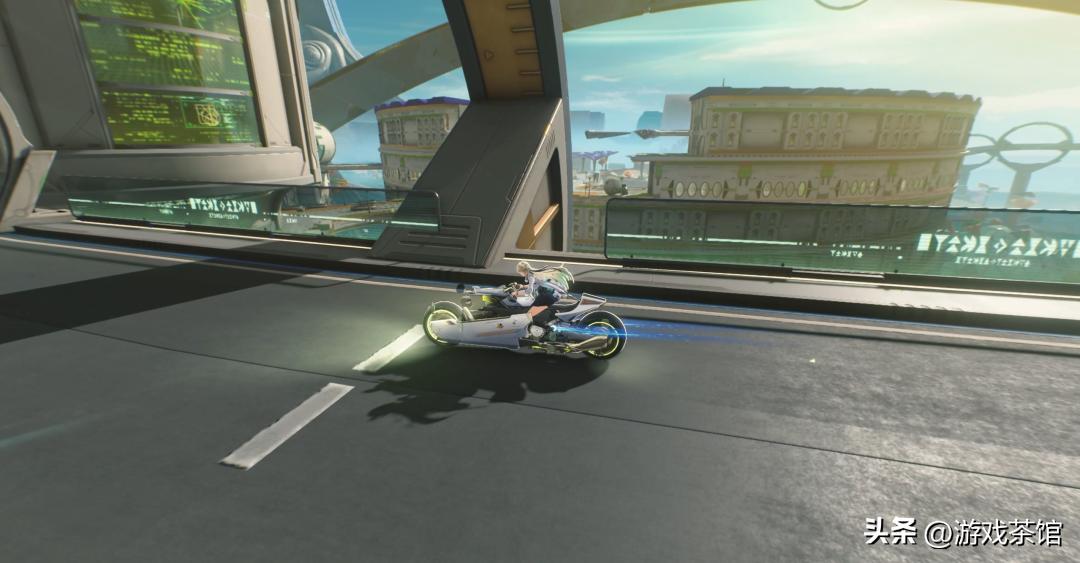
Driving through La Hailuo is much like driving in Chongqing: as the relative elevation constantly changes, you experience shifts between open and enclosed vistas, and get a direct sense of how the road connects areas at different elevations.
Naturally, due to changes in player movement patterns, the layout of the La Hailuo Open World can no longer be “patchy” as it was before, but must instead be arranged in a “bead-on-a-string” pattern along roads as central axes, spread out across gentle terrain.
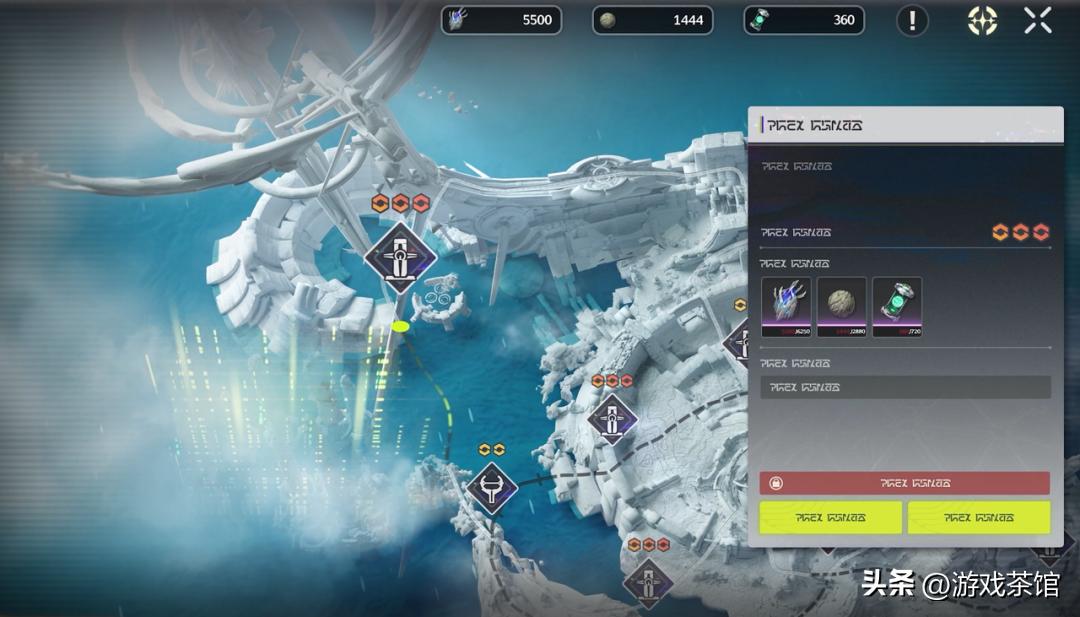
This means players can make the most of the motorcycle mechanics to string together a large number of small objectives along a single route, creating a road-movie-style rhythm where they “clear objectives as they pass by,” rather than frequently using teleports for point-to-point vertical exploration.
In this sense,the transformation of La Hailuo into a road does not come at the expense of its spectacular scenery, but rather makes room for a whole new kind of driving-based exploration. It can be understood as Kuro replacing some of the “looking up” with “looking straight ahead,” using a longer temporal dimension to dilute that massive, one-time visual impact that relies on spectacle.
This is Kuro’s new approach to designing the “Great World.” There’s really no right or wrong here, but based on my actual experience, I think this kind of tweaking offers several benefits. First, it significantly improves the utilization rate of map assets,*Roar of the Tide* is incredibly lavish in its map design, but the previous gliding mechanic made it difficult for players to fully appreciate the details of these maps.
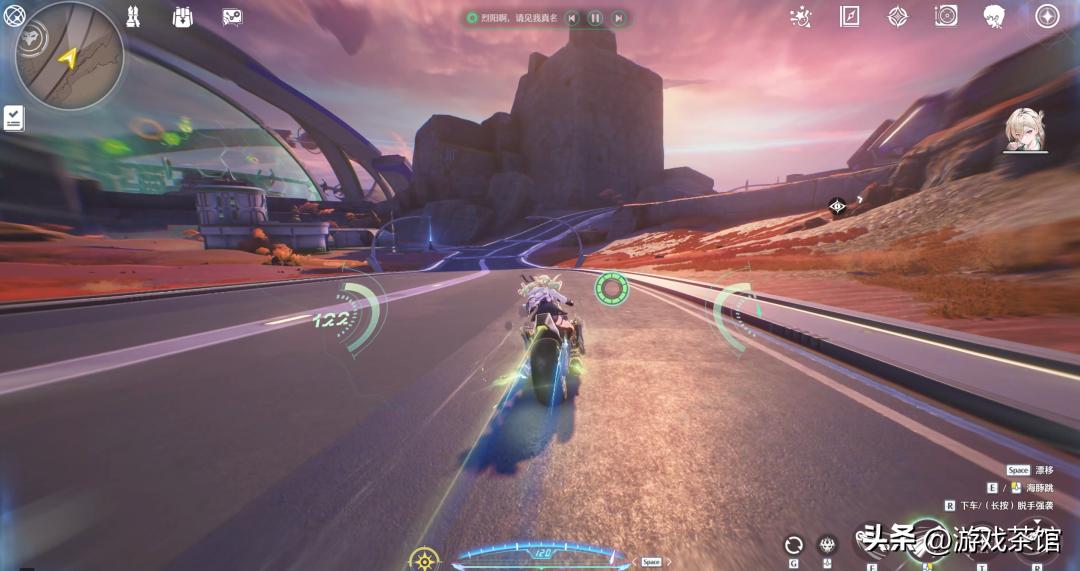
Furthermore, La Hailuo’s choice of a relatively flat base layout also helps reduce players’ cognitive load visually, making it easier for them to form a mental map of the environment. This type of terrain layout is better suited for long-term, recurring gameplay (such as racing) and back-and-forth travel across the map.
At the same time, however, the massive Star Torch Academy standing on the plain and the orbital rocket launch tower—perched in a corner of the sky and soaring into space—remain truly awe-inspiring. Especially in an open landscape like the plain, their presence is magnified exponentially by the stark contrast with their surroundings.
Furthermore, since Kuro was willing to grant players the ability to fly early on to completely eliminate the burden of exploration, it naturally wouldn’t make things difficult for players by forcing them to run through the map in Version 3.0. In areas where the elevation differences are truly extreme and require players to take detours,Kuro has placed interactive waypoints that can be used while mounted—such as motorcycle grappling hooks and throwable robots—which allow players to quickly navigate elevation changes.
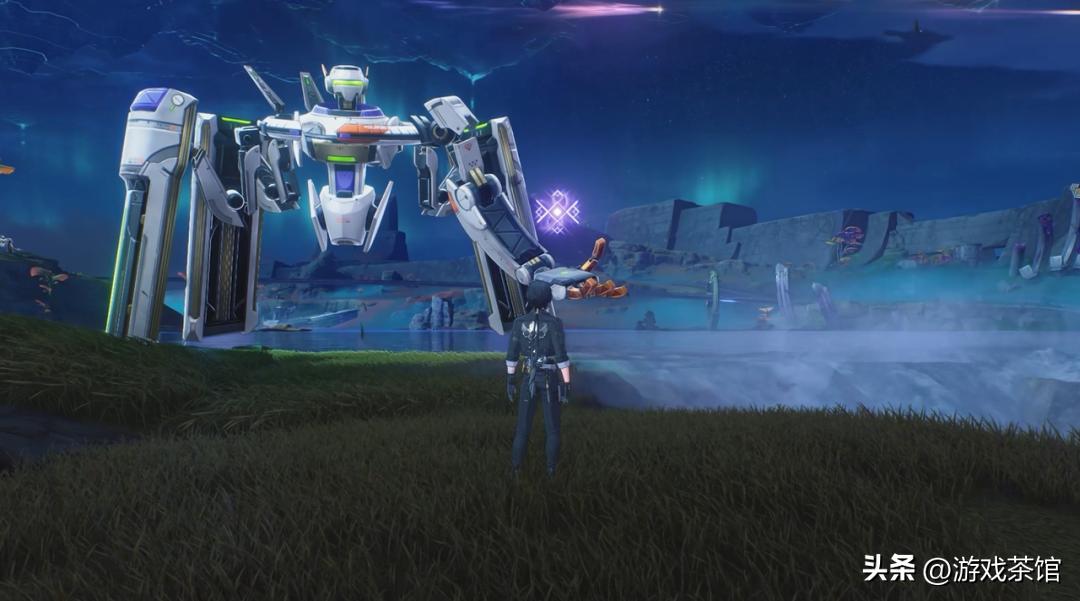
Given the overall level of integration between mobile and map design, I feel that the importance of teleportation anchors has actually decreased significantly in *Tidehunter* 3.0.
As we can see, in terms of movement and map design, version 3.0 essentially continues *Roar of the Tide*’s signature approach to creating spectacular environments and its design philosophy of adapting to—but not restricting—players’ exploration styles. The overall design philosophy of the map has also fundamentally evolved beyond—or even surpassed—previous versions, particularly in terms of shifts in the player’s perspective and the pace of exploration.
In line with this overarching direction, there are many details in Version 3.0 that give me a sense of both continuity and innovation—such as the gameplay mechanics that complement La Helo. Moreover, they’ve shown me the potential for *Roar of the Tide* to evolve toward “emergence.”
02
The Possibility of “Emergence”
You’ve probably heard of the concept of “emergence.” Simply put, it refers to the infinite possibilities that arise from players’ spontaneous behavior within the constraints of limited game rules.Essentially, achieving the state of “emergence” requires developers to design “rules” without using them to constrain players. Even when players act within the framework of these rules, the “story”—that is, their specific in-game experiences—will naturally “emerge” from their own free will.
This is a wonderful concept—the games that come closest to “emergence” that I can think of right now are *Minecraft* and the *Zelda* titles *Breath of the Wild* and *Tears of the Kingdom*.
Nowadays, most games follow a “scripted gameplay” approach, meaning that the player’s primary experience—such as level progression, story branches, and solutions to specific puzzles—is largely predetermined.
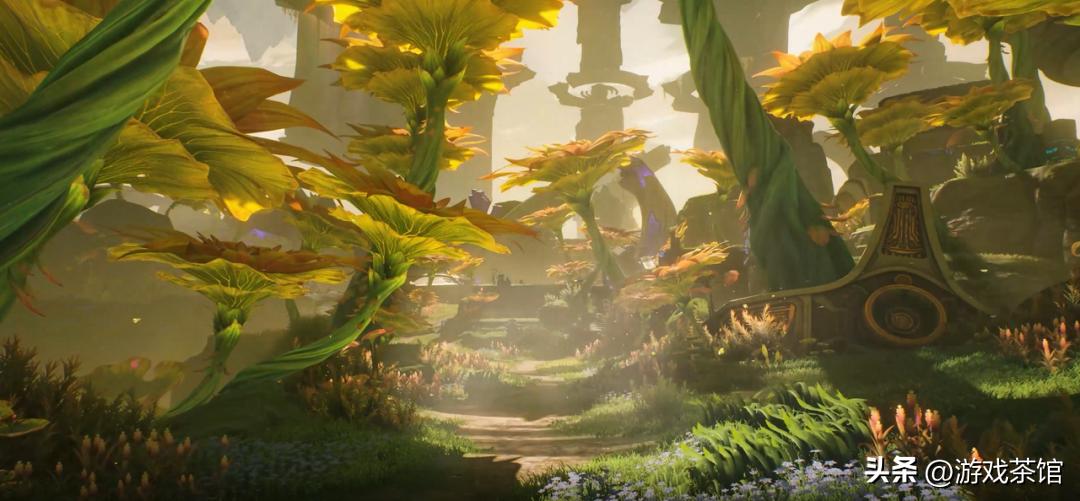
Let's start with motorcycles.
If I were Kuro, when adding the motorcycle, I’d have to figure out how to make it the players’ top choice even though they know it’s less maneuverable than flying and less efficient than teleportation.
Simply put, first, since players will be moving at high speeds on the ground more frequently, we must make it worthwhile for them to stop along the way; second, since vehicles are a new mode of transportation, we need to design a set of “activities to do while in the vehicle” specifically for when “the vehicle is on the field.”
As mentioned earlier, version 3.0 actually provides a fairly comprehensive set of map and movement mechanics. However, if the experience stops at simply being “fun to ride,” it’s actually difficult to get players to truly fall in love with riding motorcycles. What’s truly interesting is that, building on this movement framework, Kuro has added the “Road Network Contracts” feature—a road-building mechanic—to the open world.
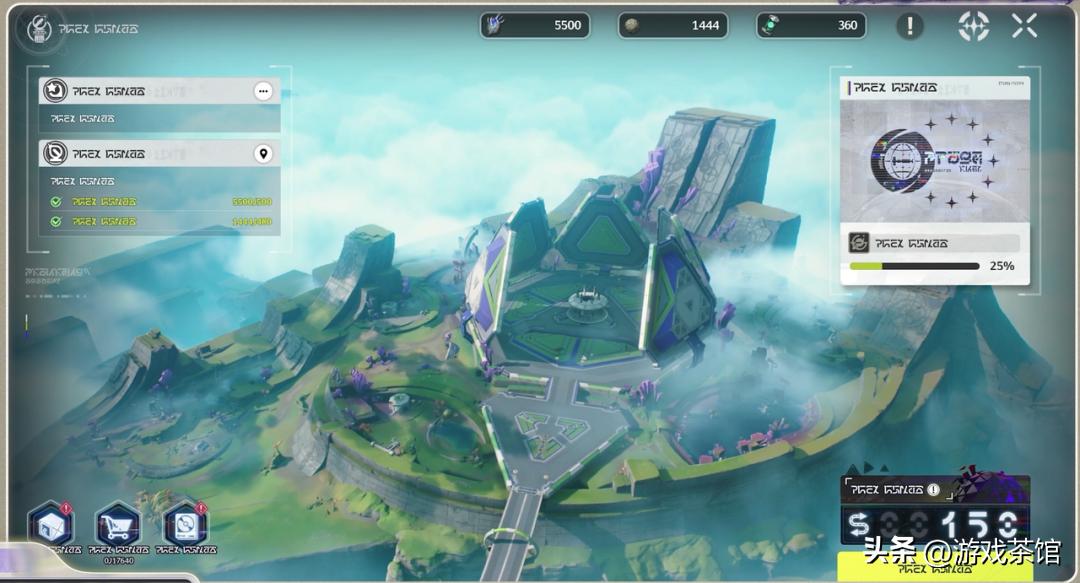
Strictly speaking, road-building in *Tidehunter* isn’t the kind of large-scale engineering simulation; it’s more like a lightweight variation of the infrastructure-building mechanics seen in *Death Stranding*, where you optimize and alter modes of transportation.
After signing a road network contract, players can collect specified resources, locate road network nodes on designated sections of road, and, after submitting the required materials, build or upgrade roads between nodes. When riding on these completed roads, players can use kinetic sprint—that is, accelerate—without consuming nitro.
So if you can build roads before exploring, your travel efficiency will increase exponentially. But the key is that the game doesn’t force players to start construction, since you can still drive on dirt roads, and you can also use nitrous to drift.
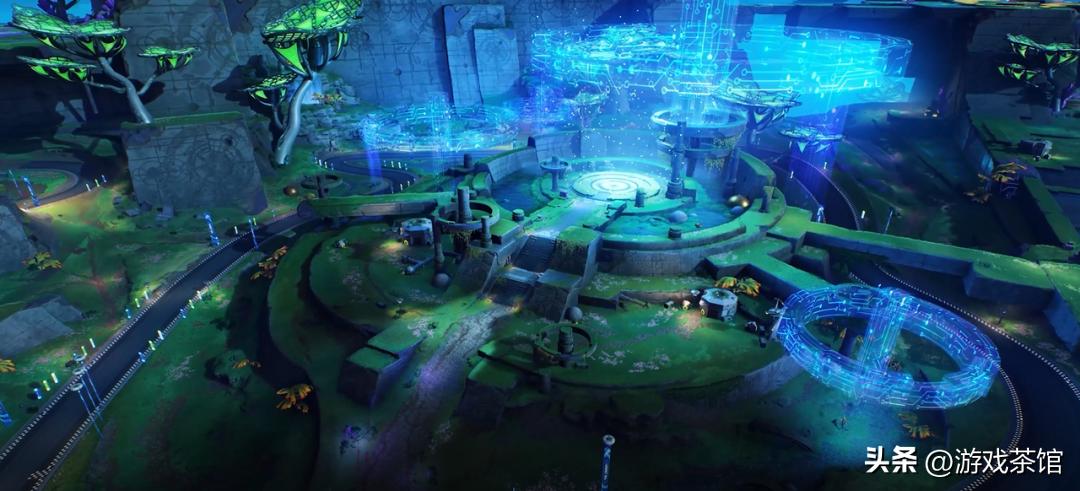
Basically, the Road Network contract only tells players where the nodes are,and what facilities can be unlocked once the road is completed—but the exploration along the way is entirely up to the player. The beauty of this design lies in its relative lightness: it isn’t as essential as in *Death Stranding*, nor does it use a barrage of UI elements and stats to lock players into a new daily routine. Instead, it seamlessly integrates “road-building” into the player’s existing rhythm of daily exploration.
Furthermore, with the implementation of “Feixun”—a chat app-like feature—not only can the character profiles of certain characters be fleshed out through conversations, but the Road Network Contract will also use this platform to announce unexpected incidents on the roads, such as displaced people blocking traffic.
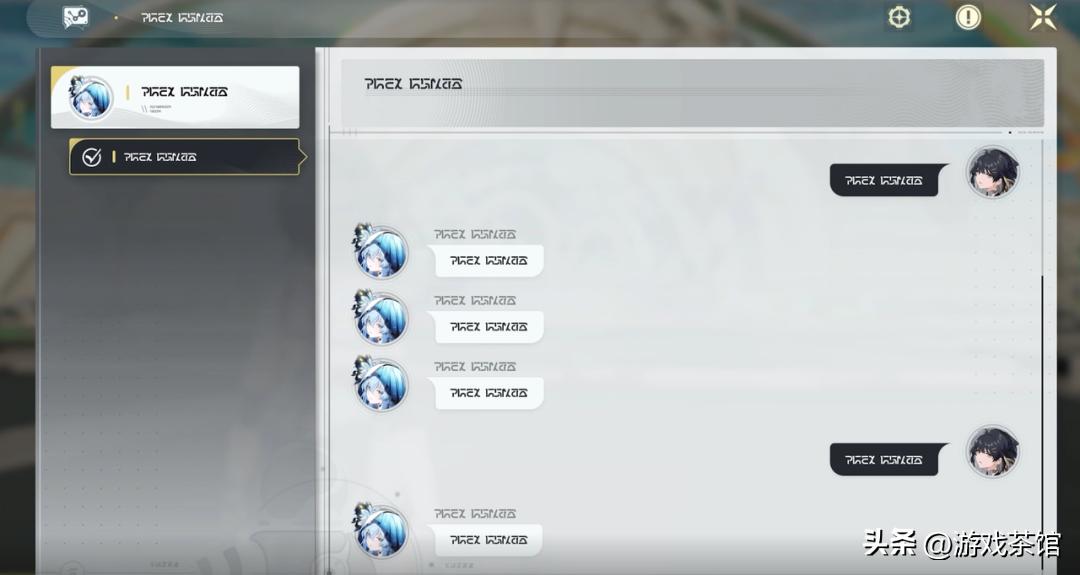
In addition, NPC vehicles traveling on the roads—such as the ramp trucks seen in *GTA* or *Mario Kart: World*, or vans capable of collecting resources—along with exploration opportunities and map events scattered across the plots on either side of the road, all contribute to the gameplay experience of traveling along the highway.
In a sense, this system centered on road-building has already begun to show the early signs of “emergence”: *Mingchao* merely provides the rules for road-building, but the subsequent actions taken by players are not mandatory—they arise spontaneously.
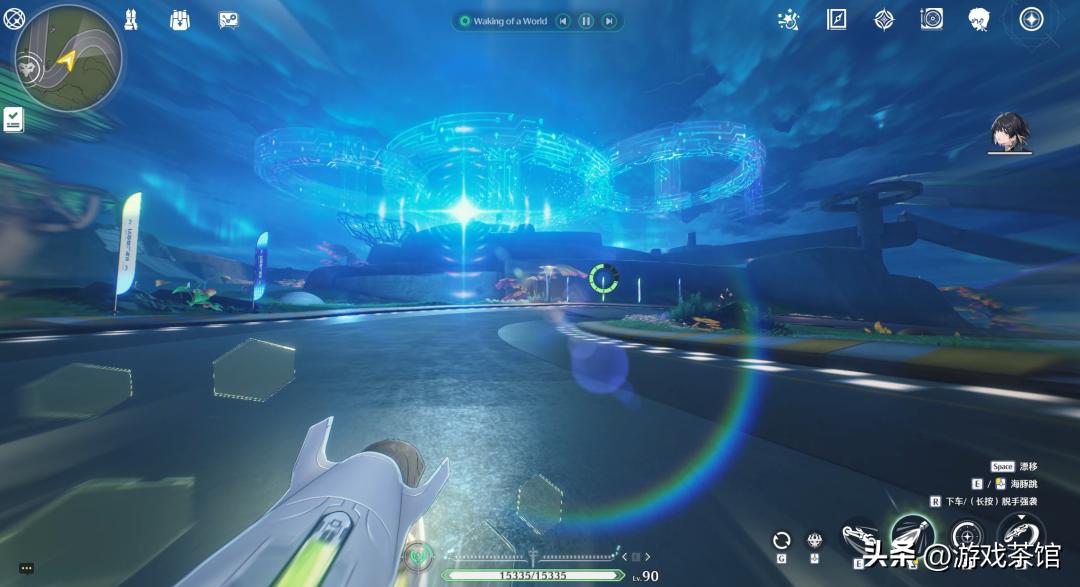
As for the motorcycles themselves, in addition to exploration, *Roar of the Tide* has also integrated them with the character progression and combat systems.
When entering combat, players can use the expedition motorcycle to aggro enemies or as a prelude to their opening combo. Additionally, the Ethereal Magnetic Storms in the Lahaelo region require the motorcycle’s built-in protective shield to reduce the debuffs they inflict.
The motorcycle comes with a progression system. By exploring the map and completing road network contracts, you can upgrade your motorcycle to unlock enhanced mobility and combat support.
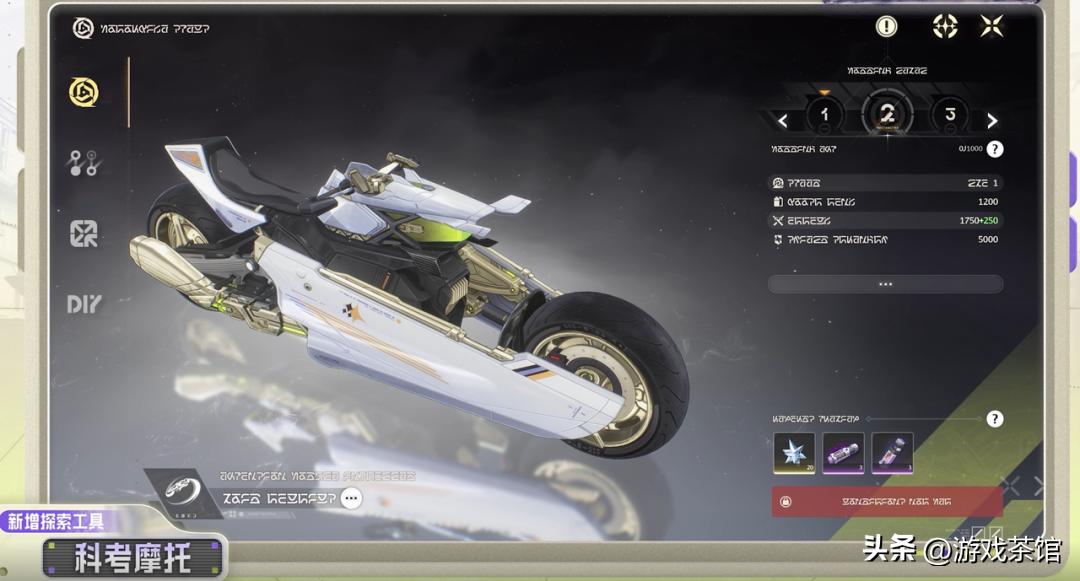
Thanks to these features, the motorcycle in *Roar of the Tide* ultimately evolves into a multifaceted gameplay element—serving not only as a means of transportation and a tool for exploration, but also playing a role in every phase of the battle against Lahelo. *Roar of the Tide* seems to be deliberately shaping it into a true interactive interface, rather than a mere, optional speed booster.
For example, players can simply summon a motorcycle to simulate parking in the real world, or change the motorcycle's paint job.

This combination of vehicle customization and the "useless-yet-useful" mechanic is designed to recreate the interaction between people and vehicles in realistic car simulation games.
In addition, version 3.0 features another set of innovations that left a deep impression on me: weather control and the exploration of the Sun Spirit.
The current version of *Mingchao* now allows players to “actively control the weather” at the engine level; simply by using the weather control device, they can freely change the weather in Lahai Luo.
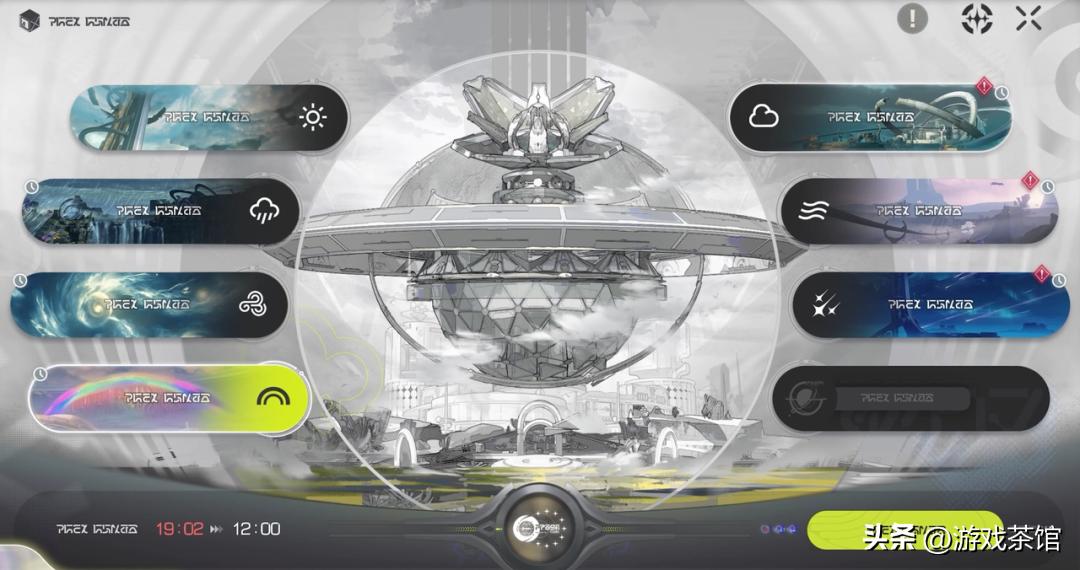
It’s a bit of a shame, though, that the current weather controls haven’t really been formally “gamified” yet; they’re still mostly just a feature.
However, given Kuro's usual approach, I would actually view this as a very interesting teaser.
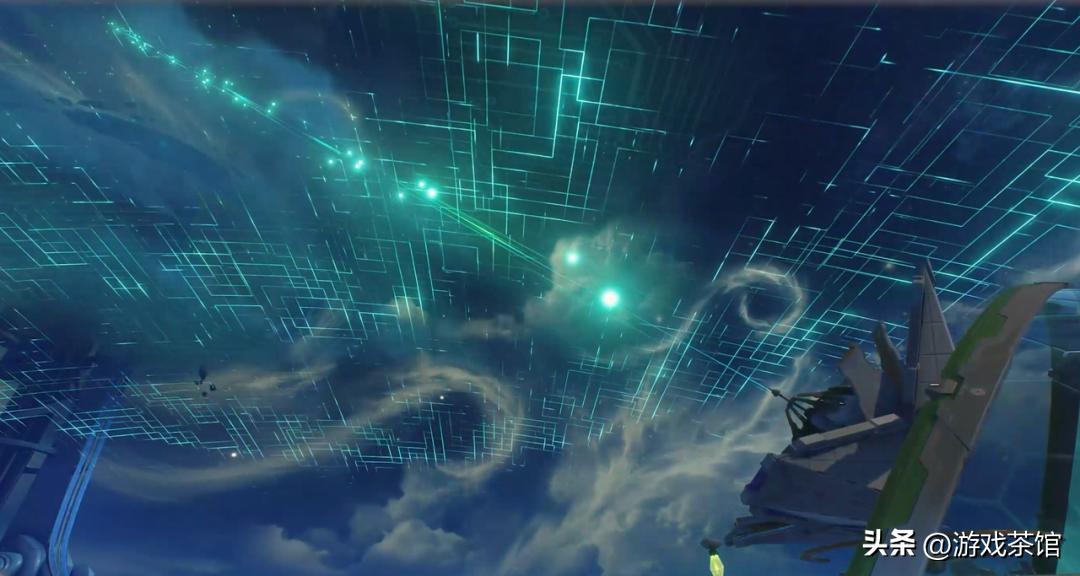
Looking back, it’s actually easy to see that one of Kuro’s habits is to quietly introduce one or more technical experiments in a particular version—first to prove that they’re technically feasible—and then, based on player acceptance and feedback, gradually develop them into full-fledged gameplay features.
Looking back, the "Heaven and Earth Reversed" feature from the Ji Yan story became a permanent system in Avenue Lin and a first-person perspective in Gabellina, and in Version 3.0, it also became a permanent feature in Moto.
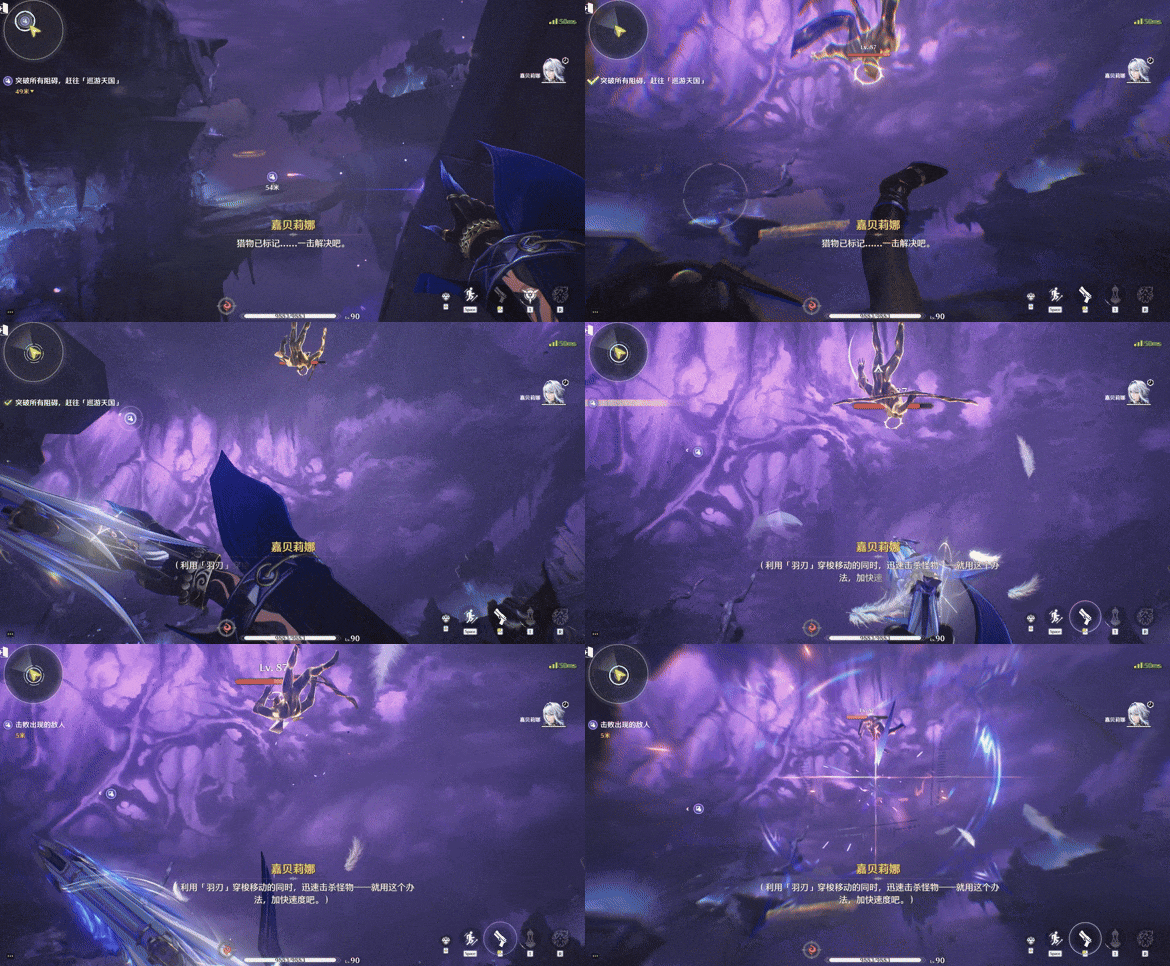
So when I saw the weather control system in La Helo, I thought Kuro might still be in hiding. It would be a real waste not to have this feature interact more deeply with the wider world.
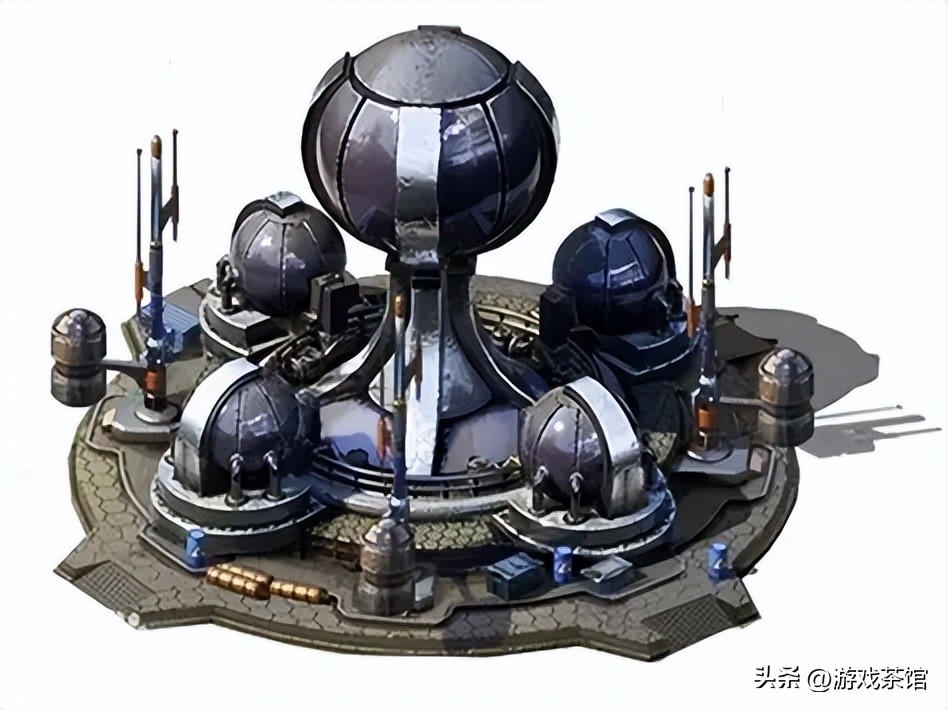
I play Red Alert on Mingchao
There are essentially two immediate associations. First is terrain and road conditions; in the future, there may be sections of road designed so that construction or travel is only feasible under specific weather conditions. Second is puzzle-solving and exploration—for example, resources that appear under certain weather conditions or enemies encountered in the wild.
Of course, these are all just reasonable speculations at this point. But the seed of “weather control” has already been planted—technology is leading the way, while gameplay is lagging behind—which is, in itself, very much in the spirit of “Mingchao.”
In fact, there were already signs of this massive change when the Sun and Moon unleashed their immense power, causing celestial anomalies—after all, the fact that characters can alter celestial phenomena with the press of a button proves that *Roar of the Tide* has already built up the necessary technical capabilities in this area.

While road-building and weather control lean toward player participation at the map structure level, the 3.0 Sun Spirit system leans more toward emergent experimentation at the micro-exploration level.
"Sun Spirit" is actually an iterative gameplay mechanic previously collected in "Voice Box"; you can simply think of it as the "Yaha-ha" from *Tide of Voices* (the Krog collection from *Wild Blow*).
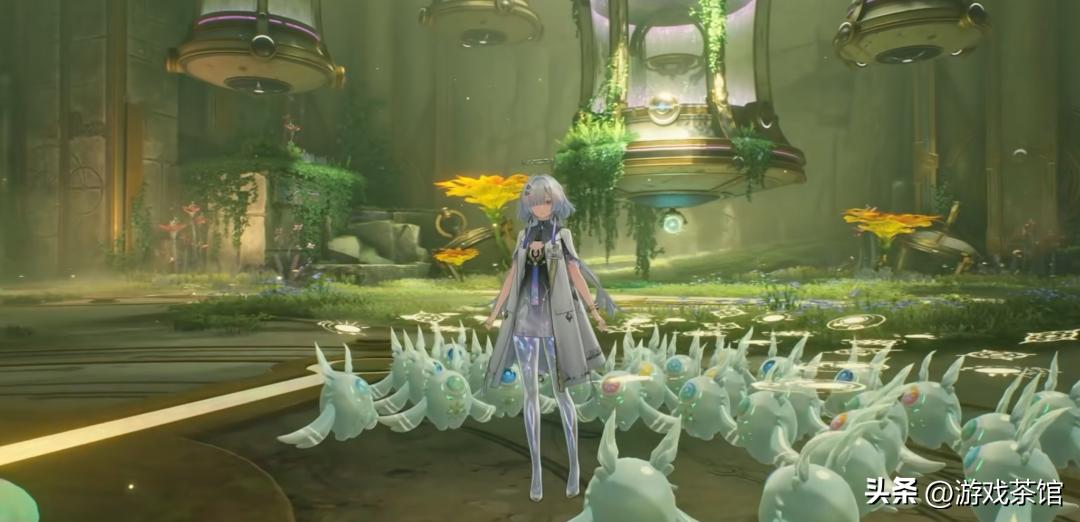
Sun Spirit
Compared to collecting sound boxes from inanimate objects,the experience of searching for Sun Spirits offers a richer level of interaction. Finding them sometimes requires using the artificial sound skeletons of the La Hai Luo people—such as the “scanning spider”—to detect their physical forms. Essentially, these sound skeletons represent a further extension of the exploration mechanics introduced in the Li Na Xi Tower, where sound skeletons play an active role in map interaction.
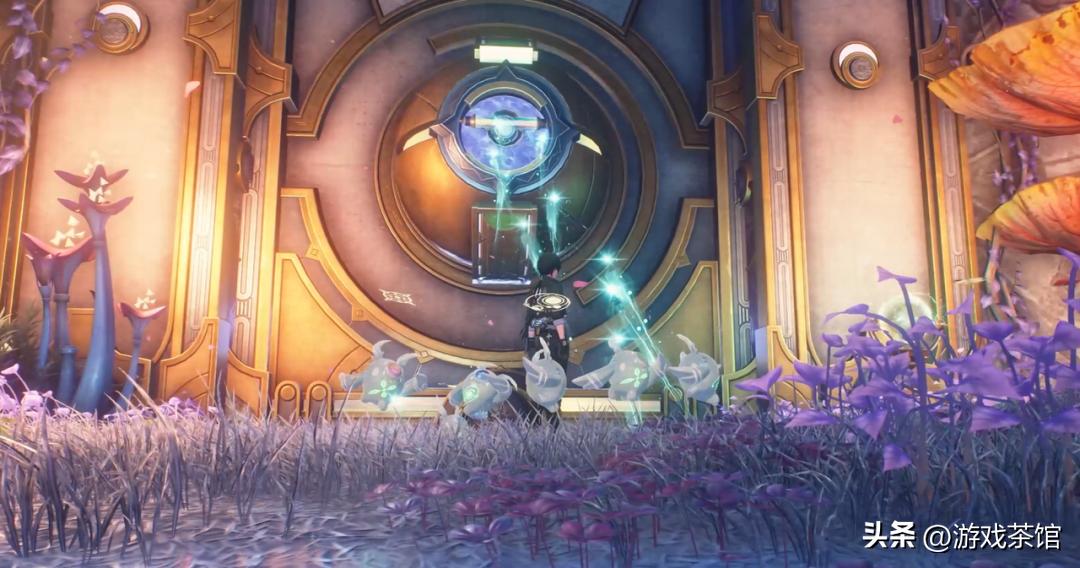
In short, the combination of Riling’s ability to collect items and Shenghai’s puzzle-solving skills creates a multi-layered exploration structure. Especially in the Floating Light Forest, Riling truly becomes a companion on the journey—just as shown in the 3.0 PV.
In many puzzles, Sun Spirits appear directly as participants—for example, you might need to collect a certain number of Sun Spirits of the same type to open a path forward. Taken together, these elements in *Tide of Voices* ensure that collecting Sun Spirits is no longer the tedious, mechanical process it was when collecting Sound Chests.
Furthermore, just like road construction, the design of Riling leaves plenty of open space—it can serve as a resource point or act as a “companion pet,” allowing you to watch it interact with its surroundings in the Glowing Forest as you explore the map.
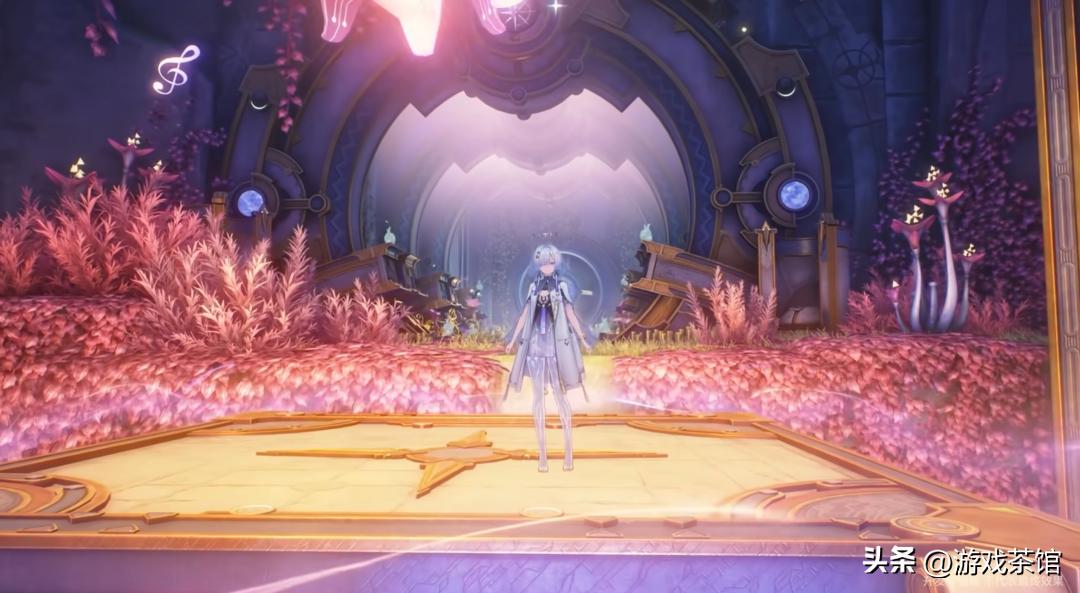
In this mode, the feel of exploration—which players have fully immersed themselves in—actually becomes quite different. Especially when you combine elements like motorcycles, road construction, weather control, and the exploration of the Sun Spirits, you’ll discover that the open-world interaction in *Mingchao* 3.0 has quietly shifted from “simply showing players what to see,and players simply watch it,” to “giving players the rules, and letting them decide how to experience it.”
The reason I say that *Mingchao* 3.0 has the potential for emergence is that I sense a trend where Kuro seems to want players to find their own activities within the framework of the rules. Essentially, relinquishing control is the threshold for “emergence.”
Of course, this is just a possibility. Based on what *Mingchao* 3.0 has shown me so far, it’s still a ways off from being a true *Minecraft*, *Ye Chui*, or *Wang Lei*, but it’s true that the direction it’s heading in is becoming somewhat clearer.
Conclusion: A Test That Did Not Achieve a Perfect Score
It’s a bit of a shame that during this demo, I didn’t get to experience the 3.0 storyline—or rather, the cinematic sequences—which are definitely one of *Roar of the Tide*’s strongest points. Many people consider *Roar of the Tide* to be a mobile game that specializes in cinematic presentation,Of course, after experiencing the gameplay aspects of Version 3.0, I feel that we can add some gameplay-related tags to *Tide of Echoes*.
So far, the story of Lahelo has had numerous plot threads woven in through Suibo City and Chisaki, which should play a significant role in unraveling the Wanderer’s origins. Add to that the legendary Artificial Lord of the Year and other elements, and it’s sure to be a major plot development.The fact that Kuro is keeping the main plot under wraps this time might also mean he’s saving something big for later.
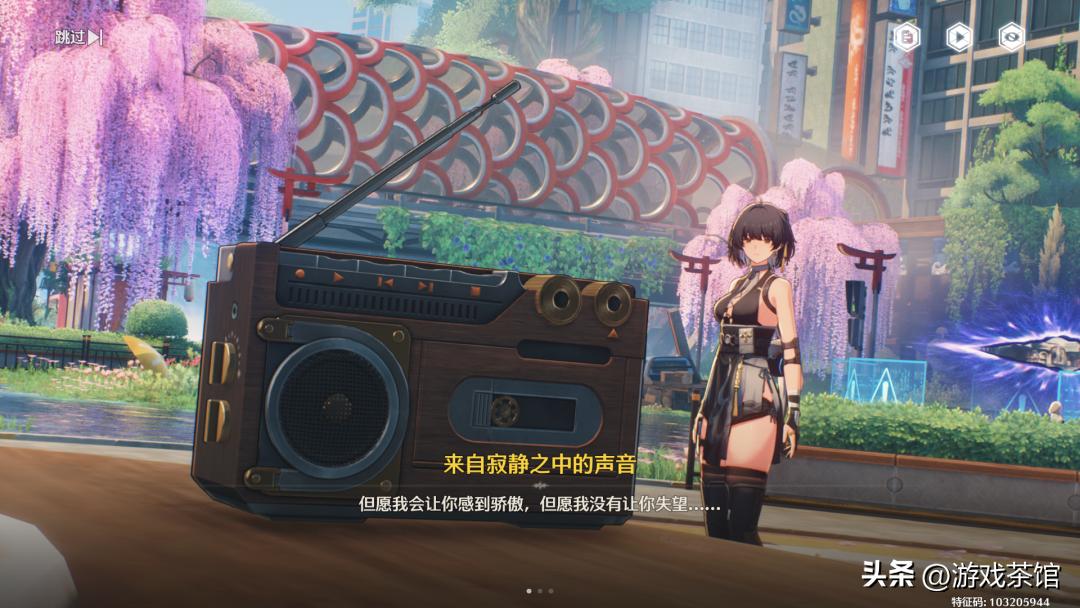
On the combat front, the "Dissonance Effect," which previously appeared in the 2.8 event, has now become a permanent combat mechanic. Unlike the Resilience Bar, it is more akin to a reimagining of the Execution Bar—a feature once exclusive to Boss Wounds. The impact of its addition on the combat system remains to be seen.
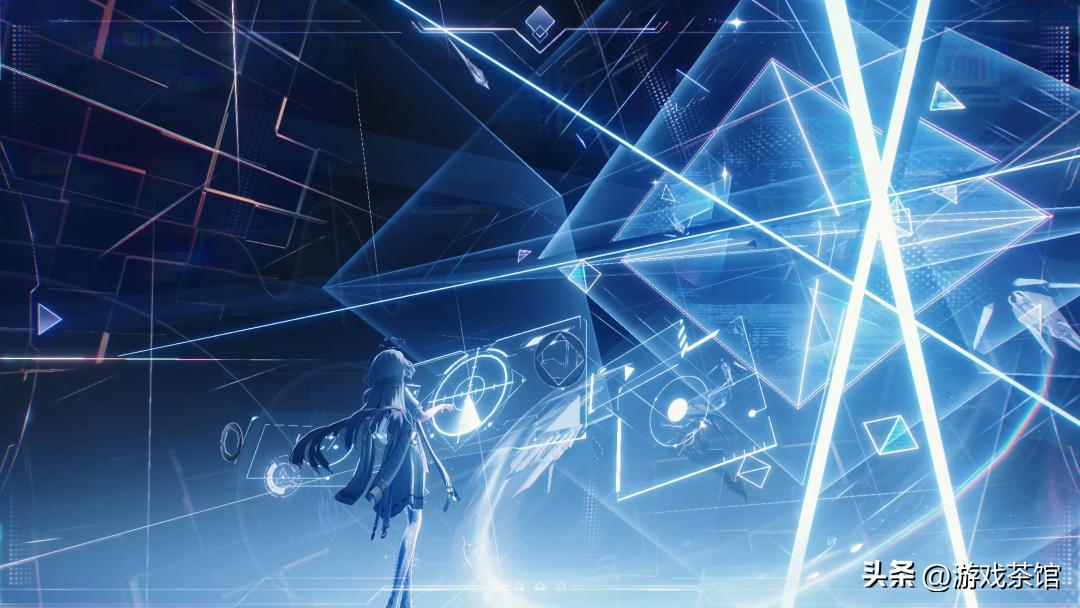
As for the sci-fi college-style character designs and the clash of styles between the technology and nomadic civilization in the Laheluo universe, we can talk about those later.
In fact, looking back over the past two years, *Mingchao* has indeed been taking a rather “old-school” approach: Technically, the game always builds complex systems first and then figures out how to integrate them into gameplay;In terms of content, each update has focused on adding a new building block to the existing framework rather than simply giving it a fresh coat of paint; when it comes to storytelling and characters, the team has used compelling performances, nuanced characterization, and standout character designs to cultivate genuine emotional connections with players.
Sometimes, when chatting with friends in the industry, we occasionally wonder why, in today’s mobile gaming market—which is like a meat grinder—it was *Mingchao* that managed to stand out.
I’ve heard many different answers to this question. Some people point to its unique character design and impressive gameplay; others believe it’s because the game makes exploring the vast world less of a burden for players, making it less tiring to play; and still others attribute *Tidehunter*’s success to its genuine authenticity.
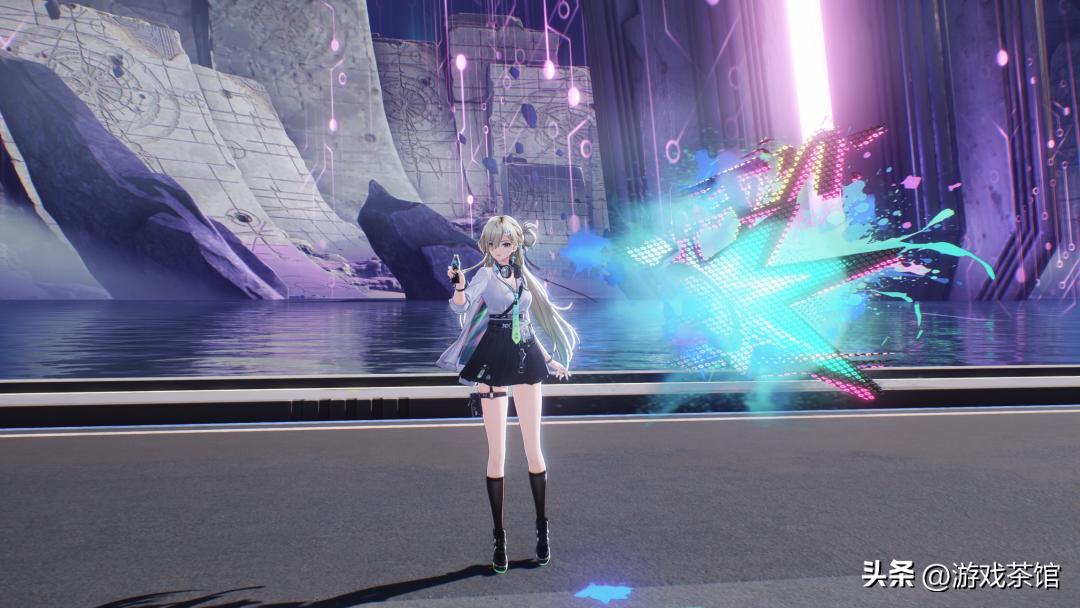
I think all of these explanations are valid, but today, I might answer this question with a single phrase: “infinite progress.”
Following the recently concluded preview livestream, Li Songlun, the producer of *Mingchao*, took the stage to deliver a speech.He said that in 2025, the *Mingchao* development team was constantly worried about failing to live up to players’ expectations; however, rather than holding back out of fear, *Mingchao* prefers to “go the extra mile and polish it a little more.”


As I mentioned at the beginning, even if one makes only a small step forward each day, the effort is not in vain.
With every update, *Mingchao* doesn’t aim for overnight success, but rather takes small, steady steps forward. It is precisely these solid steps that have pulled *Mingchao* out of the mud and led it to the recognition of players and numerous honors.
It always gives players that thrill known as anticipation—that is the key to *Mingchao*’s success.
If the transition from 1.0 to 2.0 represented *Mingchao*’s liberation of—and response to—a vast, flying world, then the shift from 2.0 to 3.0 may be a step forward for Kuro toward truly creating “a world that can be perceived and altered.”
I wouldn’t say that Version 3.0 represents another leap forward for *Mingchao*; it’s more like taking a test that scored an 80 and raising it to a 90. While there have certainly been improvements—or changes—but they are mostly corrections of minor errors—taking the first two questions of a bonus section that were originally unanswerable and providing answers in their own distinctive style.
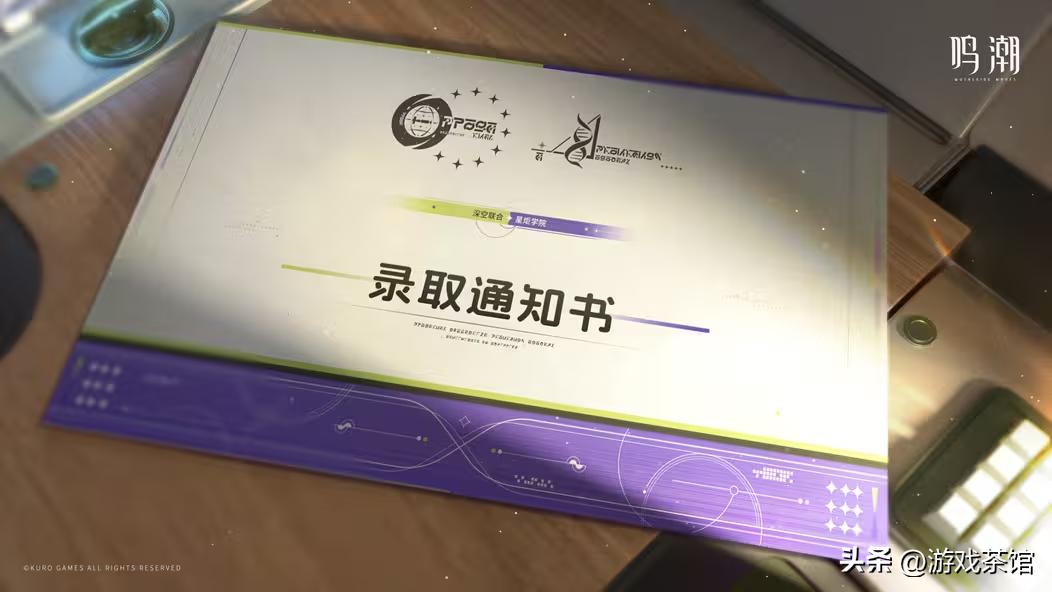
As for this exam, whether there will ever be a day when players achieve a perfect score—or whether we can come up with answers to the existing questions that are even more in the spirit of “Mingchao” and “Kuro”—we won’t know until the moment we actually graduate from Star Torch Academy.
But at least for now, I can say with relative certainty that Kuro or *Mingchao* is still staying true to its original vision.
原创文章,作者:游茶妹儿,禁止转载:https://youxichaguan.com/en/archives/213716