Without startup capital, without the credibility of an internship at a major studio, and without any professional game development experience, can a current student create a professional game with a mature narrative, a complete gameplay experience, a viable monetization model, and long-term, stable operations?
This sounds almost like a fairy tale—something that only a select few with exceptional talent could achieve—but the then-24-year-old “Radish Takoyaki” not only achieved this—he went on to create a total of 111 UGC games over the course of three years, growing from a complete novice with no prior experience into a moderately well-known hit creator. He even founded a professional UGC studio, paving the way for professional, team-based production of UGC content.
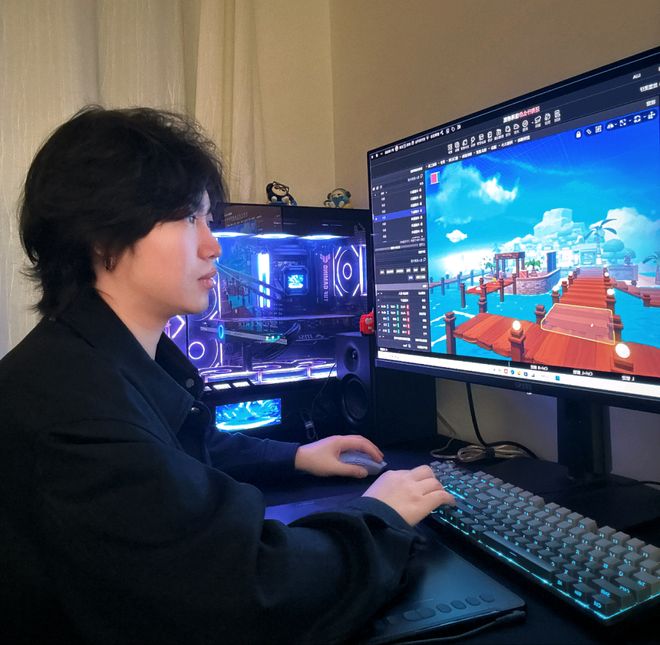
Carrot Takoyaki in the Making
Radish Takoyaki isn’t exactly an industry legend—he’s just an ordinary native creator within the *Egg Party* UGC ecosystem. On this platform, there are many creators like him who started out as beginners, and among them are those who have racked up hundreds of millions of plays, generated cumulative revenue exceeding 10 million, and consistently produced hit games that bring in millions in monthly revenue.
Game UGC creation is attracting a large number of grassroots creators and small-to-medium-sized teams thanks to its low barriers to entry and high level of inclusivity.In the traditional game development sector, individual creators and small studios often face challenges such as significant financial pressure, long development cycles, and limited monetization options. However, UGC platforms—with their streamlined creation models and comprehensive support systems—are emerging as a new pathway for them to realize their gaming dreams.
As interest in this sector continues to grow, companies such as Mihoyo and Eagle角 Network have also entered the UGC space, competing by offering high salaries to recruit relevant planning talent and developing dedicated creation tools.For platforms, the key challenge in this fiercely competitive industry is how to continuously lower the barriers to creation, refine support mechanisms, help individual developers and small-to-medium-sized teams thrive, and maintain creative competitiveness—all of which are essential to sustaining the vitality of the ecosystem.As a leader in China’s game UGC sector, the development path of *Egg Party* is sure to provide valuable insights for the industry.
01
“If it weren’t for Danzai,
"I probably won't go into game development."
“If it weren’t for Danzai, I probably wouldn’t have gotten into game development,” Radish Takoyaki admitted.
Before working on *Egg Party*, he had no systematic experience in game development. Having majored in new media as an undergraduate and animation in graduate school, his only game-related experience was a 3D version of “Flappy Bird” he created for a required undergraduate course—the gameplay was so simple that all you had to do was tap the screen to make the character fly upward.
Luobo’s connection with *Egg Party* came at just the right time. In September 2022, while scrolling through social media as a second-year graduate student, he came across the “Twin Ties” game mode and downloaded it to try it out with his girlfriend.With his background in animation, he was instantly drawn to the game’s fresh art style and intricate lighting effects. While playing, he stumbled upon the “Egg Boy Paradise” feature, which sparked his creative inspiration: “So regular players can publish their own maps—maybe I should give it a try?”
At that time, *Egg Party* was in Season 4, and NetEase officially rolled out key optimizations to the UGC editor “Egg Workshop”:They introduced basic visual drag-and-drop functionality, enabling the rapid creation of simple maps, and released the first set of basic component templates. This significantly lowered the creative barrier for beginners and officially popularized the trend of players creating their own UGC-based amusement parks.
During this period, a group of core creators known as “Egg Boy Artisans” spontaneously emerged on social media, and Radish Takoyaki quickly joined their ranks.After half a month of experimentation, he discovered that the *Egg Party* editor was extremely beginner-friendly—its simple and convenient interaction logic and clear, intuitive UI significantly reduced the initial learning curve. Just one month after starting to play the game, he clicked “Start Creating” and attempted to make two basic maps.
It wasn’t until December 2022 that he finally polished his first work he was satisfied with—*Guardians of the Blue Star*.Combining parkour with puzzle-solving and rescue elements, this map—with its ingenious puzzle design and deeply immersive storyline—quickly garnered millions of plays. It also sparked a wave of spontaneous recommendations on social media, even becoming the “first love” that remains a cherished memory for many players who have run the map.
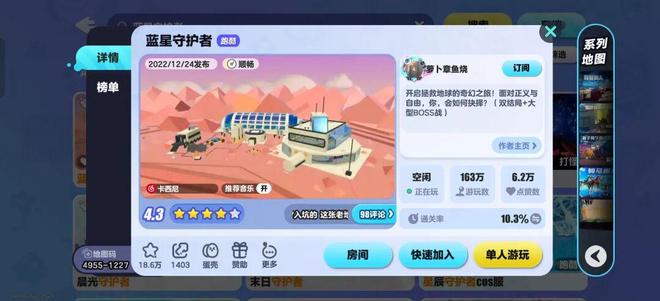
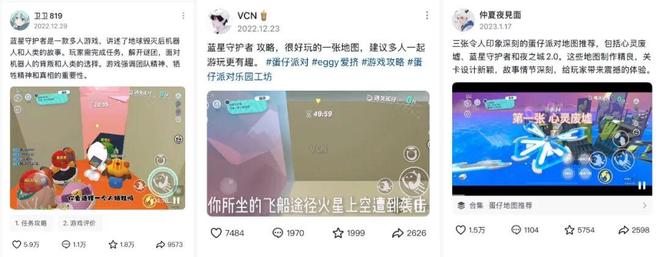
After the release of *Guardians of the Blue Star*, players took to social media to spontaneously share their recommendations for the game.
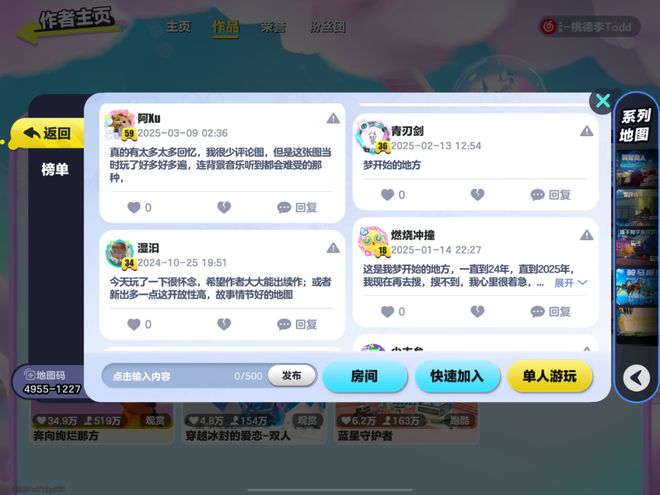
To this day, *Guardians of the Blue Star* still brings back a flood of memories for longtime players.
This positive feedback from players became a major source of motivation for him to keep creating. During the last two years of his college career, he devoted nearly all his free time to map creation. “I’d thought about trying other UGC platforms before, but I couldn’t stick with them because of my heavy course load,” Luobo Zhangyushou said that *Egg Party*’s support for mobile creation perfectly solved his time constraints; even fragmented moments—such as breaks between classes or waiting in line for lunch—could be used to refine map details.
Thanks to their consistent and steady output, Luobo Takoyaki quickly became a signed creator for *Egg Party*, and in the early days, they built a solid reputation among players for their warm and heartwarming map designs.
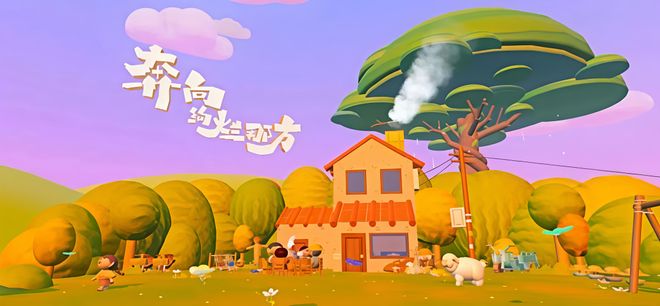
“I like to weave my reflections on literature, art, and life into my work,” he said. While creating *Toward the Brilliant Horizon*, he was preparing to graduate and part ways with friends; the heartache of being separated from friends he’d known for seven years sparked feelings of uncertainty about the future and deep insights into life.He incorporated these reflections on family, romance, and friendship into his graduation animation project and adapted them into a game map of the same name for *Egg Party*, telling the story of how “we often miss the scenery along the way because we’re chasing an unattainable ‘red balloon.’”
This heartwarming map not only sparked intense discussion both within and outside of *Egg Party*, racking up over 5 million plays, but also boosted the popularity of the animated series itself —— After uploading the animation to video platforms, it garnered 110,000 likes and 21,000 shares, far exceeding the reach achieved before it was integrated with the game map. “Compared to simply watching a short video, playing a game allows players to experience a deeper emotional connection.” Luobo Zhangyushou explained the advantages of cross-media content dissemination in this way.
02
From Zero to One, and Then to a Full-Time Creator
Last year during graduation season, while many animation graduates were still anxious about finding jobs, Luobo Zhangyushou—who had already built a solid foundation working on *Egg Party*—naturally transitioned to becoming a full-time creator.
This career gave him tremendous freedom: he rented a place in his hometown where he lived and worked alone; when inspiration struck, he threw himself wholeheartedly into creating maps, and when he ran out of ideas, he focused on studying game design, all while setting his own work schedule and determining the content of his projects.
For Luobo Takoyaki, the complete creative process follows a clear logic: When inspiration strikes, first create a sketch using drawing software and save it in a dedicated folder, then brainstorm how to integrate the storyline and gameplay around that sketch;Once the sketches and story framework are in place, set clear deadlines and daily goals for yourself to ensure creative efficiency.
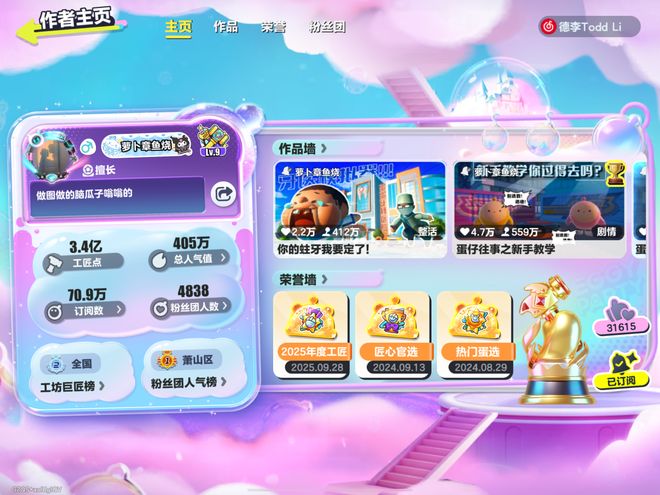
Even though he may appear to be a solo creator working on his own, his creative journey is far from a lonely one.The official team behind *Egg Party* established contact with him early on and has supported his growth every step of the way: during the concept development phase, he could consult with the team whenever he had a new idea, and the team’s monthly “Artisan Creation Month” event provided clear guidance on topic selection;during the map-making process—whether it involved refining the storyline, tackling technical challenges in graphic design, or overcoming creative blocks in gamification—the team provided targeted advice to help the project move forward smoothly.
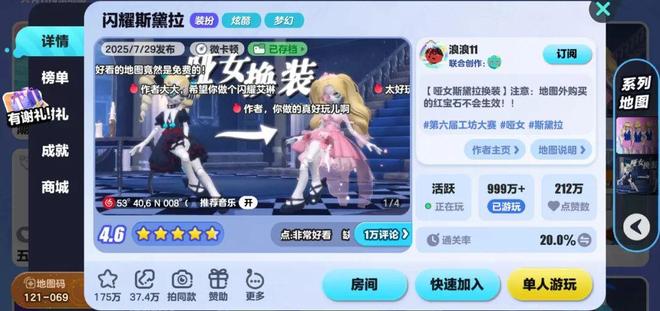
In fact, this kind of support is not an isolated case. *Egg Party* has established a comprehensive support system for UGC creators, including a one-on-one support mechanism with dedicated service groups for game design, programming, and QA—enabling many native creators, such as “Radish Takoyaki,” to grow from scratch.Popular creators such as “Depressed Guy,” “Langlang 11,” and “A Little Laa” have created hit maps generating millions in revenue precisely because of the support provided by this system.
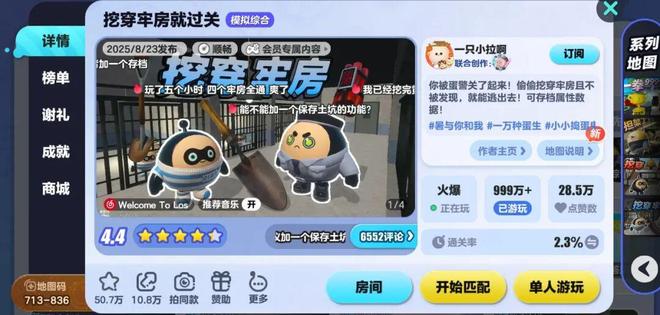
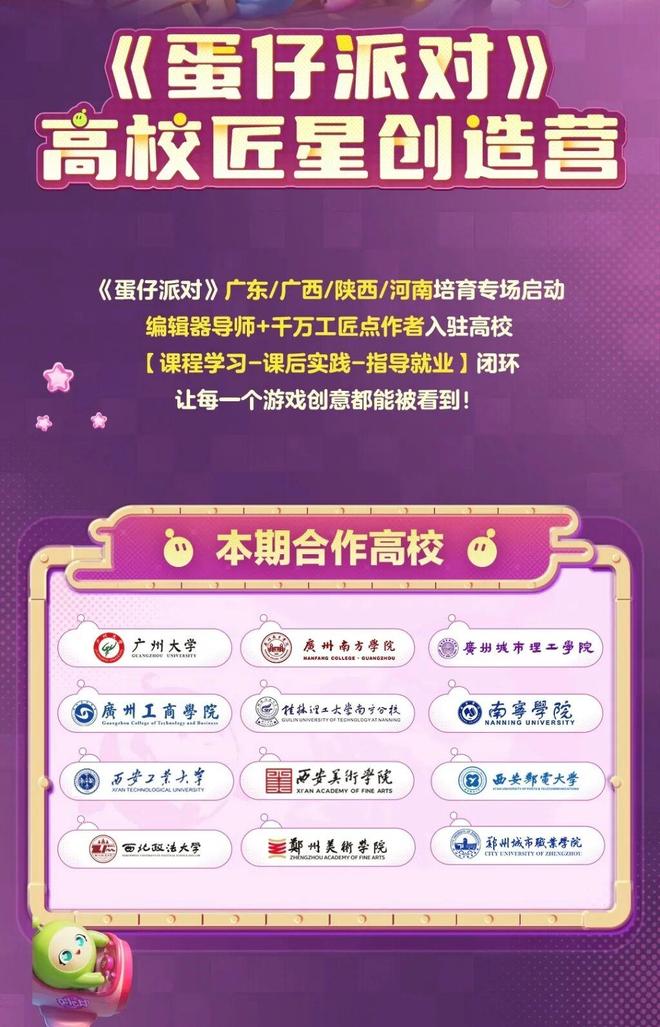
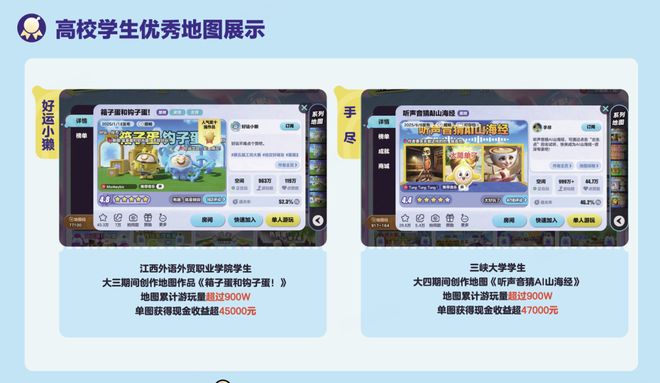
To cultivate more original content creators, *Egg Party* has even partnered with thousands of universities to launch “Egg University” Centered around the “University Artisan Star Creation Camp,” this initiative brings Eggy Workshop’s instructional courses into specialized college classrooms. Supplemented by in-app competitions and an online learning platform, it has incubated a group of popular map creators—including Shoujin and Good Luck Otter—who produced viral hits right from the start.
Over the past three years, the continuous iterations of the *Egg Party* editor have also provided creators with a steady stream of inspiration. In Luobo Zhangyushang’s view, every update to the official tools has pushed him to step outside his comfort zone: for example, in 2023, after the custom vehicle feature was launched, he was able to easily implement a racing gameplay mode;Later, following the update to the weapon system, he experimented with creating shooter-style maps, constantly pushing the boundaries of gameplay. Subsequent features—such as Egg Codes, the PC editor, and the ability to upload custom AI models—have all encouraged him to keep up with the times and add “new elements” to his maps.
While lowering the barrier to entry for content creation and providing technical support, *Egg Party* is also continuously refining the monetization pathways for its UGC ecosystem to help creators achieve a closed-loop revenue model.
In January 2025, the platform launched map sponsorship and thank-you gift features; in March, the Golden Beans Map Store began rolling out.According to an announcement by Producer Kwan at the third Creator Conference in July of that year, nearly 100,000 maps had been integrated with the platform’s monetization features, and more than 50,000 creators had earned over one million from them.
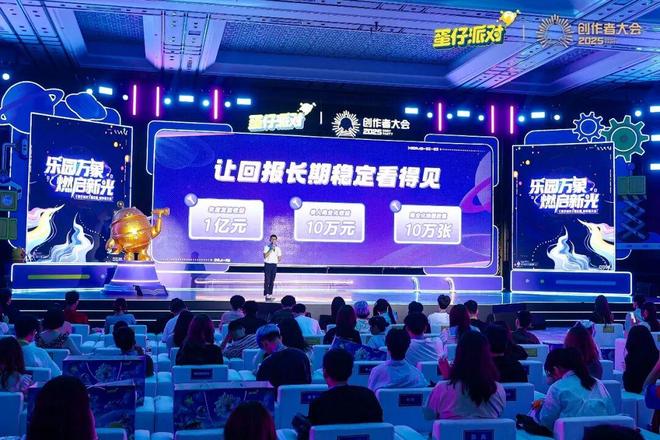
Today, *Egg Party* has established three major monetization models: in-map purchases, ad revenue, and park sponsorships:In-map purchases generate revenue through the sale of special items; ad monetization generates revenue by allowing players to unlock items by watching ads; and park sponsorships convert players’ direct tips into income for creators. These diverse monetization pathways cater to the revenue needs of different types of creators.
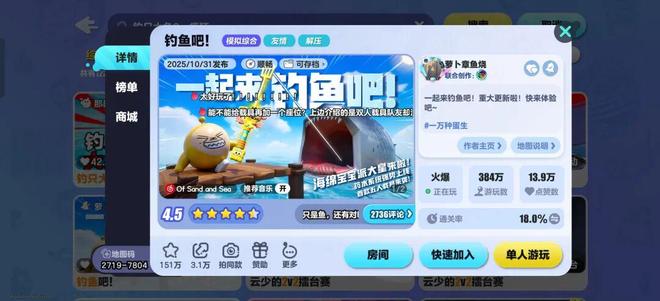
"Radish Takoyaki," the new map that’s recently gone viral, has also jumped on the bandwagon of the amusement park’s commercialization.By leveraging the unique characteristics of *Egg Boy*, the map uses a lighthearted, casual fishing gameplay style as its entry point, capitalizing on the randomness of fishing catches and the whimsical designs of the fish species. This approach has kept the map’s overall enjoyment, positive reviews, and replay rate consistently high.Notably, in designing monetization points, he incorporated elements from popular IPs that had previously collaborated with *Egg Boy* into fishing rod skins. Ultimately, the map garnered over 3 million plays.
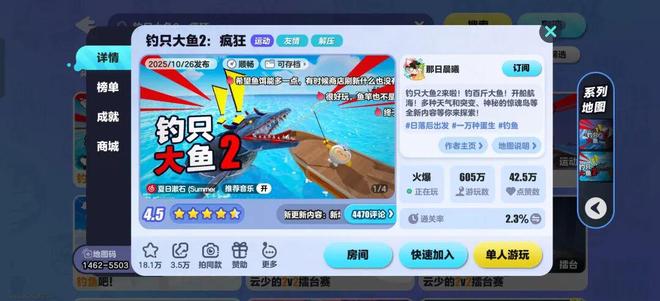
"Na Ri Chen Xi," one of the first creators to embrace the commercial features of Egg Boy Paradise, is—just like "Radish Takoyaki"—an Egg Boy creator who built his career from the ground up. He is best known for his hit map *Catch a Big Fish 2: Crazy*, which also centers on the theme of casual fishing, and has generated cumulative revenue exceeding 10 million to date.
03
From an Individual to a Studio:
Turning Your Passion into a Long-Term Career
For "Egg Party" veteran creator Luobo Zhangyu Shao, this marks a pivotal moment in his career—he and his partner "Douyou Hamburger" have co-founded their own studio, entering a crucial phase of rapid team expansion and increased output.
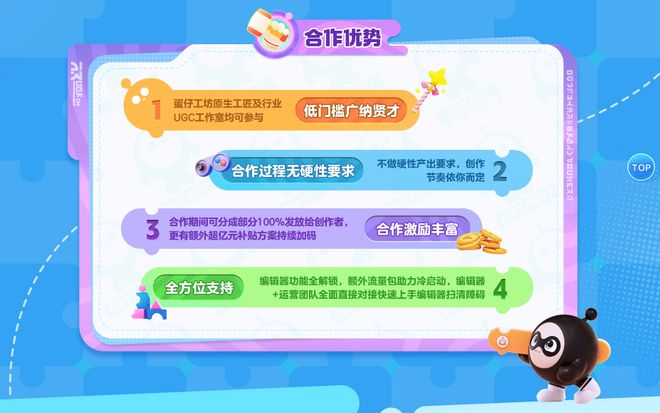
Just as becoming a creator initially required no upfront costs, the establishment of this studio also comes with no additional financial burden. The official team behind *Egg Party* has provided Native Studio with comprehensive support:Financially, the official team announced a revenue share of up to 100% and provided over 100 million yuan in subsidies to creators. Additionally, studios gain full access to all editor features, receive extra traffic packages to help new accounts get off the ground, and benefit from direct collaboration between the editor team and the operations team—all designed to help them quickly master professional tools and overcome operational hurdles.
His partner, Hamburger, is also a UGC content creator for *Egg Party*.The two had previously teamed up to create *Let’s Go Fishing!*, with Radish Takoyaki handling art design and Soybean Oil Burger specializing in programming. Their complementary skills made their collaboration highly efficient, leading them to decide to build on this chemistry by forming a studio to grow together.
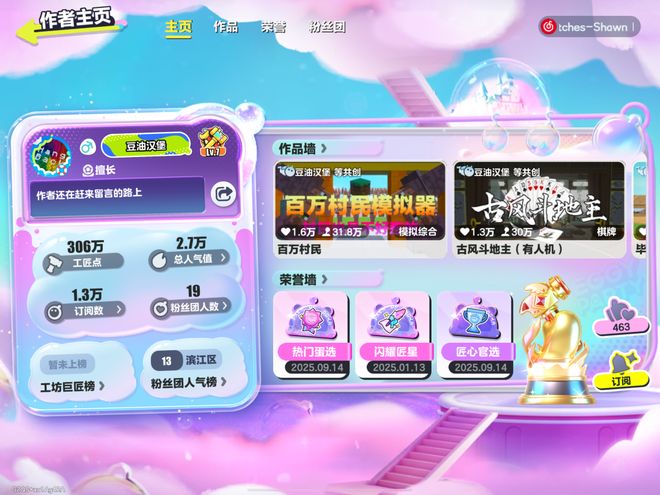
“At first, we didn’t even know each other’s professional backgrounds—we came together purely out of a love for game development. We never imagined we’d create such an influential work,” said Luobo Zhangyushou with emotion. This open and inclusive creative environment is precisely what makes the *Egg Party* ecosystem so appealing.
He first experienced this warm creative atmosphere when he became a UGC creator for *Egg Party*. The official team frequently hosts in-person meetups and creator roundtables, and has also set up online discussion groups to facilitate the exchange of experiences and mutual support.In the early days of learning to create content, he once sent a private message to the veteran creator “Brown Bear” to ask for advice. Brown Bear quickly provided a detailed response and continued to offer assistance on multiple occasions as he worked on his illustrations. Now, when new creators seek his advice, he shares his experience openly and unreservedly, passing on this spirit of mutual support.
During my conversation with Luobo Zhangyoushao, one thing that really struck me was that he described his work on *Egg Boy* not as “making a map,” but as “making a game.”This is evident in the high frequency of updates that *Let’s Go Fishing!* has maintained since its launch: from routine bug fixes and optimizations to active marketing campaigns leveraging external promotional channels and the release of new in-game items. This mindset is on par with that of professional game developers and reflects the forward-thinking perspective essential for a studio head.
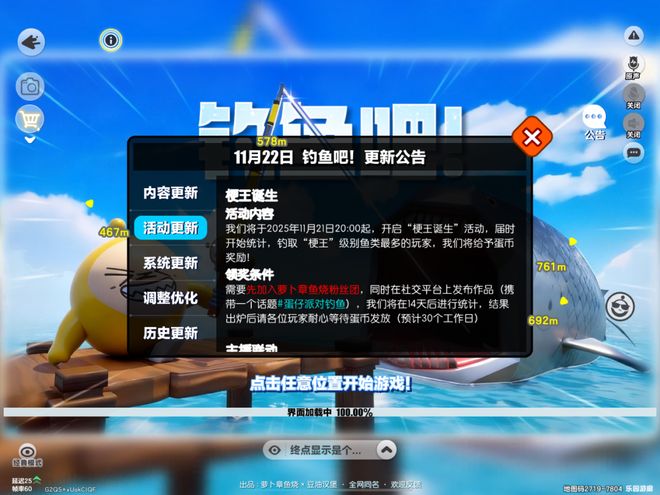
"Let's Go Fishing!" Latest Update Announcement
Of course, the decision to establish the studio also stemmed from the professional upgrade of the *Egg Party* editor.Compared to the early, user-friendly mobile editor, the gradually rolling-out PC editor, Eggitor, has added professional features such as Lua scripting and state synchronization. While this has significantly expanded the creative possibilities for projects, it has also placed higher demands on the professional expertise of veteran creators.“I want to take this opportunity to turn my passion into a long-term career and make the creation process more standardized and professional,” said Radish Takoyaki. “Only by continuously improving our professional skills can we consistently produce higher-quality content and repay the players for their support.”
He has a clear plan for the studio’s future: in the early stages, the team will primarily work remotely, focusing on efficient content creation to ensure long-term map updates; within one or two years, they will transition to an in-office setup, bringing in more like-minded teammates to make the team’s operations more structured.“Right now, it’s just the two of us, and if we’re responsible for updating about 10 maps, the workload will be very heavy,” he admitted. He explained that once the team expands, with each member taking on specific responsibilities, it will not only improve creative efficiency but also reduce the programming bugs that often occur when one person works alone, thereby ensuring higher-quality work.
In terms of monetization and operations, the studio will also continue to grow with the support of the official team. “We still have room for improvement in the areas of professional game design and production management, so we can’t do without the official team’s guidance.” Luobo Zhangyushou cited the example of *Let’s Go Fishing!*, noting that the map’s success was largely due to the official team’s advice on monetization strategies, player community management, and event scheduling. “The official team provides specific proposals for reference, which we then optimize and adapt based on our own circumstances before incorporating them into the map’s design.”
When it comes to long-term goals, he hopes to build the studio into an influential IP, “continuously producing better content and offering a more diverse gaming experience to the players who love us.” As for revenue, he isn’t in a rush: “As long as the content is good, positive results will naturally follow. Right now, the most important thing is to hone our skills and build up a portfolio of high-quality works.”
Is now still a good time to get into UGC or become a DanZai creator? Luobo Zhangyu Shao answered with a resounding “yes”: “I think now is a great time.The DanZai Paradise ecosystem is still growing steadily. In the future, they’ll update and refine their creation tools, the content produced will become more professional, and the player experience will continue to improve. In my opinion, it’s already one of the top UGC creation platforms in China.”
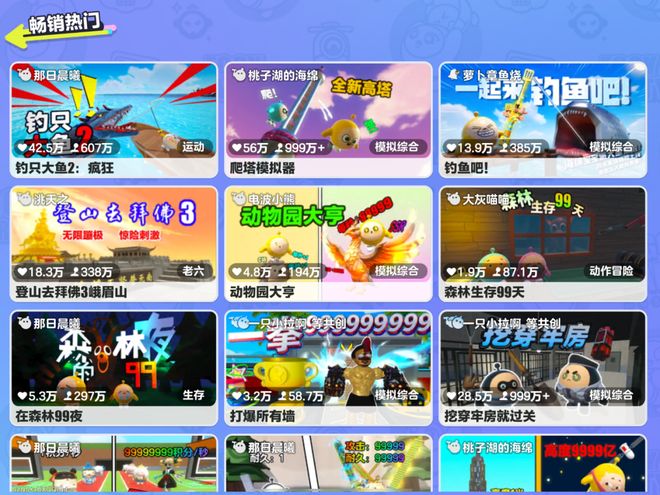
The diverse maps on the bestseller list also offer a glimpse into the specialization of theme park maps.
He also offered some words of encouragement to emerging creators: “I hope everyone can contribute to Eggland and help make this ecosystem even better. I also hope that this passion for creation can be transformed into professional skills and ultimately become your own career.”
Looking back on his creative journey, Luobo Zhangyushou admits he never once thought of giving up: “I’ve always loved creating—even before I started making ‘Danzai,’ I’d create things just for my own enjoyment. Now that my work is seen by more people and I receive positive feedback from players, that’s the greatest encouragement.” Even when he occasionally encounters maps with poor performance metrics, he reviews and optimizes them—analyzing whether the difficulty is too high or the content is too obscure—and then adjusts his future creative direction to better align his work with players’ needs.
Today, this former animation major has successfully found his niche in the world of gaming UGC thanks to the platform provided by *Egg Party*. “Compared to my classmates, I’ve been really lucky,” He reflected that *Egg Party* not only spared him the anxiety of job hunting after graduation but also helped him discover his potential in game creation. “It’s a great joy to shine in a field I love and turn my passion into a career.”
原创文章,作者:游茶妹儿,禁止转载:https://youxichaguan.com/en/archives/213685