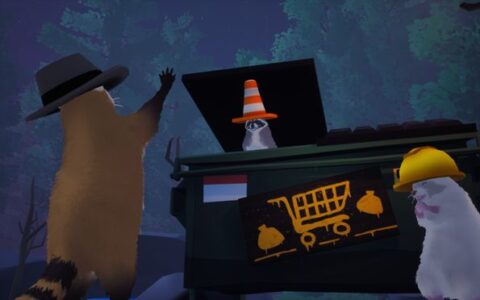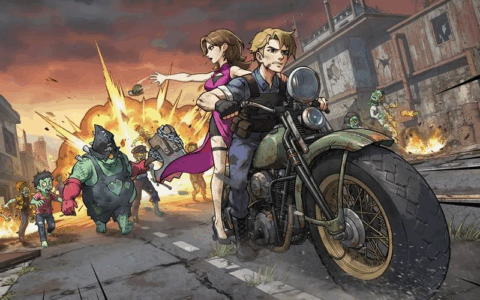
On December 7, the two-day DNFU 2025 Carnival came to a close in Shanghai’s West Bund.
In addition to PC and mobile games, *Dungeon & Fighter: Kazan*, which launched overseas this year, and a new fighting game currently in development were also showcased at this year’s festival.In particular, *Dungeon & Fighter: Kazan*—according to reports—will offer an exceptionally reasonable launch price for its upcoming Chinese server version. In addition to the original content, the game will also feature exclusive updates tailored specifically for the Chinese server to meet the needs of Chinese players.
Compared to previous carnivals, the biggest change this time is that, for the first time, the DNF PC game, mobile game, single-player game, and numerous spin-offs have been brought together into a single shared IP universe. At the event, you’ll see players from different platforms and demographics coming together to enjoy all the fun that DNF has to offer.
Li Jielu, Head of Marketing for Tencent’s Domestic Publishing Support Business and Nexon Partnerships, told Teahouse that it wasn’t until this year that they felt confident enough to call DNF a true IP.In her view, a true IP should be a state of co-created ecosystem, which means that in addition to the original R&D team, the IP should attract passionate users from various fields to collaborate on creating diverse content. By harnessing their talents to continuously refine this IP universe, the IP can truly live up to its name.
Taking this opportunity, the teahouse and industry peers sat down with Li Jielu, Head of Marketing for Tencent’s Domestic Publishing Support and Nexon Partnerships; Ding Wenbin, Producer for the PC version of DNF; and Xie San, Producer for the mobile version of DNF, to discuss how the DNFU IP came to be and what the future holds for both the PC and mobile versions of the game.
For ease of reading, the following is a summary of the key points from the interview:
Teahouse: I noticed that yesterday the DNF team released “DNFU’s First Annual CG.” Why did you decide to create this video? The content covers PC, mobile, and even single-player games—how was it originally designed, and what impact did you hope to make?
Li Jielu: That’s a good question. Our initial goal was to showcase our future product lineup in this video.However, this involves the challenge of cross-platform presentation—for example, the differences between *Kazan* on PC and mobile, as well as new formats that may emerge in the future. How to integrate and present all of this within a single video so that players can see both the trailer and the Easter eggs is one direction we’re pursuing, and it aligns with the planning objectives for our product portfolio.
Second, we hope to convey the idea that “players of all types can enjoy this IP” and to reflect that through the visuals.
Third, how to portray the game’s future art style. We are not completely abandoning the pixel art style of the past, but rather creating a new interpretation based on it—and this, too, needs to be expressed through CG.
Fortunately, all of the elements I mentioned earlier were incorporated into the final cut. Regardless of how our product portfolio evolves in the future, this CG demonstrates the core philosophy of our IP, the technical capabilities we’ve built up over the years, the unification of diverse styles, and our fresh reinterpretation of classics.
In addition, the video also depicts the evolution of the player base—as veteran players transition from students to the workforce, while new players continue to join. All of this allows this CG to both reflect on the past and look toward the future. If, in the future, there is a CG every year that captures these themes, only then can such a work truly be called DNF’s “Annual CG.”
Teahouse: This year marks the first time the DNFU IP concept was introduced. I’d like to know, after so many years of development, how the team internally assesses the current state of the DNF IP, and what stage it has reached?
Li Jielu: I truly believe that it’s only now that we can confidently refer to DNF as an IP. Previously, when we talked about IPs, we usually meant them in a narrow sense—that is, an IP protected by a trademark that generates derivative products. So, from that narrow perspective, as long as I have an entire series, it can be called an IP.
So why do I say that now is when IPs truly come into their own?Because an IP should be a collaborative ecosystem. For example, if I have a great story, I need to find a good team to bring it to life. Perhaps we’re particularly skilled at turning it into a video game, while other teams are better suited to creating light shows, animated series, or other formats. Only when outstanding teams from various fields are willing to come together to build it can its value truly be called an IP.
As a result, we’ve now essentially reached what’s known as the “threshold” stage. We can collaborate with high-end institutions like the Beijing Institute of Fashion Technology, as well as with masters of intangible cultural heritage. This isn’t a situation where we pay them to create a piece; rather, they’re willing to showcase their talents through this IP.In my view, this kind of collaborative ecosystem is what truly defines an IP, and it’s also why we’ve been placing such a strong emphasis on IP this year.
Teahouse: DNFU features a wide variety of products. How are these products integrated with one another? Since players’ preferences vary by category, do you try to guide them toward products on other platforms?
Li Jielu: First of all, we’ve never assumed that players of *Kazan* must try the PC version—it’s not a requirement. The reason we’re developing this IP is actually to provide players with more seamless options. No matter which product players use to enter this IP universe, they’ll find plenty of content to choose from freely.
For example, let’s say I’m currently playing *Kazan* and want to gain a deeper understanding of this IP. Our approach shouldn’t be to force you into the game through marketing tactics, but rather—once you’ve chosen to try a platform’s product on your own—to give you more options to quickly get into the game and catch up with the rest of the players without any pressure.If you don’t want to spend a lot of time sitting in front of a computer consuming content, you can choose to play a round on your mobile device during spare moments. What we can do is ensure that, as soon as you enter the game, you don’t need to understand a convoluted system or memorize complex strategies—you should be able to get the hang of it as quickly as possible. These are the aspects we need to streamline.
Second, I think it comes down to identity. We used to believe that PC and mobile gamers didn’t mix, but then we discovered that when we joined forces to host this carnival, our players were able to play together very naturally, and we didn’t see any so-called “hierarchy of superiority.”From our perspective, everyone loves the same IP and the same story; they don’t take opposing sides just because a cosplayer comes from the PC or mobile version. They’re able to interact naturally and enjoy the experience together.So what we can do is strive to create an environment where different types of players can socialize and interact as much as possible, allowing them to understand each other better. This is the kind of integration and connection that a shared universe should foster.
Teahouse: At this year’s DNFU, in addition to mobile and PC games, we also saw *Kazan* and new titles in the fighting genre. I’m curious why you’ve chosen to pursue this single-player game direction, given that your previous titles have always been online games. It’s clear that Tencent’s involvement is growing; will there be any co-developed DNF products in the future?
Li Jielu: As I mentioned earlier, the reason DNFU can be considered an IP starting this year is, first and foremost, that it needs to take on a variety of forms—one of which is a shift in platform formats.
Second, the content has become more diverse. For example, I now have the story of Kazan, which I can use to create a more vivid atmosphere and make the narrative richer.
Third, there’s the question of technical capability: beyond the initial side-scrolling pixel art, can we also create 3D action sequences? This includes narrative styles—in addition to animation, we’ll also be organizing exhibitions in the future and continuing to create various spin-off works. Only when all of these elements are combined can it truly be considered an IP.
So, getting back to the question at hand, we have a wealth of content that allows users to make their choices seamlessly. If you have plenty of time and want to experience thrilling storylines and battles, you can choose the console version of "Kazan."If you’re looking to team up with others for group raids, PC games are definitely the way to go. If you’re short on time or commuting to work, you can simply pull out your phone and start playing right away. Our goal is for the IP to offer a suitable format for every aspect of players’ lives, making it easy to switch between them seamlessly.
As for joint development, this may be a growing trend in the mobile gaming sector. Thanks to our years of operational experience and technical expertise, Tencent is well-positioned to listen to players’ feedback, co-create the gaming ecosystem, and incorporate player suggestions into the game through joint development.
Teahouse: Next, I’d like to talk about the PC game. DNF has been in operation for over a decade and is a long-standing IP. Games like this typically face two challenges: content is consumed too quickly, and it’s difficult to attract new players. How has DNF addressed these issues?
Ding Wenbin: First, in terms of the overall direction, we’ll focus on progression-based gameplay that requires accumulation, making it easier and faster for players to return and get back into the game. In addition, we’re expanding into new gameplay modes that don’t require prior progression, such as a new multiplayer battle royale mode, which has essentially no entry barrier.
Regarding the main progression path, we’ve set a clear goal for ourselves: in the upcoming Dirigi raid expansion, we hope that players will be able to get into the content, become part of the ecosystem, and truly start playing within one to two weeks of returning.To this end, we’ve made numerous adjustments: First, starting this year, we’ve overhauled the gear system to make it simpler, easier to understand, and more user-friendly. Second, building on this foundation, future content updates will also align with the progression system, ensuring that—under this overarching goal—players can quickly catch up with new content whenever they return, without being faced with a complex or confusing system.
Teahouse: After all these years of development, many players have complained that DNF is becoming less and less like DNF. So, how do you view the conflict between new and old content, and how do you balance the tensions between them?
Ding Wenbin: As I mentioned earlier, we are constantly evolving, and we can’t afford to stop.As we evolve, there will inevitably be veteran players who aren’t fond of the new content we’ve adjusted. In this regard, we should indeed take their nostalgia into account—but we shouldn’t exploit it. So our approach is to incorporate some of those fond memories from the past into the new content, transforming them into a better form of expression for the present.
For example, the new raid group “Diriqi” is a classic boss from previous versions. In those versions, both the related storyline and the background music were iconic, and these core nostalgic elements will be reflected in the new raid.For instance, the classic weapon skins from the old Diriiji content will return, but with new features added. Similarly, while the music from the original Diriiji was iconic, we’ll be reworking and reinterpreting it. Additionally, mechanics from the Diriiji dungeon—such as the “Wind Blows East, Wind Blows West” mechanic—will also appear in the new raid.
As a result, players feel that this version of Dirige still has the same feel as the original DNF, but it also brings many new experiences tailored to the current environment. You can think of it as the same person—just wearing different clothes and sporting a different look—but essentially, that person hasn’t changed.
Teahouse: A while back, rumors about a “retro server” started circulating in the DNF community. What do you all think? Why hasn’t DNF launched a retro server all these years?
Ding Wenbin: These rumors mainly stem from a survey we distributed. The survey used the term “retro gameplay,” which led to the misunderstanding that we were about to launch a retro server. In reality, we simply wanted to learn about the classic gameplay features and memorable moments that left a lasting impression on players in the past; we are not planning to create a full-fledged retro server.
We’re more focused on which classic content is worth reimagining in new ways. Take D’Rigge’s approach, for example—recreating the emotional moments from the classics that players remember, but presenting them in a more modern form that’s better suited to today, rather than simply copying them verbatim. Staying true to the original doesn’t mean a complete replica, because the original content may not necessarily still be “appropriate” today. We hope that while players revisit these nostalgic memories, they can also experience something truly new.
Teahouse: The mobile game has been live for a year and a half now. Players who aren’t very familiar with DNF still tend to think of it as a port from the PC version. So how has the official team helped players understand that these are two distinct products?
Jie San: When the mobile game launched, our core selling point was nostalgia. Although our initial plan was to bring the authentic PC game experience to mobile, we made quite a few adjustments for the mobile platform before the official launch—for example, the progression pace, combat experience, and gameplay framework are all a bit more casual than in the PC version.
After more than a year of operation, we’ve gained a new insight: the differences between mobile game users and PC game users are even greater than we originally thought. Currently, there is very little overlap between mobile and PC game users. While both are relatively “hardcore” products, their user bases are completely different.
Mobile game users have several distinct characteristics compared to PC game users: First, they need the flexibility to come and go as they please. With PC games, turning on the computer means entering a relatively fixed, long-term experience, whereas mobile games can be interrupted at any time. Second, they have stronger social needs.This year, we’ve spent a great deal of time communicating with players face-to-face, and many have mentioned that mobile games feel “more like single-player experiences.” This is related to the reduced depth of raid content and the diminished sense of cooperative fun on mobile platforms.
Based on these characteristics, mobile games will gradually take a different path from PC games in the future; they will not emphasize RPG elements to the same extent as PC games, and the role of progression systems in the overall experience will be reduced.Beyond character progression, we need to identify a second engine—a second driving force—such as innovative gameplay, social mechanics, and new monetization experiences. The goal is to accommodate the completely different needs of mobile and PC users, and to re-engage those users who initially joined out of nostalgia but eventually left because they couldn’t find satisfaction on mobile.
Teahouse: So, in the year or so since its launch, how has your team internally assessed the product’s performance?
Xie San: Regarding our achievements over the past year since launch, to be honest, they’ve certainly given us encouragement from our users. But more important than that encouragement is the fact that we’ve done a lot of reflecting over the past year.In terms of the product experience, we can all sense that both users and the team have higher standards and expectations. However, we experienced a lull early this year, so when planning Season 3, we packed it with a wealth of content, adding updates to the main storyline almost every month.In the second half of this year, there are three Beyond dungeons, plus disaster dungeons, multiplayer raids, and more. While the content seems more substantial, this has also led to a second issue: users may feel like they have to grind even harder.
This is why our future product direction has shifted.The many years of experience we’ve accumulated with PC games are completely different from mobile game operations; we need to start from scratch and build new insights. We’ve noticed that a significant portion of our churned users are younger players. This is likely because when the game first launched last year, a large number of young users—driven by curiosity or a general interest in the genre—tried the game out.In that case, the more traditional RPG progression mechanics actually don’t align well with the preferences of this group of players.
Teahouse: Moving forward, how do you plan to adjust things—for example, to reduce liver strain and alleviate the burden?
Xie San: Our future transformation efforts will focus on addressing several key issues.First is reducing the burden on players. For example, with the main storyline of an RPG, our previous approach was to impose a daily fatigue limit of 100 points. Could we allocate these fatigue points more reasonably—such as by setting a weekly fatigue limit? Additionally, could we make systems that previously required players to log in daily or check in with their guilds a bit less burdensome?
Another approach involves offering diverse progression paths. In past gameplay, players have become accustomed to grinding in the Abyss to level up their characters. In the future, could we incorporate the roguelike and PvP gameplay we want to implement as part of these progression paths, allowing players to choose freely—to grow however they want? This is also a way to reduce the burden of daily grinds.
Also, in terms of the game’s pacing, could we make it a bit more relaxed? For example, the first half of the season could feature growth content, while the second half could include some more peripheral progression paths—some players can choose to follow them, while others don’t have to. They could instead focus on grinding and earning in-game currency; that’s another option.
Overall, we’d prefer to retain those young users we’ve lost, and going forward, user experience and satisfaction will be our top priority.
原创文章,作者:游茶妹儿,禁止转载:https://youxichaguan.com/en/archives/213667