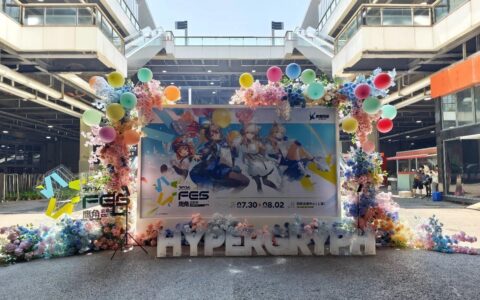
By the end of September, the summer heat in Tokyo had begun to subside. Typhoon “Raccoon,” which had originally been heading straight for the main island of Japan, suddenly changed course, seemingly sweeping away the nearby cloud cover as well. Unlike last year’s days of continuous rain, this year’s TGS was blessed with a gentle, pleasant breeze.
Under a crystal-clear blue sky, the atmosphere of this world-class gaming extravaganza had long since taken hold around the Makuhari Messe:
Banners for *Battlefield 6* and *Dragon Quest* are lined up side by side throughout the transportation hubs,Qingpao Network’s *Mountain Beyond Mountain* and Perfect World’s *The Ring* have both appeared in advertisements inside JR train cars. You might almost feel as though the global gaming industry has been condensed into Tokyo Bay in just a few short days.

In recent years, TGS has continued to expand in scale, much like its counterpart across the sea in Cologne, breaking records year after year. The larger exhibition space and greater number of exhibitors have resulted in crowds so dense that even the business days were packed to the brim, and the public days were even more crowded.

Early on the 26th,
The line outside has already formed several large, horseshoe-shaped loops.
Trials at popular booths are often so in demand that seats are hard to come by; NetEase Leihuo’s *Infinite* frequently had to pause the queue due to exceeding capacity limits;The towering wall of people in front of Capcom’s new game *Pragmata* was enough to deter many; the LevelInfinite booth, featuring Tencent’s *Monster Hunter: Traveler*, became a veritable “crowd black hole” in the venue……

Here, you can see Konami—operating on home turf—set up a massive stage reminiscent of a pedestrian mall, and wander through the art gallery-style scenery created by Annapurna, which has traveled from afar;You can experience the transition from spring to winter by switching between Dian Dian’s *Endless Winter* and Lei Huo’s *Star-Painted Sunny Days* booths, or leap through time by switching between hands-on demos of Xishanju’s *Unlimited Machine* and Koei Tecmo’s *Nioh 3*.

Aside from exhibitors and game developers, you’ll often find yourself passing by some familiar faces: Wu Dan from Hero Games, blending in among the crowds, and Motoi Okamoto, the current director of the *Silent Hill* series, quietly waiting in line for a demo—as if, while at the expo, everyone you encounter is, for the moment, defined by a single identity: that of a gamer.
The hands-on experience at TGS 2025 was undoubtedly lively, with a bit of a carnival-like atmosphere: countless new games were showcased there, and players and industry professionals from around the world were invited to try them out.
In my view, TGS did not reflect the so-called rise of the East and decline of the West, or the ebb and flow of one’s fortunes relative to another’s. Rather, it showcased a flourishing of new talent and the vibrant growth of all things. It aptly highlighted the emergence of rising stars—such as the many Chinese developers—who have now taken their rightful place on the global stage, while also providing a platform for established developers who continue to shine.

I’d rather view this year’s TGS as a snapshot of the global gaming industry’s continued prosperity and a testament to its ongoing growth.
01
If I had to name one keyword that defines TGS 2025, it would definitely be “new.”
This year, a wealth of new titles made their debut at TGS. However, among the many new games, there is a clear-cut dividing line that runs invisibly between the various booths, highlighting the rivalry between single-player, one-time-purchase games and GaaS titles.
The vast majority of GaaS games come from Chinese developers; it’s no exaggeration to say they accounted for half of the lineup at TGS.
NetEase Leihuo’s “Infinite” is one such example; the crowds that gather there are an integral part of the experience at the Six Halls.

As I struck up conversations with players in my broken Japanese, I discovered that they had stopped by for all sorts of reasons.Some had come after seeing the promotional video—which had previously gone viral in China—on overseas media platforms; others had never heard of the game before but, upon seeing “Taffy’s Eye-Catcher” flash across the venue from time to time, felt they simply had to check it out.
Today, *Infinity* also won the “Future Division” award at the TGS 2025 Japan Game Awards. This award is based on the level of anticipation for games that have not yet entered open beta or been released, and is determined by a player vote.

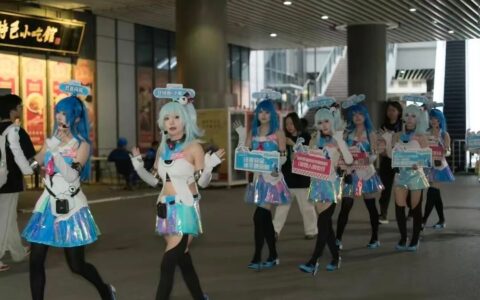
Rivaling the popularity of *Infinity* was Perfect World’s *The Strange Ring*, located nearby. Its highly stylized, neon-lit booth, urban-themed scenery, and adorable cosplayers were major draws at the “NTE” booth.


Judging by the in-train advertisements on the Keiyo Line, *Ihuan* must have a significant following in the Japanese market.
A friend from 4gamer told me that the concept of “second-tier games” in China—which are essentially big-budget productions—is gaining increasing recognition and acceptance among Japanese gamers. Furthermore, urban open-world second-tier games like *The Ring* are such a novelty in the Japanese market that trying out “competitive titles” has become one of the main reasons many Japanese industry professionals attend TGS.

As a result, Eagle Corner’s booths naturally became major hotspots for long lines. At this year’s TGS, Eagle Corner set up two booths: *Pum Pum* in the Family Games Zone and *Arknights: The End* in the General Exhibition Zone.
The “Endland” exhibition area is very large, with the main sections including: a large display screen and stage; an exhibit that recreates the industrial production line from the game; and a gaming area where visitors can try out the PC and PlayStation versions.

On the first day of TGS, *The End* released a full walkthrough of the prologue recorded directly from the PS5 Pro, which may have been a key factor in drawing players to the event.
During the hands-on demo at this year’s TGS booth, Eagle角 took the opportunity to unveil the latest prologue content for the PS5 version. Based on our hands-on experience, the game currently ranks among the very best in terms of 3C, gameplay features, controls, scene details, and visual quality.

“Double Helix,” which is about to launch its global open beta, falls into this category as well; the demo version they’ve released this time is virtually identical to the open beta.
As is well known, *Double Helix* is essentially the first major 3D mobile game to take the plunge into a “no gacha” model; under this brand-new monetization model, some of the game’s underlying design has been completely overhauled.

At the event, members of the *Double Helix* project team said that this TGS was one of the few opportunities they had to meet players in person before the game’s open beta, and the feedback they received from players there certainly gave them a boost of confidence.
“Blue Starfield: Travel Ballad,” which had just wrapped up its beta testing, naturally didn’t want to miss this opportunity. The merchandise storage bag they released had a distinctly Manjiao-style design, and unlike the physical displays at other booths, Manjiao chose to showcase the charm of the game’s characters directly on a large screen.

In Japan, the heartland of anime and manga, few gamers can resist Manjyu’s aesthetic onslaught. Sometimes that’s just how anime and manga games work—simply pushing the characters into the spotlight is enough to “overcome ten skills with sheer force.”

“The anime and gaming world has truly become a kingdom”—that was the phrase I saw and heard most often on social media during TGS. In fact, perhaps due to the influence of the Japanese market, the concentration of anime and gaming content at this year’s TGS was indeed staggering.
Even Tencent’s lineup at the expo included quite a few anime-style titles: “Chasing Caledo” from Feichi Hamli Studio,Saros’ *Fate Trigger* and *Chaos Dream* (published by Tencent), as well as *NIKKE* at the LevelInfinite booth, forming Tencent’s anime and manga dream team for its TGS debut.


Several of Tencent’s products generated significant buzz at TGS, particularly *Destiny Trigger*, which takes its unique gameplay to new depths, and *Chase Caledo*, which incorporates motorcycles into its art style and embraces a stylized aesthetic—both drew massive crowds at the event.
To be honest, seeing so many anime-style games being released one after another has left me feeling a bit dazed. After all, not long ago we were still discussing the decline of anime-style games and analyzing the challenges they face, but what TGS has shown is that even more anime-style games will be entering the market in the future.

This is undoubtedly a positive development, as these products—which are still in the planning stages or about to launch—are each exploring the boundaries of anime-style games in their own ways. Some are focusing on differentiation, others are adjusting their monetization models, and some are even attempting to blaze a new trail altogether.
As a creative industry, the gaming sector must at all costs avoid the stagnation caused by a generational gap; the number of new releases directly determines the vitality of the entire industry. Perhaps only new products can bring about a turnaround for the genre and usher in a new era.
So, aside from the two major titles, the booths for many other new Chinese games were equally exciting: *Monster Hunter: Wanderer* featured two producers from TiMi Studios and Capcom to anchor its popularity, while Clawprint Studio’s *Imo* captivated many Japanese female gamers…


It’s a bit of a shame that I didn’t see Mihoyo or Kuro at this year’s TGS, and Mihoyo has now missed at least two consecutive events.We don’t know the exact reasons behind this, but perhaps TGS has become the primary platform for showcasing new games, and neither *Zero* nor *Roar* really needs additional exposure in the Japanese market.
02
Although the keyword is “new,” it’s worth noting that a number of domestic GaaS games that have been in operation for quite some time still wield significant influence.
Countless trade shows both at home and abroad—including the one in Cologne—have demonstrated just how incredibly crowded DiDi Games’ booths can get, and this year’s TGS once again proved the universal value of love and bonds.

Moreover, the TGS coincided with an in-game event featuring Li Shen, and within just a few days, Li Shen-related terms had made it onto X’s trending list—a wave of popularity that naturally spilled over into the offline world.The *Love & Deep Space* booth was practically “unapproachable,” especially during the Player Days on the 27th and 28th; if you wanted to get inside, you had to be prepared to be crushed by the crowd.
In particular, the *Infinite Warm* booth was right next to the *Love & Deep Space* booth. As far as I know, this appears to be the first time that these two major new titles from DiDi have jointly exhibited at TGS.

Thanks to this powerful partnership, the area around the DiDi Games booth became one of the busiest spots at TGS.
Xishanju’s *Unlocker*, on the other hand, gave me the distinct feeling that they were “playing on home turf.” Every time they make a move in Japan, it sparks a frenzy among Japanese gamers, and *Unlocker*—coinciding with the season update—continued to draw a strong crowd at the booth.


If I had to pick the most distinctive booth at TGS, it would undoubtedly be *Ni Shui Han*’s. This time, *Ni Shui Han* seems to have recreated a corner of the “Bianjing” opera house in Tokyo on a one-to-one scale.

As soon as I arrived on the 25th, I heard someone who appeared to be the director patiently correcting the positioning and performance details of the actresses in period costumes. Once the stage performance began, countless players were so captivated by this “golden age of traditional Chinese culture” that they couldn’t tear themselves away.
Whether it’s *Heartbeat Town*, *Star Scar Resonance*, or *The Tale of Star Sand Island*, any one of these booths has attracted a fair amount of attention.

However, I can’t really say for sure that Chinese games are becoming increasingly well-known, because I’ve noticed that when players try them out, many don’t really care—or don’t even know—where these games they find fun actually come from.
At first, I thought it was a bit of a shame, but then I realized it might actually be a good thing.
When overseas players rave about the city-swinging gameplay in *Infinite* or line up repeatedly at the *Unlimited Machine* booth, they aren’t focused on the developer’s nationality—they’re focused on the product itself: does it feel good to play, are the visuals captivating, and is the gameplay fun?This “label-free” recognition is actually more genuine and powerful than any calculated marketing campaign.
This reflects, to some extent, a trend in which Chinese game developers are gradually shifting from “going global” to “integrating into the global market.”In the early days of expanding overseas, developers might have had to emphasize “I’m from China,” carrying the burden of needing to be scrutinized more closely. But now, more and more products are competing purely as “games,” using universally understood audiovisual language and gameplay design to speak for themselves and earn recognition.

At the trade show, I noticed that Chinese manufacturers’ booth designs, localized translations, and on-site operations were now on par with those of major international companies. They are no longer eager to prove “who they are,” but are instead focusing more on showcasing “what they have accomplished.” This shift is subtle but significant—it signifies the industry’s maturity.
Players voting with their feet is the truest measure of success. When the “Made in China” label gradually shifts in players’ minds from “something that requires special attention” to just another ordinary option on par with Japanese, European, and American developers, that in itself represents a deeper kind of success.
This “calm and composed attitude” may be the true sign that Chinese games have firmly established themselves in the international market.
Turning to the other end of the GaaS spectrum, new games sold as one-time purchases have become the domain of overseas developers, particularly those from Japan.
03
Capcom, Konami, Koei Tecmo, Sega, Square Enix, and Bandai Namco are some of the giants of the Tokyo Game Show (TGS). Few industry professionals visiting TGS can overlook the booths of these long-established Japanese companies.
Since they were on home turf, the size of their booths could almost be described as massive. Moreover, in contrast to the lackluster showing in previous years, several Japanese manufacturers unveiled some new products.


Sega unveiled *Yakuza Kiwami 3*, while Capcom released *Resident Evil: Requiem**Onimusha: The Way of the Sword*, and while Konami’s *Silent Hill f* has already been released, it remains as popular as ever; there were also long lines for the demo versions of Bandai’s *Little Nightmares 3* and *Blood Code 2*.

Although these games are mostly sequels to existing IPs, they demonstrate that the technical expertise Japanese developers have accumulated over the years and the enduring value of their IPs remain significant.
People often say that GaaS games are the future and a more market-friendly form of gaming, but I believe that the complete, concentrated, and highly personal experience offered by single-player, one-time-purchase games remains the cornerstone of gaming as the “ninth art.”

This is not to say that the GaaS model is bad. Indeed, it can provide players with a more sustained supply of content and a sense of community. However, the two models should by no means simply replace one another; single-player buy-to-play titles should coexist with GaaS as parallel paths that cater to players’ diverse needs. A healthy industry ecosystem should thrive on diversity.
Just as at TGS, we can see the buzz surrounding service-based game booths while also experiencing the enduring appeal of buy-to-play games; together, they paint a complete picture of the contemporary gaming market.

Of course, games from China sold under a buyout model are also a key part of this landscape, though they are relatively few in number and their booths are not as large.
But as the saying goes, “Though this is a humble abode, my virtue makes it fragrant”—a truly stunning product remains the focal point that draws attention.
Qingpao Network, backed by Eagle Corner Investment, is one such example. This time, they brought their SOC title *Mountains Beyond Mountains*, developed under an exclusive licensing agreement, to TGS.Although the *Beyond the Mountains* booth was relatively small, its location was excellent—right at the entrance to the venue. Thanks to this prime spot, there was a long line of people waiting to try the game, and at one point, reservations were required. When we made a reservation at 11:00 a.m., the wait was already scheduled for after 2:30 p.m.
Meanwhile, *Shadow Blade: Zero* was showcased at Sony’s booth alongside titles such as *Soul of Mount Yatei* and *Nioh 3*.

Although it didn’t have its own booth, there were still quite a few people waiting to play *Shadow Blade: Zero* in the Sony demo area. What surprised me was that I clearly heard a Japanese player say to his friend while we were waiting together, “This is a Chinese game,”and then I heard repeated exclamations of “すげ~” coming from the other side.
I’ve heard similar praise for games like *Infinite*, *Etrian Odyssey*, and *Monster Hunter: World* at demo stations as well, so perhaps the real truth is this: as long as a game is well-made, it doesn’t matter whether it’s a one-time purchase or a GaaS title.
In addition, the ranks of China’s buy-to-play games include quite a few indie titles.
91act’s *BlazBlue: Chaos Effect* was located particularly close to the official booth of the German Gaming Community. Although the booth wasn’t very large, it was fully equipped with a hands-on demo area and a large display screen. As is typical for act games, they also organized a hands-on challenge event for players.


The Teahouse also rode the wave of TGS, with a total of six games showcased at its booth, including Bilibili’s *Escape from Yakov*, Hangzhou Mingkun’s *MechaForce: Fighters of the Imagination*, Kunpan Games’ *Reforge Era: Land of Freedom*,Genki Dan Studio’s *Whispering Town*, Shanghai Youdingtian’s *L’abysse Project*, and WiseGames’ *Wind Traveler* (a solo project that recently secured funding through Epic’s MegaGrants program).

In addition, *Two-Person Coffin Carriers*, a work by a team of students from New York University that recently established a distribution partnership with Teahouse, was also exhibited at TGS as part of the official New York delegation.

However, compared to overseas developers, Chinese buy-to-play games did not generate much buzz at TGS—but this only reflects the current state of the Chinese buy-to-play market, not its future.We already have *Shadow Blade: Zero*, *Mountain Beyond Mountain*, and a host of indie titles, and there will undoubtedly be even more full-price games emerging from Chinese developers in the future.
Conclusion
Finally, I’d like to mention that after touring the expo, I found that AI was quite scarce at TGS. It’s one thing that AI was virtually absent in the general exhibition halls, but even in the B2B halls—Halls 9 through 11—there were only a handful of AI-related booths.
From what I saw, the only AI-related booths were basically Alibaba’s Tongyi Qianwen, VAST’s Tripo, and Xinying Suixing’s “Doudou Game Companion.” Of course, there may be some that are tucked away, but judging by the density and scale of the booths, AI hasn’t yet become a particularly prominent theme at this year’s exhibition.

Perhaps the most fundamental reason is that the industry’s use of AI may currently be operating behind the scenes. Today, consumer-facing AI applications generally involve things like chatbots and image generation, while the applications actually being deployed in the business sector may be in less obvious areas.
For example, using AI to automatically generate a vast library of NPC behaviors to populate open worlds, optimize localization and translation processes, or support anti-cheat measures and operational data analysis. These technologies are crucial, but they won’t appear as standalone “exhibits”; instead, they’ll be seamlessly integrated into the final product experience.
Furthermore, staff at some game and AI booths told me that gamers today are still quite sensitive about the integration of AI into game development workflows, so it’s not something that’s readily discussed in public. Since the TGS audience skews heavily toward gamers, this may also explain why there are relatively few AI-related exhibits.

Not to mention that even within the industry itself, there is no clear consensus on where AI should fit in. Costs, specific use cases, and how to stably and compliantly integrate AI tools into pipelines while ensuring content uniqueness and clear copyright ownership are challenges the entire industry is still grappling with.
AI hasn’t really stepped into the spotlight yet.
When you think about it that way, AI’s temporary absence from TGS is actually quite normal.
原创文章,作者:gallonwang,禁止转载:https://youxichaguan.com/en/archives/210887