In late October, the Early Access version of *Maggie’s Garden* was quietly released.
This is a fairly well-known AI game. Initially, *Maggie’s Garden* gained attention in the fan creation community for its ability to generate unique NPCs by uploading images.On October 13, 2024, the demo launched on Steam. Without participating in the New Releases event, it shot to the top of Steam’s New Releases chart and amassed over 10,000 wishlists.
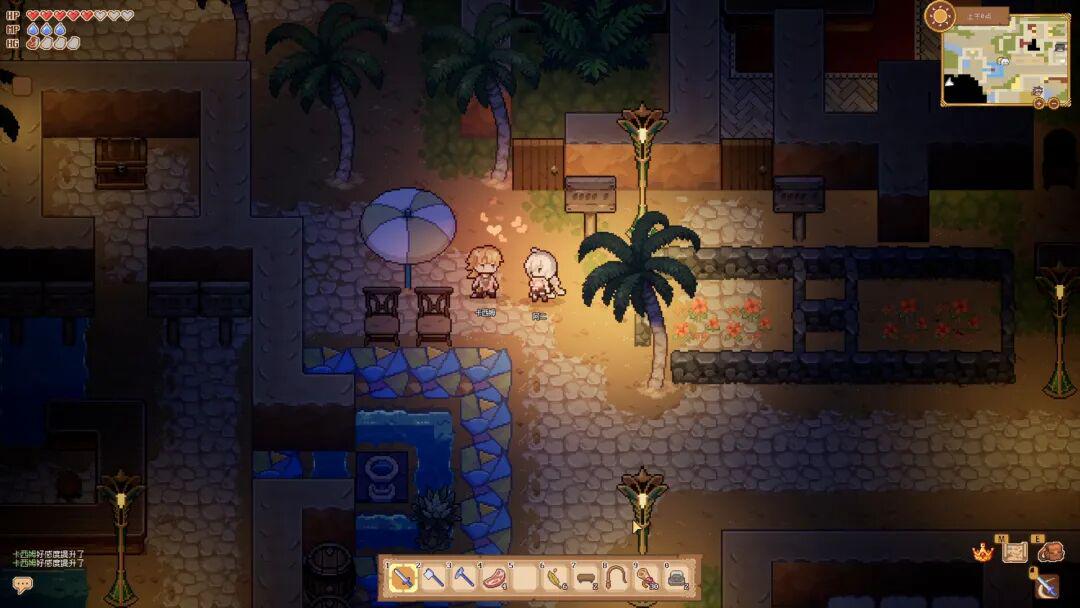
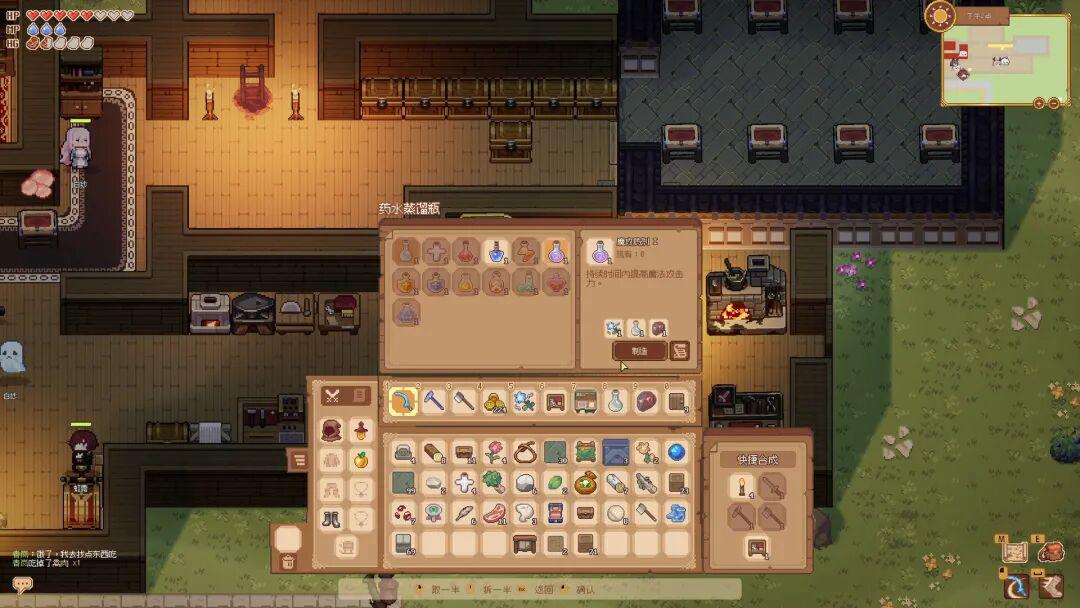
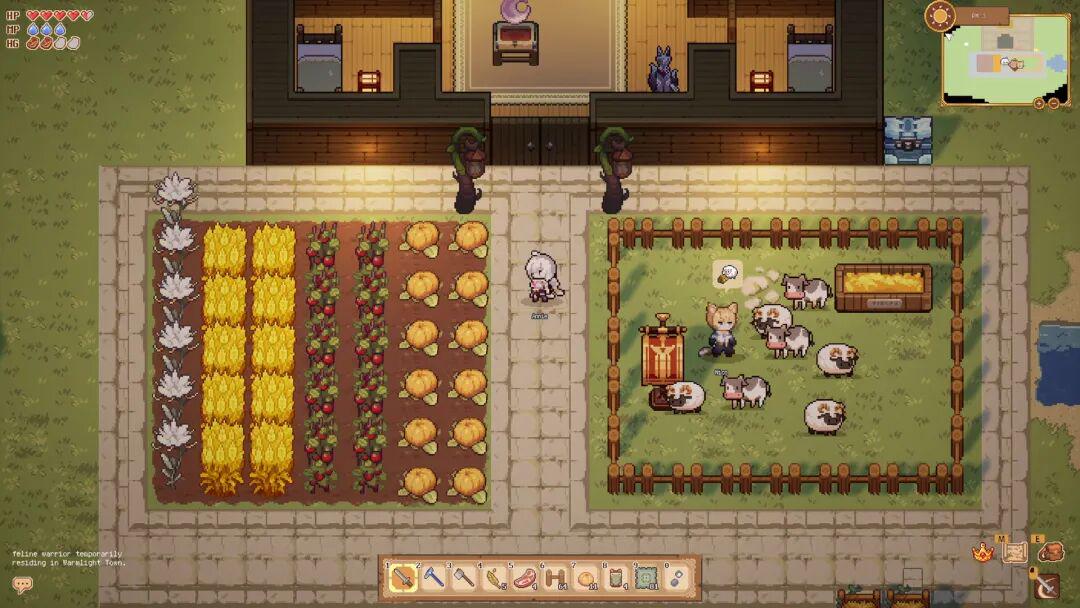
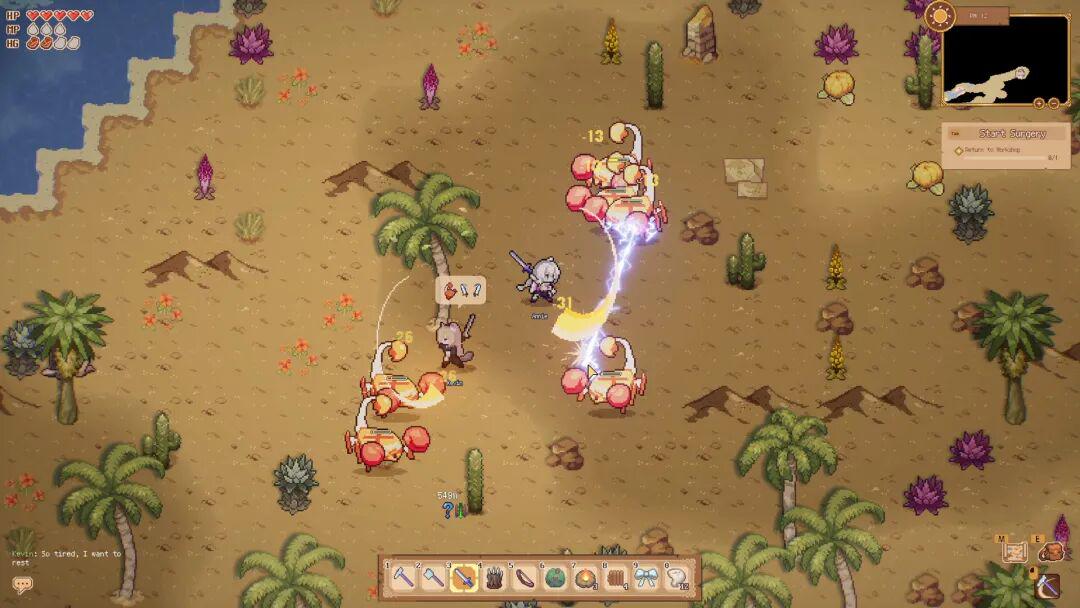
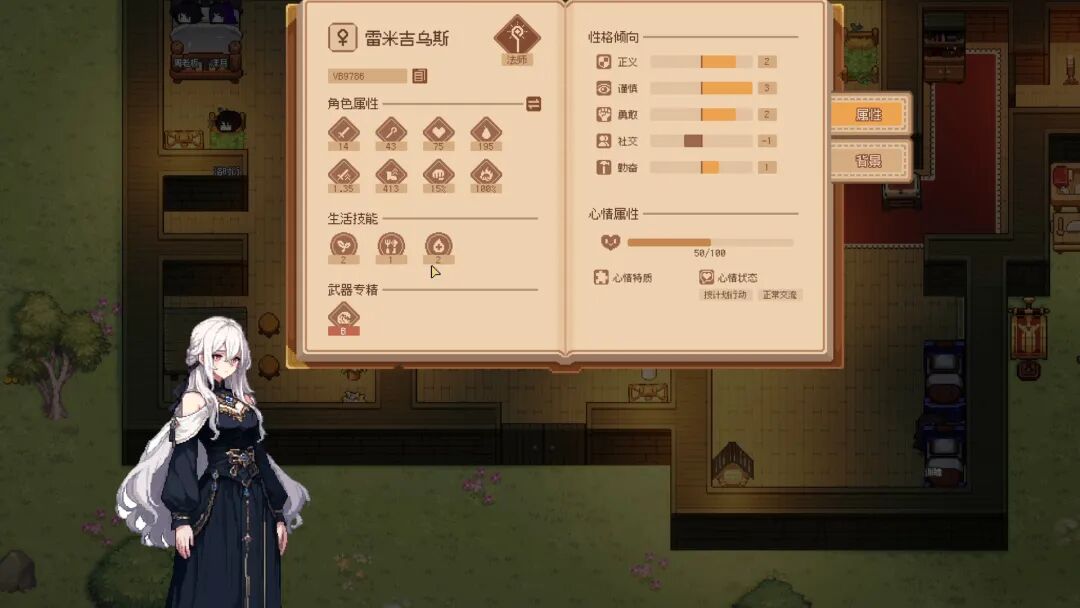
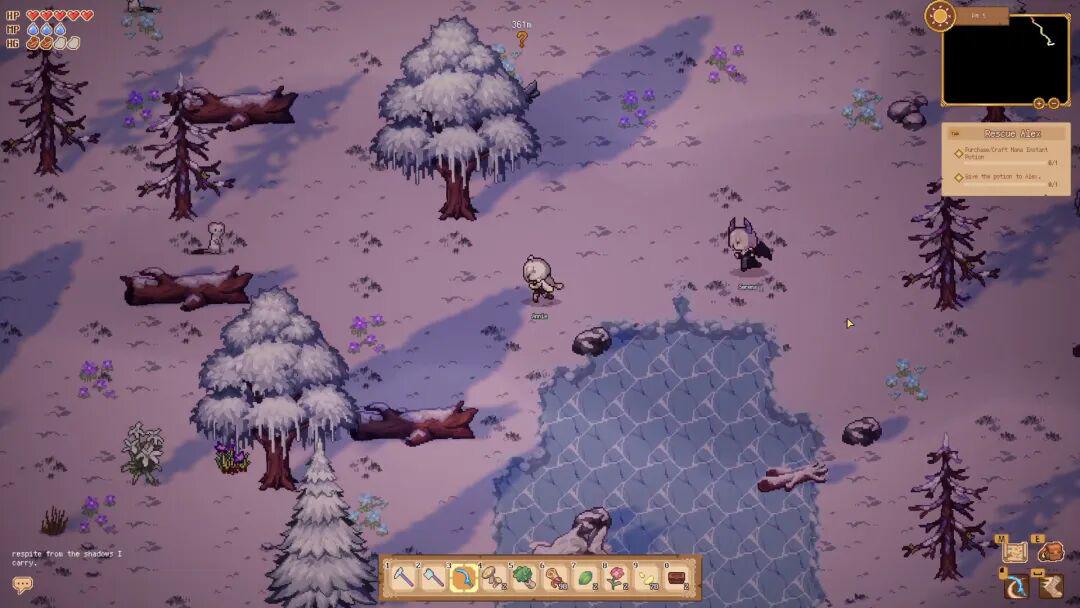
When you launch the EA version, you’re immediately greeted by a familiar routine: waking up in a small town, chopping down trees, quarrying stone, crafting tools, and building a house. With four major regions and a four-hour main story for your first playthrough, the game offers fishing, farming, monster hunting, and home renovation—it has everything you’d expect from a sandbox game.
The biggest difference between this game and traditional sandbox games is that the NPCs in town will remember what you’ve done, just like real people.If you tear down someone’s wall, they’ll bring it up the next time you talk to them. The AI is also seamlessly integrated into the game: it can generate teammates, quests, items, and objects, and it can even spawn a church in the wilderness before the player has even reached that area.
Beyond the game itself, the company behind it has also garnered significant attention in the investment community.Zhang Haoyang, founder of Shenzhen AutoGame, was formerly a technical designer for Tencent’s *Peacekeeper Elite*. He began his entrepreneurial journey at age 17 and has dabbled in VR/AR and AI virtual idols. Meanwhile, Ku Ding, lead designer of *Maggie’s Garden*, previously worked on an action game for Sony’s third season of the “China Stars” program.
Last year, AutoGame completed four rounds of funding totaling nearly 10 million yuan, with investors including Qiji Chuangtan, Jiuhe Venture Capital, and Cuican Capital.
In February of this year, another product developed by Zhang Haoyang, EvoMap, also achieved remarkable success. Evolving from OpenClaw’s Capability Evolver plugin, it surpassed 17,000 downloads in less than a day after its release on Clawhub and ranked number one on the trending list for several consecutive days.
Teahouse has spoken with AutoGame three times.The first time was in early 2025, when the market was still largely skeptical and cautious about AI games, and *Maggie’s Garden* was practically the first AI game to receive positive feedback from its demo. At that time, Zhang Haoyang was full of confidence and shared many of his insights on AI games—many of which have since come true.
The second time was this past August, right after ChinaJoy, when *Maggie’s Garden* was confirmed for release in October. The third time was after EA launched the game: despite having over 40,000 wishlist entries, it sold only a few thousand copies and was unexpectedly caught up in a storm of malicious negative reviews sparked by gender-related issues.
I asked them several times whether it would have been a better time to launch the Early Access version when the demo was at its peak popularity. Kuding explained that if they had launched it then, it would have been nothing more than a game that “endlessly generates NPCs,” which wouldn’t have provided a complete experience. “If there’s only generation and no actual game content, players will get bored quickly,” he said.
Over the past two years, this game has been copied and went through a launch that was far from smooth.But Ku Ding seemed to take it all in stride, smiling as he said that sales were “only slightly lower than we originally expected. There are still several major growth opportunities ahead, including the Creative Workshop, multiplayer, and the official release. Each of these milestones will bring in new users and convert wishlist items. AI sandbox games are designed for long-term operation.”
You can see the ambition behind *Maggie’s Garden* to push the boundaries of both AI and gameplay to the absolute limit. But another question arises: After two years of silence, why launch now of all times? The answer has to do with the speed of model iteration; they also need real-world user data to adjust the product’s direction.This year, they’ve clearly felt the pressure, sensing that “if we don’t launch now, it’ll be too late for the Early Access release.”
The following is a conversation between the Teahouse and Kuding, presented here in edited form:
01
Generating Characters as a Support Mechanic
In August, Teahouse sat down with Kuding to discuss what they’ve been up to in the two years since the demo for *Maggie’s Garden* was released.
Teahouse: Is the core gameplay still the original “AI-generated characters” feature?
Kuding: This is a supplementary feature; our core game is a sandbox experience.We have a four-hour story campaign for the first playthrough, which walks you through the mechanics of the sandbox game. During previous testing, we discovered an issue: although Maggie is labeled as a “sandbox” game, the users it attracted weren’t sandbox players—they were new users drawn in by the “AI game” label.
These users have never played a sandbox game before, so we have to teach them—for example, how to chop down trees with an axe. This is a feature found in many sandbox games, but developers don’t usually explain it; we need to provide a tutorial.As for the rest—where to find sheep, where slimes spawn near the water, and what you can catch while fishing—we need to design a four-hour tutorial that not only takes you on a tour of the sandbox world and the basic story but also helps you get familiar with how the game works.
Teahouse: Over the past couple of years, you’ve been focusing more on gameplay and cost reduction.
Kuding: Because we’re still a game company. It’s already late 2026—there’s no point in talking about AI products that can’t be brought to market.
It’s not that we don’t develop interesting little AI features—it’s just that once I’ve built them, I can’t determine whether the commercial model will be viable. If the post-launch data looks promising—especially if it’s excellent—we’ll ramp up our investment in it. At this stage, we’re cutting costs to the absolute minimum, but that doesn’t mean we lack other capabilities.From the perspectives of the team, the company, and the product, we definitely prioritize launching first. After all, we need to build a complete game; only after obtaining real user data and feedback will we have the leeway to make adjustments, optimizations, and plan new products.
Teahouse: The path forward is clear now, but many AI products face challenges with commercialization. Have you ever faced that as well?
Ku Ding: Of course there are doubts, especially regarding commercialization. No other product has ever taken this path before, so *Maggie’s Garden* has to blaze its own trail.
We don’t even want to profit from token price differences—the API is available even during the trial period. We’re mainly hoping to earn a basic fee for each character created. We’d even be happy to support players who create mods for *Maggie’s Garden* that they find interesting. Ultimately, we just want to make games.
Teahouse: So how do you control costs when it comes to AI-powered dialogue and AI-generated NPCs?
Kuding: For the dialogue section, we’ve implemented basic soft limits that cap the number of requests every 20 minutes during gameplay.We’ve observed a clear segmentation among users: those who enjoy conversing with AI are more willing to use their preferred models for chat, and they find the pay-per-conversation model easy to understand; those who don’t enjoy AI conversations may switch to other game content after trying it for a while.
The image generation API is not currently available to users. On the one hand, it is relatively complex—something that the average user cannot resolve with just a click or two. For users who integrate the API, we will only charge for this module. When calculated, this fee may actually amount to nearly one yuan per user.
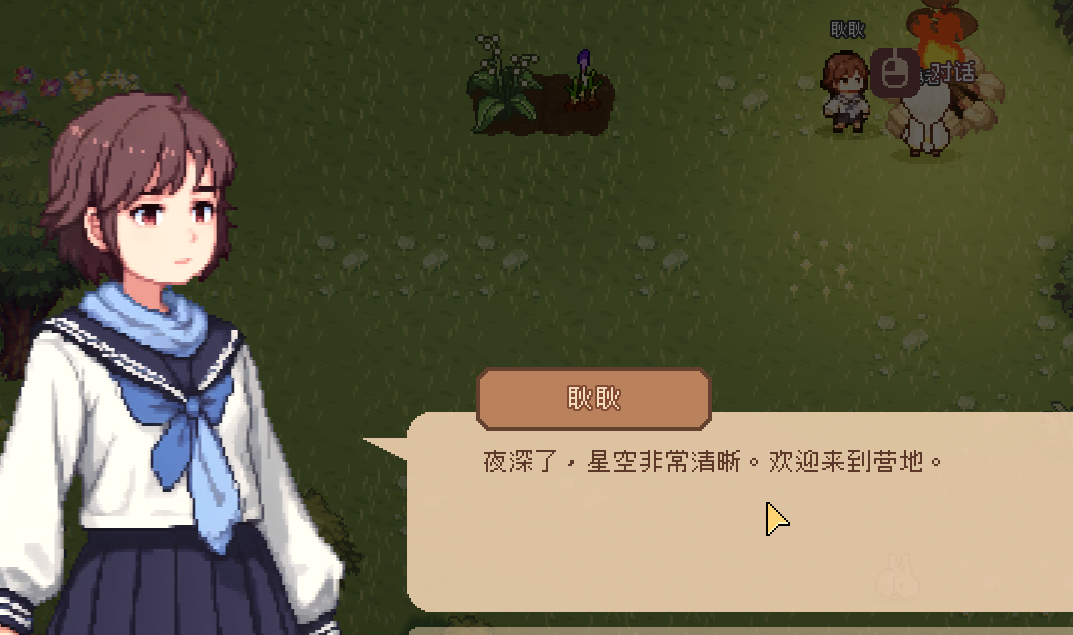
Geng Geng from the comic adaptation of *The Best of Us*, an NPC I created in *Maggie’s Garden*
Teahouse: But here’s a very practical question: if you had said back then that you wanted to make a sandbox game, wouldn’t you have raised less funding than you did for an AI game?
Kuding: I think this reality is inevitable. But from an investment perspective, AI games are a relatively “unappealing” category.Investors will ask: “You have the research capabilities—why not focus on niche AI or embodied intelligence, rather than making a game to sell to others to play?” That’s why some AI entrepreneurs in the market tell relatively grand stories, but ultimately, all those grand stories come down to commercial returns.
So, ever since that funding round last year, we’ve basically been working behind the scenes to refine our product, rather than constantly going out to raise more money. Game companies are, after all, product-driven.
Teahouse: Everyone is also watching to see if any of the companies developing AI games will break through and if there are any useful methodologies to be found.
Kuding: At this year’s ChinaJoy, there were many AI games on display, and everyone was talking about “the night before the dawn.” Everyone is waiting for a definitive AI game to emerge.
Teahouse: Do you think so?
Kuding: From the perspective of industry perception and consensus, I’d say that’s true. Around the same time we’re launching, there are other AI games set to launch as well. The consensus across the industry is that this concept has been brewing long enough—it’s inevitable that something will emerge. The only questions are what the right business model is and what the product’s core characteristics should be.
People who develop AI games have two things constantly on their minds: AI and games.On the AI side, the industry consensus is that while updates used to come once a month, they now happen daily or even weekly. Models are evolving so rapidly that it’s only natural for these developers to feel a strong sense of anxiety. So I can understand why everyone is in such a rush to launch their games right now.
02
Pricing, Sales, and Vision
On November 2, five days after its launch, Teahouse sat down with *Maggie’s Garden* for a conversation about sales, controversies, and future plans.
Teahouse: Our demo made it onto Steam’s New Releases chart before. Since it didn’t make the list this time, do you feel disappointed or surprised?
Kuding: Actually, not really. Sales were only slightly lower than we originally expected. Since it launched on the same day as *Shadow Blade Zero* and was an Early Access release, we didn’t have particularly high sales expectations.At this stage, we’re more focused on validating some of our ideas—including what the typical generative game user is like, what they care about, and how we can best serve this user base in this context. This is a process of trial and error with no prior benchmarks to guide us.
Teahouse: We spent so much time on it, and all we ended up with is an EA version. Looking back now, wouldn’t it have been better to launch it when the demo was at the peak of its popularity?
Kuding: Actually, no. Because we’ve already reached a classic conclusion: while the process of AI-generated NPC creation is fascinating in itself, it’s not enough to sustain gameplay for very long. If you treat Maggie as a creation simulator, you’ll actually get bored of it pretty quickly.
In the earliest version, many features were missing. For example, NPCs didn’t react to their surroundings—when they saw something, they didn’t display any reaction. Features like AI mission generation, AI items, AI placed objects, and AI scene generation were all added in later versions, and these elements help make each save file unique.
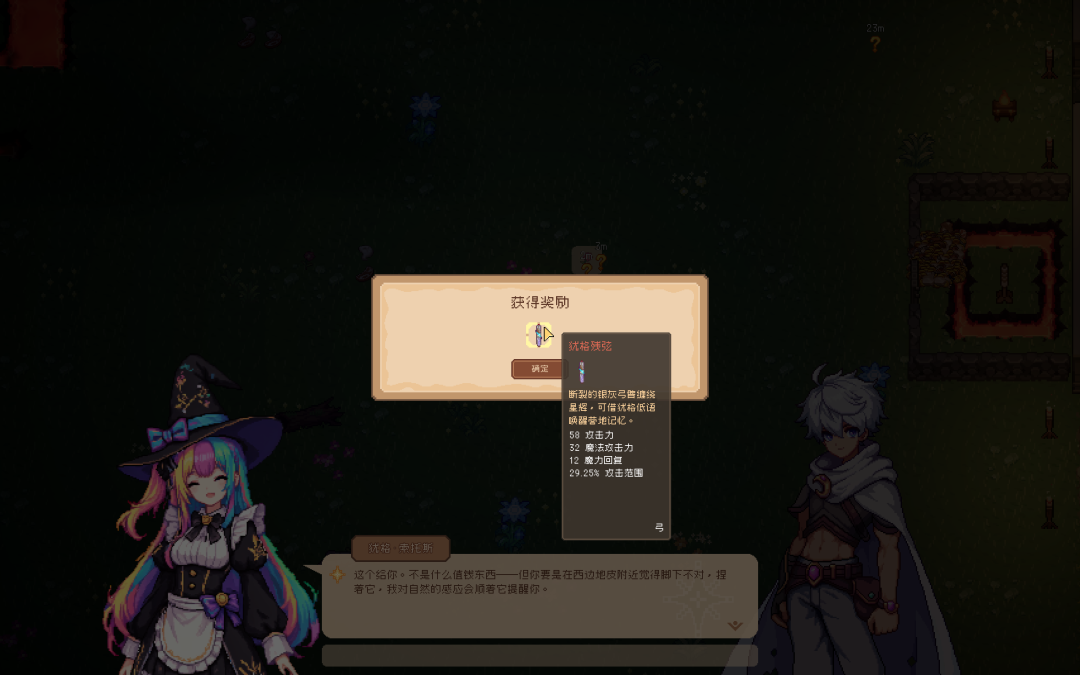
AI Props in *Maggie’s Garden*
Teahouse: The price is currently 48. What was the basis for setting that price back then?
Kuding: Our pricing during the EA phase is based on top-down sandbox games currently on the market. We’re the kind of people who respect objective market principles. Basically, all top-down, cartoon-style sandbox games fall within this price range.From a platform perspective, when it comes to category selection and tagging, you can’t suddenly have a product that’s significantly more expensive than others in the same category. Second, we’ll pass on a portion of the token costs to the DLC. You can think of it this way: our core users will essentially be paying 68 yuan for the game.
Teahouse: Now that the game has launched, you previously said you wouldn’t sell tokens—will the current pricing cover operating costs?
Kuding: Based on the backend data I’ve seen today, we’re essentially guaranteed not to end up losing money just to generate buzz. For games we’ve purchased outright and those distributed on Steam, the more copies sold, the better the results. We’ll definitely work actively to convert wishlist items and boost sales. We definitely won’t lose money on the tokens—that’s absolutely guaranteed.
Teahouse: Since there are in-app purchases for character creation and dialogue, do players feel that AI games should be priced a little lower? How well are they being received?
Kuding: Based on the feedback we’ve received so far, there are two types.
On the one hand, users who have played our game are generally okay with the pricing itself. While outsiders might assume that, like many Steam games, ours has in-app purchases and can’t be played without spending money, that’s actually not the case. You can play without spending money, and there’s plenty of content available even without spending—you just need to avoid creating a character.
On the other hand, as an AI-enhanced game, Maggie offers a truly novel experience. Some users who haven’t played Maggie—or who’ve only heard about it or read a single article—might find this hard to accept: Why would a platform with so many free games feature a product that requires in-app purchases?But in reality, if they just give it a thorough try, they’ll find it’s actually not so bad. According to our median data for the entire product, users who purchase only the DLC can essentially meet 90% of their needs.
03
Unexpected Player Feedback
Teahouse: You mentioned earlier that you’ve received a lot of unexpected feedback from players. Has that continued since the game launched?
Kuding: Actually, there are quite a few. For example, the players’ gameplay pace—we hadn’t thought of that at all.
I once saw a user who had been playing for 30 hours but still hadn’t made it out of our beginner zone.Many features had already been unlocked—including AI mission generation and AI object generation—but he spent a long time using the AI-generated objects, mostly small flowers and vases, to create a very detailed landscape and decoration around his pond. He never progressed to the later content, instead immersing himself in the world and engaging in simple exploration.
Second, it seems that users who find their main enjoyment in AI experiences, AI conversations, and creating AI characters have even less gaming experience than we imagined. Many of them haven’t played a large number of games on Steam, and their basic gaming skills are more novice-level.When we ask them to provide feedback on issues—such as sharing save files or certain basic information—they often aren’t very familiar with computer operations.
Teahouse: We might have expected players who enjoy sandbox games or *Stardew Valley* to join, but it turned out that many players didn’t have that much gaming experience.
Kuding: We actually have users like that, too. What we’ve observed is that they complete our game very quickly—content originally planned to take 20 hours might be finished in just over ten hours. They also feel that, for a game that’s sort of a pseudo-JRPG or a gear-driven sandbox, this is perfectly fine, and the survival experience is pretty good.
Teahouse: You mentioned earlier that you wanted to create a fan-created content platform. Has your approach to this product changed at all?
Kuding: We don’t think we’ve gone through that kind of shift. When it comes to creating a fan-created content platform, it’s not that we set out to build one—rather, we’re more focused on making it possible for players to share the content they create.
Looking at the backend data, we’ve noticed at every stage—starting with the demo—that user-generated characters eventually tend to converge. For example, with large language models being all the rage lately, our game is now filled with characters like DeepSeek-chan, Claude-chan, GPT-chan, and even Gemini-chan; we see plenty of these characters every day.In the early days, we mostly saw Hatsune Miku, while last year we saw more characters from anime-style mobile games.
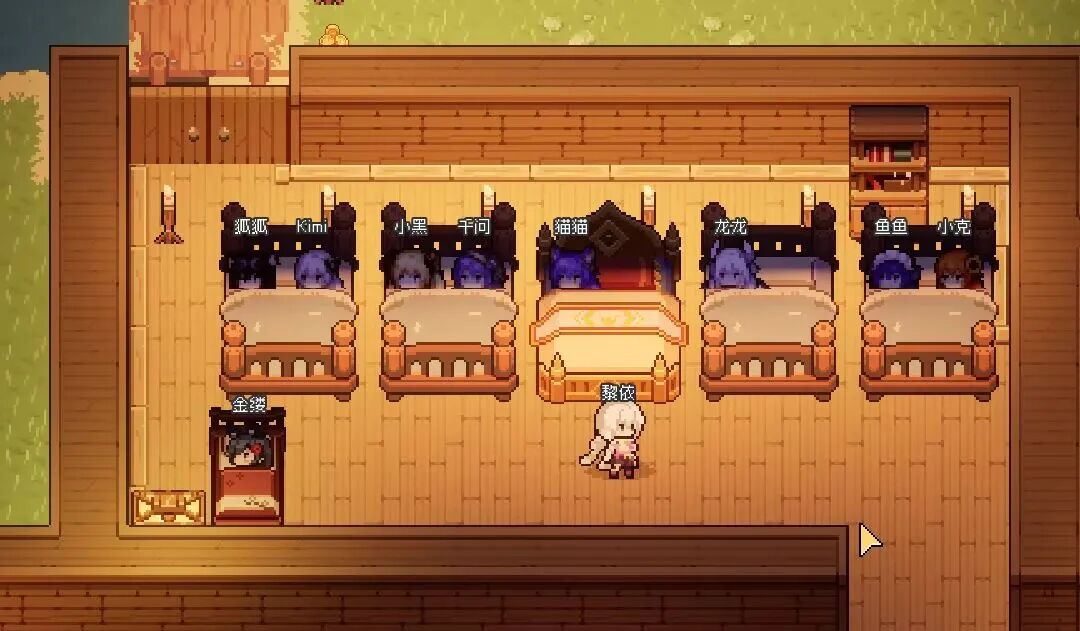
Player-Created AI NPCs in *Maggie’s Garden*
But what we expect is for users to share their characters with others. After all, human creativity is always limited—even if I give you unlimited creation credits, there will come a day when you simply run out of ideas. In a long-term game, you might run out of ideas, but others can share their creations with you, giving you new ways to play and new experiences. That’s the kind of experience we want to create.
Tea Houses: Will the government provide them with any support or incentives?
Kuding: We actually plan to do this. In the early stages, the team will likely check the in-game likes and shares on a weekly basis and periodically announce the characters that have received likes or that players are willing to share in the community—as a first, modest step. Then, as we continue to gain a better understanding of user behavior, we’ll determine how to systematically approach sharing and co-creation moving forward.
Teahouse: One positive aspect this time is that, in the past, the launch of AI games often sparked a lot of controversy surrounding the AI itself. Even if there is controversy now, it’s focused on the game’s content. Does this mean people are becoming more tolerant of AI games, or is it because your game’s content is so solid?
Kuding: It’s both. First, when interacting with new users, some are very sensitive about paying for AI. They haven’t even opened the game yet, and the first thing they ask is if they can integrate a local model. They don’t understand what local models are capable of, and they only know how to use a few APIs themselves. I told them, “Sure, just download this file.” They said they couldn’t get it to work, so I took a look—and sure enough, there was a problem with their deployment.I asked him, “What do you need the API features for?” He said, “I don’t want to pay to chat with an NPC.” I told him we don’t charge for that. He paused for a moment: “Oh, is that how it works?”
Users are very price-sensitive when it comes to AI costs, and any opaque product strategy is likely to put a strain on their wallets. If you have a relatively clear product strategy, users will accept it. For example, this morning I was handling an API bug for a user, and he asked why it was costing him so much to play the game today.I thought about it for a moment and realized, “Oh, you’re connected to DeepSeek—prices go up during DeepSeek’s operating hours.” The user was actually quite surprised.
Also, we are, after all, a game. The game content itself will gradually draw you in as you play. You’re still playing a game—not just creating a character. Even users who are deeply into character creation will eventually find themselves creating a character while also farming, exploring, fighting monsters, and decorating their homes; they won’t stay glued to the character creation screen the whole time.So, players tend to focus more on the game content itself: Why isn’t this feature working all of a sudden? Why did I encounter a bug during an adventure—accidentally killing the monster but failing to complete the quest? At least at this stage, a lot of our feedback centers on the game content itself.
Teahouse: Can we currently only access your API through certain links in the group chat?
Kuding: This brings us to the point that Steam isn’t a great environment for AI games.Currently, Steam does not recommend that any product integrate with its API; they expect developers to use their micropayment system. If you’ve been following the news, you’ll know that *Distant Planet* was once removed from Steam. For a game like *Maggie*, which requires a constant online presence, needs to continuously attract new users, and build a community, this is the only way forward.
Teahouse: We don’t plan to release some products on Steam; we’ll launch them on our own website instead. Have we considered other options?
Kuding: Definitely. The overall size of the “Maggie” package isn’t too big or too small, and we still have many technical issues to resolve. But Steam has several advantages: First, it offers a certain level of product exposure and recommendations, so we don’t have to rely solely on paid user acquisition for all our products; second, we can bundle our game with other titles in the industry to increase exposure;Third, as a buy-to-own platform, Steam handles all payment processing—we only need to integrate a simple user system, rather than building a robust platform from scratch, handling payment order binding, or managing distribution. As the platform evolves, we will certainly continue to adapt proactively.
04
Techniques are easy to copy, but judgment is hard to copy.
Teahouse: Within the sandbox genre, do you think you’ve delivered a high-quality sandbox game?
Kuding: Setting aside the AI aspect, as an Early Access sandbox game, I think we’ve met the basic standards. There might be some rough edges in the design, which is due to the fact that the Early Access version hasn’t been fully polished yet.In terms of the investment in art style, environment assets, monsters, and bosses, the scale of our game is already sufficient to support a major sandbox experience.
For example, a lot of players these days really enjoy tearing down NPC houses. Obviously, we need to have a certain amount of assets and a certain level of sandbox customization to let users do this; otherwise, if the sandbox were completely empty, you wouldn’t be able to do it.
Third, in terms of visual effects and lighting, I think we’re among the best in the sandbox genre. Compared to some of the best-selling sandbox games, what we lack most is finer polish, more comprehensive and diverse resources, and novel items introduced through ongoing updates—all of which can be addressed in future updates.
Teahouse: There are quite a few sandbox games out there these days. Will we face competition in this market segment?
Kuding: There will definitely be some. But what players are really looking for is a unique experience. Players who enjoy sandbox games may try out many different ones, but ultimately they’ll choose the one that offers the most distinctive experience. I believe that, among all sandbox games, *Maggie* is the most distinctive one.
Teahouse: There are some player-created mods for *Stardew Valley* that also allow for AI character customization. Is our alternative not good enough?
Kuding: First of all, character customization in traditional games isn’t really “customization” at all—it relies more on swapping out body parts, like changing hair color or outfits.Given the current quality and experience of pixel character generation, I don’t think any sandbox game could generate a character like the one in DeepSeek—one with a fishtail, a little skirt, and a maid’s cap on its head.
Second, we’ve seen many AI mods, such as the one for *Ringworld*, but their AI implementations are still underdeveloped. When it comes to developing AI features, we’re definitely more professional than mod developers.
Teahouse: What Are the Shortcomings of Player-Made AI Mods?
Kuding: Take the “AI Talk” mod for *World in Ring* as an example. It can integrate with OpenAI-format models to generate character behavior and dialogue; in the bottom-left corner of the log system, the character will start chatting on its own.As industry professionals, we’ll notice through our own experience that the memory mechanism is designed rather crudely, and it’s easy to spot issues with context carryover. If memory retrieval isn’t handled properly, it will carry over chat information and details about the NPC’s surroundings directly to the next layer.For an NPC to remember these things, the memory must undergo basic compression, extraction, and streamlining. Without streamlining, a larger chunk of memory gets squeezed in; to ensure the NPC remembers, this memory is passed back into the context with every conversation, and as time goes on, it piles up higher and higher. The end result is that the game becomes increasingly expensive to play.When we tested this mod, it cost us nearly 2 to 3 yuan in about an hour—far higher than the price we pay when using the API.
Many mod developers create mods out of personal interest, so they may not always consider financial returns or the paid user experience, and some of their judgments and decisions may not be as sound as those of professional AI or game industry professionals. Otherwise, the *Ringworld* mod would certainly have become a lot of fun, but it was only popular for a short while.
Teahouse: So, the fact that *Round the World* was able to create this mod—doesn’t that show that our technology is capable of recreating it well?
Kuding: No. Memory retrieval itself is something that’s very easy to replicate. In cutting-edge agent technology, there are numerous approaches and options for designing memory systems, but only the one that best fits your product’s use case is the most valuable.
For example, in Maggie’s case, the AI performs a wide range of actions every day: it eats on its own—at what time it ate an apple or a blueberry, at what time it got hungry, at what time it was working—and you’d have to develop the game yourself to understand these details.
The technology itself isn’t difficult—as long as you understand how the technical framework is designed, in the age of AI, you can quickly have AI generate a version for you. The real challenge lies in how people evaluate features; you need experience and an understanding of how features are interconnected and work together.
05
A team of ten people, and after launch
Teahouse: You mentioned earlier that there are about 10 of us working on this sandbox game? Will we have enough staff once it launches?
Kuding: Right. We definitely feel like we’re short-staffed. But instead of expanding our team, we’re borrowing staff from other departments. After launch, for example, we temporarily reassigned personnel from operations and maintenance, algorithm optimization, and graphics card optimization to help resolve certain issues. We haven’t made any major expansions or adjustments to the product’s scale; we’re continuing to move forward based on the current scale.
Teahouse: When did you join the *Maggie’s Garden* project team?
Kuding: I joined in March 2025.
Before that, I worked on traditional video games, holding various roles such as system designer and combat designer. My best-known project was probably an action game from the third season of “China’s Star.”
For a considerable period of time, I worked as a technical planner, focusing on tasks such as editor development, batch-generating levels, batch-generating level white models, scene generation, and scene generation algorithms. I was responsible for the planning and design of these aspects in the projects I led. As a result, I have my own unique understanding of the user experience of generative products.
I’ve been thinking myself that AI combined with programmatic generation will lead to a new product experience and a new future. I just happened to see a report on *Maggie’s Garden*, so I came over.
Teahouse: You mentioned earlier that the AI era is pretty draining for people. Will there be any downtime after the launch?
Kuding: It’s okay—at least I got to rest all afternoon yesterday.
Teahouse: That sounds pretty cruel.
Kuding: There’s definitely some wear and tear, but I think it’s unavoidable. Launching any product is always a very hectic time.
Teahouse: This might be the norm after a traditional game launches—are there any aspects unique to AI games?
Kuding: What makes this unique is that I can answer user questions while Coding runs in the background. I can provide customer service and fix issues at the same time. This is something unique to the AI era—I can fix bugs right behind the chat interface, and if a bug is particularly easy to define, it’ll fix itself over time.
On the other hand, this is also the first time I’ve encountered users who used AI to help us pinpoint bugs; when issues arose, they even took the initiative to use their AI tools to help us report and investigate the problems.
Teahouse: Does the game’s launch hold significant personal meaning for you?
Kuding: Personally, I’m relatively calm about it. The fact that a product has made it from R&D to launch at least proves that your development approach is sound; otherwise, some products simply wouldn’t have made it to launch.
Personally, I really enjoy taking on complex challenges. I’m particularly pleased that Maggie made it to launch and delivered all the promised AI features—it’s such a difficult project, and we managed to pull it off as a small team.
I believe Maggie is a very complex product; from functional design and AI applications to user profiling and product strategy, every aspect requires in-depth exploration. As far as the product is concerned, at the very least, we’ve been bold enough to experiment with integrating AI into the gaming experience.
As someone in the gaming industry, I place greater emphasis on creating games that players are willing to embrace, rather than simply developing products where people pay just to watch fireworks. We’re continuing to move in this direction, exploring whether we can better adapt to the market through our generative business initiatives and future product planning. These efforts hold greater significance.
Teahouse: Do you feel like you can breathe a sigh of relief?
Kuding: Not at all. The new job will start right away. Game development is a race against time—we’re actively fixing issues in the live game, quickly refining product quality, responding to real user needs, and planning new versions.
原创文章,作者:游茶妹儿,禁止转载:https://youxichaguan.com/en/archives/223072