Victorian England is a theme that has been explored time and again in video games and is highly recognizable. Some games use it to create a gothic aesthetic, while others draw on its atmosphere to weave intricate plots of power struggles; still others treat it as a source of historical reference for architecture and world-building.
“Back to the Future: 1999” (hereinafter referred to as “1999”), a game that takes players on a journey through global cultures, gained widespread attention right from its launch for its rich British atmosphere. However, in subsequent updates, the story ventured far and wide. It wasn’t until the launch of the new Chapter 4.0 that “1999” finally returned to its faithful British Isles.
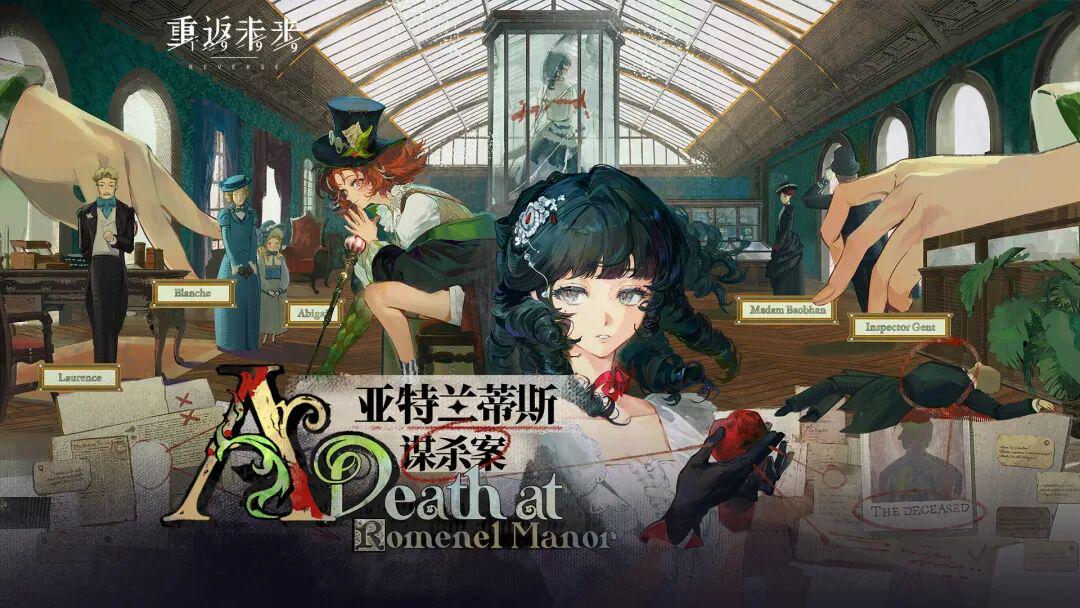
“1999” Version 4.1
Using *1999* to evoke a British atmosphere is, of course, a clever approach.
Classic elements familiar to the public—such as tartan, gas lamps, and the streets of the Foggy City—are still present, and on top of that, *1999* draws on a rich tradition of British literature. Following this tradition, *1999* wraps the content and gameplay of its new chapter in a distinctly British veneer.

Even though they both have a Victorian-era British aesthetic, the way they’re styled makes a big difference in their overall look.
Now that you’re in the UK, how could you not read mystery novels?
Version 4.1 of *1999*, as the title “The Atlantis Murder Case” suggests, revolves around a baffling murder mystery.
The story begins with a murder taking place late at night at a wealthy estate on the outskirts of London, and a detective is called in to solve the case. After a brief search, the detective concludes that the butler, the eldest son, the eldest daughter, and a guest—all present at the estate that night—are suspects.
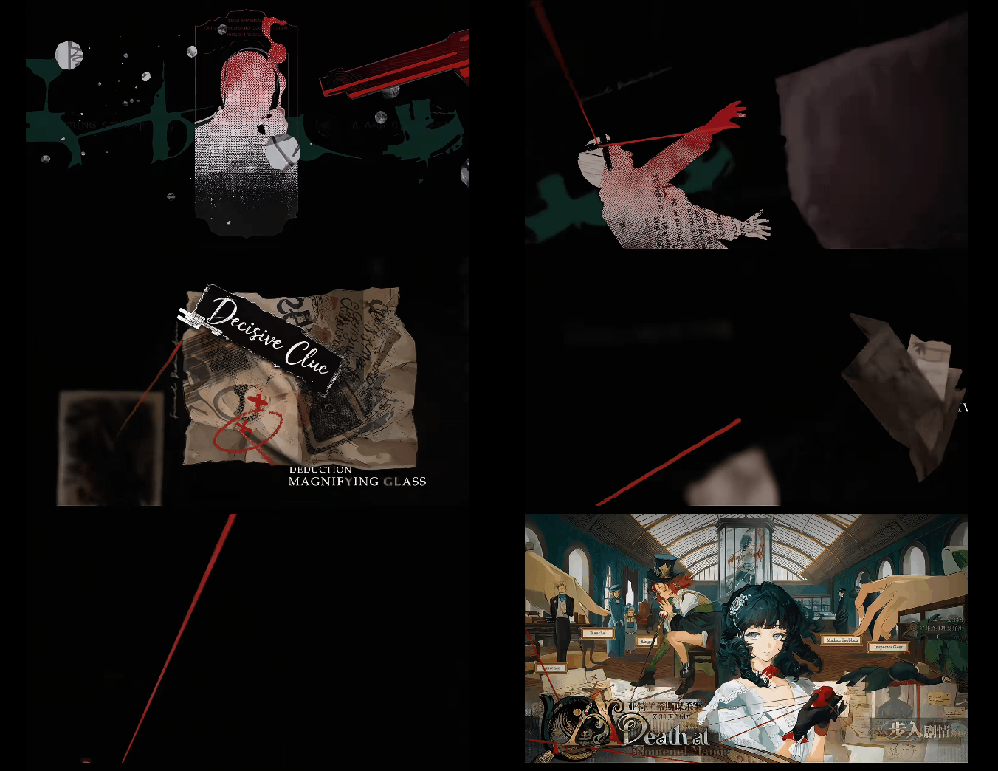
An incredibly smooth opening animation
A sense of familiarity that will make mystery fans smile knowingly
A classic country villa, a classic locked-room murder mystery, and a classic scenario where every character has a motive—right from the story’s opening, I could faintly see echoes of *The House on the Hill* (by Agatha Christie).
This traditional framework of British detective fiction, brought to prominence by authors such as Arthur Conan Doyle and Agatha Christie, has stood the test of time and remains as fresh as ever.

Granny’s renowned story, “The Strange House,” is also highly acclaimed.
Version 4.1 is set in 1871, during the mid-Victorian era—a time preceding the “golden age” of private detectives, when Sherlock Holmes was active. It is clear that the production team behind *1999* has taken a well-established story genre and crafted content rich in “9-style” themes.
Although it’s an original story, the campaign’s plot is filled with all kinds of homage-style Easter eggs:
The title of Chapter 2, “The Study of Footprints,” clearly corresponds to “A Study in Scarlet” (a famous Sherlock Holmes story);The title of Chapter 12, “The Hound of Raymonder,” is naturally a tribute to *The Hound of the Baskervilles* (a famous Sherlock Holmes story). Combined with references in the plot to the armchair detective and Scotland Yard, players familiar with detective fiction are sure to smile knowingly upon reading it.
There’s a long-standing convention in British detective fiction: all clues are revealed before the solution is unveiled, allowing skilled readers to deduce the truth before the detective does. Version 4.1 incorporates this tradition into the gameplay.
By reading the storyline, I tap the screen to explore, ask questions, and collect clues. Finally, in the deduction module, I “analyze” and piece together the clues to complete each stage of deduction.*1999* simplifies the process of analyzing clues and drawing conclusions by turning it into a fill-in-the-blank exercise, significantly lowering the difficulty and better catering to the habits of mobile gamers.
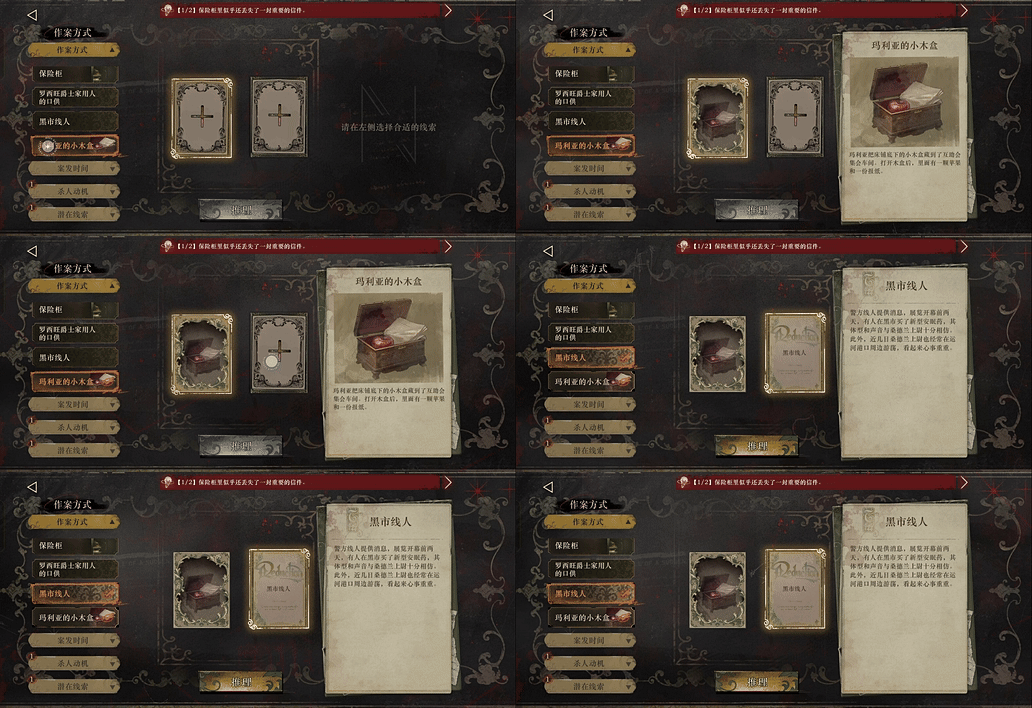
Recreating an immersive detective experience has always been one of the biggest challenges in mystery games. Currently, the solution implemented in *1999* is probably the best balance achievable given the limitations of the mobile platform.
The World of the Occult: Establishing a Rule for Reasoning
British detective novels emphasize that all mysteries can be explained through reason. But in the esoteric world of *1999*, with its abundance of supernatural phenomena and abilities, why would a criminal need to get personally involved in the crime? And why must solving the case still rely on conventional deductive reasoning? How, then, can the plot hold together?
The plot features the “Evidence Integrity Act,” which stipulates that the police may not use clues obtained through the occult as evidence, unless they can prove that the case involves occult practices.
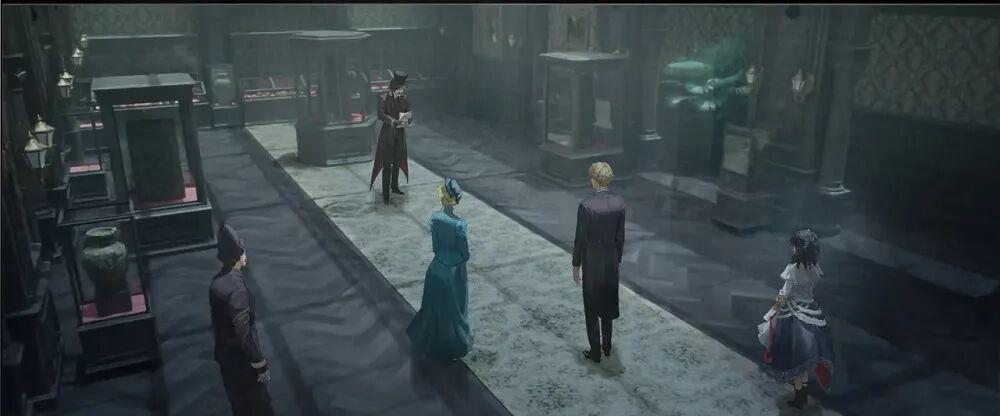
Once this bill is enacted, all these shortcuts taken at the crime scene will be excluded from the chain of evidence, leaving investigators with no choice but to examine footprints, cross-check testimonies, and analyze physical evidence.
Mystical arts haven’t disappeared; they’re simply restricted by this law, which prohibits both committing crimes and solving them. This approach is more sophisticated than simply hiding the mystical arts, as it has made deduction a rule that this world must follow.
Would you say this plot is “extra-large”?
As a fan of mystery novels, I’m satisfied with the storyline in Version 4.1. On social media, some avid players even binged the entire storyline in one go, calling it “extra-large.”

A fan of Agatha Christie who plays *1999* commented that he didn’t expect the game to stick to the classic mystery genre in a world of supernatural abilities—with no mystical arts used in the crimes and no killers appearing out of nowhere—which gave him a sense of authentic mystery.
Some players also noticed the Sherlock Holmes Easter egg in the storyline, the Grimm’s Fairy Tales elements in the characters, and the allusions to *Twenty Thousand Leagues Under the Sea*, and marveled at the care that went into the Version 4.1 collaboration with the British Library.
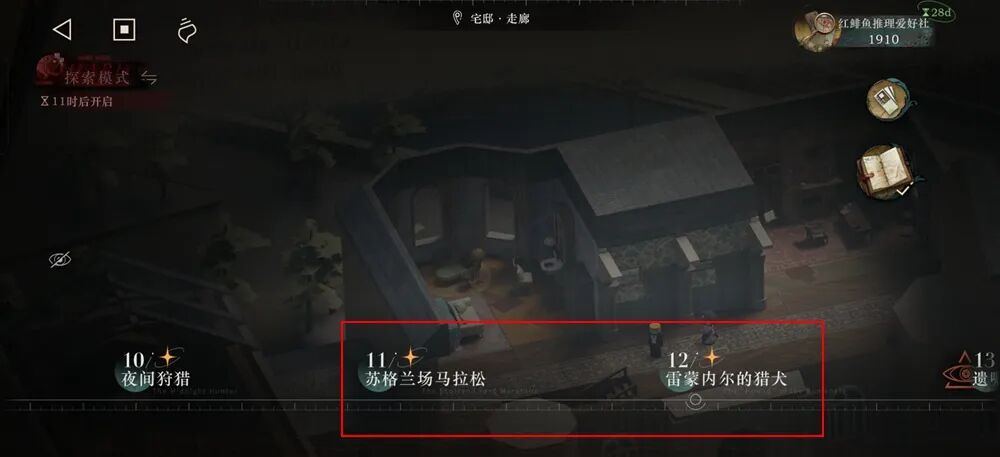
Three years after its launch, a new trailer for *1999*—featuring a single storyline—still sparks thousands of comments on Bilibili, proving the game’s popularity remains strong.
In particular, when players are able to discover the little touches the development team has included in the content, I think that’s a huge testament to their work.
From Oral Tradition to the Printed Word: 1999 Raced Along the Path of Literature
“1999” has carved out its own well-trodden path in content creation, with each update serving as a cultural journey.So far this year, Version 3.5 took players to Mexico for the Day of the Dead; the summer collaboration with *Atomic Heart* offered a taste of Soviet-style punk; September saw a return to Britain; Version 4.0 brought the legend of King Arthur; and Version 4.1—the focus of this issue—is an English-style detective mystery.
The story of King Arthur is a traditional British folktale; the characters—such as the Knights of the Round Table and the Lady of the Lake—have been passed down through generations by word of mouth.
Mystery novels are different. Thanks to the writing talents of masters like Arthur Conan Doyle and Agatha Christie, legendary detectives come to life on the page. These novels have been published in large numbers and distributed worldwide. The crown jewels of detective fiction are housed in the British Library. Across two consecutive editions, *1999* races along the literary timeline.
It’s easy to see that *1999* features a unique selection of content and maintains its consistent aesthetic style; its slightly artsy “9-style” charm is a real treat for players.
To highlight the “books” theme, the three collaboration skins in Version 4.1 each have their own unique features,
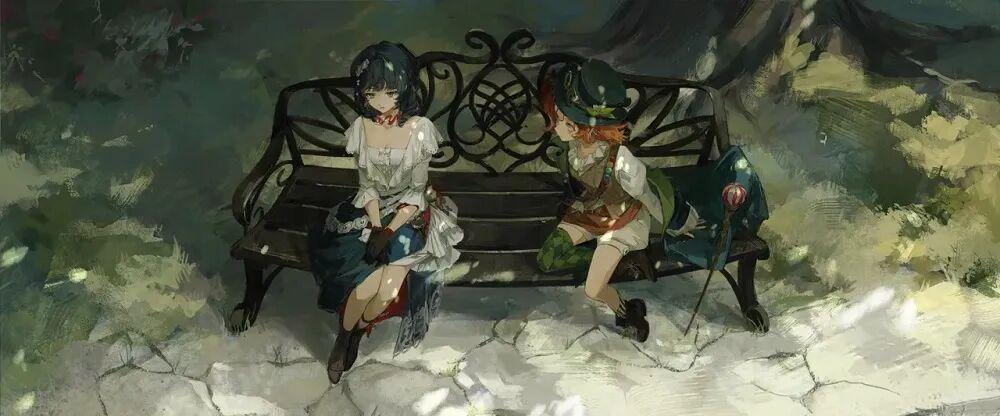
Aleph’s new skin, “The Hall of Lost Paths,” clearly corresponds to *The Adventures of Sherlock Holmes*; Enamel Eye’s ocean-themed skin, “Ocean Stamp Album,” is naturally inspired by *Twenty Thousand Leagues Under the Sea*; and Lorenz Butterfly’s new skin is derived from *Grimm’s Fairy Tales*.When a certain trait of a character meets the spirit of a particular work, sparks fly.
Just as Aleph suffers from hyperthymesia—his mind is crammed with memories he cannot shake, which become a burden—Sherlock Holmes’s “memory palace” treats memory as a tool, much like a vast database. Aleph is trapped within his memories, while Holmes masters them; they stand at opposite ends of the spectrum.
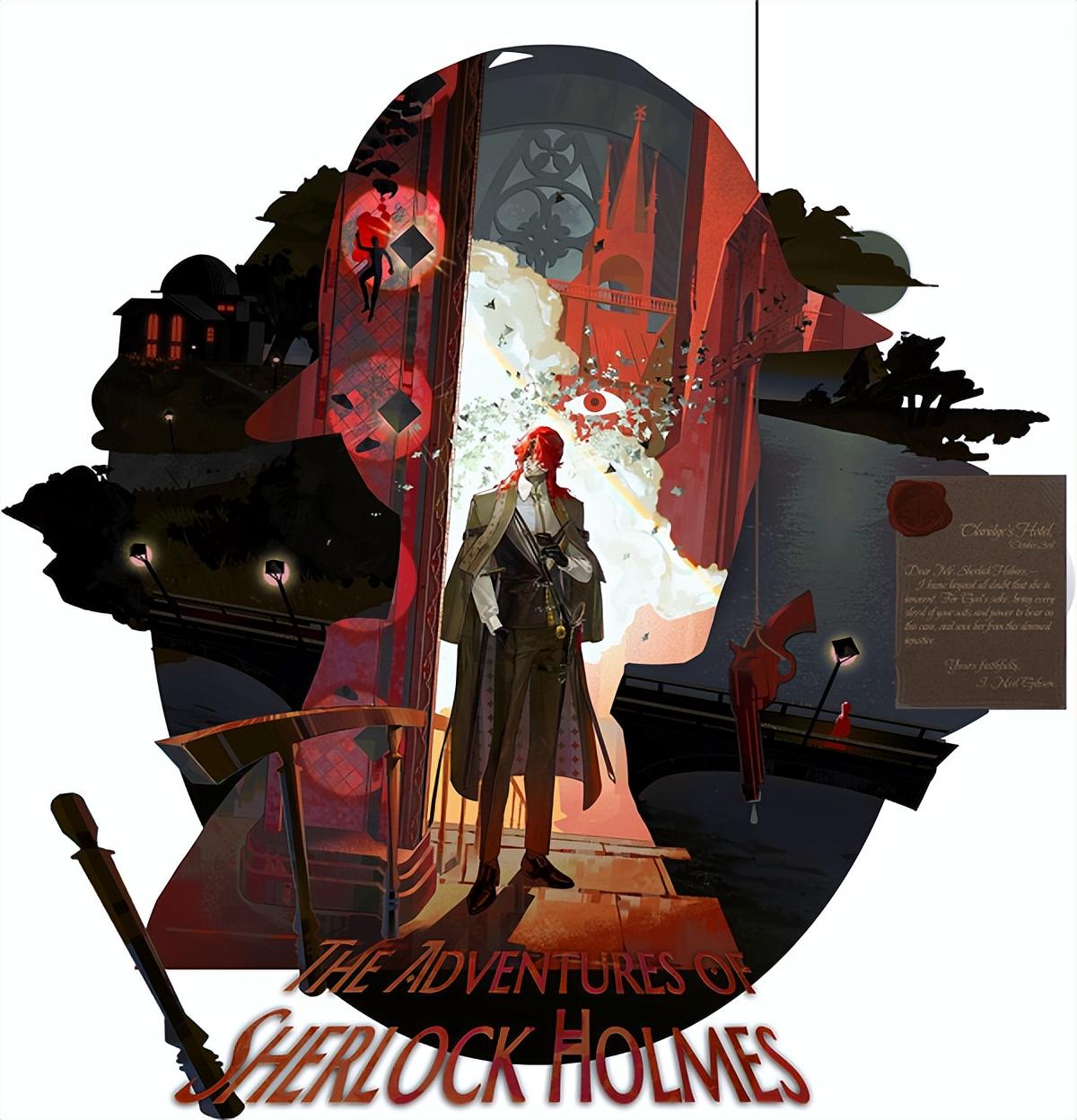
Aleph: The Hall of Lost Paths
“1999” has mastered the art of refining every detail of its content.
9. The pursuit of literary sensibility is evident in all of them
In recent years, there have been an increasing number of collaborations between the gaming industry and cultural and museum institutions. Cultural and museum institutions such as the Palace Museum, the Dunhuang Academy, the Sanxingdui Museum, and the National Library have all partnered with leading domestic game companies to organize online or offline collaborative events.
Collaborations between cultural institutions and game developers differ from typical cross-industry partnerships, which are primarily about exchanging traffic. Such collaborations typically require time and careful consideration to integrate the content into the game; museum collections and historical research must be accurately incorporated, which inevitably consumes production resources. Ultimately, the content produced through these collaborations becomes part of the game’s assets and remains a permanent part of the brand.
I suspect that when planning Chapter 4.0 of *1999*, the creators—wanting to incorporate elements of British detective fiction—approached the British Library to discuss a collaboration.
Based on information released by the British side, this collaborative project involved several months of joint research, design, and communication. In its reply, the British Library specifically mentioned that it was delighted by *1999*’s pursuit of literary sensibility.
Since cultural and museum institutions recognize the value of fan-created content in games, and players are eager to immerse themselves in collaborative content, I hope to see more of this kind of content produced in *1999*.
原创文章,作者:游茶妹儿,禁止转载:https://youxichaguan.com/en/archives/223262