Another hit prototype has emerged from the IAA mini-game track.
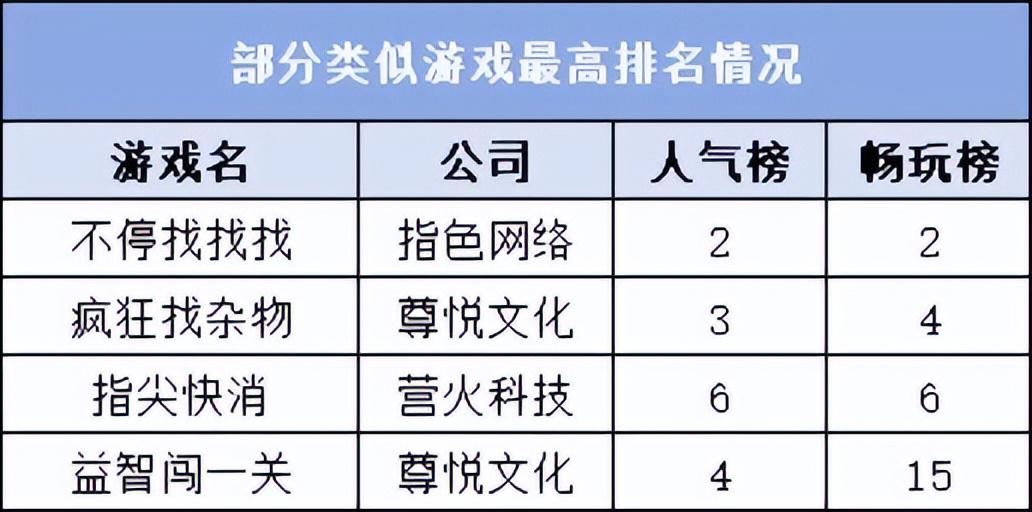
Recently, a wave of games combining “stacking and object-finding” with “sorting and matching” mechanics has surged in popularity.Games such as *Fingertip Frenzy*, *Never-Ending Search*, *Crazy Clutter Hunt*, and *Puzzle Challenge* have quickly attracted a large player base thanks to their soothing, stress-relieving organization themes and simple, addictive match-three mechanics, surging into the top ranks of WeChat’s Popularity and Top-Played charts.
Among them, “Never Stop Searching,” developed by Zhise Network, has performed particularly well, reaching the No. 2 spot simultaneously on both WeChat’s Popularity Chart and Fun Play Chart at its peak, and continues to dominate the charts to this day, demonstrating outstanding market competitiveness.
01
A Game That’s All About Stress Relief
The content of these games is virtually identical, and the gameplay is very simple: you sort and clear cluttered scenes.
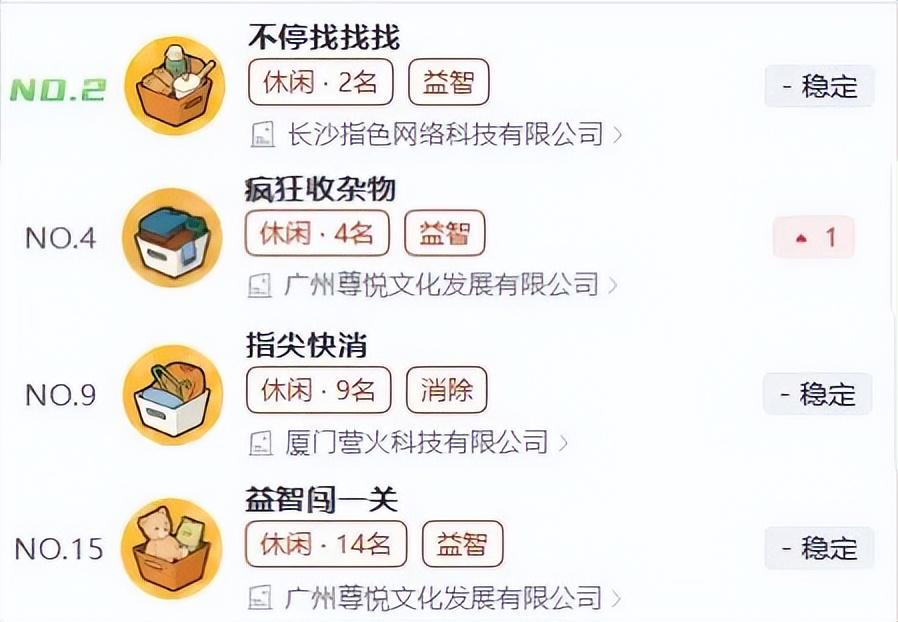
The icon art style is also consistent. Image source: Gravity Engine
Upon entering a game level, the first thing that catches your eye is a strikingly chaotic scene filled with clutter: it could be a living room littered with stuffed animals and snack boxes, or a study where books and stationery are piled haphazardly on top of one another…The soft, low-saturation art style captures the familiar feel of a “messy room,” with items piled layer upon layer. At a glance, it looks cluttered and cramped, naturally sparking the urge to roll up your sleeves and tidy it up.
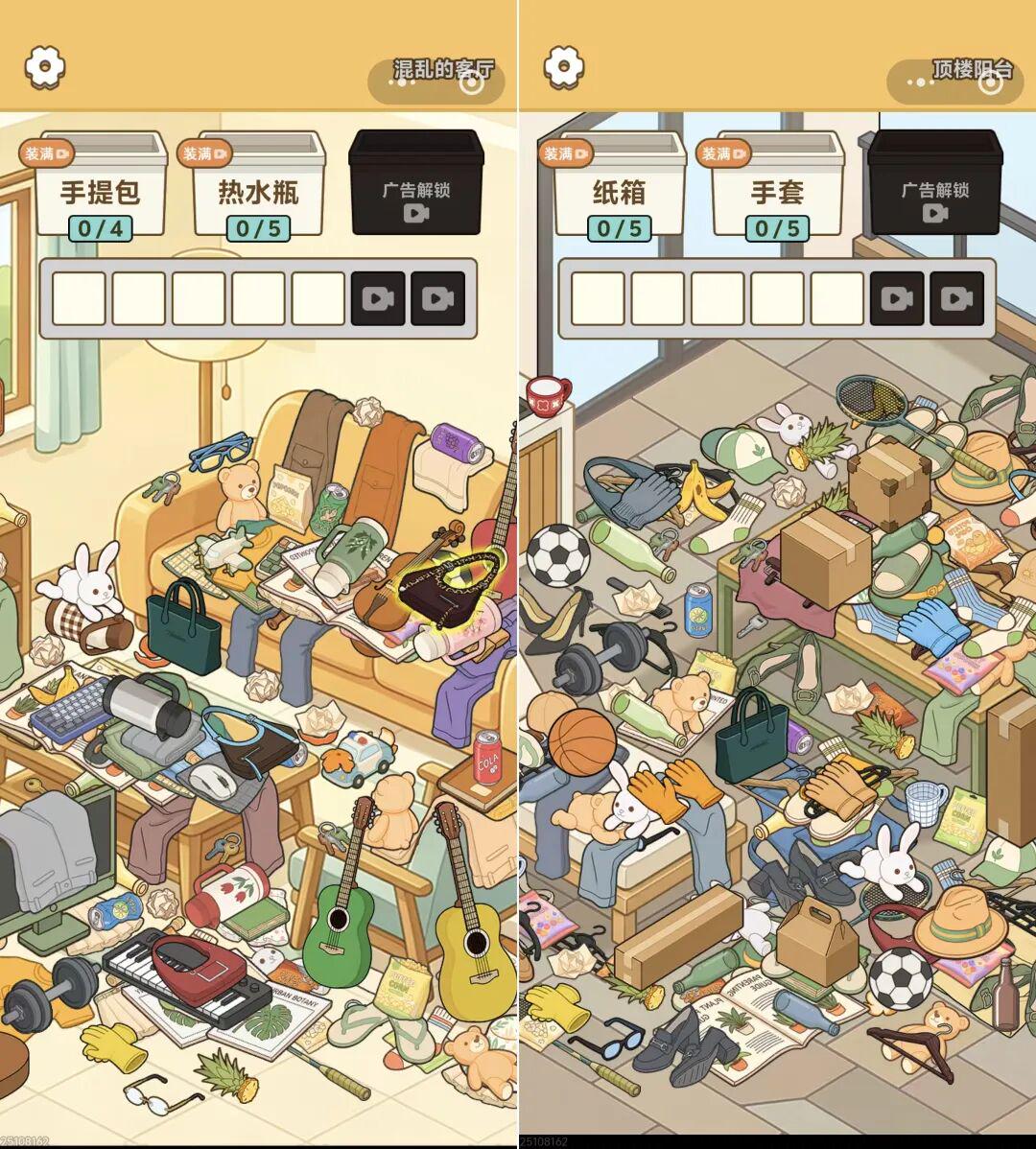
Above the chaotic scene are several storage boxes of different types and a few temporary storage slots.The player’s task is to locate and pick up the corresponding items in the cluttered scene based on the categories labeled on the storage bins; once a specified number of bins are filled, they are cleared, unlocking new bins for other categories. When all items in the scene have been sorted, the level is cleared.
As items are sorted and packed into boxes one by one, and the layers of clutter are gradually cleared away, the once-crowded and chaotic scene slowly becomes clean and orderly. This process of moving from chaos to order is precisely the game’s most core source of stress relief and satisfaction.
These games feature many familiar elements; the hidden-object segments are similar to games like *Scavenger Hunt!*. However, in traditional hidden-object games, items are laid out flat on the screen—they aren’t stacked on top of each other or obscured, you can’t flip through layers to pick them up, and there’s no system involving a hand slot or categorized storage bins.The core gameplay focuses primarily on visual search that tests players’ eyesight.
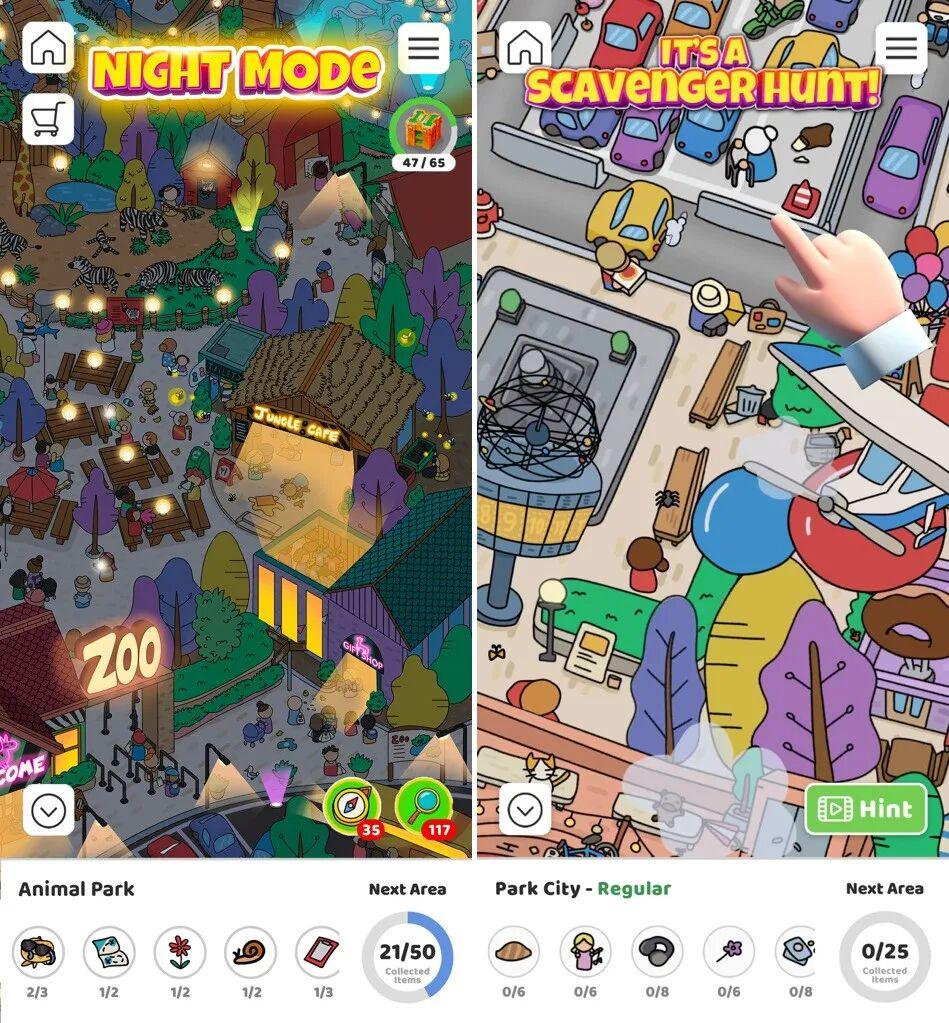
《Scavenger Hunt!》
The concept behind the category-based matching is similar to “Tightening Screws” and “Unraveling Yarn,” while the stacking-based matching mechanic follows in the footsteps of *Catch the Goose*.However, unlike *Catch the Goose*, items in the scene are subject to a stacking and obstruction mechanism: only the topmost, unobstructed object can be tapped to pick up. Items buried beneath other objects must first have the clutter covering them cleared away before they can be retrieved.
If an item you pick up does not match the category of the storage box directly above you, you can only temporarily store it in the lower storage slot; you cannot place it directly into the storage box. The temporary storage slot has a fixed capacity limit, and once it is full, you will fail the level immediately.
This also creates some strategic flexibility in the game: Players can’t just pick up whatever they see; instead, they must weigh their options and prioritize collecting items stacked on the top layers according to the storage bins’ categories, promptly completing the packing and clearing objectives, while simultaneously using the opportunity to gradually expose the clutter on the lower layers, paving the way for retrieving other items later on.
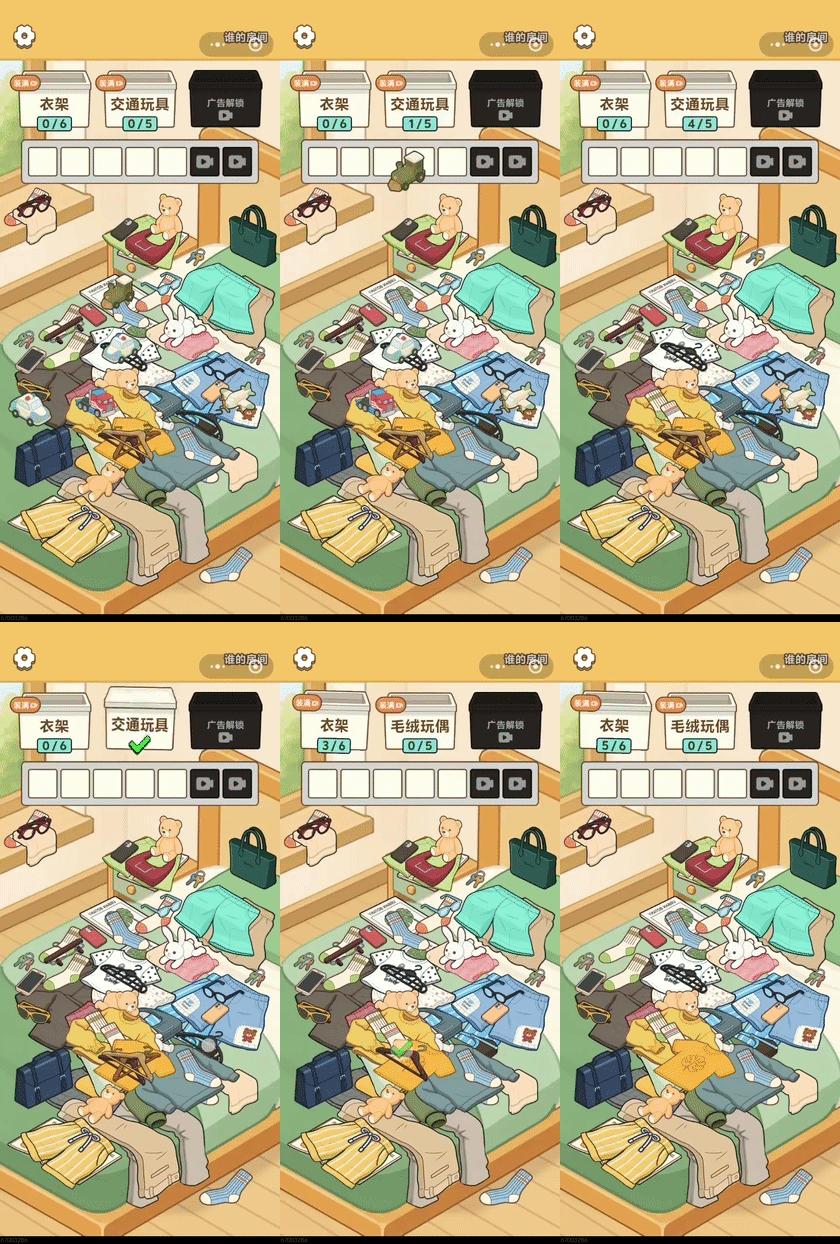
The limited number of storage bins and compartments also serve as the commercial vehicle for this concept.
Storage boxes determine the types of items a player can manage at the current stage, while storage slots serve as temporary holding areas; together, their capacity limits define the player’s scope of action.While organizing, players often face this dilemma: items of the same type that match the storage box are buried beneath stacked items. To retrieve them, players must first pick up other items from the top layer and place them in the temporary storage slot. If they miscalculate and the temporary storage slot nears capacity,the player finds themselves in a catch-22: continuing to pick up items risks immediate failure, but not picking them up prevents progress through the level.
At this point, players can choose to watch ads to immediately unlock more storage boxes and slots, giving them greater flexibility. The game also seamlessly monetizes the moment a player actively seeks help.
02
A Timeless Classic Theme
In addition to this ingenious gameplay loop, these products also rely on the theme of organizing—which carries inherent emotional value—to keep players engaged.
The reason why organization-themed games appeal to players lies in their ability to tap into a very basic psychological need: the desire for order and a sense of control.In real life, tidying up a room is often tedious and exhausting—it requires time and physical effort, and the space frequently becomes messy again shortly after cleaning. In organization games, however, players need only tap the screen to watch clutter transform into order, achieving emotional release with minimal effort.
Of course, the popularity of organization-themed games in the gaming market is nothing new. Over the years, major gaming platforms have already produced numerous organization games of various types that remain consistently popular.
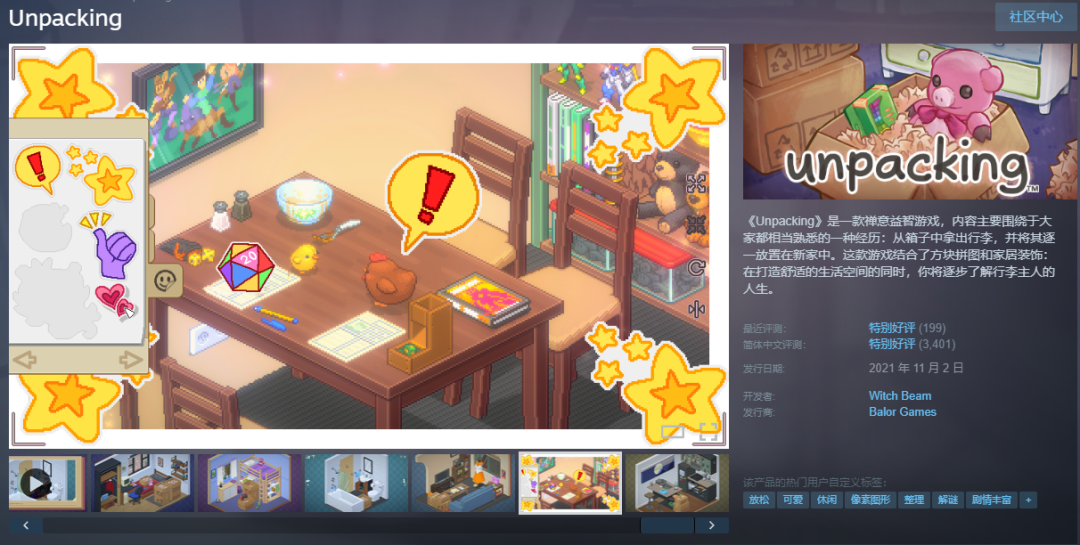
In the indie game market, the most representative title is *Unpacking*, developed by the Australian studio Witch Beam. Released in 2021, the game garnered widespread acclaim solely for its immersive, slow-paced gameplay centered on unboxing and organizing items, and sold over 1 million copies within its first year.
Focusing on mobile platforms, there have also been quite a few hit organizing apps. For example, “Super Organizing” and “Organizing Expert” emphasize strategic placement, focusing on the order in which items are arranged.

"Fill the Fridge," which gained popularity overseas, and its domestic spin-off, "Fill the Fridge," further streamlined the gameplay by focusing solely on the task of filling a refrigerator, testing players' spatial planning skills. Back then, the game sparked a global craze for refrigerator organization.
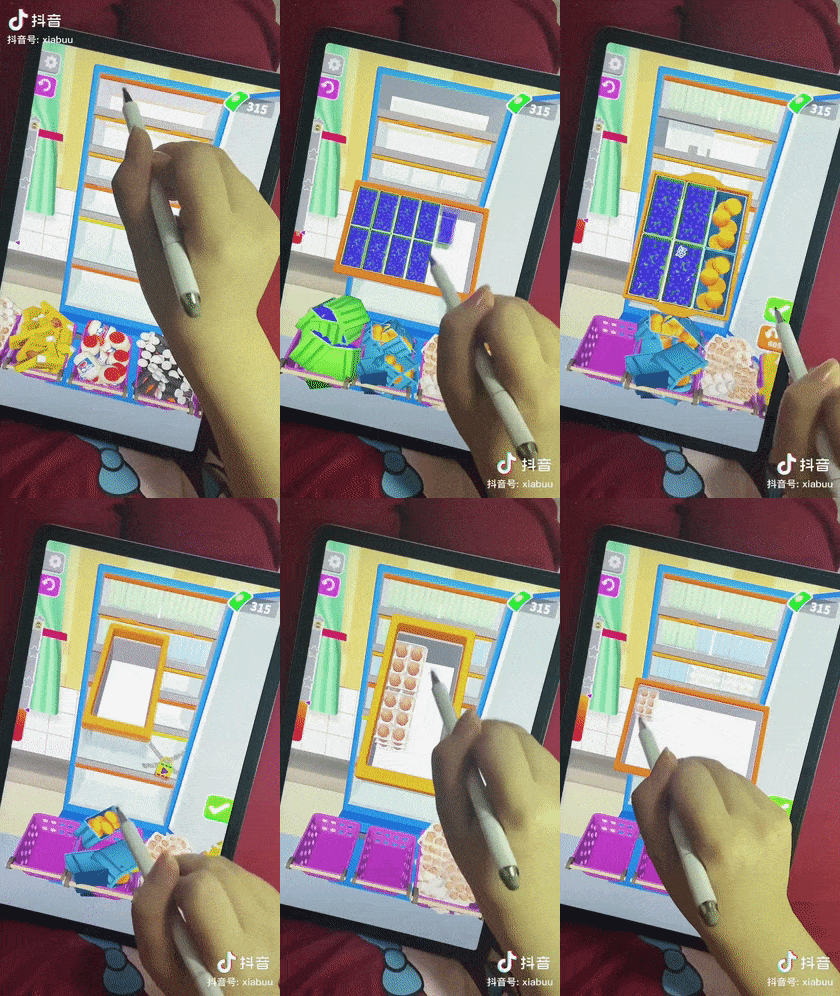
Today, this wave of stacking-and-matching + sorting-and-matching mini-games that have flooded the charts has opened up an entirely new direction for gameplay within the established genre of organization. It breaks away from the traditional design approach of organization games—which focused on spatial arrangement and layout planning—and shifts the core challenge of organizing to the order in which items are stacked and the allocation of storage slots.
It’s clear that the organization genre offers tremendous flexibility in gameplay.The same therapeutic core of “restoring order” can support the quiet, drawn-out narrative style of *Unpacking*, serve as the basis for intuitive spatial arrangement games like *Super Storage* and *Fill the Fridge*, and now even combine with match-three mechanics to create short, high-feedback gameplay experiences.
The universal appeal of the theme ensures that it naturally has a low barrier to entry and a broad audience, while the ample room for adapting gameplay mechanics leaves plenty of room for ongoing innovation.
But from this perspective, there is still plenty of untapped potential in the storage genre. It may already be too late to jump on the bandwagon of the currently popular “stacking and clearing” gameplay archetype; the real opportunity lies in who can develop a completely new combination of gameplay mechanics centered around the core concept of “restoring order.”Whoever discovers it first will have the chance to gain a head start in the next wave of hit games.
原创文章,作者:游茶妹儿,禁止转载:https://youxichaguan.com/en/archives/222738