Shanghai Bantou Technology has been quite active recently. First, its product "Code Name: Live" completed testing, and then the company announced that it had secured over $10 million in a single round of funding.
In February 2024, BanTu Technology was founded. In March 2025, the company received an exclusive investment of tens of millions of RMB from IDG Capital, a globally renowned investment firm. The recently announced funding round marks the company’s second round of financing, with participants including leading domestic and international investment firms such as Lenovo Ventures and IDG Capital.
Its founder, Xing Jun, previously served as the head of AI research for Mihoyo’s Anti-Entropy team, whose 3D virtual avatar, Lu Ming, has over 1.6 million followers on Bilibili.Co-founder Duan Jinjiu previously co-founded WaveParticle Technology, which focused on social networking for anime-style virtual avatars; the company was later acquired by ByteDance, and he joined ByteDance’s Pico division with his team, where he conducted in-depth research on the A-SOUL virtual idol project. Both men firmly believe that AI can take 3D virtual idols even further.
Subsequently, Shi Min joined BanTu Technology as Head of AI Technology. He has extensive experience in the gaming industry, having played a key role in game projects such as *Legend*, *Magic Baby*, *Genshin Impact*, and *Star Valley*. He has held positions at several companies, including Google, Shanda, and miHoYo, serving as Technical Director and Executive Producer.
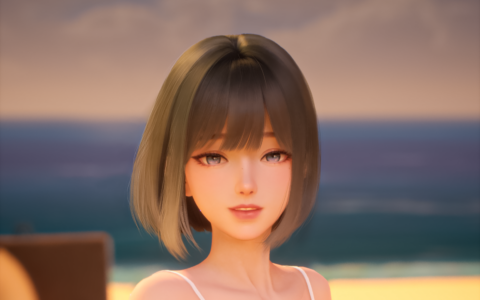
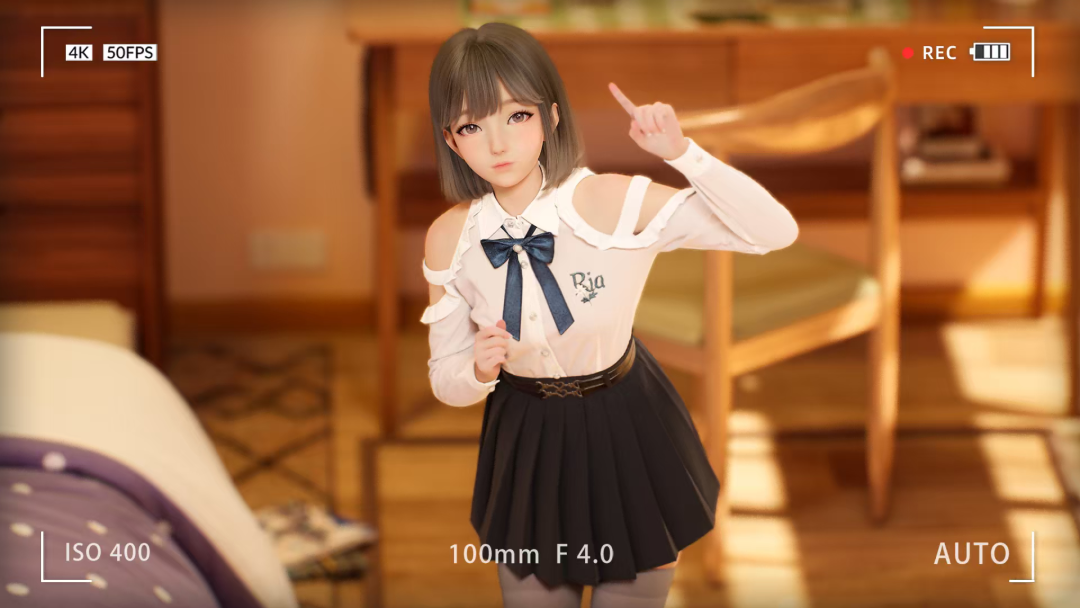
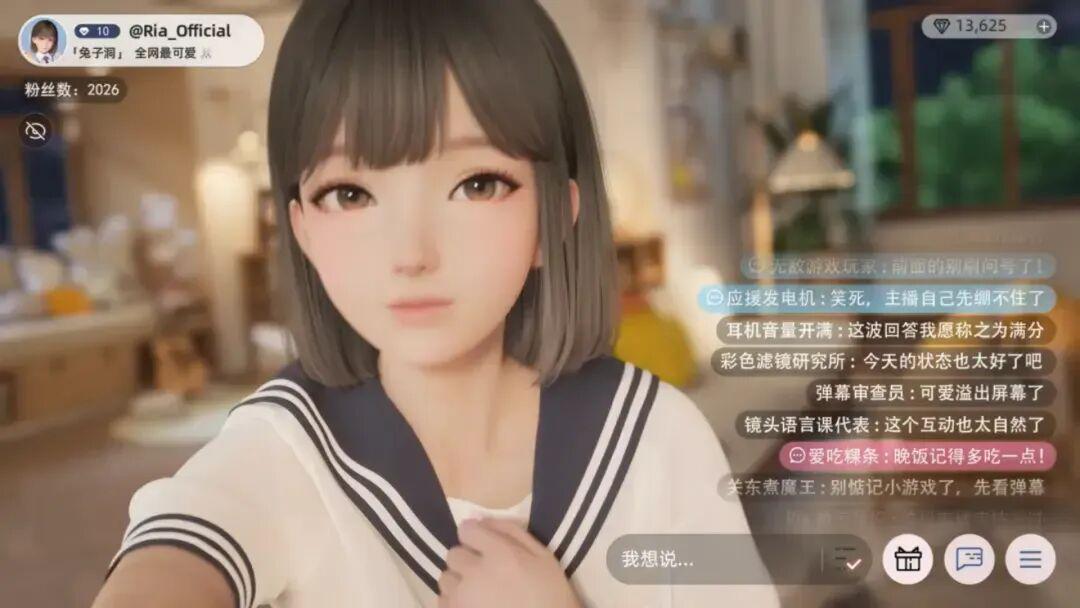
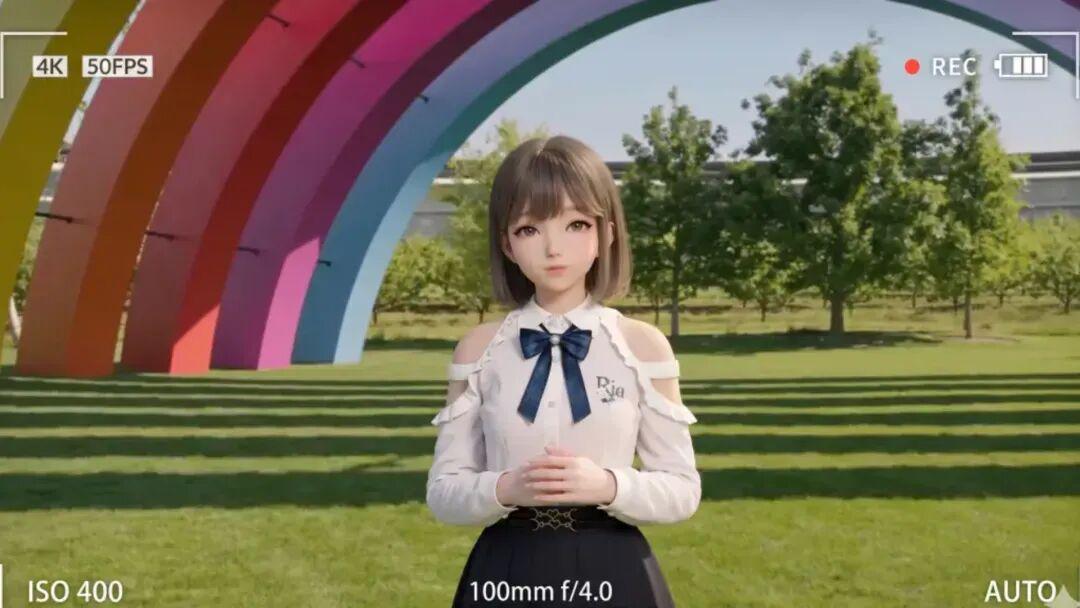
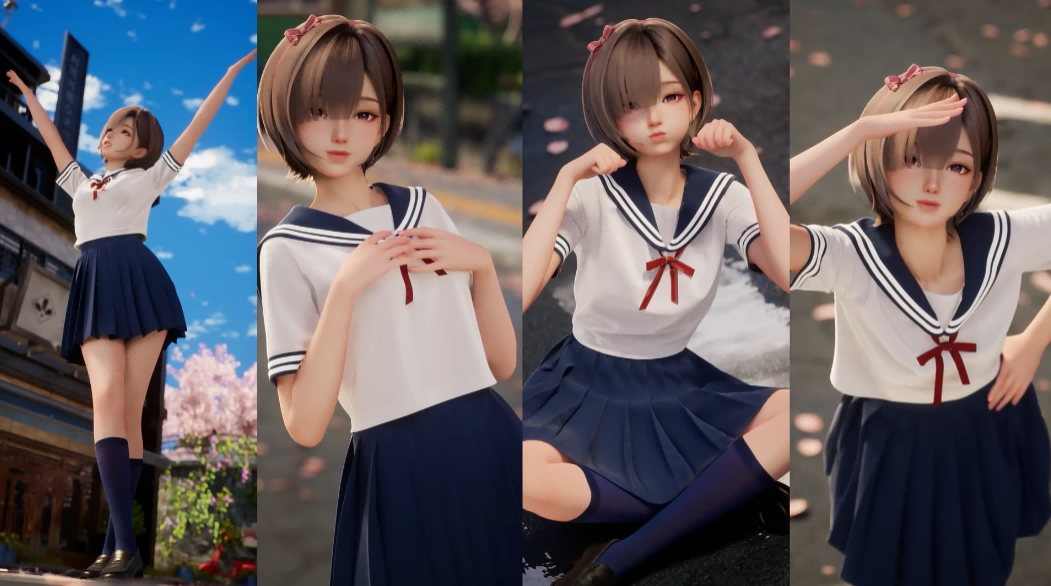
This is an AI-native 3D virtual idol game. When you open *Code Name: Live*, you’ll meet Ria, a young girl with a neat, short haircut and a school uniform—she loves to sing and dance and is a rookie idol. As her producer, she’ll grow and evolve in different ways based on your plans and arrangements.
One of the most beloved clips from *Code Name: Live* features a smiling young girl singing and dancing in a livestream. After her performance, she leans in close to the screen and asks you in an energetic voice, “What do you think? What do you think? Haven’t I improved a lot since before? As long as I’m willing to train hard, there’s nothing I can’t do!”
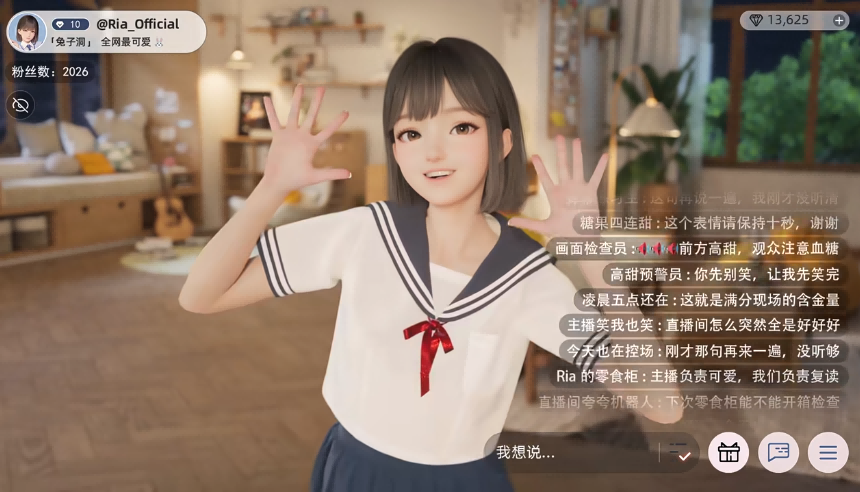
Cute, approachable, and a sense of accomplishment from raising a character. Last month, *Code Name: Live* completed its first round of closed beta testing, achieving a 72% retention rate on the second day and a 57% retention rate on the fifth day. Users averaged nearly 200 AI interactions per day, exceeding the team’s expectations.
In addition to this ToC product, HalfMap Technology has also charted a unique path in AI technology. Focusing on human behavioral modeling capabilities, the company has built an entirely new technological pipeline—spanning data generation, model training, real-time behavior generation, and action-driven systems—and has used this to expand into the ToB market, serving a diverse range of clients, including game companies and embodied intelligence enterprises.
Since its founding more than a year ago, BanTu Technology has maintained a relatively low profile, aside from publicly disclosed funding information and media coverage of its founders. Co-founder Duan Jinjiu said the company is now ready to move forward.
Teahouse held two conversations with BanTu Technology in September and October. Participants included BanTu Technology co-founder Duan Jinjiu and Head of AI Technology Shi Min, who answered numerous questions regarding the company’s products, technology, team, and business operations.
The following is a conversation between Teahouse and BanTu Technology:
01
Three Months to Get Everything Up and Running: The Birth of an AI 3D Virtual Idol
Teahouse: How long did it take for *Code Name: Live* to go from project approval to testing?
BanTu Technology: We started working on this at the end of last year, and by April of this year, we had the AI pipeline up and running—and our first product was ready.In May of this year, *Code Name: Live* underwent its first test. At that time, we had just successfully implemented the model’s engineering pipeline and wanted to see if it could continuously generate content based on user feedback, as well as whether the generated results could consistently maintain control over the virtual characters.
Teahouse: Did you decide to develop *Code Name: Live* this early on? How did you get the project approved?
HalfMap Technology: When the company was founded, we had already thought these things through in advance. It’s probably a bit different from established game companies, which have a set project approval process. As a company in such an early stage, to put it simply, we don’t need things to be that complicated—if everyone agrees we should do it, we just move forward.
We tend to handle several tasks simultaneously. For example, model training and data—which are clearly preliminary tasks on the AI side—must be completed first so we can understand the model’s capabilities and the functions it can perform; on the other hand, there’s the standard game development process—3D art, the engine, game design, operations, and content—which is almost identical to that of traditional games;sandwiched in between is a layer of agents responsible for integrating the model’s capabilities into the product through engineering methods.
None of these three aspects can be overlooked: modeling capabilities are the foundation; the agent determines whether AI outcomes can be turned into products; and the product side involves integrating these capabilities into gameplay design and 3D art.
Teahouse: Compared to the traditional game development process, what are the similarities and differences in your approach?
BanTu Technology: Our development process is actually quite similar to that of traditional games: we validate the core gameplay and design progression systems—all of which are similar to, or even almost identical to, traditional games. We have a relatively independent team working on this game.
The difference is that this game makes extensive use of our modeling and agent capabilities, which are developed collaboratively by the game team and the agent and modeling teams.
Teahouse: How many people on the company team are involved in this product?
BanTu Technology: The company currently has more than 50 employees, with over 20 working on pure AI R&D and about 30 working on product development.
However, there are relatively few experienced professionals in the field of combining 3D and AI, and only a handful of major domestic companies—such as NetEase and Tencent—are conducting related research. Furthermore, it’s quite difficult for us to find talent who understand AI, 3D animation, and real-time product development all at once.Many people have expertise in one of these areas, but bridging the gap between models, character performance, and product operation requires hands-on project experience. As a result, building our team has taken quite a long time.
Teahouse: What is the core gameplay of *Code Name: Live*? My last hands-on felt like it was still in a relatively early stage—I might have only seen a small glimpse of it.
BanTu Technology: The core gameplay of our product is built around character growth and real-time AI interaction, with the ultimate goal of fostering a unique emotional bond between players and their characters. The current version is still in its early stages, and what you’ve experienced so far is just a small glimpse; we’ll be accelerating the expansion of content in the future.Test data also shows that users appreciate new technologies like AI Agents, which enable more multidimensional interactions between players and characters.
Teahouse: Who is the main user base for “Code Name: Live”?
BanTu Technology: We target three types of users: first, the anime and manga gaming community; second, fans of virtual idols and virtual streamers; and third, users interested in AI products.
Teahouse: One of the challenges of creating a character with strong emotional resonance is that everyone has their own preferences. Based on the user feedback we’ve received, do people like the character Ria?
BanTu Technology: Feedback on this aspect received the highest score in our evaluation. The character’s “distinctiveness”—or rather, its overall character archetype and design style—is currently the aspect we’re least concerned about. Overall, anime fans seem to really get it and are relatively receptive to it.
But you're right—every user is unique, so we definitely won't limit ourselves to just one character in the future. We hope to eventually create characters with different styles.
Teahouse: Back when there was no data available, how were the character’s personality, appearance, and voice designed?
BanTu Technology: Initially, the operations and art teams worked on this collaboratively. We believe the first character is extremely important—she serves as the face of our external communications, is central to content creation, and shapes users’ first impression of the product—so she’s worth the time and effort to refine. That’s why the art team actually spent a long time refining her independently.
From the initial character designs to the subsequent naming, color schemes, and styles of the entire character system, we had a solid plan in place from the very beginning. We then validated our concepts multiple times by releasing several gameplay videos and conducting tests not only domestically but also overseas to gauge how well this art style was received by the anime and manga audience.The feedback we received confirmed that we were on the right track, so we continued to iterate in that direction.
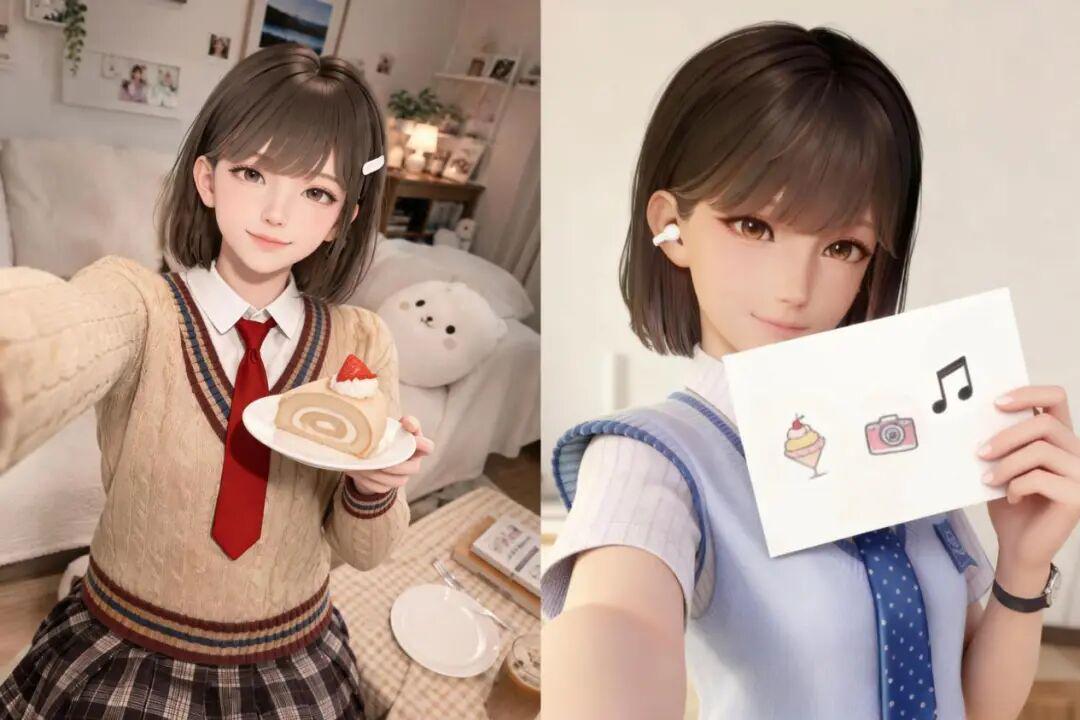
Teahouse: Right now, Ria’s image is defined by her short hair, school uniform, and sweet smile. What inspired this look?
BanTu Technology: In the early stages of the project, we didn’t have a large amount of test data. Although we had some basic internal data, the design of the Ria character relied more on our analysis of the anime market and player preferences. When it comes to creating charismatic female characters, we draw inspiration from a wide range of sources—not only from anime and virtual groups, but also from various literary and artistic works both domestically and internationally. Whether it’s animation, novels, or other forms of content, there is actually a fairly broad consensus regarding the public’s aesthetic preferences for female characters—this is a clear, overarching trend.We first establish a basic direction based on this assessment, then continue to iterate and refine the characters.
Teahouse: How many drafts were there, roughly?
BanTu Technology: We’re still making changes even now. Before this product was unveiled to the public, we’d already gone through two or three, or even three or four versions—we just hadn’t released them publicly.If you look at our social media, you’ll see that this character’s design has undergone several changes—all part of the refinement process. However, the overall image hasn’t changed; the revisions have mainly focused on the character’s general appearance and demeanor, as well as some artistic details, such as lighting and expressiveness.
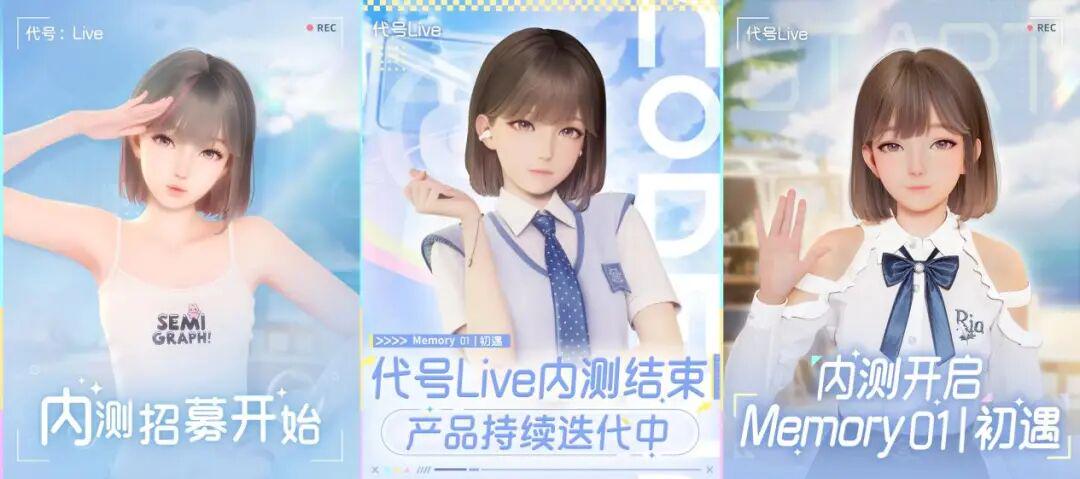
"Code Name: Live" Beta Tests
Teahouse: When playing anime characters, it’s easy to get accused of “copying someone else’s face.” Have you ever experienced this?
BanTu Technology: (Laughs) When it comes to creating anime characters, it’s true that discussions about how similar they look at first glance often come up, and we’ve seen a wide range of player opinions during this test.
However, for us, a character’s true distinctiveness ultimately comes from its character design. Our team has years of experience in character art and photorealistic rendering, and all of our characters are independently designed from scratch based on a brand-new world setting. Fortunately, after playing the game extensively, many players are able to sense each character’s unique personality and appreciate their inherent charm.
Teahouse: Why was the relationship between players and characters defined as “virtual idols and producers” rather than as AI lovers?
BanTu Technology: We chose not to limit the experience to AI lovers because we believe that the emotional connection between humans and virtual characters shouldn’t be limited to romantic relationships.
We hope to leverage our core AI technology to make the bond between players and Ria dynamic and personalized: some will see her as an idol they admire, others as a comrade-in-arms, and still others may find themselves developing romantic feelings for her. Players can gradually nurture a relationship that is uniquely their own, based on their own feelings.
The strength of our product lies in its AI-driven 3D performances and the characters’ ability to grow. As a “producer,” players can participate in her training, daily life, and growth, experiencing a sense of freedom in this companionship that isn’t limited by a single relationship.
02
Users treat her as if she were a real person.
Teahouse: What percentage of your overall vision did the scale of the last test represent?
BanTu Technology: About 10% to 15%. There’s still a lot of content to be added, and we haven’t finalized the progression and resource systems yet—these will likely be the focus of the next version’s testing.
Teahouse: Some people choose to release their games on Steam as one-time purchases first, which requires less upfront investment. Why didn’t you go that route?
BanTu Technology: Our core product model is based on the concept of service-oriented games. Character AI models require continuous iteration and cloud-based service support. If we were to adopt a one-time purchase model with a single delivery, and if the models were no longer updated or the services discontinued afterward, the player experience would actually be quite poor.
Of course, our project is designed to be multiplatform, and we are currently planning a PC version. Progress will be synced across both mobile and PC platforms, but the user experience will differ between the two.
As for marketing and promotion, we don’t want to simply apply the established methodologies used for anime-style products; instead, we hope to focus more on conveying the product’s inherent qualities and, by leveraging the characters’ inherent appeal, communicate the unique selling points of *Code Name: Live* to players.
Teahouse: What is the current user base?
BanTu Technology: This test involved about 600 participants, and more than 3,000 people completed the survey. We didn’t conduct any large-scale promotion; these sign-ups were generated organically through page views, which is relatively in line with our expectations.

"Code Name: Live" Unveils Its First PV
Teahouse: After the test, what was the biggest difference compared to what you had originally envisioned?
BanTu Technology: Users’ expectations for relationship continuity are more nuanced than we originally thought. They care about whether the nicknames, habits, and shared experiences from their chats are carried over—and whether their avatars still remember them—when they move to Moments, live streams, or other scenarios. This has led us to place greater emphasis on ensuring consistency in status and expression across different scenarios.
Teahouse: Have there been any user behaviors that exceeded your expectations?
BanTu Technology: Yes. Take the first technical test, for example. The features were very basic—it was essentially a proof of concept to see if there would be any bugs and if the system could run smoothly. The content preparation was also very simple. But the average viewing time per user during that test was around 120 minutes per day, which far exceeded our expectations.
During these 120 minutes, he’ll watch the character’s performance and make requests for interaction—it feels very much like the live-stream comments I see when watching a real-person livestream.Moreover, it feels different from previous AI companion or text-based flirting apps, where many users were primarily seeking a hormonal rush and would tease or even attack the characters. With the transition to 3D, users’ entire language patterns and communication habits have completely changed—it’s now very close to how they would interact with a real person.
Teahouse: How specific are we talking about?
BanTu Technology: Players' requests in the comment stream are actually very similar. Many look forward to characters performing talents, chatting about various topics, or sharing their daily lives, hoping to interact directly with the characters—all of which are very typical interaction behaviors among virtual streamer users.
Teahouse: So the live-stream comments we see in the test are also generated by AI, not from real users?
BanTu Technology: Yes, it's currently generated by AI.
This design was initially driven by technical necessity. We wanted the character to actively generate content, rather than being a passive robot that simply waits for user interaction. Suppose a user doesn’t interact with her at all, or is busy doing something else—we want her to follow the bullet comments and independently perform a series of actions and interactions, keeping her occupied at all times instead of idling and waiting for instructions.Later on, we may develop this system into a full-fledged gameplay feature, rather than having it serve merely as a purely technical application for setting the mood. Further adjustments are planned for the future.
Teahouse: But isn't a one-to-many setup more manageable and cheaper?
BanTu Technology: Actually, a one-to-many model is easier to manage. A one-to-one model faces a lot of technical challenges, such as concurrency and content output.For example, when our AIGC generates a piece of content, is that content intended for a single user or multiple users? If it serves 10 users, the load on the server is reduced by a factor of 10. Previously, it was a one-to-one service, but now a single server can serve 10 people.
However, in order to achieve a truly one-on-one experience—which is exactly what we’re doing now—the content generated each time is tailored exclusively to that one user, which results in higher costs. This isn’t so much a matter of difficulty as it is a fundamental difference in approach. Since our primary target audience is anime and manga fans, this group still prefers a personalized, one-on-one experience.
Teahouse: Can users tell where your AI technology is being used? Or is most of it working behind the scenes?
BanTu Technology: I think it’s obvious to them. For example, the range of behavioral expressions—such as movements, dance, and facial expressions—is superior to that of many traditional anime-style products. The sense of interaction is very strong, and users can communicate directly with the characters—an experience that other anime-style games simply can’t offer.
Teahouse: But if we write these things down, maybe they’ll come true?
BanTu Technology: To implement a feature, you can use an AI model or write code. However, there is a significant difference in their generality and versatility. It’s impossible to write code to accommodate every user request, but large models—or architectures like Transformers—can do just that. Writing code limits users to a few predefined options, resulting in a significant loss of interactivity.
Teahouse: On the flip side, since AI is being used, has user dissatisfaction with the experience also increased?
HalfMap Technology: Yes, there will be some. During testing, users offered a great deal of feedback. Some really liked *Code Name: Live* and suggested many ways to improve it, while others felt the product wasn’t what they had expected. We think this is perfectly normal—any product encounters this during early testing.
Different players have different expectations when it comes to interacting with virtual characters. Our core goal in developing AI-driven character experiences is to provide players with more immersive and deeper real-time interactions—this is the most distinctive feature of our product, and we will continue to refine it to better meet everyone’s expectations.
Teahouse: Do casual players tend to be more forgiving of the AI in this regard?
BanTu Technology: It will actually be higher.
On the one hand, most of the participants in the test are hardcore anime and manga fans who have long been exposed to high-quality virtual content and, as such, have relatively high expectations for the art and the basic quality of the content.
On the other hand, they have already seen a large number of polished and captivating virtual characters. Having been immersed in high-quality 3D virtual content for so long, they naturally approach our product with corresponding expectations, so their overall standards are actually even higher.
Teahouse: Could this expectation turn into pressure?
BanTu Technology: There’s definitely pressure, but we believe there’s a solution to this.
Based on the test data—including our retention rates, usage duration, and the feedback we’ve collected—it’s clear that our core user base has significant demand for this type of product; the results met or even exceeded our expectations.
Many of the requests you’ve raised will require cross-team collaboration and phased implementation—whether it involves gameplay design, content creation, AI interaction, or visual presentation. These are also the expectations players have for our product, and we will continue to refine it and steadily improve the overall experience.
Teahouse: To sum up, what was the most common piece of feedback in this round?
BanTu Technology: Most of the feedback has focused on character expressiveness, particularly suggestions related to art. Due to time constraints, the art aspect hasn’t yet met our own initial expectations. To break it down further, specifically the visual presentation within the product, as well as the integration of AI and art—such as lip-syncing, voice generation, and facial expression details—all still require further iteration.
I personally believe this is the most important aspect as well. The core of our product is creating charismatic characters that make players want to interact with them, shape them, and influence each other. Aside from expressiveness, another key concern for users is “what kind of relationship can I build with this character?” While this test had a framework in place, we didn’t prepare for it in great depth—this is a goal for future iterations.
03
Advancing Simultaneously at Home and Abroad
Teahouse: How significant is *Code Name: Live* among all your products and business lines?
BanTu Technology: This is our main commercial product.Our company currently operates along two main lines: technology and products. On the technology side, we train models and develop agents. Our trained human behavior models come with complete 3D and skeletal data, making them compatible with the vast majority of platforms and products within the same modality. We have already partnered with several game companies and embodied intelligence firms;On the product side, we validate our models through games or other forms of content; *Code Name: Live* is one such example.
Teahouse: So you guys have pretty high expectations for *Code Name: Live*?
BanTu Technology: We definitely have expectations, and we hope to commercialize it.
Tea Houses: Does "commercialization" mean how much money can be made?
HalfMap Technology: We have certain expectations, but testing has just wrapped up, so the team’s top priority right now is to refine the product. Once our product meets players’ expectations—or even exceeds them—we believe commercial success will naturally follow.
Teahouse: You mentioned earlier that *Code Name: Live* plans to expand overseas. How are the countries and regions for this expansion currently prioritized?
BanTu Technology: We place equal emphasis on both the domestic and overseas markets.
At this stage, we plan to launch the game simultaneously in China and select regions overseas, and preparations are well underway. For future international versions, we will also consider localizing content such as character designs. Since conditions vary by region, we will proceed steadily and schedule testing in multiple regions over time.
Teahouse: If *Code Name: Live* ultimately fails to meet commercial expectations, does the team have a backup plan?
BanTu Technology: So what you're asking is, "What if the product fails?" (laughs)
Going back to what I said at the beginning: Our company’s core focus is still on technology, and at the very heart of that is our modeling capability.To be honest, no one can guarantee that a product will definitely succeed. When it comes to addressing this issue, we’re no different from most companies: core competitiveness is the most important factor, followed by commercialization capabilities. Commercialization capabilities can take many forms—some teams focus solely on commercialization, while others support our model development.
We still hope to get back on the company’s core path—not like a game development team that puts together a team to develop a product, launches it, and then disbands if it becomes a hit. That’s not what we mean.
04
An Unexpected Alternative Path
Teahouse: How far along is that company’s other business line now? When did they start developing the technology for the B2B side?
BanTu Technology: A few months ago—actually, not that long ago, around July or August—the technology was productized and turned into an API that others could call.
Teahouse: Did you initially approach people with the intention of collaborating, or did it just come about through casual conversation?
BanTu Technology: It all started with a friend of mine in the industry—he wasn’t a stakeholder, which is actually quite interesting.
The first person was a former business partner and colleague of mine who works with Yushu Robots. He likes to use robots to pull off all sorts of pranks and post them on social media.After chatting with him one time, he found out what I’d been up to lately and told me about this ecosystem in the robotics industry: they’re an MCN company specializing in robots—they’ve bought a bunch of robots and put together a small team to take on commercial performances.
He said this was quite interesting, and maybe we could look into it, because as far as he knew, robots only played cartoons—cartoons that were very basic and expensive to produce, and their programming was updated very slowly.
It all started with this one opportunity. I began reaching out to friends—including many of Xing Jun’s academic colleagues who were conducting research on embodied intelligence. After discussing it, we realized that this technical approach was entirely viable and aligned very well with our own technology. That’s how it all came about—it was actually quite a coincidence.
Teahouse: Could you break down these customer segments and explain what specific issues they’re trying to solve?
BanTu Technology: There are roughly three major categories.
The first category is game companies. Their needs are fairly straightforward: asset creation. In the past, they created a large volume of in-game motion assets—known as K-animations—using optical motion capture, actors, or animators. Now that they have the ability to produce high-quality motion at a very low cost, they may want to integrate our API at the corporate level to generate these assets through various methods.
Another category involves gameplay mechanics. Some music-focused companies have a strong connection between music and dance, and they want to develop UGC-based gameplay: users can upload a song or watch videos online, and the system uses that information to generate a note chart—similar to a rhythm game—which is then shared with other players to play and share. These are the kinds of needs that game companies have.
The second category is interactive entertainment. This is a fairly broad field, but we’ve received one specific request: their products feature a large number of social characters, and they want these characters to interact with players more naturally—with their own behaviors, behavioral logic, character profiles, and memories—and they hope to use this technology to drive these interactions in real time.Then there are companies specializing in virtual idols and virtual streamers, both domestically and internationally. Their goals are quite clear: on the one hand, they want to use AI to drive their characters; on the other hand, they want to create performance-oriented content, such as concerts and dance routines.
The third category is embodied intelligence. On the one hand, these robots rely on data—they require vast amounts of it for training; on the other hand, they lean toward user-generated content (UGC) and developer-oriented features. When users purchase these robots, they expect them to have a wide range of capabilities—such as learning to sing and dance, mimicking movements, or engaging in real-time interaction.The robots come equipped with cameras that allow them to see what their owners are doing. They aim to integrate with our API so that when users give commands, the robots respond accordingly. This is already very similar to the application of virtual idols in the physical world.
Teahouse: Aren’t there some big companies doing this on their own, too?
BanTu Technology: We are, in fact, collaborating with major tech companies as well. Although they have their own internal R&D teams working on this type of technology, they ultimately chose to partner with us. So there is definitely a technical barrier here; even for major tech companies, it’s not an easy task—it requires both resources and effort.
There are still some companies working in the same technical field, but I think the number of companies that are truly direct competitors can be counted on one or two hands. There really aren’t that many people working in this field. Our partners also compare options, but in the end, they choose to trust our technology—mainly because the services or products we offer have a clear advantage in terms of quality.

Teahouse: AI products generally face challenges with commercialization. How do you handle the issue of inference costs?
BanTu Technology: AI products have to pay an “AI tax” right from the start—it’s hard to avoid, and we’re no exception. But our approach is a bit different: our core gameplay revolves around 3D performances, and we don’t want users to endlessly chat with characters and burn through tokens.Instead, much like traditional games, we prefer to combine limited content generation with manually designed elements to support AI-native features such as numerical values and random events.
Teahouse: Speaking of which, can ToB revenue now support ToC R&D?
BanTu Technology: Although our revenue is still modest at this stage, after initial market validation, we have received a great deal of positive feedback on our technology from many partners. This is a very encouraging sign for a company like ours that is in the early stages of business development.
Therefore, we are generally optimistic about the market’s future development, and we also believe that human behavior modeling is a general technology area with excellent prospects for the future.
原创文章,作者:游茶妹儿,禁止转载:https://youxichaguan.com/en/archives/221884