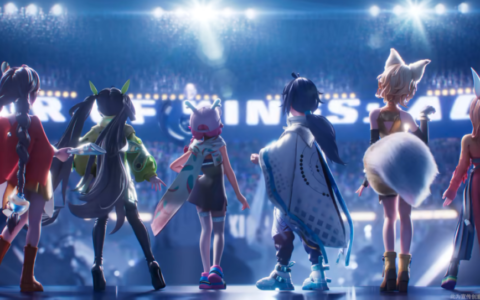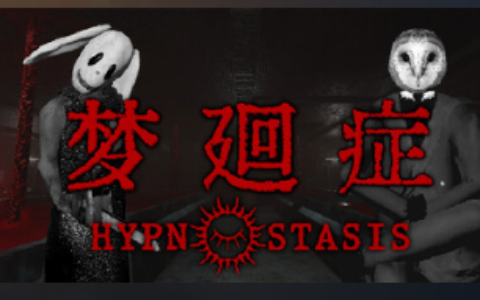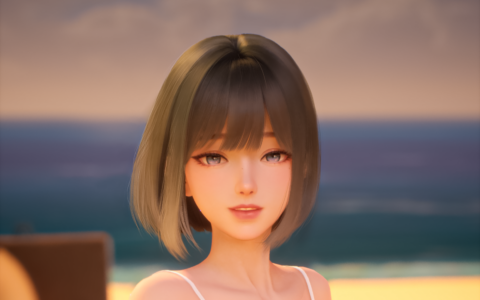
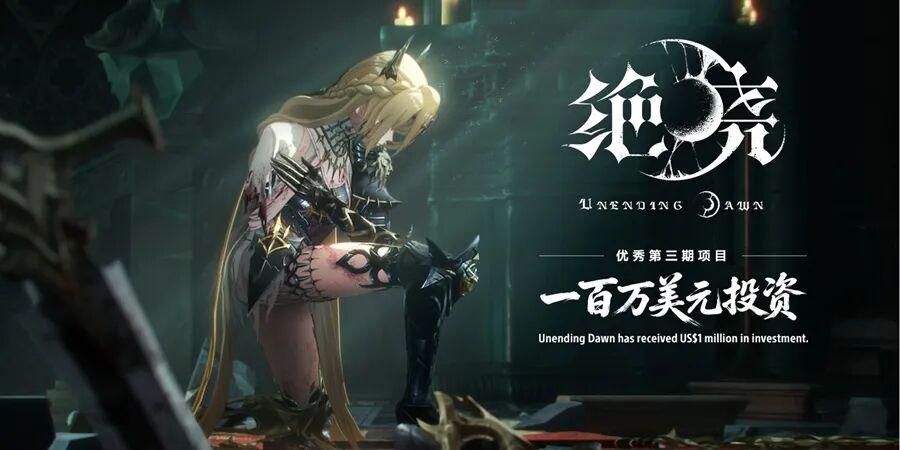
On November 3, the PlayStation China Stars Program announced its fourth round of new policies in Shanghai. Each selected project will receive a $1 million investment from Sony Interactive Entertainment (SIE). Additionally, the China Stars Program has brought on investment firm DENMU and global distributor Solutions 2 GO as new partners.
During the group interview following the press conference, Bao Bo, Director of Game Production at SIE Shanghai, further explained SIE’s investment philosophy, noting that the $1 million was not an equity investment but a project investment, and that SIE does not expect much financial return from it—“we simply want to support the growth of Chinese developers.”

During the interview, Bao Bo also revealed that single-player games in China are gaining momentum, and that there are many more teams to come whose talent will absolutely blow everyone away.
(Other interviewees included You Rongchang, CEO of DENMU, and Ying Chao, producer of *Absolute Dawn*)
Q: Is this $1 million a project investment or an equity investment?
Bao Bo: We are currently focused on project investments.
Q: Why are you providing this funding at this point? What return do you expect?
Bao Bo: PlayStation’s increased investment in a project serves, to a certain extent, as an endorsement of that project. It helps these teams attract more investors, publishers, and other high-quality partners—that is the main objective.
Of course, PlayStation’s investment will certainly help resolve some of the issues in the short term. Internally, we don’t have high expectations for financial returns; we simply hope to lend a hand and support the growth of Chinese developers.
Q: From a developer’s perspective, what problems can $1 million actually solve?
Ying Chao: $1 million is certainly no small sum; in the past, that amount might have even been enough to cover the production costs of a single indie game. Of course, titles ranging from AA to AAA definitely require more financial support.
Given the current investment climate in China, a single investment of $1 million is by no means a small amount; it falls within a normal range and will certainly make a significant difference.
Furthermore, having SIE take on this project carries a different significance than a simple financial investment; the fact that a relatively seasoned veteran in the gaming industry has endorsed it is quite helpful.
Q: The China Star Program is positioned as an incubation initiative. Will the program undergo any changes in the future? Will it continue to focus on incubation from start to finish, and how will it deepen its efforts in this area?
Bao Bo: Our incubation program is also a selective process; we only incubate projects we believe are promising—that’s the prerequisite. There are two key factors for success: First, the project must be completed; second, it must be of high quality. The most basic requirement for its commercial performance is that it must be at least as good as comparable products—only then will we consider it.
Our "China Star" program supports projects of any size—we just look for good projects that we think stand out among similar products, and then help them grow. We’ll continue to focus on incubation, but we’ll be selective.
Q: *Absolute Dawn* secured additional funding—what did the investors see in it during the re-evaluation?
Bao Bo: Discussions regarding the evaluation of this investment have been ongoing for quite some time; the announcement of the investment is a subsequent step.
We have high regard for the development capabilities and speed of the *Absolute Dawn* team, and we also find the project to be quite unique. Our investment evaluation is comprehensive and involves an ongoing process, such as exchanging builds, reviewing their development plans, and assessing their financial resources and personnel. We also maintain frequent contact with the development team, the project’s investors, and partners.
Q: Will Sony interfere with development? What happens if there are disagreements?
Bao Bo: When it comes to collaborative projects, we’ll definitely point out any issues we see. For example, if the impact feedback is really poor, we’ll tell them that the coordination between the vibration, sound effects, and animations isn’t quite right. The developer is in charge—they decide how to fix it, or whether to fix it at all. If they have their own ideas about how to make the changes, we generally respect their judgment, since they’re the ones on the front lines, actually doing the work.
The *Absolute Dawn* project is excellent; we don’t have much feedback to offer at this point, but in the future we may provide some suggestions regarding vibration, since PlayStation places great emphasis on controller feedback.Developers always have their own “design” ideas, but it’s often impossible to account for 100% of all factors—this is very common in game development. If we identify any shortcomings, both teams will work together to resolve them.
You Rongchang: Three Types of Game Development Teams:
First, no matter what you say to him, he thinks you're wrong and argues fiercely with you. Generally, people like this lack a strong sense of security and take things too personally—this kind of relationship isn't going to work;
Second, no matter what you tell him to do, he’ll carry it out as if it were a royal decree—but that won’t work either, because then it wouldn’t be his game anymore;
The third type of good development team will listen to all feedback and selectively apply it based on their own circumstances. I think this is a quality that a good game development team should possess.
After hearing that presentation, I’m even more interested in the *Juexiao* team.
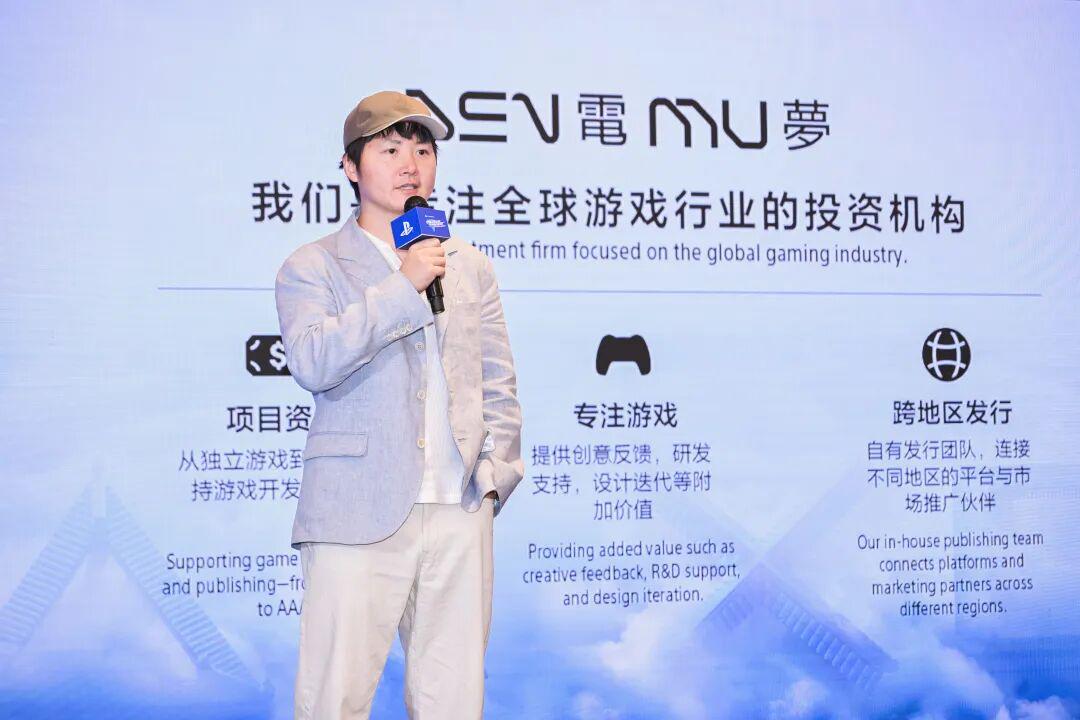
Electric Dream Wanderer Rongchang
Q: At this point in time, how do the projects China Star is working on differ from those five years ago?
Bao Bo: Domestic developers are going through a process of self-discovery and self-understanding. First, many talented individuals work at major tech companies and already earn high salaries, so they’re reluctant to leave to develop single-player games.Second, there aren’t as many people passionate about single-player games as people might think, but the numbers have suddenly surged in the past two years—perhaps because of the success of *Black Myth: Wukong*. People have recognized the “momentum” of domestic single-player games, and more and more teams are optimistic about this field, with an increasing number of people starting their own companies. Third, developing single-player games is extremely challenging.
My current impression is that Chinese development teams are truly very strong. I took the time to thoroughly experience *Shadow Blade Zero* this time around, and I thought it was excellent. Plus, since we interact with these teams quite often, many of the teams that haven’t released their projects yet are definitely capable of blowing everyone away. I think Chinese teams are working hard, and while the process is full of twists and turns, it’s definitely moving in the right direction.
Ying Chao: The environment is definitely getting better and better for those who want to develop single-player games, but have we reached a boom period yet? As everyone can see, the upcoming projects are few and far between—you can count them on one hand—so we certainly haven’t reached a concentrated harvest season yet.The overall trend is completely different from what it was two years ago—or even a year ago. The general upward momentum is definitely a positive development. The strong performance of *Shadow Blade Zero*, for example, has made us very happy and served as a confidence booster for everyone.
Q: So when can you say you’ve really made it?
You Rongchang: To put it simply, if the revenue generated in China by major Chinese titles accounts for less than 50% of their total revenue, then this is really happening.
I think we still have a long way to go. Spring is on its way, but it hasn’t truly arrived yet. The Chinese market is huge, but the global market is even larger. So, Chinese games are still in a very early stage of exploring overseas and global markets. There are plenty of opportunities here, and there’s room for improvement.
原创文章,作者:游茶妹儿,禁止转载:https://youxichaguan.com/en/archives/222762