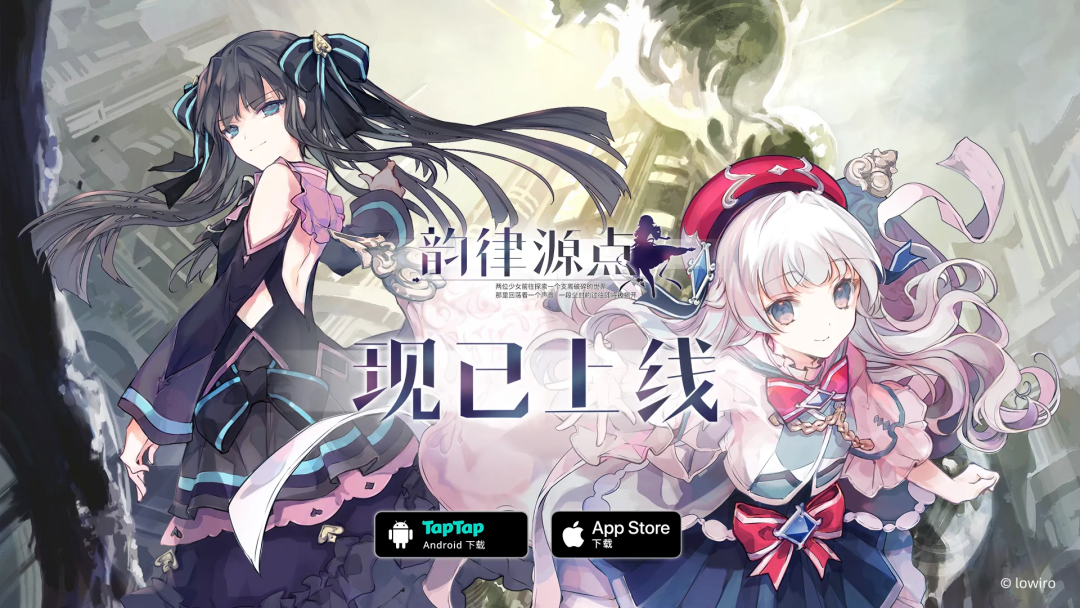
On November 3, 2026, the 3D rhythm game *Arcaea* (hereinafter referred to as *Rhythm Origin*), developed by the independent British team lowiro and published by Xindong, officially launched on the Chinese server, simultaneously available on both mobile platforms.This marks more than eight years since the game first debuted on international servers.
For those unfamiliar with the rhythm game genre, the name *Rhythm Origin* may sound a bit unfamiliar. But within the hardcore rhythm game community, it’s more commonly known as “Akai.” When it launched in 2017, it carved out a solid niche in the genre thanks to a 3D mechanic known as the “Heaven and Earth Dual Tracks.”
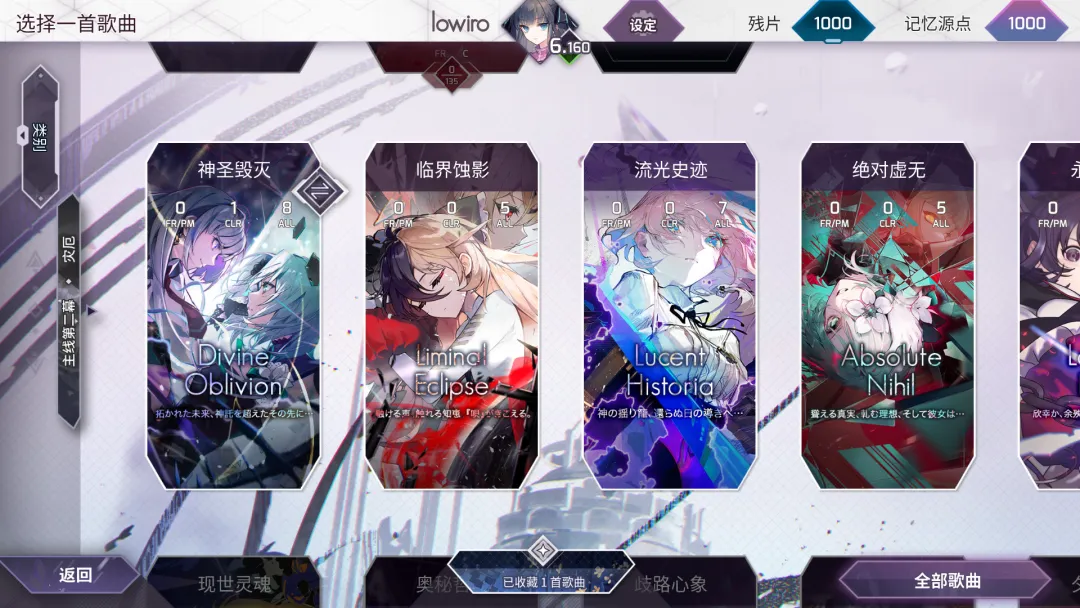
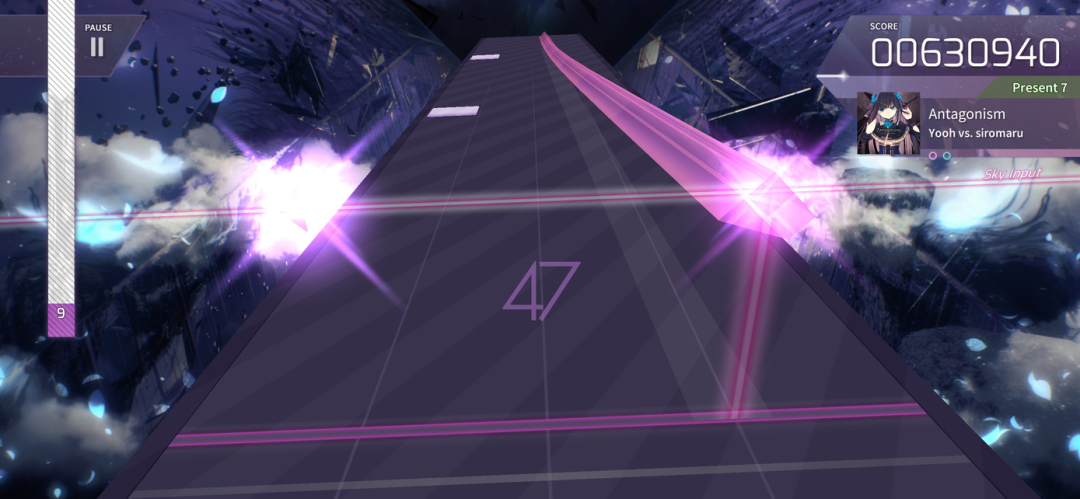
Traditional top-down rhythm games feature only a single ground hitbox, but *Rhythm Origin* adds a sky hitbox at the top of the screen. Notes travel along three-dimensional trajectories between the two hitboxes, and combined with the “note arc” mechanism—which requires players to slide their fingers along the notes—this pushes the game’s control system from a two-dimensional plane into three-dimensional space.This design has a very steep learning curve, but once you get into the rhythm, the tactile feedback it provides is something other games struggle to replicate. Over the past eight years, the game’s song library has expanded from just a few dozen tracks to over 500 original songs.
All of this is supported by a team that has always remained relatively small.Headquartered in London, UK, lowiro was officially incorporated in 2018. Its workforce has long remained at around twenty people, with team members based in the UK, Japan, the U.S., Singapore, and other locations. In 2021, the team established a legal entity in Japan—lowiro japan—to further entrench itself in the East Asian market, where rhythm game culture is most mature.
After its launch in China, *Rhythm Origin* quickly climbed to No. 2 on TapTap’s Trending Chart. The Teahouse previously interviewed the game’s producer, Guy; the following is an edited transcript of that interview.

01
The “source” is passion
Since its inception, lowiro has been a quintessentially distributed team, with its core members scattered across the globe. Reflecting on the early days of developing *Arcaea*, Guy admitted, “This distributed work model caused quite a few headaches when it came to coordinating work and rolling out major version updates, but the good news is that we’ve made significant improvements over the past few years.”
When game industry professionals are asked about their initial motivation for making games, their answers are always so consistent.
"Passion"—that was Guy's answer, too.
“At first, the other members of my team and I were all die-hard fans of arcade rhythm games. Since we were scattered all over the world, it was hard for us to visit local arcades whenever we wanted, and we always missed that atmosphere especially after traveling abroad or returning from living overseas.So I personally really wanted to bring this regularly updated arcade rhythm game experience to players all over the world—that was the original vision behind launching *Rhythm Origin*.”
Over the past eight years, the rhythm game genre has evolved tremendously. Guy’s understanding of the genre has also changed compared to when he first started working on *Rhythm Origin* in 2017.
“What was once a niche genre has now gone mainstream. Game content is everywhere, players can play anytime, and game resources are virtually limitless. In the past, *Rhythm Origin* easily caught people’s attention, but now, with innovative gameplay, storylines, and song updates available everywhere, it’s become very difficult for a game to stand out to players.”
“What can we do that no one else has done? How else can we surprise our players?”
"It’s been these two questions that have kept them going all these years," Guy said. "In the past, the answer to this question was often, ‘How can we make this work on a mobile phone?’ But now, it’s become, ‘What do we actually want to do to make players genuinely enjoy the game?’"
02
A Multidimensional Narrative of Fate
In the rhythm game community, there’s a common saying that *Rhythm Origin* isn’t the best game for newcomers to start with. This is largely due to its iconic “dual-track” system.
“Ten years ago, there was a severe lack of 3D-perspective music games on mobile devices; most of what was available on the market featured conventional 2D gameplay mechanics.”Guy felt that mobile devices were capable of much more than that, and they wanted to tap deeper into their potential. Thus, a system combining sky notes, ground notes, and three-dimensional note arcs was born.
At first, I thought this innovative system was what made *Rhythm Source* so special, but Guy’s answer took me by surprise.
“In the early days, the most notable feature of *The Origin of Rhythm* was actually its update cycle.”
“Nine to ten years ago, it was very rare to release new songs and song packs every few months. Although this has become the norm in today’s mobile music game industry, I believe that over the years, our core competitive advantage has shifted to our focus on deeply integrating music, storytelling, and gameplay.”
As for whether the game’s difficulty might deter new players from getting started, Guy confidently stated, “It’s true that the learning curve is steep, but we believe that once players get past the beginner phase, they’ll find it incredibly fun.”
Beyond the gameplay itself, “Arcaea’s core competitive advantage today actually lies in its focus on the deep integration of music, story, and gameplay.”
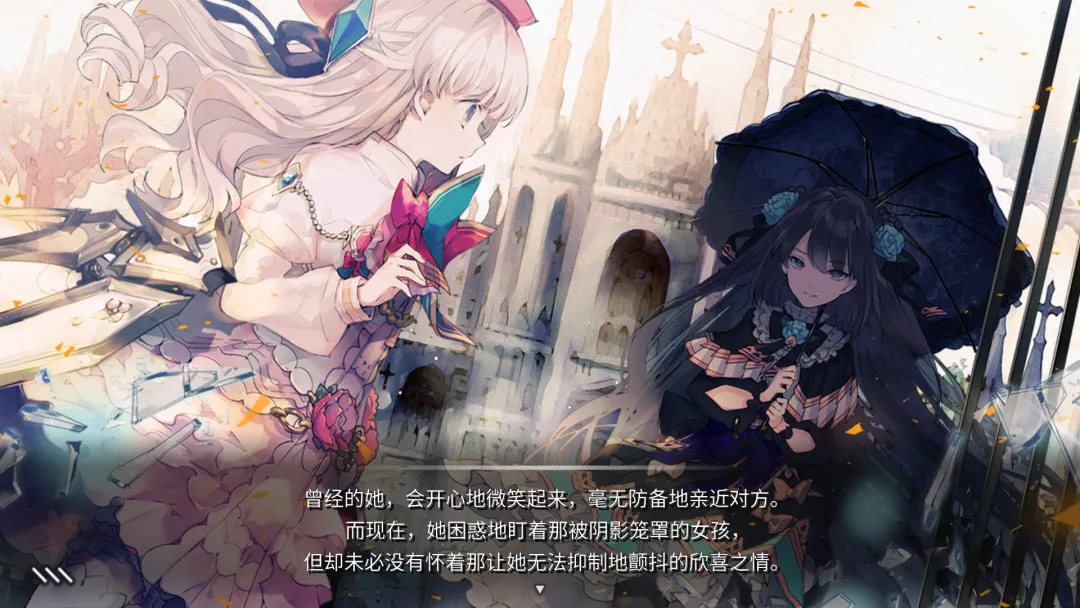
This deep integration is most clearly reflected in the story of the protagonists “Light” and “Opposition.” If he had to choose just one song to sum up the relationship between these two characters, Guy answered almost without hesitation: “Solitary Dream,” composed by ak+q and performed by Sennzai.
This track is highly representative of the player community; its ethereal melody and lyrics perfectly capture the sense of loneliness and interconnected fate between Light and its opposite in the storyline, which could perhaps be seen as an official endorsement of the game’s main narrative tone.
03
A Mutual Pursuit
Chinese players caught lowiro's attention very early on.
Guy recalled, “Chinese language support was first added to the game in Version 2.0 in early 2019. We felt the enthusiasm of Chinese players right from the game’s launch, and it was that enthusiasm that prompted us to decide to add Chinese.”
Here’s an interesting tidbit: In 2018–2019, there was controversy surrounding the Chinese translations on the international servers. At the time, Lowiro responded by recruiting a Chinese localization manager and launching a “player translation review panel” mechanism.This history left its mark on the player community and made translation quality one of the most closely watched issues leading up to the launch of the Chinese server.
In the past, after acknowledging the game’s high quality, most players would say they “didn’t understand” the storyline. Aside from the metaphysical nature of the plot itself, the translation actually bears a large share of the blame. This has even led to quite a few funny moments—for example, a line in one scene that read, “The antagonist moves forward like a flying dragon.” The original text simply described the character “Tairitsu” moving rapidly forward through the scene, but the metaphor “like a flying dragon” completely transformed the atmosphere of the scene. This is how the “Flying Dragon Tairitsu” meme originated, and it subsequently spread widely throughout the player community.

From the initial addition of text to the official launch of the Chinese server, language and narrative barriers have always been a major challenge for the team. Swiff, a storywriter, once said that the translation team was “doing their best to convey the story’s underlying meaning.”
When asked whether the story experience in the Chinese server is complete, Guy responded candidly:
“Starting as a very small team with not a single member who spoke Chinese, supporting the Chinese language has been a huge challenge over the years. Language differences do make it difficult for all players to fully understand the story, which means that sometimes we have to convey key plot points outside of the text to ensure they’re clear enough. This is also an area where we need to keep improving.”
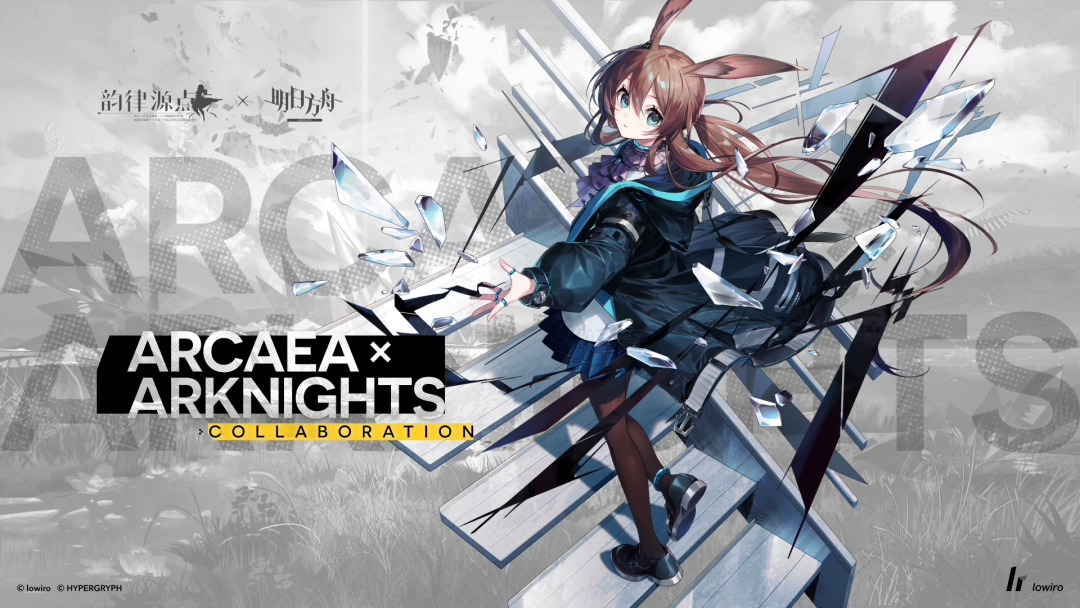
Although the localization isn’t perfect, on October 30—the day the game launched in China—the developers announced a collaboration with *Arknights*, one of the country’s leading anime-style IPs.From the exclusive collaboration song pack and the partnership with the core character Amia to the completely original collaboration storyline, it’s clear that the developers are putting their heart into this—they’ve even dubbed this collaboration “the largest-scale collaboration in history.”
04
Survival Strategies for Small Teams
At the GTI Guangzhou Expo this past September, Xiyou from Huali Technology mentioned that more than 90% of its backend users who play music games are also fans of anime and manga games, and concluded that “what music game developers are currently competing over is exactly what anime and manga game developers are competing over—artwork, promotional videos, song libraries, and note chart design.”
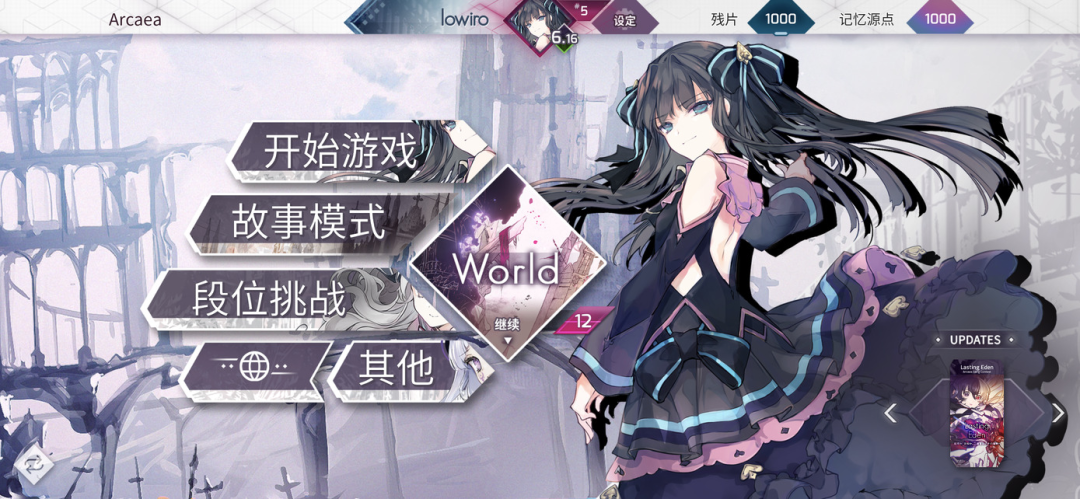
Within this framework, *Rhythm Origin* occupies a somewhat delicate position: it features 2D character art and a narrative, but lacks character progression, gacha mechanics, and the backing of a major IP. How does Guy view his place in this market?
Guy framed this issue within the context of team size: “It’s true that *Rhythm Origin* was created by a much smaller team. But it’s precisely because the team is small that we’ve been able to stick with this one project for so many years.While we do want to reach more players and experiment more with the game, we still want to stay true to our original vision and focus our energy on the quality of the game itself and its world-building, rather than spreading ourselves too thin and ultimately failing to maintain consistent quality.”
As a small team, lowiro has chosen to focus its resources on the game itself, and this commitment to quality is equally evident in their approach to technology.
Over the past two years, there have been several concrete applications of AI-driven chart generation in rhythm games. A paper published in July of this year in *IEEE Transactions on Games* on deep learning-based chart generation for *Taiko no Tatsujin* reported an improvement in adjacent note detection accuracy of approximately 12.49%;In the same month, a paper on arXiv described ITGPT, which uses a Transformer model to generate DDR/ITG play patterns; on the commercial side, products such as MagicalTakt and KeyJaan! are already capable of automatically converting any song into a playable play pattern.
When asked whether he would consider using AI to assist with his work—even if such technology could come close to human-level performance—Guy’s answer was very firm:
“lowiro places great value on the hard work that human creators put into games, including art, music, note charts, and storywriting. We have no plans to use AI to replace the creative aspects of game development and storytelling.”

This dedication has paid off: as you can see, nearly 8,000 player reviews have given the game an exceptionally high score of 9.6. This result can be considered the highest praise players can bestow on this game.
In today’s world of intense competition in the rhythm game market and rapid advancements in AI technology, a small, distributed team of thirty chose not to follow the crowd. Through meticulously handcrafted song charts and an unwavering commitment to quality, they have proven that hardcore rhythm games still possess an irreplaceable vitality.
原创文章,作者:游茶妹儿,禁止转载:https://youxichaguan.com/en/archives/222774