“Only a game designer who’s been to hell could create levels like this—Hidetaka Miyazaki made the *Souls* series after playing this game.”
"That's how it is near my house."
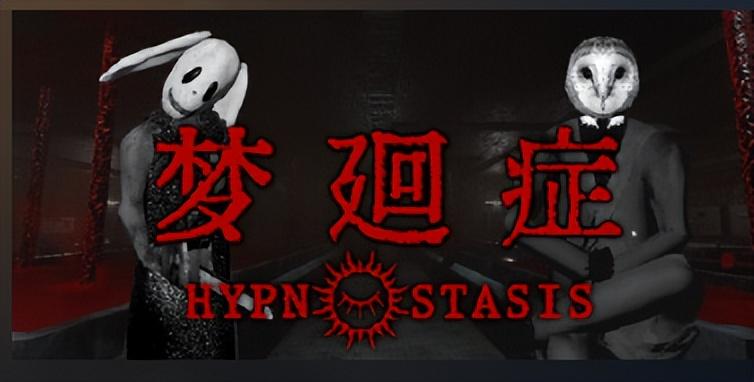
Recently, an indie horror game billed as the “spiritual successor to *Tears of Fear*” has been recommended by various “horror game” content creators, with some even describing it as “*Tears of Fear* + *Resident Evil* + *Dark Souls* + *Silent Hill*.”That game is *Hypnostasis*, a Goldsrc-style survival horror FPS developed single-handedly by TPX500 over the course of three years.
The opening dialogue consists of the script written by a gaming blogger for a live-stream of *Dream Recall Syndrome*, along with the producer’s responses.
After the game's release, our editor interviewed the producer, TPX500. Today, we'll talk about the game's content and development.
01
From GMod to Indie Games
Experienced horror game players who try *Dream Recall* will likely be reminded of a free horror game released in 2013—*Cry of Fear*.
Some younger players may not be familiar with this, so let us first explain what *Tears of Fear* is.

Released in 2013, it is a free “underrated gem”—a first-person psychological horror game that began as a mod for *Half-Life 1*. After approximately four years of development, it launched on Steam as a free standalone game on April 25, 2013.
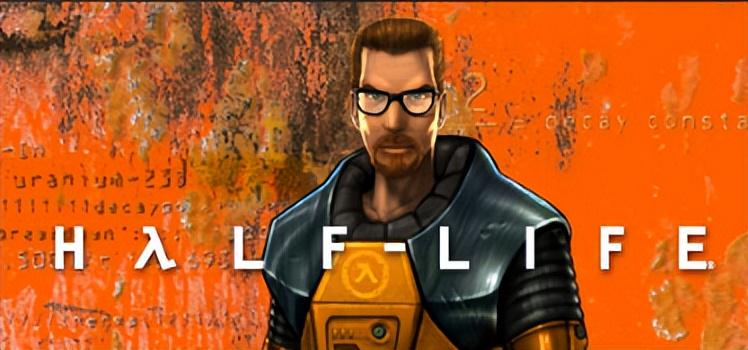
Known for its oppressive atmosphere, twisted, nightmarish imagery, and fragmented narrative, it has become one of the classic titles among indie horror game players thanks to its unique horror experience.To date, the game has accumulated approximately 88,000 player reviews on Steam, with an overall approval rating of about 89%, earning it the “Overwhelmingly Positive” status.
TPX was introduced to Counter-Strike and *Half-Life* in elementary school, and over the years has played nearly every major game genre. He enjoys the level design and gameplay feel of escape room-style games, and also appreciates the map design in the *Souls* series—which is full of challenges, mystery, and opportunities for exploration—as well as its fragmented narrative, where players must piece together information on their own.
"Silent Hill 2," "Cry of Fear," "Resident Evil," "Final Fantasy," "Fear Hunger," and others are among his favorite titles. These diverse gaming experiences have gradually shaped his understanding of gameplay and level design.

Before actually beginning production on *Dream Recall Syndrome*, TPX had already accumulated a considerable amount of experience in game development.
As early as middle school, he began creating his own Counter-Strike maps and plugins. In college, he shifted his focus to creating mods for Garry's Mod (GMod).
Initially, he came up with the idea of recreating the entire game system in GMod because he was dissatisfied with an update to a game he was playing at the time. GMod itself has a relatively mature framework, and the community has uploaded a large number of assets—such as weapons—that can be directly imported and used, allowing him to focus more of his energy on system and content design.
Building on the original game system, he gradually added features of his own design, such as a wider variety of classes. The game system, which originally had only about eight classes, was expanded through his ongoing efforts to include approximately 20 classes in the end.
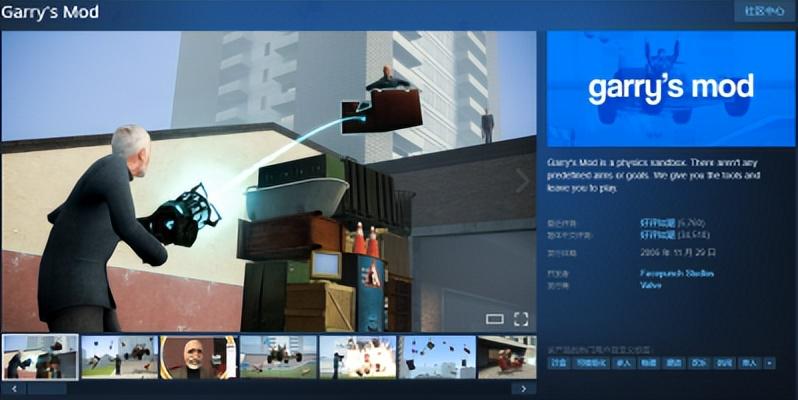
This mod took about two or three years to develop, and it received a positive response after being released on the Steam Workshop. Even now, players still reach out to ask when the next update will be released. TPX even covered the operating costs of the community server out of pocket so that players could experience the mod.
But mods always have their limitations. As the amount of expandable content gradually dwindled, he began to feel that there wasn’t much room left for further updates, while he still had to continuously invest money to maintain the servers. Rather than continuing to create content based on someone else’s game, he decided to try making a complete game of his own—one that would also allow him to earn a reasonable return on his previous creative efforts.
So, rather than consulting his family and friends specifically, he relied on his existing programming skills and began gradually learning the other skills needed for indie game development.
TPX had always been interested in programming, and his college major was computer-related, so he wasn’t starting from scratch when it came to game development. The real challenge was that he needed to integrate his creative experience—which had previously been scattered across maps, plugins, and mods—into a single game with a complete world, gameplay, and story.
And so, in addition to his full-time job, he continued to devote himself to game development every day, using his time after work to handle programming, art, level design, music, and other tasks. Over the course of three years, he single-handedly completed this survival horror FPS game, *Dream Recurrence*.
02
Ingenuity
When you enter the game, you’ll see the control guide on the floor, then search the room, walk down the hallway, and encounter various terrifying scenes…
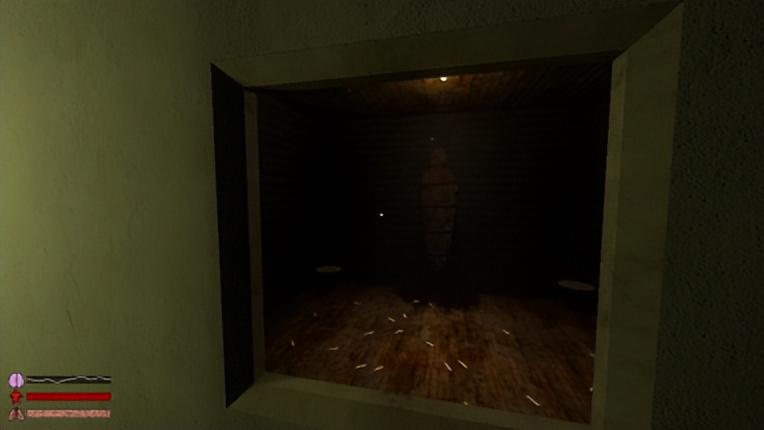
However, the game doesn't rush players into the typical horror-exploration sequence: the scene suddenly shifts to a dreamlike space reminiscent of a dark picture book, where monsters charge toward the player, who must quickly grab a weapon to defend themselves.
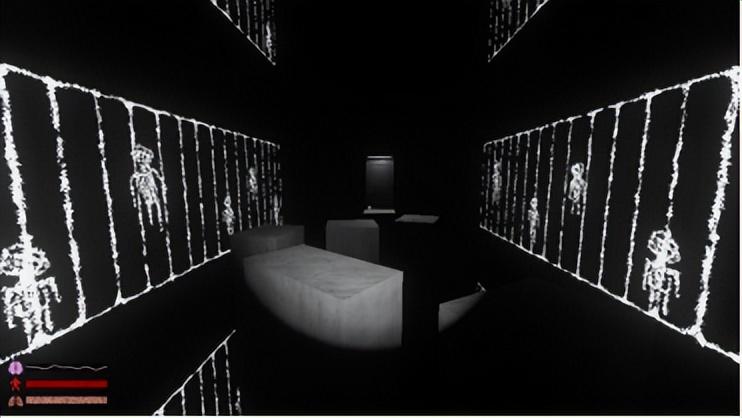
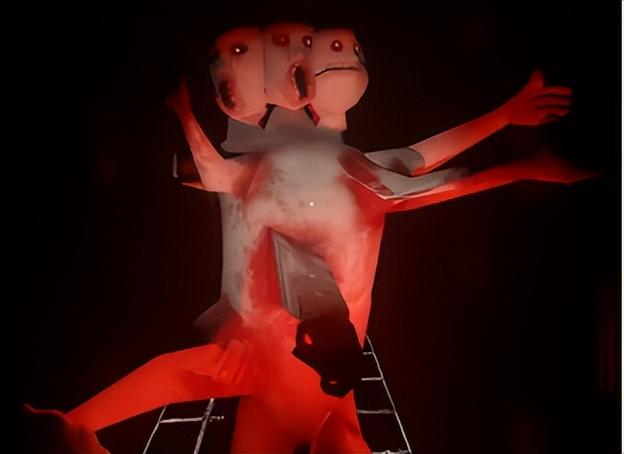
Then you wake up, enter the game, and start exploring the map.
The world takes on a low-fidelity, gritty feel, which is especially noticeable on metal objects. This is why, shortly after the game begins, you can sense a rather unique, long-lost atmosphere reminiscent of old-school PC horror games: dim lighting, low-saturation scenes, and slightly distorted environmental details… all of which combine to create an unsettling visual experience.
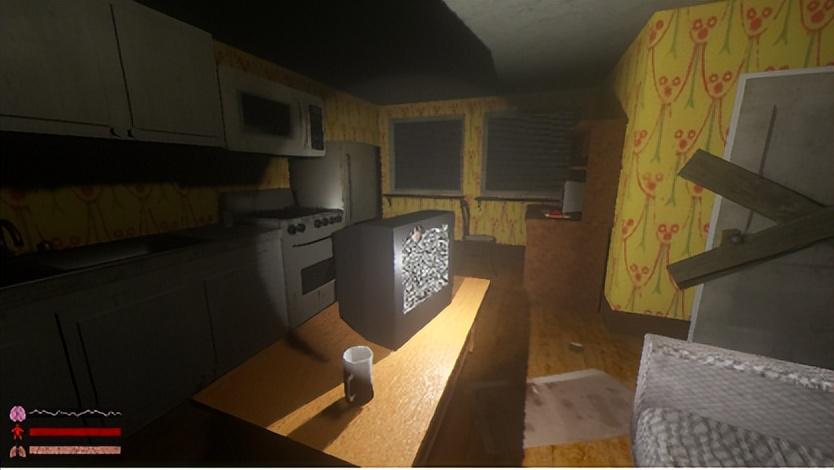
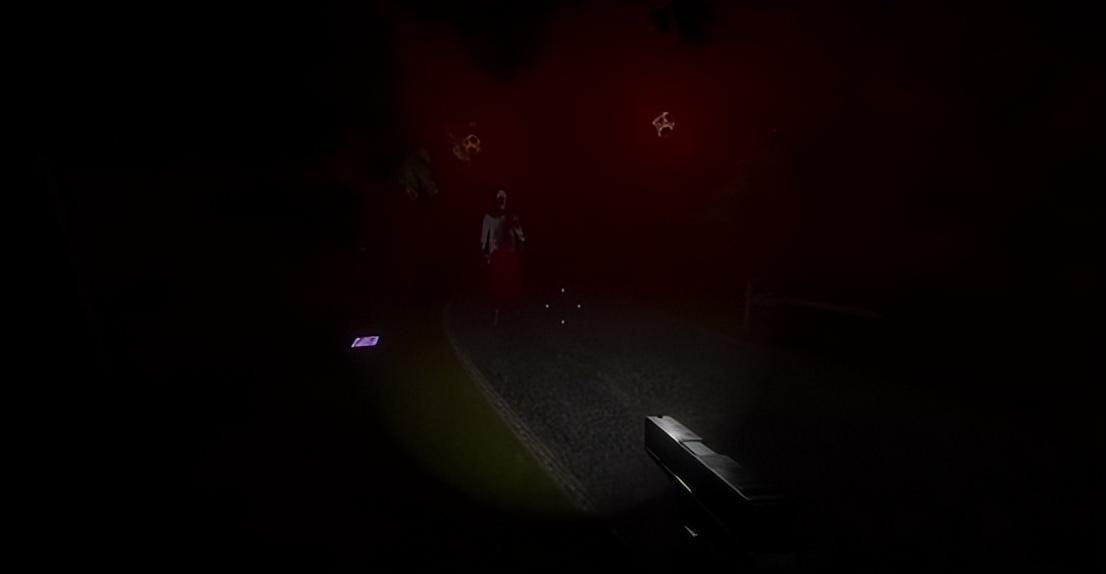
While playing, we can definitely sense that it carries on the design philosophy of *Tears of Fear*—one that doesn’t rely on flashy graphics but instead uses the environment, sound, and atmosphere to create fear:For example, standing by the bathroom door in a room, you hear the sound of water rushing as someone showers, but when you try and fail to open the door, the sound stops abruptly, as if you’ve disturbed the person inside; or, when you pass by a room and try unsuccessfully to open the door, a deafening knock echoes from within;and as you pass different doors, you hear various sounds: cooking, tidying up, alarms…
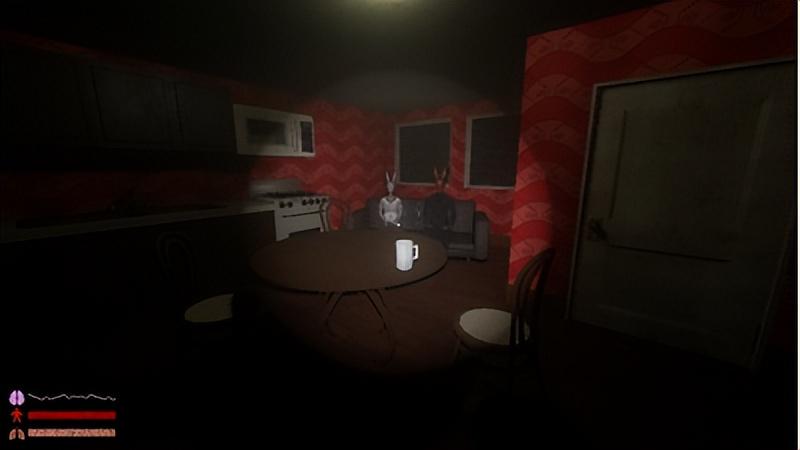
Outdoors, the game’s environments become even more diverse. Rather than striving for realism, TPX prefers to incorporate dreamlike elements, so the placement of objects and the paths players take can sometimes seem illogical, creating a distinct sense of dissonance between the real world and the dream world.Overall, it evokes both the fog-shrouded streets of *Silent Hill 2* and the oppressive, absurd atmosphere of *Tears of Fear*.
Whenever people hear “Silent Hill 2,” they always think of streets shrouded in thick fog. According to developer interviews, the production team behind “Silent Hill 2” took advantage of the PS2’s enhanced performance to further refine the fog effects;Later, the lead designer of *Silent Hill: Homecoming* also noted that the team intentionally incorporated fog and grain filters because overly crisp visuals actually detracted from the series’ original visual aesthetic; the fog resonated with people’s psychological fear mechanisms, cementing the game’s status as a horror classic.
TPX believes that a slightly “blurry” look actually makes things appear more frightening. Take, for example, the old movie *The Ring*—the blurriness enhances the sense of unease.So in the outdoor environments he created, he added thick fog and blurred distant scenery, with monsters of all shapes and sizes emerging from the fog: a tower covered in eyes, a strange figure in white holding a long saw, a person brandishing an axe…
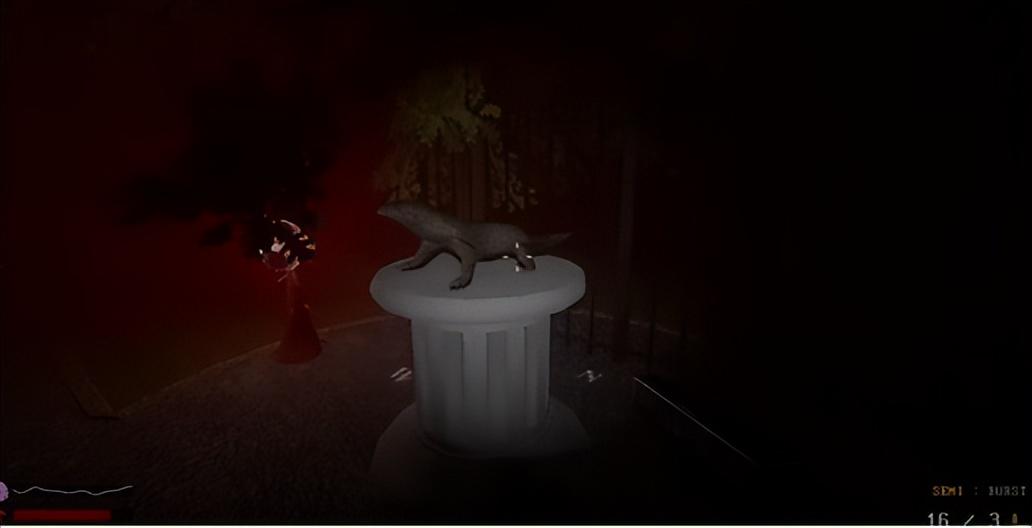
In terms of monster design, each monster is inspired by the protagonist's psychological trauma or the atmosphere of their surroundings.
For example, the boss in the parking lot at the very bottom actually symbolizes the trauma of a car accident itself; he has car parts stuck all over his body—including a steel frame shaped like a cross. Another example is a monster on the lawn that throws beer bottles at you and vomits; it’s basically a fat, alcoholic monster.
Based on a certain trauma or psychological projection, the producer adds details to give them a variety of attack patterns. This is also done with the entire level in mind—the monsters’ attack patterns can’t appear too repetitive.
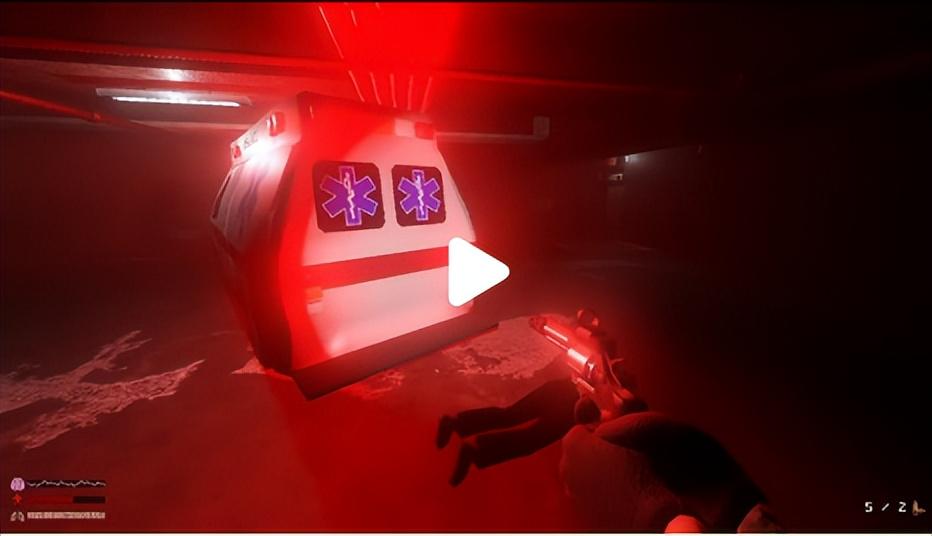
This design logic bears some similarities to *Silent Hill 2*, but a well-made game doesn’t earn praise simply by closely mimicking another’s theme or style. During a conversation with the producer, our editor discovered that TPX himself has incorporated many of his own interpretations of “horror” into this game.
In particular, while playing, I discovered that many of the monsters in this game don’t appear based on logical inferences.
In most horror games, monsters appear when your field of vision narrows, when you’re focused on solving puzzles, or when you’re searching narrow spaces, but in this game, the monsters seem to appear whenever they please.Especially after returning from a dream to reality—after searching the entire floor, solving numerous puzzles, and finally opening a door, I saw a knife on the table. I thought monsters only appeared once I stepped outside, but think again: the very next second after spotting the knife, a screeching sound came from behind me…
You have to react quickly, grab the knife, and turn around to strike—it’s not over until your opponent is actually lying on the ground, even if their head is severed.
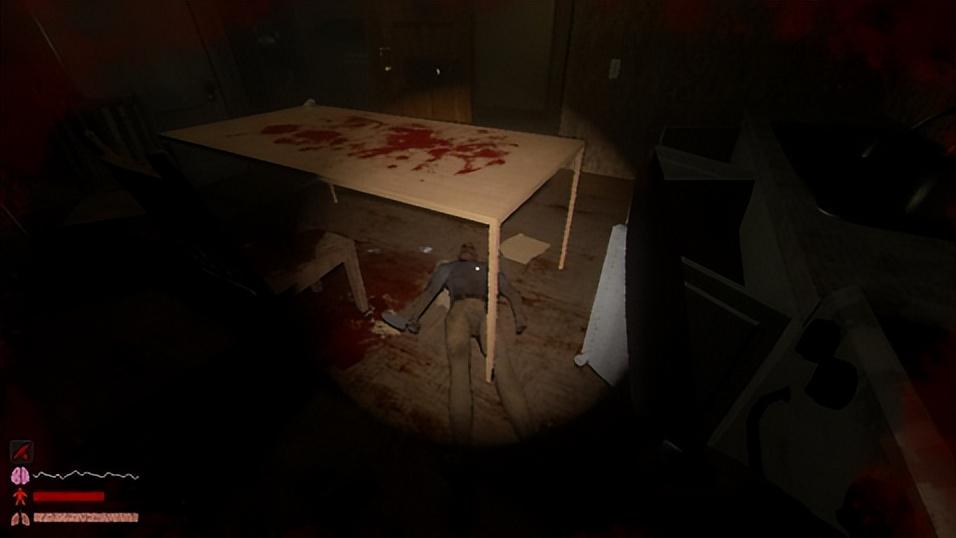
In an interview, TPX was asked if there were any designs he considered to be strokes of genius or truly ingenious. He pointed to this spot: “The part where you pick up the knife—that spot. Basically, everyone I’ve seen gets scared by it. It’s that moment when you pick up the knife, and the guy outside bursts in and starts hacking at you.Most people don’t expect that the moment you pick up the knife, an enemy will immediately rush in. Usually, you grab the knife, walk around a bit, and only then do the enemies appear—but I had him come right in.”
“Another possibility is the design of the Western-style mansion area later in the game. Actually, by the time you’re supposed to go to the mansion—which is, of course, later in the game—you’re basically fully armed. But if you want to enter the mansion, you can’t carry any weapons. It feels a bit like going back to the beginning and exploring the apartment complex, except there’s a monster chasing you there.Players would assume that the monsters in this game can’t open doors, but that one can.”
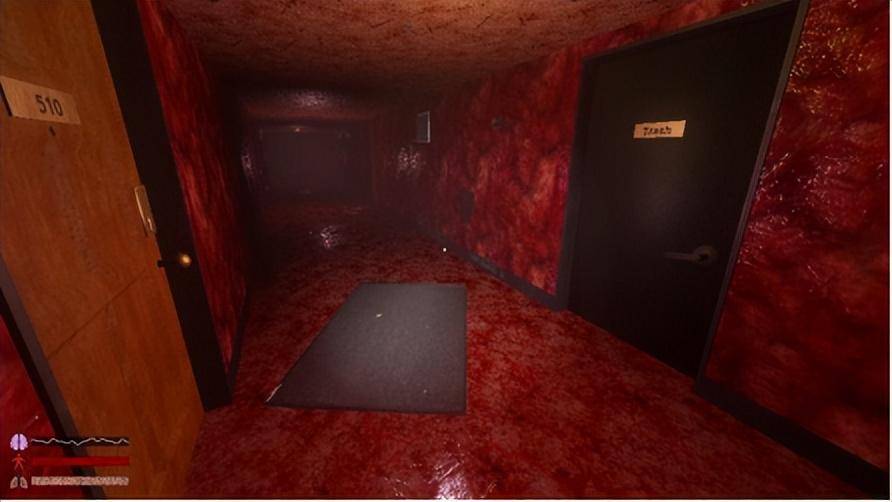
Second, TPX’s horror philosophy is inseparable from its environmental design. Rather than simply turning different scenes into linear horror levels, the game establishes distinct environmental rules for each area: in the parking lot, players must contend with oncoming vehicles; in the sewers, they must watch out for pipes; and to enter the mansion, they must even surrender their weapons. The environment itself becomes a challenge that players must overcome.
In addition to what we mentioned earlier—that the environment in *Dream Return Syndrome* has the style of *Cry of Fear* and *Silent Hill 2*—this approach also brings to mind the level design of the *Souls* series.
As exemplified by *Dark Souls*, excellent levels create challenges not only through enemies but also by using mechanisms, terrain, and spatial design to alter how players move.
The map in *Dream Recall* also encourages players to explore on their own. Apartments, elevated walkways, parks, sewers, and Western-style mansions are all interconnected, allowing players to often catch a glimpse of areas they cannot yet reach—creating new exploration goals as they continuously unlock new routes.
For a horror FPS, this design ensures that the game no longer relies solely on chases, scares, and combat to drive the gameplay; instead, exploration itself becomes a constant motivator that keeps players moving forward.
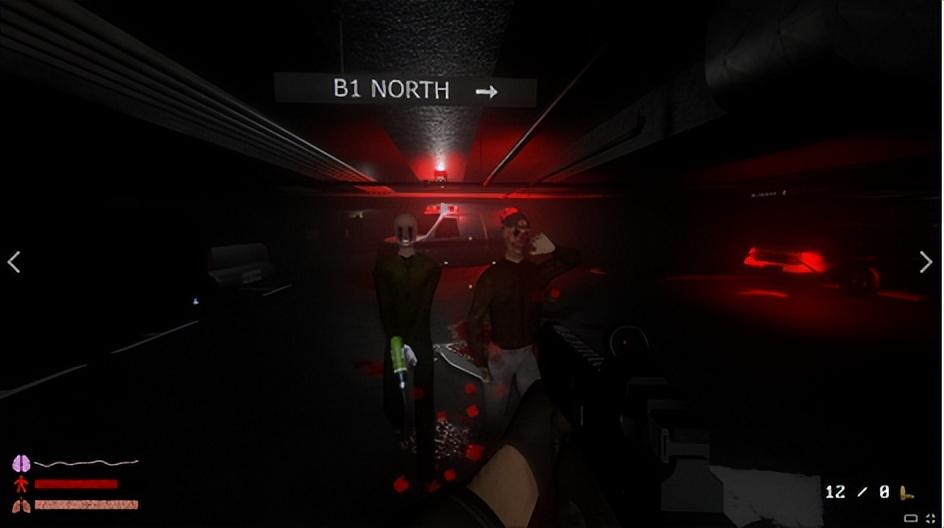
TPX said, “I’ve seen people describe this game as ‘Tears of Fear + Resident Evil + Dark Souls,’ and I actually think that’s pretty accurate. Maybe the underworld really is that eerie, but I’m actually pretty happy to be called that.”
03
From Jung to David Lynch
Many of the designs in *Dream Recall* appear quite abstract, but in TPX’s vision, these scenes are not randomly pieced together. He hopes “to use the game to let players experience something they’ve never felt before”—to discover just how wondrous human consciousness and dreams can be.
This creative approach stems largely from his interest in Jungian psychology.
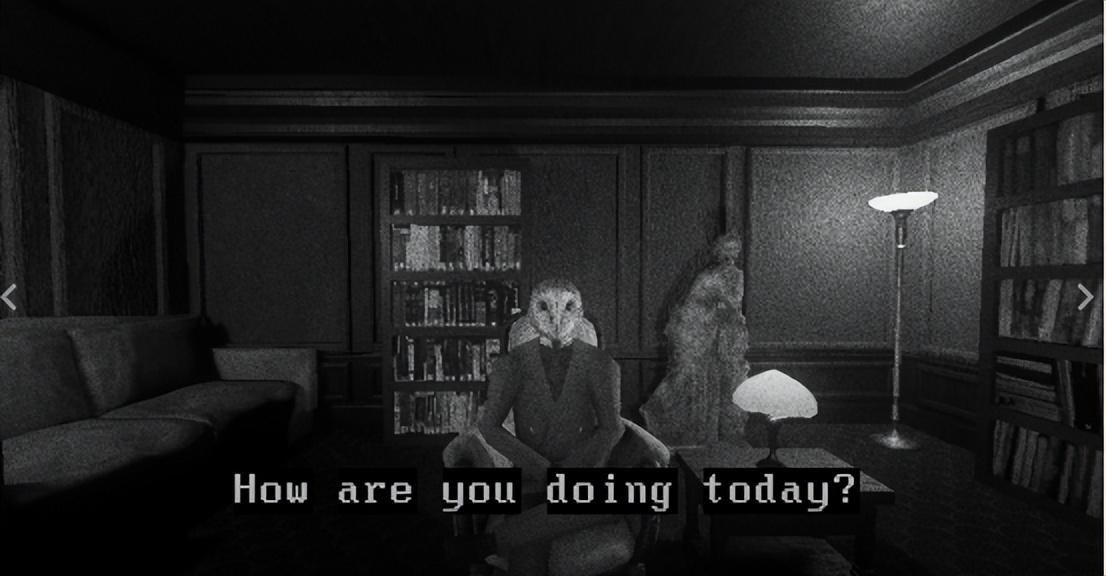
The concepts of the “shadow” and “individuation” in Jungian psychology form the central psychological themes of *Dream Recurrence Syndrome*.
In Jung’s theory, the “shadow” is not merely a symbol of evil or negativity; rather, it refers to those parts of the self that are neglected, repressed, or denied. “Individuation,” on the other hand, is the process of gradually recognizing, accepting, and integrating the contents of the conscious and unconscious mind, thereby leading the personality toward wholeness.
TPX has integrated this process into the game’s overall structure. In his view, the protagonist must confront his own shadows and attempt to merge with and reconcile them. Players set out from the apartment, passing through grassy fields, sewers, and sulfur pits, before finally reaching the black-and-white zone—a journey that consistently leads deeper downward.TPX believes this is somewhat akin to exploring the protagonist’s own subconscious; as the player delves deeper and deeper, they gradually reach the depths of the spiritual realm.
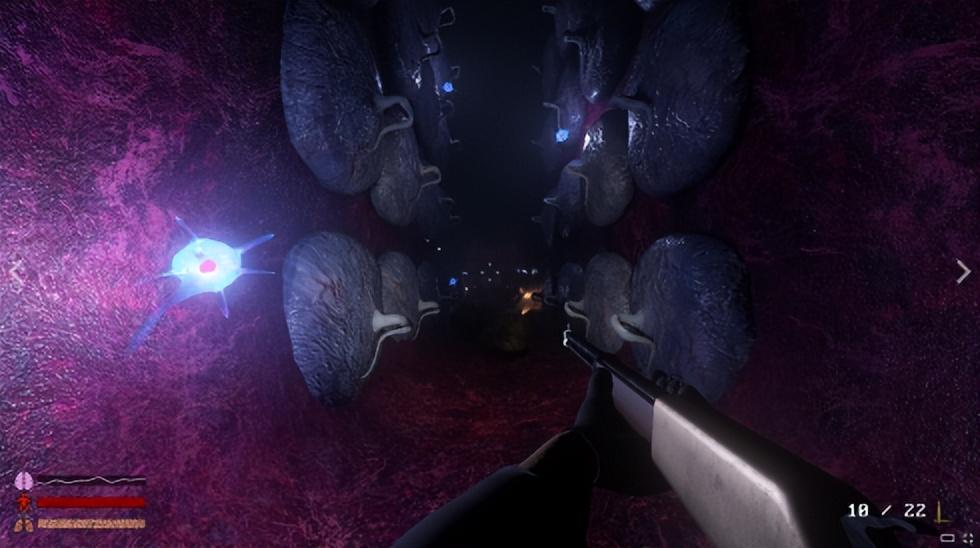
Therefore, the map in *Dream Recurrence* is not merely a collection of different horror scenarios; it also serves as a vehicle for the protagonist’s psychological journey from the surface to the depths of their mind. The monster designs mentioned earlier follow the same concept: they are often linked to the protagonist’s psychological trauma, memories, and mental state. To a certain extent, the monsters players encounter are also an external manifestation of the protagonist’s inner world.
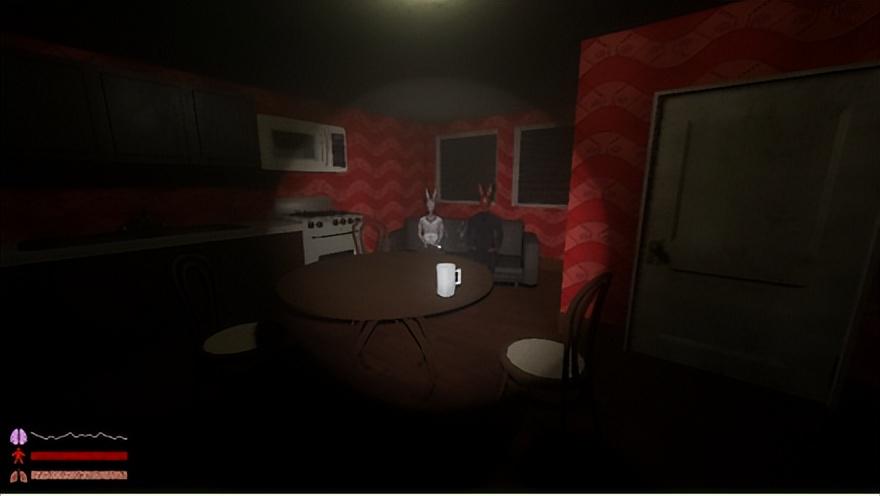
This symbolic expression is particularly evident in the Western-style buildings district.
Jung once used the term “persona” to describe the facade a person presents in order to adapt to society and interact with the outside world. In an interview, TPX directly explained that nearly all the characters in *The Western Mansion* wear masks—and that these masks display different expressions—as a reflection of the protagonist’s fragmented and split personality.
There is also a character in the game that corresponds more directly to Jungian theory: a bizarre creature with a woman’s head and a body resembling a red centipede. TPX notes that this character corresponds to what Jung referred to as the “Anima”—that is, the feminine image or archetype within the male psyche.
Damn it
Since the protagonist’s wife has gradually grown distant from him following the car accident, this female archetype actually appears even gentler in his dreams and is willing to care for him. A monster with a distorted, even unsettling appearance nonetheless embodies tenderness and comfort; this contrast elevates it beyond the status of a mere hostile creature.
In addition to characters and monsters, TPX also incorporated the alchemical system that interested Jung into the game’s symbolic design.Jung did not view alchemy merely as the ancient practice of attempting to transform base metals into gold through chemical processes; rather, he regarded the process of material transformation within it as a symbol of psychological transformation. This also made the imagery and symbols of alchemy important materials for his understanding of the unconscious and the process of individuation.
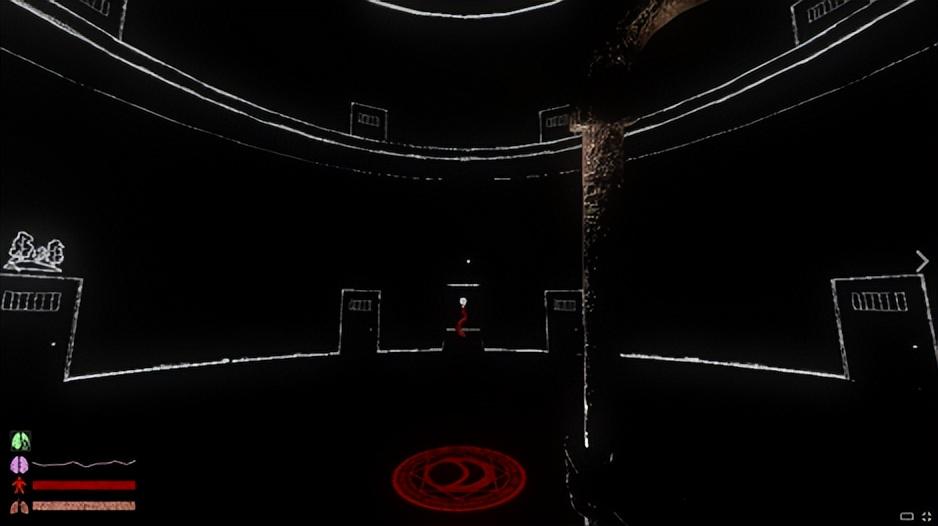
TPX assigns alchemical and psychological meanings to various symbols and further transforms them into game features.
For example, the copper-green symbol represents a state transition and is used to symbolize saving and loading; the ether symbol, consisting of three rings, resembles what he sees as an additional “fifth space,” and is therefore used to represent extra storage space or the backpack function in the game; the sulfur symbol represents the soul and is associated with the character’s health recovery function.
He also made special mention of the mandala. Jung believed that the recurring appearance of this symbol across different religions and cultures was no coincidence, but rather was connected in some way to the collective unconscious.Exhibition materials from the Library of Congress on Jung’s *Red Book* also note that Jung regarded the mandala as an important “archetypal” image and linked it to psychological wholeness. TPX is very interested in this concept and hopes to incorporate this mystical symbolic language into its games.
In fact, he had even gone out of his way to buy Jung’s *Red Book* and was particularly fond of the hand-drawn illustrations depicting fantasies and inner experiences. To him, these images held a special appeal in and of themselves: they didn’t necessarily convey their meaning through explicit textual explanations, yet they sparked associations and even prompted him to reflect on his own consciousness and dreams.
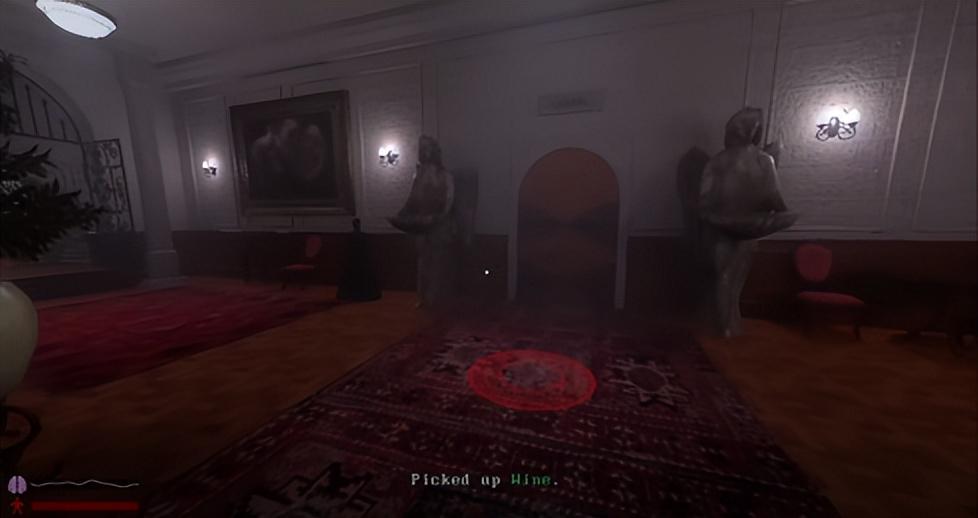
In addition to psychology, literature and film are also important sources of inspiration for TPX. He mentioned that he is a big fan of Hermann Hesse’s *Steppenwolf*, and the description of the wild dance party in the book inspired a section of the design for the “Western-style Mansion” area in *Dream Recurrence*.
In *The Wolf in the Steppe*, the protagonist, Harry Haller, enters a bizarre space known as the “Magic Theater” after attending a masquerade ball. There, he confronts the various split personalities and inner worlds that have emerged from within himself.The novel interweaves the themes of the ball, masks, dreams, and the exploration of the self, creating an interesting parallel to *Somnambulism*, which depicts the Western-style mansion as a realm filled with masked figures and a bizarre atmosphere. TPX did not simply replicate the novel’s plot but drew inspiration from its imagery and narrative style.
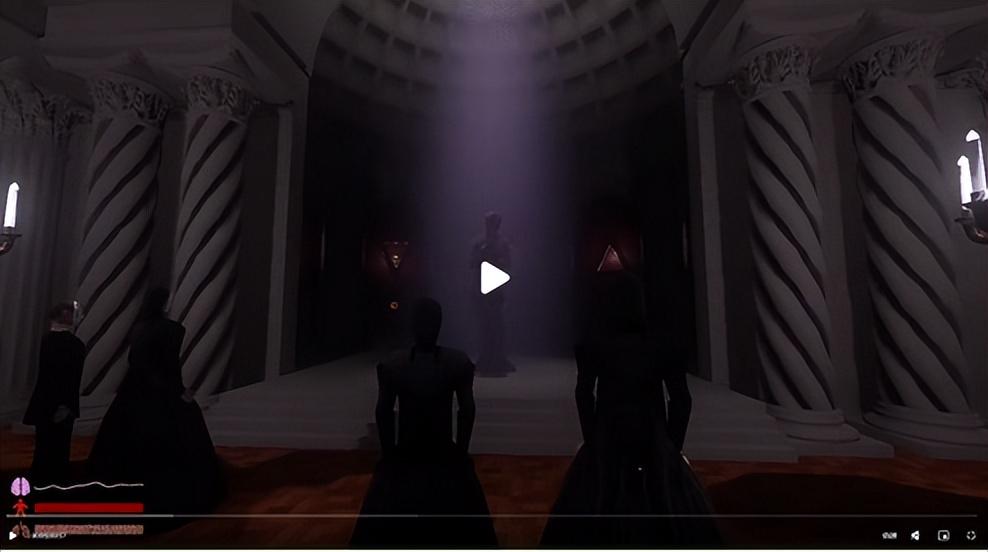
When it comes to movies, he is particularly fond of David Lynch’s work. Lynch’s films often juxtapose familiar, everyday settings with absurd, violent, and nightmarish situations, gradually leading viewers to realize that a completely different world may lie hidden beneath the surface of their peaceful lives.
Take *Blue Velvet* as an example: the film begins with flowers, lawns, and a tranquil small town, but as a human ear is discovered, it gradually reveals the twisted, dark underbelly of everyday life.In its introduction to this film, the British Film Institute also specifically highlighted its narrative technique of juxtaposing the idyllic facade of the small town with the nightmares, violence, and grotesque elements lurking beneath the surface.
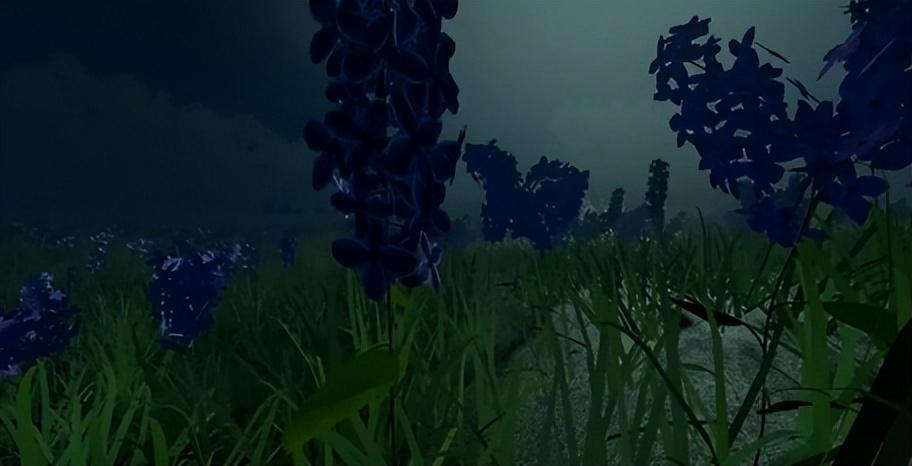
This aesthetic easily brings to mind the environmental design of *Dream Recurrence Syndrome*: strange sounds emanate from behind an ordinary door; a space of everyday life suddenly becomes unsafe; and a once-familiar environment begins to reveal its inexplicable side.
However, TPX has not explicitly stated that these specific designs were directly inspired by *Blue Velvet*; more accurately, the two works share similarities in their depiction of the interplay between everyday life and nightmares.
He also mentioned Kubrick’s *Eyes Wide Shut* in the interview.A key plot element of this film is a mysterious masked ritual; after entering a luxurious mansion, the protagonist encounters a group of masked people performing a specific ritual. This does indeed create a visual connection with the masked figures and mysterious atmosphere in the Western-style mansion section of *Dream Recurrence*.
When TPX spoke about the movie, he said that watching it gave him more confidence in developing his own game.
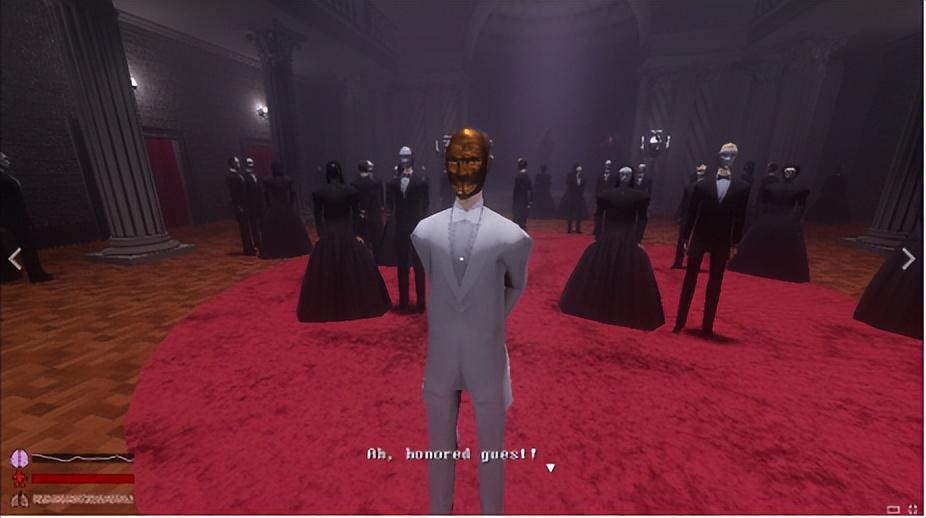
From Jung to Hesse, and on to Lynch and Kubrick, the works TPX has encountered have each provided him with different insights. He hopes that players will have an experience in *Dream Recurrence* similar to watching a Lynch film:Some elements may not be immediately understandable—they might even feel like bizarre fragments—but they will encourage players to keep thinking and search for the connections hidden behind the scenes and the story.
04
Working alone for three years takes more than just hard work
When developing a complete game on your own, the hardest part may not be any specific technical skill, but rather how to break down the enormous workload into manageable parts.
In the interview, TPX stated that he had not prepared a complete proposal in advance that covered all structures and details.
His approach is to refine his work as he goes. He starts by establishing the theme for each major level, thinking through what the area is meant to convey and what metaphors it should incorporate, before building out the general structure. Next, he enters the game, adds some basic textures, walks through the level himself to experience it, and only begins gradually adding models, decorations, and other details once the overall feel is fairly solid.
Many designs also undergo constant adjustments during this process. For example, when it comes to weapons, he first considers what distinctive characteristics each weapon should have to avoid designs with overlapping functions; monsters, on the other hand, are gradually added based on the themes of each level. As for the pacing between map exploration, combat, and puzzle-solving, he relies largely on his own accumulated gaming experience, judging whether it feels right by actually playing the game.
This approach may sound somewhat intuitive, but TPX doesn’t rely solely on his own instincts to determine the game’s final form. He also enlists players to help with testing, observing where they get stuck and when they’re unsure what to do next, and then makes adjustments based on that feedback.
In its early days, this game attracted a large number of Russian players to the community, and later, those same Russian players helped with the translation.
In March 2026, *Dream Recall Syndrome* released a demo lasting about two hours. Players quickly raised two main issues: it was easy to get lost in the grassland levels due to a lack of clear landmarks, and the pressure from the doctor’s pursuit was too intense, with the bottles he threw hitting their targets with excessive accuracy.
After receiving feedback, TPX made adjustments to the grassy area, adding elements such as windmills, dolls, and lighting to make it easier for players to identify the path. In his view, if players linger in a certain spot for too long, it doesn’t necessarily mean that the area is challenging enough—it could also mean that the level itself isn’t conveying the information clearly.
This is also why he’s willing to test the game repeatedly. Rather than letting players lose interest in exploring because they can’t find their way, it’s better to make appropriate adjustments to the environment so they can refocus their attention on what the game truly aims to convey.
When it comes to resources, TPX takes a very pragmatic approach.
He didn’t hire a dedicated art or music team; in the early stages of development, he wrote most of the code by hand, and for the visuals, he relied on textures he photographed in his daily life, some open-source oil paintings that matched the game’s atmosphere, and a large number of hand-crafted 3D models.Over the course of three years of production, the only paid expenses were a 50-yuan ancient Greek sculpture model and a 10-yuan-per-month sound effects library.
However, limited resources do not mean he has lower expectations for his work. TPX admits that if he had more resources, he might choose to create some sculptures himself rather than simply purchasing ready-made models.The same applies to music. He taught himself music production from scratch, but since he can play the piano and is quite familiar with classical music, he incorporates classical pieces into his games as appropriate to compensate for his lack of professional music composition skills. He also hopes that, when he has more resources in the future, he’ll be able to compose his own original theme music for the game.
The three-year development process was no easy feat. There was also a heartwarming moment during this journey.TPX mentioned that he got to know some very enthusiastic Russian players. They usually communicated in English, and two of them even volunteered to help with the Russian translation. Working on a game in his spare time, he originally just wanted to bring the ideas in his head to life, but later, complete strangers were willing to spend their time helping it reach a wider audience.
This is perhaps one of the most interesting aspects of indie game development: at first, developers are faced with nothing more than their own computer and a set of unfinished ideas, but once the game is actually released, it no longer belongs entirely to the creator alone.
Conclusion: Let more people step into the dreams they’ve created
After the release of *Dream Recall Syndrome*, TPX monitored feedback from many players: those who like the game really love it—some have even spent over 20 hours, or as many as 50 to 60 hours, playing it—but those who don’t care for this style may choose to quit early on.
For an indie game with a distinct personal voice, it’s perhaps even more important that its style, difficulty, and mode of expression remain fully intact—so this feedback comes as no surprise.
As TPX himself said, “I want *Dream Recall Syndrome* to let players experience feelings they’ve never felt before.” That’s why he didn’t prioritize commercial success; instead, he focused on the game’s quality, hoping that the target audience would give it positive reviews after playing and truly feel happy and satisfied.
Looking back, *Dream Regression* started out as a world that one person built bit by bit, opening their computer again and again after work. Then one day, players from another country began exploring these scenes—some spent dozens of hours playing, while others volunteered to help with translations.
For TPX, this is probably the most tangible response his creative work could receive: the world he spent so much time building has finally become a place where others are willing to immerse themselves and spend time exploring, and someone has given him the recognition and understanding he sought.
原创文章,作者:游茶妹儿,禁止转载:https://youxichaguan.com/en/archives/222726