Over the past month or so, people on Xiaohongshu have been constantly sharing photos of their jewelry creations. The rings and necklaces in the photos are set with gemstones of various colors, and their designs range from elegant to quirky; some people have even used gemstones to craft a “giant sword.”
All of these accessories are from the same game, *The Abyss Jeweler*.
The full version of this game has not yet been released, but its free demo on Steam has already garnered over 560 player reviews, with an 86% approval rating; it has been labeled “Overwhelmingly Positive” by the platform and has 170,000 wishlist entries.In late September, it was also nominated for the “Best Design” award at the 2026 indiePlay China Independent Game Competition.
And these figures come from a “development team” consisting of just one person.
01
I worked at Tencent for a year first
Deng Runchong, the author of *The Jeweler of the Abyss*, took his first step into the gaming industry at Tencent. After graduating from college, he worked there as a game designer on the publishing team.
This experience lasted less than a year, but it changed his understanding of games. As a student, Deng Worm had also created some indie games, approaching them more as a form of self-expression and not worrying too much about whether they would sell. The training he received at the publishing studio prompted him to seriously consider the commercial value of a project for the first time.
In September 2023, Lampworm decided to quit his job; he had been there for less than a year. He recalls that his original plan was to work for a few years, save up enough money, and then start developing indie games, but after realizing that the costs of independent development were actually quite limited, he decided to take the plunge sooner than expected.
The first project he worked on after leaving his job was a card game themed around perfume and alchemy, with gameplay similar to *The Sultan’s Game* and *Esoteric Simulator*. He worked on the project for a little over a year, but it gradually fell apart.
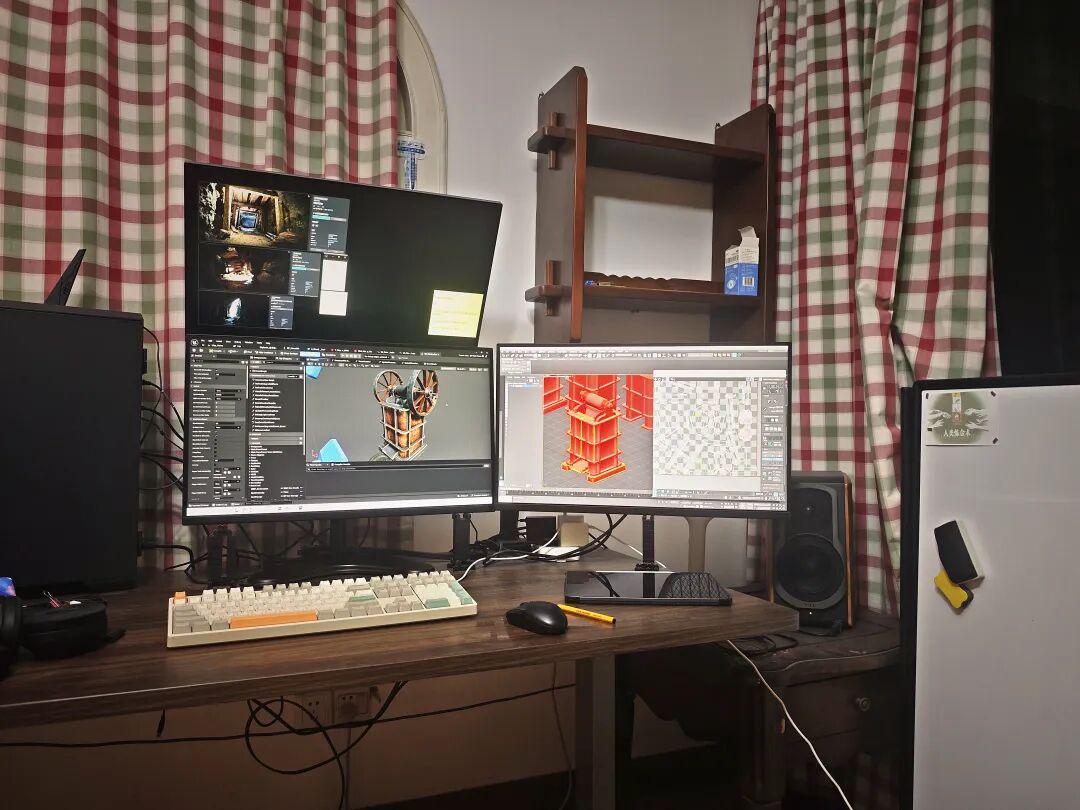
The Lampworm Studio
He has a habit of jotting down his ideas. Over the past few years, whenever he’s come across an idea he felt he could—and wanted to—pursue, Lampworm has added it to his idea bank and queued it up according to development priority.
Some creative themes share the same conceptual framework, which Lightworm summarizes as “re-enchantment”—that is, taking things from reality that are beautiful and emotionally meaningful but serve no practical purpose, and incorporating them into the game’s world to give them a practical function.Take perfume as an example: in reality, objects such as perfume, gemstones, and tattoos carry people’s imaginings of beauty, memory, and identity, yet from another perspective, they are merely pseudo-objects with only emotional value. He wants to make these imaginings a reality within the game. Perfume is not just a scent; it can also alter a person’s flesh and blood, and even affect the soul.
In October 2024, he drew on the theme of “gemstones” from his inspiration library and created the first version of *The Jeweler of the Abyss* for the Spotlight competition.
02
First, decide on the gameplay; then, create the story.
After the demo was released, it quickly garnered attention. One gaming article used the headline “Cut jade, craft jewelry, and then summon Ke Zong?” After trying it out, an editor from the U.S. gaming media outlet PC Gamer wrote that the gem-cutting process was “as satisfying as it looks,”A review on the gaming website BizzNerd described it as “slow and quirky” and touted it as a potential dark horse among next year’s simulation games.
“Jade Gambling” is the first impression players have of this game today, but it wasn’t even a glimmer of an idea in the original prototype.
Lampworm recalls what the “Spotlight” version looked like: players would purchase rough stones, use a chisel to split them open, and the system would calculate the impurity rate and damage level. The subsequent cutting process was shown with no visuals—only a progress bar that moved across the screen—and once it reached the end, a pre-determined gem model would pop up.“It was just an empty loop with no depth at all,” he recalls, noting that the original version didn’t even include an appraisal feature. “Back then, there wasn’t even a ‘gambling on rough stones’ mechanic.”
The turning point came from an outside perspective: after the publisher reviewed the prototype, they suggested that the “gambling on jade” concept “had potential.”Lampworm subsequently added an appraisal mechanic to the purchasing phase, requiring players to use tools and experience to assess the quality of the rough stones—though luck also plays a part. From selection to quarrying, cutting, setting, and selling, the complete cycle surrounding a single stone is thus closed, and the “gambling on jade” concept truly comes to life.
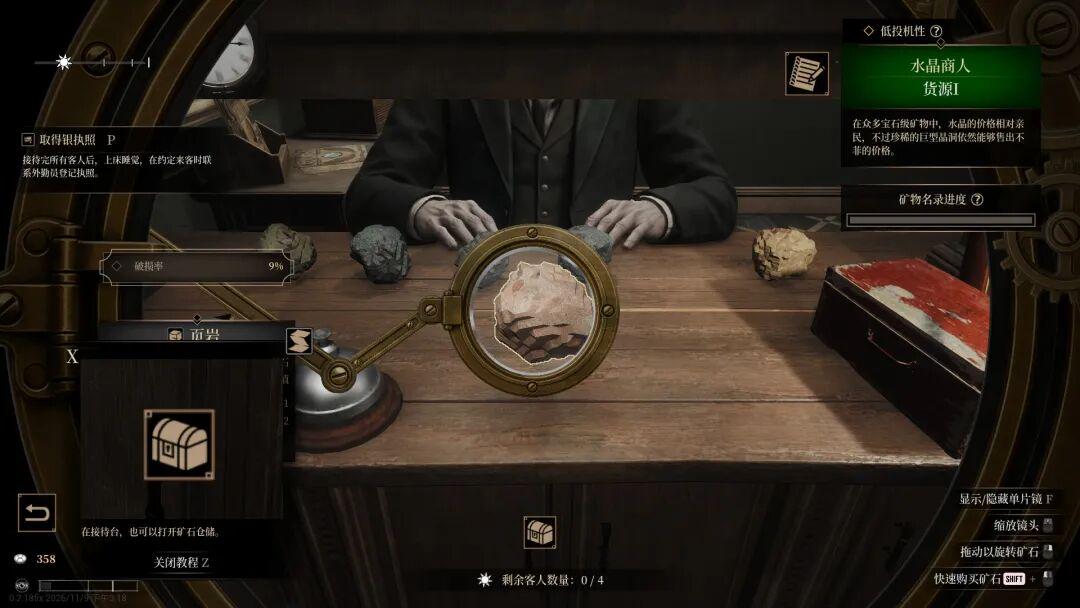
Selecting Rough Stones: A Key Part of the Game
However, at first, Lightworm wasn’t sure if the gameplay concept would work.In October 2025, with the publisher’s assistance, the game underwent a small-scale test involving several dozen participants. The feedback was that it had “potential, but was rough around the edges,” and Lampworm gained the confirmation they needed from this: “That’s when I truly became convinced that this gameplay concept was actually viable.”
Development subsequently picked up significantly. In June 2026, the game entered open beta on Steam, and in October, during the New Releases Festival, a free demo was officially released. The figures mentioned at the beginning of this article come from these events.
The setting for this game is a fictional underground city, where players inherit the jewelry store “Vermilion Hall” left behind by their missing older sister and search for clues to her disappearance while running the business.This city is currently gripped by an epidemic known as “Amnesia Fever.” Isolated from the wider civilization, it feels like an interlude forgotten by history.
The Lampworm said that he first settled on the gemstone as his medium, then sought out cultural attributes for it—specifically, commemoration and memory—and used these as an anchor to create conflict: “I pretended to be a novelist and created some conflict in this world.”
The details gradually bring this underground city to life: customers come and go—some buying gems, others selling rough stones, as well as men searching for strange relics, moneylenders, and women selling tea.According to the game’s mechanics, the higher your reputation, the stranger the customers who walk through your door. As you manage your business, you’ll accumulate a stat called “Awareness.” Once you cross a certain threshold, strange phenomena begin to occur: rooms where you can hear heartbeats, bottomless pits, and contaminated radio channels.
The game’s tagline reads, “Whoever peels away the shell of the world with their own hands will inevitably bear the aftershocks of history.”
Jike.cn’s description of the horror’s intensity is quite accurate: “It doesn’t jump out at you, but it still sends shivers down your spine.”
03
Realism Must Give Way to Gameplay
Many players describe this game as “professional”—with terms like “cutting,” “faceting,” and “setting,” the terminology and processes seem quite authentic. Lampworm’s reaction to this assessment was somewhat unexpected: “I don’t even know what a real jeweler is.”
In the real world, jewelry making involves multiple stages—including material selection, gemstone cutting and polishing, and design—each with its own specialized techniques. What “Lampworm” aims to do is connect these stages, allowing players to experience the entire process from a rough stone to a finished piece of jewelry.
To gather material, he watched countless videos on jewelry crafting, pored over textbooks, and studied techniques and cutting sequences for faceting styles like the octagonal hand cut.Lampworm has also experimented with games featuring other cutting themes, but he found the textbook method of adjusting angles bit by bit to be “a real drag.” Rather than a simulation that perfectly replicates reality, he places greater value on whether these abstracted processes are fun to play with.
When it comes to refining the gameplay, a significant portion of the effort put into *Lightworm* went into areas that players might not easily notice.Every piece of ore used for processing in the game is composed of nearly 10,000 minute units that interact with one another, creating a voxel-based world similar to *Minecraft*, only rendered more smoothly. As *Lampworm* puts it, “Every piece of ore is a little world of its own.”
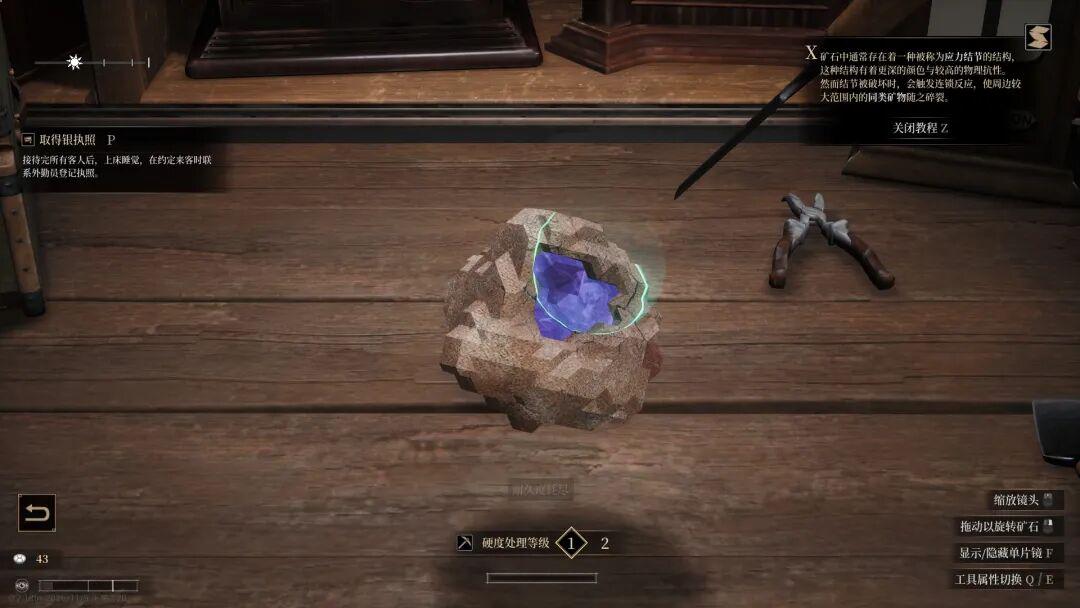
Hit the rock, hit it, hit it, hit it
The cutting process is actually quite simple; from a programming perspective, it involves nothing more than ordinary model polygons. The ore processing stage, however, has been assigned attributes across various dimensions—such as hardness, toughness, and acid resistance—and heat treatment mechanics are currently in development.Lampworm’s goal is to ensure that every tool has a purpose. In his vision, ore processing will account for 60 to 70 percent of players’ time, cutting will take up 10 percent, and the remainder will be devoted to accessory crafting.
Realism takes a back seat to gameplay here. When designing the specific properties of minerals, Lampworm prioritizes intuitiveness—for example, diamonds and corundum should be harder—rather than meticulously replicating real-world physical parameters item by item.As for phlogopite—frequently dubbed “Mr. Shatter” by players—its inclusion stems from the manga *Land of the Lustrous*. Lampworm aimed to make this exceptionally fragile mineral leave a lasting impression on players within the game.
The biggest concession was made to the quality system. In the initial beta test, the game did not have a quality rating system; instead, it used real-world properties such as damage rates to directly determine the quality of gems.Later, Lampworm realized the problem with this design: when players shared their results on social media, “I got a perfect-quality gem” was immediately understandable, whereas “I got a gem with zero damage” left people scratching their heads.
Currently, gems in the game are categorized into five tiers: Poor, Common, Good, Excellent, and Perfect. The trade-off is that “Perfect” quality gems occasionally have a 90 percent chance of being damaged. He admits this isn’t entirely realistic, but no player would turn down the sense of accomplishment that comes from seeing the colorful quality labels in their inventory.
Players’ “addiction” stems from another set of design choices. Initially, “Light Worms” was modeled after small-scale titles like *Fishing Sails and Hidden Currents*, but after introducing the “gambling on jade” mechanic and the quality system, the depth of collection and the risk-reward dynamic were layered on top—a combination he described as “multiplying the experience.”As for why players can’t stop playing, his conclusion is straightforward: “It exploits human weaknesses—there’s nothing more to it. People love to gamble, and they love collecting shiny things of varying quality.”
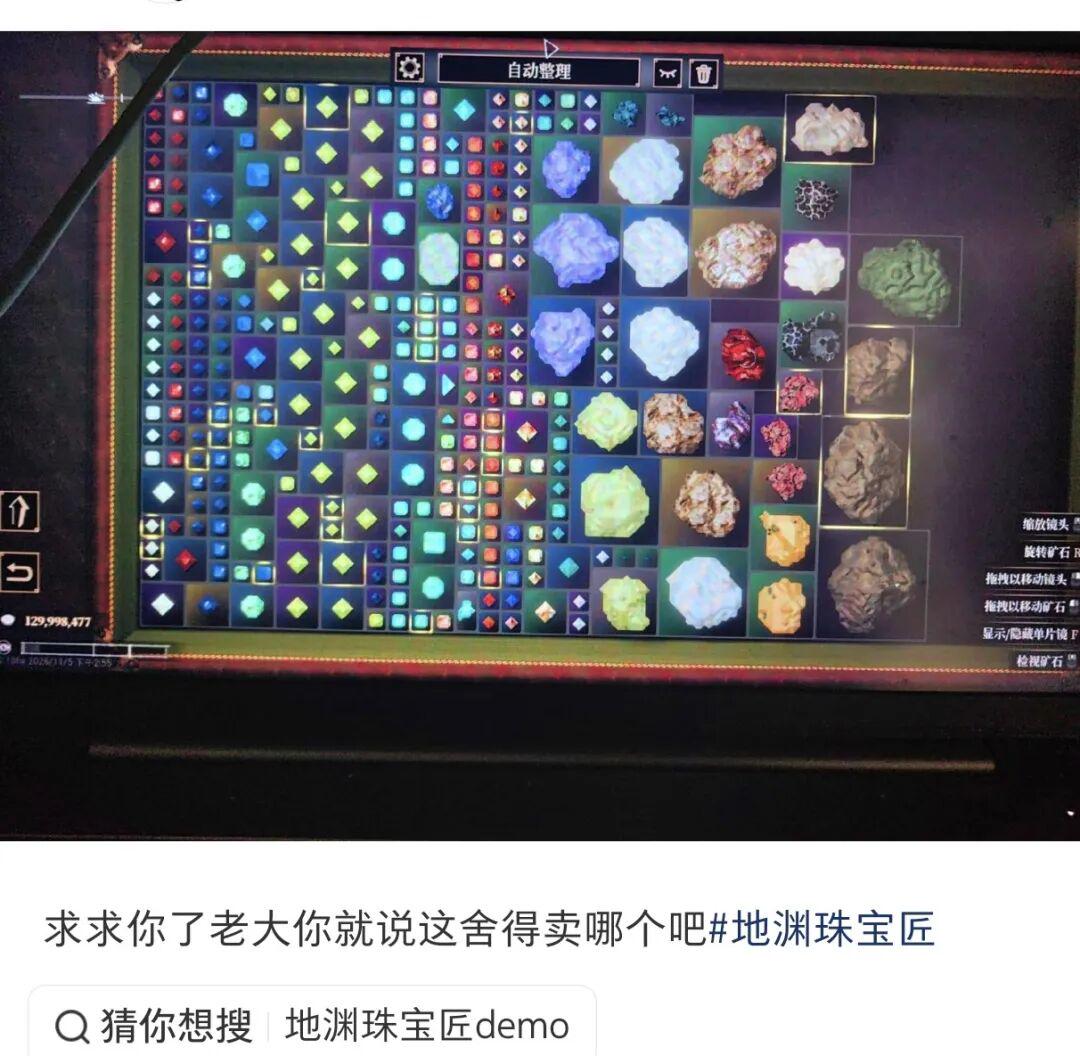
User Reviews on Xiaohongshu
Since the demo was released, adjustments have been ongoing. The game includes built-in surveys and bug reporting features, and a comprehensive round of player feedback is collected after each test. Players can reach him directly in the QQ groups in China and on Discord overseas.
At the end of the article, Lampworm asked Game Teahouse to convey two messages to the players.
First, regarding the horror elements in the game: during the demo period, some players were put off by the game’s atmosphere,In response, Dengchong has promised to create a “mild horror” mode that tones down particularly eerie events—such as giant moths and power outages—to a milder level. However, since this mode involves a complex set of game mechanics, it may not be ready in time for the official release; the developers will add it as soon as possible afterward.
As for completely removing horror elements, Lampworm admitted that it would be difficult to do so, as some elements are tied to gameplay mechanics—for example, the eyes growing out of ore—and it would be a real shame to remove them. He also emphasized that even in the game’s normal mode, there will be no sudden scares or chase sequences, so players can rest assured.
Next, regarding the dizziness issues mentioned by some players, Lampworm said he’s received more complaints about this than about the horror elements, and he promised that the official release will include a teleportation-style quick-travel mode.
Of course, players are concerned about more than just these two issues. For example, there’s been a lot of discussion about the economy system—in the demo, meticulously crafted accessories sometimes don’t sell for as much as raw stones.Lampworm’s explanation for this is that the value of accessories lies primarily in earning reputation and providing attribute bonuses; the specific values will be further refined in future updates. As for the issue of having too much money to spend later on, this will also be resolved in the full release, and there are still a large number of upgrade options, equipment, and advanced tools that have not yet been unlocked.
Plans for the future have already been laid out; the alchemy-infused worldview is built upon the foundation he’s developed through past projects, and *The Jeweler of the Abyss* “serves as a starting point” within that framework.
原创文章,作者:游茶妹儿,禁止转载:https://youxichaguan.com/en/archives/223249