Have you ever watched a disaster movie? When I was playing the new season of *Operation Delta*—which had been upgraded to UE5—and looked up to see massive waves dozens of meters high crashing down on Skyport, I understood why this genre has remained so enduring in film history.
As the guided missile that sealed the victory struck, a massive explosion first echoed throughout the harbor, followed immediately by a surging tidal wave that crashed into roads, bridges, and buildings, sending up vast plumes of white spray.As the wave drew near, its destructive power became all the more apparent: it smashed buildings in its path, sweeping up vehicles, trees, streetlights, and large chunks of reinforced concrete debris—and G.T.I. operatives who hadn’t managed to take cover in a safe zone were swept away along with everything else.
Bitch
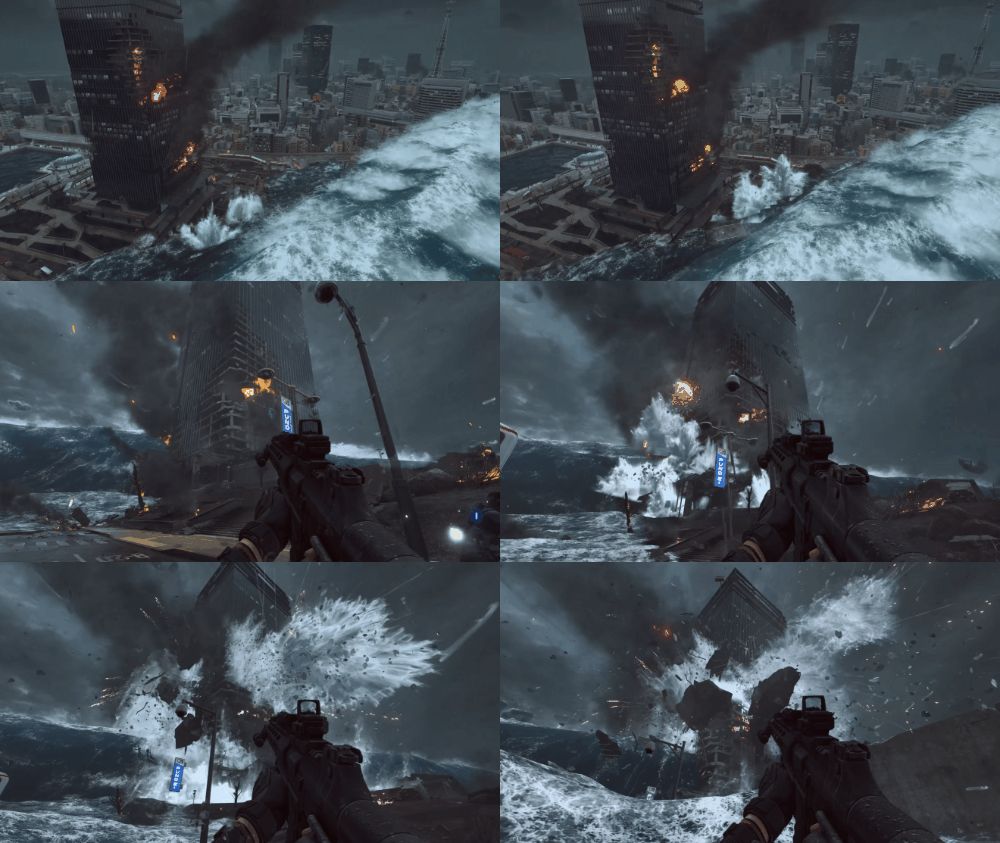
It’s hard not to be reminded of the scene in the movie *The Day After Tomorrow* where floodwaters engulf New York—an irresistible force steadily closing in, the familiar world suddenly thrown into chaos, and the audience left to witness the unparalleled power of nature.
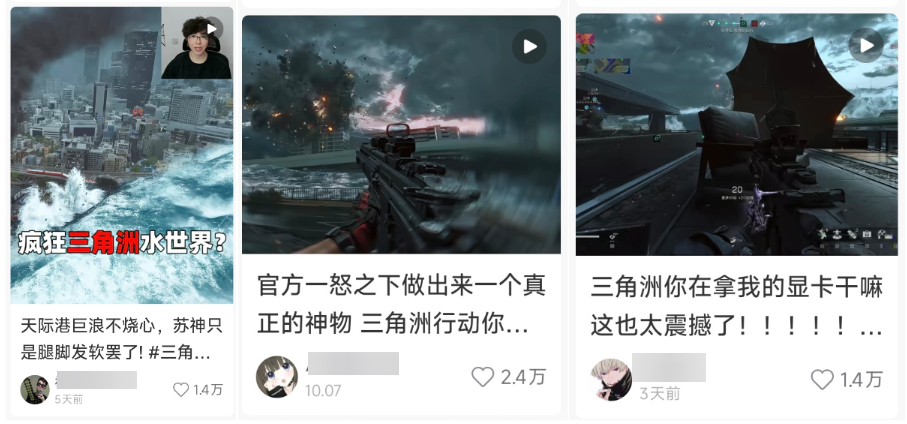
Players also love this sense of tension. Many gamers with high-end PCs have recorded the entire sequence of the “Giant Wave” event at maximum 4K settings and shared the footage online. Especially after the Sky Harbor map was upgraded with UE5 technology, Unreal Engine 5 features like Nanite and Lumen have made the sight of the giant wave crashing into the city look incredibly realistic.“My graphics card is about to catch fire!” is the most common comment under these videos; others joke, “This is the wave Delta has been waiting for his whole life.”
Even in overseas comment sections, quite a few players have been comparing Delta’s gameplay footage to blockbusters like *Battlefield*, and their comments are full of love.
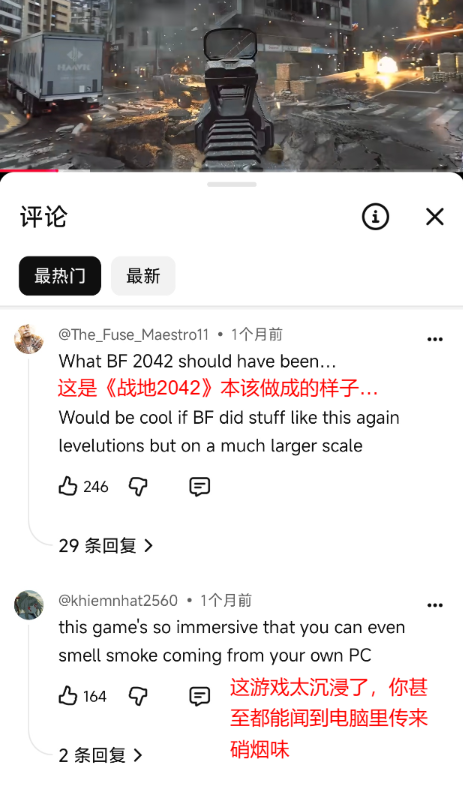
For a long time, we’ve taken for granted the dominance of overseas AAA titles in terms of physical destruction and lighting effects, praising *Call of Duty* for its lighting details and *Battlefield* for its environmental destruction—yet it remains rare for domestic FPS games to receive similar recognition.
This may mean that, at long last, a Chinese-developed FPS game has, through its top-notch performance, broken into the technical arena where overseas FPS games have long held a leading position.
So how did *Operation Delta*, which has been live for two years, pull this off?With this question in mind, I spoke with the lead designer of the “Operation Delta” Comprehensive Battlefield Skyport map, a technical artist, and the head of the engine team. Through their accounts, I saw three distinct aspects: a solid technical foundation, the tenacity to tackle seemingly impossible challenges, and a creator’s heart that remains steadfastly focused on the player experience.
01
Putting an Elephant in a Refrigerator
“The whole process is like putting an elephant in a refrigerator—it’s an epic challenge,” the lead designer at Skyport told me.
The essence of huge waves is water, and simulating water has always been difficult—this is a consensus within the game development industry. Mathematical modeling of waveforms, the sorting of reflections, refractions, and transparent objects; plus water bodies of different locations and types, each with its own color, turbidity, and flow state—each of these requires extremely complex algorithms to implement.Furthermore, according to technical artists, rendering realistic water in a film or TV scene can take dozens of hours to compute a single shot, whereas in a multiplayer FPS, there are only a few milliseconds available for rendering.
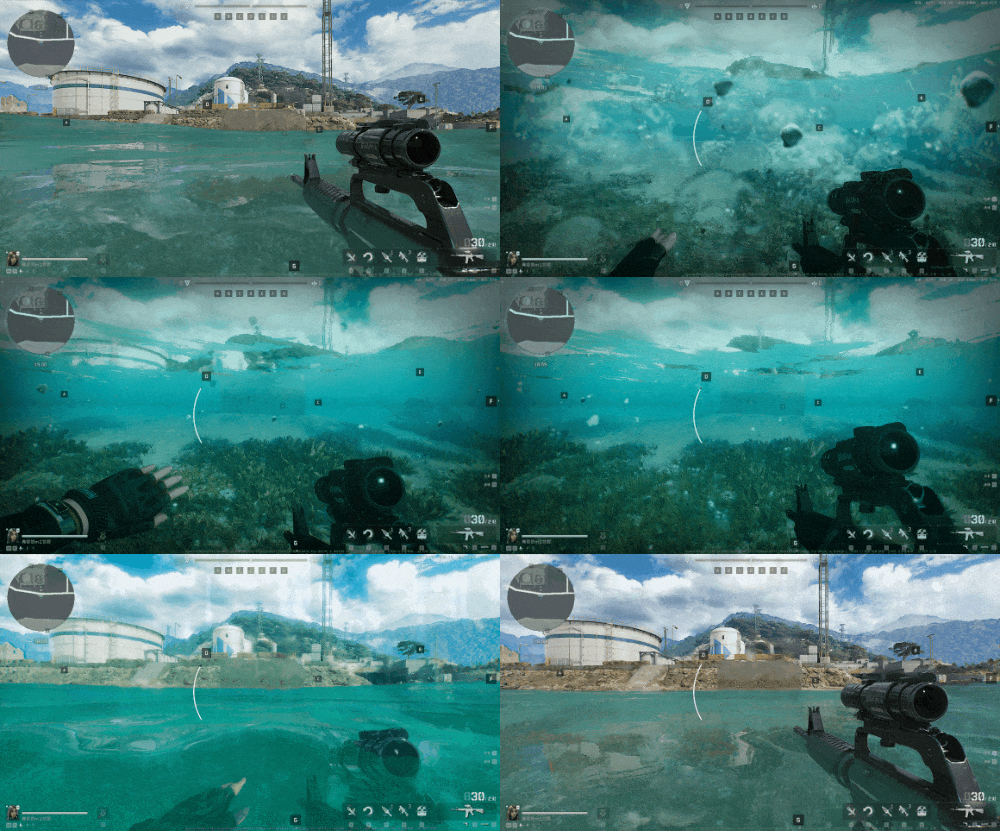
Not to mention, in Delta, characters can dive, swim, and operate boats—which requires consideration of the interactions between the water environment, vehicles, and operator skills, as well as ensuring server synchronization in multiplayer mode. Achieving this level of interactivity has already required a tremendous amount of R&D effort.Scale this aquatic environment up a thousand or even ten thousand times, and both the technical difficulty and performance demands skyrocket exponentially. Even when looking at the global multiplayer FPS landscape, they can find almost no direct precedents to draw upon.
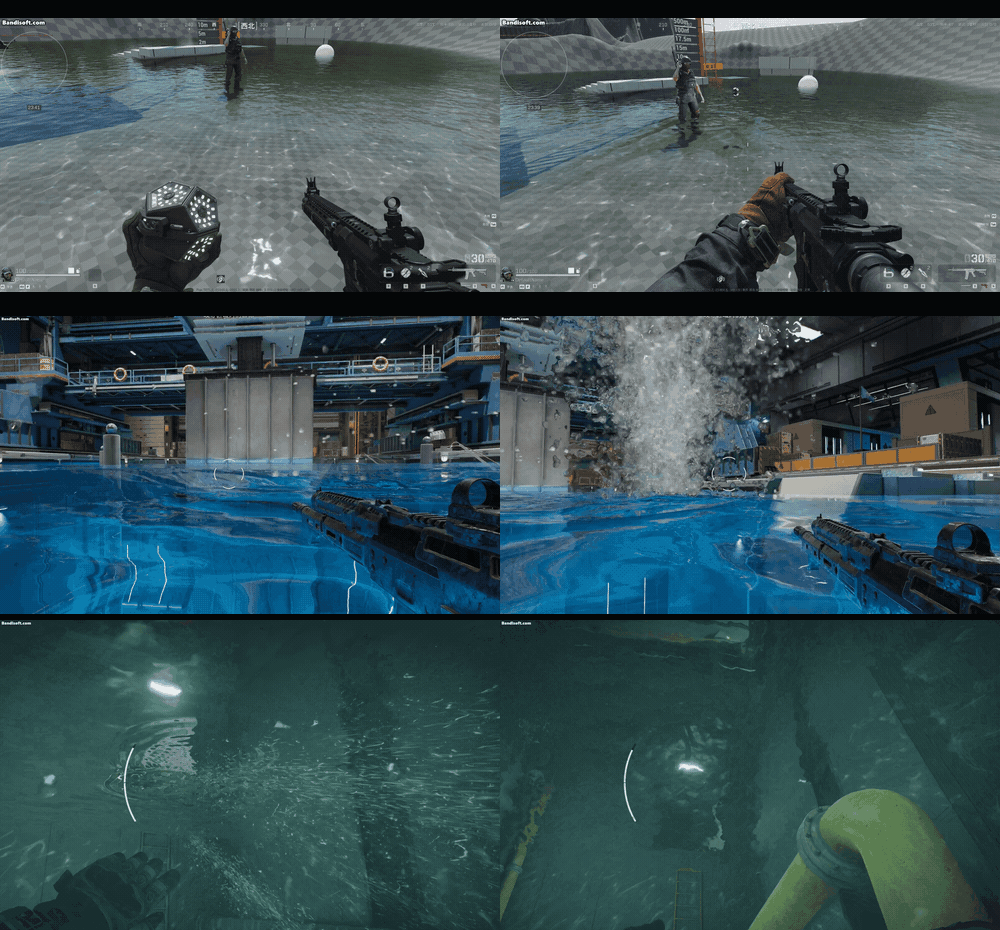
“At the first meeting, everyone gasped—‘How could you design something this difficult?’” recalled the technical art specialist, but he quickly added, “Everyone said it was hard, but they were actually really looking forward to bringing it to life.”After all, the idea of “creating waves” at Skyport was so perfectly fitting—it would serve as the emotional catharsis for this epic battle between G.T.I. and Hafke Sky City.
After several rounds of internal discussions, the project team decided to adopt a phased delivery plan: first, they would build a minimum viable demo capable of showcasing the “giant wave” effect to confirm that it could run in its basic form on both PC and mobile platforms; then, they would break down the required artistic details and interactive effects into separate components, implementing them layer by layer and building upon each other.
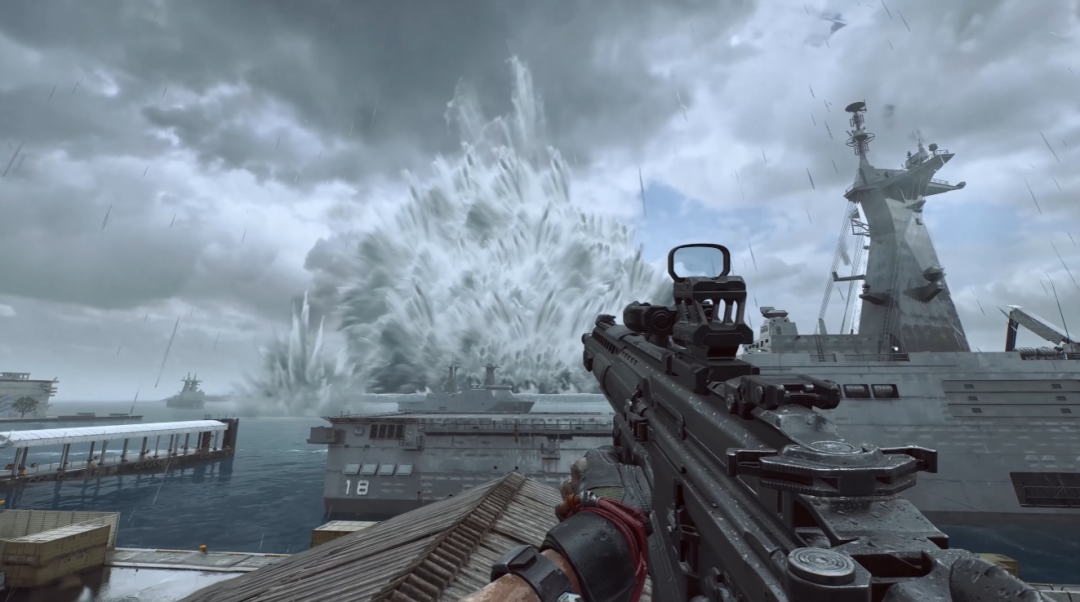
Multiple teams—including Art, 3C, Technical Art, Design and Engine, Visual Effects, and Performance—were all mobilized.During this period, the technical artists were busy becoming “giant wave experts”—they extensively reviewed academic papers on tsunamis and mathematical modeling of ocean water, and also referenced the fluid dynamics depictions in films such as *2012* and *Haeyundae*, all in pursuit of a single answer:How can we use algorithms to model this ever-changing body of water created by the massive waves?
“Tsunamis in nature are completely different from still water: when they first form, they start as an extremely slow wave, then the wave continues to expand and energy builds up layer by layer until it crashes head-on into the shore, at which point it slows down in certain areas.” A technical art specialist gave an example. They recreated these morphological changes in the game, so players can see them more clearly when looking down from an airplane as the giant wave approaches.
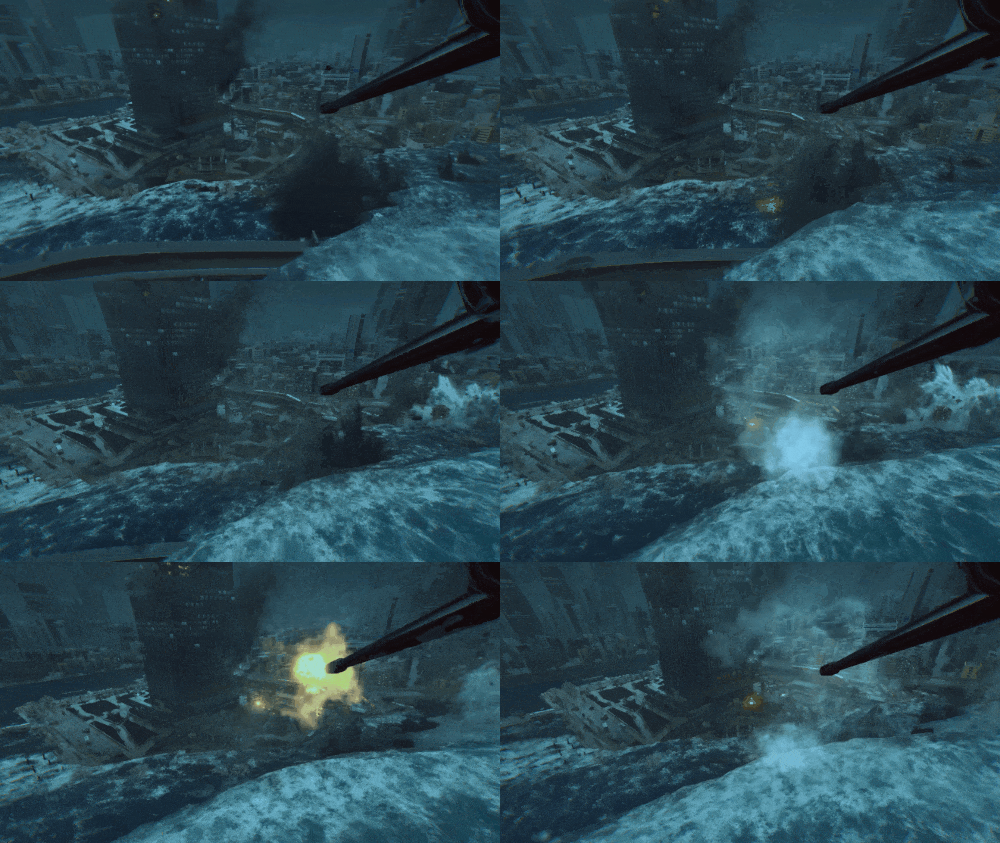
There were also some water effects featuring massive waves that we had to abandon after testing because it was nearly impossible to avoid this long-standing optimization challenge—the massive waves themselves are rendered as full-screen water effects, and when combined with scene fragmentation, splashes, water mist, and skill effects, along with dozens of players and vehicles on the same screen, how could we possibly reduce the performance overhead?
A technical art specialist told me, “There’s no silver bullet for optimization”—every department has to fine-tune the details bit by bit.Specifically for water rendering, they developed a GPU-based software subdivision solution: increasing the mesh density of water in the foreground, reducing it in real time in the background, and precisely removing meshes that players cannot see—all to minimize the rendering overhead for every frame as much as possible.
The final result is that the overall shape of the giant wave is driven by specialized algorithms and curves, with Gerstner waves superimposed on the wave body to add detail to the undulations. As the giant wave advances, the overall color of the water deepens and its turbidity increases, causing this stretch of water to constantly change over time.
These details—which players might inadvertently overlook—combine with a smooth gaming environment to shape the ultimate experience——In real life, people rarely have the chance to face massive waves head-on, but in the game, they can take on the role of a G.T.I. agent and personally experience this overwhelming sense of pressure coming from all directions, allowing the tension that has built up throughout the entire battle to be released all at once in that moment.
02
Amid the Waves
At this point, the wave’s structure has taken shape. But the project is only halfway complete. The other half involves taking the concept a step further. “We don’t just want to create the water itself and make it look better; we also want to build a series of interactions around it to make the threat posed by the giant wave feel more believable to players.”
Fortunately, they’ve accumulated a wide range of visual techniques over the years. For example, from last year’s “Eye of the Storm” map to this year’s “Aftershock” map, Delta has developed a suite of techniques ranging from all-terrain tactical destruction to large-scale building destruction—techniques that are perfectly suited to showcasing the destructive power of giant waves.
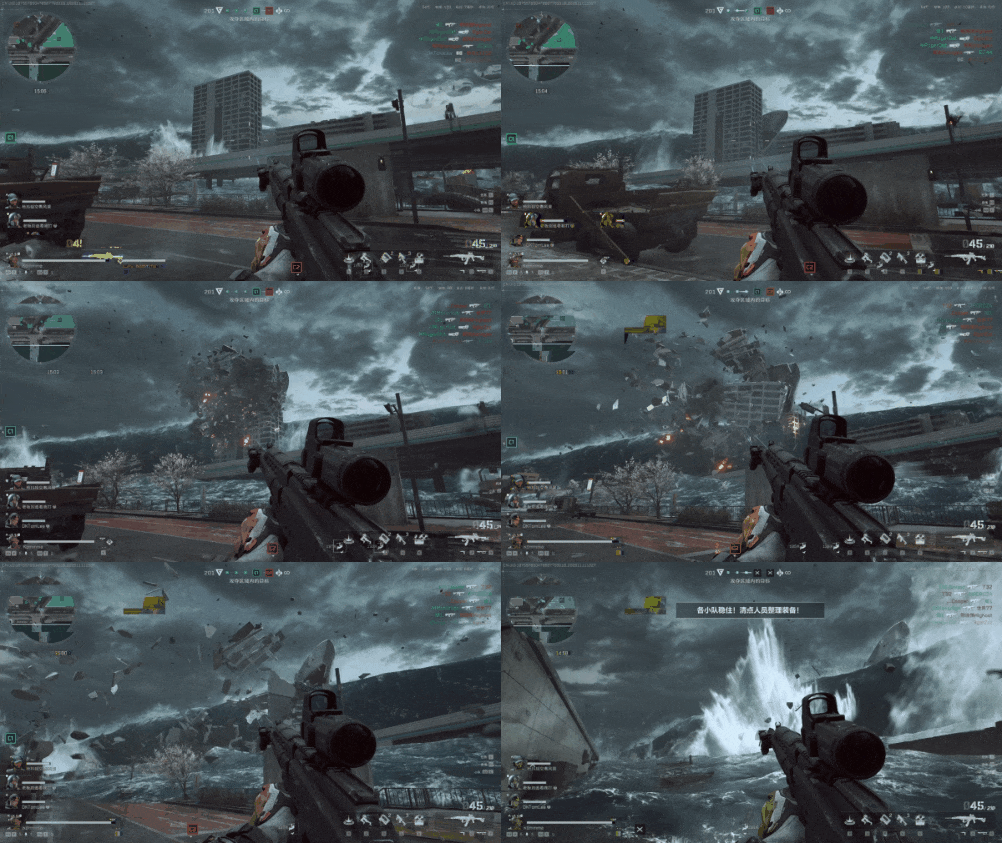
One clever touch is that, just as the wave is about to reach the player’s location,the G.T.I. landing craft is swept up by the wave and crashes violently into a building where the player had just been engaged in fierce combat—instantly bringing the sheer power of the wave to life while also adding a sense of G.T.I.’s “do-or-die” situation.
The planners then broke down the scripted events into three acts—before, during, and after the giant wave strikes—and assigned them to various modules such as visuals, audio, and UI. Before the wave hits, the wind swirls violently, flocks of crows take flight in panic, and air-raid sirens blare from all directions.The dynamic weather changes accordingly, and the HUD inside the visor suffers from electromagnetic interference. In the distance, billboards and vegetation have been torn up; water sprays into the air, and a wall of mist sweeps toward the viewer, fully capturing the atmosphere of “a storm is brewing.”
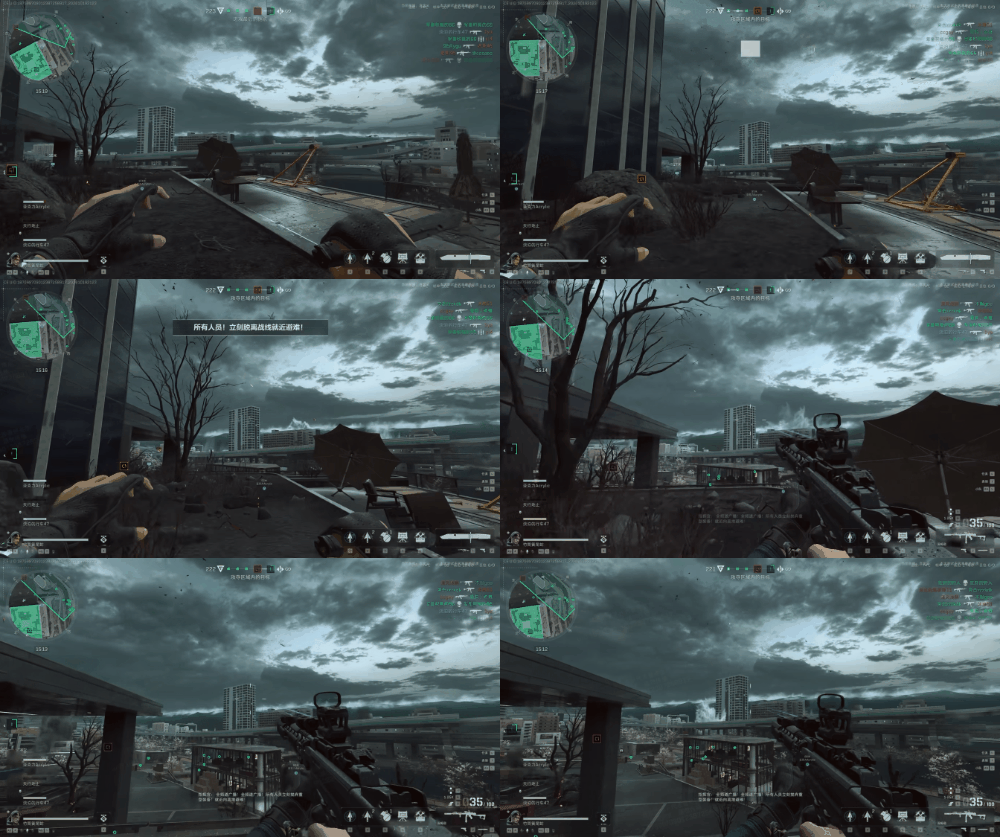
At the same time, they must also consider another issue—continuity and synchronization. In other words, this major event must unfold continuously; players must experience a “what you see is what you get” experience—from where the main wave advances to when operators are hit, and when vehicles and the environment respond. Everyone should also be able to remain actively engaged in the major event at all times.
For example, quite a few players felt after trying it out that “G.T.I. Superman” was a bit over-the-top—when an operator is knocked down by a giant wave, they don’t leave the screen immediately but instead enter an 8-second hit animation, making it look as if they’re “taking the brunt of the wave with their own body.”However, a technical art specialist told me, “If we followed real-world logic—where a giant wave instantly eliminates a player, who is then redeployed—it would actually be a hundred times easier to implement.”
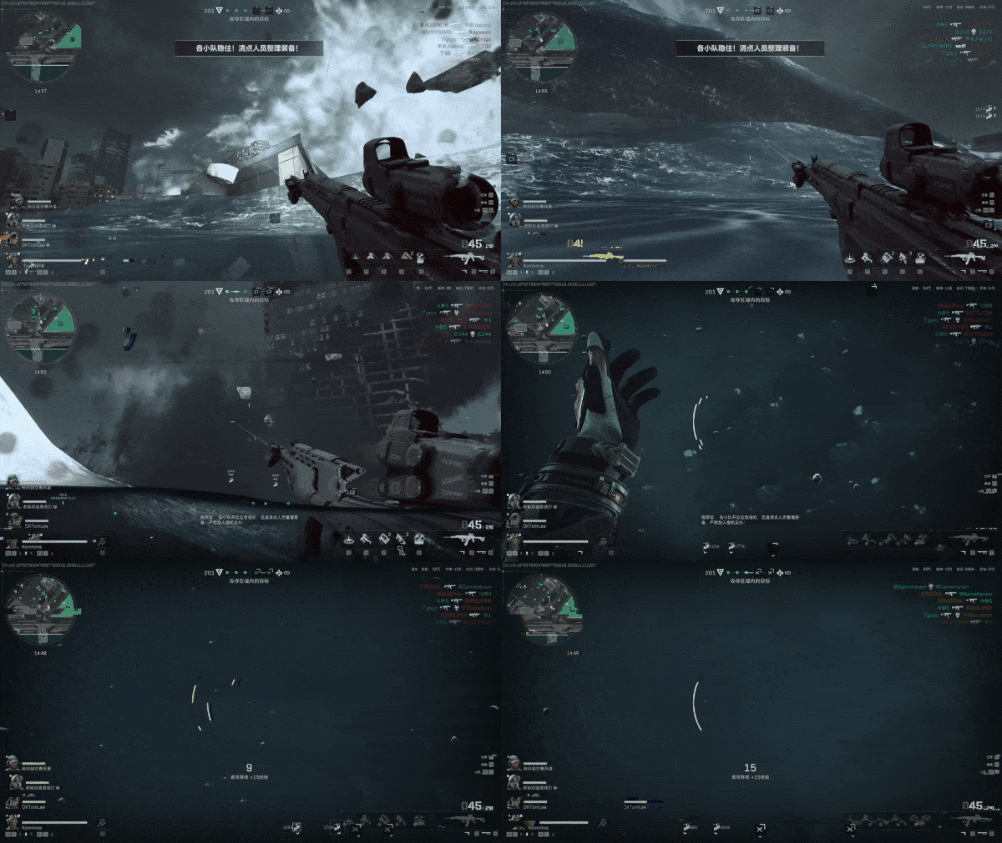
He gave a few examples: “Suppose the player’s screen shows that a massive wave is still far away, but the server determines that the player has already been swept up by it—the sense of immersion is instantly shattered. Or suppose the position of a player jet-skiing or driving a boat in the water isn’t detected correctly, causing the water to appear to pass through the model.”If players were forced to remain in a death animation or a pre-rendered cutscene, none of these issues would need to be addressed. After numerous discussions with the combat engineering team, they ultimately chose the more resource-intensive solution: allowing players to witness the entire event in real time.
The team chose the path with the steepest technical challenge and developed a solution called “Water Tsunami,” which separates the system into a logic layer and a rendering layer: a deterministic function driven by server time “t” ensures millisecond-level synchronization of the giant wave state across the server CPU, client CPU, and GPU, which is then used to render the main wave body and generate interactive feedback.At the same time, they used their in-house water simulation tool, Water ACT, to pre-compute data describing the water environment, enabling them to determine as accurately as possible when players were on the surface, when they were underwater, and when they should switch between different states such as swimming or diving.
Many of the game’s most breathtaking in-game highlights stem from this kind of “grind.” Real-time participation opens up even more possibilities for gameplay—some players use the Silverwing Agent to release a falcon from the top of a skyscraper and watch it soar over the towering waves; others hop into an amphibious vehicle to enjoy the sensation of sinking to the bottom and then resurfacing;some do absolutely nothing, simply savoring the sensation of being knocked over by the waves; and we’ve even seen players posting videos specifically to promote this “must-try activity” at Skyport: hopping on a jet ski and riding the crest of the waves at their peak.

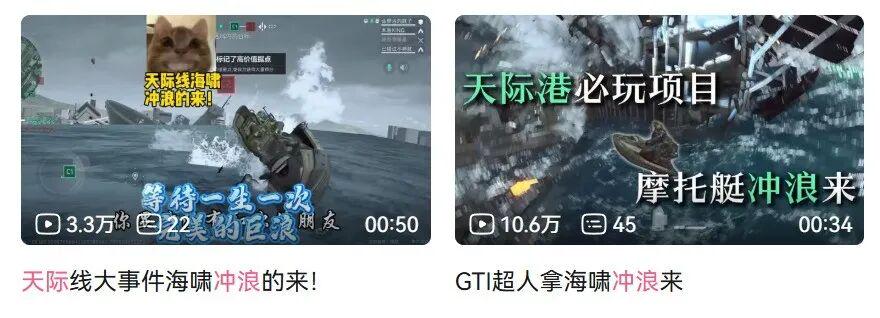
Especially when you enable the “Realistic Mode” graphics option—which utilizes UE5 features—the details of the wave, the city’s lighting and shadows, and the interactions unfolding before your eyes all blend together, allowing everyone to experience a unique “giant wave crashing” sequence from their own perspective.
After listening to the R&D team describe these efforts, I realized that no matter how deeply the discussion delved into technical details, it always came back to the same thing: the player experience.
As the massive wave sweeps through, players find themselves on what feels like a brand-new battlefield, surrounded by rubble and ruins.The two outposts where fierce battles had raged earlier were closed off after being struck by the massive wave, and the new outpost was relocated to the rooftop of a skyscraper. Both sides entered a confrontation with unlimited troops, and the attacking side could even deploy forces from the air. The entire battle shifted from a ground-based advance to vertical attacks and defenses between skyscrapers, completely rewriting the dynamics of the battlefield.
So, what exactly did this massive wave bring to the Delta? It not only allowed players to experience a visual spectacle firsthand, but also transformed that sensory impact into a new combat experience.After the game ends, the slogan “Capture the South Bank” displayed on the screen hints at entirely new possibilities for future battles in Skyport. The giant wave has thus become a tangible, massive variable within the tactical landscape.
03
The more difficult the journey, the more wondrous the sights.
Looking back on the entire R&D process, it’s quite moving.Behind a map event lasting just a few minutes lies the close collaboration and repeated iterations of multiple departments within the Delta team, who overcame a series of technical challenges. As the game enters its long-term operation phase, many teams opt for a “play it safe” approach—doing less to minimize mistakes. So why did TiMi J3 choose to take on such a difficult task?
“Looking back, it seems as though the team has been constantly reaching new heights in user experience, but in reality, the groundwork for many of these seemingly unattainable goals was laid long ago during previous R&D efforts,” the head of the engine team told me.
This statement also reveals a core strategic barrier for the team: technological compounding. Juwang is a prime example: as longtime Delta players know, there is actually a subtle, underlying thread of aquatic research and development running through it.
For example, over the first four seasons, the team studied aquatic ecology during the early stages of development. They gradually figured out how to create “visually appealing water” and explored ways to use technology to describe the physical properties of water, such as color, turbidity, and refraction. In the vast bodies of water in Longbow Valley and Dam Zero, they created visual differences between various areas.
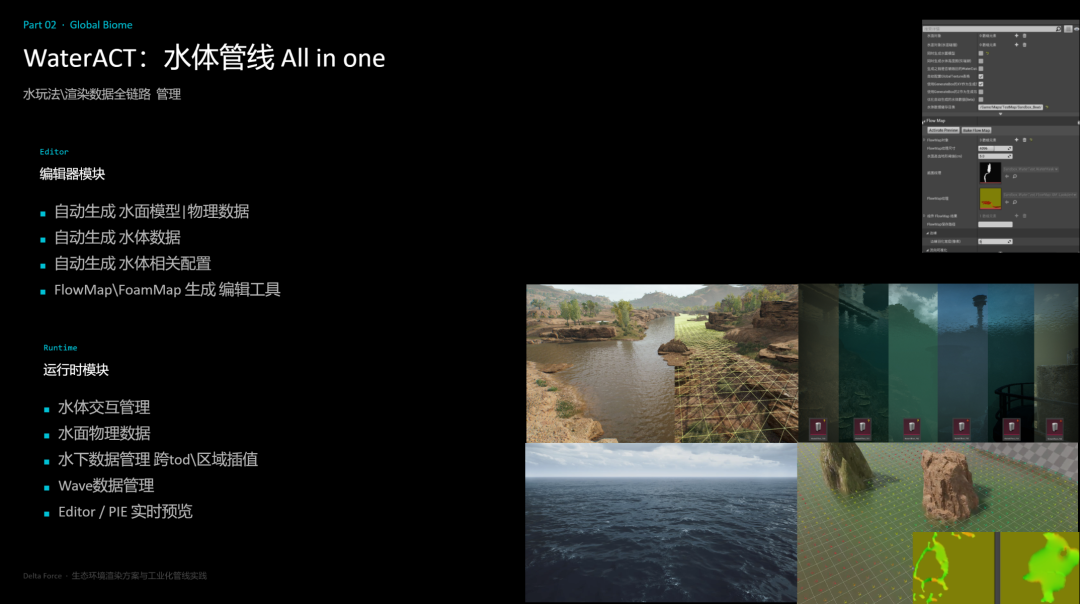
Starting with S5, Delta officially introduced diving and swimming mechanics, evolving from “visually appealing water” to “interactive water.” It was also at this stage that the team began maintaining Water ACT, its in-house water pipeline toolchain, which integrates processes such as water area creation, data generation, configuration, and verification, enabling designers and artists to validate their ideas more quickly.Since then, the team has continued to add new features to the toolchain based on the needs of each season’s updates. For example, the pre-calculated water data used in this “Giant Waves” update to bridge the gap between rendering and gameplay validation was also generated by this toolchain.
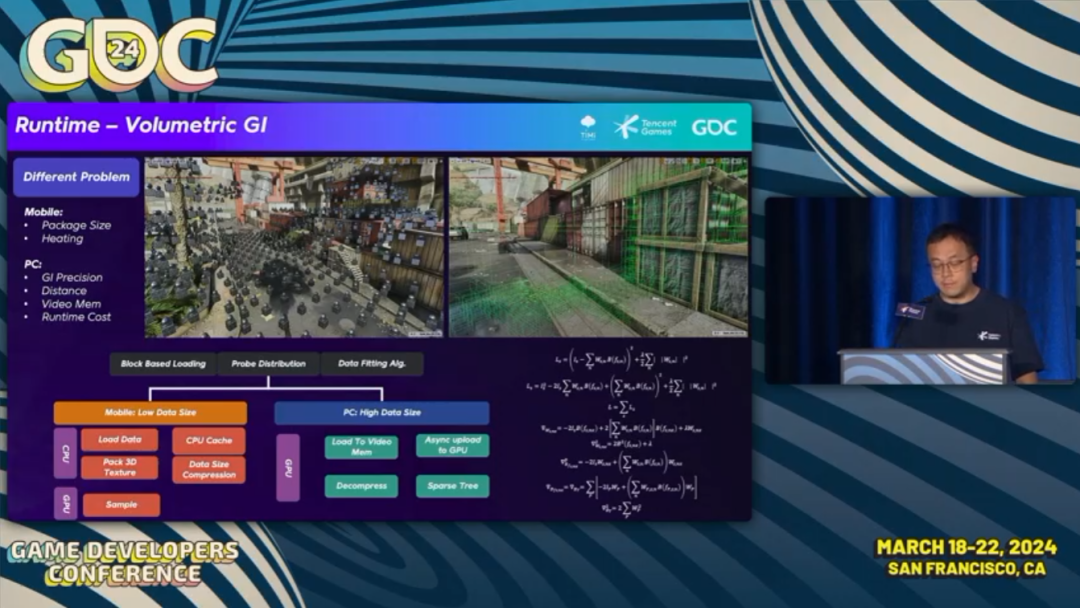
As early as 2024, the Delta team took the stage at GDC to share their production pipeline with developers around the world.
Behind the scenes, a dedicated engine team quietly supports the entire R&D system.The head of the engine team told me that, in addition to the water system, they’ve also made customizations to terrain, lighting, the open world, PCG, materials, vegetation, the rendering pipeline, and various compatibility adjustments—they’ve even overhauled streaming and serialization. These deep, low-level “modifications” underpin the implementation of Delta’s various features.
Now, they have officially integrated UE5 capabilities such as Nanite, Lumen, and VSM into Delta, their deeply customized, in-house production pipeline. While maintaining version releases, they are simultaneously elevating the underlying technical foundation.In terms of performance optimization, they spent a month making drastic, custom modifications—from high-level features down to low-level multithreading scheduling—and deployed tens of thousands of lines of code, boosting the game’s base frame rate on the same graphics card from 70–80 frames per second to over 120 frames per second(UE5’s official target is 60 fps)—this was a “hard requirement” set by Producer Shadow.
When the Delta team presented some of their work at this year’s Unreal Fest, a colleague privately told our reporter that what they were doing was “hard to imagine.”

Second, the drive to continuously create great gaming experiences for players is what motivates the team to keep tackling tough challenges. With every technological advancement, we must ask the same question: What new experiences will this bring to players?
Let’s use the “water” theme as an example again. Delta’s exploration of “water” not only leaves a clear trail but also tends to change players’ tactical decisions and gaming experience every season. That’s quite unusual.
For example, when Tidal Prison was introduced in Season 5, the lack of underwater escape routes inevitably left a gap in the narrative experience of a prison break; after the Space 2.0 update, a series of new playstyles—such as the “Buoyancy Ghost” strategy—began to emerge, altering the original dynamics of offense and defense.Then there’s the water system overhaul in Longbow Valley during Season 11, which not only allowed players to enjoy the thrill of high-speed boat races throughout the valley but also sparked a “fishing craze” across the entire map, bringing millions of “anglers” to the Delta overnight…These updates centered around waterways have repeatedly expanded the game’s playability while also influencing players’ specific tactical choices time and again.
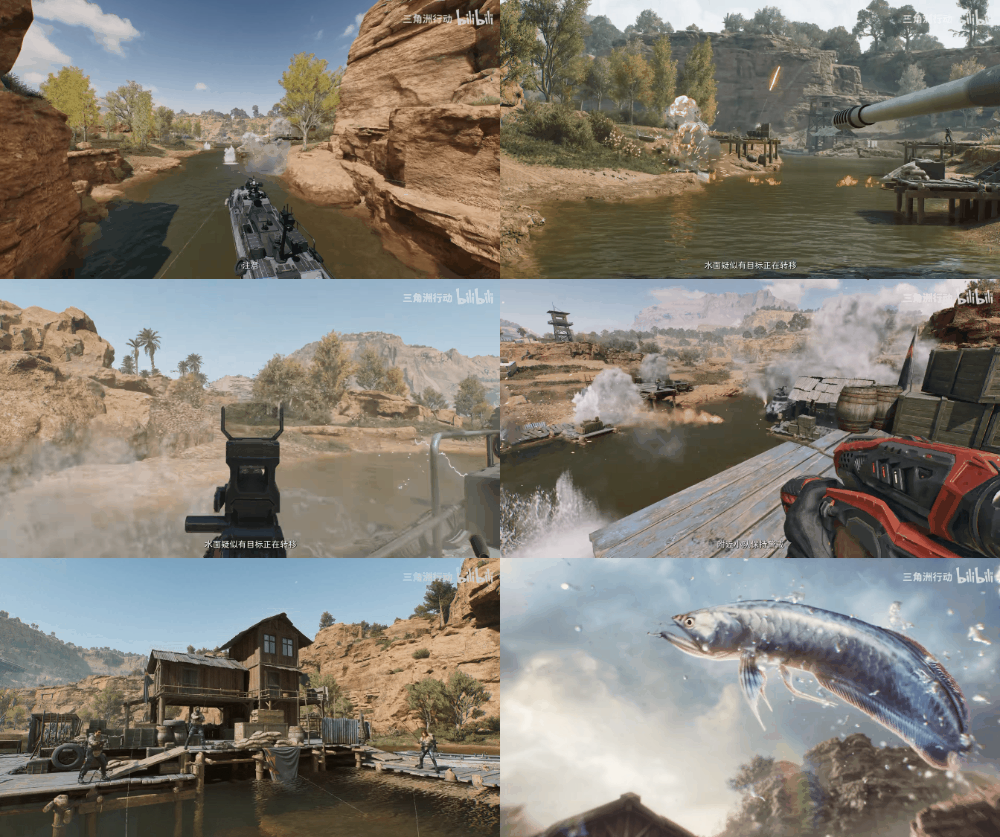
The completely revamped Longbow Valley map for Season 11
In Skyport, the success of this major event was largely due to the convergence of two technical advancements: the evolution of water systems and the building destruction mechanics developed through maps like “Aftershock.” Challenges that had previously been tackled separately came together in this update, combining to create a new kind of experience. This is the power of technological compounding.
04
Never Stop Moving
Looking at the trajectory of technology development, we can see that Delta is expanding upon some of the inherent expectations associated with FPS games.
For example, in the past, people used to say that FPS games come down to the fundamentals of game development—games that excel in 3C, gameplay mechanics, and character design are the ones that stand out.But now, when people talk about Delta’s seasonal updates, they’re more interested in what major in-game events are coming, whether the map’s ecosystem will become even richer, and if new Easter eggs and gameplay features will be added. This is a competition on a higher level.
In discussions about AAA games in recent years, “gameplay innovation” and “graphics competition” have often been pitted against each other. But with Delta, we see a completely different picture.Every fundamental technical challenge they’ve overcome in the past—along with the technologies, tools, and experience gained along the way—has equipped them to tackle even more complex ideas. The next update might introduce yet another disruptive gameplay option, enabling the game to continuously create unforgettable and unique experiences for players.
The future will continue to evolve along this path. For example, Delta will explore even more unrestricted “search, engage, and withdraw” gameplay narratives in the upcoming “Valkyrie” map; it will also upgrade more large-scale battlefield maps to UE5. These plans, already on the horizon and poised to launch, offer a glimpse into the potential for Delta’s next leap in gameplay.
People often say that Delta is an outlier in the FPS market in recent years. It has raised the bar for the domestic FPS experience, achieved exceptional commercial success, and is even gradually venturing into uncharted territory—a sector previously dominated by overseas FPS titles.Perhaps this is precisely why: as this massive wave surges past us, its ever-rising tide will continue to propel the game even further.
原创文章,作者:游茶妹儿,禁止转载:https://youxichaguan.com/en/archives/223232