Over the past year or so, the pace of progress in AI has been almost beyond imagination.
Especially when it comes to programming, the act of writing code is being redefined. Even complete beginners who don’t know how to code can simply tell an AI what they have in mind, and within minutes, it can generate a webpage, create a simple game, and even fix any errors along the way.
In terms of code, AI agents have permeated nearly every aspect of game development. But on the other side of the creative process—3D art—there are still significant barriers to entry.AI can draw images and generate videos, but when it comes to creating a 3D model that can be imported into a game engine, rigged with bones, and actually move within the game, it often hits a wall.
A visually appealing 3D model and a functional 3D model are two different things. The latter is not merely a visual representation, but a spatial structure that must be understood. How hundreds of thousands of vertices are arranged, how they are connected to form surfaces, and whether the topology is reasonable—all of these factors directly determine whether the model can be edited, rigged, and rendered by the engine.
Over the past three years, AI has made rapid, successive breakthroughs in images, videos, and code, but 3D has consistently been recognized as the toughest nut to crack. However, in the last six months, progress in tackling this challenge has accelerated significantly.
On September 1, VAST, an AI 3D large-model company, announced the completion of its Series B and Series B+ funding rounds, totaling approximately 3 billion yuan, with Matrix Partners China leading the investment. Including previous rounds, the company—which was founded just three years ago—has raised a cumulative total of approximately 5 billion yuan in less than half a year.
The list of investors also warrants special attention. Over the past six months, a number of game developers have frequently appeared on this AI 3D company’s shareholder roster, including 4399, Tanwan, and Giant Network in the Series A3 round, as well as Perfect World, 37 Interactive Entertainment, and Yanqu Games in the Series B and B+ rounds.It is rare to see capital from the gaming industry place such concentrated bets on a single upstream technology company.
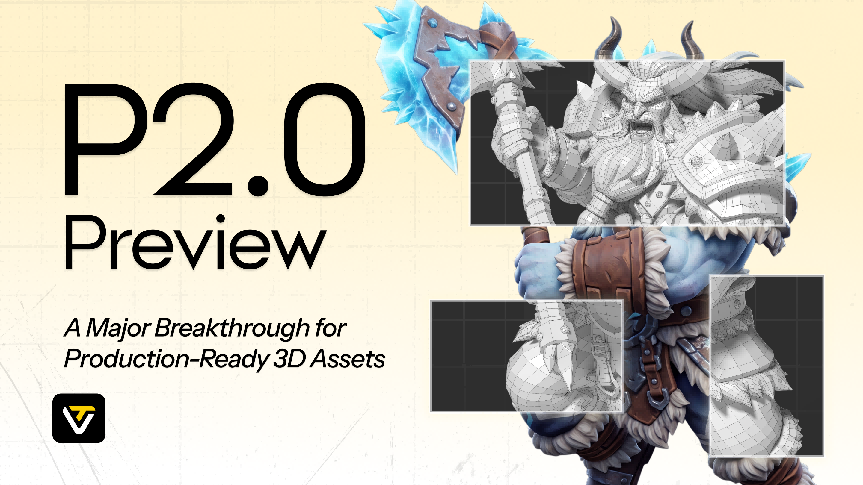
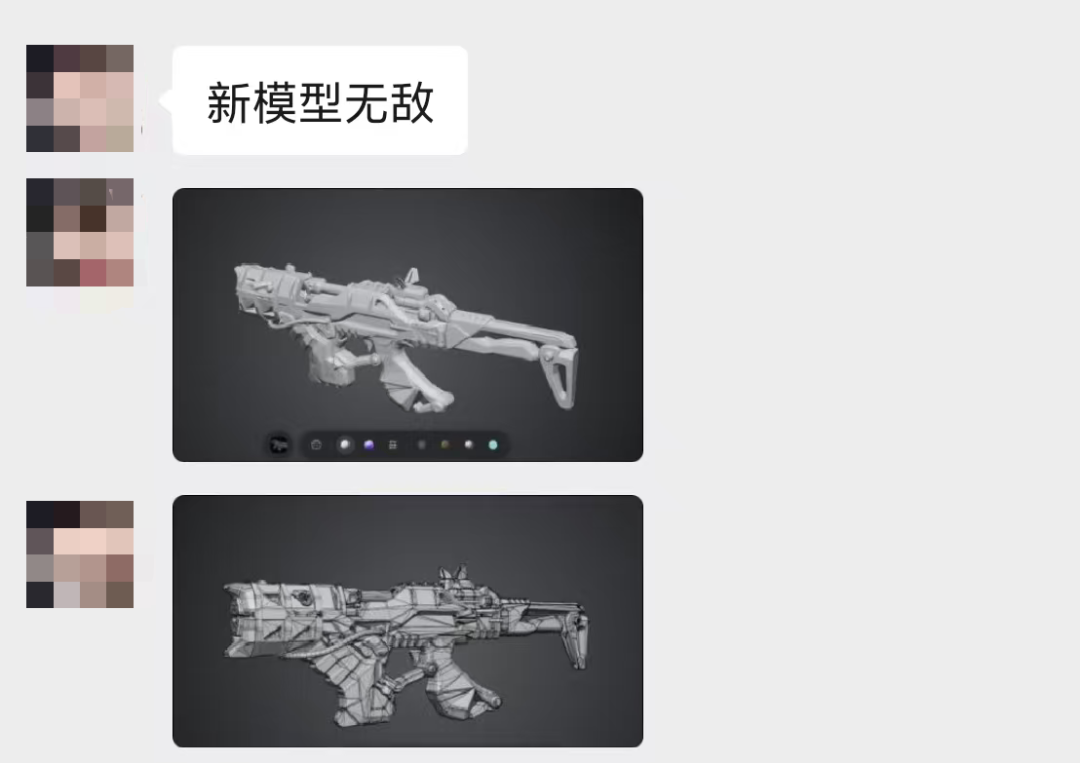
Along with the funding announcement, VAST also released version 2.0 of Tripo, its 3D large language model. This is the world’s first AI 3D foundation model to achieve native tetrahedral topology. After speaking with a TA expert who had briefly tested the new model, I got the sense that this wave of AI 3D technology might truly be set to revolutionize the field.
01
Before P2.0, why did someone always have to “clean up after” the AI?
To fully explain what makes this new model different, we need to start with a fundamental question: How are 3D assets in a game actually created, and where do developers typically run into problems?
Taking a 3D character in a video game as an example, the typical production process follows an assembly line:
First, the concept art is created to establish the character’s design and style; next, a highly detailed high-poly model with an extremely high polygon count is created to sculpt the character’s form;Next comes a crucial step—retopology—which involves converting the high-poly model into a medium- or low-poly model, reorganizing the hundreds of thousands of unstructured, fragmented polygons into a model with clean, well-organized topology; After that, UV unwrapping is performed, flattening the 3D surface like peeling an orange to create a 2D map onto which textures can be applied;Next, we paint the texture maps, set up the skeleton, perform skinning, create animations, and finally import the model into the game engine.
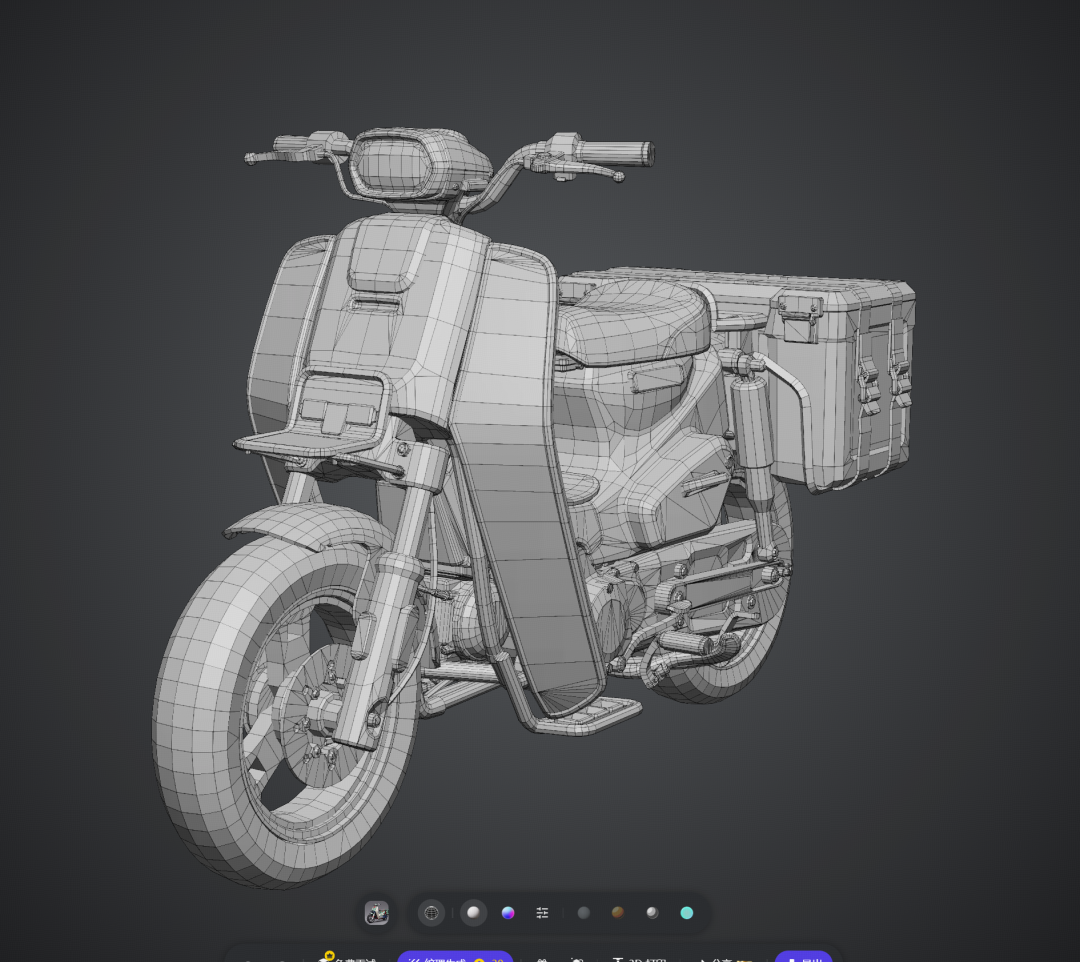
The wireframe on the white model is the “mesh”: the arrangement of the faces directly determines whether the model can be edited, rigged, and rendered.
In this process, the level of creativity is completely out of proportion with the labor costs. Concept art, modeling, and animation are the highly creative stages; in contrast, retopology, UV unwrapping, rigging, and skinning are more like translation and manual labor—they involve almost no creation of new content but rely heavily on experience, and are widely recognized as the most grueling stages.Retopology, in particular, is the most expensive, messiest, and least desirable step in the entire process; manually completing a single asset often takes anywhere from several hours to several days.

What’s worse, it’s stuck right in the middle of the production pipeline. If there’s a problem with the rigging, it will become obvious as soon as the animator takes over, forcing a series of rollbacks: adjusting the topology, re-UVing, re-texturing, re-rigging, and re-animating—it’s a case of one change affecting everything else.
As a result, the most expensive and top-tier artists on a team end up spending a significant amount of time on these tedious, repetitive tasks that should be handled by machines. Both money and time are wasted on the least creative aspects of the work—yet these are the very tasks where there is no room for error.
Over the past few years, AI-generated models have excelled precisely at the easiest and most superficial task in this process—creating high-poly models and defining their shapes—while the time- and budget-intensive tasks of retopology, rigging, and subdivision may even require additional manual rework due to substandard meshes.
The problem is that the goals for high-poly and mid-to-low-poly models are different.High-poly models prioritize appearance—skin wrinkles, scratches on armor—and the more detailed, the better. It’s not a big deal if the polygon count, edge flow, or topology are a bit messy, since they aren’t meant to be used directly anyway. AI vision models are inherently good at determining whether something looks like the intended subject.
Unlike low-poly models, which prioritize appearance, high-fidelity topology focuses not just on “looking right,” but on “being functional”: the number of polygons must be kept within the budget, the wiring must follow the structure, and loop paths must be properly reserved at joints… To achieve this, it’s acceptable to sacrifice a bit of visual fidelity.This marks a shift from “visuals” to “structure,” whereas in the past, AI treated 3D models merely as “a mesh of many points” for generation, covering only the first half of the process.
As a result, people often have to clean up the mess left by previously generated models. There’s only one way to truly integrate AI into the pipeline: ensure that, the moment it generates something, it directly outputs a structure that meets industry standards.
The P2.0 model, which directly generates tetrahedral surfaces, was designed to solve this problem.
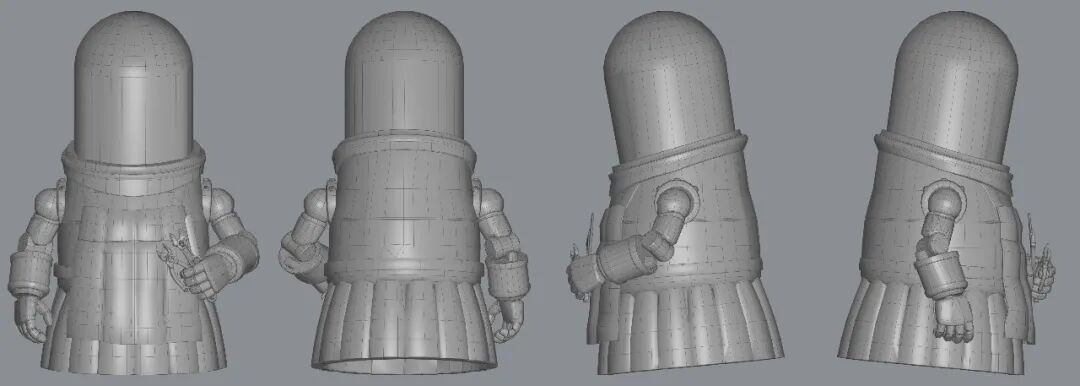
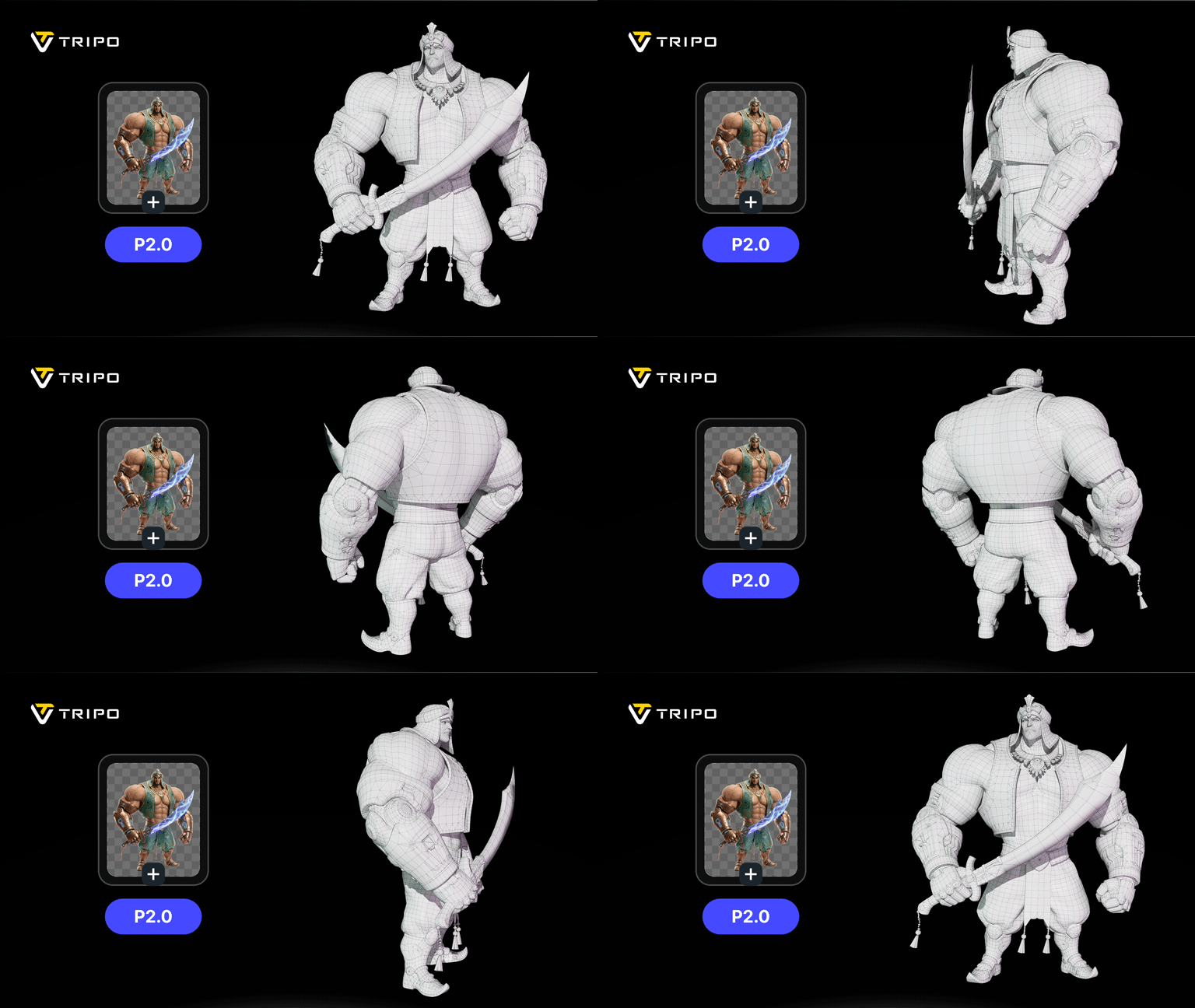
P2.0 Steam-punk-style characters rendered directly
Quad faces have been the standard in film, television, and gaming for decades. The reason they are considered the “standard” isn’t because they are “superior” to triangular faces, but because they are more compatible with subsequent production stages: they facilitate continuous wiring, yield more predictable results during surface subdivision, and are better suited for character animation.Previously, AI was unable to generate quad faces because it first had to create a mesh with irregular faces and then rely on algorithms to retopologize it into quads—which effectively meant going back to the most expensive and least desirable step in the entire pipeline, a process that was both time-consuming and resulted in a loss of detail.
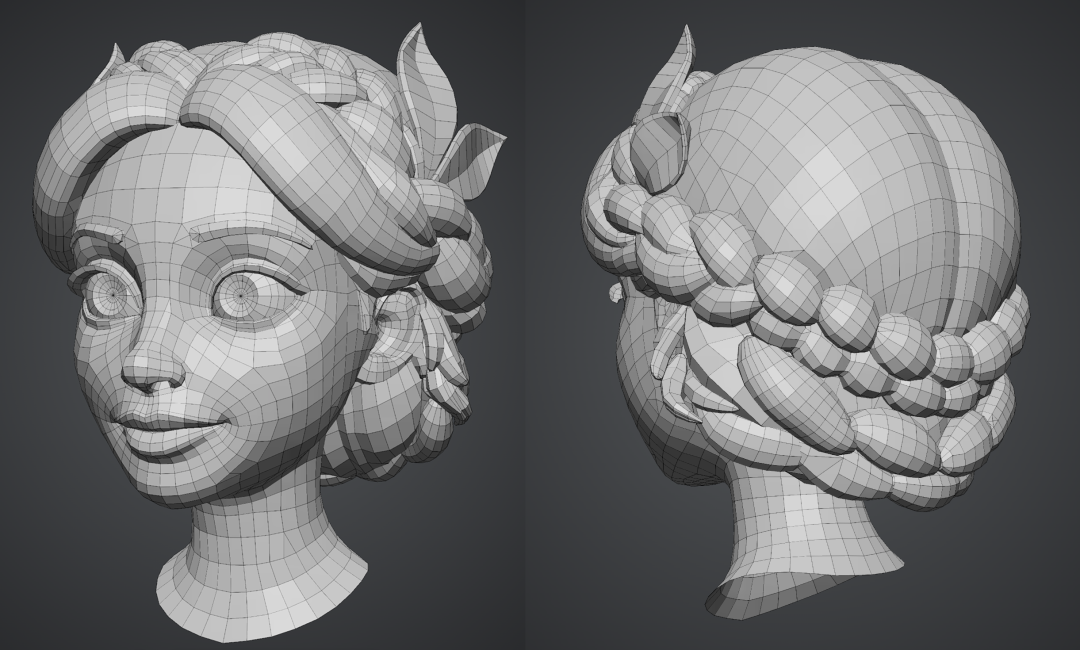
Quadrangular faces make it easier to create continuous animation paths, making them better suited for character animation.
The key difference with P2.0 is that the four-sided faces aren’t modified after generation—they’re generated directly during the process. This is the result of extensive technical development over a long period of time; they have their own proprietary Nexus framework.The industry standard approach is to break down a 3D model into a sequence, generating it character by character—much like writing a sentence one word at a time. Nexus does not follow this “sort-then-write” approach; instead, it generates the whole model first and then refines the details.
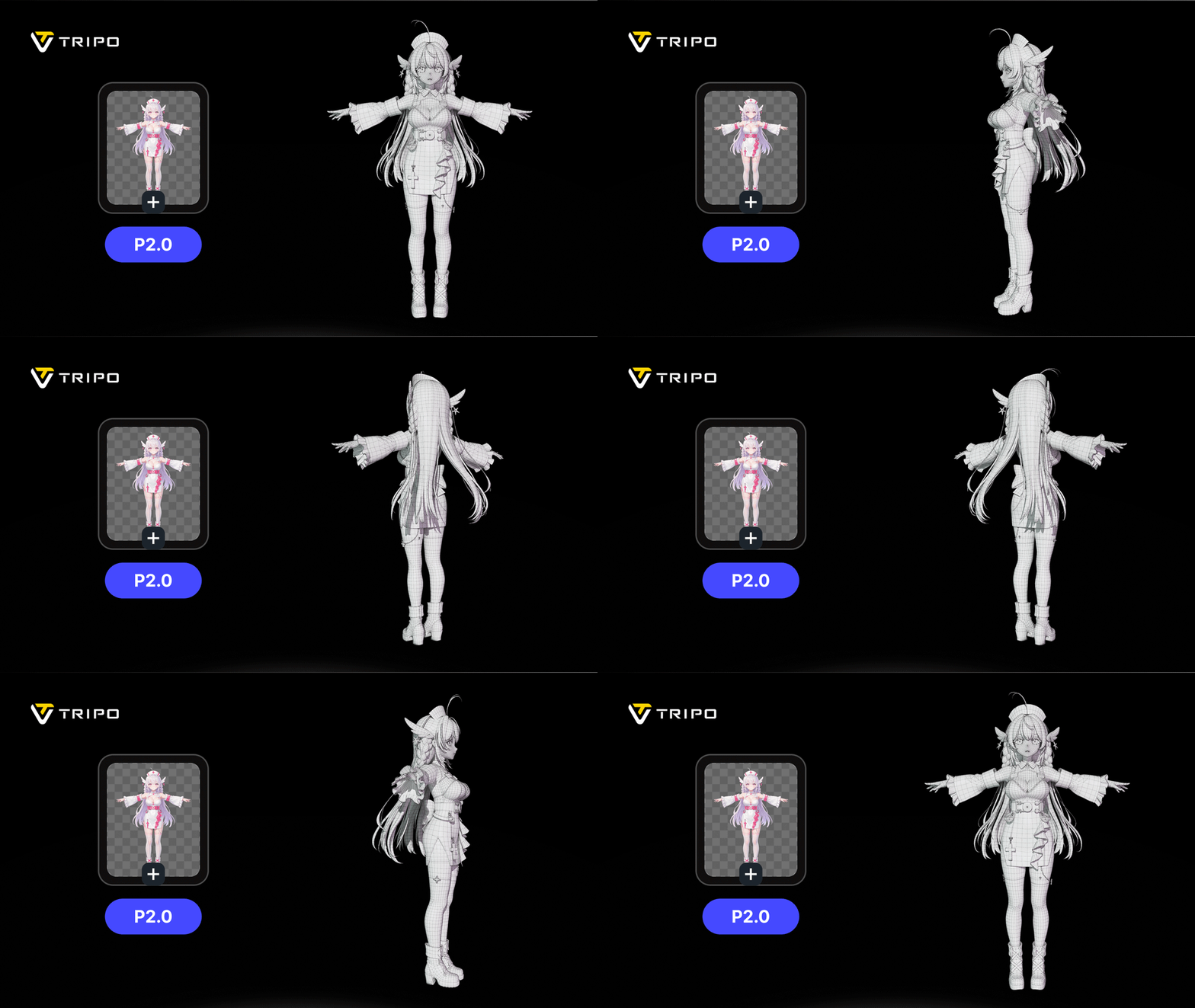
To put it simply, P2.0 no longer generates a messy mesh, but rather an industrial-grade asset that can be directly imported into the engine, edited, and broken down into components. In other words, from the moment it’s generated, it bypasses the most expensive and time-consuming step.
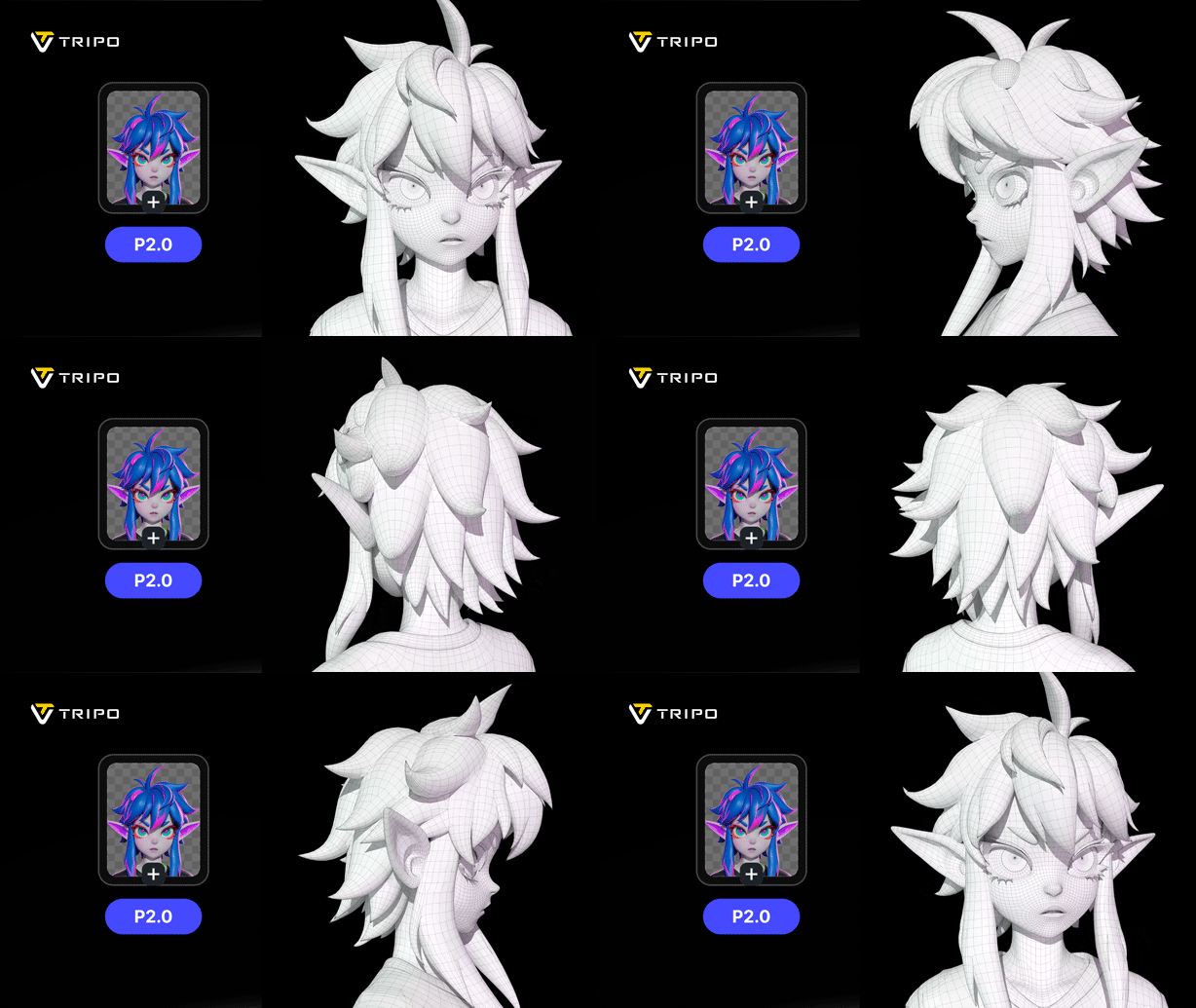
Upload an original illustration to generate a character head model with clean, four-sided edge-painted lines.
Some developers have reported that the time saved on retopology alone is enough to recoup the investment. Other 3D artists have noted that P2.0 delivers significant improvements in hard-surface assets such as weapons, vehicles, and architectural props—with clean surfaces, precise density that matches the level of detail, and sharp, crisp edges.
02
For people and for agents
Earlier, we discussed how people can make better use of AI-powered 3D generation. However, in today’s development workflows, AI is deeply integrated—writing code, configuring engines, and fixing bugs based on runtime results are tasks that AI agents often perform on behalf of humans. In many cases, it’s not necessarily a human who actually invokes the AI 3D generation model—it could just as easily be an agent.
But whether an agent can make good use of a 3D model is another matter entirely. This is because agents and humans “understand” a model in two fundamentally different ways.
For example, when a person glances at a model, they immediately know, “This is a fish, and that’s its tail”—based on what they see and their experience.An agent is different—it has no eyes; it understands only code and bytes, and its understanding of a model can come only from the data in a file. When a model is rendered as data, it consists of a collection of vertex coordinates and geometric shapes, without any semantic information such as “which part is the fish and which part is the tail.”
So when the Agent is presented with a model, it’s a bit like being handed a book with no table of contents or chapter titles, yet being asked to revise a specific chapter or paragraph—it simply doesn’t know where to start.There are some workarounds, such as converting the 3D model into code and feeding it to the Agent, but the conversion process can easily result in information loss, and if the number of faces is too high, it can exceed the Agent’s processing capacity.
Another limiting factor is the Agent’s work pace. It doesn’t generate results in one go, but rather follows a rapid cycle of “generate, review, revise, and regenerate”—much like two people revising a proposal face-to-face, with each round taking just a few minutes. If we had to wait a long time after each generation for manual review and annotation, efficiency would completely collapse.
So, when using 3D for an Agent, there’s actually a set of strict requirements that have nothing to do with how good the model looks: the topology must be clean so that the Agent can clearly see the structure and distinguish between components;the number of polygons must be manageable and the model lightweight enough to handle real-time rendering on the web; more importantly, the model must be semantically divisible into individual parts—if it’s just a box of unnamed parts, the Agent won’t know which one to pick or what logic to apply to it.
Three Essential Conditions for an Agent to Make Effective Use of a Model: Clean Topology, Controllable Number of Faces, and Clear Part Division
This is also the problem VAST is addressing. In particular, it has achieved programmable precision for the last point—“parts with names.”
As accuracy improves, the level of detail in the natural component segmentation (Connected Components) of 3D models generated by Tripo P2.0 also increases, resulting in more reasonable and semantically consistent component segmentation.

The windmill was disassembled into individual parts with semantic labels.
Combined with the native quad-faced surfaces mentioned earlier and the ability to generate models directly based on face count estimates, VAST truly makes 3D-generated models agent-friendly.Quadrangular faces ensure clear structural boundaries, allowing the Agent to identify “which parts are which”; the polygon count limit ensures assets are generated directly in a size that runs smoothly on the target platform; and semantic part segmentation enables the Agent to name components, locate them in the code, and write component-level interaction logic.
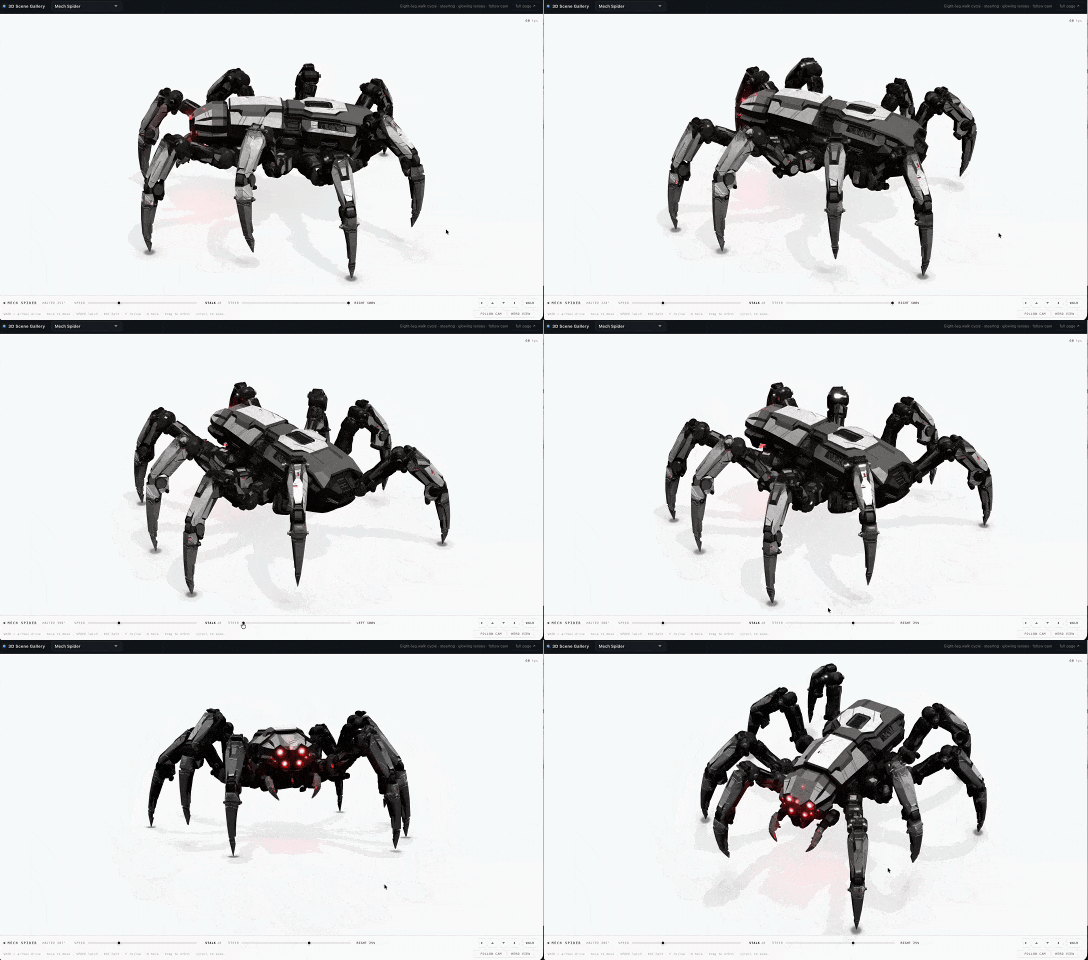
Take an official demonstration as an example: Cao Yanpei, VAST’s chief scientist, used P2.0 to generate a robotic spider, then had a large language model name each individual component, write and debug the motion logic, and control the spider’s animation component by component.
In the hands of external developers, these capabilities have already been turned into fully functional products. One developer used GPT and Tripo to create an interactive educational webpage featuring human organs—users can click, rotate, and explore each organ—and the project was shared by OpenAI co-founder Greg Brockman.

With clean, readable models, combined with the Agent’s ability to write its own code and perform its own rendering verification, it’s easy to imagine that the efficiency of game development and verification will likely increase by several orders of magnitude in the future.
03
From Egg Boy Studio to Industry Investment
The capabilities of AI 3D models are advancing rapidly, and their applications are gradually expanding.
On July 30, the "Egg Party" Egg Workshop launched a 3D model decomposition feature, powered by technology provided by VAST.By generating or selecting a model in the Workshop, users can break it down into multiple independent parts in just a few steps. These parts can be moved, rotated, scaled, or deleted individually, and can also be freely combined with other components.

Generative models can be split into individual components with a single click, allowing them to be moved, rotated, and scaled independently.
With the addition of this feature, AI-generated models are no longer a single, monolithic entity; they have become editable assets that can be modified, rearranged, and used independently. As a result, a castle no longer appears solely as a castle: its walls can be rearranged to form a maze where players must find an exit, and its towers, distributed at varying heights, can create a parkour course requiring consecutive jumps.Previously, a single model had only one purpose, but by breaking it down, it can now be incorporated into more maps and serve a wider range of functions.
Lab demonstrations are a world apart from a production environment with over 100 million monthly active users. For the model provider, launching this feature on DanZai involved overcoming numerous engineering challenges in addition to the technical aspects themselves.With DanZai’s monthly active users consistently exceeding 100 million, the AI capabilities must simultaneously withstand the triple challenges of quality, speed, and cost in an environment characterized by massive concurrent player traffic, mobile performance constraints, and the need for rapid page redirection after a tap.
In fact, VAST and NetEase have a long-standing partnership. In early 2025, based on the Tripo API, *Yan Yun Shiliu Sheng* launched the “Taiji of All Things” feature, allowing players to generate in-game items with a single phrase;In September 2025, Tripo was integrated into Danzai Workshop, allowing players to upload reference images and enter commands to generate cartoon-style models that could be used directly to build maps; with the launch of this latest feature—the ability to deconstruct models—the collaboration has evolved from “AI-generated” content to “AI-editable” content.Over the past few years, each step has delved deeper into NetEase’s game creation workflow than the one before.
In addition, Tripo has been implemented in the workflows of more companies. Prior to this, the company had already provided end-to-end support—from concept generation to animation rigging—to several leading global game developers, enabling rapid scene asset creation, level prototype validation, and comparison of multiple design options, resulting in an overall efficiency improvement of over 50%.
Beyond the products themselves, capital is also entering the market. Over the past six months, 4399, Tanwan, Giant Network, Perfect World, 37 Interactive Entertainment, and Yanqu Games have successively acquired stakes in VAST.Game developers are one of the most important downstream sectors for AI 3D. When upstream and downstream players converge at the same time, it often signals that the technology is transitioning from being merely “usable” to “practical,” and that commercial returns are shifting from theoretical figures to tangible benefits in actual production.
Conclusion
Over the past few years, competition in AI 3D has shifted from “how visually appealing the output is” to “whether it can be integrated into production,” and VAST is gradually bringing AI 3D generation in line with the industry standards of the gaming sector.
Of course, there are still many challenges to overcome before AI-generated 3D content can be fully integrated into the gaming industry’s production pipeline. But as we mentioned at the beginning of this article, after making rapid strides in graphics, video, and code, 3D may be the last tough nut to crack. Now, that nut is visibly starting to loosen.
For VAST, this is just the beginning; its long-term goal is to lower the barrier to “building a world” so that anyone can get started. Perhaps we can truly look forward to a future where everyone can create their own game.
原创文章,作者:游茶妹儿,禁止转载:https://youxichaguan.com/en/archives/220714