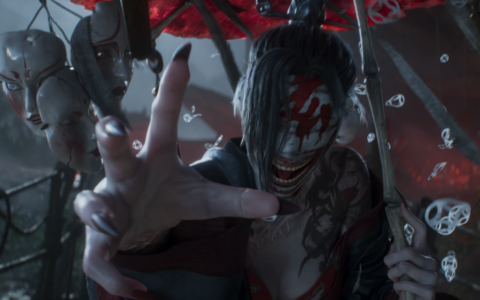
In December 2025, NetEase’s wuxia open-world RPG *Where Winds Meet* achieved another major success in overseas markets, with strong performance across both mobile and multi-platform channels, establishing itself as a benchmark for the global expansion of Chinese gaming culture.

According to reports, the game was developed by Everstone Studio, a subsidiary of NetEase, and had already demonstrated strong competitiveness on PC and console platforms: After the international server launched on November 15, 2025, the number of players on Steam surpassed 500,000 within 40 minutes,with a peak concurrent player count of over 140,000 on the first day and a cumulative player count exceeding 2 million within 24 hours. Subsequently, the peak concurrent player count on Steam surpassed 250,000, placing the game in the Top 3 on the global best-seller list;On consoles, it also successfully entered the Top 10 bestsellers on the North American PlayStation Store and was voted “Best New Game” for November 2025 by PlayStation players. As of December 14, the total number of players across all platforms for the international version had surpassed 15 million, achieving rapid user growth in just one month since launch.On December 12, the mobile version of *Sixteen Sounds of Yan Yun* officially launched on iOS and Android platforms overseas. During the 24-hour pre-download phase, it topped the free app charts in over 50 countries and regions, including Tier 1 markets such as the United States, Japan, and Singapore.Overseas players have showered the mobile version with praise, with some users noting that “it runs as smoothly as a dream on an older iPhone” and even describing its performance as “better than the PS5 Pro.”This success is attributable to NetEase’s in-depth optimization for mobile devices—the project team leveraged the experience gained from operating the game in China and continuously adjusted the game to accommodate hardware differences across a wide range of overseas device models. Wen Jie, the head of publishing, also stated that “optimization will be a long-term endeavor,” highlighting the company’s commitment to player experience.

As a Chinese wuxia-themed game, *Sixteen Sounds of Yan Yun* has not only broken into new audiences with its gameplay but has also earned global recognition for its technology and cultural essence.The game utilizes the “Messiah” engine, developed in-house by NetEase over a decade, which supports seamless cross-platform play across PC, consoles, and mobile devices. It not only recreates grand scenes such as Kaifeng City and a real-time ecosystem featuring tens of thousands of AI NPCs but also employs detailed physical rendering to showcase intricate details like embroidered clothing and the play of light and shadow;At the same time, the game incorporates traditional wuxia moves such as pressure-point strikes, Tai Chi hand techniques, and wall-running, while also using panoramic digital scanning to recreate ancient paintings—including *The Night Banquet of Han Xizai*—and 1,200 cultural artifacts, allowing overseas players to experience Chinese aesthetics through interaction.Although the game faced skepticism during its initial launch due to cultural differences (for example, IGN initially gave it a score of only 6), it ultimately made a comeback thanks to its quality. Among the 78,000 reviews on Steam, it has an 88% “Most Positive” rating,with 98% of those reviews coming from players who do not speak Simplified Chinese. The United States has become its largest overseas market for the PC version (accounting for 37%).
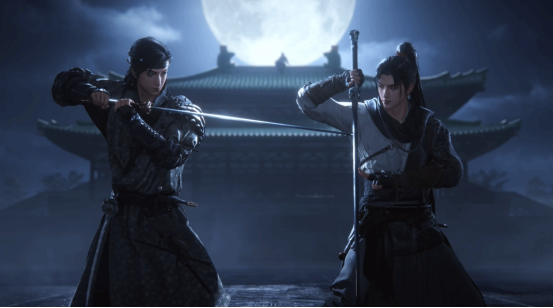
Notably, at the TGA 2025 awards ceremony held in December, *Sixteen Sounds of Yan Yun* released a brand-new trailer, revealing the new map “Kaifeng Imperial Palace” and footage of the popular character “Chu Qingquan” making an appearance—even though this character had previously “exited the stage” due to a plot-driven death,it remains unclear whether this appearance is a flashback or a “resurrection,” but it has already heightened players’ anticipation. NetEase CEO Ding Lei previously emphasized during the Q3 earnings call that *Sixteen Sounds of Yan Yun* is “the first major Chinese game to successfully bring the Chinese wuxia genre to an international audience,”and its ongoing content updates—such as the upcoming “Kaifeng Imperial Palace” gameplay and the foreign diplomacy system—will further promote Chinese wuxia culture to a global audience.
原创文章,作者:gallonlabs,禁止转载:https://youxichaguan.com/en/archives/213728