The moment that first made me realize just how “cyber” this year’s ChinaJoy was happened while I was waiting in line to try out *Resisters*.
The player in front of me had a somewhat odd gait as he walked. Upon closer inspection, I realized his lower body was actually wearing a powered exoskeleton. He told me it wasn’t a cosplay prop, but genuine equipment that could be rented at a very affordable price right at the venue entrance—specifically designed to make walking around the expo a little easier.Further ahead, robots were engaged in a martial arts battle at the Yushu Technology booth, while cosplayers dressed as robots flashed by in the hallways from time to time. A wide variety of AI exhibits and futuristic technological elements were on display throughout the halls of the Shanghai New International Expo Center.

This year’s ChinaJoy has adopted “Exploring with AI” as its official theme—the first time the event has featured a specific technology as its theme. Players seeking pure gaming fun may feel that this year’s ChinaJoy lacks some of the traditional “gamer vibe”; however, for those in the gaming industry, the event’s theme resonates widely.
At this very moment, the industry needs a platform where everyone can come together to discuss the future of AI, and the appeal of this flagship exhibition is precisely what brings together explorers who are otherwise scattered across different companies and sectors.
In particular, after walking through the entire CJ event, I had two pretty distinct impressions.
First, “people are on the same page”—compared to a little over half a year ago, when most industry professionals still felt some degree of fear and career anxiety about AI at events like GDC, everyone’s attitude is now much more composed.At dinner gatherings these days, casual conversation has shifted to topics like “Which model offers better value for the work it does?” and “Which harness is easier to use?” After all, as AI continues to evolve, tangible productivity gains will naturally win people over.
At business matchmaking sessions, investors pulled producers aside to ask how their teams use AI; whether a team “thinks like an AI” has become a key factor for many investors in assessing the value of a game project.There have been significantly more foreign attendees at the CJ venue this year than in previous years. Although it is generally believed that overseas companies take a more conservative approach to AI, many of them have actively asked me during conversations, “How do Chinese companies use AI?”
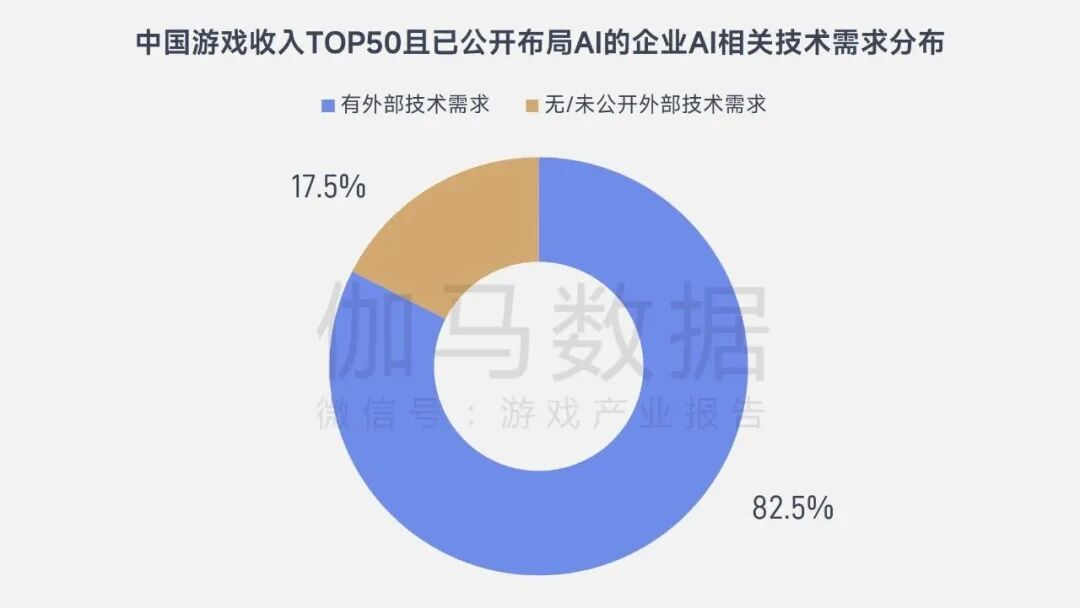
According to the *2026 China Gaming Industry AI Development Report*, 80% of the top 50 gaming companies in China by revenue have initiated AI-related initiatives, and nearly 60% have publicly announced the establishment of AI labs or dedicated teams.
Second, “there are more directions”—regarding exactly how AI will transform the gaming industry, the industry spent the past two years largely feeling its way forward from scratch, but at this point, many things have become clear.
Many vague goals have been broken down into clear propositions and incorporated into specific processes; in some areas, there are even consensus-driven directions where several companies are competing against one another.All six of CJ’s industry summits this year revolved around the overarching theme of “AI-Driven Digital Content Creation,” with representatives from many major game companies taking the stage to present case studies and share in detail how they are using AI to overhaul their operations.
As Sun Shoushan, Chairman of the China Audio-Video and Digital Publishing Association, said at this year’s CDEC conference: “AI is no longer a nice-to-have option, but rather a standard infrastructure that empowers industrial development, and it is comprehensively reshaping the entire process of game content production, R&D, operations, and user services.”
And these brand-new AI trends, consensus points, and propositions are precisely what make this year’s CJ so noteworthy.
01
From AI-driven game development to content equity, the gaming industry is heading in different directions
One perspective that’s definitely worth exploring is the dramatic changes currently taking place in game development. When it comes to using AI in game development, the approaches presented by various companies this year have clearly undergone a transformation.
For example, on the first day of ChinaJoy, I ran into the head of LAP at the Tencent Games booth—LAP is an end-to-end AI-powered asset creation and management platform for high-quality 3D games developed by the Photon Studio Group—and she shared some data with me:In Photon’s current R&D efforts, LAP has already delivered efficiency gains ranging from 20% to 95% across various stages of the development process. Assets such as 2D, 3D, and special effects created with LAP’s assistance are now featured in products from various partners.
This year, Tencent Games set up a "Tencent Giant Ship" in the ToC exhibition hall. In addition tofeaturing game IPs such as *Honor of Kings* and *Operation Delta*, half of the booth’s space was dedicated to showcasing AI—four AI tool platforms: LAP, MagicLomix, MagicDawn, and Code Name: Craft—as well as three AI-powered apps: *Digital Jingdezhen: Porcelain Capital Artisans**Cat Immortal Chronicles*, and *Humans Can’t Fly*—all lined up in a row, clearly demonstrating the importance that a major tech giant like Tencent places on its AI strategy.
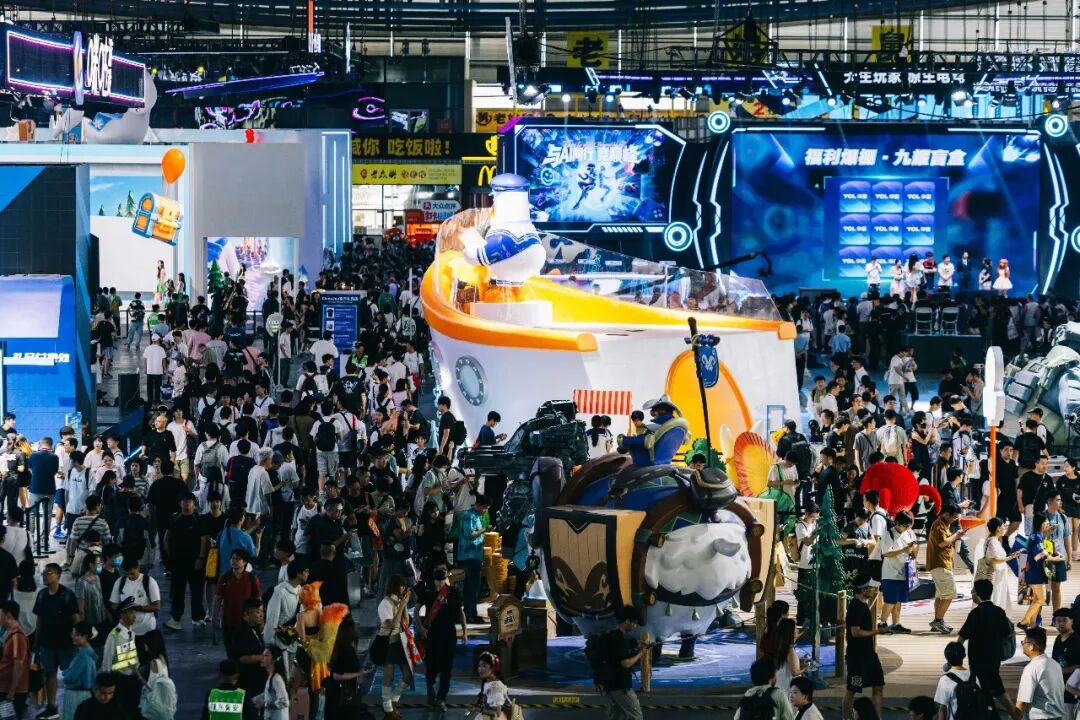
At the Tencent Games Exhibition Area
Products like LAP represent a direction that embodies the “big-company ethos”: serving large-scale, high-specification 3D projects, aligning closely with R&D needs, and using AI to build a new generation of industrial infrastructure.Its predecessor was LightAI, an AI-powered creative platform originally developed for Photon’s internal use. Working closely with a talented development team, it underwent three to four years of rigorous testing. Through successive rounds of project requirements, production feedback, and workflow challenges, the platform was refined to meet genuine industry needs.
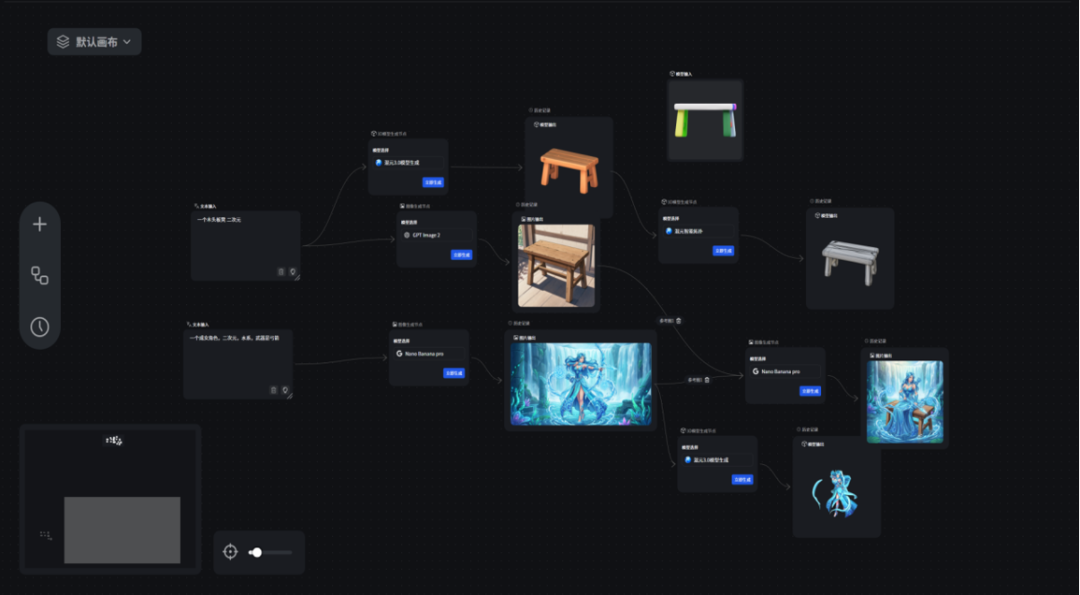
Take, for example, the work they’ve put into the “canvas.” Most AI image-generation workflows on the market still rely on prompt-based “lottery-style” generation, whereas LAP uses a node network to control local generation—allowing for fine-tuning of details such as lighting direction and local adjustments.It can also integrate the entire asset production workflow—from concept to 3D model—onto a single canvas, reducing communication friction between departments. By delivering more controllable generation results and higher-quality final outputs, LAP meets the massive content supply demands of service-oriented games.
Similarly, at this year’s CIGDC, NetEase’s Fuxi Lab, miHoYo’s *Honkai: Star Rail* project team, as well as 37Games,Kaiying, shared or unveiled practical applications such as AI-enhanced game production pipelines and AI large models for the entire R&D process—this type of AI implementation naturally aligns more closely with the goals of major companies.
In terms of resources and patience, it’s not difficult for them to drive this kind of iteration over the long term—packaging AI capabilities and internal expert knowledge into tools, stringing those tools together into workflows, integrating those workflows into a platform, and ultimately transforming them into industrial-scale capabilities across the entire organization.Once implemented, the advantages are clear: they can be seamlessly integrated into the pipelines of existing long-running games, delivering immediate value. This is also another consensus-driven direction that major studios have begun pursuing once again following the previous wave of industrialization.
An interesting contrast can be found at the other end of the spectrum. “One-line game development” products aimed at novice and new developers also garnered significant attention at the event—this year, Tencent’s project codenamed “Craft,” TapTap Manufacturing, Baidu Cloud, and SOON (incubated by Kaiying) all showcased similar solutions at the New China International Exhibition Center.Even large-model companies like Kimi (the “Dark Side of the Moon”) recently launched an AI-powered game creation and publishing platform. The fact that so many players are vying for dominance is, in itself, a sign of industry consensus.

Long lines formed in front of the "Code Name: Craft" booth, mostly made up of casual gamers: they entered their game ideas into a dialogue box, the system suggested viable directions, and after a few rounds of dialogue, a game plan was finalized and turned into a complete game. The most common comment heard as people left was, “I never thought I could make a game, too.”
The output of such platforms currently cannot be compared to that of mature commercial products. The optimism surrounding them stems from their structural significance—they have redefined the path by which a game is created. Structural changes often give rise to entirely new content. For example, the head of Project Craft is very confident in his assessment: he believes that on such an AI game development platform, “entirely new AI gameplay will inevitably emerge.”The logic is sound: lowering the barrier to entry for development and enabling more people to participate in game creation will significantly increase the number of gameplay ideas produced each year, greatly raising the probability that previously unseen concepts will emerge.
Furthermore, AI capabilities have significantly lowered the barriers to entry across various roles—as this trend continues, the emergence of “super-individual developers” becomes a possibility: a single person can simultaneously handle parts of the responsibilities of roles such as game designer, artist, programmer, and producer, effectively becoming a micro-game studio.Creative capabilities that once relied on large organizations are now being redefined and redistributed through AI.
A prime example can be found right at the Tencent Games booth: their game *People Can't Fly* is not only innovative in its gameplay but was also created by a single "super individual" using AI-assisted code generation.
When these two most striking examples are compared side by side, the trend becomes clear: by 2026, the industry’s exploration of AI in R&D will be becoming increasingly in-depth and multifaceted—no longer focused solely on “reducing costs and improving efficiency,” but rather on different value orientations tailored to specific scenarios.Solutions targeting mature pipelines have delivered value sooner, while creative platforms have the potential to generate incremental growth for the entire gaming market over the long term.
They represent two distinct approaches to platform capabilities, and there are many more specific avenues for exploration between these two models.
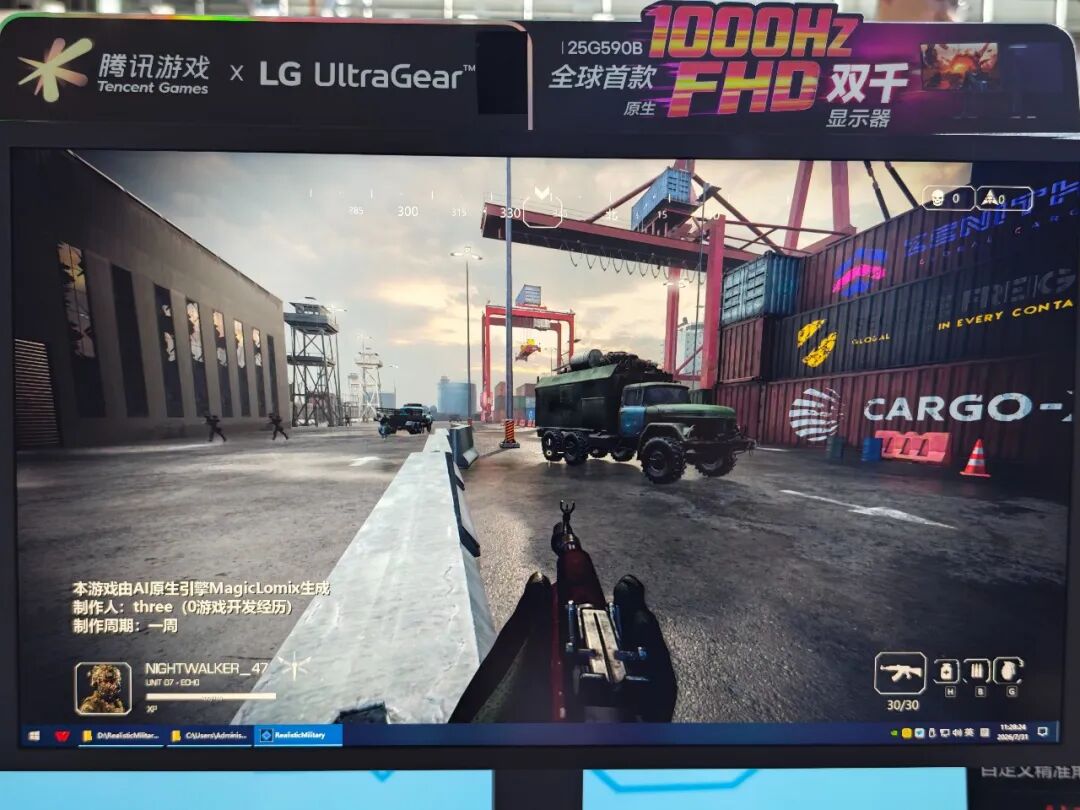
For example, at the MagicLomix booth, I saw that even developers with zero experience can currently use MagicLomix to create a small-scale, fully 3D, photorealistic FPS or games in various genres—such as simulation, management, or SLG—in about a week.They are also continuously iterating on their capabilities, with the long-term goal of building an original, domestically developed AI-native 3D game engine—one that is independent of Unreal Engine and Unity and free from the technical debt associated with these classic engines.It’s not just about creating a “one-line game development” platform; rather, it’s about integrating the expert knowledge Tencent Games has accumulated over the years into a skills system through AI, to build an engine that serves small and medium-sized teams as well as long-tail developers and enables “content equality”—an approach that could potentially usher in a new paradigm for game engines.

Product Managers for Tencent Games' MagicLomix and MagicDawn Give Live Interview on CCTV
CJ’s B2B business negotiation area was even more “crazy.” AI-driven user acquisition tools, AI-powered comic and drama creation platforms, AI-powered interactive film and game editors…The third-party service providers occupying this section of the venue have plastered the term “AI” all over their various solutions. Although these solutions aren’t part of the core R&D pipeline, many service providers are already using AI to help major companies carry out real-world business operations such as marketing and operations—which just goes to show that the integration of AI and gaming can take countless forms.
After four days, my understanding of the industry’s current attitude toward AI has evolved significantly—these changes are often hard to notice because this AI boom is largely incremental:It’s not like when smartphones replaced feature phones—a “overnight revolution” at a specific point in time—but rather a gradual permeation, one scenario at a time. From the AI role-playing games of the chatbot era, to coding in the Cursor era, to the Lobster Agent for office automation, as AI capabilities improve, they are gradually integrating into and reshaping the way people work and play in their daily lives.
On the game development side, however, the question has quietly shifted: it’s no longer “whether to use AI,” but “how effectively to use it.” One clear trend is that the underlying technology is becoming increasingly robust; whereas the industry once competed on creativity and innovative ideas, companies are now waging a battle centered on platform infrastructure.
Events like CJ offer us a concentrated window of opportunity for observation. On this gradual curve of AI evolution, the goal of “enabling game developers to use AI” has already been largely achieved in many respects; meanwhile, “enabling more people to experience AI” is the challenge that must be addressed in the next phase.
02
The Second Half of AI-Native Gaming
But to be honest—compared to the rapid strides made on the supply side, we haven’t yet seen any significant breakthroughs in AI gameplay at this year’s ChinaJoy alone.
In addition to the AI gaming products showcased at the Tencent booth mentioned earlier, this year’s ChinaJoy featured the inaugural “ChinaJoy Next Play” innovation experience zone, where a total of 70 AI entertainment and gaming products were on display—a record-breaking number—and attracted a large number of players eager to try them out.Teahouse Editor also got to try out quite a few AI games. The vast majority of these products were created by independent developers or startups, and it’s common for their quality to vary widely. While some of these products have already gained a modest reputation within the AI startup community, they haven’t yet achieved results that are sufficiently impressive compared to traditional products.

However, it is also clear that many changes are brewing beneath the surface. The increasing number of AI-driven creative games on display is the most obvious sign of this change—it indicates that AI-native games have moved beyond the “sporadic breakthroughs” of just a few titles seen in the past two years. Now, more and more people are getting involved, and a broader front is beginning to emerge.
The applications of AI technology have also become more diverse.
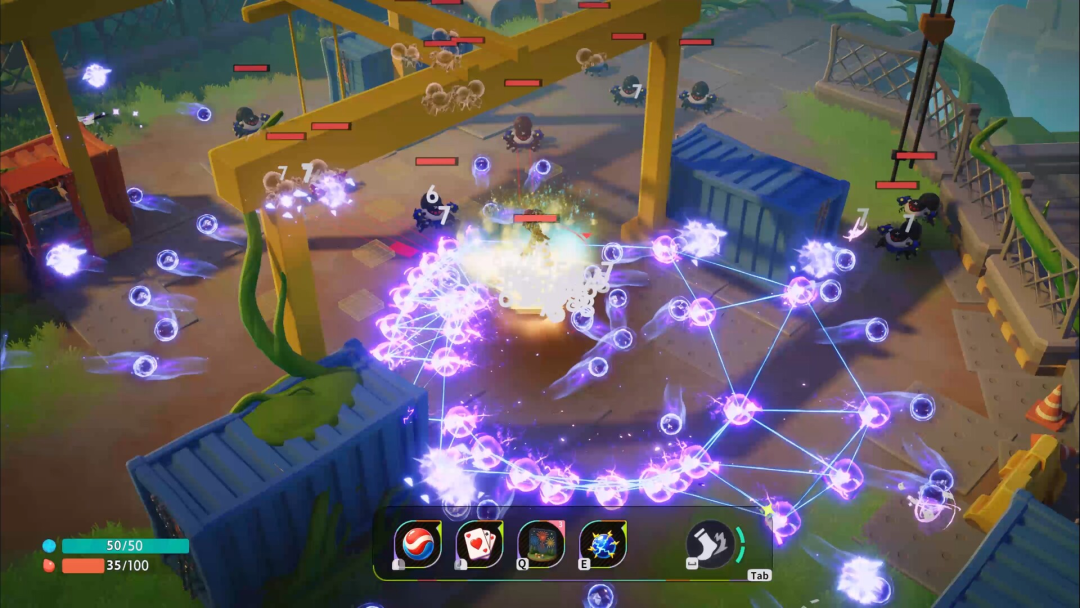
One particularly noteworthy experiment is Meshy’s *Black Box: Infinite Construction*—Meshy trained an AI model specifically for this game, not to generate images or text, but to generate “skills”: Players can freely combine skills from the game, and the model helps generate an entirely new skill.This kind of experiment—based on training a large language model—hasn’t been done by anyone else, and very few studios are capable of pulling it off.
Judging by the 70 products on display, a significant portion of them go far beyond the early days of conversational AI. From 3D generation and video generation to agents and infinite world generation—many terms that once appeared only in summit presentations are now being presented to players for the first time in a hands-on format.Compared to many early products that used AI merely as a gimmick, things have changed significantly: there are now more building blocks to choose from, and the scope for gameplay design has naturally expanded—a development that in itself attracts explorers to the field.
An AI-native game developer shared his perspective with me. He believes that, to date, AI-native games have not only been constantly evolving but have also undergone two major iterations: the first generation involved adding AI gameplay elements to traditional game frameworks, such as card games and RPGs;the second generation consisted of agent-interaction games like *Agentank*; and the third generation is already beginning to emerge—products that leverage AI’s infinite generative capabilities to reconstruct “Player Fantasy.”He believes that, aside from the lack of technical validation for high-concurrency AI at large scales, third-generation products—which represent the current state-of-the-art—are already very close to the ultimate form of AI-native games.
Reality may not unfold exactly as this developer envisions, but those in the thick of it do indeed have a clearer perspective. Several AI game developers have also shared similar views with me: “Only products that wouldn’t work without AI can be called truly AI-native games.”
These shared perspectives reflect a new consensus emerging in the AI-native gaming sector regarding the next phase—one that goes beyond simply stitching together games and AI to pursue the entirely new forms of enjoyment that arise from their interaction.
While some AI products are still in their early stages, they are indeed showing the potential to become breakout hits.Take, for example, *Cat Immortal Chronicles*, a new concept game featuring a female-oriented AI agent developed in-house by Tencent, which Tea House recently covered—they offered their first in-person hands-on demo at ChinaJoy, and based on the actual experience, it’s already quite close to the new generation of AI games mentioned earlier that “reimagine players’ fantasies based on AI capabilities.”
This is a single-player narrative RPG that blends Daoist culture with animal elements, set within a 49-day day-night cycle: the main story progresses during the day, while free time begins at dusk, when the AI Agent’s casual gameplay unfolds.The team’s goal is to create a “human-like” experience. To achieve this, they built a proprietary model, but the dialogue is underpinned by a vast amount of world-building text; the total volume of in-game content and the training data used to create it exceeds 1 million Chinese characters.
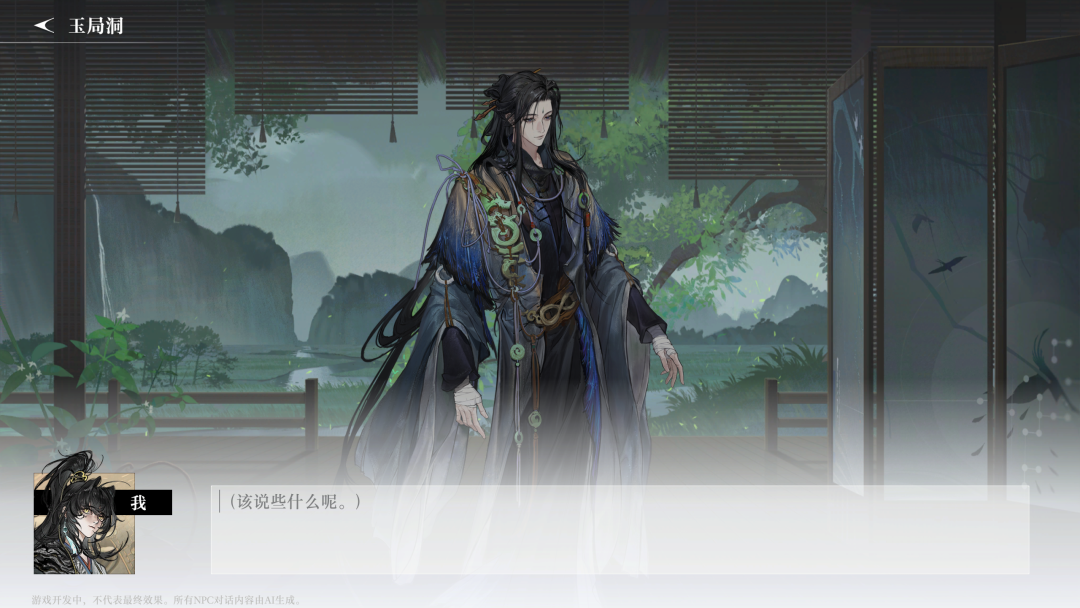
Behind every line spoken by an Agent lie countless sleepless nights spent by the copywriters.This hard work has yielded a qualitative transformation: In *Cat Immortal Chronicles*, affinity is no longer a fixed value but is determined comprehensively by the AI Agent—even if two players make the same choice in the main storyline, their endings will differ based on their interactions during the evening, thereby reshaping the way players immerse themselves in the game’s world.This offers a potential breakthrough from the limitations of traditional female-oriented narratives—which are often thin—or the "beat-it-and-forget-it" mentality common in RPGs. And as we can see, *Cat Immortal Chronicles* has not only drawn long lines at offline events, but its first teaser post on Xiaohongshu has repeatedly surpassed several thousand likes.
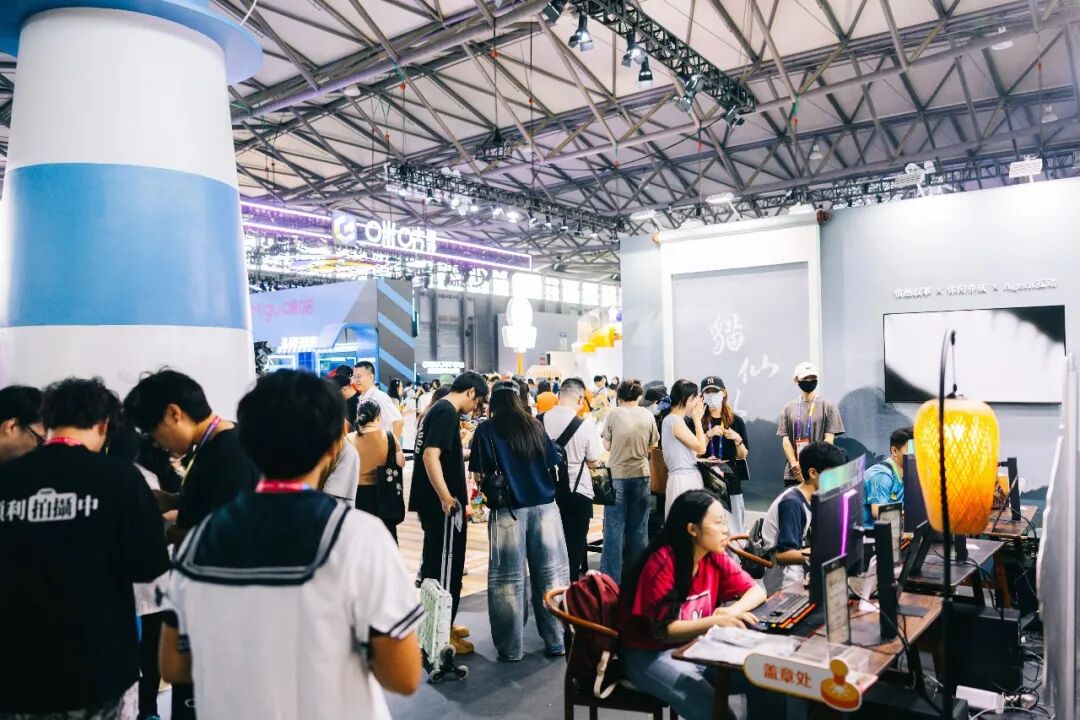
The "Cat Immortal Chronicles" Booth at the CJ Expo
This provides strong evidence that AI applications that truly add to a game’s enjoyment are those that players can actually perceive.
Tencent’s *Digital Jingdezhen: Little Artisans of the Porcelain Capital*, showcased at this event, is another representative example. Just last week, the “Handicraft Porcelain Heritage of Jingdezhen” was successfully inscribed on the World Heritage List, becoming China’s 61st World Heritage Site, and this mini-game—the world’s first to commemorate a World Heritage inscription—was launched simultaneously.
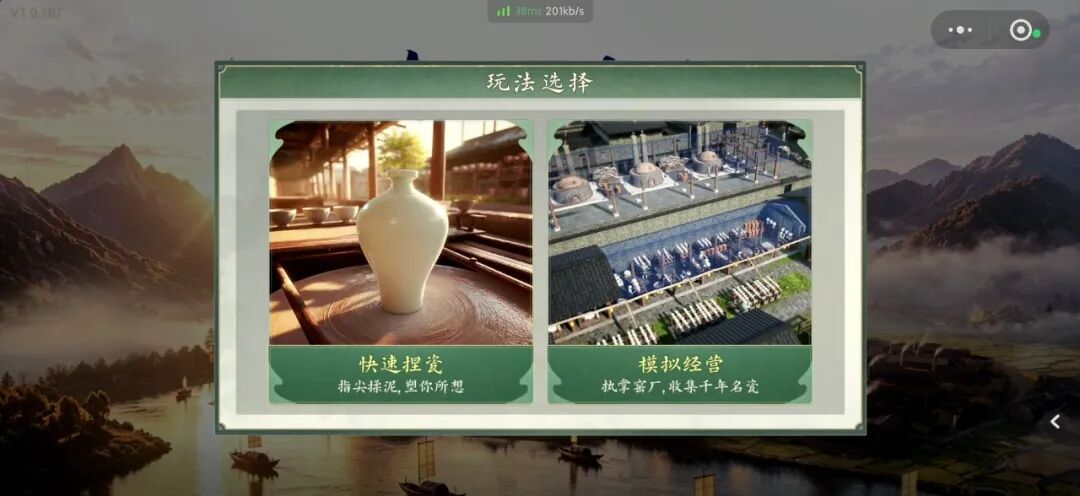
This game features a high degree of AI involvement in its interactions. Tencent Games, the Tencent SSV Digital and Cultural Lab, and the Jingdezhen authorities have collaborated to use AI and PCG technology to “bring back to life” long-vanished kilns, workshops, and docks in the digital space;AI avatars built on a three-tier technical architecture bring dry porcelain history to life; players can also use AI-powered 3D image-to-3D generation capabilities to create their own porcelain blanks by simply uploading a sketch.This demonstrates that AI-driven game products can deliver mature content and create highly polished, internally consistent experiences, while validating the feasibility of new AI technologies and pioneering innovative interactive gameplay. As we observed on-site, *Digital Jingdezhen* attracted spontaneous interest from many players and media outlets, and most offered positive feedback after trying it out.
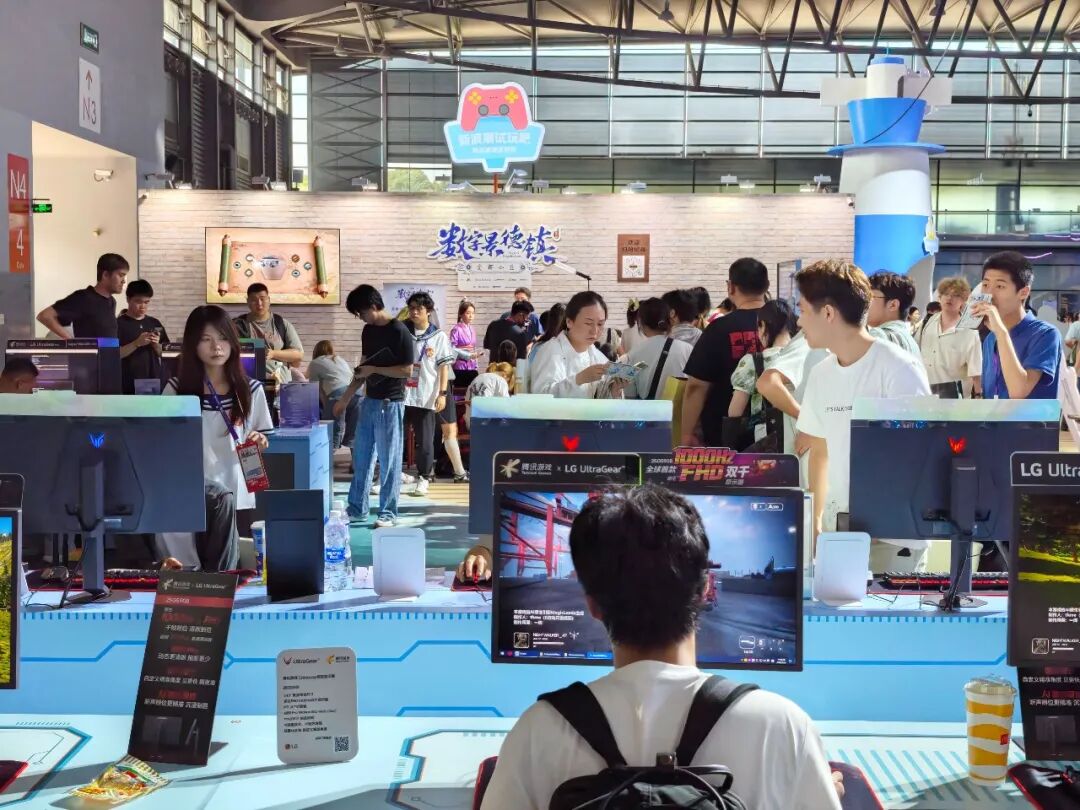
There’s also an even earlier example. A few months ago at GDC, I heard Xue Bing, Deputy Director of Game Design for *Peace Elite*, share a set of figures: their AI NPC gameplay had attracted a cumulative total of 110 million users, with a peak of 17.7 million daily active users.The significance of these figures lies in the fact that they prove that, in games with high DAU, AI is not merely a nice-to-have Easter egg, but a “legitimate gameplay feature” that tangibly drives session duration and social engagement.
When you put this trend into context alongside the examples mentioned earlier, the picture becomes a bit clearer: whether it’s AI-native games or innovations that combine AI with existing gameplay, both approaches already have representative products that are beginning to be put to the test by real players.
Of course, objectively speaking, the “ChatGPT moment” for AI games has not yet arrived. However, breakthroughs have indeed occurred within certain limited areas. There is only one question left to answer: What kind of gameplay can become even more mainstream, gain long-term acceptance among players, and deliver sustained results? Only time will tell.
And this year, for the first time, the contours of this issue have begun to emerge—not because of the sudden emergence of any single product, but because the industry’s collective investment has reached a new level.
03
A Marathon
The biggest change at this year’s ChinaJoy is that, within a centralized venue, a strong signal of prosperity is being conveyed—AI is being recognized as a prominent theme, allowing those working across various sectors of AI gaming to connect with one another;Regarding how to approach topics such as “AI-driven pipelines” and “AI-native gameplay,” people have already reached some preliminary consensus and identified a general direction. This consensus, in and of itself, is highly significant.
Both AI and gaming are highly technology-intensive industries—a major leap forward in these sectors rarely depends on a single breakthrough by one company; rather, it requires long-term efforts by a large number of participants, followed by a waiting period until a certain point in time when the transition from quantitative to qualitative change is achieved.
This is most evident when it comes to major tech companies like Tencent. The reason Tencent is now able to offer platform solutions for UGC, asset generation, and management—and enable its AI-native games to generate value ahead of the curve—stems from years of in-depth, long-term development grounded in the practical needs of its production pipeline; many of the seeds for this were sown long ago.
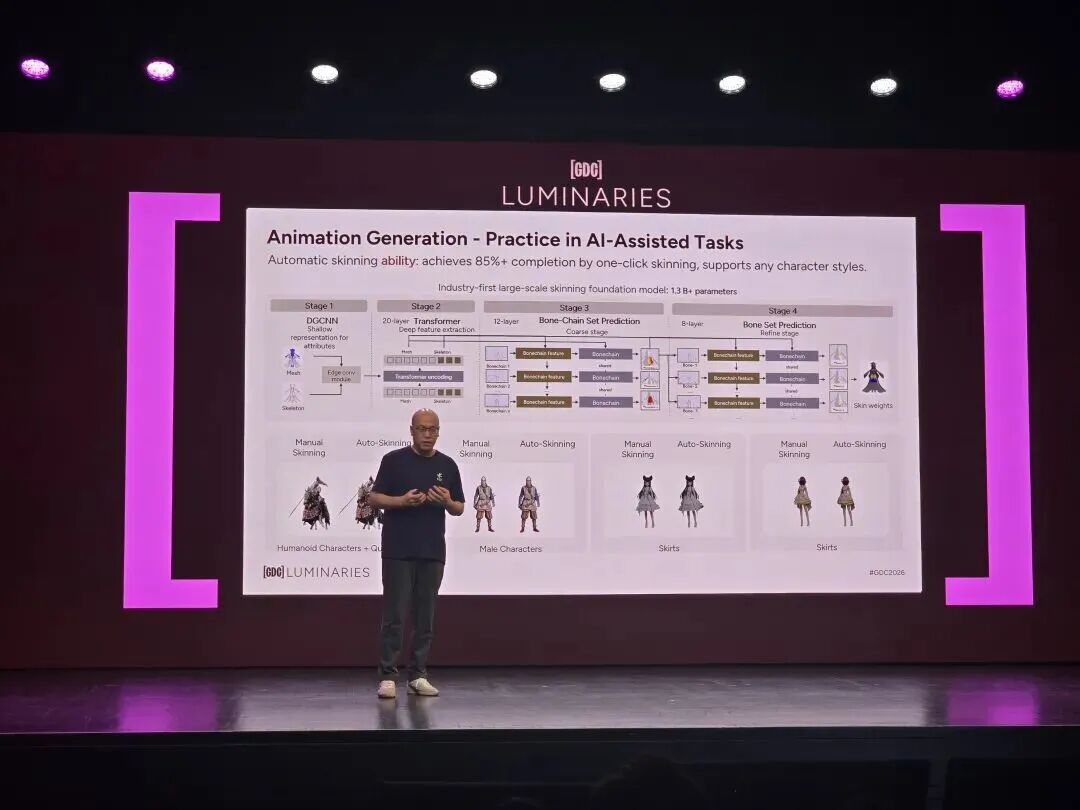
Chen Dong, Head of Public Technology at Tencent Games, Delivers a Keynote Speech at the GDC Summit
At last year’s Gamescom, they unveiled a suite of AI tools covering the entire game art workflow, reducing character animation production time from 3 days to 15 minutes;At this year’s GDC in March, 21 of Tencent’s nearly 40 presentations focused on AI—from automatic skinning to anti-cheat systems—all delivering concrete, practical solutions that demonstrated “what problems they can solve.”A closer look at the products showcased this time reveals the concrete origins of the phrase “long-termism”: MagicDawn, Project Craft, and *Digital Jingdezhen: Little Artisans of the Porcelain Capital* all made their grand “One More Thing” debut as the closing acts at Tencent’s SPARK conference in May.
Other major companies capable of achieving AI-related breakthroughs today have, in fact, followed a similar trajectory in the past.For example, NetEase’s recent successes in overhauling its AI pipeline—which have allowed games like *Jade Dynasty* and *Sixteen Sounds of Yan Yun* to gain widespread recognition thanks to AI systems such as intelligent NPCs—can all be traced back to the forward-thinking efforts of the company’s game AI research institute, Fuxi Lab.
Many solutions that seem mature today may not yet be the final word, and approaches that have yet to yield results are not necessarily proven wrong. In another year, this systematic exploration may give rise to a qualitative breakthrough—just as large language models have exhibited intelligence as their parameter counts have increased. The true variables lie in time, so seizing the moment has become the top priority.
After touring the event this year, my biggest takeaway is this: it’s becoming increasingly difficult to view games and AI as two separate fields developing in parallel. If, in recent years, pioneers in game AI were digging wells in isolation, then this year’s ChinaJoy gave us our first tangible sense that these wells are now merging into a river.
In other words, the golden age of game AI development is right now.
原创文章,作者:游茶妹儿,禁止转载:https://youxichaguan.com/en/archives/208816

![[Cape of Good Hope] Chen Yu of Tencent’s Photon Studio: Can Mobile Esports Match PC Esports?](https://youxichaguan.com/wp-content/uploads/2015/11/14466302435772-3-480x300.jpg)