Earlier today, the list of winners for this year's TGA awards was officially announced.
I’m sure everyone saw the specific list of award winners yesterday. Aside from *Tidehunter*, which won the “Voice of the Players” award, this year’s TGA had little to do with Chinese gamers. But if we take a step back, we can actually see the bigger picture.
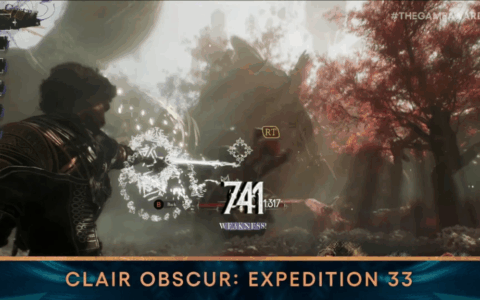
Take Geoff Keighley, the founder of TGA who knows traffic better than anyone—this year, he employed a strategy of “forcing a cult following,” allowing the French game *Expedition 33* to sweep nine awards, causing discussion to skyrocket overnight.It’s not that *Expedition 33* isn’t a good game, but it’s somewhat “undignified” that masterpieces like *Kingdom Come: Deliverance 2*, *Death Stranding 2*, *Shadow of the Twin Peaks*, and *Soul of Mount Sheep’s Hoof* ended up going home empty-handed.
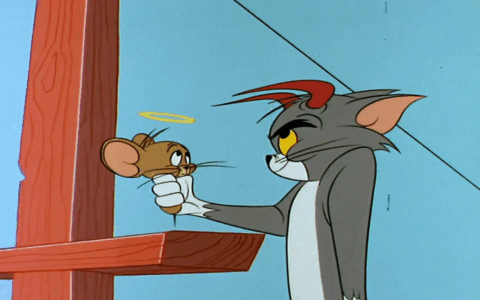
The official *Kingdom Come: Deliverance 2* account sent well-wishes to the French, but players weren't having it
After *Expedition 33* won “Best Game Direction,” Hideo Kojima clapped reluctantly
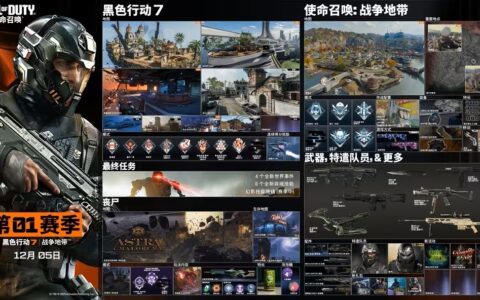
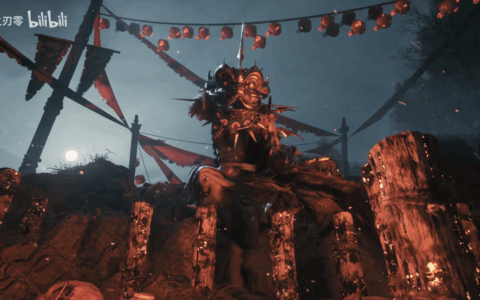
There were quite a few domestic games featured in the video showcase, such as *Arknights: Endland**Shadow Blade Zero* announced its release date, *Escape from Yakov* unveiled a new content trailer, and Tencent-backed Larian Studios revealed its new title *Divinity*, among others. However, these felt more like “firefighters” rushed in to save the day—they were among the few highlights that carried the entire new game announcement segment.Coupled with the annual nominations lineup featuring the lowest concentration of blockbusters in history, as well as massive controversy surrounding the award presentations, the entire ceremony was permeated with an indescribable sense of awkwardness—as the largest gaming awards show on the planet, it was certainly a grand affair, yet the highlights ended up being the game trailers.
What's more, this year, viewers' "biting critiques" of the TGA awards have been both more numerous and more scathing than in previous years.
For example, in Geoff Keighley’s annual audience vote on the social media platform X, only 40% of viewers gave the TGA a positive rating this year, while as many as 35% of gamers gave it the lowest rating of “D”—a far worse reception than in previous years.
In the past, people would mostly argue about whether certain awards were well-deserved or if there were too many commercials at the TGA, but this year, gamers’ questions have struck a deeper nerve—“What exactly is the TGA’s significance to the industry?” “Does its prestige live up to the hype?” “Why do gamers need the media to teach them how to play games?”…And when such skepticism gradually spreads from the views of a few to become a global consensus, it will evolve into a collective demystification that directly undermines the TGA’s future viability.
Several media outlets, including The Verge, The Gamer, and The Escapist, have collectively criticized the TGA this year.
Taking a broader view, Tea House believes that players’ dissatisfaction with the TGA can no longer be resolved through adjustments made by the TGA itself—the entire Western gaming industry, which is currently teetering on the brink of collapse, is the “root of all evil” behind this situation.
01
Supply collapses, authority erodes…
Have Major Western Blockbusters Entered the “Age of Decline”?
This really isn’t an overinterpretation. If Geoff Keighley is the head chef of the TGAs, then the lack of “ingredients” (game titles) is undoubtedly one of the reasons this year’s awards ceremony fell flat—throughout 2025, not a single game emerged that could be considered a definitive, blockbuster hit like*God of War 4* or *The Witcher 3*—and the lineup of nominees for Game of the Year even had to rely on AA titles and indie games like *Hades 2* and *Expedition 33* to hold it together.
Moreover, this is no fluke. For example, aside from the Chinese title *Black Myth: Wukong*, which burst onto the scene out of nowhere, last year was also a decidedly slow year for major Western releases. Looking ahead at the upcoming release schedule for major titles, sequels to major IPs continue to dominate, while original new games remain scarce.Coupled with large-scale layoffs and capital withdrawals that have persisted for nearly three years, the Western gaming industry is currently in an unprecedented and seemingly endless slump.
This inevitably brings to mind a “sharp commentary” from Owen Mahoney, the former CEO of Nexon, who recently argued that the AAA gaming industry is on the decline.This industry heavyweight, who once steered a company worth 100 billion for over a decade, concluded—after interacting with countless investors and producers—that one reason the Western gaming industry is heading toward its demise is a core problem that has remained unresolved for decades: “an excessive obsession with Hollywood.”
Owen noted that all major Western AAA game publishers were founded before the Internet era; they rose to prominence in their early days by emulating the film industry, and their operational models closely mirror those of 20th-century movie studios.Many job titles and team structures are modeled after the film industry, characterized by a highly “top-down” approach—emphasizing large-scale industrial mass production, with “cinematic-quality graphics and sound” held up as the gold standard; yet at the same time, senior executives at these companies are extremely averse to investment risks.Consequently, just as movie studios milk a major IP franchise for more than a dozen sequels, the approval of AAA game projects is increasingly focused on “playing it safe.”
Video games have “superseded” movies as the entertainment medium of the new generation, yet game companies have, paradoxically, inherited the outdated production system from the film industry—one that emphasizes supply-side efforts while intentionally or unintentionally distancing itself from its customers (audiences/players).
The TGA is a “showcase” that epitomizes the Western gaming industry’s fascination with Hollywood.
Geoff Keighley has never made a secret of the fact that they are directly modeled after the Oscars. And the TGA embodies all the “old-school” traits of the Oscars: an emphasis on the industry, authority, and a highly centralized structure.A committee of “authorities” and media figures controls the entire process; celebrities are invited to present awards on stage; and the level of participation by the general gaming public is deliberately kept to a minimum (player votes account for only 10% of the total in each TGA category).
The very categorization of the awards reveals many signs that the TGA is merely “trying to imitate others.” For example, while the Oscars’ main event is Best Picture, the TGA has “Game of the Year”; while the Oscars present awards for Best Actor and Best Screenplay, the TGA has categories for Best Performance and Best Narrative.Particularly baffling is the “Best Game Direction” category, which mirrors the film industry’s “Best Director” award—yet most mass-produced video games lack the “auteur” elements typically associated with film directors.Consequently, the “Best Game Direction” and “Game of the Year” awards lack distinctiveness; both broadly recognize “outstanding games,” and there is significant overlap in the nominees and winners each year, rendering the separate awards virtually meaningless.
In 2024, the nominees for the TGA Best Game Direction Award (Part 1) and Game of the Year (Part 2) were exactly the same, and the ultimate winner of both awards was *Cosmic Robot*.
There are also differences compared to the Oscars. For example, the TGA also presents awards in specific gameplay categories based on the characteristics of the games.However, the actual award categories often fail to keep pace with changing trends—for instance, genres like fighting and racing, which bear distinct hallmarks of the early console and arcade eras, now see only one major title emerge every few years, yet the TGA still maintains separate awards for them;and the “Best Simulation/Strategy” game category clearly favors the PC gaming market.
In addition to Riot Games' "2XKO," this year's "Best Fighting Game" category features a large number of remakes of classic titles.
Just by looking at the gameplay categories for the annual TGA awards, it’s hard to discern emerging industry trends—such as service-based games gradually becoming mainstream or mobile games rapidly dominating the new gaming culture—nor can one identify gameplay genres like horror games (e.g., *Deadly Corporation* and *Content Warning*) that are quickly capturing the market.All of this diminishes the TGA’s intended role as a “barometer of the industry.”
In addition to issues with the award categories, there is also the annual, inevitable controversy over the choice of presenters.
There are roughly two categories. One involves debates over nomination criteria—for example, from *Stray* in 2022, to *Diver Dave* in 2023, and on to this year’s *Expedition 33*, nearly every “Best Independent Game” in recent years has prompted players to ask, “What exactly makes it ‘independent’?”Then there’s the controversy sparked last year by the TGA nomination of *Elden Ring: Shadows of the Golden Tree* regarding whether DLC should be eligible for nomination.
Another category involves controversies surrounding the nominees; for example, *Umamusume*, which launched in Europe and the U.S. this year, beat out *Genshin Impact* and *Naruto: Storm* to win the Best Mobile Game award, and this year’s *Expedition 33* also clearly received some awards that didn’t reflect its actual merit.
There’s also the question that still stings for Chinese gamers: “Why didn’t *Black Myth: Wukong* beat *Robot Universe*?” Meanwhile, *Fortnite* has been nominated for “Best Ongoing Game” for the eighth consecutive year—which brings us back to a topic constantly discussed by gamers:the TGA’s excessive focus on Western games, while “turning a blind eye” to the outstanding titles from Asia—particularly China and South Korea—that have risen rapidly in recent years.
You’ll find that when the TGA judging panel attempts to apply the award system they’ve “designed” to the complexities of reality, it results in numerous discrepancies and misalignments. Meanwhile, the players who witness all this have no say in shaping the TGA’s selection criteria, and their voting weight pales in comparison to that of the media jury.Ultimately, the increasingly intense negative public sentiment each year is brewing a clear reputation crisis for the TGA.
Of course, for a long time, the top-down “Hollywood model” in the Western gaming industry was quite effective—by having corporate executives continuously increase investment in AAA game development to enhance the polish and visual appeal of games, it truly provided players with a sense of novelty in an era when “spectacle” was scarce.This includes Geoff Keighley himself; you can’t help but admire his ability to navigate the gaming industry with finesse and attract endorsements and support from all corners of the industry.
However, in this era of explosive growth in new forms of entertainment, the lengthy response cycles inherent in a “top-down” model—coupled with the “arrogance” of senior decision-makers who lack deep engagement with, or even actively shut out, player feedback—will ultimately cause R&D teams to drift further and further away from consumer needs, making failure inevitable.
Just look at how Hollywood movies have been forced into a steady retreat by short videos, with U.S. box office revenues faltering for years; even the Oscars—the film industry’s most “authoritative” award—have seen their viewership plummet by three-quarters over the decade since 2010, causing their public influence to shrink significantly.
Viewership Trends for the Oscars from 2010 to 2020
With the advent of the mobile internet era, a large number of legacy centralized systems have been swept away by information and new forms of entertainment. The gaming industry is not only no exception, but some of its pioneers have already been “washed up on the shore”—for example, E3, once the world’s largest gaming expo, made a quiet exit;The Game Developers Conference (GDC), which has long been regarded as the “authoritative voice” for game developers, is also facing a “low-attendance crisis” this year due to declining participation numbers. As a result, organizers have been forced to launch a new brand called “GDC Fest” in an attempt to attract more developers and players to attend.
An op-ed in *The Guardian* on GDC's performance in recent years
Therefore, all signs point to the fact that while the credibility of what appears to be merely a single TGA award is gradually crumbling, what is actually happening simultaneously is that the old system of an entire generation of the Western gaming industry is being resisted by a “rejection reaction” from the new era.
However, deconstructing a system inevitably leads to its reconstruction, which in turn raises new questions: In the wake of TGA, what kind of game evaluation criteria do we need?
02
The overlooked power of players is the key to unlocking the next era
The essence of this question, however, reflects another issue: What kind of future values should the gaming industry embrace? In my opinion, we don’t need to speculate about the answer—there’s already a successful example right in front of us.
During the roller-coaster ride of the global gaming market from 2021 to 2025, the concurrent user count on the Steam platform, operated by Valve, grew steadily by 60% (from 25 million to 40 million).Recent data revealed that Valve’s annual revenue reached $17 billion, with Steam alone contributing $16.2 billion.
Trends in Concurrent Users on the Steam Platform Over the Past Five Years
Just last month, a group of European and American gaming executives took part in a survey, and 70 percent of them believed that Steam currently holds a “monopoly.” However, after this result was reported by the media, it was actually the gamers who were the first to come to Steam’s defense. This shows that gamers see Steam as the embodiment of the future they desire.
What is Steam’s “classification system”? Let’s look at an example to understand it—just as the TGA has its own award categories, Steam also has its own game classification system, known as the tag system (Steam Tags). On the Steam platform, there are nearly 500 game tags used to categorize games.
These tags weren’t systematically planned by Steam employees; rather, they’ve been gradually “refined” over the nearly ten years since the tagging system launched, thanks to the collective efforts of players across the platform—as a player, you can add custom tags to any Steam game to help others make informed purchasing decisions;You can also submit original tags, which, through collective player voting, may be selected as official tags—which is why the tag list continues to grow every year.
This system illustrates, on a small scale, how Steam’s philosophy stands in stark contrast to that of the TGA and the Western gaming industry: it is bottom-up and user-driven. By establishing mechanisms that allow the player community to form a “self-sustaining cycle,” Steam makes player consensus the primary driving force behind the development of the entire platform ecosystem.
Therefore, compared to the TGA’s “ridiculous” award categories, Steam’s tags are far more detailed and better reflect the reality of gameplay.In addition to standard top-level categories like “Action” and “RPG,” you can filter games by visual style—such as “pixel art,” “top-down view,” and “anime-style”—or by theme, such as “dinosaurs” and “zombies”;or even explore categories based on the mood and atmosphere you’re looking for while playing, such as “heartwarming,” “fun,” “dark humor,” and so on.
Simon Carless, an indie game data analyst, believes that Steam’s tag system is more complex and sophisticated than that of almost any other platform; at times, it may even seem somewhat informal and unstructured, but that is precisely where Steam’s strength lies. In Simon’s view, Steam tags are a treasure trove worth exploring in depth. This reflects the consensus among many analysts in the gaming industry.
For example, when a developer is looking for inspiration for a new project, they can use big data search analysis—combined with the correlations between various tags and estimated game sales figures—to identify opportunities for innovative gameplay combinations. For instance, would a roguelike game be more popular with players if it had a dark fantasy style or a cute, cartoonish style? Steam tags can be used to make a preliminary assessment of this.
You can also trace the annual evolution of Steam tags to identify turning points in industry and genre trends—such as “Escape Shooter,” added in 2023; “Roguelike Card-Building,” added in 2020; and “Battle Royale,” added in 2018.It’s fair to say that Steam tags are like a mirror polished by the collective efforts of all players, using just a handful of keywords to accurately and dynamically reflect players’ in-game experiences at every moment.
The "Made with AI" tag, newly added to Steam in 2025, reflects a new industry trend of AI involvement in game development and has been well-received by players.
This bottom-up, player-centric approach ties together every aspect of the Steam platform and makes the entire development and distribution process on the platform more organic and user-friendly.
For example, this highly informative player tagging system is also used by Steam in its algorithmic recommendation system. Not only does it enable more precise recommendations, but Steam also maintains a recommendation system that does not incorporate paid rankings; exposure is driven entirely by big data combined with behavioral data such as players’ wishlist additions and game reviews.This minimizes the noise from marketing campaigns and significantly lowers the “financial” barrier for teams competing in the market.
Every year, the Steam platform produces a few small-scale smash hits like *Vampire Survivors* and *Deadly Corporation*; after going viral, these games often go on to influence and pioneer entirely new gameplay genres.These games aren’t just “lucky” flukes; they tapped into players’ underappreciated needs, which were then identified and amplified by Steam’s recommendation system.
Then there’s player-generated content (UGC)—among today’s mainstream gaming platforms, Steam was one of the first to support mod creation and to recognize and embrace the creative potential of its players.As Valve founder Gabe Newell explained long ago: “We can compete with Bungie, Blizzard, or any other company when it comes to content, but we won’t try to compete with our own user base—because we know we’d definitely lose.”
Mod support has been a key reason for the massive popularity of *Escape from Yakov* this year.
Back then, the Half-Life Mod Workshop gave rise to blockbuster hits like *Counter-Strike* and *Garry’s Mod*.Today, many games use the Creative Workshop to break through the limitations of a single-player game’s lifecycle and achieve long-term popularity; even Valve’s own *CS:GO* and *Dota 2* rely on the Creative Workshop for a significant portion of their maps, mods, and other content provided by players.
The wide range of community management tools that Steam provides to developers—such as Early Access, developer livestreams, community discussion groups, and online testing features—have significantly transformed the relationship between game developers and players, bringing the two sides closer together. Players now enjoy greater transparency, while developers are able to adjust their course based on player feedback, allowing them to move forward more steadily and achieve greater success.
As a result, we’ve witnessed a historic turnaround like that of *No Man’s Sky*, which, through persistent long-term updates and player engagement, ultimately transformed from a “flop” into a “masterpiece.” This represents not only an opportunity for developers but also a prime example of how players, through their collective efforts, can reshape the gaming industry.
03
A Time of Change and Unchanging Values
In addition to Steam, there are countless other examples demonstrating that, compared to the top-down production model of the previous era, the “bottom-up” model is rapidly taking over the gaming industry. User-driven UGC platforms such as Roblox and Fortnite have become some of the industry’s fastest-growing sectors in recent years.
We are at a turning point between two eras in the gaming industry—it is undeniable that industry trends are shifting from being driven by supply from major studios to being driven by player demand. And players, who are closer to the games themselves, often have a better understanding of where the tide is heading than senior executives at game companies.
In a recent interview, Owen Mahoney recalled that when he secured Nexon’s investment in Embark Studios, he faced significant skepticism and pressure from the board of directors and other executives.Even though Embark Studios was already recognized as a high-potential GaaS team in the Western gaming industry, and GaaS was widely acknowledged as a major trend, it wasn’t until *ARC Raiders* sold over 4 million copies in just a few weeks that “people finally realized investing in Embark Studios was a good deal.”
"ARC Raiders" Wins This Year's TGA Award for "Best Multiplayer Game"
Owen remarked, “This industry will stubbornly cling to a belief until you throw other possibilities right in its face.” And the “paradigm shift” the industry now faces represents a crisis for Western game developers—the collapse of their established path—while for Chinese developers, it presents an opportunity for a complete reshuffle and a chance to leapfrog the competition.
Where do our opportunities lie? In these complex times, let’s return to the essence of gaming: fun and sophisticated gameplay, and fresh, engaging experiences—these strengths, which resonate with players’ intuitive sense of what makes a game great, will always be the “hard currency” of the gaming industry.
When it comes to identifying new trends in gaming based on player demand, Chinese developers have actually been ahead of the curve for many years. For example, Chinese companies—Tencent being a prime example—began using Steam as a monitoring tool early on, focusing on gameplay mechanics and targeting core development teams to carry out long-term investment strategies.
According to reports, starting in 2016, Tencent’s internal research team began monitoring Steam’s tag system.They soon discovered a strong correlation between the three tags—“open world,” “survival,” and “building”—which were also showing significant growth. Consequently, they combined these three to propose the new concept of the SOC genre and incorporated it into their strategic roadmap—three years before Steam officially added the “open-world survival building” tag.
Main Steam Tags for "Rust," the Hit Survival Game on Steam
Building on the success of the Steam label, Tencent discovered and invested in several high-potential overseas studios over the next few years, producing multiple SOC hits—including *V Rising* and *Dune: Awakening*—that each sold over a million copies.
From “discovery” to “incubation,” and then to “going viral.” The entire process is actually quite similar to how FromSoftware spent more than a decade turning the “high-difficulty, niche” Souls-like gameplay into a Game of the Year,titles like *Dark Zone Breakthrough* and *Operation Delta* brought search-and-destroy gameplay out of “hardcore circles” into the mainstream—a process later echoed by *Escape from Yakov*, which was adapted into a hit single-player game. Only by deeply specializing in a niche and closely observing players can one capture these fleeting gameplay opportunities emerging from the player community.
This also reflects the high effectiveness of “bottom-up” thinking in the investment sector. For example, Savvy Games, a subsidiary of the Saudi sovereign wealth fund, recently stated that in its investments in recent years, it has emulated the investment approach exemplified by Tencent.Tencent’s strategy has long been “out in the open”—it consistently supports the top teams in each sector, providing them with the necessary backing to grow and become stronger.
For example, the founder of the Polish game studio Techland recently stated in an interview that, following their acquisition by Tencent, they received a great deal of valuable advice from an outside perspective. For instance, Tencent helped them build a data analytics team from scratch to collect player feedback and improve their games.Funcom CEO Rui Casais also highly praised Tencent’s recommendation to “streamline strategy and focus on core IPs.” Both the former’s *Dying Light: Beasts Within* and the latter’s *Dune: Awakening* have set new sales records.
The former head of "World of Warcraft" recently retweeted an interview with Liu Ming, CEO of Tencent Interactive Entertainment's International Business Division, and Musk commented, "Tencent Games has impeccable taste."
Meanwhile, in terms of product development and operations, while major Western AAA studios have repeatedly faced setbacks in their transition to the GaaS model, Chinese developers have long achieved countless milestones thanks to their “Chinese-style service”—such as the recent breakthrough success of *Sixteen Sounds of Yan Yun* in overseas markets,*Love & Deep Space* sparked “collective empathy” among female players overseas with its period-tracking feature; and *Operation Delta*, which addressed up to 200 player requests daily during its overseas beta testing, has left international players thoroughly impressed.
This is no longer simply a matter of upgrading game services and building closer relationships with players; at its core, it taps into the R&D logic behind the next generation of products in the gaming industry—just as Steam, as a platform, grew driven by its player community, Chinese developers have become highly skilled at finding ways to let games and communities grow together, and even go a step further to break the cycle of game lifespans and achieve “evergreen” status.
As I sit down to write this, reflecting on the achievements of Chinese game developers in recent years, I can’t help but recall myself staying up late in 2019 to watch the TGA—envious of Japanese developers who could create masterpieces like *Sekiro: Shadows Die Twice*, and constantly discussing how Hideo Kojima broke the mold with *Death Stranding*.Back then, on gaming forums everywhere, “How far behind is China’s game industry?” was a hot topic of discussion. Sony, Ubisoft, Activision… these were still names we could only look up to in awe. Developing mobile games as contract manufacturers for top overseas IPs was already considered a major project at the cutting edge of the domestic industry.
Yet just a few years later, as the overseas gaming industry found itself in turmoil, Chinese games such as *Genshin Impact*, *Black Myth: Wukong*, and *Operation Delta* took the world by storm one after another. Behind this phenomenon lies the full maturation of the Chinese gaming industry’s “bottom-up” business model and its increasingly evident global leadership.
The aura surrounding the old-guard TGA figures is fading, while new value is emerging in the East. There is no doubt that Chinese games—which “understand players better”—are currently facing their greatest opportunity ever.
原创文章,作者:游茶妹儿,禁止转载:https://youxichaguan.com/en/archives/213710