It has been some time since Yuelongyin Studio’s *Ring of Fire* was officially released.
During this period, this second-tier game—which no one had high hopes for—delivered results that matched those pessimistic expectations: it was nowhere to be found on the best-seller charts, and the player review sections on platforms like TapTap were flooded with negative reviews.
However, given the game’s frequent bugs, incomplete voice acting, and even the lack of fixes for the announcement UI, I find it hard to defend *Fire Ring*.
In terms of quality, this game certainly doesn’t live up to the expectations it has built up since its initial reveal in 2021, thanks to its art style—though those expectations have long since been all but worn away by the lengthy wait and four rounds of testing.
Numerous reports have already provided detailed accounts of how *Ring of Fire* and *Moonlit Lament* went from being highly anticipated to ending up in this predicament.
In short, it was a team that was far from mature, which, caught between massive funding (from DiDi) and the market’s overwhelming hype (driven by the initial buzz surrounding the trailer), found itself mired in a six-year development hell. Yet even after such a long time,*Fire Ring* still failed to deliver the changes and improvements in gameplay and player experience that players had come to expect.
The root cause of this problem is closely tied to internal dysfunction within “Moonlit Chant”:A classic case of management breakdown—where an inexperienced producer and a highly paid, newly appointed lead designer engaged in “flattery toward superiors and exploitation of subordinates”—led to the departure of numerous key staff members amid ongoing internal strife. As a result, the project lacked both experienced judgment and a core team of executors at a critical stage. Ultimately, the game’s core framework was repeatedly scrapped and rebuilt,and its direction wavered repeatedly—a situation that not only drained funds and time but also exhausted players’ patience.
After the investment boom in the second-tier game market subsided in 2021 and 2022, *Ring of Fire*’s high valuation actually became an obstacle to the project’s next round of funding. Disagreements over distribution partnerships also left the project without channel support. Ultimately, the producer was forced to sell his home to raise funds and handle distribution independently, leading to a rushed release of a hastily patched version that no longer possessed the luster of the once-celebrated title.
In the comments section of the first PV for *Ring of Fire* released in 2021, there are still quite a few players who feel disappointed.
As for the internal issues with *Moonlit Chant*, I’m sure there’s no need for me to elaborate further. As for the game’s performance since its official launch, I don’t think it can be described as “sincere.” The restrained distribution of in-game rewards and the drastic nerfs to character stats have caused the game’s already tarnished reputation to plummet even further.
So, at this point, there’s no need to discuss what’s wrong with *Ring of Fire* and *Moonlit Chant*, or how they should be revised to revive this project riddled with flaws.
What I’m trying to say is that, in a sense, the six years from the greenlighting and development of *Ring of Fire* to its open beta fully spanned the evolution of China’s anime-style gaming industry—both in terms of player attitudes and market investment and financing.
This, along with the many indie games that have failed this year, proves that the era when indie games—especially those of small to medium scale—could carve out a niche for themselves based solely on their art is now a thing of the past. Their demise marks the resounding crack of the indie game bubble bursting in the post-*Genshin Impact* era.
01
In the past, for quite some time, there was essentially only one criterion for evaluating anime-style games: art.
At that time, anime and manga culture had not yet become as mainstream as it is today; anime and manga games were often still viewed as a niche genre by fans of the genre.
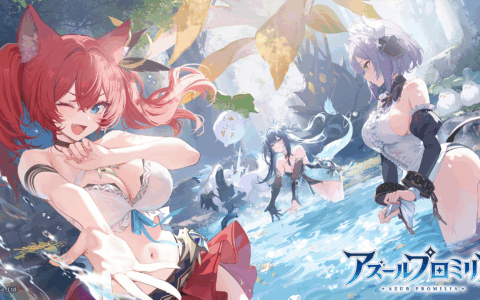
Basically, as long as a game combines “art + a specific theme,” it can gain a firm foothold in the market. *Honkai Academy*, *Azur Lane*, and *Girls’ Frontline* are representative examples from this period; their gameplay isn’t complex, and their early operations weren’t particularly systematic or refined.
Back then, there weren’t many mobile games—especially domestically developed ones. Due to the scarcity of options, players would generally stick with a game as long as its art style appealed to them, while factors like gameplay, rewards, and the developer’s approach to operations were generally considered secondary in their evaluation criteria.
The real turning point in this situation came after the launch of *Genshin Impact*, which raised public perceptions of the anime and manga industry to a whole new level; most importantly, it directly sparked a widespread investment boom in the anime and manga sector.
According to an investment and financing report compiled and released by Game Tuo in 2021, 24 of the industry’s investment and financing deals in the first half of 2021 alone were related to the anime and manga sector, accounting for the highest share at 18 percent, while the remaining categories collectively accounted for the rest of the 82 percent.
This investment boom has spurred the development of numerous second-tier games, and players of these titles are enjoying an unprecedented golden age. With such a wide variety of products on the market,the casual game market is gradually becoming player-driven. To attract players, capable top-tier developers have begun transforming casual games into high-budget titles. Development costs for casual games are rising steadily; in addition to art, developers are finding every possible way to “pack in features”—as this is the only way to capture players’ attention.
As a result, 2D games gradually shifted their focus from the creation of individual character art to refining the overall narrative and world atmosphere. Art remains important, but it has become a prerequisite rather than the ultimate goal.Throughout this process, players’ motivations for playing anime-style games and their emotional attachments to the genre have also shifted. Players have begun to prioritize whether developers can consistently tell a compelling story within a given world and whether the game is fun to play; factors such as in-game rewards and game mechanics have also become integral components of the evaluation system for these games.
As time went on, the survival of the fittest in the indie game sector became increasingly fierce. With the successive releases of games like *Honkai: Star Rail*, *Zero Zone*, and *Mingchao*, the indie game industry officially entered an era of industrialization.
At this point, the only mobile games that can survive are those whose core strategy involves making the combination of “main storyline + events + character storylines” a regular, scheduled feature; 3D graphics and re-enactments have become standard. Mid-tier games must either differentiate themselves or compete on gacha prices—they must have at least one particularly strong advantage.
These products have further become the benchmark against which players evaluate new mobile games. By this point, they have completely transitioned from consumers of art to consumers of content; players immerse themselves daily in the industry’s top-tier products, armed with a clear comparison chart.
In addition, as anime and manga culture has expanded its reach and the player base for anime-themed games has grown increasingly large, discussions on topics that were once limited to core communities have become more mainstream; for example, terms like “gacha odds” and “progression curves” have become common phrases in comment sections.
Players are becoming increasingly sensitive to gacha mechanics and the depth of character progression. In fact, *Star Tower Traveler*, which launched that same month, is a prime example of this. For the community, any new mobile game that reuses outdated—or even notoriously problematic—designs will immediately spark a backlash.
On top of that, with precedents like *Circular Train* and *Wildfire Luminescence*—projects that either were canceled midway or remain in limbo—players have come to realize that it’s already a stroke of luck for a mobile game to make it to official launch, and that it could still crash and burn at any moment after launch.Against this backdrop, players are no longer willing to extend their patience indefinitely to so-called “promising titles.” A poor experience during one test can be chalked up to fine-tuning, but if things haven’t improved after three tests, the developers will be labeled as incompetent or arrogant.
The trend among gamers in 2024 and 2025 is that the "excuse" small studios used to make—that "they have no money, so it's understandable that their games have lots of bugs and poor optimization"—has all but disappeared.
That’s right—if the 2021 version of *Fire Ring* was still aimed at players whose expectations hadn’t been raised by top-tier mobile games, then the version released in November 2025—after a long delay—would be facing what are perhaps the world’s most demanding Chinese mobile gamers.
But can we blame the players for that? Clearly, given the quality of *Ring of Fire*, it doesn’t have the right to do so.
02
Do you remember the investment data I mentioned earlier? In 2024, when the overall scale of investment and financing contracted, investments in the anime and manga sector had dwindled to barely one in ten of what they once were. Moreover, these investments were generally controlling-stake investments by major companies in anime and manga studios with proven track records. It’s safe to say that after a cooling-off period of less than four years, the investment boom in the anime and manga sector is a thing of the past.
Image source: YouSha Gaming Community
This is also the root cause of *Fire Ring*’s difficulties in securing follow-on funding. Therefore, aside from internal turmoil, *Fire Ring*’s greatest enemy is time.
I’ve been thinking about this lately, and it seems like quite a few people in the indie game scene who’ve been listed as “debtors” are small indie game studio owners—like Guilian, Yingche, and Mobius. It almost feels like you can’t even say you’ve made an indie game without having that “debtor” label attached to your name.
Looking back at the examples of these companies, I realized that, aside from the fact that internal chaos seems to be a common occurrence, the reason their products struggle to gain traction is that many business owners can’t keep up with the pace of development in the second-tier gaming market.
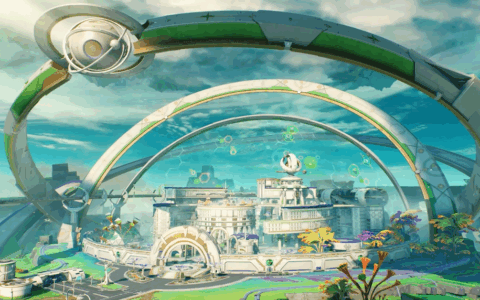
Take *Ring of Fire* as an example: in terms of its visual presentation, it is by no means a game “lacking in artistic merit.” The character art features a consistent design language and clearly leans toward a stylized aesthetic—it’s not half-hearted. The color schemes and pixel art for the environments are visibly outstanding, but this is the work of the art team—or, more specifically, the former lead artist.
The lead artist of *Ring of Fire*’s Weibo post is heart-wrenching
But when it came to the producers and others who had to consider gameplay and monetization, they really let the team down.
The gameplay system of *Ring of Fire* can be summed up in one word: “building.” Its combat pacing, character progression, and skill combinations are reminiscent of several popular titles, but when viewed individually, each element lacks polish.
This falls into a classic trap for mid-sized second-tier games: they don’t dare to copy the original completely (for fear of being criticized or labeled as a pure rip-off), yet they lack the resources and capabilities to truly differentiate themselves (lacking system design expertise and long-term validation).
Actually, that alone isn’t so bad; what’s really worrisome is when decision-makers copy not only the system but also the payment model—focusing on the payment model first rather than benchmarking against quality standards.
Yes, as it happens, *Ring of Fire* is exactly like that.
Furthermore, as I mentioned earlier, the way *Ring of Fire* has been operated since its open beta launch could be described as lacking integrity. Typically, when a game launches with a chaotic rollout, many projects resort to the same three-step approach—apologizing, offering perks, and outlining a vision for the future—to salvage the situation.
The "Ring of Fire" project also claims to have had more than half a year of preparation, but judging by its overall performance from launch day through the following week, it’s hard to believe this is a project with a comprehensive plan and a professional operations team.
In the player comment sections for *Ring of Fire* across major platforms, one can see a steady erosion of confidence; many players believe that *Ring of Fire* is doomed, and that this is already a foregone conclusion.
And once players come to that conclusion, no amount of elaborate marketing or damage control will convince them to willingly invest their time and emotional attachment—let alone their money—especially since *Ring of Fire* hasn’t managed to do that yet.
So, even today, what’s most worth discussing about *Ring of Fire* isn’t how poorly it was made, but rather that it perfectly exemplifies a classic template for second-tier game failure: it first raised players’ expectations with sufficiently attractive visuals, concepts, and style, only to take “shortcuts” when it came to the underlying mechanics and core gameplay logic,lacking system design that builds from the ground up. Subsequently, amid a protracted development cycle and internal turmoil, it squandered the anticipation it had initially built through its visuals. Ultimately, based on the quality at launch and the pace of operations, players quickly identified it as a “project with a very short lifespan.”
The key changes behind this are, first, that players' attitudes toward art have shifted, and second, that the market environment is no longer what it used to be.
Conclusion
Whenever I'm out talking to people, I always hear them say that it's getting harder and harder to make money in the secondary gaming market these days.
In fact, to understand why indie game projects are becoming increasingly “difficult to develop” these days, we need to look at the issue from the players’ perspective. In a sense, we can roughly break down players’ evaluation system into several layers.
First is the first layer, which is essentially art—this is the eternal ticket to entry for mobile games. For example, character design must feature a consistent visual language and high recognizability; it shouldn’t just pile on anime clichés. The second layer involves the gameplay loop and progression experience, which must have their own unique characteristics; this is the foundation for player retention.The third layer is narrative and world-building—the key to establishing long-term emotional connections with players. Many projects of modest scale have managed to survive longer than expected largely because this layer was solidly executed;Finally, it’s essential to build a system of trust with players—in other words, effective operations—which means, at the very least, being willing to take responsibility when problems arise and being open to constructive criticism.
If we analyze past cases in reverse, under these circumstances, I believe that small, high-quality products still have a chance to break through.
After all, not every team can make a second-tier game labeled as a “3D open world,” but you can certainly focus on just one thing—like storytelling. Take *Return to the Future: 1999* as an example, or *Assault XP*; games like *Crossed Fronts* and *Brown Dust 2* are both doing quite well.
Although players’ tastes are quite discerning these days, as long as the development team doesn’t set its sights too high, focuses on the players, and avoids creating a game that “tries to do everything but ends up with half-baked results in every area,” players won’t be overly critical.
Small and medium-sized projects are often most prone to falling into the trap of thinking, “I want to be just like the top-tier products,” trying to keep up in every aspect. The result is that they end up spreading themselves too thin and leaving everything half-finished. Compared to this approach, players are now actually more receptive to products that are honest from the very start of their marketing campaign.
As for *The Ring of Fire*, perhaps one has come to realize that the past cannot be undone, but the future can still be pursued.
原创文章,作者:游茶妹儿,禁止转载:https://youxichaguan.com/en/archives/213655