When it comes to game genres whose potential has yet to be fully tapped, Auto Chess is certainly one of them. In an era where players’ time is increasingly fragmented, Auto Chess—with its low barrier to entry and extremely high replay value—can find its way into a wide variety of gaming scenarios.
Currently, this genre has produced high-DAU games (gameplay styles) such as *Golden Shovel Battle* and *Hearthstone*’s Tavern Brawl, but the market landscape is showing a clear trend toward stagnation—top titles and a large number of projects currently in development almost exclusively rely on major IPs, while neglecting to explore new gameplay mechanics and themes.
Against this backdrop, an auto-battler game that doesn’t rely on a major IP has recently caught the attention of the gaming community. Developed by NetEase, this Chinese-style auto-battler—titled *Code Name: Demons and Ghosts*—aims to establish its competitive edge through innovative themes and distinctive gameplay.
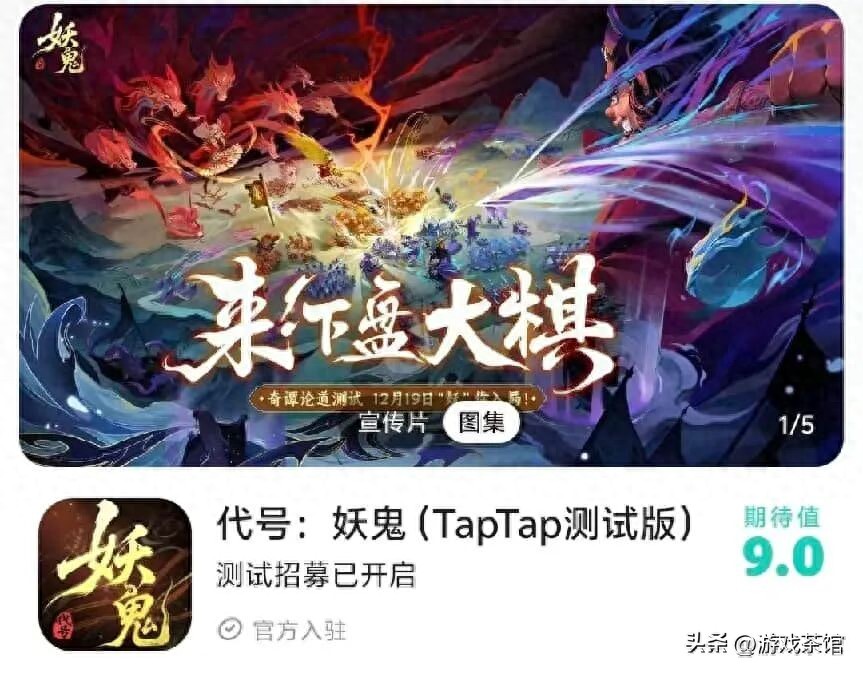
According to reports, the game underwent a technical beta test with 1,000 participants in August. Despite the art assets not yet being optimized during this initial test, the game earned a 9.0 rating on TapTap based solely on its core gameplay, with a second-day retention rate among core players nearing 70%. Many players found the game highly addictive during the beta phase, logging playtimes of up to several dozen hours.
On December 19, *Code Name: Demon Ghost* will launch a new 10,000-player beta test. Ahead of the official launch, the Tea House got an early chance to play the game. We originally just wanted to get a feel for it, but we got completely hooked and raced through four tiers in one go, climbing from the Silver to the Purple Jade rank.
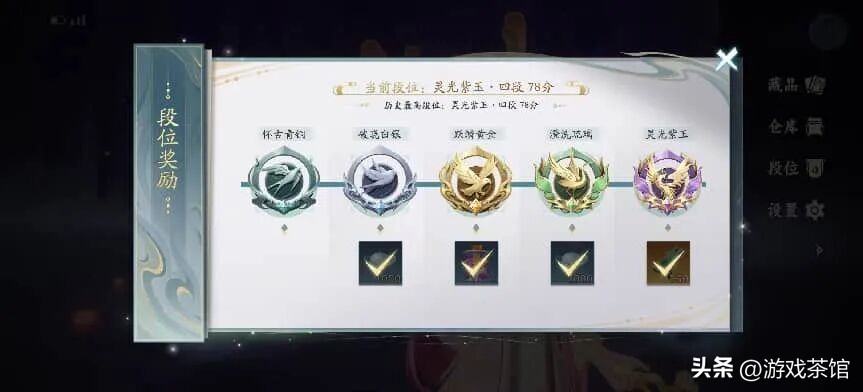
I even played until 3 a.m. on the weekend, but I fell asleep because I was so tired and ended up losing a lot of points while my character was AFK.

After playing extensively for dozens of hours and experiencing most of the current gameplay styles, Teahouse believes this is a “promising Auto Chess title” worth keeping an eye on.In an era dominated by big-IP titles, *Code Name: Demons and Ghosts* has chosen the theme of Chinese demons and ghosts—a subject with immense potential for exploration—and has incorporated appropriate innovations into the gameplay while building upon the existing Auto Chess framework.
01
The Great Battlefield: From Chess to Tactics
As another auto-battler, *Code: Yao gui* shares a similar basic framework with *Hearthstone: Tavern Brawl*:At the start of the game, you select a “Phantom God” (hero) with a core ability. Then, during the preparation phase, you spend gold to buy units (chess pieces), upgrade the shop, build your lineup, and adjust unit positions. You can field up to 7 units to enter auto-battle, and the cycle repeats until a winner is determined.
Although the gameplay framework is similar, *Code Name: Yao gui* features several key design adjustments that set it apart from traditional auto-battlers.
First and foremost, the most striking feature of *Code Name: Demon Ghost* is that it replaces the chessboard with a battlefield.In traditional auto-battlers, combat often consists of numerical clashes on a grid, resulting in relatively sparse visual presentation. In contrast, *Code Name: Yao gui* moves combat to a vast, open battlefield, and units are no longer isolated individuals but rather groups of varying sizes.
Increasing the number of combat units is the primary way for players to boost their combat power. Once the number of units reaches the maximum limit, any units beyond that limit will still be converted into combat power (battle strength) at a certain ratio. In the later stages of the game, it is common to see hundreds or even thousands of units battling on the same screen, and changes in their numbers directly reflect changes in combat power.
The game also features a system of unit counters involving Assassins (Cavalry), Archers, and Warriors.Cavalry excels at charging and can quickly break through defenses against vulnerable archers; shield bearers can effectively block the path of advancing cavalry, and some units even possess the “Counter-Charge” ability, which deals equal damage to charging units; archers, meanwhile, provide damage output from the rear ranks.
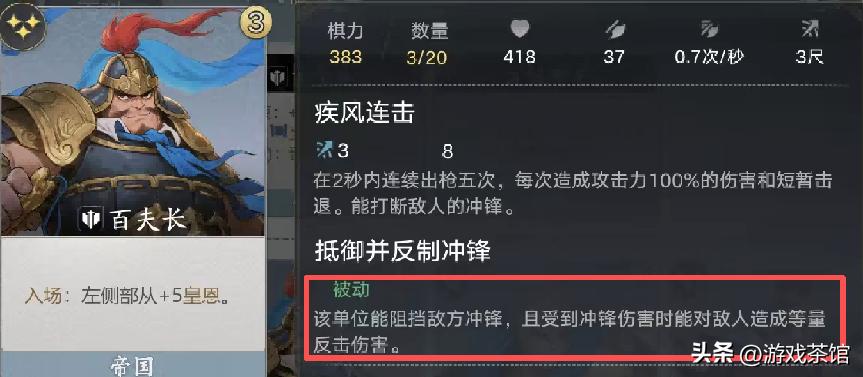
In addition to the three unit types, there are also powerful leader units and their followers. Leaders are typically single units (though their maximum number can be increased through special means), often possess stronger base stats and skill effects, and serve different roles.For example, the Purple Palace Lao Jun can use his gourd to suck in enemies within ten feet and then gradually spit them out to deal damage, providing a powerful crowd control effect against groups of units; the Heavenly Lord of Salvation’s skill, on the other hand, summons a magical formation that heals allies within the formation while attacking enemies.

During the preparation phase, unit counters and skill effects add an extra layer of strategy to positioning. In the auto-battle phase, many elements that are typically represented only by health bars and numbers in traditional auto-battlers are brought to life through vivid battlefield animations in *Code Name: Yao gui*, greatly enhancing the visual appeal of auto-battles.This immersive “troop deployment” experience provides more intuitive positive feedback for the strategic gameplay.
The selection of Phantom Gods before the game begins further enriches the gameplay.Currently, there are 45 Divine Beings in the game. Some possess universal abilities, while others provide powerful boosts to specific playstyles. There are even Divine Beings like Nezha and the Ten-Tailed Fox who, upon meeting certain conditions, can personally join the battle as powerful Seven-Star Units.

When properly equipped and managed, the Seven-Star Phantom God can single-handedly hold off a hundred enemies and turn the tide of battle, and its combat power is clearly reflected in the battle animations.
02
A Clever Fusion of Theme and Gameplay Genres
Looking further, the game deeply integrates Chinese-style demon and ghost themes into its gameplay, establishing six major faction systems: the Demon Realm, the Dragon Palace, the Underworld, the Immortal Court, the Empire, and the Neutral Faction. Each faction features a unique deck-building system and multiple playstyles to choose from.
Unlike the synergy mechanics in games like *Golden Shovel Battle*, where “grouping players of the same faction triggers bonuses,” in *Code: Demons and Ghosts*, each faction has its own independent resource system and operational logic.More importantly, these mechanics align naturally with the cultural connotations of Chinese demons and ghosts—the demonic energy of the Demon Realm, the Dragon Pearls of the Dragon Palace, the Yin-Yang hexagrams of the Immortal Court, the miasma of the Underworld, and the imperial grace of the Empire. These resource systems are deeply intertwined with their cultural significance.
When players use these mechanics, they don’t feel like they’re manipulating an abstract numerical system; rather, they feel like they’re utilizing the unique resources of their respective factions, creating a level of immersion that conventional IP-based games struggle to achieve.
For example, the Immortal Court’s powers are centered around the Black-and-White Hexagram System. Each division and faction has its own hexagram: the Black Hexagram boosts attack power, while the White Hexagram extends health; the two can be switched via “hexagram transformation.”
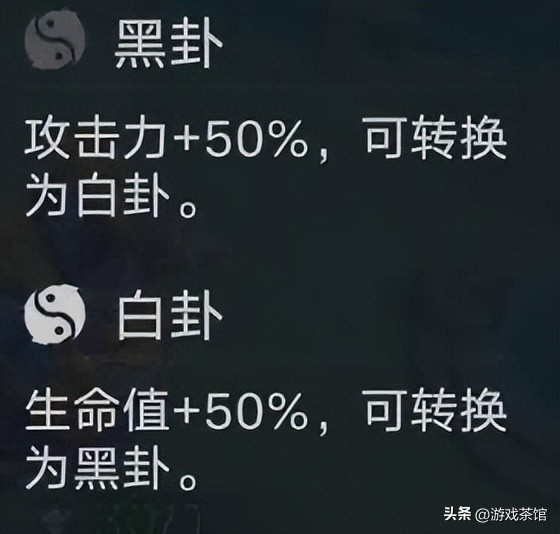
This is a classic example of a faction that’s “easy to pick up but hard to master”—the basic gameplay has a low learning curve, but there are many excellent solutions and complex paths to achieving them, and advanced play requires both mental agility and quick reflexes.
Based on the synergy between pieces with different hexagrams, Xianting offers two easy-to-master basic lineups: one black and one white. The all-black strategy provides steady growth but has a lower ceiling, while the all-white strategy offers strong economic performance and allows for rapid base upgrades.
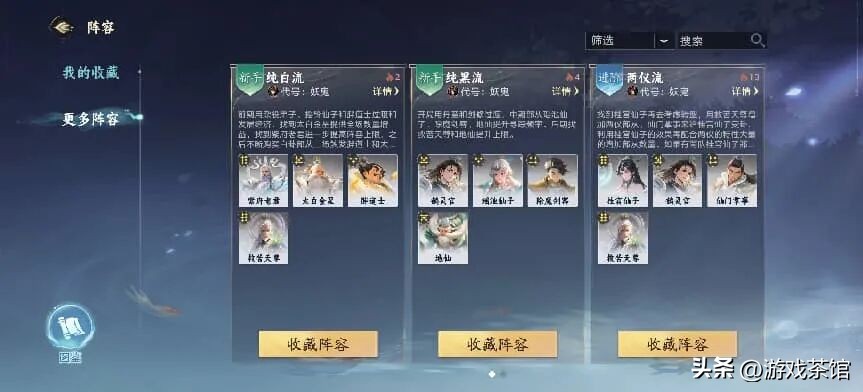
Once players become familiar with the unique mechanics of the Celestial Court faction—such as “Transformation” (changing the hexagram of a piece), “Tracking” (triggering an ability after refreshing a certain number of times), and “Two Polarities” (possessing both black and white hexagrams simultaneously)—players can build upon the basic playstyle to unlock more flexible, high-potential, and skill-intensive strategies such as the “Two Extremes” and “Changing Hexagrams” playstyles—by triggering a follower’s “Tracking” ability through shop refreshes, managing resources, and frequently changing hexagrams to increase follower numbers and boost combat power.

Just like the Celestial Court, other factions also have gameplay mechanics that are highly aligned with the theme of demons and ghosts:
The Demon Realm focuses on a consumption-based strategy: in the early game, players quickly level up the Celestial Book (to advance to the next tier), and in the late game, they accumulate the “Demon Energy” resource through the Trade Department to significantly increase the number of subordinates and achieve explosive growth;
The Empire grants permanent promotions to specific units by consuming the "Imperial Grace" resource, resulting in a gentle growth curve and an overly smooth progression;
Youdu grants all its units a percentage-based bonus by stacking layers of “miasma,” making them increasingly difficult to defeat as the game progresses;
Dragon Palace relies on accumulating Dragon Orbs to charge and trigger the "Orb Glow" effect. By utilizing the "Dragon Orb Transfer" mechanism to either accumulate Orb Glow or destroy Dragon Orbs, it maintains continuous fire suppression.
Meanwhile, the “Enter the Field,” “Leave the Field,” “Start of Turn,” and “End of Turn” effects shared by all factions, along with those of the neutral faction, serve to link gameplay together and keep it flowing smoothly. This prevents the game from becoming overly reliant on fixed strategies and allows for flexible adjustments to different card sequences.
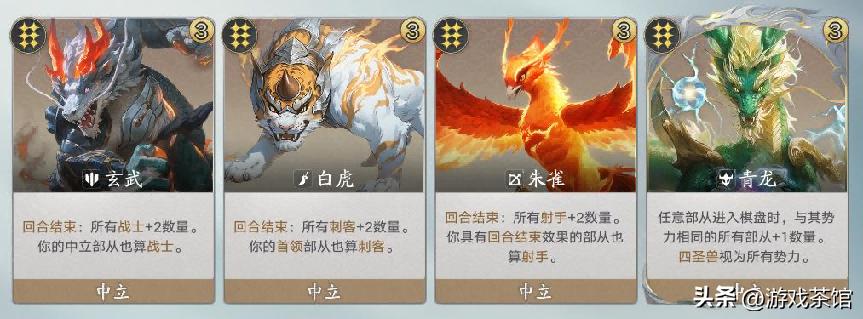
In the early and mid-game, neutral creatures can provide a transition in terms of economy or combat power; in the late game, powerful single-target units like the Four Sacred Beasts can be paired with other factions. With sufficient economy and a favorable card draw sequence, the Four Sacred Beasts can also form a powerful team thanks to their strong stats and special effects.
The ingenuity of this faction design lies in the fact that, while allowing each faction to have its own resource management logic, it ensures gameplay diversity and the flexibility to adjust formations, thereby lowering the learning curve while retaining a high level of strategic depth.
03
An Attempt to Break New Ground in Chinese Ghost and Monster Stories
The Auto Chess genre has been around for several years now, and while the overall market size is substantial, the market landscape is showing a clear trend toward consolidation—top-tier titles and a large number of projects currently in development rely almost exclusively on “super IPs.” This phenomenon stems from deep-rooted characteristics inherent to the genre.
Auto Chess has two inherent pain points: First, it’s not easy to pick up,as players must understand the complex synergy system, economic management logic, and team composition strategies—resulting in a steep learning curve; second, it’s difficult to gain initial traction. As a competitive game that prioritizes fairness, Auto Chess requires a certain minimum number of concurrent online players to ensure a smooth matchmaking experience and support monetization, which poses a significant barrier for new products.
Super IPs seem to be the “standard solution” to these two major pain points. Take *Golden Shovel Battle* as an example—its success stems largely from the clever use of the *League of Legends* IP.Gameplay concepts can be directly transferred—players’ understanding of hero roles (tank, assassin, mage), weapon combinations (the differences between physical damage, magical damage, and tankiness), and team composition strategies (frontline protecting the backline, assassins targeting the backline) can all be seamlessly transferred from *League of Legends* to the auto-battler gameplay.
This transfer of knowledge significantly lowers the barrier to entry for the target audience; players don’t have to start from scratch but can quickly grasp new gameplay mechanics based on their existing gaming knowledge. At the same time, the massive audience that comes with a super IP provides the product with a guaranteed user base, solving the challenge of cold start.
However, a "super IP" strategy is not a panacea. Products that rely on IPs often struggle to attract audiences outside the IP's fanbase, and for players unfamiliar with the original work, the barrier to entry is actually higher.
"Code Name: Demons and Ghosts" has chosen a different path—building its own brand equity around Chinese-style demon and ghost themes. This choice seeks to strike a balance between "establishing a foundation of recognition" and "pushing beyond boundaries."
From a cognitive perspective, Chinese-style monster and ghost themes have a natural appeal to domestic players.Zhong Kui, the Dragon Palace, the Underworld, and the Immortal Realm—these symbols are deeply rooted in the collective memory of Chinese culture. The myths, legends, supernatural fiction, and folk tales players have been exposed to since childhood have already established a foundational understanding, allowing them to grasp these concepts without any additional learning effort.
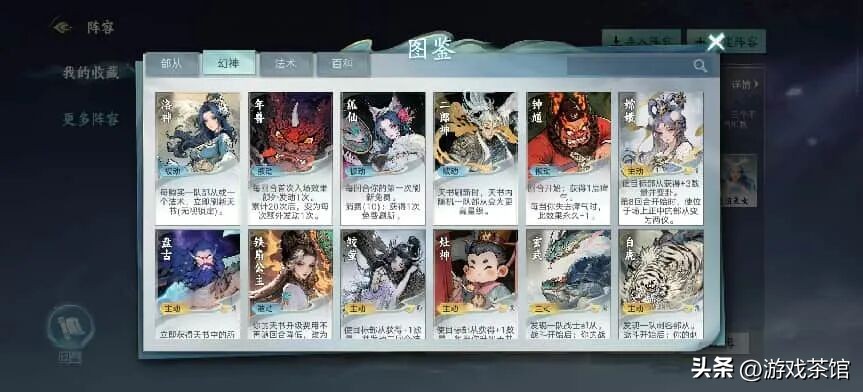
This cultural resonance lowers the cognitive barrier for players without creating the kind of audience barriers that super IPs do—even if you haven’t played a specific game or watched a specific work, you probably have a general idea of the connection between the Dragon Palace and *Dragon Ball*, or the link between the Celestial Court and the Yin-Yang symbols.
The integration of themes and gameplay mentioned earlier transforms this cultural understanding into practical in-game knowledge.When you see the Demon Realm accumulating demonic energy through trading, the Dragon Palace charging its energy with Dragon Balls, and the Immortal Court utilizing changes in divination symbols, you don’t need to memorize abstract mechanism descriptions—instead, you can intuitively understand “how this faction should be played.”
Of course, not relying on a blockbuster IP also means higher risks. *Code Name: Yao gui* will require greater marketing investment to build brand awareness, more time to build a user base, and the effort to cultivate its own player community from scratch.
But looking at it from another angle, this is also an opportunity. With the Auto Chess market becoming increasingly crowded, differentiation may be the key to breaking through. While products that rely on major IPs have a high starting point, their audience is largely limited to the IP’s fan base, making it difficult to reach a broader audience.In contrast, *Code Name: Demons and Ghosts*, by fostering a sense of cultural identity through its Chinese-style demon and ghost theme, could theoretically appeal to a broader player base—including not only core Auto Chess users but also potential users who are drawn to Chinese-style themes yet may not be particularly interested in traditional Auto Chess games.
Compared to today’s established auto-battler games, *Code Name: Yao gui* has chosen a more challenging but potentially more rewarding path—building its competitive edge through “innovative themes and differentiated gameplay” rather than relying on IP popularity to achieve rapid growth.The success or failure of this choice will gradually become clear during the upcoming testing and launch phases. But at least from a strategic perspective, it is a direction worth exploring, as it represents a new possibility for the Auto Chess genre.
Conclusion
As a product still in the early stages of development, *Code Name: Demons and Ghosts* certainly has plenty of room for refinement.However, based on our in-depth hands-on experience at the Teahouse, it has already demonstrated some promising qualities: the Chinese-style demon and ghost theme offers unique cultural distinctiveness; the resource system of the six major factions provides a strategic depth distinct from traditional auto-battlers; and the large-scale battlefield combat makes gameplay more intuitive and rewarding.
If you’re interested in innovative gameplay and want to see what kind of sparks fly when Chinese-style demon and ghost themes meet Auto Chess, why not try it out for yourself during the 10,000-player beta test on December 19?At present, this is not yet a fully polished, mature product; its gameplay, art, and balance all still require player feedback and refinement. But at least at this stage, *Code Name: Demons and Ghosts* can be considered a “promising contender” in the Auto Chess genre that’s worth keeping an eye on.
原创文章,作者:游茶妹儿,禁止转载:https://youxichaguan.com/en/archives/213806