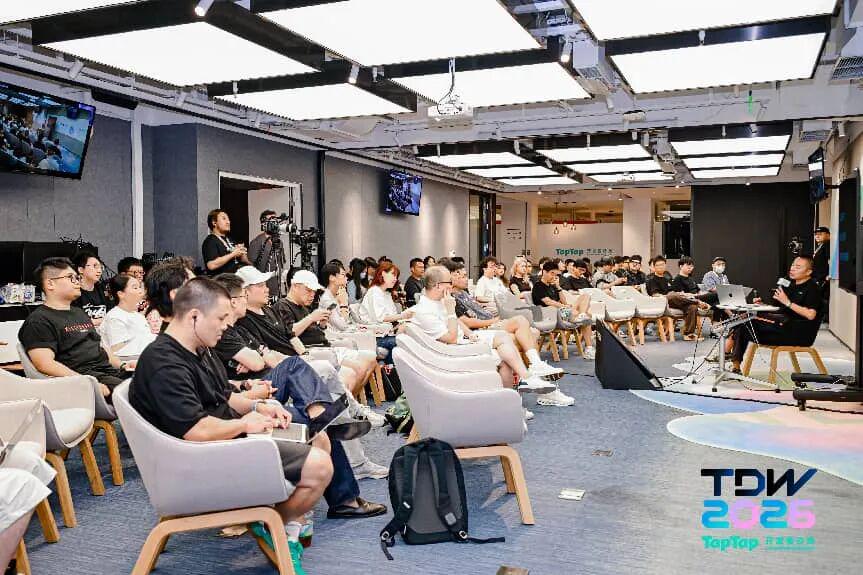
On July 26, the 8th TapTap Developer Salon (TDW 2026) kicked off in Shanghai.This year’s event is somewhat special. Ten years ago at ChinaJoy, Huang Yimeng, CEO of Xindong and founder of TapTap, publicly announced that counterintuitive decision—to refrain from co-publishing and to share no revenue with developers. Today marks exactly ten years since then.
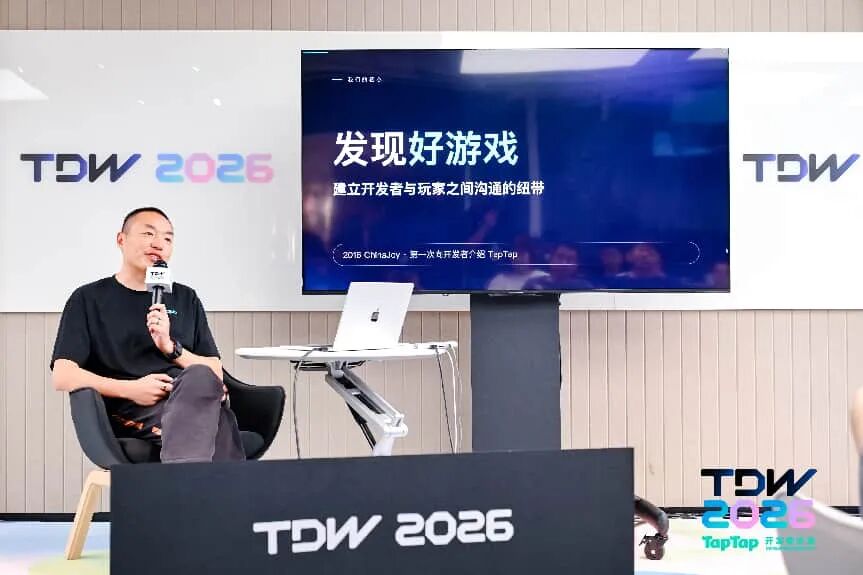
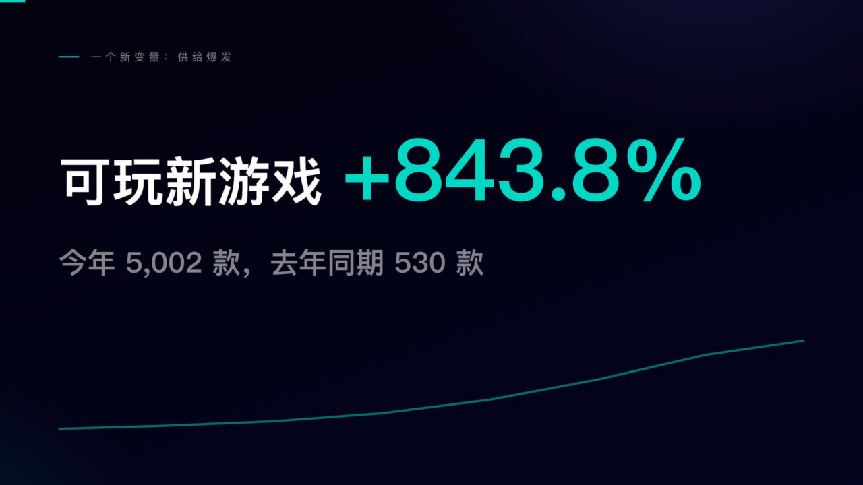
Every year, Huang Yimeng’s keynote speech is the highlight of TDW.This year, a set of statistics set the tone for the entire event: In the first half of 2026, TapTap released 5,002 new playable games—nearly 10 times the 530 released during the same period last year. Of these, more than 4,000 were mini-games created using AI, with a significant portion produced using TapTap’s own AI creation tool, “TapTap Maker.”
At last year’s TDW, Huang Yimeng said that TapTap would shift its focus from “helping players discover great games” to “helping developers create great games.” Today, AI has indeed made it easier to “create a game”; the barriers to entry have been significantly lowered, attracting a flood of developers, and many of the resulting creations are truly outstanding.
While the supply side is booming, another reality is that players’ attention remains limited. As they are exposed to more and more high-quality games, it’s becoming increasingly difficult to impress them. Huang Yimeng didn’t shy away from this issue. In his words, with ten times as many new games flooding the market, the exposure each game receives has been significantly diluted, and the games players come across may be of “lower quality and less satisfying.”
However, on the production side, AI tools still have a long way to go before they can achieve creative equality. Huang Yimeng believes that good games remain scarce, and it is precisely because of this scarcity that we need to lower the barriers to entry and expand the developer base—so that more developers have the opportunity to experiment, hone their skills, and iterate.AI is still evolving rapidly, and as tools become more user-friendly, more truly excellent works will have the chance to emerge.
Technology has democratized content creation, and the tension between supply and demand is a question platforms must address: How can the barriers to creation be further lowered? How can good games be discovered? Huang Yimeng’s speech this year largely centered on these two questions.
01
TapTap Development: From “Micromanaging” to “Letting Go”
The main driving force behind this surge in supply was TapTap. On the evening of January 30, the product launched and immediately began a limited beta test, gradually expanding access over the following months.
When it first debuted, it made quite an impact on the industry; for many, it was the first time they realized that using AI to make games could be so easy and seamless. One developer told Huang Yimeng that he spent the entire first night working on it.
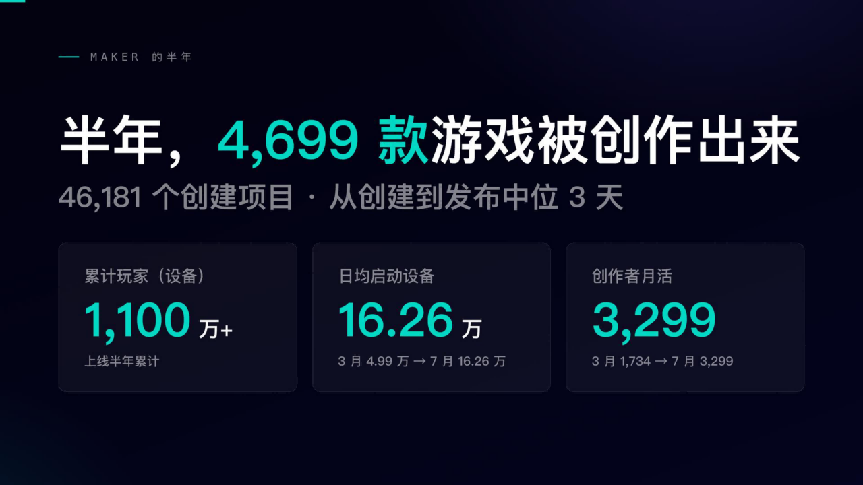
After half a year, the numbers are quite impressive: nearly 5,000 games have been created through TapTap, with a cumulative player base exceeding 10 million, an average of more than 160,000 daily active players, and over 3,000 creators.
There are also quite a few standout examples among the released titles: *The More You Dance, the Richer You Get*, which originated from a creator challenge, has generated solid revenue and boasts a high average session duration—and it continues to grow; titles like *Journey of Destiny* and *The Tale of a Working Immortal*, which have been refined through thousands of rounds of dialogue, are already highly polished.
Beyond the specific products themselves, what matters even more is the developer’s growth trajectory: from a simple, tentative first attempt to creating a second and third product after dozens, hundreds, or even several hundred iterations, becoming increasingly proficient along the way.
On stage, however, Huang Yimeng did not dwell on the achievements. He reflected that TapTap’s growth over the past six months had not been fast enough, nor had its user base expanded quickly enough. The reason lay not in the product itself, but in the business model established for it at the beginning of the year.
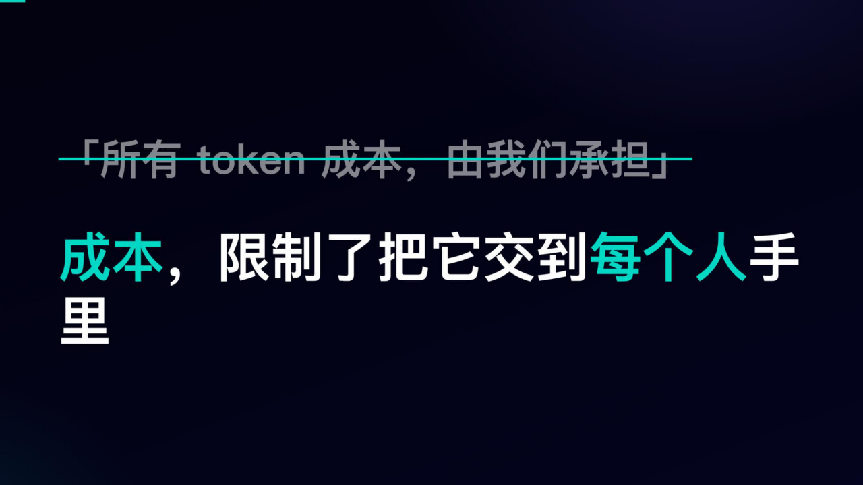
The burden is primarily reflected in costs. The initial plan at the beginning of the year was this: the product would be completely free for creators, with the platform covering the cost of tokens; once high-quality games were launched and brought in growth and revenue, that revenue would then be reinvested into production costs, creating a closed-loop system.
However, after six months of operation, this model has revealed some limitations: the platform bears the full cost of tokens for more than 3,000 creators, which can amount to tens of millions each month; meanwhile, it is extremely difficult to generate equivalent revenue from these games—which are still in their growth phase—and ensure that a portion of that revenue flows back to the platform.
The allocation of points is also a challenge: the platform is solely responsible for determining who should receive more and who should receive less, which puts a lot of pressure on it. Huang Yimeng summed it up himself: “All these complicated issues are actually related to the points policy.”
An even greater burden stems from TapTap’s initial positioning. At the beginning of the year, it was positioned as an all-encompassing intelligent system: questions that should have been left to market forces—such as which model generates the best images or which model produces the best videos—were all answered by the platform itself. At a time when model capabilities are evolving every month, this approach is clearly not flexible or agile enough.
The adjustments were made along these two lines. First, regarding costs: the practice of giving away points will remain, but their role will be redefined as an “additional incentive.” At the same time, restrictions on purchasing will be lifted, allowing developers to decide for themselves how much to invest and how to implement the system. Huang Yimeng specifically emphasized, “We don’t want to sell points, nor do we want to make money from them,” and even encouraged developers to compare prices across the entire internet.
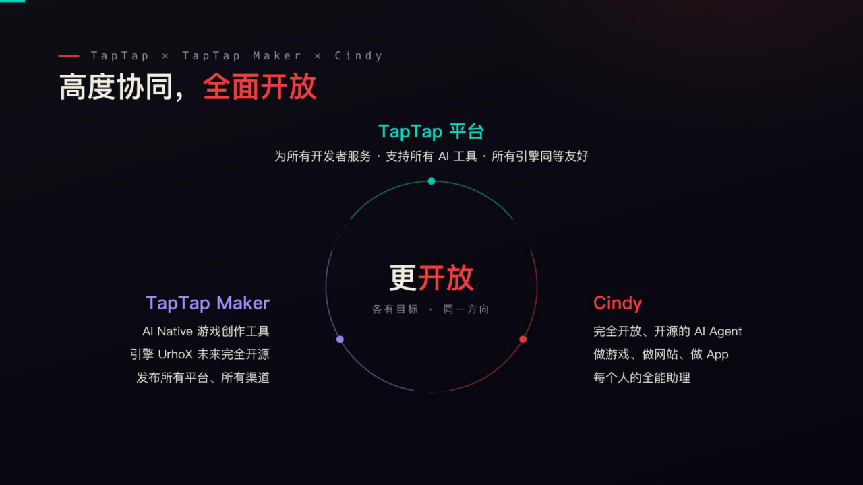
Next is the “do-it-yourself” aspect: computing power and tool capabilities are no longer limited to the cloud; developers can install any agent locally, integrate any model, and use MCP to call upon TapTap’s capabilities to create games. The platform also no longer decides which models to use on the developers’ behalf.
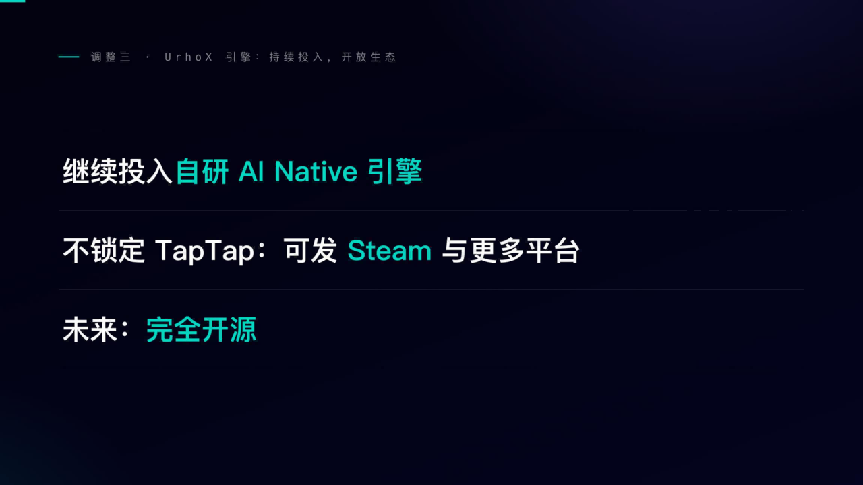
Meanwhile, the in-house AI Native engine behind TapTap will continue to receive R&D investment and will be further opened up: it will no longer be limited to specific publishing platforms, allowing games developed with it to be released on Steam, and it will eventually become fully open-source.
In the words of Huang Yimeng, “Developers shouldn’t use it just because there are free tokens, nor because it’s the only way to publish on TapTap.” From now on, TapTap’s competitive edge can only come from genuine product advantages over other platforms.
02
Distribution Restructuring: Letting Good Games Emerge on Their Own
The adjustments made by TapTap are primarily aimed at the supply side. However, following this surge in supply, the distribution side also faces significant challenges.
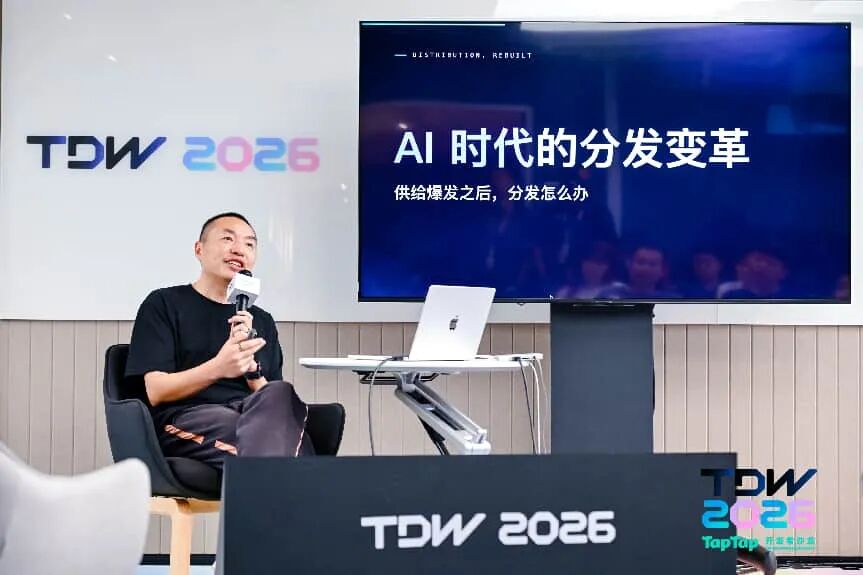
Editor’s Picks have always been one of TapTap’s most distinctive features, but the distribution logic used in the past was based on a premise that now seems somewhat unrealistic: with a limited number of games, editors could review every single one, ensuring that every new release received a minimum level of exposure.
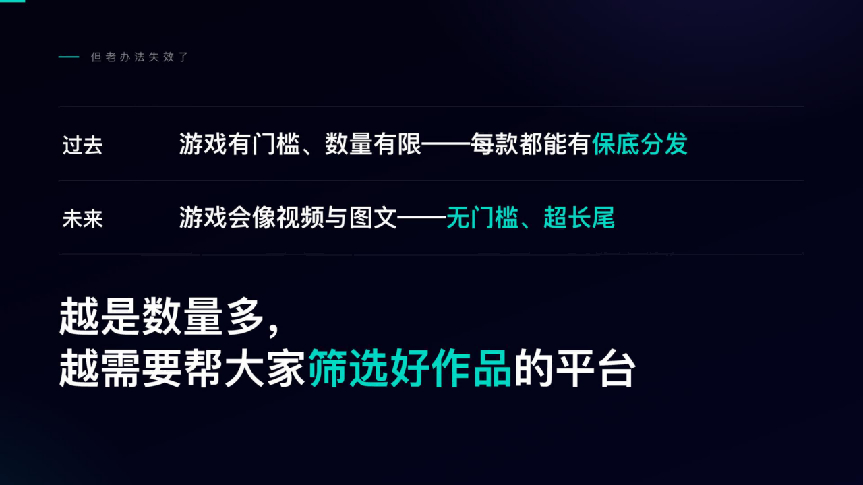
But with more than 5,000 titles released in half a year, the situation has changed. The recommendation algorithm also needs to be adjusted accordingly. TapTap’s response is to keep the “Editor’s Picks” section but shift its focus from “show everything” to “selecting what’s worth recommending.”
Huang Yimeng acknowledged that it is no longer possible for editors to review every single game, so some titles are bound to be overlooked. Therefore, editorial recommendations serve as an added bonus for the selected games, with a focus on supporting those that are relatively niche but demonstrate unique artistic vision and are worthy of encouragement from an industry perspective.
With the explosive growth in the number of games, the guaranteed distribution mechanism is facing challenges. In the past, every game could receive a relatively stable level of guaranteed exposure, but now that the number of new games has reached this scale, continuing to provide guaranteed recommendations for low-quality titles “is also detrimental to users.”
Huang Yimeng believes that the brand of the developer will become increasingly important in the future. A new game that starts from scratch without any brand equity may grow at a slower pace.

So, who is responsible for bringing the game to the players?
First is the recommendation mechanism. Rather than the term “algorithm,” which can easily lead to misunderstandings, Huang Yimeng prefers to call it “user-behavior-based recommendations.”Recommendations are still generated by the system: whether players leave positive reviews after playing, give the game a “like,” continue to invest time in it, and are willing to provide constructive feedback to developers—these behaviors, which players can explain themselves, serve as the basis for determining whether a game is worth recommending. At the same time, high-quality games can still receive editorial recommendations.
Another new mechanism is on the creator side: the creator credit rating system. This system went live on July 16, and by the day of TDW, it had been in place for exactly ten days.According to an on-site announcement, the platform currently has 13,571 active creators, each of whom has a credit rating. Creators who value their brand and consistently produce high-quality content will receive higher exposure weighting for their future works.
Just ten days after this feature was launched, changes have already begun to emerge. Some developers have started proactively consolidating secondary accounts, moving games scattered across various accounts into the main account.
Huang Yimeng used an analogy: It’s like shopping—you want to buy products from manufacturers that have a brand and value that brand, rather than a no-name brand that can change its packaging and start over at any time—the latter often tests the limits at every stage.
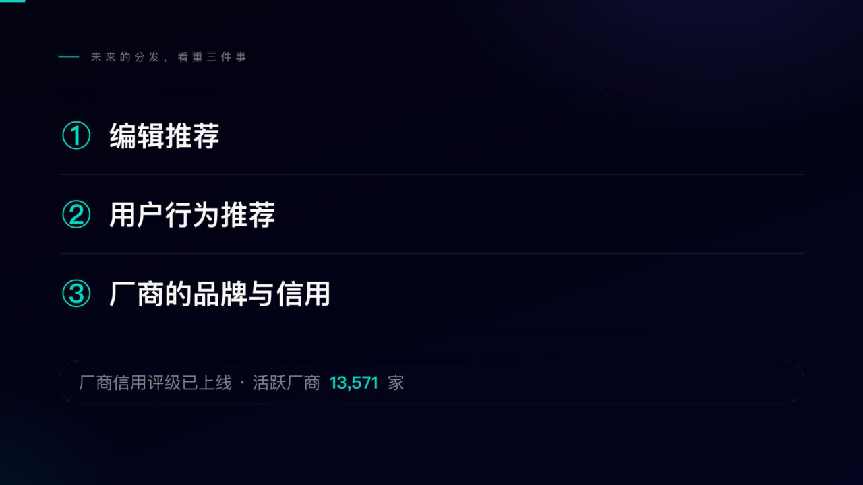
When viewed collectively, these adjustments on the distribution side effectively represent a step backward for the platform: it has shifted the responsibility for filtering to the players and placed trust in the developers’ brands.
03
Cindy: Why Do Game Companies Develop General-Purpose Agents?
The grand finale of the presentation was the launch of a general-purpose AI agent product called Cindy.
Cindy is an open-source, out-of-the-box AI Agent client: installed on your local computer, it provides one-stop access to a variety of models, covering not only text but also images, videos, audio, and even future 3D assets. TapTap is built right into the client as a native plugin.
Huang Yimeng defines it as: easier to get started with than pure programming tools, yet more powerful than other office-oriented tools on the market.
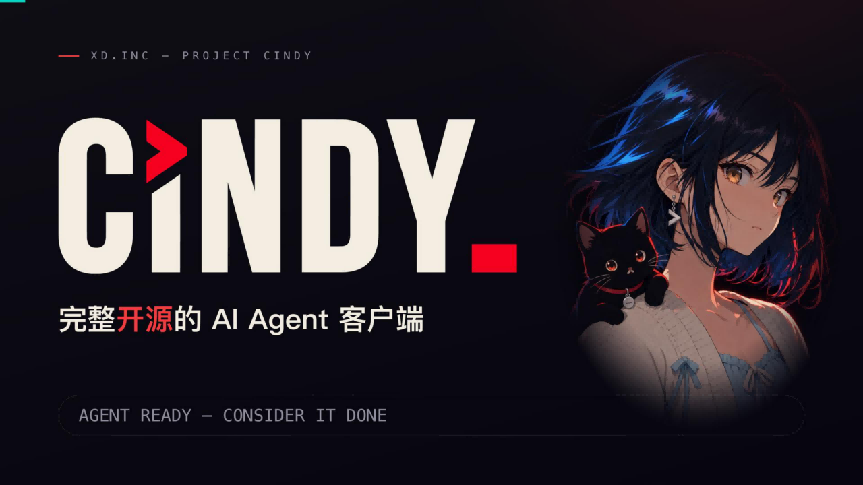
Why would a game company develop a general-purpose agent that can “do just about anything”? The answer begins with the creation of Cindy.
It wasn’t originally developed for external users, but rather as an internal tool at Xindong.
The initial motivation was quite simple: to provide every colleague with an AI client right on their computer, so they could delegate tedious and inefficient tasks to the AI, leaving people to focus solely on making truly valuable decisions.
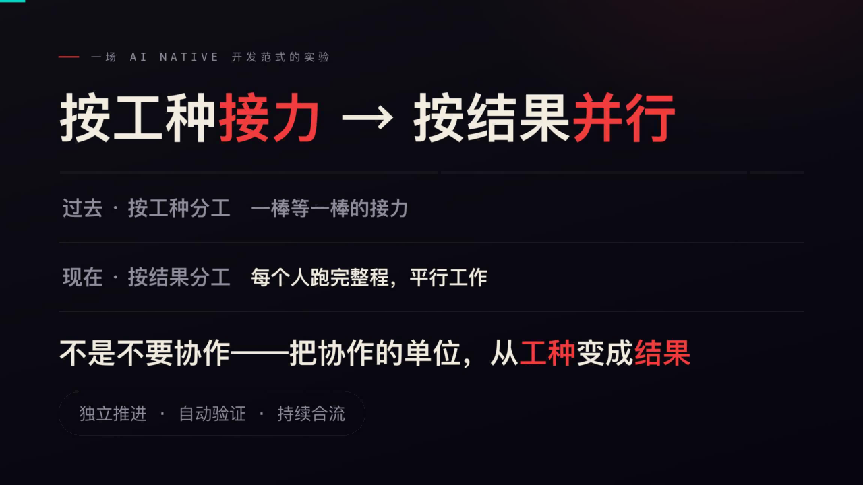
In addition, there is another, deeper motivation.With the help of AI, an individual’s efficiency can increase tenfold or even more, but when it comes to the team as a whole, efficiency does not increase proportionally. Huang Yimeng believes the problem lies in the way teams collaborate—as long as the workflow remains a relay between different roles—such as planners passing tasks to programmers, programmers passing them to artists, and QA sending back results only to wait for programmers to make changes—time is wasted on waiting.
At Xindong, Cindy’s role involves ensuring that the design team doesn’t have to create mockups first and then hand them off to developers for implementation; instead, they can iterate on visual effects directly within the tools and submit them to the code repository via PR. Huang Yimeng sees himself as a product manager and requirements specifier, evaluating results based on the code, while the developers are responsible for reviewing performance…
All phases are moving forward simultaneously; no one has to wait for anyone else. Code is contributed by colleagues from various projects, and even HR is submitting code.
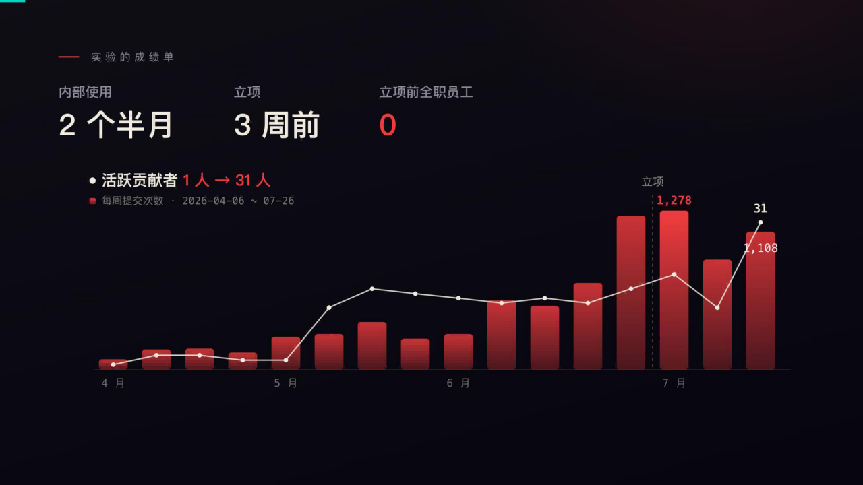
Huang Yimeng said, “Over the past two and a half months, I’ve been completely immersed in this. These may have been the two and a half months with the strongest positive feedback I’ve experienced in all my years as an entrepreneur.”
If internal tools are fully functional, why release them as open source? Huang Yimeng believes that the software industry has already been disrupted—it’s just that many people haven’t realized it yet. In the future, “everyone will have the opportunity to create their own software,” and the barrier to entry will be unimaginably low.
Cindy herself is proof of that. In her own words, this project “wasn’t even approved by the company three weeks ago—it didn’t even have a budget.” Compared to making a game, which costs nothing at all, “buying a few Coding Plan subscriptions was all it took to get it done.”
This follows the same line of thinking as making the engine open-source and avoiding forced platform lock-in: when the cost of replicating a tool approaches zero, closed-source software cannot protect anything, so it’s better to open it up in exchange for an ecosystem.
04
The more open a company is, the deeper its moat becomes.
Ten years ago at ChinaJoy, Huang Yimeng announced that TapTap would not act as a co-publisher and would not take a cut of developers’ revenue. In an era when a 50-50 split was the norm among distribution channels, this decision baffled many people.In this speech a decade later, he shifted TapTap’s development strategy from a hands-on approach to a hands-off one, open-sourced the engine, and even made the newly released Cindy fully open-source… On the surface, this also seems to defy conventional wisdom.
But when viewed together, both decisions were bets on the same thing. Ten years ago, by not sharing the profits, we built trust; today, by handing over tools, models, and computing power one by one—allowing distribution to be guided by user behavior and vendor credibility, while the platform steps back to the role of designing the rules—we are still gaining trust in return.
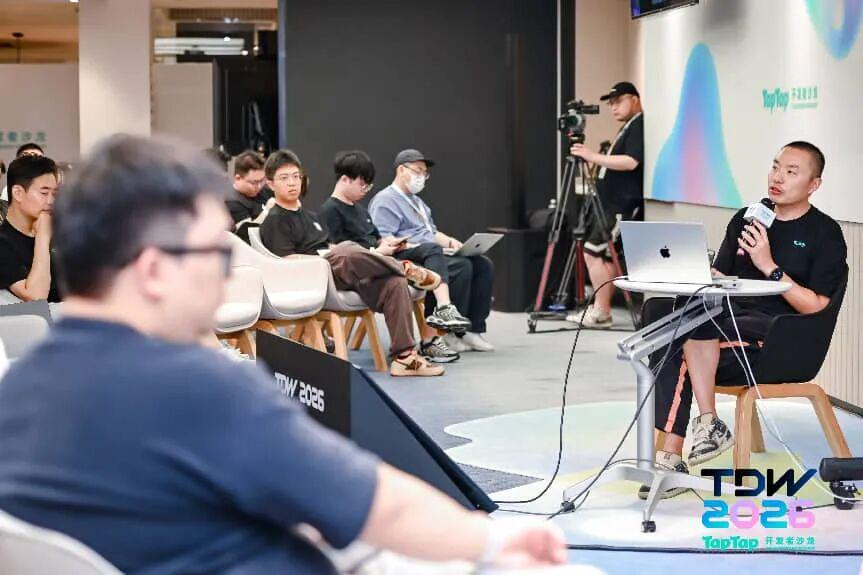
Someone in the audience asked Huang Yimeng: “What is the one thing TapTap is least willing to sacrifice over the next decade?” His answer was the brand: “Traffic from traditional channels may come from hardware or other dominant entry points. But all of TapTap’s traffic comes from one thing: players’ awareness of and trust in the TapTap brand.”
Now that AI makes it possible for anyone to create a game that looks decent, promises of fairness and impartiality, authentic ratings, and the assurance that every installation package is an official one have paradoxically become the scarcest commodities. In an era where the barrier to entry for tools is approaching zero, trust is the only asset that cannot be replicated.
From stores, communities, and developer services to creation tools and general-purpose agents, TapTap is capable of doing more and more. But according to Huang Yimeng, its essence hasn’t changed in a decade: TapTap is a gaming platform that helps developers and connects games with players. Everything else is supplementary, designed to allow developers to focus their energy on the creative process itself.
原创文章,作者:gallonwang,禁止转载:https://youxichaguan.com/en/archives/208473