It’s been almost a week since BW ended, but the “withdrawal symptoms” have been more intense than I expected.
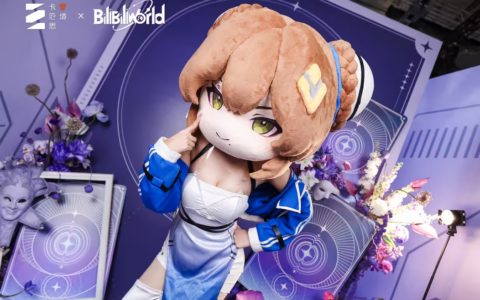
Every now and then, I still open my phone’s photo album to reminisce about all those “absolutely epic” moments from those three days—joining the 400,000 people who were there in person,we stood in long lines in front of the four-to-five-meter-tall inflatable “Phoebe and Chibi” from *Mingchao*, and we crowded around the massive 3,000-square-meter booth, packed shoulder to shoulder, just to take photos with the live-action cosplayer portraying the GTI agent from *Operation Delta*.Last year, two halls at BW were specifically designated as gaming exhibition areas; this year, that number has increased to three. A wide variety of titles—including those aimed at female audiences, open-world games, FPSs, and MMOs—are flourishing here.

As you may recall, around the time the pandemic ended, domestic game developers began gradually expanding into the offline space. As user acquisition costs online continued to rise, content-driven game developers were the first to take action, making frequent appearances at various exhibitions and exploring formats such as concerts, carnivals, and themed pop-up events.
At this year's BW, I feel that the path game developers are taking to explore offline settings has undergone many fundamental changes.
First, games have come to occupy a central position in these anime and manga-themed events, even directly defining the most exciting experiences at these events; second, game developers’ approach to offline exhibitions—and, more specifically, their logic for organizing them—is also quietly reaching new heights.

01
A "small Western-style house" has been built in the community
In other words, checking in for stamps, playing interactive mini-games, and collecting “cyber eggs” are no longer the end goal of offline gaming experiences. Building on these foundational elements, creating immersive spatial settings and fostering shared experiences and collective memories is becoming a new goal and consensus among game developers.
At this year’s BW event, I had “two mind-blowing experiences” at the Ubisoft booth. I think the experiences there are a very representative example.
At this year’s BW, Ubisoft showcased *Rainbow Six: Siege* (hereinafter referred to as “Rainbow Six”), *Just Dance: Party*, and *Assassin’s Creed: Black Flag – Remastered*.Each of the three titles had its own booth. The first two are published and operated by Tencent Games; *Rainbow Six: Siege* completed its first technical test for the Chinese server last month, while *Just Dance: Party* launched on mobile on July 2;the latter launched on PC on July 9—the day before BW opened—and topped the Steam China sales chart during the event.In recent years, as domestic mobile games have taken center stage, many of Ubisoft’s classic IPs—despite having cultivated deep emotional connections with players—still needed an opportunity to re-enter the public eye. I believe the BW booth created just such an opportunity.

As I mentioned earlier, I was “blown away” twice at the Ubisoft booth. The first time happened shortly after I walked into Hall 4. At the time, I was looking down at my phone, intently searching for a map and scouting out my next booth to visit, when suddenly a man not far away bellowed, “Everyone, look this way! I’ve got an announcement to make! The Chinese server for Rainbow Six is awesome!” I looked in the direction of the voice and saw him dressed head-to-toe in a Kapkan cosplay outfit from Rainbow Six, holding his hands high in the air and striking Hu Ge’s signature pose.

Before the bewildered onlookers could even react, he ran off, looking a bit shy. The whole scene lasted only a dozen or so seconds—it seemed rather absurd, but it successfully piqued the interest of a few passersby. They walked over with smiles on their faces and joined the line at the Color Six booth.
After approaching him to ask, I learned that he wasn’t an official cosplayer tasked with meeting “entertainment quotas”—he was simply a long-time player of Rainbow Six who’s been with the game for years and just likes to express himself freely. The reason he showed up in full gear was because Tencent’s Chinese server had organized a special event:Any player who cosplayed as an operator and arrived at the BW venue in full costume would receive official merchandise as a reward.
Dozens of players were even selected for the official fashion show through their early submissions, allowing them—just like the professionally invited cosplayers—to take the stage at the small Western-style building in the center of the exhibition hall and confidently showcase their outfits to hundreds of players in the audience.Many of the participating players had never tried cosplay before. For this event, they set aside the hands they normally use to grip a mouse or pull the trigger and started from scratch, learning makeup, sewing, and how to craft cosplay props.

This event deserves special mention because it perfectly exemplifies a core concept behind Tencent and Ubisoft’s booth design this time around: establishing a two-way interactive relationship that differs from traditional exhibition events. As you may have heard, the domestic Rainbow Six player community is already known for its abundance of memes.This time, the organizers actively brought these creative players into the spotlight on stage, making them an integral part of the live atmosphere. Behind this shift lies an elevation of the players’ status: within this event orchestrated by the organizers, they gained a sense of identity—one in which they are seen by the development team and recognized by the community.
Official data from this year’s BW also supports this point: the number of cosplayers at this year’s event reached 60,000, double last year’s figure. This strongly illustrates a common desire within the broader anime and manga community: many attendees are no longer content to simply watch from a distance; they prefer to actively immerse themselves in the experience and become part of the event.
The small Western-style building mentioned earlier was the second thing that “really blew me away.”In recent years, it has become quite common for companies at trade shows to compete in elaborate set designs and spectacular displays—such as large-scale sculptures featuring all kinds of ornate styles. But seeing the Tencent China Server team actually build a fully functional two-story building right on the exhibition floor was truly a sight to behold.

The exterior of the entire building is modeled after the “Consulate” map from the game, with details such as handrails and ornate carvings meticulously recreated.The front corridor features a spacious layout, allowing cosplayers and players to stage various performances both upstairs and downstairs. Viewed from the rear, it even recreates the iconic vertical spatial structure of Rainbow Six, making it hard to resist grabbing your tactical gear and diving right into a multi-level assault and defense scenario.
The organizers have defined the entire exhibition booth as a “film set.” They’re not just building sets—they’re actually creating content: the various interactive games that players participate in on-site essentially recreate the tactical actions of the game’s operatives right there on the set.
The gameplay can be broadly divided into three categories, one of which is the prop experience. Players can build walls with their own hands, break through walls with a sledgehammer, operate a reconnaissance vehicle, and even talk directly to Ela, who is portrayed by a robot.

One type is exploring Easter eggs.Tactical props like EDD and “Shatter Cannons,” as well as hidden Ink Ice go-karts, are tucked away throughout the venue, waiting for players to discover them on their treasure hunt. The third category is player-generated content. For example, players are invited to draw go-kart designs on the walls, and their fan art is then displayed throughout the venue for other attendees to enjoy.


A Mute operator is deploying a signal jammer at the scene.
I spoke with the relevant Tencent China Server representative in charge of designing the booth, who told me that the project team’s experience in building a stage like this has been refined step by step through past China Server tournaments and offline events featuring 1:1 recreations.In previous events, the booths lacked memorable features, so this time they set a goal: to ensure that casual players could “remember Rainbow Six in ten seconds.”
The gameplay of "Color Six" is inherently complex: environmental destruction, three-dimensional offense and defense, operator skills, fortification and defense, and tactical reconnaissance all come together to form a cohesive system.With so many activities to participate in at the booth, the organizers have effectively distilled the core mechanics of the game and brought them into a physical space for players to experience firsthand. For the general public unfamiliar with "Color Six," seeing firsthand how walls are demolished and reinforced, and how reconnaissance vehicles are used before combat, actually eliminates the need for lengthy explanations of the gameplay.

And perhaps even more importantly, veteran players can have an even better time at this exhibition area.I witnessed this firsthand on multiple occasions: veteran Rainbow Six players chose the official booth as their in-person meetup spot because it featured gameplay mechanics, items, and countless Easter eggs they were already familiar with—elements that tied together the nostalgic theme of the entire booth. At the same time, through co-creation activities, players could also feel a deep connection with the development team and fellow players.
Just like the player mentioned earlier who excitedly shouted, “The Chinese server of Color Six is awesome!”—when players find themselves in an environment where they feel a sense of connection and witness firsthand the project team’s meticulous dedication to offline events, they easily develop a sense of belonging and are more willing to share their experiences at the booth on platforms like WeChat Moments and Xiaohongshu.

A video filmed by a player at the BW Color Six booth has garnered over a million views.
This is also highly aligned with the launch strategy that *Color Six* currently requires. Liang Jiasheng, the production lead for the Chinese server of *Color Six*, once told Teahouse that the first thing his team clarified was exactly who they were serving—*Color Six* has already amassed over 100 million users globally and has been in operation for a decade, so the foundation of player understanding of the gameplay is quite solid.Under these circumstances, the project’s key objective is not to aggressively pursue innovation, but rather to ensure that players who have accompanied the game over the years are willing to stay, preserve the communities and networks they’ve built up over time, and engage more deeply with the game.
As for the goal of expanding their user base to a mass audience, they can achieve this through other, more efficient means. For example, *Color Six* is currently collaborating with *Operation Delta*, developed by Tencent’s TiMi Studio Group, on an in-game crossover—which not only leverages a high-DAU title to drive users to the Chinese server of *Color Six* but also allows these two generations of flagship shooting games to pay tribute to one another through this opportunity.Additionally, *Color Six* will debut as an official event at this August’s Esports Club World Cup, with a Chinese regional qualifier being held for the first time. In the future, the project team plans to host official tournaments domestically as well. High-profile esports tournaments and other public events like these can also serve as key catalysts for breaking into new audiences.
In-person booths, on the other hand, can focus on something else that the internet struggles to replace: leaving a deeper impression of the event itself in the minds of gamers.
02
Three products, three approaches, one goal
Compared to *Rainbow Six: Siege*, the booth designs for the other two Ubisoft IPs were completely different in style, but they were just as impressive. More importantly, it was clear that they weren’t simply repeating the same approach three times; instead, each team returned to the unique features and challenges of their respective products and reimagined their booth designs from scratch.
After all, while exhibition booths can be built using reusable templates, there are no standard answers when it comes to player needs. This kind of tactical diligence was quite evident at the *Just Dance: Party* booth.
The contrast between *Just Dance: Party* and *Rainbow Six* is stark. Overseas, both *Just Dance* and *Rainbow Six* are blockbuster IPs that have been around for over a decade; the *Just Dance* series has sold more than 80 million copies in total, making it just as popular as *Rainbow Six*.However, in the domestic market, where console gaming culture is relatively underdeveloped, and due to limitations imposed by platforms and usage scenarios, *Just Dance* finds it difficult to quickly rally a large following of IP fans—as *Rainbow Six* has done—through a dense array of nostalgic elements and Easter eggs.
As a result, its approach at BW is completely different. My overall impression of the booth was that, rather than simply promoting a product, it was more about conveying a relaxed, joyful, and vibrant lifestyle.

In the center of the exhibition area is a small, professional-looking stage where dancers take turns performing throughout the day, and visitors can also take the stage to try their hand at the challenge.On the one hand, this creates the most direct link between the stage and the game’s core dance gameplay; on the other hand, the lighting, music, costumes, and performances collectively shape a distinctive brand identity, allowing even those who haven’t played the game to quickly understand that it offers an experience centered on trends and style.
Behind the booth was a more casual, interactive space. Players could try out the Chinese server version of the game, which is already live, or take photos at the JustFoto photo booth set up as part of the collaboration. The organizers even paid attention to the scent of the booth.A Tencent staff member on site told me that the team had specifically set up an aromatherapy diffuser, selecting a fresh and soothing fruity scent. In the exhibition hall—where, in the height of summer, the air was inevitably tinged with the smell of sweat—this refreshingly scented little space quickly set itself apart from the surrounding experience.

Trends, socializing, check-ins, and dance experiences are seamlessly interwoven, making this design an effective way to connect with potential users who enjoy trendy experiences, social check-ins, and the ritualistic aspects of daily life.
Compared to "Color Six," the core challenge facing "Just Dance: Party" is how to educate the market about the genre—essentially starting from scratch—and establish user awareness of "dance mobile games" in China. Expanding the user base by leveraging lifestyle trends is a relatively smooth path to achieving this.
This path was actually identified by the players themselves. For example, a representative from Ubisoft responsible for *Just Dance: Party* told me that, during the collaboration on the Chinese server launch, Tencent provided Ubisoft with a great deal of valuable, in-depth insight regarding “mobile-first thinking” and “Chinese users’ usage habits.”After the product launched, players naturally found more localized ways to use it: some do fitness routines in the game or use it as a tool for weight loss and fat burning. Players are also constantly redefining what a product can actually be used for.
"Just Dance: Party" is also eager to meet players' needs. On the one hand, the developers have brought "Just Dance" from consoles to mobile devices and developed a camera-based AI motion-tracking solution to lower the barrier to entry. On the other hand, they have partnered with Keep to launch fat-burning workouts, helping players better achieve their fitness goals.
The product manager told me that the level of engagement and feedback from players at the BW event regarding motion-based dancing far exceeded their expectations, proving how well dance fits into in-person settings.They recently announced offline dance competitions and events at various locations, such as Shanghai’s Nanjing Road Pedestrian Street and Shenzhen’s Penguin Island, and plan to explore additional offline formats in the future, including pop-up events, city tours, and campus activities.From smartphone screens to fitness settings and on to urban public spaces, the common goal of these initiatives is to integrate the product into the real-life scenarios of more Chinese people, bridging the gap between the game and users’ daily lives.
They clearly put a lot of effort into the *Assassin’s Creed: Black Flag – Remastered* booth as well—as a remaster of a classic console game, it naturally enjoys widespread recognition.Many of the visitors at BW are also veteran gamers with years of experience. The key challenge lies in precisely identifying those players from back in the day amid the noisy crowd.
The approach in *Assassin's Creed: Black Flag—Reset* is straightforward—they simply brought the massive Raven to life, making a bold statement with its presence.

After all, nothing catches the eye quite like a spectacular sight—many veteran players could spot this massive ship from a distance and came to the booth to check it out.Once inside, visitors could even watch legendary characters—including Edward and Caroline from *Assassin’s Creed: Black Flag – Remastered*, as well as the series’ beloved protagonist Ezio—perform interactive skits, instantly evoking a wave of nostalgia.
At the same time, the booth featured a large hands-on play area, allowing players to experience the game content firsthand.Paul Fu, Creative Director of *Assassin’s Creed: Black Flag – Reset Memories*, and Justin Ng, Executive Producer, also visited the booth during BW. The two creators played Nine Men’s Morris with players on-site, engaging in truly up-close, face-to-face interactions to gather player feedback.The waves of cheers and applause from the players on-site were the best proof of how inspired they were.

So, looking back at Ubisoft’s journey at BW this time—jointly planned by Tencent and Ubisoft—the three titles ultimately presented three completely different approaches, each addressing a specific challenge: *Rainbow Six* focused on how to enhance the experience for veteran players; *Just Dance: Party* aimed to engage new users and break into new markets;and *Assassin’s Creed: Black Flag – Memories Reset* aimed to evoke emotional resonance by reawakening memories that had lain dormant for years.
Behind these three approaches lies the same underlying methodology: today, booth design must be centered on the product and the players.
Spectacles, stages, interactive elements, and merchandise are merely means to an end. What truly determines the success of an in-person event is whether it addresses the product’s most pressing release-related issues and makes attendees feel that this space was truly created for them.
03
New Trends in IP Interaction: A New Perspective on Games in the Real World
After reviewing the highlights from the three-day BW event, I believe the image presented by Tencent and Ubisoft this time reflects an important shift currently taking place in the gaming industry’s offline events.
Over the past few years, various companies have been innovating around offline experiences. Their strategies have also evolved—from focusing on “physical presence” and exploring “how to get noticed” to, today, more and more companies beginning to consider the next level of questions: Once players arrive here, what exactly can they participate in, and what can they take away?A simple offline exhibition has become a more critical component of year-round marketing strategies—one that warrants greater investment and seamless integration between online and offline efforts. With a wide variety of games on the market, refining the offline experience is no longer the exclusive domain of content-focused game developers.
Take Tencent Games, for example: this year, they showcased nearly twenty titles all at once. The booths for these titles at this year’s BW featured a completely refreshed look, which actually gave many gamers the feeling that they were “getting to know Tencent Games all over again.”
Taking *Honor of Kings* as a case study, a few years ago the game primarily appeared offline as a standalone product, hosting tournaments and stage performances. But today, *Honor of Kings*, *Honor of Kings World*, and *Honor of Kings Chess* have come together to form the “Honor of Kings Family Bundle.”At the Honor of Kings Farm, you’ll find “Marco Pineapples” and “Gongsun Pears” growing; players carrying “Wang Shijie’s Wife Cake” tote bags chase after official cosplayers like Shouyue and Xuan Ce to take photos with them.In just the past few years, their image at gaming expos has shifted from that of a PVP competitive game to a multifaceted IP capable of attracting a wider range of players.

Other Tencent products have also, as if by mutual agreement, gone all out to “pull off stunts.” At the *Operation Delta* booth, players could experience the community’s iconic “bright red culture,” where bright red plush toys like “Champagne” and “Gold Bars” were chased around to “spread good luck”;*Dark Zone Breakthrough* brought six player-created “National Games” memes directly to the event and even sent the gunsmith Camona to teach players how to “rent guns”; *Goddess of Victory: Niki* featured Doro printed on tote bags;*Lock Kingdom: World* built a magical castle and brought “Yuan Ge” (the traveling merchant) and various spirits to the event; the “DD Control Room” from the virtual streamer-themed game *Virtual Ring* drew a large crowd of virtual streamer fans…

The underlying logic is very similar: these booths are increasingly resembling temporary outposts for gaming communities in the real world. They break down in-game mechanics, characters, and community memes into more multidimensional forms of interaction, then bring players back together through tournaments, performances, check-ins, and collaborative creation. Game developers are learning from memes created by players and absorbing the ways players communicate with one another.
Take this year, for example: the Tencent Games brand had a dedicated booth featuring official “good grains” handpicked for you by “Goose’s Big Hand.”Tencent Games has become your fellow fan, giving you freebies, sharing in-game currency, and even offering you a “secure job at Tencent”—activities like collecting stamps and purchasing in-game currency are no longer just forms of interaction within fan communities; they’ve gradually become secret codes for communication between the company and its players.

When this phenomenon becomes widespread across the entire BW community, it signals a general trend. Game developers are becoming more down-to-earth, embracing players’ inside jokes, banter, and deconstructive commentary with greater ease, thereby bridging the psychological gap between themselves and the players. In fact, we can even see in many places that quite a few players are calling on Tencent Games to host its own “Tencent Games Only” event.

The significance of this change will become even clearer when viewed in retrospect.
This year’s BW has generated an especially huge buzz online, driven bit by bit by countless specific “highlights.” A funny piece of merchandise, a joke that only gamers would get, or a shareable moment of live interaction—all of these are constantly being reposted and shared on Bilibili, Xiaohongshu, and WeChat Moments.
My impression of this BW event is that, although it took place at an in-person venue in Shanghai, it used this content to forge a closer connection not only with the 400,000 people in attendance but also with internet users across the web. The games at the heart of this event are also entering a new phase of dissemination—people who have been disconnected by the internet for years are beginning to yearn once again for more direct, in-person connections.Online dissemination and offline experiences are merging further, and as a result, new avenues for games to build relationships with players are opening up.

Look, even the anti-fraud police officers formed a band right at the BW event, drawing a crowd of onlookers; many beverage and FMCG brands also began adopting similar creative marketing tactics at this year’s BW event.
Now is the perfect time to board this ship bound for the world of the next generation of gamers.
原创文章,作者:游茶妹儿,禁止转载:https://youxichaguan.com/en/archives/208365