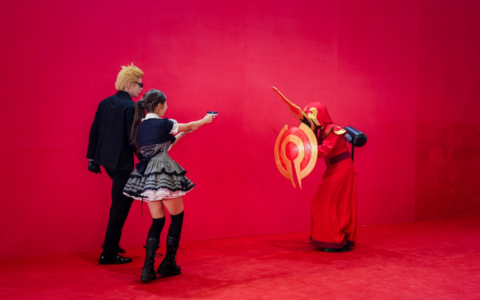
On March 27 of this year, the premier summer esports tournament for *Honor of Kings*—the *Honor of Kings World Cup* (HONOR OF KINGS WORLD CUP AT 2026 ESPORTS WORLD CUP, abbreviated as KWC at EWC26), held in partnership with EWC—announced its plans for the new season:The total prize pool is $3 million, and a total of 20 teams have qualified to compete.

In terms of the tournament format, a multi-stage system will continue to be used:The Qualifiers will feature a double-elimination BO3 format, the Group Stage will also use a double-elimination BO3 format, and the Knockout Stage will employ a single-elimination BO7 format. This structure ensures teams have some margin for error while also highlighting the suspense and intensity of competitive play—in last year’s finals, AG.AL came back from a 1-3 deficit to win three consecutive games, completing a stunning comeback andsecuring a thrilling championship victory.

In addition to the tournament schedule, this year’s KWC at EWC26 also announced a piece of news that came as a pleasant surprise to players and industry participants worldwide: professional teams from Arena of Valor (AoV) will be invited to participate in the World Cup, where they will compete alongside teams from various regions of *Honor of Kings*.The spirit of competitive collaboration is also reflected in the tournament’s theme: “Forged in Valor, Crowned by Honor.”
As a nationally renowned top-tier game familiar to all players, *Honor of Kings* continues to evolve.In October 2025, the company officially announced that daily active users on its Chinese servers had surpassed 139 million, while global monthly active users exceeded 260 million. This surpassed the 100 million daily active users figure reported in 2024 and also set a new global record for monthly active users among video games.


At this historic moment, when its popularity reached a new high, the esports ecosystem of *Honor of Kings* took the next step that only it could achieve: expanding the boundaries of mobile esports.
This joint event—KWC at EWC26—represents an extremely important endeavor: to create a tournament system capable of bringing together mobile esports forces from different versions, different regions, and different development paths under a single competitive framework, thereby achieving true global connectivity.
It is precisely these breakthroughs that have allowed KWC at EWC26 to transcend the scope of ordinary tournaments and become a major event that captivates mobile esports enthusiasts and participants worldwide.
Since the KPL’s inception in 2016, *Honor of Kings*’ esports tournaments have not only maintained their youthful energy but have also taken further strides in global expansion, broadening the possibilities for the competitions—a feat that is by no means easy. Behind this grand event lies an increasingly mature international tournament management system, as well as years of consistent leadership and development in the global mobile esports scene.
01
Breaking Through Boundaries Across the Seas: Creating Products That Best Understand Overseas Players
A mature global esports ecosystem must be built on top of mature product and content ecosystems. This requires not only high-quality products but also the ability to connect with local cultures overseas and, through persistent effort, convince local players to invest their emotions and time.
Both HoK and AoV have achieved top-tier operations and service in overseas markets.
AoV has been available for nine years. Currently, it has nearly 400 million registered users worldwide and has consistently ranked at the top of mobile game charts in markets such as Thailand and Vietnam.
Unlike most global products that prioritize breadth, AoV focuses on establishing an irreplaceable competitive advantage in specific regions and serves local players through customized operations.
Looking back on AoV’s nine-year history, players’ impressions of the game can be summed up in one phrase: it’s incredibly down-to-earth. This strategy—which focuses on establishing deep, multifaceted connections in the core market, encompassing social, emotional, and cultural aspects—is the key to its status as a timeless benchmark for global expansion.
In terms of content, AoV has opted for targeted IP collaborations and has continuously come up with innovative strategies to reach the local anime and manga fanbase.ranging from *That Time I Got Reincarnated as a Slime* to “Cat Cat Bug Kabo,” and even featuring MAMAMOO member Song-yeol performing the theme song—all of which have sparked cultural resonance and enthusiasm among young users with diverse interests.

It’s worth noting that AoV also places special emphasis on fostering an emotional connection through its tournament operations. After the Flash Wolves secured the championship, the game immediately launched an in-game celebration for all players, transforming the glory of the tournament into a shared memory for the player community.
With the product’s in-depth cultivation of the player base, the maturation of the esports scene has come naturally. AoV not only has its own Super Pro League and World Cup but has also been successfully selected for the 2023 Hangzhou Asian Games—a testament to the long-term trust between the product and its users bearing fruit.

Following in the footsteps of its predecessors, HoK’s global expansion has also been smooth sailing. In March 2023, HoK’s international version made its debut in the Brazilian market, and by June 2024, it had launched in over 200 countries and regions worldwide, topping the download charts in multiple countries and regions on its first day of release.
In terms of product operations, HoK has developed two proven strategies: First, it collaborates with a wide range of popular anime and manga IPs, such as *Jujutsu Kaisen*, *Detective Conan*, *Dragon Ball*, and *Sword Art Online*, and integrates the characters’ traits with the heroes’ movement mechanics in the game.
Second, by drawing on local ethnic cultures and deeply integrating with traditions, we create symbolic connections and engage players:For Latin America, Southeast Asia, and the Middle East, HoK has created custom skins and heroes based on local mythology and folklore—such as the Garuda from Southeast Asia, Mexican wrestling, and Brazilian war dances—to delight players from diverse cultural backgrounds.

This sense of connection and respect has resonated deeply with gamers and earned their trust.For example, the Hanuman skin—inspired by Indonesia’s traditional treasure, “wayang kulit” (shadow puppet theater)—has been widely embraced by the local market. Many Indonesian bloggers and players have expressed that being able to see and hear their own national art form within the game is a deeply meaningful experience.

(The comments in the image have been translated.)

A thriving overseas market and strong user trust form the foundation of HoK tournaments abroad.
It can be said that while HoK and AoV have different focuses in their overseas operational strategies, their sequential rollout has collectively provided KWC at EWC26 with a global user base and deep market roots in specific regions, while also supplying the professional league with a stable audience and a talent pool.
02
Global Innovation and Hard Work
Building on its product and user base, HoK has gradually established a global professional esports ecosystem, and the existence of KWC at EWC26 also relies on a multi-tiered, wide-reaching professional esports system.
Currently, HoK’s tournament system has reached a sufficiently broad market, spanning more than 20 countries and regions, and features over 50 active professional teams and more than 300 professional players.
However, to develop a sustainable, multinational system, it is not enough to simply expand its reach and accelerate its growth; it is also necessary to ensure that each region is well-developed and mature. Yet, regions start from different points in this regard, as many have clubs that are not yet fully developed, with inadequate training programs, players, and esports infrastructure.
Without mature regional leagues, there can be no high-caliber competition system.
In response to this, HoK chose to build an organic system for events in different regions overseas that features “decentralized growth at the grassroots level and unified integration at the top level.”
The secret to this system can be summarized as three interlocking components—cultivating local talent, providing professional competition and training guidance, and integrating the regional competition structure—which deeply integrate China’s proven experience and industrial capabilities in esports with the localized needs of the global market.
First is the selection of competitive talent. For regions that got a late start, HoK chose to extend its influence to the grassroots level of the esports ecosystem by establishing local grassroots leagues, and by 2025 had authorized more than 1,000 unofficial tournaments.
For example, the “HoK Campus Attack” national college esports tournament launched in Indonesia was designed to discover talented players in grassroots settings such as college campuses. This ultimately led to the formation of a three-tiered structure linking “grassroots tournaments—semi-professional leagues—professional leagues.”

These initiatives have injected new blood into local clubs, lowered the barrier to entry for amateur players to participate in tournaments, and provided a boost to the overseas esports scene as a whole.
In addition, the talent pool in esports tournaments includes not only players but also tournament organizers, coaching staff, and others. However, these behind-the-scenes roles are like the foundation of a building—they require a great deal of time to develop—and many overseas regions lack this kind of infrastructure.
In response to this, the authorities have launched a subsidy program to support esports coaches working abroad, sending professional coaches from China’s KPL to overseas teams to help local clubs establish youth development and tactical systems.
XiShuai, coach of Indonesia’s BTR team, previously served as head coach of the KPL club KSG, while Deer, coach of Indonesia’s DMT team, also has coaching experience in the KPL. They combine proven tactical systems and training methods from China with the unique strengths of Indonesian players to help local clubs enhance their ability to develop talent independently.

Coaches who go overseas bring more than just strategies for draft games, resource management precise to the second, and approaches to lane management; they also bring the entire standard for competition and training. Furthermore, they help overseas clubs establish a standardized, replicable process for organizing practice matches and conducting post-game reviews.
This also means that overseas esports clubs can continuously develop local talent through advanced competition and training systems. This is the essence of sending coaches abroad: it’s not about rigidly replicating the KPL model, but rather sharing the KPL’s infrastructure and then tailoring it to local conditions.
This "teach a man to fish" approach has significantly narrowed the gap in competitiveness across different regions and reflects HoK's long-term commitment to its overseas tournaments.
In addition, HoK has incorporated mechanisms for fostering and protecting the ecosystem into its rule system.The tournament rules clearly stipulate residency requirements for local players, aiming to prevent the “mercenary” phenomenon commonly seen in the global esports ecosystem. Ensuring that teams from each region truly represent their local areas—and that international fans can take pride in their players with confidence—has become a hallmark of a mature and well-developed tournament system.
This comprehensive set of measures has not only provided fertile ground for the growth of local talent but has also accelerated the industrial maturation of overseas competitions.
If the development of a talent system addresses the foundational issues of the tournament ecosystem, then HoK’s approach to the structure and planning of independent tournament regions focuses on the framework of the tournament system.
To date, this framework consists of six major professional leagues spanning the globe: the IKL in Indonesia, the PKL in the Philippines, the MKL in Malaysia, the CHoKBR in Brazil, the consolidated KML (Honor of Kings International Professional League), and the KPL in mainland China.
The organization of tournaments will be flexibly structured based on the maturity of each region. While retaining the aforementioned independent national leagues to deepen local engagement, the organization will also connect to a broader international competitive ecosystem through integrated tournaments such as the KML.
The in-depth management of these international regions has enabled regions such as Brazil and Indonesia to produce their own star teams and players, while also ensuring that the intensity of competition remains balanced and reasonable across regions, ultimately making cross-regional competition possible.
For example, at the recently concluded KIS4 Intercontinental Invitational, eight teams from different countries and regions competed against each other.

This proves that this system—comprising “talent recruitment, competition and training support, and the establishment of regional leagues”—is fully capable of engaging players from different countries and regions in competitive matches, fostering the exchange of tactical approaches across different regions, providing non-local teams with clear goals to strive for, and igniting the enthusiasm of local players for watching the games. It can truly be described as highly effective.
It can be said that the reason KWC at EWC26 is so highly anticipated and holds such great significance is that it is backed by a dynamic, global competition system.
However, simply establishing a self-sustaining business model and building an ecosystem for top-tier tournaments is not enough; the HoK tournament system also faces a fundamental challenge: How can it maintain and foster the continued prosperity of this ecosystem?
03
The ultimate goal of going global is the globalization of the system.
Products address user needs, and ecosystems attract talent, but the international influence of a tournament ultimately depends on the set of rules it establishes for the entire industry.
This is also *Honor of Kings*’ response: through continuous internal innovation, it systematically shares its rules and frameworks across three areas—tournament format design, technology application, and business operations.
When it comes to innovative game format design, MOBA esports enthusiasts universally praise the “Global Ban/Pick” system, which was first introduced by *Honor of Kings* in 2018.

The key point of this rule is that a team cannot select a hero again in a series if it has already been used by that team.
In hindsight, this rule has fundamentally extended the lifespan of MOBA esports—it forces teams to broaden their hero pools and tactical repertoires, increases the strategic importance of coaching staffs, makes competitive skill—rather than meta adaptation—the key to victory, and even brings underused heroes back into the spotlight.
To sum it up in a nutshell, with a global BP, the matches are more exciting and entertaining, as well as fairer and more sustainable.
After seven years of refinement, today’s “Global BP” is not only a standard feature of *Honor of Kings* but has also been adopted by other MOBA tournaments, taking it to the world’s premier esports stage.
This also demonstrates that the event’s pioneering innovations not only help refine the rules and standards of international competitions but also enable cross-sectoral influence and leadership.
In addition, the event’s cutting-edge exploration of technological applications also constitutes an important aspect of the industry’s contributions.
It can leverage technology to bring the excitement of the competition back to players—for example, through the “Endgame Replay” challenge mode, which allows casual players to simulate challenges against professional players—and it can also use technology to create an immersive, multimedia viewing experience.

Building on its established technology and regulatory frameworks, *Honor of Kings* has established a global commercial operations system that has attracted established international clubs to participate, ultimately driving the growth of the entire esports market’s value and creating a virtuous cycle.
According to statistics from the third-party data firm EsportsCharts, the total global prize pool for *Honor of Kings* tournaments reached $21.77 million in 2025, ranking third among global esports titles and making it the tournament ecosystem with the largest prize pool in the mobile esports sector.

Prize money is more than just a number; it serves as a lever to drive the entire ecosystem. In addition to motivating players, high prize pools themselves attract global capital and clubs—such as traditional powerhouses like Team Vitality, OG, and NongShim RedForce—thereby creating a virtuous cycle where “high prize pools attract top teams, top teams drive traffic,and increased viewership boosts commercial value.”
In a nutshell, the global esports tournaments for *Honor of Kings* have established a stable, predictable, and self-sustaining ecosystem that provides partners with quantifiable market value, thereby generating strong market appeal.
Maturity across these three dimensions ultimately translates into the event’s influence.
On November 8, 2025, the finals of the 2025 KPL Annual Championship were held at the Beijing National Stadium (Bird’s Nest). According to official certification by Guinness World Records, the live audience totaled 62,196 people, breaking the world record for “the esports event with the largest live audience”;In November 2025, the finals of the Honor of Kings International Championship 2025 (KIC) set a new viewership record for international esports tournaments.


It can be said that by exporting its industrialized competition standards, technology, and business models to the world, *Honor of Kings* has established its influence in the global mobile esports ecosystem.
04
From competitive events to a hub of global youth culture
As a major stage for global pop culture, the significance of sporting events has never been limited to the competition on the field. A look back at the history of traditional sports reveals that once an event’s influence reaches a certain level, deeper cultural value naturally emerges.
For example, the tournament itself can generate its own IP appeal. Currently, in addition to the *Honor of Kings* game itself—which has already established an IP ecosystem spanning film, television, music, cultural tourism, and merchandise—merchandise featuring the tournament’s teams can also generate an IP effect, often selling out quickly.
What’s even more noteworthy is that, as a form of pop culture that captures the attention of young people, the event naturally possesses the potential for spillover effects, connecting young people from different regions, cultures, and with diverse interests to foster deep interconnection.During the recent 60th Super Bowl halftime show, Latin superstar Bad Bunny became the first Latino artist to headline the performance solo. His collaboration with Lady Gaga drove viewership to a peak of 150 million viewers, propelling Latin music to the forefront of global mainstream culture.

These examples demonstrate that top-tier sports and esports events have become crossroads of diverse cultures, encompassing everything from traditional arts to youth culture. As for the “Honor of Kings” tournament system, its future evolution has the potential to serve as a cultural bridge connecting young people around the world.
From Indonesian shadow puppetry to Brazilian war dances, and on to popular animation and idol girl groups, these cultural expressions—which embody diverse memories and interests—seamlessly extend beyond the competition arena, showcasing a fusion of youthful spirit across music, dance, and theater;Characters within the game, rich with cultural narratives, along with cross-promotions and live performances outside the game, are being watched, discussed, and remembered by players around the world.

The arena can thus become a unique space for cultural dialogue. When teams from the Indonesian region face off against teams from the Brazilian region on the field, and when audiences from different regions cheer for the same match, the competition transcends a mere contest of victory or defeat—because what they bring to the table is not only their respective regions’ tactical insights but also the cultural imprints shaped by their unique upbringings.
This is precisely the potential that KWC at EWC26 has unlocked.
It proves that mobile esports tournaments can give rise to a new form of pop culture platform—one that transcends barriers and empowers young people around the world to create their own language.
On this platform, differences are not barriers, and regional characteristics are not limitations—rather, they form the foundation of audience identification.
Ultimately, KWC at EWC26 is not just a mobile esports tournament; it is the natural outcome of the global esports ecosystem for *Honor of Kings* following the completion of three phases: product integration, region development, and rule standardization.
Perhaps the value of this mobile esports ecosystem lies in the very setting it creates: young people from diverse cultural backgrounds gather in the same arena, transcending the many barriers of identity, race, culture, and politics, and—as a fresh new generation—tell entirely new stories through the language of gaming.
原创文章,作者:游茶妹儿,禁止转载:https://youxichaguan.com/en/archives/216048