Recently, *The Sixteen Sounds of Yan Yun* has been making waves again.

On April 9, the official team published an article titled “World of Wuxia: A New Beginning.”In addition to introducing the new region “Qingzhou,” set to launch on April 24, and revealing some of this year’s future plans—such as the addition of a “themed region” similar to Qingzhou in addition to Jiangnan, as well as the gradual rollout of three new martial arts schools and a companion system—the article’s most significant announcement came at the end, where the developers announced a brand upgrade for *Yan Yun*.
It evolved from the original "Wuxia—it's all about Yan Yun and the rest" to "World Wuxia—nothing else matters."
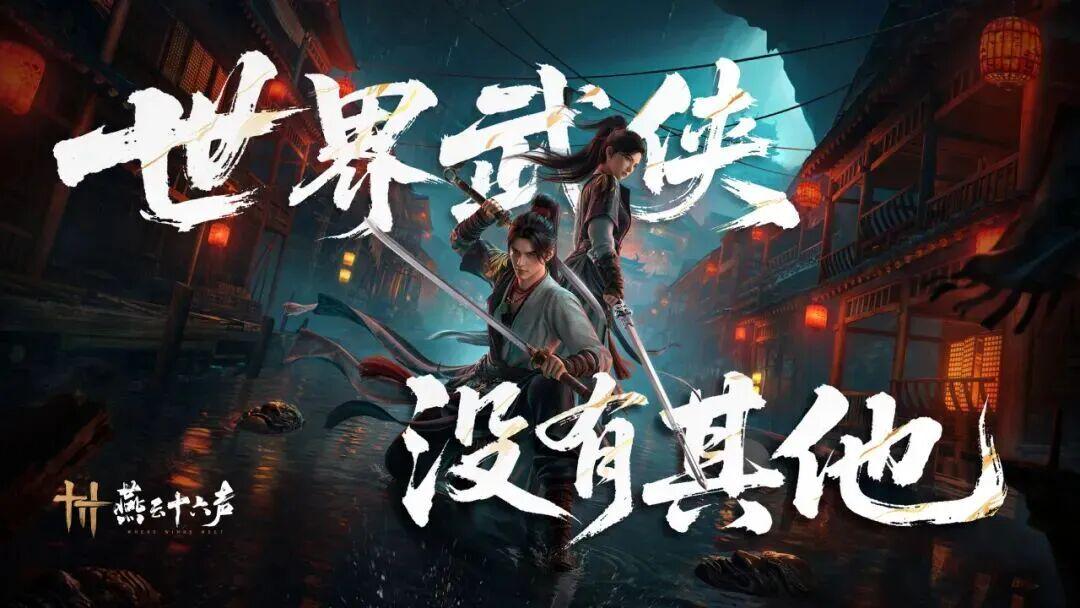
Making the leap from the domestic scene to the global stage all at once carries a certain air of “it’s lonely at the top,” which inevitably leads one to wonder: has this kid gotten a big head again? Yet looking back at the past year, *Yan Yun* has racked up an impressive track record of achievements, so it certainly has every reason to be “arrogant.”
Judging by its performance, as an original IP, *Yan Yun* has been on a roll since its launch at the beginning of the year, ultimately surpassing 80 million global players—a feat that NetEase CEO Ding Lei has highlighted multiple times in earnings reports.Following its overseas launch last year, the game not only shot to No. 2 on Steam’s Best-Selling Chart but also won the hearts of 20 million international players.
Looking at the game, the nearly 1:1 recreation of Kaifeng City left countless players exclaiming, “This is exactly the wuxia world I’ve been looking for.” In the subsequent Hexi update, the “jute sack”—which went viral across social media—became an epic phenomenon that transcended the game’s fanbase.Meanwhile, the Battle of Zhongdu Bridge in the “Invisible Mountain” region pushed players’ emotions to unprecedented heights with its high-caliber battle choreography and narrative of homeland and nation. “I have no regrets joining Yan Yun in this life” was by no means a mere platitude, but rather the heartfelt cry of players shedding tears on the battlefield.
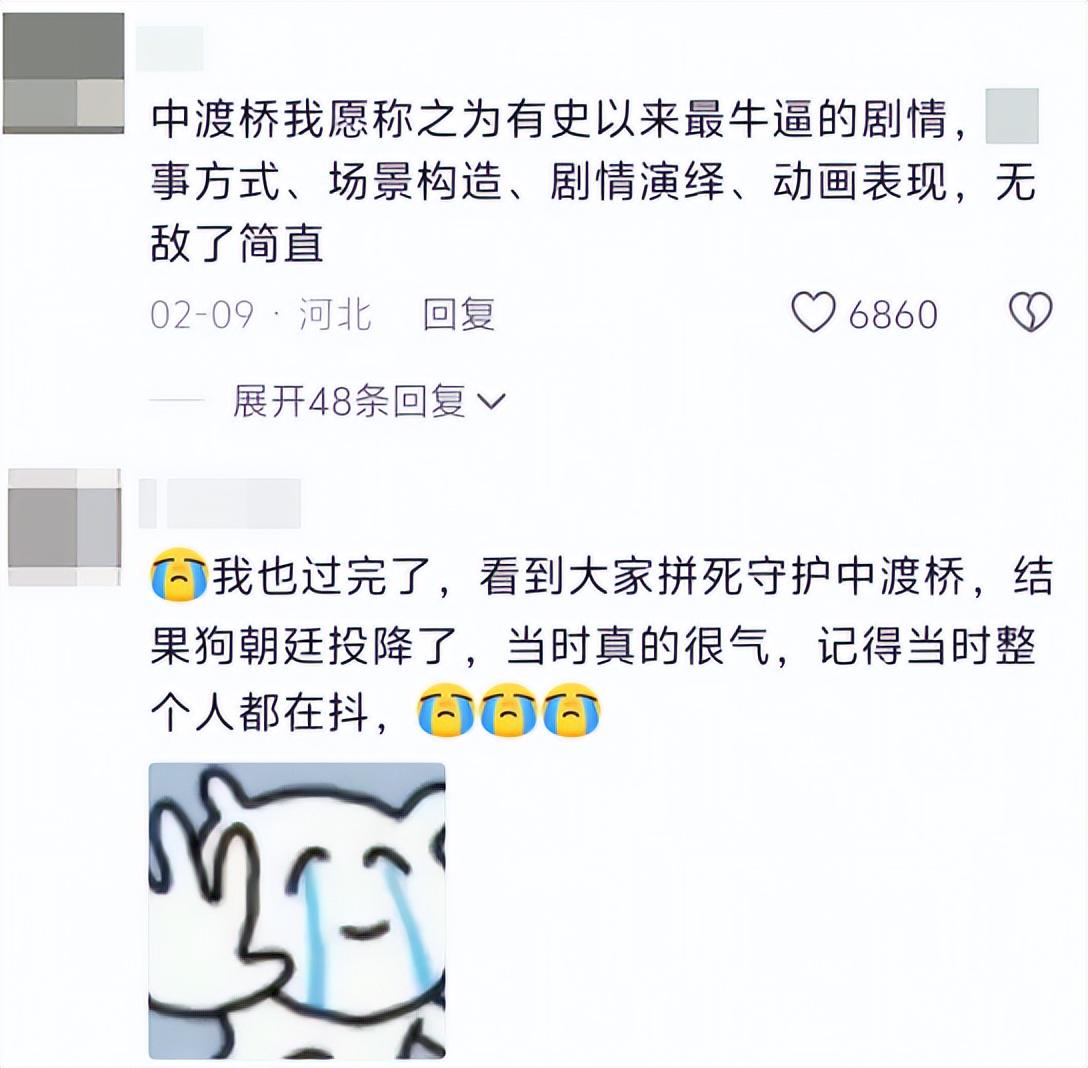
Player "Impressions" of the Battle of Zhongdu Bridge
In my view, Yan Yun’s bold statement that “there is no other martial arts game in the world” carries at least two meanings: on the one hand, Yan Yun’s ultimate ambition is to become a Chinese-developed martial arts game with global influence; on the other hand, it aims to allow players worldwide to experience the rich Chinese cultural heritage embodied in the game.
From Qinghe to Kaifeng, from Hexi to Bujian Mountain, and on to Qingzhou and Jiangnan—which are poised for expansion—in terms of physical scale, *The Sixteen Sounds of Yan Yun* has virtually recreated “half of China.”But even more important than this geographical expansion is the cultural significance each map carries, the comprehensive evolution demonstrated in the game’s production quality, and its uncompromising stance toward cultural outreach abroad.It is precisely these elements that have truly propelled “Chinese-style wuxia” to new heights as “world wuxia,” and have earned *Yan Yun* the right to stand at the pinnacle of the global stage.
01
Building Cultural Barriers with “Half of China”
“The world of martial arts—nothing else matters.” While this may sound like a flippant remark, it reveals the unique cultural foundation that sets *Yan Yun* apart. If we were to summarize this core competitive advantage in a single word, it would undoubtedly be “cultural depth.”
The current gaming market has no shortage of wuxia-themed games or open-world titles, but when it comes to products that truly and organically integrate geographical space, regional culture, and emotional storytelling, *Yan Yun* is virtually one of a kind.The development team isn’t content with simply creating a visually stunning map; instead, they strive to ensure that every inch of land carries a cultural significance that players can perceive, interact with, and empathize with.
I call this “cultural embodiment”—whether it’s an illustration from a textbook, a line from an ancient poem, or a moment from a historical drama on TV—all are incredibly accurately recreated and brought to life through tangible objects or experiences within the game.
Culture is no longer just an abstract concept; it has taken on a concrete form and been integrated into games—something to be admired from afar, explored, and experienced firsthand.

To be more specific, when it comes to the player’s experience, this translates into the distinctly different aesthetic qualities and underlying regional cultural elements embodied by each of the game’s overworld maps.
Qinghe is an idyllic scroll.As the starting point for players entering the game, this heartland of the Central Plains—with its peaceful villages, vast farmlands, and secluded mountainous wilderness—sketches out “the place where the martial arts dream begins,” establishing a familiar yet sophisticated “Chinese aesthetic” as the game’s overarching tone.Behind the scenes, a subtle narrative thread skillfully weaves together historical events such as the Qingfeng Station Incident and the Battle of Zhongdu Bridge. Tragic episodes that were merely touched upon in official histories are brought vividly to life through various scattered clues within the game.This is where the player’s martial arts journey begins, as they step into a turbulent era driven by a simple, “narrowly personal” conviction.

Kaifeng marks the first major leap forward. When players leave the countryside and step into this capital of the Northern Song Dynasty, the visual impact is most immediate. With its entertainment districts and taverns, wine houses and teahouses, pedestrians on bridges, and pleasure boats on the water, a “living” city slowly unfolds before their eyes.Behind this lies a rich tapestry of culture and history; for example, the design of Fanlou was based on research into paintings and calligraphy such as *The Night Market at Fanlou*,and the city’s scenes meticulously recreate the splendor depicted in *Along the River During the Qingming Festival*. In one particular quest, players can even step directly into *The Night Banquet of Han Xizai* and “sit at the same table and drink together” with figures from a thousand years ago.Upon entering Kaifeng, players’ emotional perspective breaks free from personal grudges; moved by the diverse lives of the common people in the bustling streets, they begin to feel compassion for the masses.

The aesthetics of Hexi, however, embrace a sense of detached transcendence. Solitary plumes of smoke rising from the desert, moonlight and a cup of wine, and vast grasslands—the color palette shifts from warm to cool, then transitions to an interplay of desolate green and deep blue.Visually, the game incorporates surreal scenes that align with the theme of “poetry” and an impressionistic atmosphere; narratively, it pioneers innovations such as multi-threaded storytelling and allegorical references—for example, using multiple quests to weave an interactive version of *Zhang Yichao Leading His Army on a Campaign*.This dreamlike art style harmonizes perfectly with the narrative theme of “Chang’an, a Place We Can Never Return To,” prompting players’ emotions to take another leap—transforming into reflections on the clash, fusion, and survival of civilizations.

The absence of mountains represents a sudden, explosive “convergence.” On one side stand towering peaks and majestic waterfalls, where intricate mechanical joints create a spectacle of profound depth; on the other, the Battle of the Hutuo River looms—a scene of extreme pathos as the nation falls and families are destroyed, yet the warriors march to their deaths with defiant resolve.Finally, the Battle of Zhongdu Bridge is presented as a grand-scale spectacle, igniting every emotional foreshadowing laid since Qinghe and serving as the emotional climax that runs through the entire work. Here, players truly complete their spiritual transformation—from “a lone swordsman wandering the world” to “sacrificing oneself for the common people and standing nobly for one’s homeland.”

It’s not hard to see that these four maps together weave a clear and progressive emotional arc: Qinghe focuses on the “individual,” where chivalry first takes root; Kaifeng centers on “society,” delving into the stories of ordinary people;Hexi explores “civilization,” where personal sacrifice ensures the torch of civilization is passed down; and “Beiyan Shan” addresses “the nation and the family,” where individual fate becomes inextricably intertwined with that of the nation and the family. As these emotions progress layer by layer across these regions, they ultimately form a narrative loop unique to *Yan Yun*.
With the upcoming addition of Qingzhou, *Yan Yun*—spanning nearly half of China’s territory—brings to life the evolution and transformations of a specific period in Chinese history, deeply connecting players’ emotions to that era. This is no coincidence; it is the result of a highly deliberate narrative design.This ensures that *Yan Yun*’s “open world” is not merely a geographical expanse, but also a continuous deepening of the emotional dimension.
02
Build a World-Class Product
If cultural content is the “soul” of *Yan Yun*, then the continuous evolution of its systems is the framework that supports that soul. In fact, the extent to which the *Yan Yun* team has refined and rebuilt the product over the past year and a half is rare even in the history of domestic online game operations.
The first thing that comes to mind is, of course, combat. To be honest, the combat system was indeed the aspect that drew the most criticism during the game’s initial launch. Comments like “stiff animations,” “poor impact feedback,” and “ridiculous hit detection” weren’t unfounded—the actual experience fell far short of players’ expectations.
But Yan Yun has never shied away from these issues; instead, he chose the most straightforward—and most effective—approach: based on extensive player feedback, he worked tirelessly on each and every update.
Most notably, the parry system has been comprehensively optimized. As one of the core mechanics of the combat system, the early versions had significant issues with hit detection windows and feedback, often leaving players feeling like “I pressed the button but nothing happened” or “I clearly pressed it, but it didn’t register.”After several versions of adjustments, the hit detection accuracy and feedback now align much better with players’ expectations. This is especially true for certain bosses with high attack frequencies, where players can now enjoy “missing their attacks” without frustration.

Next is the refinement of attack mechanics. When the game first launched, some bosses had attack animations with excessively long wind-up times and unreasonable hitboxes, leading many players to feel the game was as punishing as the “Souls” series.Through ongoing optimization and adjustments, these player-unfriendly design elements have been corrected one by one. On video platforms like Bilibili, you can now see a large number of players posting videos showcasing their skills—the gameplay is not only more satisfying but also more visually impressive.

This has been followed by a consistent commitment to diverse performance styles.From the early boss battles that incorporated shadow puppetry, to the River God performance that later integrated elements of Nanfeng Nuo dance masks, and on to the grand, high-production-value “showcases of skill” featuring characters like the Black God of Wealth and Big Brother Zhao (just tell me—what does it mean when Big Brother Zhao starts warming up?)—this continuous evolution ensures that battles in Yan Yun go beyond mere numerical clashes, transforming them into an interactive feast that blends cultural aesthetics and pushes the ultimate immersive experience to its absolute limit.

Me? Hit Brother Zhao?
In addition, the narrative—which is one of *Yan Yun*’s greatest strengths—has been evolving at a visible pace.To be honest, *Yan Yun*’s narrative has displayed considerable ambition from the very beginning. It isn’t content with the simple “you are the chosen one, go save the world” hero’s journey, but instead continually experiments with more complex, literary-style, interwoven narrative structures.
From Qinghe to Kaifeng, the narrative shifted from a “single-character perspective” to a “multi-character perspective,” and by the time the story reached Hexi and Bu Jian Shan, the “ensemble perspective” truly shone.For example, the side quest “A Lifetime in a Single Leaf,” which moved countless players, unfolds through the stories of numerous ordinary people, ultimately converging at an unexpected turning point. The “Hemp Sack” in Hexi became a truly groundbreaking moment, shifting the narrative from a hero-centered perspective to a people-centered one—it is the radiance of human nature that moves us most deeply.

Player Reviews of the "A Leaf's Lifetime" Quest
It proves one thing: a good story doesn’t have to be grand; the life of an ordinary person, when told with care, has the power to move people just as much.
Ultimately, it will inevitably feature open-world gameplay. The biggest challenge for open-world games isn’t a lack of scale, but rather that every location feels the same. *Yan Yun*’s solution is to ensure that each region bears a distinct cultural imprint.Early examples in Qinghe—such as the arrow-throwing game and the guzheng—already demonstrate this approach. In Kaifeng, this is further enriched with Song Dynasty street games like sumo wrestling and the guessing game *Shefu*. In Hexi, there are games such as the *Piaoyao* chess match and *Chasing the Moonlight*; in the *Invisible Mountain* region, there are *Kite Chasing Shadows* and *Swallow Return Board*, among others.
One particularly telling detail is that even the interaction for opening treasure chests changes constantly depending on the area. In Qinghe, a simple tap is all it takes to “unlock” them; in Kaifeng, it becomes a jigsaw puzzle; and in Bu Shan, it evolves into assembling mortise-and-tenon pots and solving a Kongming lock.

In addition, the interaction between magical arts and the environment continues to deepen, with techniques such as disguise and bone-shrinking. Ingenious activities like “The Big Goose Steals” have been widely praised; the Family Business system has also enriched the game’s playability by adding non-combat role-playing elements—such as “A Day in the Life of the Young Master”—to the standard homestead-building gameplay;The newly launched two-player challenges and “Golden Rooster Showdown” are truly “friendship-ruining” games, subtly pushing the boundaries of the social experience.

In my view, *Yan Yun* is striving to achieve one thing: expanding the definition of an open world from “a space to explore” to “a world to live in.” This also represents the evolution of a Chinese-developed game into a world-class product.
03
From Chinese Martial Arts Fiction to Global Martial Arts Fiction
The continuous evolution of product capabilities has ultimately been validated externally in two dimensions: the integration of culture and tourism, and global expansion. When these two threads converge, they answer the same question: “Just how far can the cultural influence of a game extend?”
Let’s start with cultural tourism. While most games’ cultural tourism collaborations remain at a superficial level—limited to “pop-up events and offline check-ins”—the collaboration between *Yan Yun* and Kaifeng can truly be described as a “match made in heaven.”Online, *Yan Yun* has recreated iconic landmarks such as Kaifeng Prefecture, Daxiangguo Temple, Fan Tower, and the Qingming Shanghe Garden almost exactly, skillfully weaving the vibrancy of everyday life and historical allusions into its wuxia world.Offline, tourist attractions have broken down the barrier between the virtual and real worlds by launching a series of immersive experiences, such as “Explore Kaifeng with *Yan Yun*.” These initiatives have not only repeatedly trended on Douyin but have also attracted a large number of young players eager to meet up in person.

Interestingly, as soon as *Yan Yun* went live, a large number of players had already keenly sensed this “enormous traffic” and began calling online for Kaifeng to quickly launch a collaboration with *Yan Yun*. Following the resounding success of the first collaboration with Kaifeng, cultural and tourism authorities from across the country rushed to join the fray.The Hexi version partnered with the Gansu Provincial Department of Culture and Tourism to digitize the Hexi Corridor and collaborated with Xi’an’s Qujiang Culture and Tourism Bureau on the “Tang Dynasty City That Never Sleeps” project. Subsequently, local culture and tourism authorities in Shandong, Zhejiang, Yunnan, and other regions also reached out, expressing interest in deepening their cooperation.
Of course, aside from the integration of culture and tourism, the stance of mainstream media is also worth careful consideration. Previously, *Sixteen Sounds of Yan Yun* was featured in the CGTN documentary *Winning Fans Worldwide*, which provided an in-depth explanation of the game’s development philosophy and cultural background.Last year, it made another appearance on the Henan Spring Festival Gala, where the co-created “Feitian” dance and the life-size set depicting the splendor of Fanlou allowed countless Chinese people to experience the charm of traditional culture. All signs indicate that this product has transcended the narrow evaluation framework of a mere “game” and has entered the realm of being recognized as a “cultural product.”

The "Flying Apsaras" Dance at the Henan Spring Festival Gala
Now, let’s look at its international launch. Before its overseas release, there was significant disagreement within the industry over whether *Yan Yun* could “go global.” The core controversy centered on this question: Could overseas players truly understand and accept a wuxia game set against the backdrop of the Five Dynasties and Ten Kingdoms period, with a narrative heavily reliant on the Chinese historical context?
But the market soon provided a resounding answer. Within 40 minutes of its international launch, the game surpassed 500,000 players, with a peak concurrent user count exceeding 250,000. It repeatedly ranked in the Top 2 on Steam’s Best-Selling list, and to date, the total number of international players has exceeded 20 million.
These figures speak for themselves, but even more persuasive than the numbers are the genuine attitudes and reactions of overseas players.
Asmongold, who has 4.5 million subscribers on YouTube, once publicly shared his game account—which had logged 511 hours of playtime—and praised Yan Yun as a “great game.”

"Bald Guy," who went viral thanks to his meme, has become a die-hard fan of *Yan Yun*—he even traveled to China in person just to attend the show’s offline event.
What’s even more interesting is that while playing *Yan Yun*, a large number of overseas KOLs and streamers experienced varying degrees of “emotional outbursts” in response to storylines such as “Brother Dao” and “Red Thread” in Qinghe, “Grandma Turtle” in Kaifeng, and “Mabu Dai” in Hexi. This proves one thing: a truly good story doesn’t need to “localize” its soul.Even with different cultural backgrounds, human empathy for courage, sacrifice, home, righteousness, and a sense of belonging remains universal.
In my view, this uncompromising, non-pandering strategy for taking culture global is particularly valuable in the current industry context. While it may face higher barriers to understanding and market resistance in the short term, in the long run, it builds genuine cultural awareness rather than one-time consumption.

During NetEase’s Q3 earnings call last year, Ding Lei made a significant observation: “We are the only major Chinese game company to have successfully brought Chinese-themed content overseas—I’m referring to *Sixteen Sounds of Yan Yun*, which is a game based entirely on the Chinese wuxia genre.”The industry significance behind this statement lies in the fact that the narrative surrounding Chinese games going global is gradually shifting from a focus on “genre expansion”—such as SLGs, hyper-casual games, and shooters—toward a new phase of “cultural expansion,” and *Sixteen Sounds of Yan Yun* is undoubtedly the title that has gone the farthest down this path.
04
Do Something with a "Chivalrous Spirit"
As I wrap up this piece, I’d like to distill everything down to a single, more fundamental question: “What exactly makes Yan Yun so special?”
It’s not the 80 million users, nor its No. 2 ranking on Steam’s best-sellers list, and certainly not the various awards it has won both domestically and internationally—it’s a consistent, almost stubborn commitment to “self-expression.”
This game has done so many things that seem “of little use for commercialization”: writing an entire life story for a random NPC on the side of the road, and recreating more than 1,200 precious artifacts in the game to enhance realism and immersion;scouring *The Night Market at Fanlou* and architectural records of Shanxi’s Feiyun Tower to faithfully recreate a Fanlou tower; and conducting research at the National Museum to verify the authenticity of a “Dali Yuanbao” coin for a storyline featuring a desert courier.
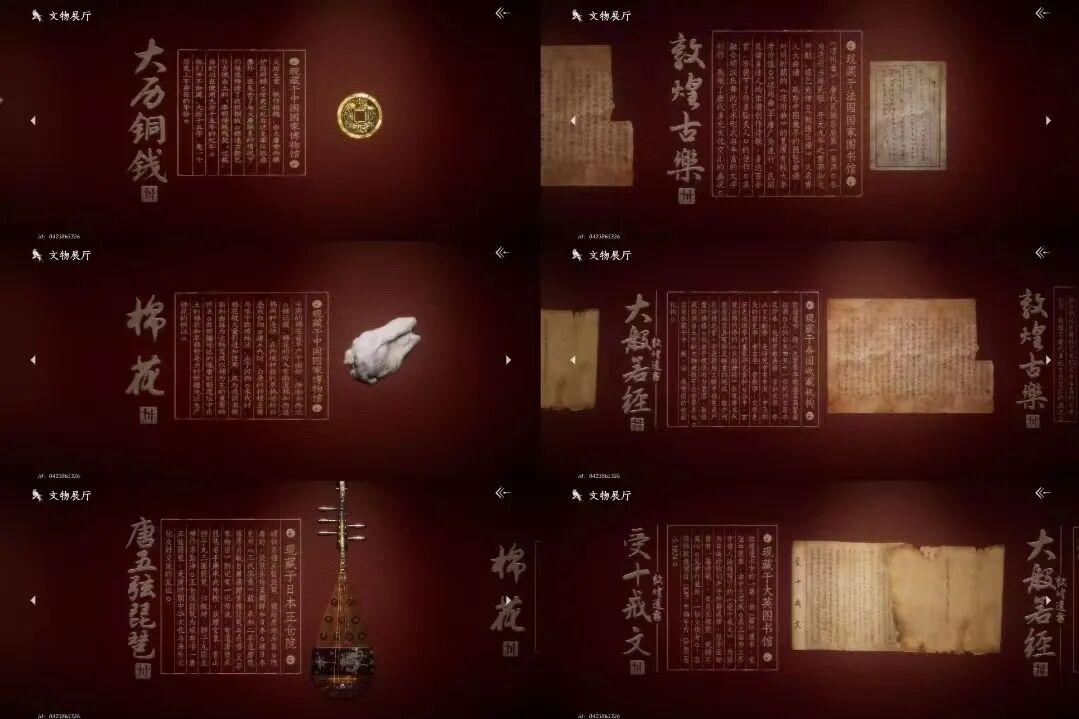
It doesn’t strive for so-called narrative perfection, but instead lays bare a raw, documentary-style melancholy—filled with regret—before the players. Without affectation or pretense, and without any attempt to gloss over or whitewash the truth, it ultimately transforms into a phantom pain that lurks in the softest part of every player’s heart.So much so that whenever you think you’ve forgotten it—the moment you see that golden leaf or hear the children’s folk song about the Battle of Nakadō Bridge—you can’t help but shed a tear.This belated surge of emotion is the very best interpretation of content that dares to “express itself.”
It is precisely these things—which don’t show up on financial statements—that build players’ unwavering trust: “sincerity.”
In this data-driven era, where commercial success is the ultimate metric and users are targeted with precision-tailored content based on their profiles, “self-expression” has almost become a luxury. But Yan Yun is like a group of game creators stepping up to you and saying, “I have a really interesting story—would you like to hear it?”
It isn't trying to cater to your tastes; rather, it invites you into its world.

In an interview, producer Beralt mentioned that one player comment had deeply moved him for a long time. The comment read: “The fact that you’re willing to create a game like this in today’s climate is, in itself, a manifestation of chivalry.”
In my view, having been put to the test through four major versions—Qinghe, Kaifeng, Hexī, and Bujian Mountain—*The Sixteen Sounds of Yan Yun* has thoroughly overcome the most perilous growing pains in terms of production capacity and quality that content-driven games typically face. It is now telling new stories about Chinese culture and domestic games through the language of “global wuxia.”
The declaration that “There is no other world of martial arts” is not a flippant boast, but rather an absolute confidence in the quality of our game and the significance of Chinese culture.This is because the long-term competitive advantages it has established are precisely those elements that cannot be easily quantified or replicated—a reverence for culture, a commitment to detail, and the courage to do what “may seem pointless but is indeed the right thing to do.”
原创文章,作者:游茶妹儿,禁止转载:https://youxichaguan.com/en/archives/216156