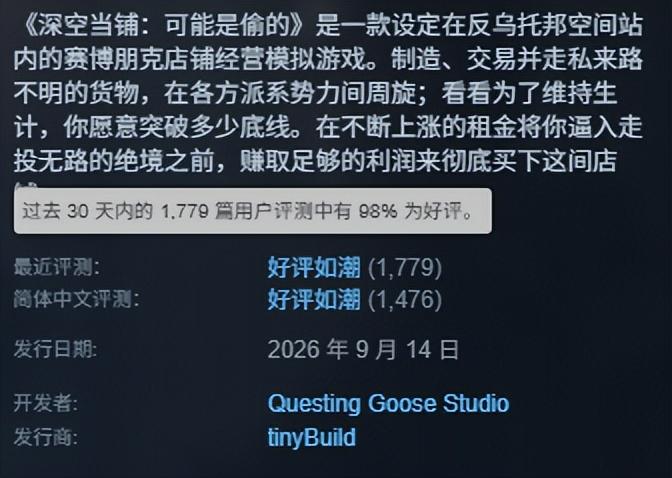
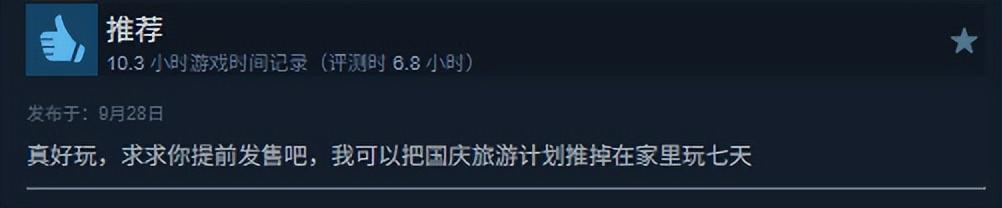
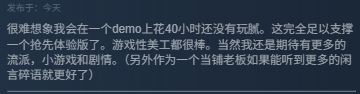
How should we evaluate *Deep Space Pawnshop: Possibly Stolen*? To quote the official description, it’s a cyberpunk shop-management game set on a dystopian space station.After the game’s demo launched on Steam, it immediately earned a “Overwhelmingly Positive” rating with 98% positive reviews, including comments like, “Can you hurry up and release it so I can play it during the National Day holiday?” and “Someone please knock me out until the full version comes out on the 28th.”The players’ enthusiasm has left me wondering: With such a vast array of simulation games on the market, how did *Deep Space Pawnshop* break through the crowd and become the game everyone is eagerly anticipating?
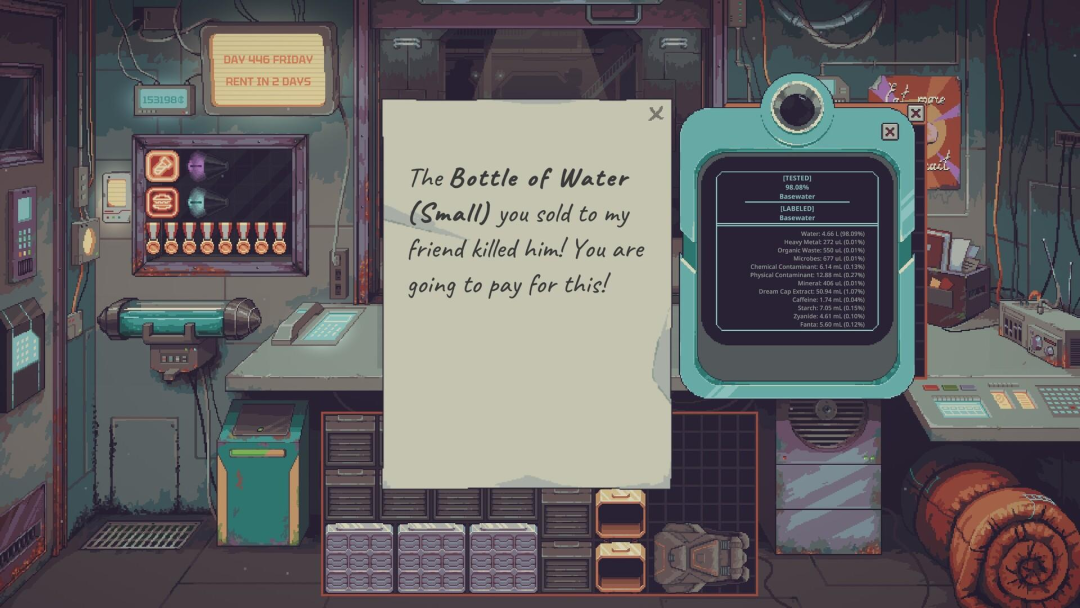
To verify these claims, I spent over a week playing the demo of *Deep Space Pawnshop* before the interview—and immediately became hooked. The demo isn’t the full version yet; currently, only four classes are available to play, but it’s quite substantial. In my opinion, it’s enough to provide at least 100 hours of gameplay.*Deep Space Pawnshop* never holds your hand when it comes to making money. Your mentor will teach you a few tricks every now and then, but once they’re done, that’s it—you’re on your own. How do you make money? Or rather, how do you make dirty money?Maybe you could try extracting 100% pure water from rat droppings. Sounds ridiculous, right? But as a pawnshop owner in a cyberpunk world, making money this way doesn’t bother me one bit.
Before the game’s release, I caught up with Bei Ning (also known as Amba), the developer of *Deep Space Pawnshop*. Let’s start by talking about Questing Goose Studio—the birthplace of *Deep Space Pawnshop*.
01
A studio with almost only one person
Although it’s called a studio, Questing Goose is so small that it’s practically just him: Benin handles all the design and programming himself, while an outsourced team provides the art, sound effects, music, and UI. In an interview, he was full of praise: without them, the game certainly wouldn’t have reached its current level of quality.
As for why he started making games right after graduation—Benin says he’s been playing games his whole life and had completed three game-related internships while in college. After leaving the ivory tower in 2023, he felt it was time to take a risk and try his hand at creating his own work. That’s how Questing Goose Studios opened its doors in Montreal.
“Deep Space Pawnshop” wasn’t his first project. Before that, he had developed a game called “Space Looter.” While there was no direct connection between the two projects, “Space Looter” happened to feature a flexible item and inventory system, which was later directly incorporated into “Deep Space Pawnshop.”
So the question naturally arises: What was the biggest change when we transitioned from *Space Looter* to *Deep Space Pawnshop*? Why did we feel at the time that “running a pawnshop” was a better fit for this world than the original gameplay?
The turning point came during a trip to Benin, when a sudden thought struck me: Since the Space Looter system was already so well-developed, why not use part of it to create a new project? That way, I wouldn’t have to start from scratch. After a series of changes along the way, *Deep Space Pawnshop* was born.
02
Pawnshops: A Window into the Cyberpunk World
Based solely on gameplay, *Deep Space Pawnshop* could easily be classified as a management simulation game. And while there’s no shortage of excellent management simulation games on Steam, Benin himself is well aware of this fact.
“There are a lot of great career and shop simulation games on Steam, but I think the game would be more interesting if it had a unique premise and a world with character. Otherwise, it’s just another run-of-the-mill 3D simulation game, and that’s not what I want to make.”
I’m curious about his thoughts on how to create something unique: Does he feel that the small shop in *Deep Space Pawnshop* is more than just a fixed setting for a management sim—that it’s actually a way to view a cyberpunk world through the lens of a pawnshop?
He replied: “I chose to run a pawnshop because the role of shopkeeper is naturally suited to interacting with all walks of life—some come to buy, some to sell, some to conduct legitimate business, and others with goods of unknown origin.”Every day, players sit behind the counter as if looking through a small window onto the world, observing people of different professions and with different purposes passing by. The items they carry bring a piece of the world into the shop. In this way, the logic of the business and the game’s world-building operate in a self-consistent manner.
Picking up on that point, I pressed him further: Are players here to “run a store,” or to struggle to survive under pressure? Which experience does he want more?
His answer was very straightforward: For many players, the pressure and the struggle to survive are the most interesting parts of the game—and its core.
“Once you get past this stage, the appeal shifts to earning more money and running the shop more effectively. I want this challenging phase to last a little longer, while still letting players feel like they’re making real progress—so the game doesn’t turn into a boring grind.”
He admitted that this part was very difficult to implement, because different players have completely different definitions of “difficult.”
“What if a player just wants to play by the rules and run a store honestly?” I asked.
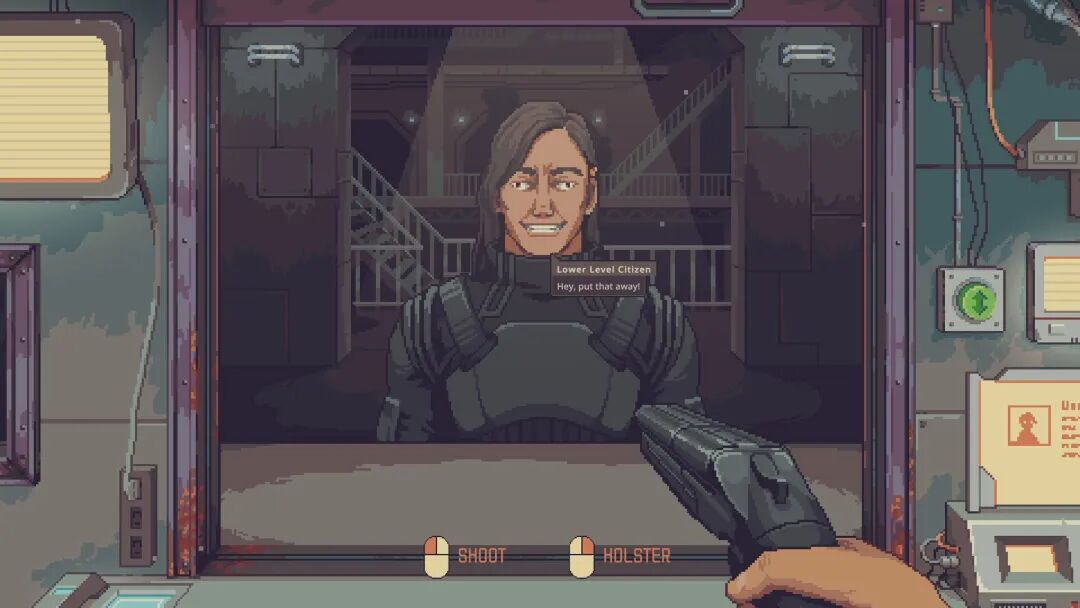
“Of course. The goal of this game is to support different playstyles. From the very beginning, it was designed with both a shop management simulation and a sandbox mode in mind.”
03
Players can always find even more underhanded ways to make money.
The closed beta recap announcement mentioned that players particularly enjoy risk-based games with an element of chance, and the “Rock Bottom” starting point in Hard Mode is especially popular among players who enjoy a challenge.
“Players seem to always be pushing themselves toward greater difficulty. Some even go so far as to modify their save files so they can start the game with more debuffs. They call this ‘Boulder Bottom’ instead of ‘Rock Bottom.’”
Benin’s approach was, “If players want to play, then I’ll make it.” He told me that the official release will include a “Challenge” difficulty level—even harder than Hard Mode—complete with a set of negative traits, specifically designed for players who enjoy a challenge. For casual players, he’s also added a “Cozy” mode that reduces pressures like rent increases.
When it comes to gameplay strategies that players figure out on their own, we can’t avoid mentioning the “rotten apple” incident I brought up at the beginning. I asked him—half-jokingly—if he knew about the “rotten apple” incident, and whether, during development, any players had discovered something the team hadn’t anticipated at all. Did that kind of behavior ultimately lead to changes in the design of any systems?
I could almost see Benin’s wry smile:
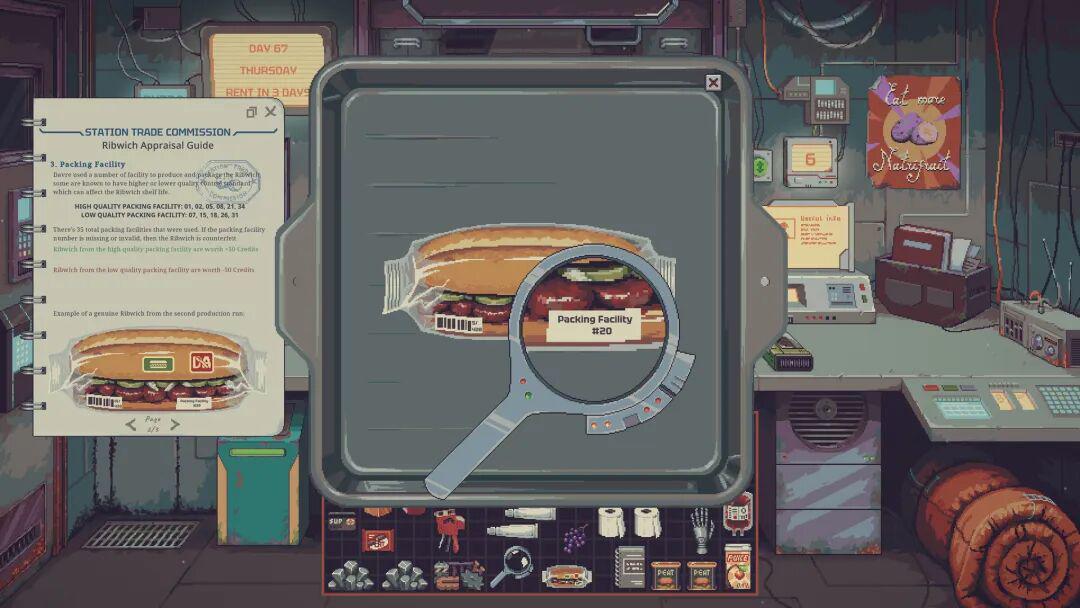
“That’s right, and this has been well documented.There’s a way in the game to put rat droppings into a liquid container, which allows you to produce 100% pure water quite easily using a miniature water purifier. However, this isn’t very practical because you have to collect a large amount of droppings first. This is a natural result of how different systems interact, so in the end, I decided not to change it.”
04
What Legacy Did *Show Me Your ID* and *Space Station No. 13* Leave Behind?
When people first see this game, Benin mentioned in a discussion with players on Reddit that the initial reaction to *Deep Space Pawnshop* might be that it resembles *Show Me Your ID*, but after playing for a while, you’ll realize it draws inspiration from *Space Station 13*.
“People might think of Papers, Please first when they see the game, but after playing for a bit, they’ll notice the inspiration from Space Station 13.
When people first see this game, their initial reaction might be that it resembles *Show Me Your ID*, but after playing it for a while, they’ll realize it draws inspiration from *Space Station 13*.
Benin told me that these two games feature two completely different structures. *Show Me Your ID* offers a core structure: the player takes on the role of a social observer, and every day, new and different people—each with a complex life story—come before you and interact with you; the player must look for clues in their stories to explore the entire game world.
“As for *Space Station 13*, we drew inspiration from the depth of its various systems.”
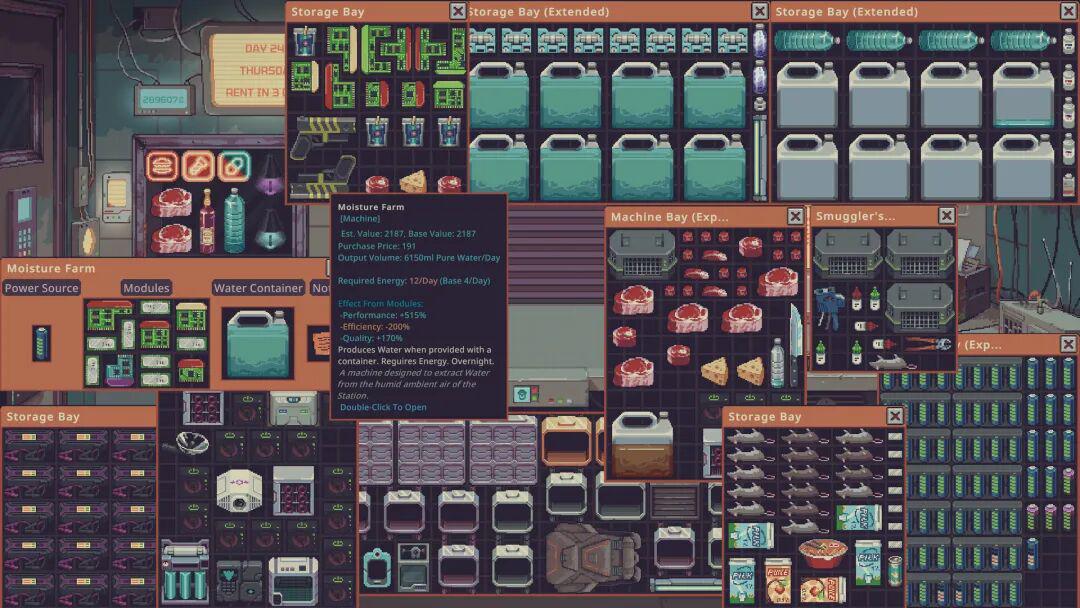
The systems are layered and interdependent; players won’t complete quests by following a fixed path, and the game generates a vast number of outcomes that are completely beyond the developers’ control. The fact that players can turn rat droppings into 100% pure water is a byproduct of this depth.
For a team of practically just one person, this system is a bit over the top. Is there any system that made him truly feel, “This is much harder than we imagined”? And how was it ultimately resolved?
“Yes.”
I can almost see the amused expression on Benin’s face behind the words,
“Mechanisms of Product Purity in Chemical Systems.”
“Simply put, a player could make a pill—for example, a ‘caffeine’ pill that doesn’t actually contain caffeine—and then label it as a regular caffeine pill.”
The problem is that as soon as a player tries to trade it, the game has to respond accordingly. Whether it’s regular merchants, black-market exchanges, or orders—every channel through which players can sell the item must trigger a negative reaction when they try to sell the counterfeit medicine.
“I know this is going to be a lot of work, but I’ve decided to do it anyway.”
To what extent exactly? Benin answered very bluntly:
“We never fully solved this, and it still causes issues today.”
We’ve never fully resolved this issue, and it still causes problems to this day.
The more complex the system, the harder it is for developers to anticipate every possible scenario. Players can freely combine various tools and items, which means the game must handle more edge cases; the performance of a single item across different channels may also affect other systems.
Benin is clearly willing to pay the price for this. Even though some systems still have issues today, he has not abandoned this design approach.
05
Why are players so eager for a demo?
Finally, I asked a question I was really eager to hear the answer to. The demo has received overwhelmingly positive reviews in the Chinese Steam region, with many players in the comments section already popping champagne in anticipation; even though the full version hasn’t been released yet, Chinese video platforms are already flooded with comments like, “I’m dying to play the full version.” As a developer, Benin seemed both surprised and delighted.
“At first, we were pretty surprised, because we hadn’t promoted this game in China at all at that point. It was really heartwarming to see all this.”
This reaction is actually not hard to understand.The appeal of *Deep Space Pawnshop* goes beyond cyberpunk, dystopian, or other post-apocalyptic elements. In *Deep Space Pawnshop*, the choices players make aren’t isolated from one another. The funds you accumulate through running your business—or your knowledge of various items—can help you discover new ways to make money you hadn’t considered before.When a game allows players to continually discover new combinations even after they’ve become familiar with the rules, it goes beyond simply presenting content and waiting for players to uncover it piece by piece. This may be one of the reasons why the *Deep Space Pawnshop* demo has received such widespread acclaim.

At the end of the interview, Benin was asked if he had anything he wanted to say to Chinese gamers and what his outlook for the future was:
He replied, “I’m truly grateful for everyone’s support and interest, and thank you for playing our game! I hope Version 1.0 lives up to everyone’s expectations.”
“Also, version 1.0 isn’t the end of development: free content updates will continue after the official release.”
原创文章,作者:游茶妹儿,禁止转载:https://youxichaguan.com/en/archives/216717