37 Interactive Entertainment excels at “making the most of every opportunity.”
Once they’ve successfully validated a viable gameplay loop, they’ll reuse the entire gameplay loop and monetization framework. By changing the theme, art style, and world-building—as well as making minor innovations to gameplay elements—they can rapidly produce more differentiated new titles, precisely target users across different demographics, and continuously capture traffic in niche markets.
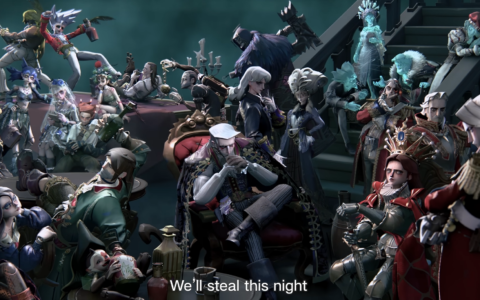
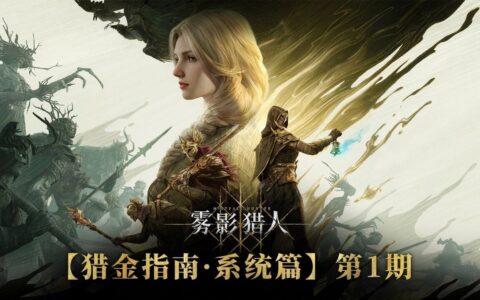
This strategy has indeed yielded fruitful results for 37 Interactive Entertainment.After the “loot box” mechanic went viral across the internet, they made full use of various themes and IP resources to launch a series of titles featuring similar gameplay mechanics, including *Seeking the Way in the Great Void*, *Prologue of the Soul*, *The Nameless*, and *Heroes Without Flash*. Among these, several became massive hits, generating over 100 million in revenue for several months.
In the broader simulation game genre, following the long-running success of *Call Me the Store Manager*, they have gone on to release *Time Big Bang*, a game centered on the evolution of civilization, and *Time Grocery Store*, a game set in a nostalgic, everyday urban setting—and these later titles have also achieved remarkable market success.
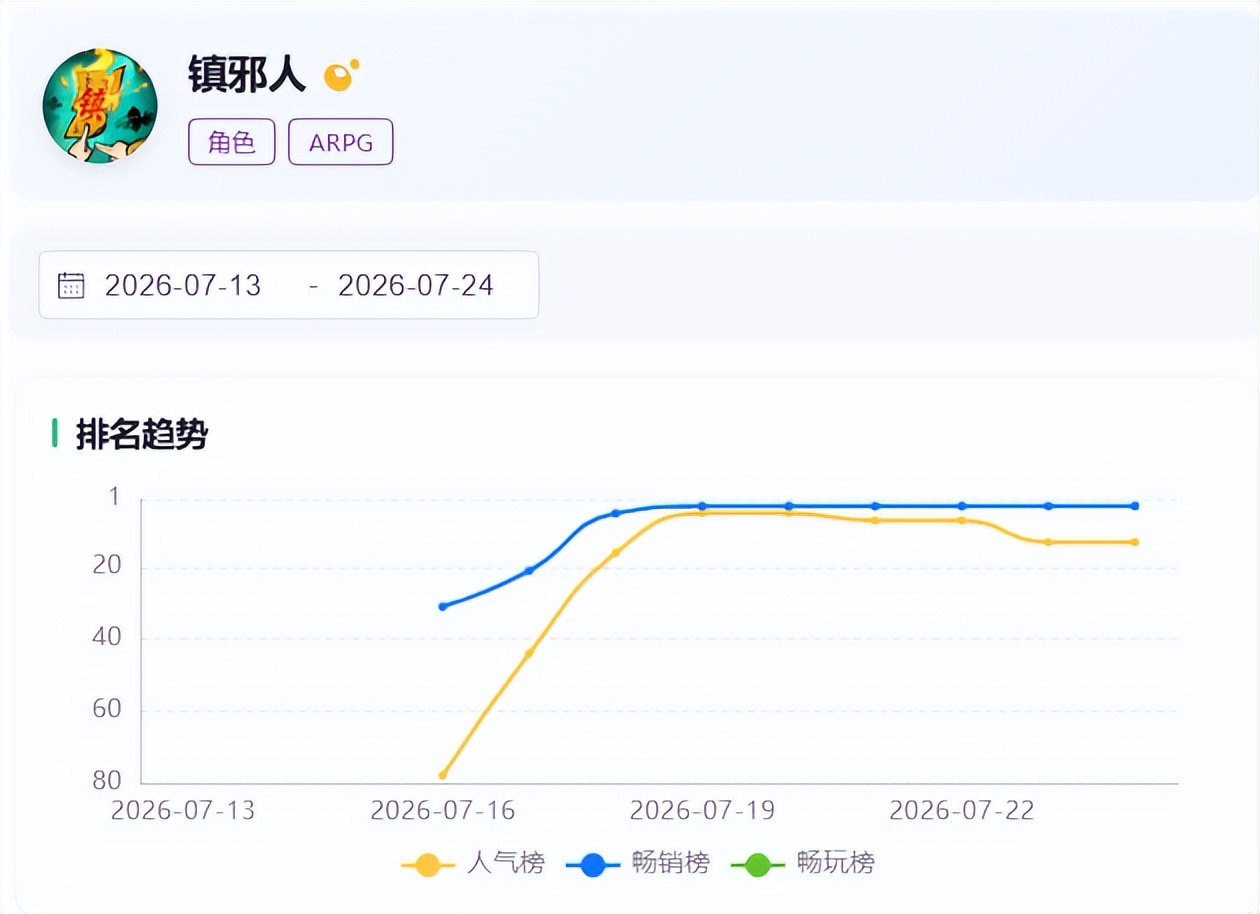
Recently, using the same “formula” and drawing inspiration from their moderately popular title *33 Days of Survival*, they launched a new game called *The Demon-Slayer*. Now, this new game is taking the market by storm and has held a spot in the top 3 of WeChat’s mini-game bestseller chart for six days straight.
01
A Powerhouse Partnership Between “Boom Boom Like + Soda Che”
"The Exorcist" is quite distinctive in both its theme and gameplay.
In terms of theme, the game draws on the ever-popular genre of Chinese horror, incorporating Chinese supernatural elements such as ghosts, spirits, and puppets to create its overall aesthetic. Its highly distinctive visual style not only captures players’ attention more easily but also provides a wealth of material for short-form video ads, helping the game quickly establish a unique point of differentiation in the competitive user acquisition market.
In terms of gameplay, this game has almost entirely adopted the underlying gameplay framework of *33 Days of Survival*. When *33 Days of Survival* launched late last year, it successfully cracked the Top 5 on WeChat’s Mini Games best-seller chart thanks to its unique blend of “boom-like” and “search-hit-retreat” gameplay elements.
Among them, the “Rumble-like” genre has been around for over three years. Ever since the release of *Rumble Heroes* (Rumble Mercenaries) by South Korean developer PlayHard,this type of gameplay design—centered on “casual RPGs”—has become an instant hit, attracting the attention of and inspiring imitations from numerous developers worldwide, and giving rise to a large number of similar hit titles. Among them are the mobile game *Top Heroes (Song of the Kingdom)* by Jiangyu Interactive and the hit mini-game *Heroes of a Hundred Trials*, published by 99 Interactive.
Meanwhile, “Search-Strike-Withdraw” has become an absolute sensation, achieving complete penetration across all categories in the past two years—so much so that the industry has even coined the phrase, “Everything can be ‘Search-Strike-Withdraw.’”Leading companies such as Tencent, NetEase, and ByteDance have thrown significant resources into this space, with flagship titles like *Operation Delta*, *Dark Zone Breakthrough*, and *Firefly Assault* continuously breaking records and reporting success after success;Popular titles in other genres, such as *Eternal Return* and *Unlocker*, have also introduced new gameplay mechanics to capitalize on opportunities in this space, and even the mini-games sector has seen the emergence of highly stylized hits like *Virus Battle Royale*, *Hook & Escape: Giant Crisis*, and *Infinite Reincarnation*.
Yet 37 Interactive Entertainment has managed to seamlessly integrate these two popular gameplay elements into a single game.
In *The Exorcist*, the main storyline follows a “Boom-Boom-like” structure,Players form teams in the game and acquire resources—such as copper coins, ingots, Bonding Charms (Summoning Charms), and Proof of Demon-Subduing—by defeating monsters and finding treasure chests. They then use these resources to unlock new maps, summon or upgrade heroes, and advance their titles, creating a steady progression cycle.
During actual gameplay, the game incorporates the elements of "search, fight, and retreat," which are integral to the experience. "Search" involves exploring the map to find supplies and open treasure chests; "Fight" means battling roaming monsters to claim resource rewards; and "Retreat" allows players to return to a safe zone to rest and recover after completing their exploration.
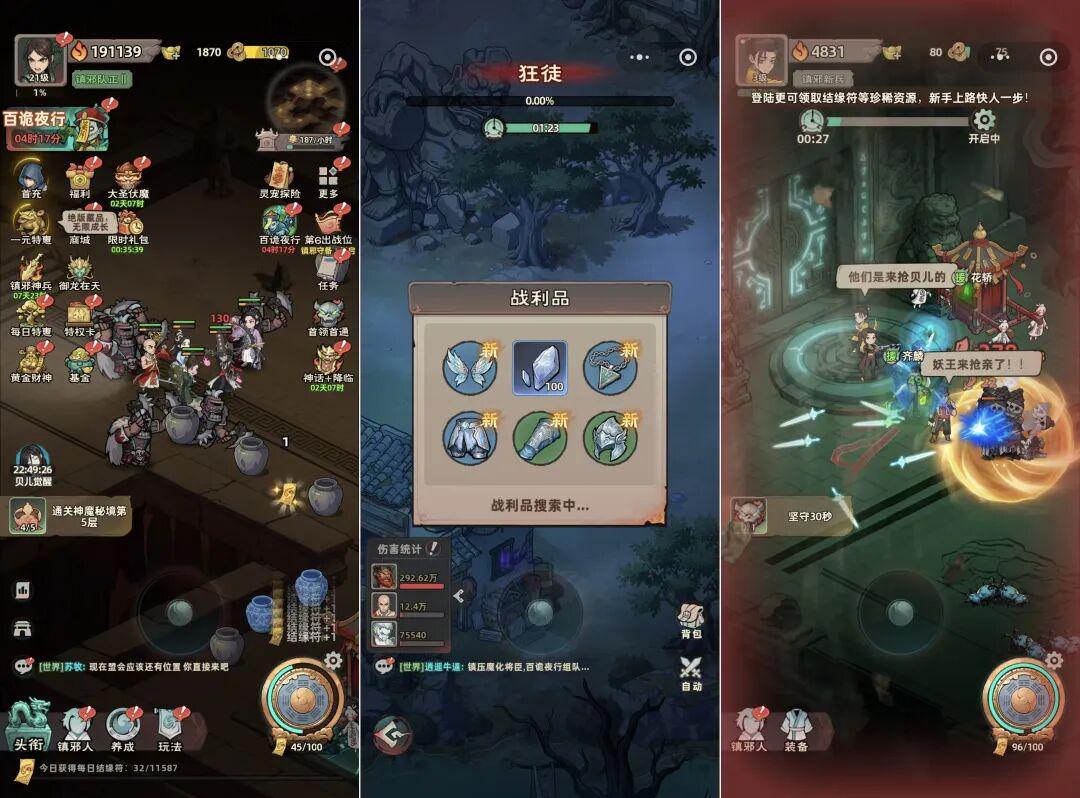
Building on this foundation, the game also introduces a new “Small Room Exploration” module. Players can enter standalone, enclosed environments—such as abandoned dungeons—to fully experience the entire process of looting, combat, and evacuation. Each individual room serves as a condensed, mini version of a “loot-fight-escape” level, further amplifying the fun of exploration and enriching the game’s depth.
The advantages of this “powerhouse collaboration” between two popular game formats are very clear.From a user acquisition perspective, both “Honglonglong Like” and “Souda Che” have their own stable user bases. Merging these gameplay styles can broaden the target user base, provide more creative angles for ad copy, and make it easier to capture players’ attention in a highly commoditized market, thereby improving user acquisition conversion rates.
In terms of gameplay, these two popular modes complement each other perfectly. “Boom Boom Like” provides long-term progression goals that keep players engaged over the long haul, while “Search, Fight, Retreat” offers more immediate risk-reward dynamics and loot feedback, heightening the tension of each exploration session.The combination of these two distinct play rhythms—one long-term and one short-term—enriches the gameplay layers and creates a unique experience that sets the game apart from traditional squad-based exploration games.
02
Lightweight operation, powerful core
Of course, to accommodate the gaming habits of casual gamers, the development team has also significantly simplified the game's controls.
Unlike many casual games that gradually unlock automation features, *The Demon Slayer* makes auto-pathfinding and auto-battle available right from the start, accompanied by clear quest guidance.Throughout most of the main story and in some dungeon challenges, players can keep progressing simply by tapping the screen; only during boss battles do they need to manually position their characters to avoid heavy damage. This design perfectly aligns with the needs of casual gamers who prefer an idle gaming experience—one that allows them to log in anytime for short, fragmented play sessions.
At the same time, the game has also made adjustments to its interface interactions. The gacha entry point has been simplified by embedding the function button directly into the main interface; after players collect enough Bond Charms through exploration and combat, they can summon heroes anytime, anywhere without having to navigate to a separate gacha page.This eliminates the disruption caused by repeated page switching, making the entire workflow—from resource collection to character summoning and hero development—more seamless and fluid.
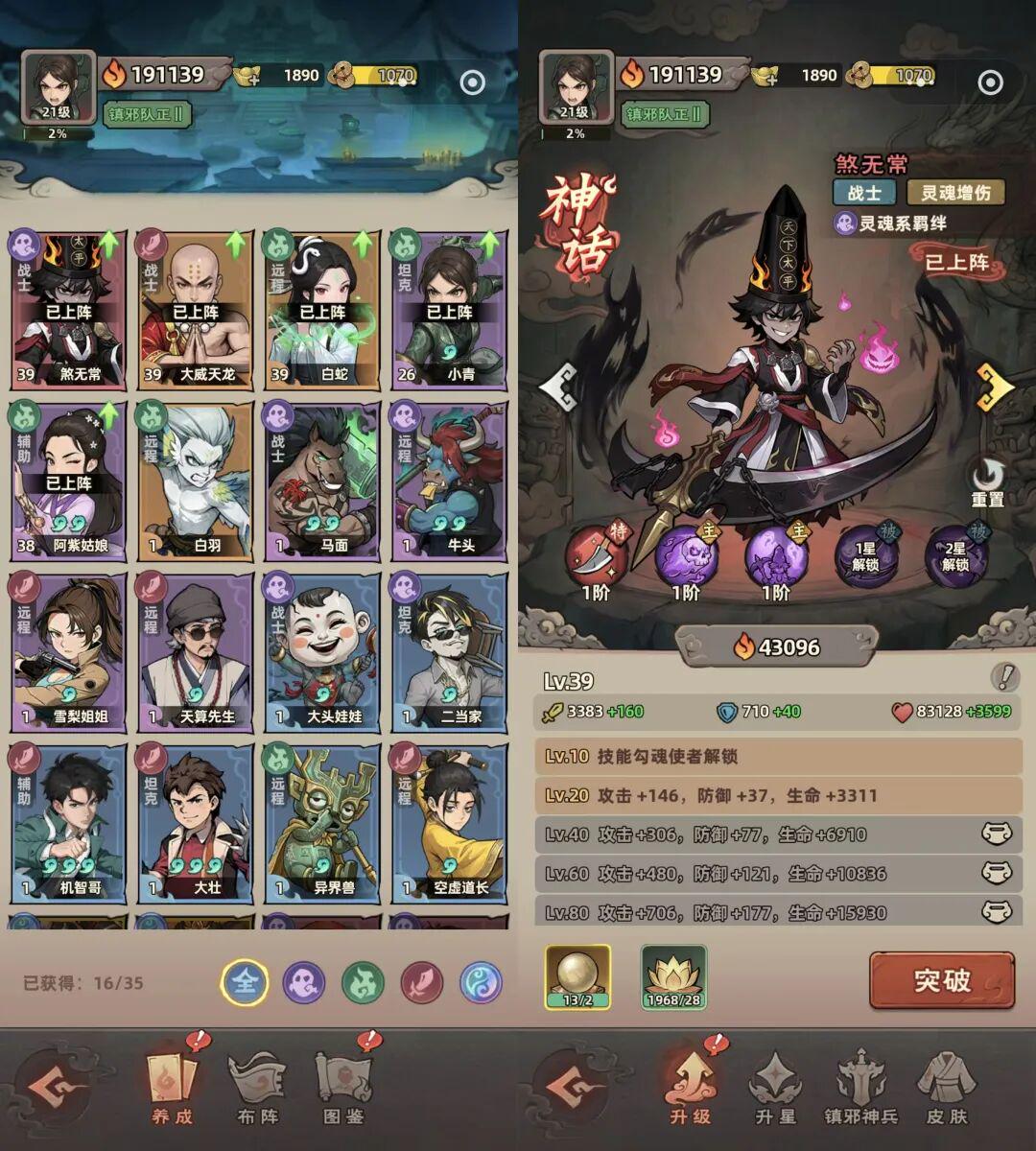
Although the game's controls have been significantly simplified, the core progression mechanics remain deeply complex. The entire progression system is composed of multiple progression tracks—including heroes, equipment, magical artifacts, demon-subduing beasts, and divine and demonic relics—that build upon one another in a progressive manner.
In addition to recruiting, leveling up, and upgrading heroes to higher star levels to build their team lineups, players can also equip Exorcist Weapons to gain corresponding attribute bonuses and unlock exclusive skills;Different magical artifacts not only provide heroes with certain attribute bonuses but also generate additional combat effects (which take effect in different regions or scenarios); Demon-Suppressing Beasts, as support units, have their own damage-dealing skills and can also grant sustained buffs to the entire team; and the Divine and Demonic Relics unlocked in the mid-to-late game provide even greater attribute bonuses.
The diverse progression modules work together to provide players with ample room for strategic combinations, satisfying the need for in-depth strategy in core gameplay while also enhancing the game’s replayability and effectively extending its lifespan.
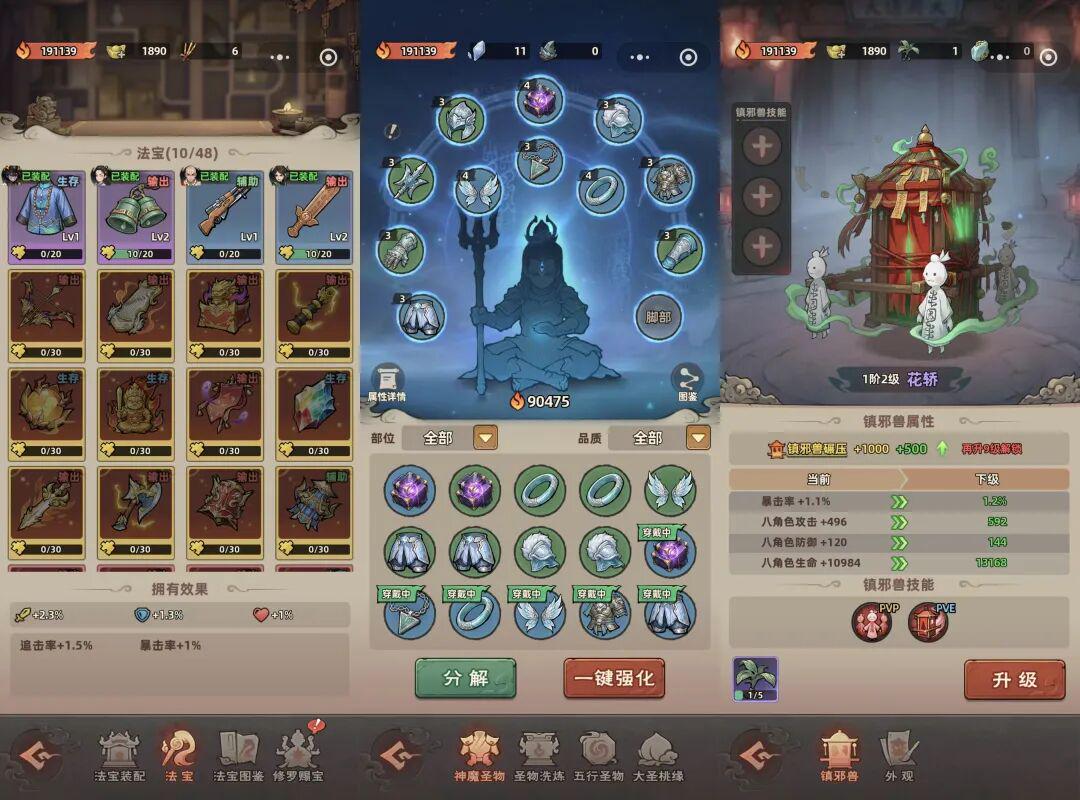
The entire set of gameplay and progression mechanics forms a complete numerical growth cycle, driven by two parallel threads—title advancement and the countdown to major events—which together constitute the game’s main storyline.
Players must continuously advance their titles by exploring the map, defeating monsters, and securing their first victory against bosses. This allows them to unlock more gameplay modules, raise the hero level cap, and gain additional stat and combat power boosts. At the same time, the major event countdown serves as a phased objective that guides the players’ pace, compelling them to continuously develop their squads and enhance their overall combat power.These two core mechanics work in tandem to establish clear short-term and medium-to-long-term goals, constantly incentivizing players to invest resources in character development and sustaining long-term engagement.
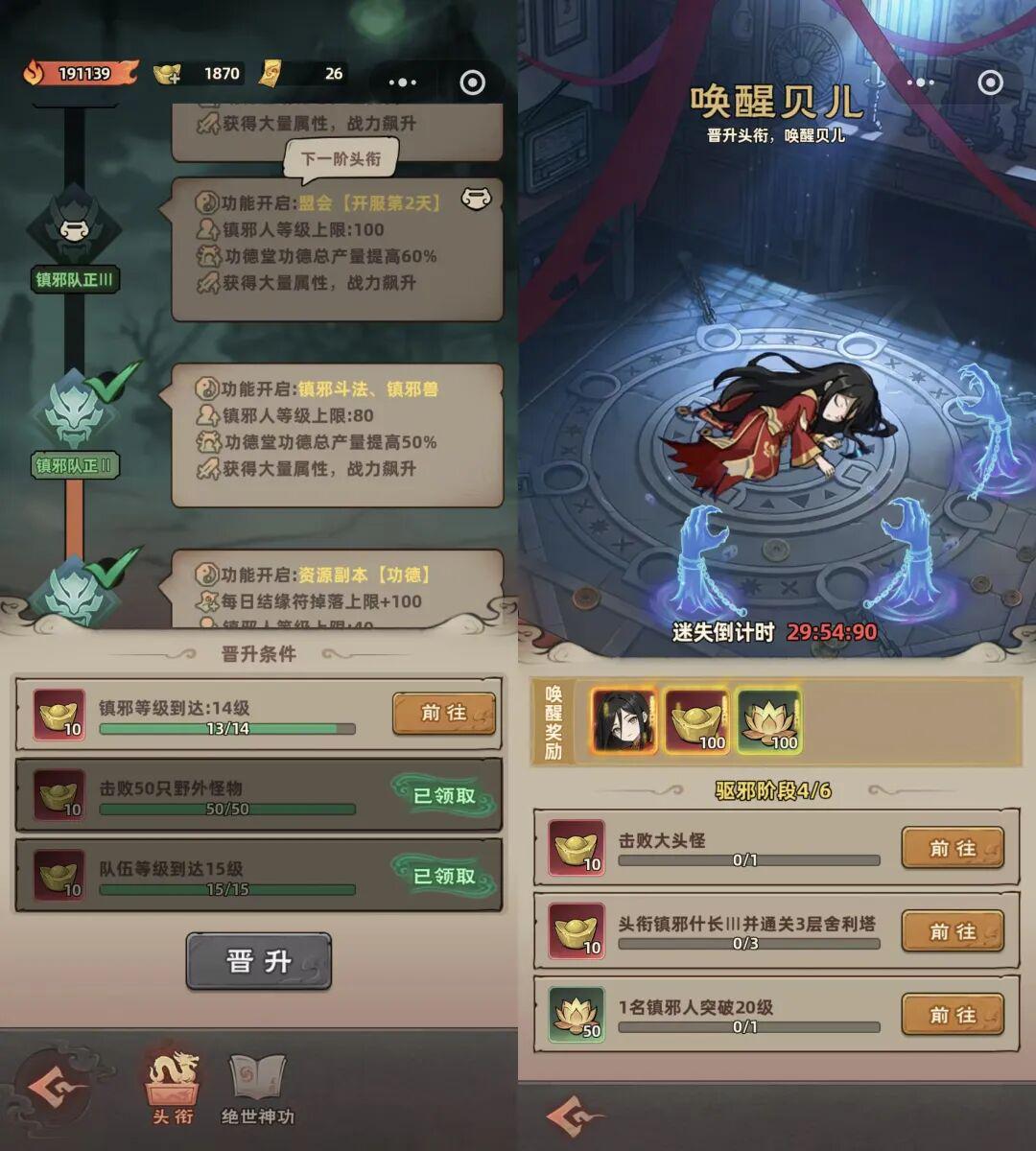
Overall, *The Demon Slayer* adopts a typical “low barrier to entry, high depth” design philosophy.In the early stages, the game’s progression is relatively measured; once players unlock a high-tier hero, they receive immediate and tangible positive feedback, experiencing the exhilarating thrill of mowing down enemies. As the game progresses, however, players face increasingly powerful bosses and adjusted dungeon challenges, forcing them to continuously enhance their squad’s combat power through multiple progression paths—including team composition adjustments and gear upgrades.
Furthermore, throughout this process, the game fully capitalizes on players’ aversion to disparities in gameplay experience. By offering limited-time trials of high-tier heroes, it allows players to experience the thrill of a sudden surge in combat power and recognize the gap in character strength, thereby motivating them to make in-game purchases and driving monetization.
From the fully automated gameplay mode that lowers the barrier to entry, to the rich and diverse progression system that extends the game’s lifespan, to the gradual monetization guidance—the entire design flow connects naturally and builds upon itself, forming a seamless and comprehensive closed loop of gameplay and monetization.
END
From *33 Days of Survival* to *The Exorcist*, this once again demonstrates the effectiveness of 37 Interactive Entertainment’s “multi-purpose” strategy. The integrated framework of “Houmoulong Like” and “Search, Attack, Retreat” has been reused, and when combined with the currently popular “micro-horror” genre, it has proven to be highly competitive in the market.As of this writing, the game continues to hold a steady position in the top three of WeChat Mini Games’ best-selling chart.
However, it’s important to note that while this strategy of reusing proven templates may be highly effective for companies like 37 Interactive Entertainment—which have substantial resources in product development and capital investment—it may not necessarily be suitable for most R&D teams.In the increasingly crowded mini-game market, proven gameplay templates can help secure a product’s core user base and reduce the risk of trial and error; however, to consistently create hit titles with long-term viability, breaking out of established frameworks and developing more groundbreaking gameplay innovations is the long-term challenge that all industry professionals must address.
原创文章,作者:游茶妹儿,禁止转载:https://youxichaguan.com/en/archives/208455