Since the start of this year’s Steam New Releases Sale, the indie game *King of Auctions* has quickly skyrocketed in popularity, becoming a “regular feature” on major gaming livestreams.On screen, streamers stare intently at the silhouetted shipping container tiles, their faces flushed with tension; on their screens, the constantly rising bid numbers fill the comment section with a relentless barrage of messages.
The excitement in the livestream quickly translated into concrete numbers: in less than two months, the game’s demo saw its peak concurrent users surge from 1,400 to 23,000; on the day the full version launched, that number surged past 57,000, propelling *King of Auctions* to the top of the Steam sales chart in the Chinese region.
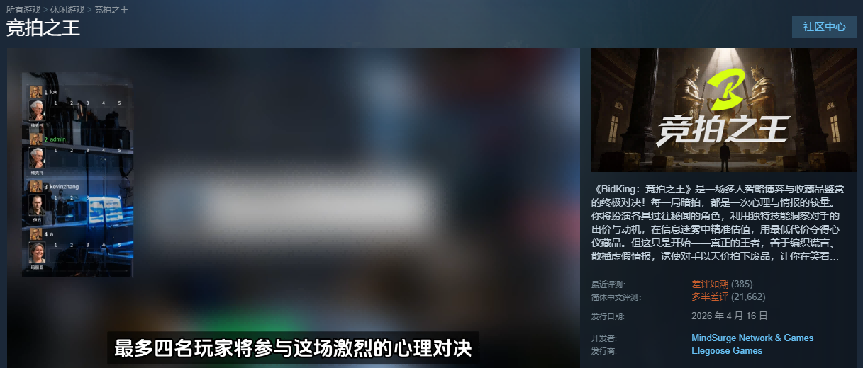
Even as the frenzy in the livestreaming rooms has yet to die down, a large number of “clones” have quietly emerged on gaming platforms of all sizes. In addition to the similarly named *King of Auctions*, there are also *Club Big Player*, *Everyone’s Tycoon*, and others.Among them, *Club Big Player* has achieved the most impressive chart performance, peaking at No. 21 on WeChat’s Mini-Games Best-Sellers Chart and No. 27 on Douyin’s Best-Sellers Chart, making it a rare hit among new in-app purchase titles in the mini-games sector.
01
The Allure of “Online Jade Stone Betting”
"King of Auctions" is yet another prime example of a game that gained popularity through live streaming and short videos, and the reason it quickly broke into the mainstream is largely due to its highly entertaining psychological gameplay.
The inspiration for this game came from a sudden flash of inspiration the producer had while in the bathroom; its core mechanics combine the "container blind box" trend that has taken the world by storm with the search-and-loot mechanics commonly found in search-and-escape games.
Once the game begins, multiple players join a match through the matchmaking system and take turns participating in a sealed-bid auction for a batch of virtual warehouses. Players cannot see the specific contents of the warehouses or view other players’ bids; they can only judge their value based on vague information such as the warehouse’s appearance and level labels, and submit their own bids. Ultimately, the highest bidder wins.
However, the winner of the game isn’t necessarily the person who bids on the most warehouses; the real deciding factor is whether the items that ultimately drop are worth the price you paid. A warehouse might contain rare items worth a fortune, or it might just be a pile of worthless, low-level junk.This means that a warehouse you snatched up for an exorbitant price might turn out to be nothing but junk, while a “junk box” that someone else picked up for a bargain might actually contain top-tier gear. This element of uncertainty makes every game as thrilling as “speculating on jade.”
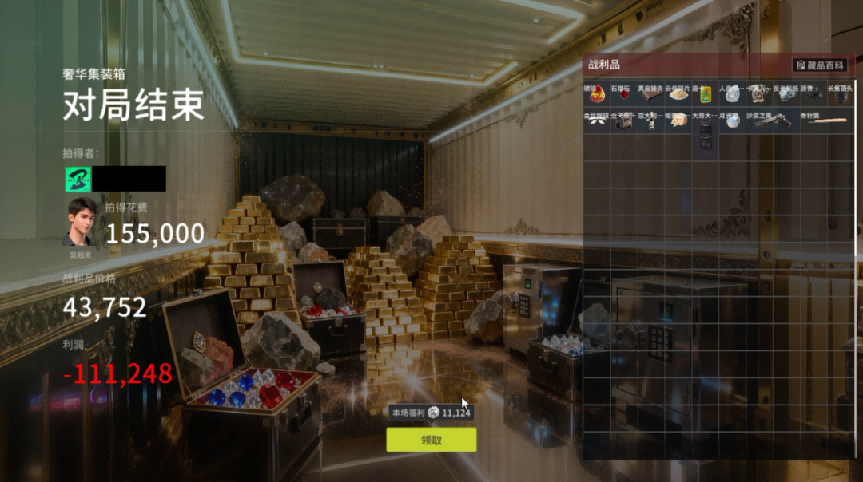
Even more ingeniously, the production team has infused the core mechanic with the spirit of online competition. Each player can use unique items to uncover additional clues beyond the publicly available information. This information asymmetry opens up a wider range of possibilities in each round: some players use it to make precise valuations, while others take the opportunity to drive up prices and set traps.Consequently, every bid becomes a battle between courage and reason. When you see an opponent going on a bidding spree in the previous round, will you call to take a gamble, or will you bow out in time? This is precisely what is meant by “there’s nothing more enjoyable than competing against others.”
When the game comes to a close, the items in the warehouse are revealed one by one, and whether the player made a profit or a loss remains a mystery until the very last moment. Whether the outcome is “hitting the jackpot” or “losing big,” it’s always the kind of dramatic twist that live-stream viewers love to see.
As a result, after streamers tried out the game, *King of Auctions* quickly went viral on live-streaming and short-video platforms. Clips from live streams by top streamers like Yinzi and Dian Gun quickly surpassed 100,000 views on Bilibili, and game-related topics on Douyin garnered over 200 million views.The unexpected viral success of the gameplay videos forced the development team to forgo their Spring Festival break and work around the clock to rush out both the demo and the full version.
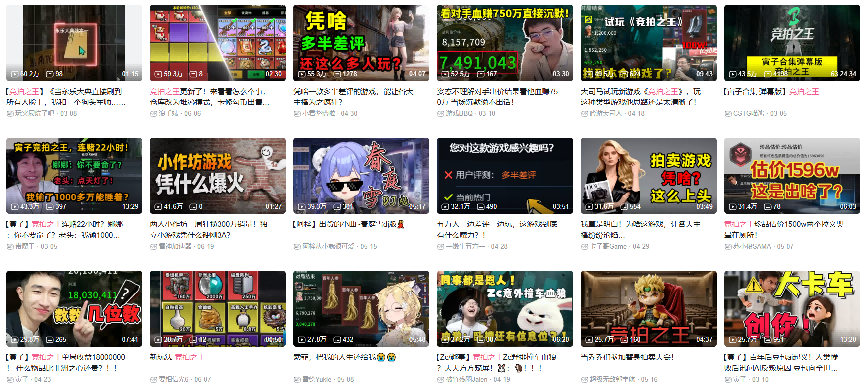
After the official release, the game’s reputation plummeted to a “flood of negative reviews” due to server crashes and controversy over its payment model. However, from a business perspective, the game sold over 1.1 million copies within its first month of release (Source: VGI Data), which is undoubtedly a huge success for a lightweight indie game.
02
"Club Big Player"
With such impressive results and popularity, it was hard for other development teams not to take notice. Soon after, a flood of mini-games touting “auction” mechanics hit the market, with *Club Big Player* gaining the most momentum—it has now climbed into the Top 30 on both WeChat and Douyin’s mini-game sales charts.
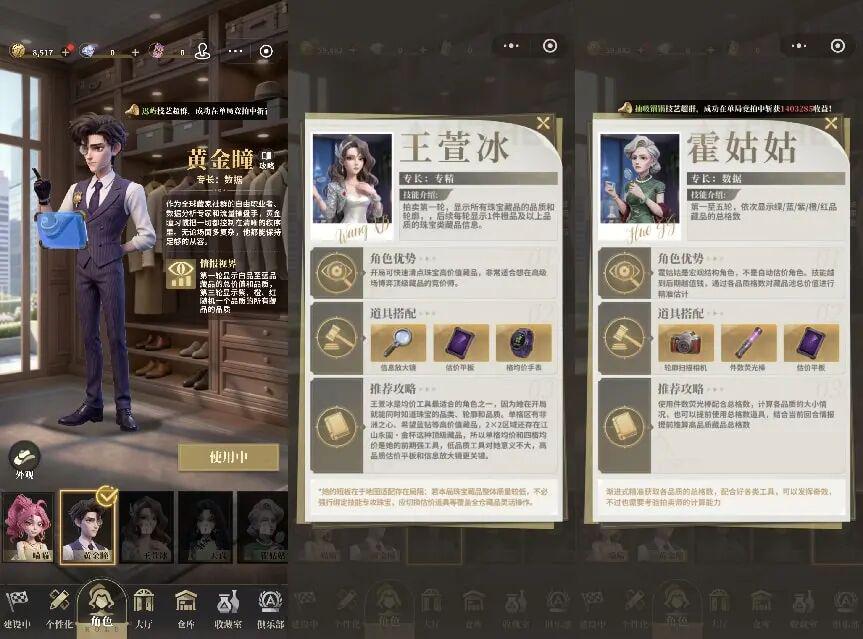
Overall, aside from the art style and UI design tailored to the mini-game market, the game is a nearly exact recreation of the original’s core systems, including its main gameplay, player-matching mechanism, and character skill configuration.
Just like in the original work, the game features a diverse cast of auctioneers, each with their own unique skills: for example, “Golden Eye” is a data-oriented character who can identify all low-value collectibles right from the start and obtain a piece of high-value intelligence midway through the game;“Wang Xuanbing,” on the other hand, specializes in jewelry. From the start, she can clearly identify the quality and outline of all jewelry items. By fully leveraging each character’s strengths and pairing them with the right items, you can efficiently determine the value of collectibles and minimize valuation errors.
To further enhance the game’s long-term appeal to players, it has also introduced a seasonal system. Through a continuous stream of seasonal quests and limited-time seasonal content, this system encourages players to develop consistent login habits and drives their ongoing engagement with the game.
In terms of the economic system, the game has built an entire set of operational mechanics around gold coins. Players must first pay an “entry fee” to join each round; after winning a warehouse in an auction, a corresponding amount of chips is deducted; and the collectibles acquired through auctions can be recycled and converted back into gold coins, creating a cycle of resource circulation.
Building on this, the game also features a room tiering system: the more chips a player has, the more eligible they are to enter higher-tier rooms, and the probability of obtaining high-quality items in these rooms is significantly higher. Players with more gold coins enter better rooms, win more gold coins through auctions, and then advance to even higher-tier rooms—this forms the game’s primary progression loop.
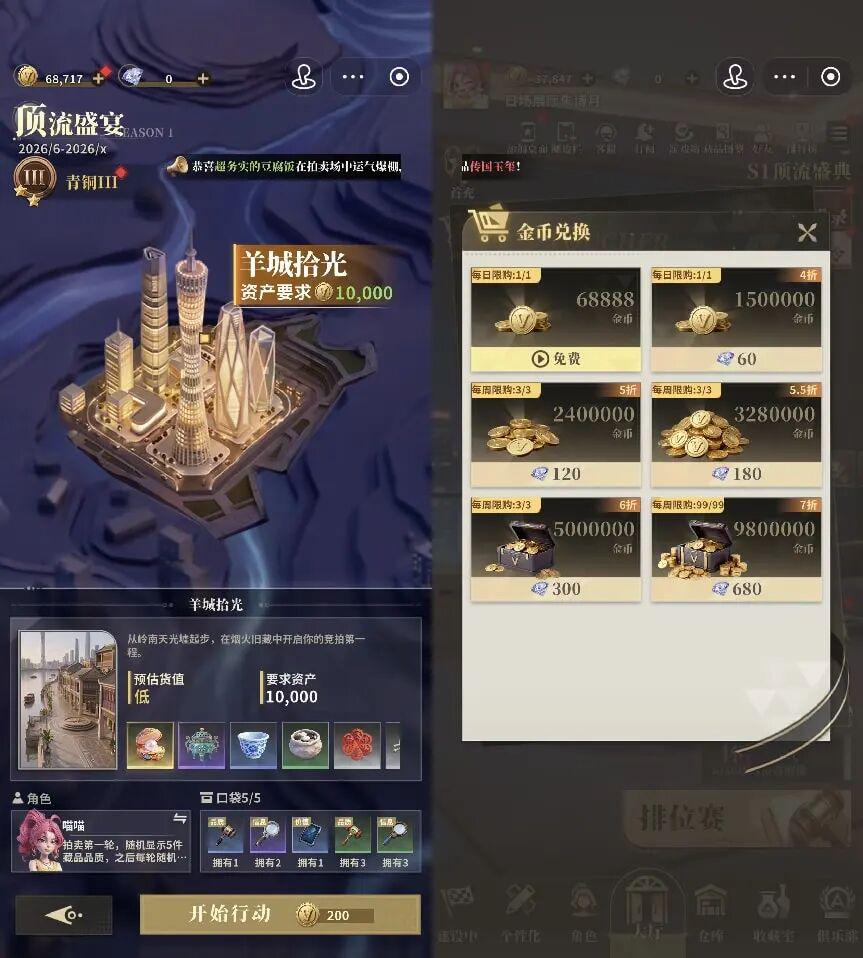
Skins, seasonal perks, and in-game currency form the backbone of the game's primary monetization model.
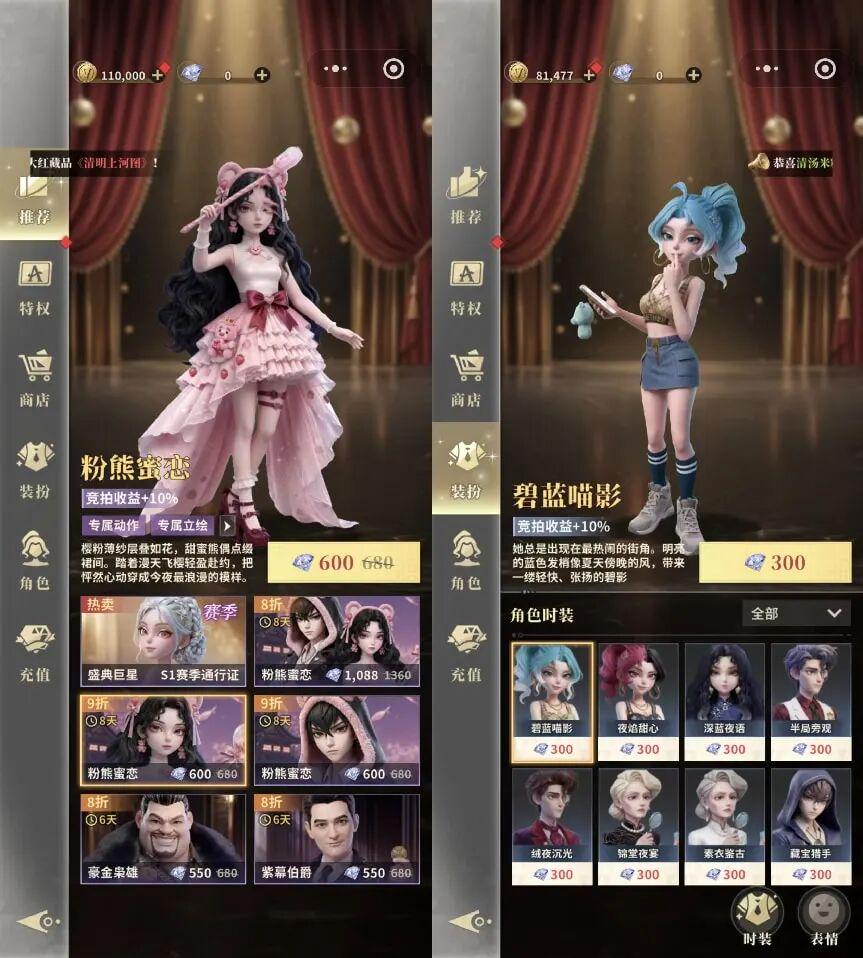
Paid skins not only feature exclusive character art and animations, but also provide an additional bonus to auction proceeds. This “good-looking and practical” design not only satisfies players’ desire to collect and show off, but also gives “power-seekers” a reason they simply can’t resist spending money.
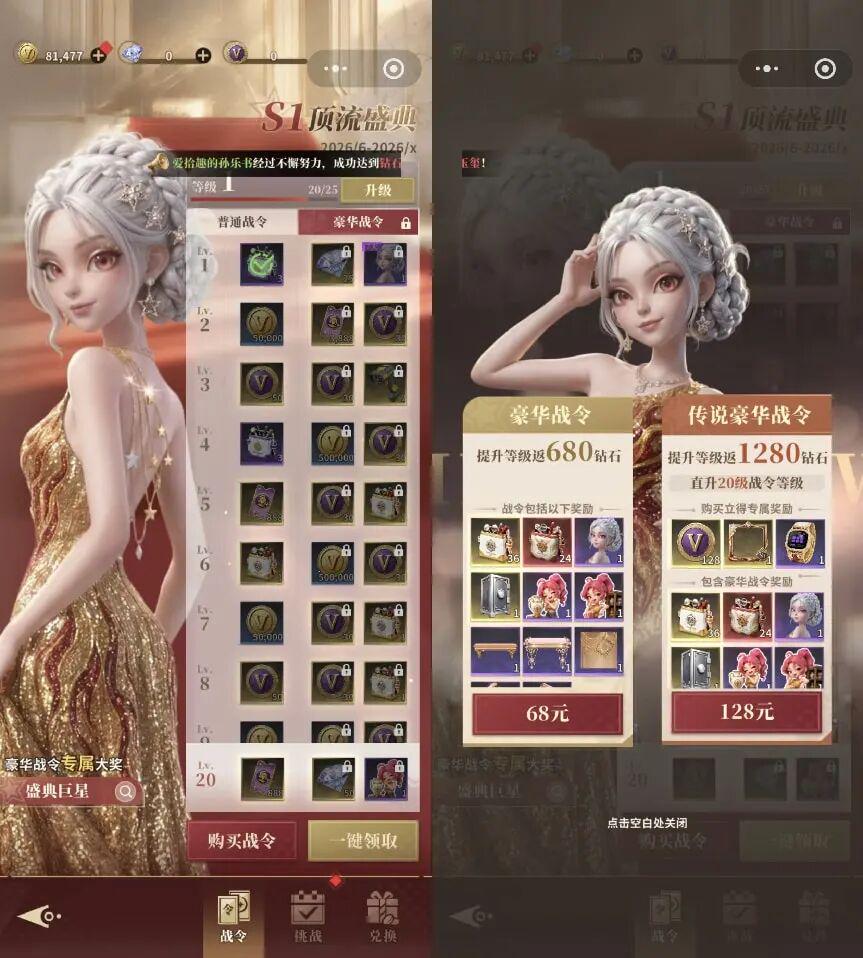
The Season Pass further encourages players to make in-game purchases through exclusive daily rewards.
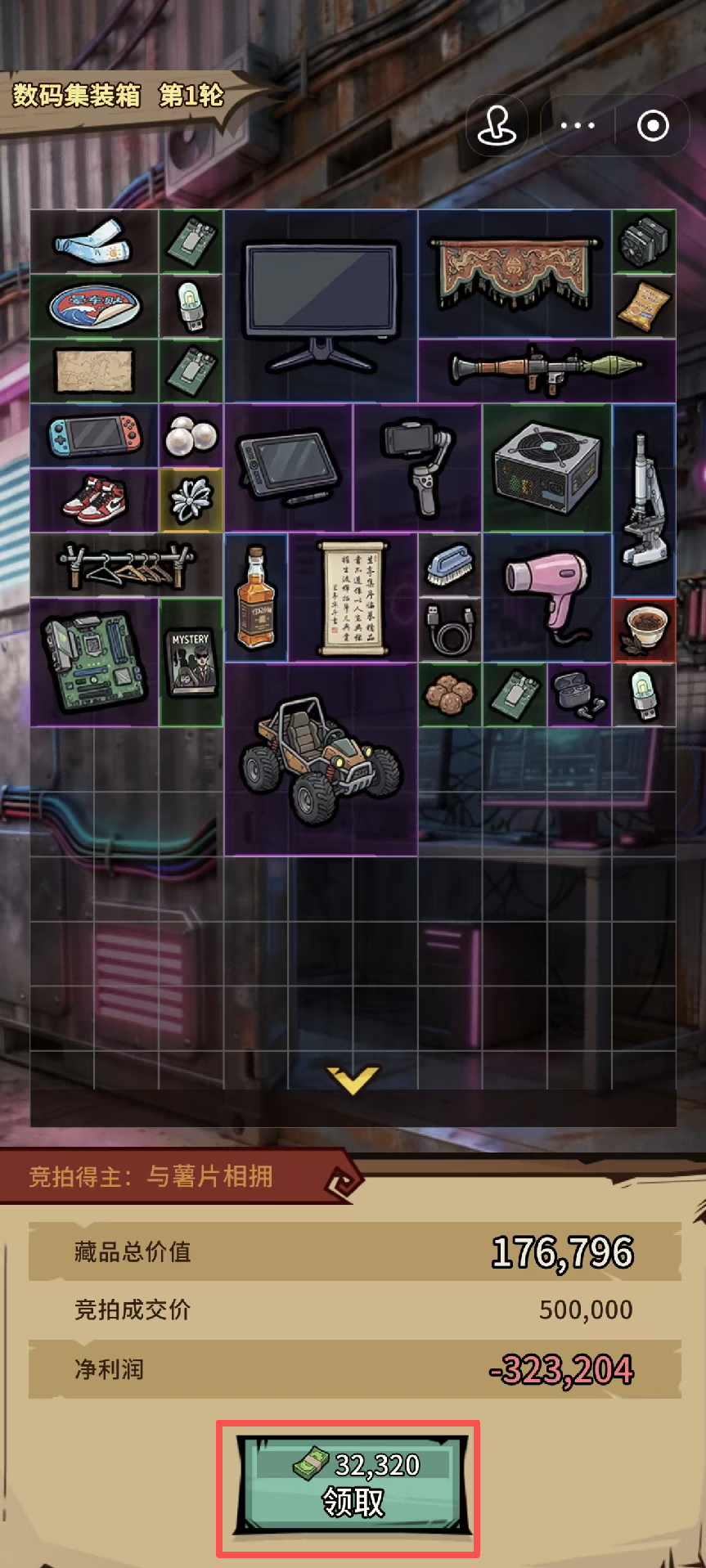
Coins, meanwhile, serve as the game’s most central resource and payment gateway. When players suffer consecutive losses in high-level rooms and their coin reserves run low, purchasing coin packs through in-app purchases becomes the most direct way to turn the tide. This sense of resource anxiety that arises during gameplay is precisely the most effective catalyst for driving in-app purchases.
Buoyed by the popularity of the original work, *Club Big Player* achieved impressive rankings shortly after its launch, thanks to its faithful recreation of the original gaming experience and a well-developed monetization system.
03
Everyone's Millionaire
Another product that has added its own unique twist to the original is the TikTok mini-game *Everyone's Tycoon*.
Visually, the game features a Western-style cartoon aesthetic, combined with distinctive animal character designs, which gives the game a high level of recognizability.
In terms of gameplay, *Everyone's Tycoon* places greater emphasis on refining the core experience.
On the one hand, the game incorporates an “excess refund” mechanism: when the bid exceeds the actual value of the warehouse, the excess amount is distributed proportionally among the other players.This design helps mitigate the frustration of losing an auction to some extent; even if a player ultimately fails to win the item, they can still benefit from their opponents’ mistakes and avoid walking away empty-handed.
On the other hand, compared to the relatively precise valuation reference system in *Club Big Player*, this game’s reserve price estimation is much more vague:The system only provides players with a rough minimum price reference based on existing, concrete information—a figure that often differs significantly from the actual value. This forces players to carefully calculate and weigh their options before every bid, while also requiring them to make bold predictions and act decisively at critical moments.
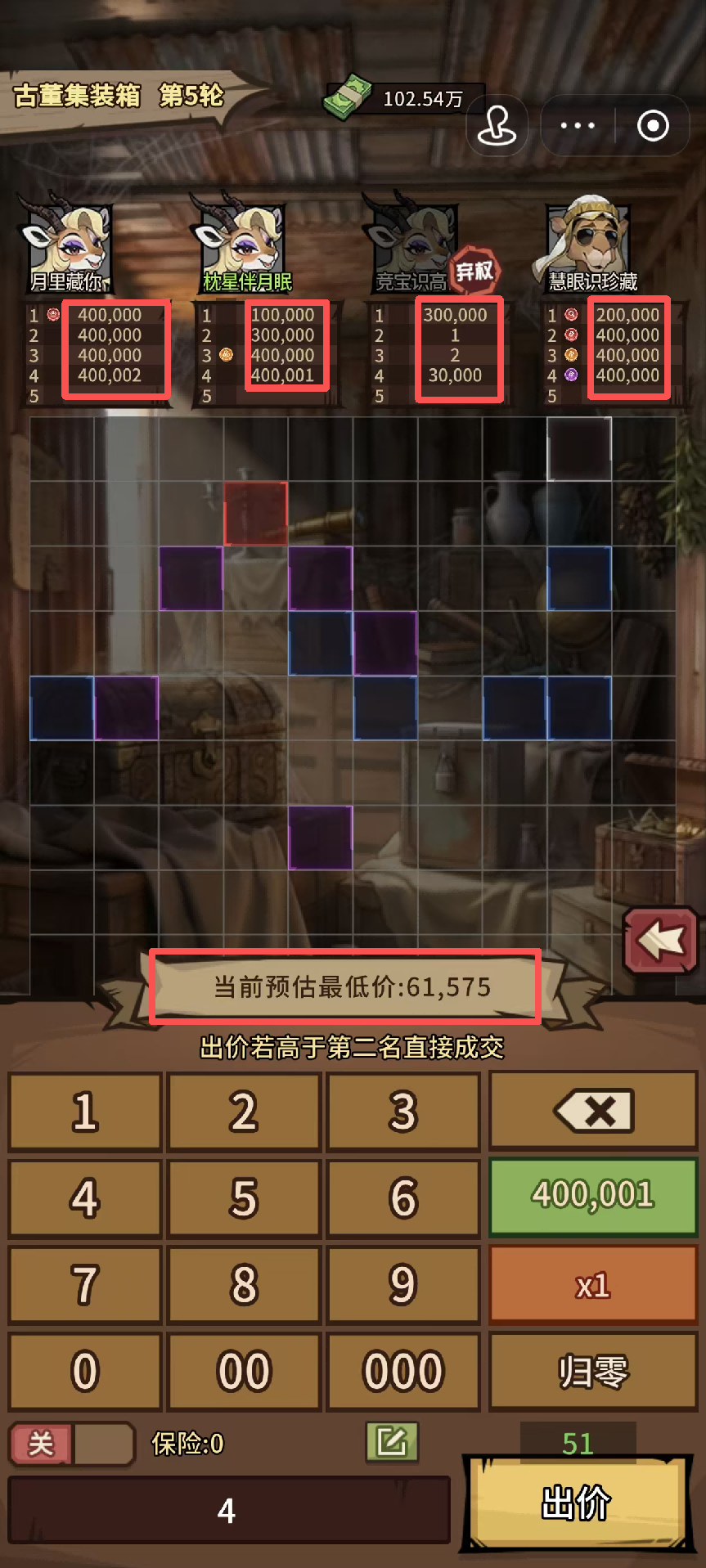
This design significantly increases the unpredictability of each match, leading to more frequent dramatic moments—such as sudden collapses and come-from-behind victories—and making the overall experience more thrilling. It also further highlights the importance of in-game items: when public information is limited, the ability to use items to gather more information about the value of a collectible becomes the key to winning the auction.
In addition, *Everyone's Tycoon* has introduced two new resource supply channels—the Collection Catalog and the Museum—which have simplified resource management and reduced the restrictions that chips (banknotes) place on players.
Every time a player acquires a new collectible, they activate the corresponding collection album and receive a cash reward; the Collection Hall allows players to display rare collectibles, which generate ongoing revenue. These two features provide players with a relatively stable source of resources, significantly alleviating the pressure of cash expenditure.
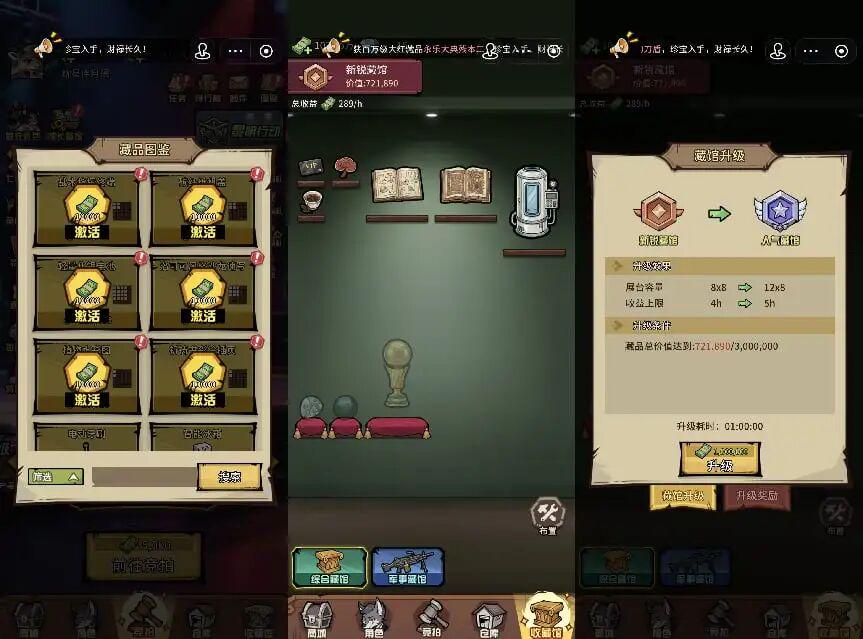
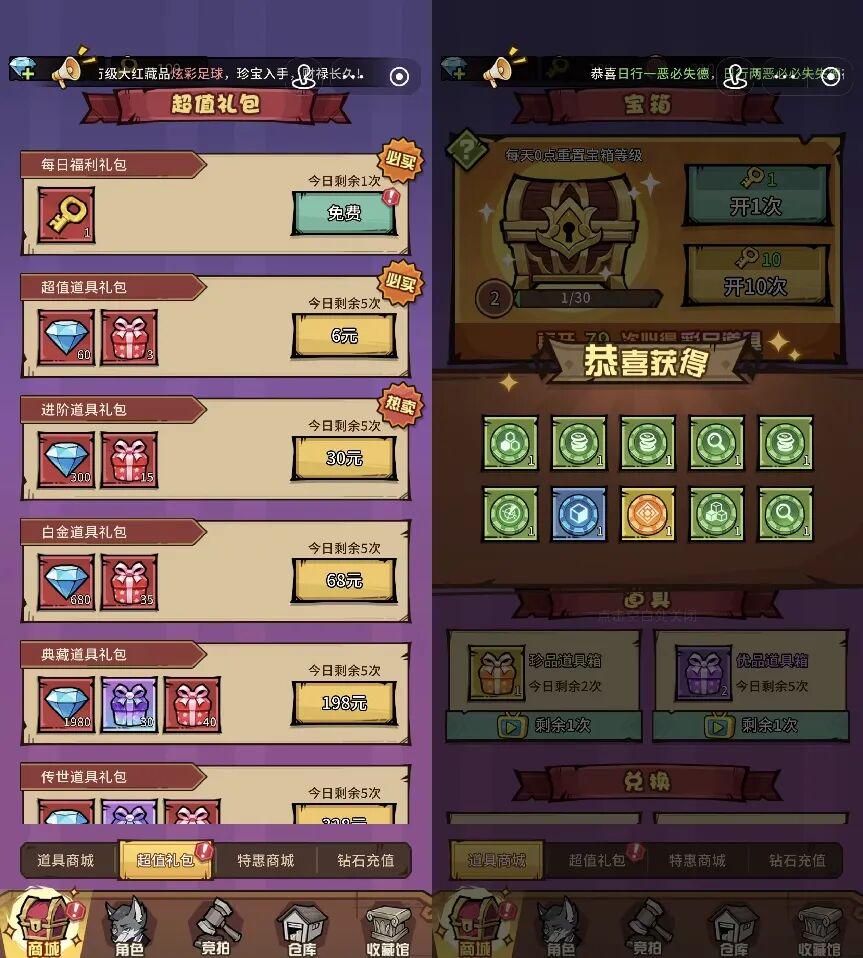
An ample supply of resources early on allows players to focus more of their energy on the matches themselves. In frequent matches, winning auctions requires spending a large number of in-game items, which creates the most natural incentive to make in-app purchases.Centered on this concept, the game has established a business cycle of “gameplay experience → item consumption → in-app purchases → continued gameplay” through two mechanisms: purchasing items and gacha-style item draws.
END
In addition to the two games mentioned above, several other titles have also capitalized on this auction craze. For example, the mini-game *King of Auctions*, which features historical artifacts as its theme, and *Brain Battle* have both incorporated their own thematic elements into the original gameplay framework.
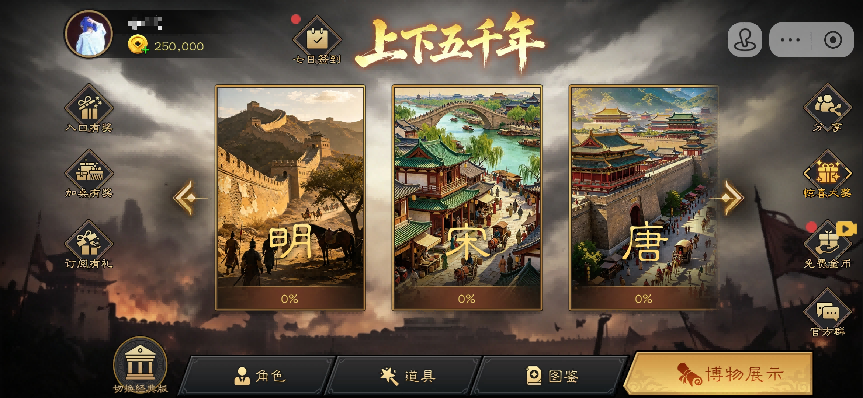
"King of Auctions" Mini-Game
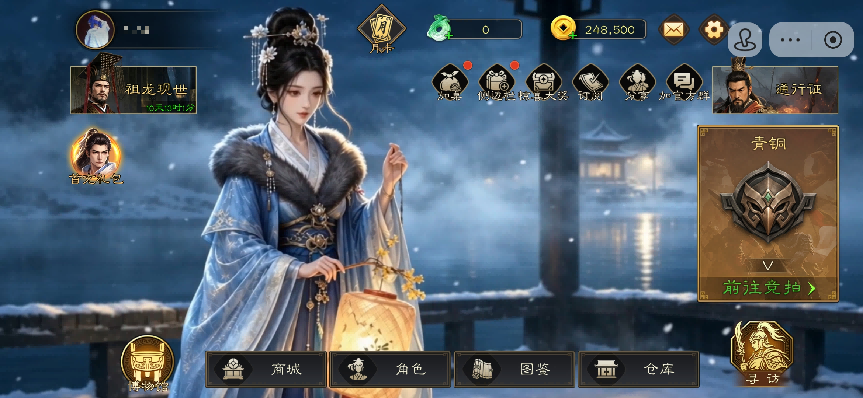
"Brain Battle"
Looking back, the gameplay structure of *King of Auctions* is exceptionally well-suited to the mini-game market: On the one hand, its core rules are simple enough—the three steps of “bidding, auctioning, and opening boxes”—three steps that explain the entire game, requiring virtually no learning curve for players; on the other hand, the combination of “secret bidding + random loot boxes” delivers exceptionally high replayability, with every round full of unpredictability, making it naturally suited for entertainment during short, fragmented periods of time;Coupled with its online matchmaking system, the game perfectly aligns with the current “light competition + social interaction” trend in the mini-game market.
By perfectly aligning with the core gameplay elements preferred by the casual game audience, combining them with appealing visual design and the monetization strategies commonly used in the casual game market, and leveraging the traffic boost from the original game’s popularity, it was only natural that these latecomers achieved market success.
原创文章,作者:游茶妹儿,禁止转载:https://youxichaguan.com/en/archives/220448