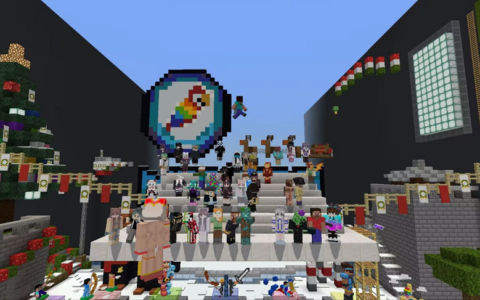
On March 12, 2023, Bilibili content creator "boffoon小丑桌" uploaded the final episode of the "Naked Man Climbing a Mountain" series. Three years later, on August 27, 2026, the video's view count had stalled at 2,548.
When you put that number on the same table, it seems a bit harsh.
In 2022, the first episode of their series *Mangshan Mysteries* was released, garnering 91,000 views. The subsequent episodes garnered 31,000, 19,000, and 16,000 views, respectively. The viewership curve continued to decline and never recovered.

The Joker Table Homepage
The Clown Table is a seven-person gaming group. The members met while playing games as teenagers and went from being online friends to close friends and family.In 2022, the group discovered a replay creation software called “Movable Type.” They found that they could run most of their sessions through it without having to align the frames—in their words, “it’s pretty much like making a PowerPoint presentation.” They decided to turn their past campaigns into videos as keepsakes.
After 2023, the "Joker Table" hasn’t been updated. A similar situation occurred among many RPG replay creators during the same period: while their work became increasingly polished, their audience continued to shrink.Wang Dagou Vampy, a top creator who has been producing replays for eight years, also hit a traffic ceiling; in the past two years, even high-quality replays in the community have only garnered “a few thousand or just over ten thousand” views.
"Once you've seen the vast ocean, no other water will do," he said. "Even now, I still think Xiao Zhen Dong is the best."
01
The Glass Ceiling
In 2017, the content creator "Little Zhen Dong Who Loves to Dance and Jump" began uploading episodes of *Cassandra's Black Carnival*. Individual videos from this series later reached around 2.8 million views.
Its most famous scene appears in Episode 10, “Everyone Really Does Have Their Own Special ♂ Skills”: Investigator bigbear stubbornly insisted that a clue was hidden on the bell tower’s big bell. After numerous skill checks and a grueling climb to the top, all he saw was a line of text: “The beer is so cold, and here I am sitting next to the big bell—how cool is that?”

The most famous meme in the Chinese live-action role-playing (LARP) replay community
That single short sentence became a widely circulated meme in the RPG replay community and was even compiled and documented by netizens.
"Runtuan" is a colloquial term for tabletop role-playing games (TRPGs). A Game Master (GM) is responsible for storytelling and bringing the world to life, while several players (PLs) take on the roles of characters they’ve created, with the success or failure of their actions determined by dice rolls. There are no screens or controllers; the entire experience unfolds through verbal descriptions and the players’ imaginations.
This genre is part of popular culture in Europe and the United States. “Dungeons & Dragons” (D&D), created in 1974, is the pioneer, followed by “Call of Cthulhu” (CoC), “Cyberpunk,” and other systems that have each carved out their own niche. The “Baldur’s Gate” series of games is based on the D&D rules,*Cyberpunk 2077* is adapted from the 1988 tabletop game *Cyberpunk 2020*, while the world of *Disco Elysium* stems from the creative team’s own tabletop campaign, which they’ve been running for years. Game-playing shows like *Critical Role* are among the top-tier streamers on Twitch.
In China, however, it has always remained a niche hobby. Currently, the CoC rules are the most popular; players take on the role of investigators, struggling to survive amid mythical creatures and madness.
"Replay" is a spin-off of this game. After a session, players turn their playthrough into a video, adding character art, music, and sound effects to edit several hours of verbal storytelling into a visual narrative. It brings an extremely intimate form of entertainment—one that normally exists only around a table—to a wider audience.
Of course, Xiao Zhen Dong wasn't the origin of the replay videos.

Where many role-playing gamers' dreams begin
The Chinese role-playing community took root in online forums, with communities like “Pure Apple Orchard”—which translated rules and shared game reports—serving as the community’s home base. Around 2010, Japanese “Manmanlai” style replay videos were localized by translation groups and uploaded to Bilibili, giving domestic players their first glimpse of how role-playing games could be presented in this way.
But Xiao Zhen Dong was undoubtedly the earliest catalyst for this culture in China. Before Cassandra, RPG videos were just a niche hobby enjoyed by a small circle of people, but after Cassandra, they became a full-fledged content genre.During the same period, the “Cassandra” campaign by Secret Scarecrow garnered 1.78 million views, and after 2020, the “Dream Traveler” compilation by Ge Weijue surpassed one million views.
Within the tabletop RPG community, the period from 2017 to 2019—represented by Xiao Zhen Dong—is generally regarded as the first peak, while the period from 2020 to 2022—represented by content creators like “Three-Day Wonder,” who spent all day goofing off, and “Song Weijue Si”—is considered the second.
As the number of viewers grew, a rift formed between those who actually ran the events and those who only watched. People who only watched videos and never ran events themselves were dubbed “COBs” within the community—a term carrying a distinct air of contempt. This term has been in circulation for years and has gradually become part of the community’s identity politics.
Xiao Zhen Dong has inspired many creators who came after him, and Mlz is one of them. A native of Guangzhou, he now runs a merchant guild and writes mods. When asked about Xiao Zhen Dong, he says that the latter served more as a catalyst for his own passion: “He was the one who first sparked my desire to create replays.”
Among this new generation of replay creators, Wang Dagou’s journey is quite typical: after watching a video, he happened to have recordings from his own D&D sessions, so he taught himself Premiere and turned those sessions into his first replay.He now spends eight hours on each episode—four or five hours on editing, and the rest on sourcing footage and selecting music. He once spent four hours just finding the right soundtrack for a single episode.
As for Xiao Zhen Dong—the person who inspired Wang Dagou to make his videos—she stopped posting a long time ago.
02
What Can Happen at a Table?
In the group led by Wang Dagou, there was a player character named Sweetheart Angel. According to the original script, this character was supposed to have her "card torn" in Golden Village—meaning she would die, merge into a blob of flesh, and vanish.
At the request of the player portraying this character, Wang Dagou had no choice but to set an extremely demanding rescue condition. The player managed to save the character despite the harsh conditions, which greatly surprised Wang Dagou. “Then let it be as fate decrees—let him live.”
Of course, divine intervention comes at a price. This card’s stats were too high, so later in the story, Wang Dagou devised a plot where the character suffered corrosion damage from Meatball, reducing their stats by 20 points. The players didn’t complain at all—just being able to get back the Sweetheart Angel they’d played for so long was more than enough.
"In tabletop role-playing, the unexpected always trumps what's planned."In the campaigns Wang Dagou has run, there are often unexpected twists. For example, with one of his key NPCs, Williams, the original plan was for the players to rescue him and escort him back to a small town. But because of a sudden whim on the players’ part, Williams died unexpectedly,so Wang Dagou had no choice but to scrap the entire original plan and rewrite the plot. “There’s no way I’m letting him go back carrying a corpse.”
As a game master, Wang Dagou’s priorities when running a game are, in order: player experience, story integrity, and rules.As long as players are willing to accept the consequences, anything goes. In his “Anomalous Phenomena Investigation Bureau” series, there’s a player character named Li Dehua who was determined to return to the police station to settle the score—a place where he had previously been humiliated.
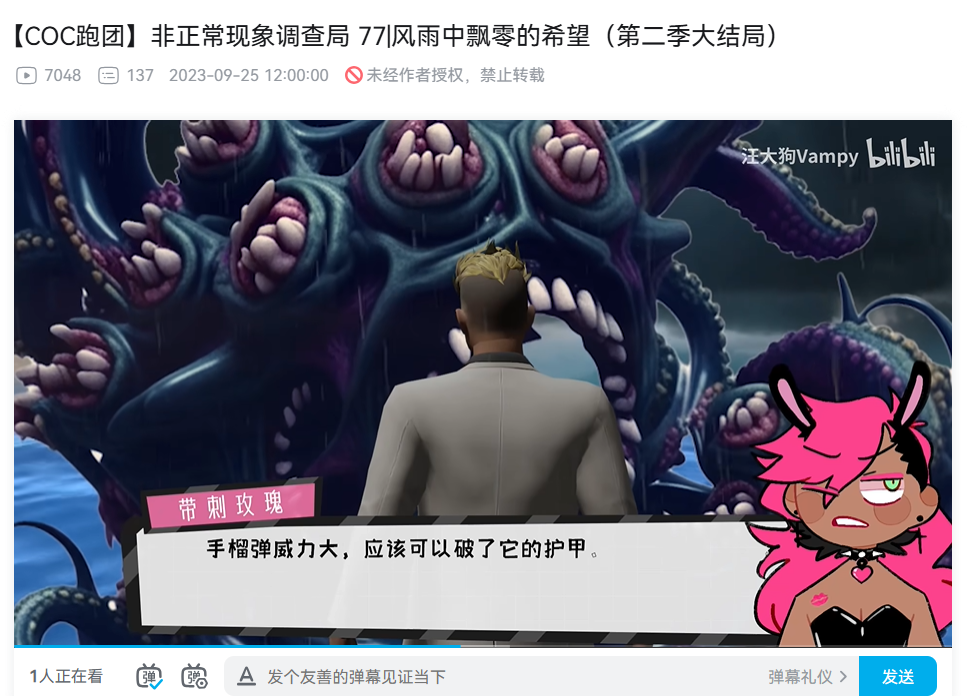
Player Bravely Rescues Sweetheart Angel on the Spot
During the discussion at the table, the other three had initially wanted to call it off, but in the end, the entire group agreed to let him go—with the result that he was immediately arrested. The ending of such stories is usually unimportant; what matters is that the people at that table made the decision together and bore the consequences together.
If Big Dog represents one extreme of “writing stories together,” then Mlz represents the other extreme—meticulously crafting stories.
Behind the shopkeeper’s mod, *The Human Marketplace*, lies a timeline spanning more than ten pages, with a complete life story for every important NPC. The mod has drawn criticism as a result; some have called it fluff, claiming these details are useless in a dungeon-master’s guide, but he doesn’t agree.
"I don't like treating NPCs as tools; to me, every NPC is a person," he said. He used Zhuge Liang as an analogy: no one has ever seen the historical Zhuge Liang, but through *Romance of the Three Kingdoms*, we know the full story of his life, so everyone understands him. "It's the same with my NPCs," he added.
The shopkeeper’s plays are almost all based on Chinese folk traditions: *The Vertical Coffin* features Qinqiang opera, *A Traveler Returning Home on a Windy, Snowy Night* centers on Cantonese opera, and *Random Notes on a Journey Through Hunan* is set in Hunan.He himself does not believe in ghosts or deities; in his own words, “I am, in fact, a communist.” He studied these rituals partly for cultural reasons and partly to use them when leading tour groups. His mother taught him from a young age that what is Chinese is universal, and what is national is universal.
“Cthulhu is a science fiction film; its underlying logic differs from that of Chinese folklore, so it can’t be forced into a fusion.” Since a forced fusion isn’t possible, he suggests going public through a backdoor listing instead. In his view, rules are merely tools, and tools shouldn’t restrict the storytelling itself.
This underlying theme of Chinese folklore has been virtually the only universally recognized growth driver in the Chinese live-action role-playing community in recent years. When the Clown Table analyzed why *The Strange Tales of Mangshan* performed much better than expected, their first reason was that Mangshan “reaped the benefits of Chinese folklore.”
These tables are actually connected to one another. Big Dog’s fixed table consists mainly of real-life friends and family, and one of the players, RC Big Seal, is also a member of Shopkeeper “Stone City’s” guild.
03
People Who Have Been Discouraged by Life
As a long-time regular at the gaming table, Wang Dagou reflected during an interview, "If you have a friend who’s willing to play D&D with you, you should definitely cherish them."
Regarding this statement, an observer close to the copyright holder has offered a similar analysis from an economic perspective. She believes that the role-playing community has a “pay-to-stay-engaged window”: college students have free time but no money, while working professionals have money but no free time. The effective lifecycle of each core audience is only a few years—it ebbs and flows like the tides, forming a cycle and a natural pattern.
The experience with the "Joker Table" confirmed this observer’s assessment; another member told Game Teahouse that the main reason they stopped updating was that “everyone got busy.” Some graduated, others just started their first jobs—after reaching that turning point, everyone gradually became corporate drones.
During those years when I was making videos, I was either just starting out in my career—when the workload wasn’t too heavy—or still in school, so I could always find time for it. In recent years, with promotions and life changes, even the number of times I’ve run D&D sessions has dropped significantly, let alone making videos. Now that my time is so fragmented, our go-to activity for get-togethers has become playing party games in the afternoon.
They initially started making videos simply to commemorate the running group they had been part of, and now that they’ve fulfilled that purpose, they’ve stopped. When asked about the reason for stopping updates and the impact of declining viewership, they said they had indeed felt the overall running community cooling down, noting that “the peak period is already behind us.”
Some people have left, but others are sticking with it.
Around the time he was working on *The Forest of Mist*, Wang Dagou was let go by his former company, and the pandemic struck shortly after. Since then, he has devoted himself almost full-time to video production, and the “quantum leap” in quality seen in Seasons 2 and 3 stemmed precisely from that sudden surge of free time. According to him, his revenue share from Bilibili is “negligible—practically nothing.”
What keeps him going are the live comments and user feedback—proof of user engagement and, in his eyes, the foundation of trust for future derivative projects.He once conducted an experiment: for the final chapter of *Quiet Town*, instead of releasing it episode by episode, he completed the entire two-and-a-half-hour episode and streamed it all at once. Hundreds of people were online simultaneously, and the live chat was ablaze with comments.There’s one comment he still remembers to this day: “Wow, it feels like we’re all watching a movie together in a theater.”
That livestream used up the traffic allocated for the premiere, and the viewership numbers for the actual show actually declined; he hasn’t done a full livestream screening since. He’d already learned the hard way about the tension between passion and data.
"Replay is a work of art," said Wang Dagou. "I’ve kept it going from the perspective of creating art."
Mlz, on the other hand, has turned running tabletop RPG sessions into a business. His main job is leading commercial gaming groups; he owns his own tabletop game store, where sessions cost 138 yuan for five hours on weekdays and 158 yuan on weekends. If he’s hired to lead a group off-site, the fee is 300 yuan per session, and his schedule in Guangzhou is almost always fully booked.

Out of admiration, a fan used their own money to turn the shop owner’s replay videos into an audiobook.
In contrast, the income generated by the actual "works" he created was relatively modest.The mod *Human Market* is priced at 138 yuan; rumors online suggest it sold over 300 copies, which is considered the ceiling for online sales of Chinese fan-made mods. He corrected this, saying, “It’s really more than that,” and then casually did the math: even 300 copies would only bring in a little over 40,000 yuan. “How could I make a living off that? You’ve got to be kidding.”
This business actually started as a maid café. Around 2016, the owner ran one of the first maid cafés in Guangzhou. The otaku customers weren’t very good at striking up conversations with the maids, so they would just gather together to watch *Kamen Rider*.To build customer loyalty, he began leading free tours of the shop. Later, a customer said to him, “Your time is valuable too—why don’t you charge for it?”
However, the shopkeeper advised everyone to choose this line of work carefully. He said that he had enough savings and experience to make it work: “First, make sure you have enough to eat; then think about the extras. If you’ve fallen so far that you have to rely on running D&D sessions just to get by, then don’t do it under any circumstances.”
04
When Leisure and Entertainment Are Also Being Transformed by AI
Online and offline, tabletop role-playing groups seem to face different situations.
The shop owner’s RPG group slots are almost all filled, and RPG conventions are becoming more and more frequent. Not long ago, GTS 3.5 was held right in his own store, drawing over a hundred attendees, and GTS 4.0 is scheduled for mid-October 2026.“Commercialization brings in more people, which is always a good thing,” he said. “Even if eight out of ten people are absolute pros, doesn’t that still leave two good ones? The larger the pool, the healthier the ecosystem becomes.”
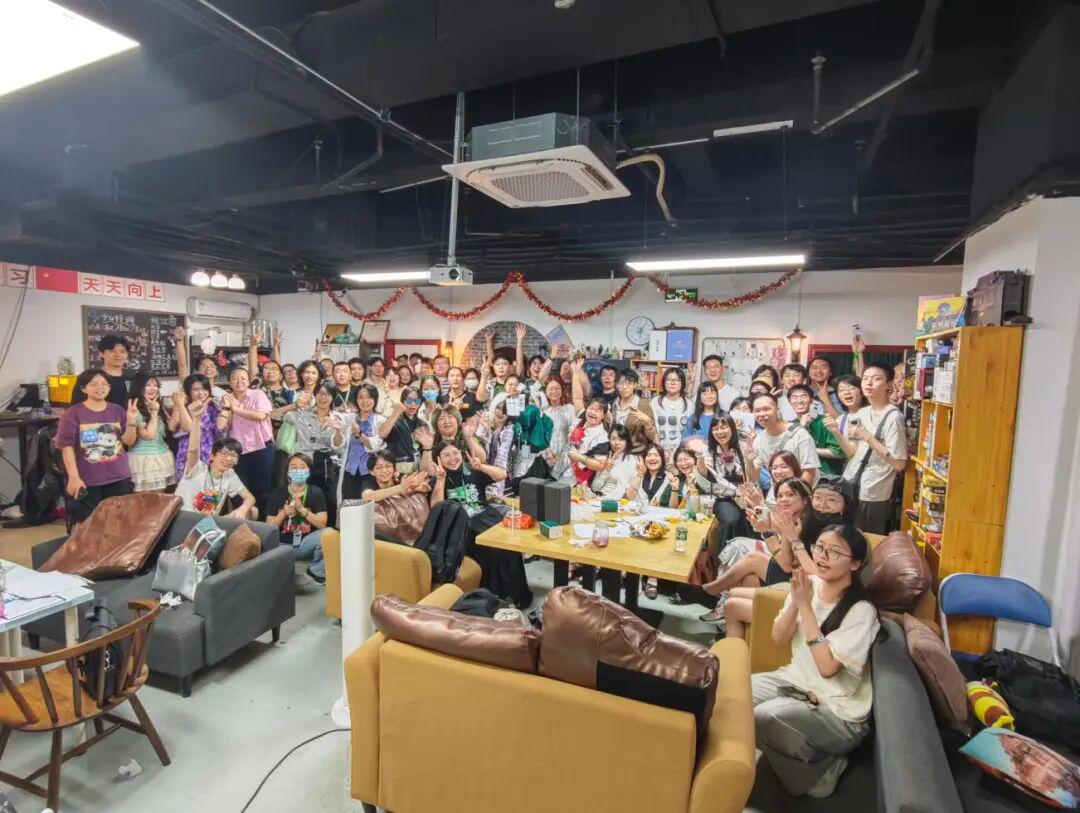
Photos from the GTS 3.5 Event
But Wang Daguo believes that both live-action role-playing (LARP) itself and replay videos are experiencing a false sense of prosperity. He witnessed firsthand the boom in domestic board games in late 2011, when a wide variety of games flourished for several months—including even ones based solely on rock-paper-scissors mechanics—only for everything to fall silent afterward. “In the end, everyone was still playing ‘Three Kingdoms Kill,’” he said.
This experience became the framework through which he judged everything. In his view, the tabletop RPG community lacked all three elements—timing, location, and harmony—had no grassroots support, and no one was willing to set aside six to eight hours to sit down and tell a story; on top of that, members of the community looked down on one another.Newcomers who say they got into the hobby by watching replays are met with snide remarks and derisively called “COBs.” Wang Dagou finds this baffling: “If you drive away potential players, how is the community supposed to grow? You should make as many friends as possible and as few enemies as possible.”
In addition, manufacturers are constantly coming up with new rules, which Wang Dagou sees as putting the cart before the horse. He believes that a good story is more important than rules: “You’d be better off shelling out some cash to get Xiao Zhen Dong to come out of retirement and run through your story to create a replay.”
Lanting Yanyi, one of China’s largest online role-playing communities, offered a nuanced response to this question. Its director believes that both “things are getting better” and “a false sense of prosperity” “may both be true.”
Lanting currently has over 200,000 registered users, and CoC accounts for more than 90 percent of its group-buying records. In an interview, the team stated that Lanting has now stopped promoting itself, shut down all paid channels, and is relying on the team’s own funds to subsidize server costs. “Actually, it’s unclear how much longer it will be able to continue,” they said.
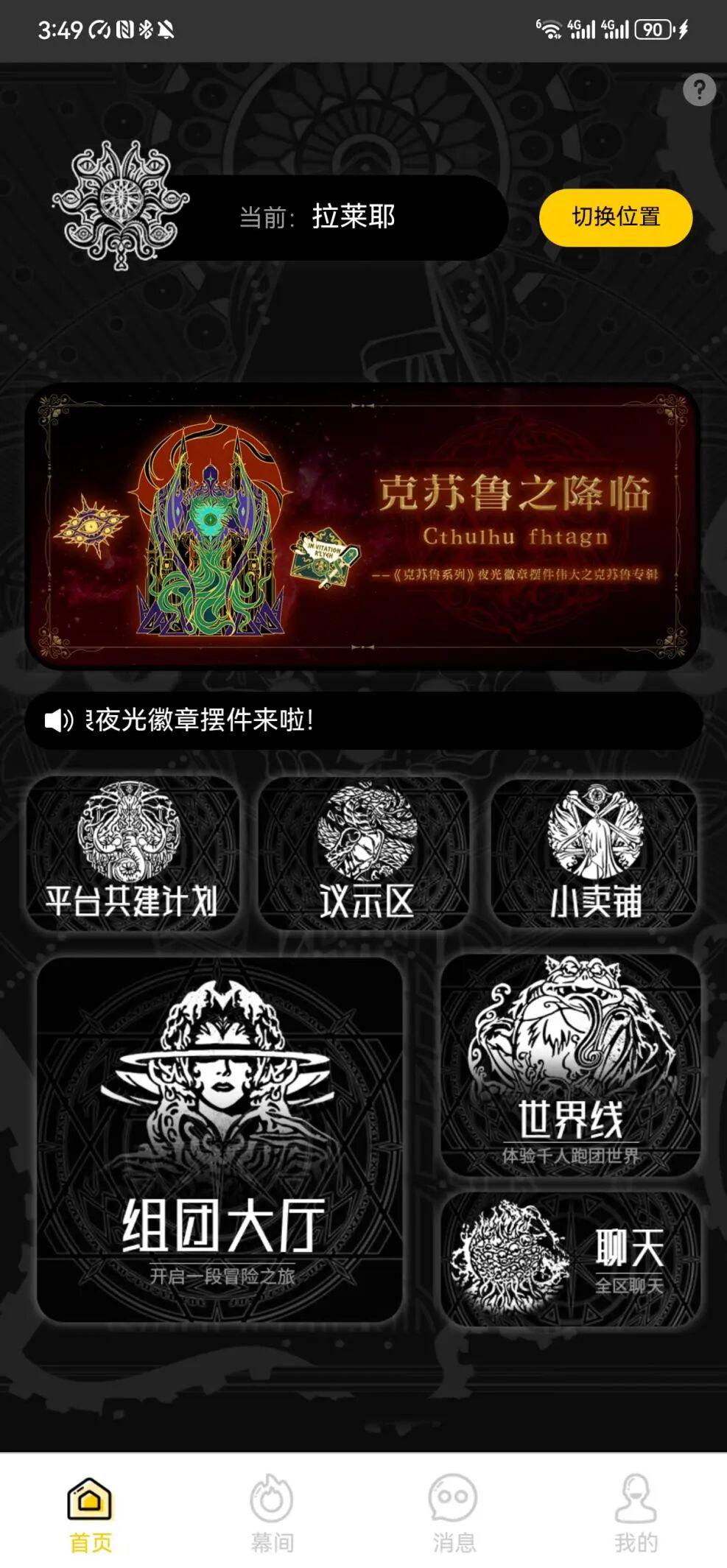
Lanting Yanyu, one of the largest online role-playing platforms in China
According to this official, they are currently developing “New Lanting.” At present, there is only one programmer working on this new project, so progress is relatively slow, and the launch date remains uncertain. Compared to the original platform, which was simply a role-playing game platform, New Lanting may introduce a new feature: an AI Game Master. The official did not elaborate on this in their written response, stating, “The AI Game Master is simply a new option for everyone.”"
It’s fair to say that the core experience of tabletop role-playing games hinges on the Game Master; whether the story unfolds smoothly and whether the NPCs are well-developed all depend on the GM’s skill.Some members of the Clown Table have worked part-time as DMs for murder mystery games, so they fully understand the importance of this role—thoroughly studying the module, breaking down the plot, and handling players who go off-script are all essential tasks.The reason their session of *The Naked Man on the Mountain* is worth turning into a replay is precisely because everyone went completely off the rails during the game—it was filled with moments of inspiration from both the GM and the players.
Lanting Yanyu isn't the only company trying to combine AI with tabletop role-playing.
On June 15, 2026, the Chinese indie game *Invoking the Gods* released a demo during Steam’s New Releases Festival. In the current demo, the first story module is based on the well-known Chinese folklore role-playing module *The Enlightenment of Lady Xie*, and players have the option to integrate AI.
The game development team told Game Teahouse that their members are all tabletop RPG players themselves and had previously created a digital tabletop RPG mini-program called *Inception Notes*. Back then, they had already experimented with using AI to run the game. In their view, “tabletop RPGs are an interesting format; we wanted to bring them into the digital realm and felt they were well-suited to AI capabilities.”
As role-playing enthusiasts themselves, the members of the Clown Table have their doubts about whether AI is a good fit for this format. They believe that an AI Game Master would likely function much like the DMs in early murder mystery games—simply handing out clue cards at set intervals—which is sufficient for entertainment purposes but “would lack those standout moments.”
Aside from AI, the topic that’s been discussed the most in the role-playing community lately is a rumor.
Rumor has it that a certain satellite TV station is planning a role-playing game variety show, which is still in the planning stages. Game Teahouse attempted to contact staff at the station to inquire, but the response was, “We don’t know.” Regarding this rumor, the proprietor responded with four words: “No comment.”"Wang Dagou, however, expressed some concern, fearing that the community might not be able to handle the traffic brought by celebrity fans, which would inevitably dilute the quality of the content."
"A group of people sitting there talking," Wang Dagou couldn't see how that scene could be appealing. "I guess I'll just have to wish him luck. I'm really curious to see how things will unfold once he succeeds."
The members of the “Joker Table” are equally skeptical. They believe that murder mystery game variety shows work because the format allows for proper set design and costumes, whereas tabletop role-playing is just a group of people sitting together, snacking, and writing stories.and viewers have to rely on verbal descriptions to visualize the scenes—the lack of visual elements would make for a poor viewing experience. More importantly, when it comes to guest selection, inviting people from within the community means the general audience won’t recognize them, while inviting popular celebrities leads players within the community to dismiss them as unprofessional. “This is what’s known as a false prosperity.”
Wang Dagou’s *Tengu* is still being updated; it’s a prequel to his “Bureau of Anomalous Phenomena” series. He’s recently started using AI to help create replay videos, and he’s also considering compiling *Hell’s Transformation* into a mod for release. Once it’s ready, he’ll make a big announcement about it in his Bilibili feed.
The shop owner’s store is open as usual, and new modules are released every now and then—it’s just the replay that’s been delayed. In mid-October, GTS 4.0 is set to launch, and the big event is about to “kick off its promotional campaign”; he’ll post an update on Bilibili.
The Joker Table was paused on March 12, 2023. Dog Brother, who runs the table, is currently writing an original module. Once it’s finished and tested, they’ll restart the session to record a replay.This time, the motivation has shifted from commemorating a role-playing session to celebrating their very first original module. However, there are still uncertainties. At the end of the interview, Fox noted that whether they can pull it off depends on the other players: “If he flacks out, then we’ll flack out too.”
原创文章,作者:游茶妹儿,禁止转载:https://youxichaguan.com/en/archives/220702