Over the past couple of years, we’ve heard far too many stories about people getting rich through user-generated content (UGC) in the gaming industry.
Amid the constantly updating news reports, ordinary players have attracted tens of millions of users on the platform thanks to their wildly imaginative ideas;little-known small teams have generated tens of millions in monthly revenue with a single viral map; and some creative teams have even caught the eye of investors, easily securing tens of millions in funding and seeing their company valuations soar past the 100-million mark.
At the same time, major industry leaders and popular games are racing to invest substantial funds to capture market share in the UGC sector."Egg Party" distributed over 200 million yuan in incentives and revenue shares to creators in a single year; "Peacekeeper Elite"’s Oasis Qiyuan platform also distributed a cumulative total of over 100 million yuan in various incentives in a single year; and even the long-standing, top-tier anime hit "Genshin Impact" has launched its in-game UGC platform, "Thousand Stars Wonderland."
Stories of underdogs making a comeback and news of companies investing heavily continue to capture everyone’s attention, painting a picture of a thriving and vibrant domestic gaming UGC sector. But is that really the case?
Gong Zihao, founder of Super Parrot, believes that beneath the façade of prosperity lies an unhealthy market reality.
This 19-year-old college student, through six years of hands-on experience in the UGC field, has discovered that the vast majority of UGC practitioners today are still stuck in the mindset of gamers and creators.They may be capable of producing a single piece of content that goes viral overnight, but they struggle to consistently and reliably create such hits; even among the few teams that can consistently produce popular content, there is a widespread lack of business acumen, making it difficult for them to grow into formal, self-sustaining enterprises.
That is precisely why many teams disappear from the scene after a single viral hit, and why domestic UGC has consistently struggled to achieve large-scale growth.
After recognizing this reality, Gong Zihao decided to move beyond a narrow product-centric mindset and lead his team deep into this largely unexplored ecosystem, where he found a completely new positioning for Super Parrot: to become “the one selling shovels” in the UGC space.
01
From Player to Creator
Game Teahouse: I hear you got into the UGC space quite early. How did you first get involved with gaming UGC?
Gong Zihao: I started creating mod packs and servers for the Bedrock Edition of *Minecraft* in my second year of junior high school, uploading content such as structures, skins, and mods. Later, when the Chinese version of *Minecraft* began to flourish, I joined the team of developers.
Game Teahouse: You started developing games in middle school—where did you learn those skills?
Gong Zihao: I taught myself everything. Back then, there were developer communities in China like the Creeper Forum and MineBBS, and there were also plenty of tutorials on Bilibili.I followed the tutorials on the forums step by step, and whenever I ran into a problem I couldn’t solve, I’d post in the community to ask for help. These technical communities are still active today; many people discuss development-related issues there, and it’s a very vibrant community of creators.
Game Teahouse: Did you achieve anything during middle school?
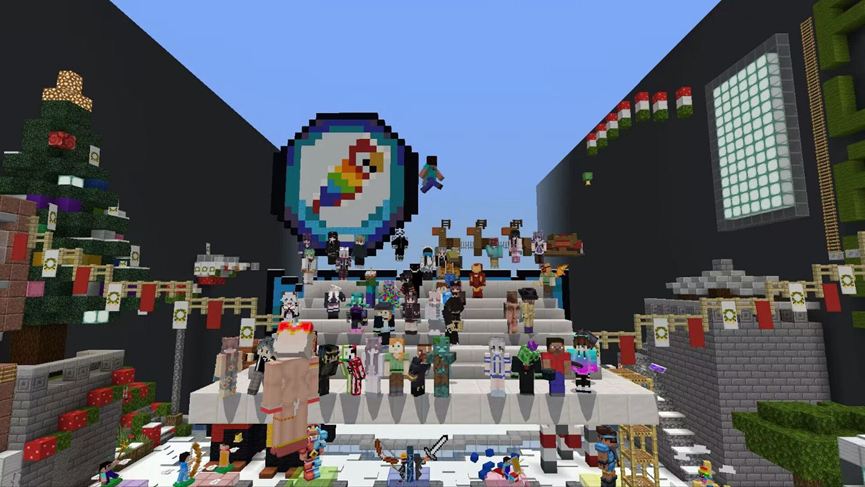
Gong Zihao: When I was 13, I saw a server someone else had set up and thought it looked really interesting, so I learned how to set up my own. I added features like PvP, PvE, RPG, and casual competitive gameplay, and the server’s active user count eventually surpassed 10,000.
Game Teahouse: Did you have any idea what that number meant at the time?
Gong Zihao: Back then, I really didn’t have much of a concept of metrics like user base, but once I earned a little pocket money, I got a real sense of it the moment I held the cash in my hands.
Game Teahouse: How much revenue can it generate? What are the main sources of revenue?
Gong Zihao: Once the game reaches a certain scale, monthly revenue can reach 10,000 to 20,000, primarily from player in-app purchases.
Game Teahouse: What is your family’s attitude toward your content creation?
Gong Zihao: At first, my family didn’t understand at all. They thought I was just playing games and not taking my life seriously—they even confiscated my cell phone. But once I started earning a steady income and contributing to the household, my family’s attitude gradually changed.
Game Teahouse: What prompted you to start exploring other platforms?
Gong Zihao: Our thinking at the time was that we shouldn’t put all our eggs in one basket. If we relied too heavily on a single platform, our business would suffer a major blow the moment that platform’s rules changed.Later, we shifted our focus to other vendors. The partnerships progressed smoothly, and we gained considerable media exposure. After that, more vendors and UGC platforms reached out to Jianlian on their own initiative, which allowed us to expand onto additional platforms and gradually reach user groups across a wider range of age demographics.
Game Teahouse: How is the team doing at this stage?
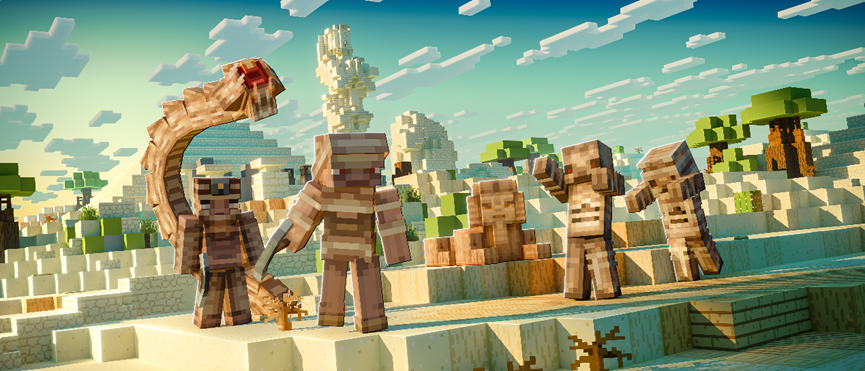
Gong Zihao: During this phase, we established UGC creation hubs in both Changsha and Nanchang. Over the course of three years, we incubated more than 100 UGC products, which garnered a cumulative total of over 30 million impressions across all platforms.
02
From Creator to Entrepreneur
Game Teahouse: It seems the team’s core business underwent significant changes in 2025?
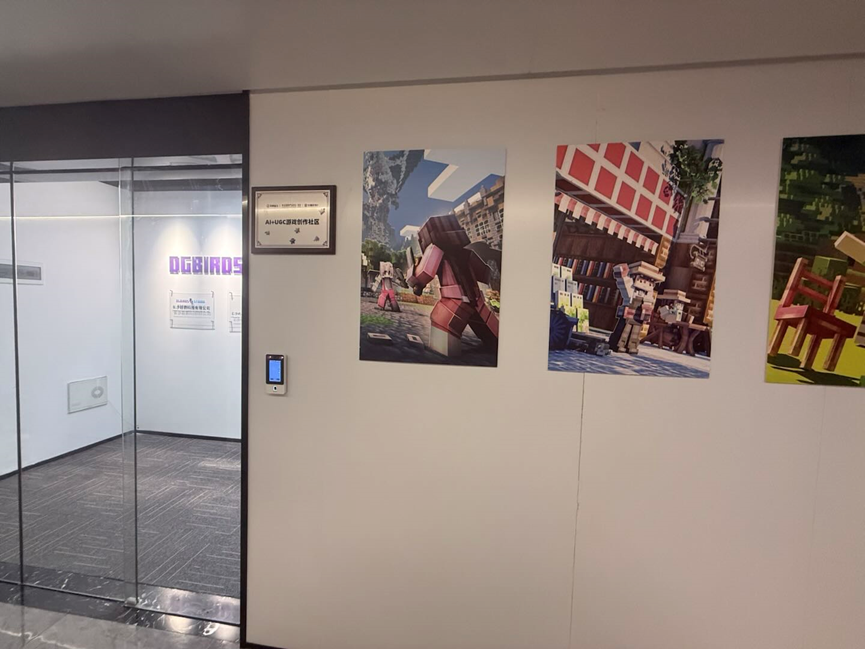
Gong Zihao: That’s right. In 2025, we officially established the company and defined our overall direction. Before that, we were just a small campus studio primarily focused on developing UGC content; after becoming a company, our core business shifted from content production to a closed-loop model of “incubation—distribution—investment.”
Game Teahouse: How big is the company now, and how are responsibilities divided internally?
Gong Zihao: Right now, there are more than 30 people at our headquarters, including interns. If we include the studios we’ve incubated, the total comes to about 70 or 80 people.
Our company’s internal workforce is primarily divided into two divisions:The first segment, which we internally refer to as the “Screw Segment,” consists of highly adaptable members who can respond to unexpected situations arising within the incubated teams, engage in product development, and explore new market segments, develop courses, and provide instruction. They first establish proven methodologies for commercializing products across different platforms and then distill that experience to pass it on to the incubated creator teams.
The second is the administrative center, which brings together corporate support functions such as finance, legal affairs, human resources, compliance, and policy research. Most members of this department are seasoned professionals, with an average age of around 40 to 50.They do not directly participate in game content production; rather, they primarily provide a comprehensive suite of corporate operational capabilities to both internal teams and all incubated partner studios, addressing the challenges small teams face in maintaining compliance and helping incubated teams mitigate risks.
Game Teahouse: In a nutshell, what is your company’s current positioning?
Gong Zihao: We position ourselves as a full-chain ecosystem service provider for game UGC. We act as a service provider, primarily offering UGC creators and studios a comprehensive suite of support—ranging from talent incubation and content distribution to early-stage investment—to help the industry evolve from a fragmented sector into a mature industry.
Game Teahouse: What is your business model?
Gong Zihao: Our core business is divided into three modules: First is incubation, where we partner with universities to conduct hands-on training through standardized courses, transforming students with no prior experience into UGC developers. Second is distribution: after completing their training, students move into the park, form studios, and—under the guidance of industry mentors—produce and publish commercial content.Finally, there is investment. We have partnered with independent funds to establish a dedicated investment fund. When the teams we’ve incubated have matured and are ready to expand independently, we provide investment to support them in scaling up production capacity and leasing their own spaces to operate their businesses.
The three core business areas are closely interlinked, forming a closed-loop business model of “incubation + distribution + investment.”
Game Teahouse: You’ve already achieved success in content development. Why are you exploring these new business areas now?
Gong Zihao: There are two factors at play here. First, from the perspective of the company’s development, focusing solely on content development can easily lead to hitting a growth ceiling. If we want to build our team into a company that continues to grow, we must explore new business directions.
On the other hand, looking at the market ecosystem as a whole, most creators in the industry today are growing in a haphazard manner; talent is highly dispersed, and many people don’t even have a clear understanding of UGC. This is precisely why we launched our creator incubation program—to identify and nurture these scattered UGC creators, fill the talent gap in this ecosystem, and drive the entire ecosystem forward.

Game Teahouse: So do you still consider yourself a pure creator?
Gong Zihao: I think of myself more as an entrepreneur than as a creator.
Game Teahouse: So you’d rather be an entrepreneur? Why?
Gong Zihao: I actually enjoy both of these roles, but in the long run, I’d rather be an entrepreneur.
As a creator, the joy is straightforward: you can pour all your energy into the work itself, focus on refining the content, and enjoy the sense of accomplishment that comes from creating. But if you’re only a creator, the resources you can tap into and the people you can influence are limited. As we discussed earlier, content studios can easily hit a growth ceiling.As an entrepreneur, however, I can build a platform and refine development systems to help more creators bring their ideas to life. Instead of relying solely on my own output, I can empower a group of people to create UGC content together, which will amplify the value we generate significantly.
Game Teahouse: Where does your revenue come from these days?
Gong Zihao: It’s mainly divided into four areas: First, revenue from incubation; second, we’re helping the government build a UGC talent ecosystem to promote entrepreneurship and employment among college students, for which there are corresponding government grants available; third, we invest in and incubate teams, which also generates financial advisory (FA) revenue for us; and fourth, the content produced by our internal teams continues to generate revenue.
Game Teahouse: What is the approximate breakdown of revenue by segment?
Gong Zihao: Product revenue accounts for about 60 percent, and government revenue accounts for 30 percent.
Game Teahouse: Is the team’s current revenue structure much more stable than when you were solely focused on development?
Gong Zihao: Yes, it's much more stable.
Game Teahouse: From a small development team to running a full-fledged company, what management challenges have you faced? What insights can you share?
Gong Zihao: We’ve certainly run into a lot of pitfalls. I think, in summary, the issues mainly fall into three categories:
First, when choosing a business partner, character is more important than individual ability.
Second, finance, tax, and legal affairs form the foundation of any business and must be given the highest priority. Many small UGC teams tend to overlook these areas, but if problems arise in any of these areas, it could very well lead to the company’s collapse.
Third, you need to tackle a lot of tasks that others might consider “unnecessary.” Many UGC teams focus so intently on product development that they overlook areas such as business partnerships, capital reserves, and product operations. However, to ensure long-term survival, capabilities in business development, investment, and operations are all indispensable.
03
The Shovel Seller
Game Teahouse: In a previous interview, you mentioned that your current incubation business model is modeled after Luckin Coffee’s quality control and Wuyou Media’s talent management. Could you briefly explain that?
Gong Zihao: Wuyou Media has adopted a focused strategy. We’ve always described ourselves to the outside world as a gaming MCN, and our core focus is on cultivating talent and generating revenue through that talent. Wuyou has its own “Influencer University,” which allows us to continuously develop influencers. What sets us apart is our ongoing incubation of promising UGC studios.
As for benchmarking against Luckin Coffee, our focus is primarily on learning from its expansion strategy. Luckin has done an excellent job in terms of the speed of single-store expansion, store operations and management, as well as its audit and quality control systems. By drawing on this model, we aim not only to establish a single organization similar to Worry-Free Media, but also to set up multiple incubation centers across the country to rapidly generate new growth.
Game Teahouse: How exactly is this logic put into practice?
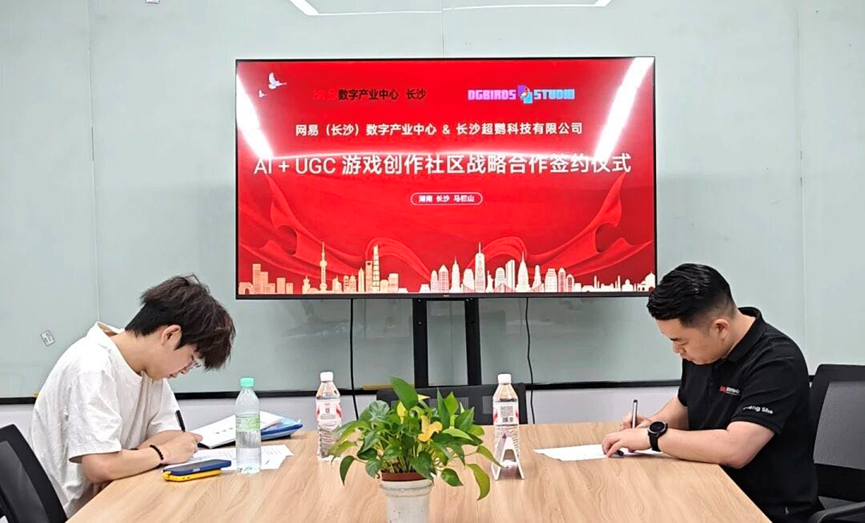
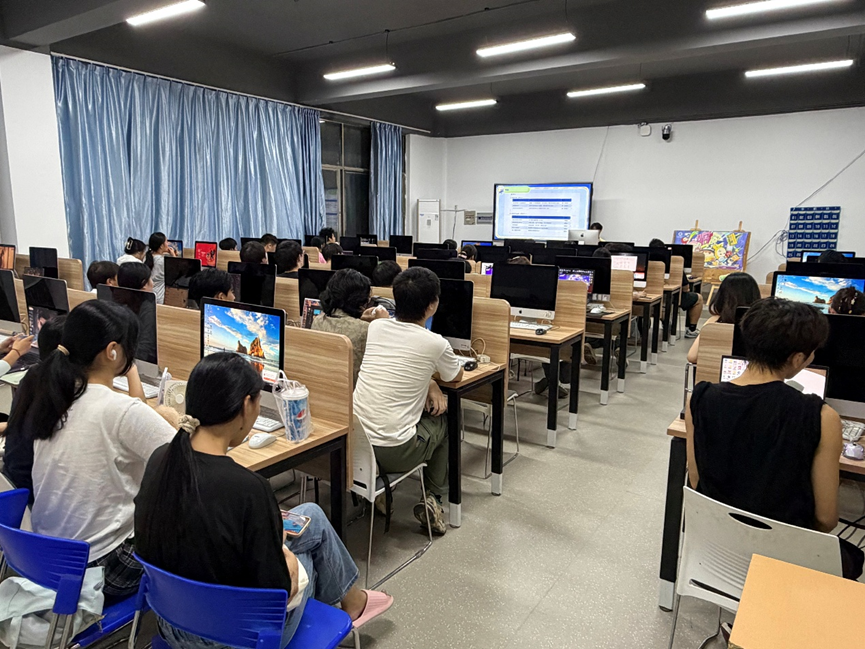
Gong Zihao: First, we’re going into 95% of the universities in Hunan to offer courses and provide incubation services, with the aim of addressing the talent shortage in this sector.
Another approach is to partner with local governments to build industrial parks, providing free space and incentives based on product revenue to guide teams toward standardized and clustered development.
In addition, we are promoting the establishment of UGC industry associations in Changsha and other regions, offering benefits such as funding and talent apartments to attract more established teams to join. Like the gaming industry, the UGC sector is primarily driven by capital, creativity, and talent. These resources inherently possess a strong “siphon effect”; only when they come together can the ecosystem move forward more effectively.
Game Teahouse: How many universities does your incubation program currently cover, and what is the approximate number of students involved?
Gong Zihao: At this stage, we have expanded our reach to 45 universities in Hunan Province, with between 3,000 and 5,000 students participating in our courses each semester.
Game Teahouse: What does the course cover?
Gong Zihao: We have an extremely comprehensive SOP that is constantly updated and refined. It covers fundamental skills in game design, programming, and art, and we also have students form development teams to engage in hands-on development projects.
Game Teahouse: When did the first session of the course start? How long does it take to complete the program?
Gong Zihao: September 1 of this year. Our foundational course lasts 31 days, and when you add in the time for product development, it takes about a month and a half. Once students have completed all the courses and mastered basic development skills, they can graduate.
Game Teahouse: Are the teams that have emerged through your incubation program closely tied to your company?
Gong Zihao: No, if a team already has the ability to develop independently, it can go out on its own. We hope to grow alongside the entire UGC market, but we don’t want to create a closed ecosystem.
Game Teahouse: Why do you target college students as your primary audience?
Gong Zihao: College students are young and energetic, and they bring unique ideas and perspectives to gaming—all of which are key advantages for UGC development.Furthermore, from a practical business perspective, college students are more willing to make initial investments and are better suited for large-scale incubation. It might be difficult to find 100 adults interested in UGC, but finding 100 interested college students is much easier. Plus, as a college student myself, I hope to help my peers and work together with them to do something meaningful.
Game Teahouse: Is the incubation business still in its early stages? What success rate do you expect for the incubation program?
Gong Zihao: That's right. The incubation business is just getting started, so we can't accurately predict how it will turn out at this point.
04
It's not quite an industry yet
Game Teahouse: What do you think is the current state of the domestic UGC market?
Gong Zihao: I believe that UGC in China right now can only be considered a sector—it hasn’t yet evolved into a full-fledged industry. Most creators on the market started out as gamers who began creating content with the intention of producing their own products.Very few of them consider developing their projects into full-fledged companies. Many teams can create products that go viral, but they lack the mindset for professional, corporate-level management. After a single burst of popularity, they fade away, making it difficult to achieve long-term growth.
Game Teahouse: Compared to overseas markets, what are the main differences in the domestic UGC ecosystem?
Gong Zihao: First and foremost is the platform’s ambition.Currently, most of the leading UGC platforms in China are modules within games, but overseas there are standalone, pure UGC platforms like *Roblox*. Moreover, on this platform, developers can obtain official licenses through a mature IP licensing system to create UGC content based on well-known IPs, which offers a higher ceiling for monetization.
Next is the development of the ecosystem. In China, UGC is not yet considered a true profession; for the most part, it remains at the part-time level, and a complete industrial ecosystem has yet to be established.
Finally, there’s industry awareness. Most people don’t understand UGC, and I believe that many game developers also underestimate its true value.
Game Teahouse: You previously suggested that OGC (professionally generated content) is the key to validating the commercial value of UGC. Why do you say that?
Gong Zihao: For an industry or project to succeed, it must gain the approval of investors, and what investors value most is whether traffic can be converted into tangible revenue.
Take Douyin, for example: it is a UGC content platform that has gained recognition from investors. The platform’s three main revenue streams—live streaming, advertising, and e-commerce—all rely on professional OGC, or PUGC, teams, namely various MCN agencies.Take *Roblox* as another example: these days, there are virtually no purely individual creations in the top 100 bestsellers. Even content created by individuals is typically handed over to third-party publishing teams for management.
Therefore, I believe that if UGC platforms are to achieve monetization at scale, they need professional teams to help implement these strategies.
Game Teahouse: What is the main difference between individuals and teams? Is it publishing capabilities?
Gong Zihao: It’s not just about distribution capabilities; I believe there are three main areas where we fall short.
First is organization: the team will have a clear project schedule and will move forward with work according to established processes.
Second is standardization: teams conduct various types of testing—such as A-testing, B-testing, black-box testing, and white-box testing—based on established standards; individual creative work, on the other hand, is often driven by subjective ideas and lacks a benchmarking system.
Third is market orientation: Teams need to consider recouping their investment, so they calculate ROI and user-related metrics, and have comprehensive data analysis and evaluation criteria. Individuals, on the other hand, simply take whatever they can earn, lack clear goals, and find it difficult to achieve the expected business results.
05
AI and UGC Are Bound to Converge
Game Teahouse: So what impact do you think AI will have on the development of the UGC sector?
Gong Zihao: In my view, AI and UGC are bound to converge. Over the past year, we’ve seen an explosion of AI-generated UGC videos, and AI-powered mini-games are constantly emerging—the convergence of the two is an inevitable trend. Our company has specifically hired a technical expert from a leading AI vendor to oversee related development and research efforts in Beijing.
Game Teahouse: Currently, in which aspects of your day-to-day operations are you applying AI?
Gong Zihao: AI can be involved in many aspects of work. On the programming side, AI can assist with mechanical, repetitive coding tasks; however, since different models yield varying results, the generated code still needs to be manually reviewed and modified by programmers. In terms of visual design, AI can handle basic UI design and also help provide design inspiration.During the modeling phase, AI-generated content can also be used, but due to platform restrictions on the file size of uploaded models, most require further processing—such as face reduction.
Game Teahouse: Now that AI has become widespread, what skills do you think are most valuable when it comes to creating user-generated content (UGC)?
Gong Zihao: The key lies in planning capabilities, as well as product design focused on later stages, such as commercialization. AI-generated content can meet basic standards, but it tends to be rather formulaic, making it difficult to produce truly outstanding results.
Game Teahouse: If everyone could use AI to make games in the future, how would the UGC market change?
Gong Zihao: UGC creation will become more free, and it will be easier to bring creative ideas to life. By then, competition will largely come down to scale and efficiency: once the barriers to entry are lowered, homogenization will become severe, and the focus will shift to who can produce content faster—the speed of iteration will become the key factor in competition.
Game Teahouse: Have you set specific development goals for your team?
Gong Zihao: Yes. We hope to discover more talented creators, produce high-quality content, and achieve 10 million in revenue by the end of this year.
Game Teahouse: Looking ahead, what do you hope Super Parrot will be like 10 years from now?
Gong Zihao: I hope it will eventually become a community for creators—a platform that brings creators together—and that it can also evolve into a full-fledged platform.
Game Teahouse: Finally, what advice do you have for people who want to try their hand at UGC development?
Gong Zihao: Just do it first; we'll figure it out as we go.
Once you've built your first demo and gotten your first MVP (Minimum Viable Product) up and running, you'll be able to decide whether or not to continue.
原创文章,作者:游茶妹儿,禁止转载:https://youxichaguan.com/en/archives/221126