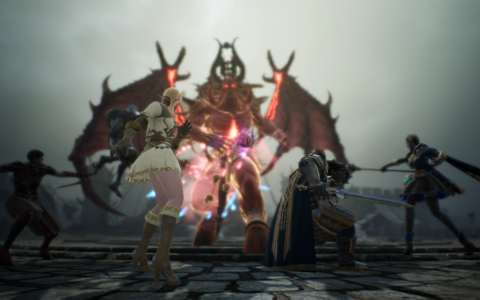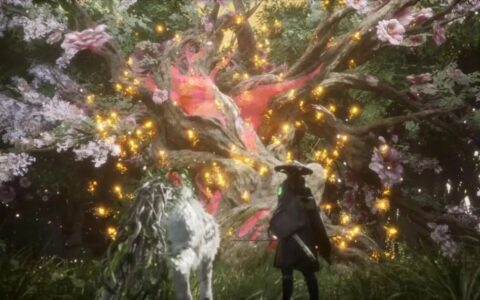
"Zhao Yun and A Dou" is definitely one of the hottest titles on the casual gaming market right now.
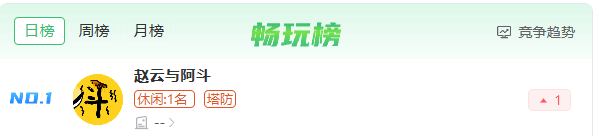
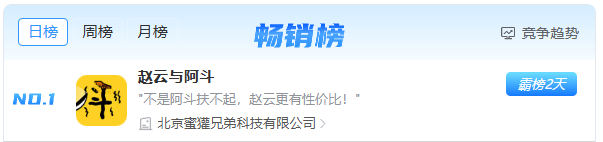
This new release from Beijing Honey Badger Studio has already surged to the top of both the trending and best-selling charts for Douyin mini-games; on WeChat, it has also successfully claimed the top spot on the most-played chart, making it a rare dark horse in the IAA tower defense genre on recent charts.
For Honey Badger Studio, such remarkable achievements are nothing new. As early as the beginning of 2022,their release *Lie Back and Level Up* (also known as *Haunted Dorm*) instantly became a sensation thanks to its mild horror theme and unique tower defense gameplay. It turned into a massive, phenomenon-level hit across the internet, amassing over 10 billion views on the Douyin hashtag and surpassing 300 million registered users in China.
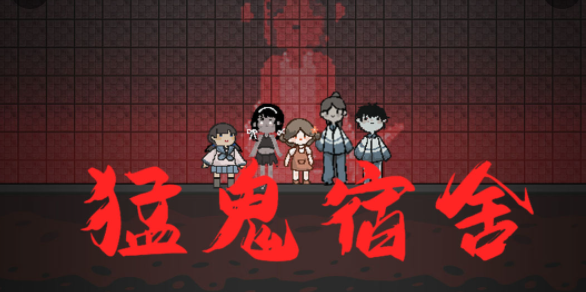
Furthermore, this game—released four years ago—has consistently ranked at the top of charts on major platforms for several years running, and to this day remains a perennial fixture in the top 10 of WeChat’s “Most Played” mini-games chart, making it a rare long-term benchmark in the IAA mini-games category.
Now, Honey Badger Workshop’s long-awaited new hit product has brought fresh excitement to the market and gamers alike.
01
A Unique Three Kingdoms Tower Defense Game
Simply put, *Zhao Yun and A Dou* is a tower defense game set in the Three Kingdoms era.
Visually, the game eschews intricate 3D models and flashy special effects, opting instead for a minimalist style that combines Chinese characters with ink-wash painting to present the gameplay.Here, “Chinese characters” themselves become the core visual symbols and vessels for the characters; all combat units in the game appear in the form of Chinese characters: the character for “bow” (弓) draws its string to shoot arrows, the character for “spear” (枪) thrusts a spear, and the character for “sword” (刀) slashes at enemies.
A visual language that skillfully blends typographic structure with combat animations not only makes the state of the battle immediately clear, but also allows the game to stand out from the crowd of resource-intensive Three Kingdoms titles thanks to its distinctive, minimalist style.
In terms of gameplay, this game seamlessly blends common elements from the mini-game market—such as text-based gameplay, tower defense, inventory management, and item synthesis—while innovatively introducing a 1v1 symmetrical competitive mode.Once the match begins, the opposing sides occupy the upper and lower halves of the map, respectively. Enemy forces surge out along fixed routes, closing in on the trembling Adou at the far end. The player’s task is to build a defensive line through recruitment, synthesis, and strategic deployment to ensure Adou’s safety.Ultimately, the side whose A Dou’s health reaches zero first is declared the loser.
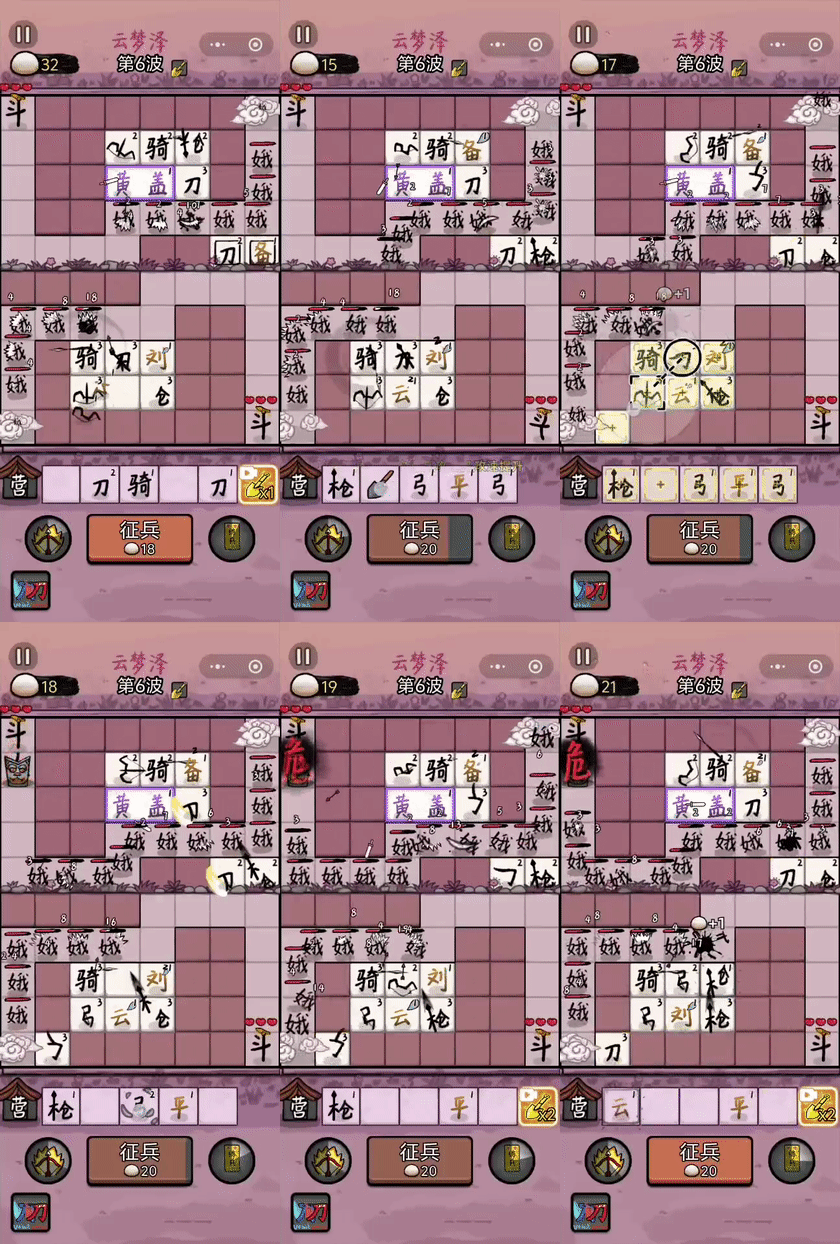
Whether it’s the minimalist Chinese character art style or the intuitive drag-and-drop composition mechanics, this game exudes a casual vibe that makes it “easy to understand at a glance and fun to play right away.”
02
Addictive, random gameplay
However, once you dive deeper into the game, you’ll find that while it’s simple in design, it’s not easy to master.
Every battle is highly random. Each time a player spends “steamed buns” to recruit troops, the game randomly generates one of four basic troop types—“swordsmen, spearmen, archers, and cavalry”—as well as various golden hero tiles or items like “shovels.” The probabilities of these elements appearing vary, so every tap feels like opening a blind box.
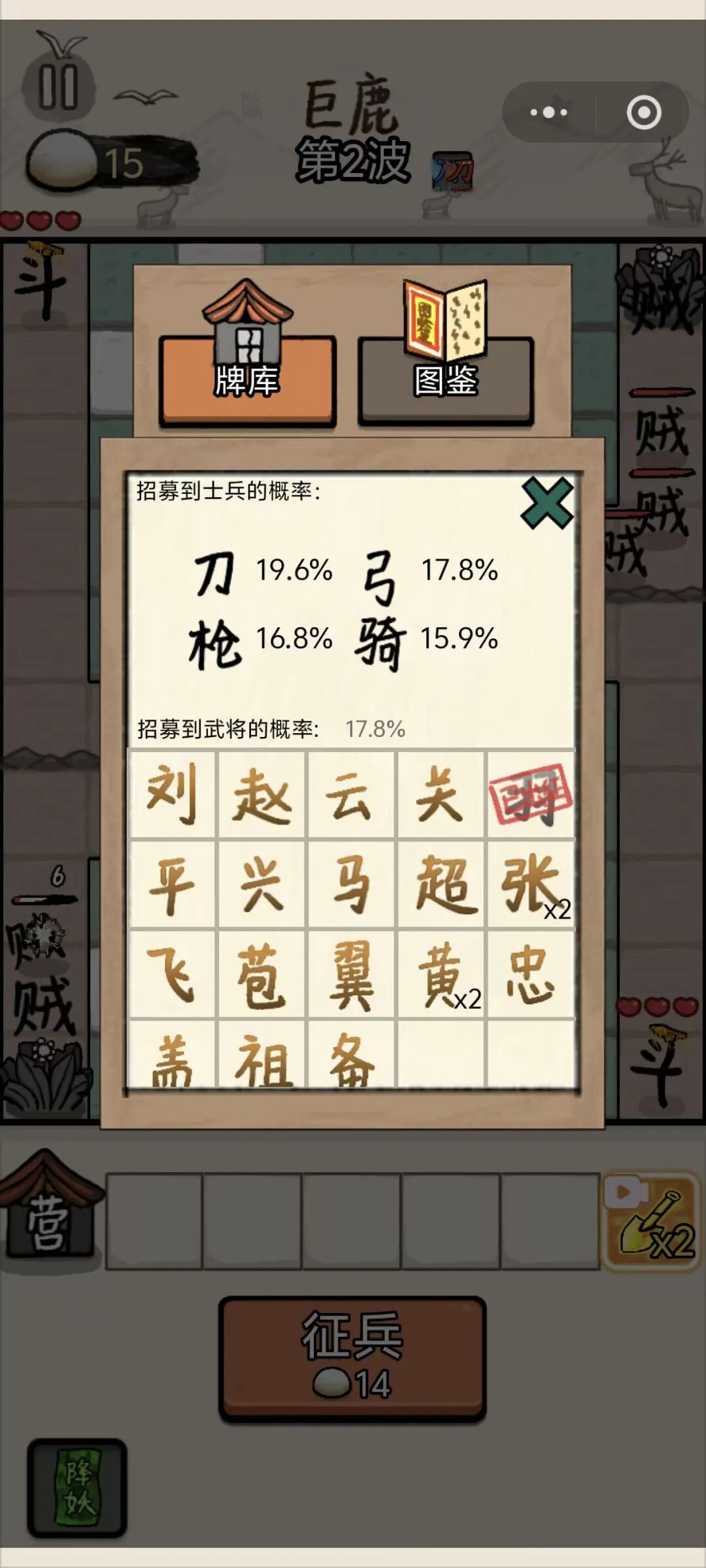
Once basic units are dragged into the battlefield area, they enter auto-attack mode. Two units of the same type and level can be merged to create a higher-level unit of the same type.
Compared to regular units, heroes have stronger combat stats, but each summon yields only a single-character fragment (such as “Zhao”). A single character cannot activate a hero or participate in battle,Players must complete the hero’s full name (such as “Yun”) through subsequent summons and place the fragments on the battlefield in the correct order to unlock the hero.
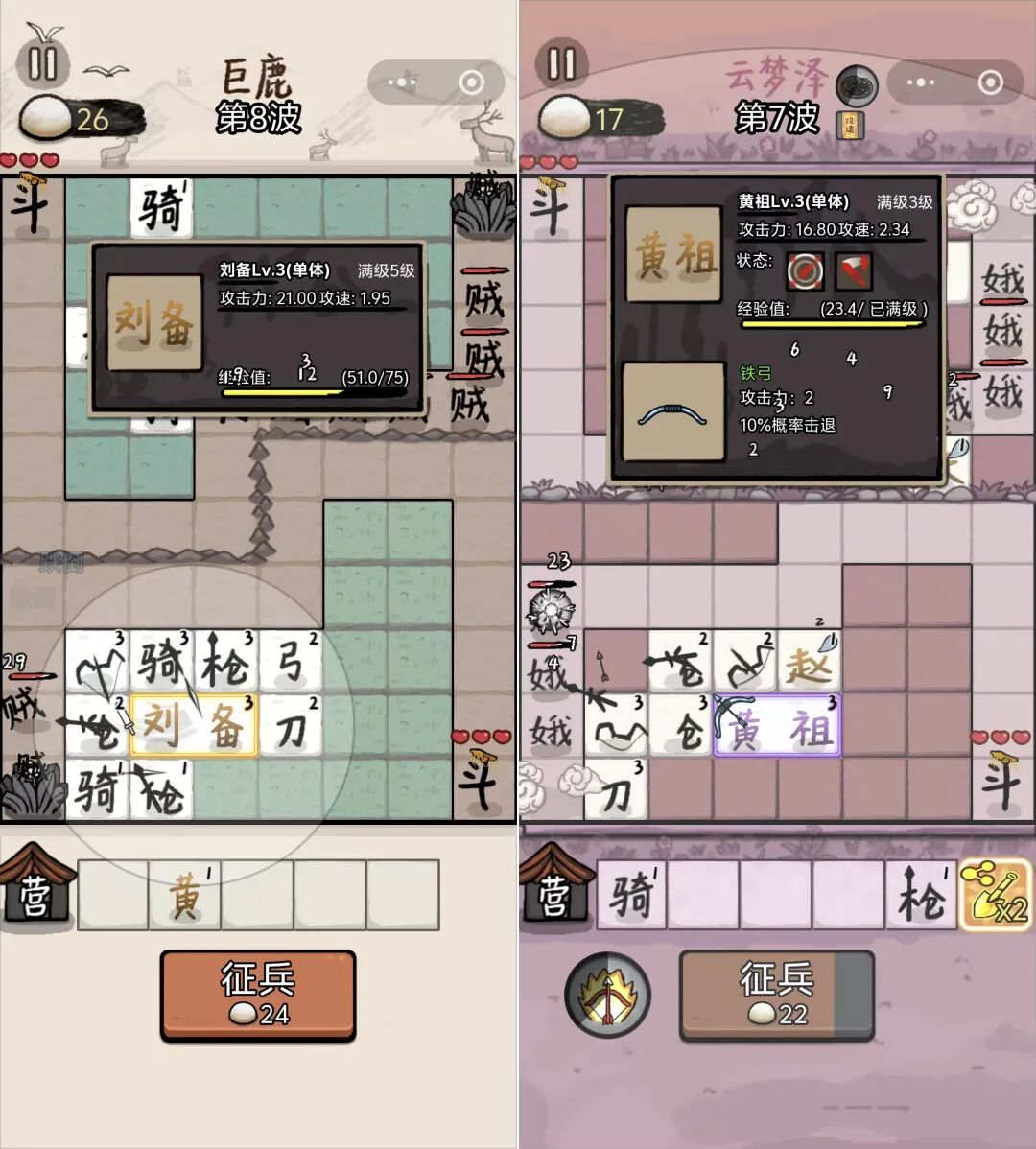
More importantly, battlefield space is limited; although shovels can be used to expand your territory, they appear relatively infrequently. Furthermore, as the battle progresses, enemy forces not only grow in size and become tougher, but bosses with special abilities also spawn randomly, posing a massive threat to your defenses.
This requires players to plan carefully on a board where every inch of space is precious—similar to a “backpack” mechanic—by taking into account unit attack speed and range to strategically arrange and allocate their positions;When a single-character hero appears, players must also make a critical decision: whether to hold onto that character and take a gamble—risking the collapse of their defenses while waiting for the hero—or to simply forgo summoning the hero, make full use of the grid space, and stick to stacking basic units to ensure consistent damage output.
This "space management + card-drawing strategy" mechanic is precisely what sets this game apart from traditional tower defense games, and it’s the very essence of why it’s so addictive.
03
An Ingenious Item System
In addition to the intense and thrilling crafting and combat during matches, the game also features a weapons and equipment system and a “Mysterious Merchant” outside of matches.
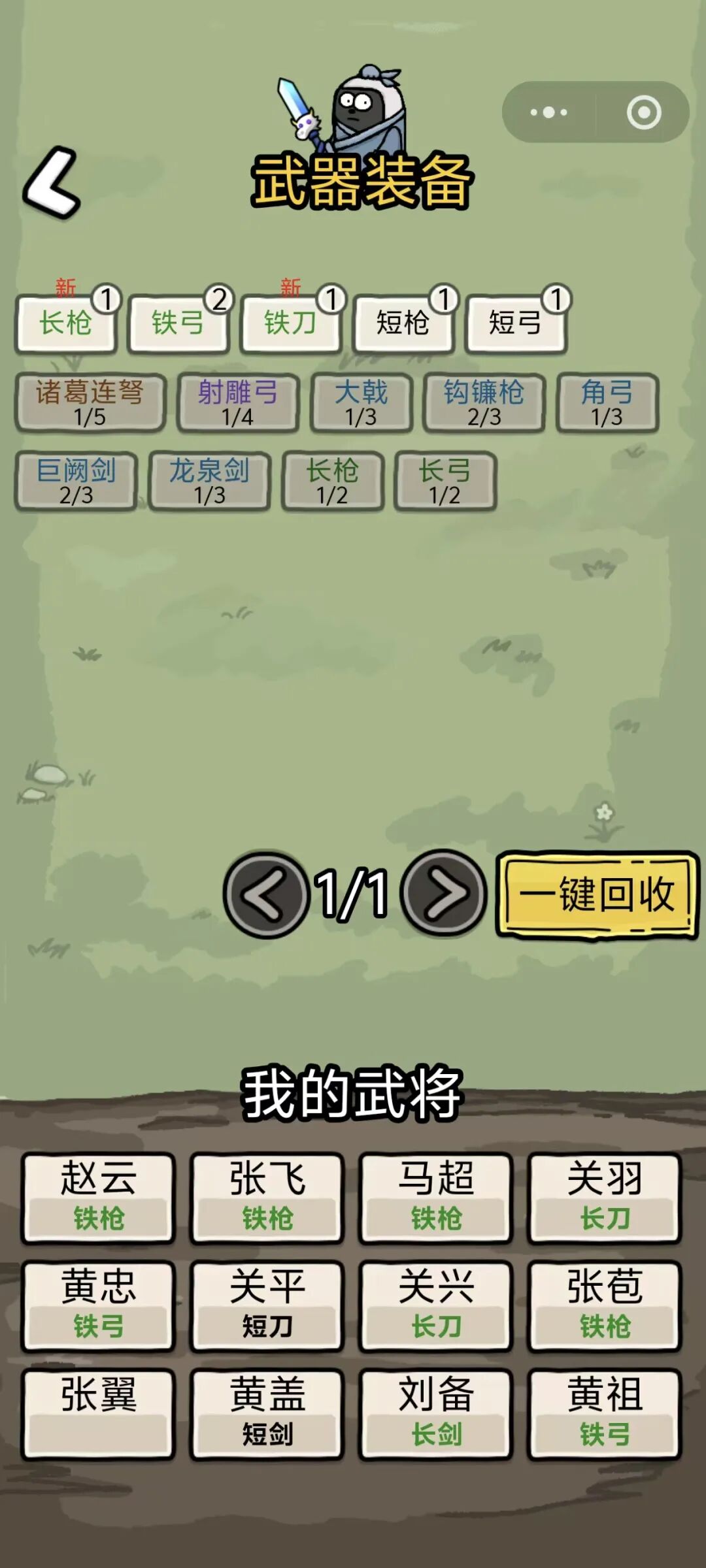
During a match, players have a chance to collect various weapons that drop on the battlefield; these weapons come in different qualities and types.The higher the quality, the greater the attack power; furthermore, different heroes can equip different types of weapons: Zhao Yun can only use a spear, Guan Yu uses a broadsword, Huang Zong uses a bow, and Liu Bei uses a sword. Before starting a battle, players can assign these weapons to the corresponding hero characters to increase their damage output.
At the end of each battle, players will occasionally encounter a “Mystery Merchant,” who randomly sells various buff items. Players can obtain these items by spending their accumulated gold or watching ads to enter a lottery. The types of items available for purchase are randomized each time and cannot be refreshed; they are primarily divided into two categories: active and passive items.
Passive items automatically take effect during a match and directly influence the course of the game. For example, the Meteorite item: when enemies approach Ah Dou, it drops a meteorite to eliminate them; the Mud item: it slows down the movement speed of enemy players.
Active items require players to use them intentionally; they can be used to boost the team's damage output or disrupt the opponent's rhythm. For example, the "Divine Weapon Talisman" can immediately increase the level of a single unit by one, while the "Inkstone" can slow down the attack speed of enemies within its splash area.
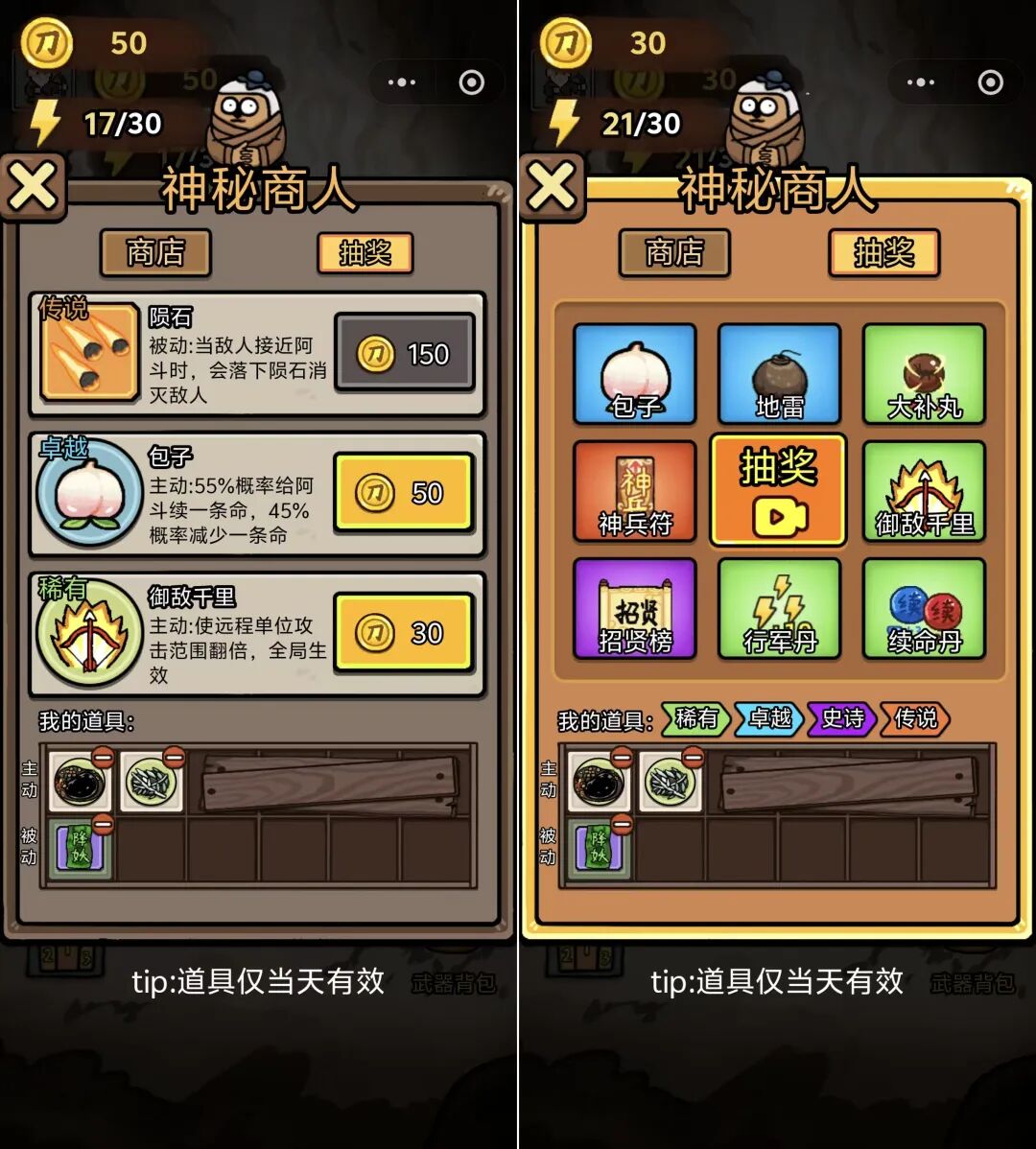
There is a wide variety of items with diverse functions, but players have a limited number of item slots they can bring into each match—a maximum of 2 active items and 6 passive items. Players can freely select and combine items from the rotating pool based on their strategy.
The addition of various items significantly increases the game’s competitiveness and strategic depth. During intense battles, players must not only focus on allocating resources and upgrading their own faction but also constantly monitor the enemy’s movements and react in real time—deciding whether to use intervention items or buff items to strengthen their own advantage.
It’s fair to say that the item mechanics have taken the game’s competitive intensity to a whole new level, significantly enhancing both its fun and replayability. Furthermore, the unique rule that all items are “valid only for that day” cleverly prevents the game’s balance from being disrupted by item farming, ensuring a dynamic equilibrium in the competitive environment.
04
It's the best heater for show value.
More importantly, the introduction of a wide variety of props can add more unexpected entertainment value to gameplay, making it ideal for sharing on short-form video platforms and live streams.
In fact, it’s not just the in-game item modules—the game *Zhao Yun and A Dou* itself offers tremendous potential for content virality. To date, the game’s TikTok hashtag has surpassed 200 million views.
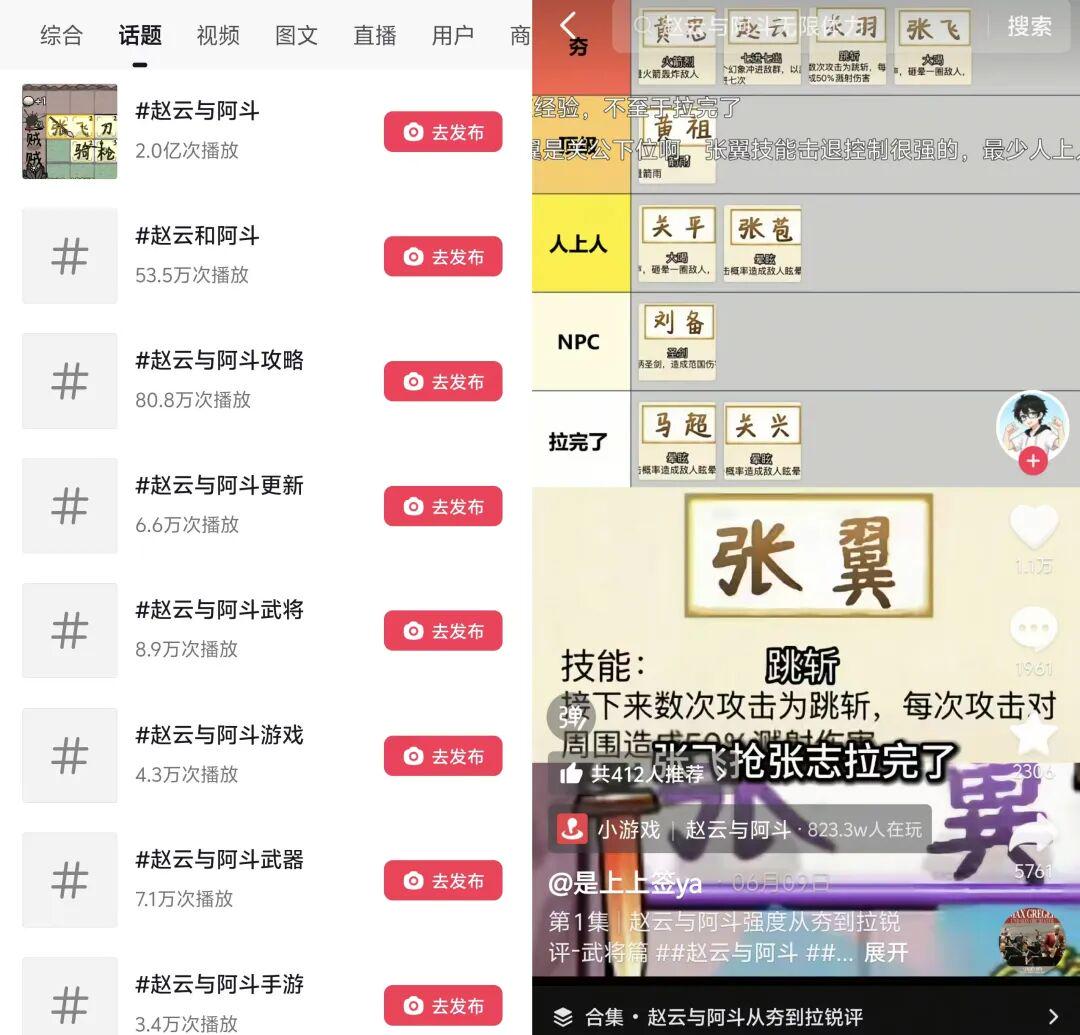
Under this topic, some users have posted in-depth reviews and analyses of various heroes and items, showing off the overwhelming kill streaks achieved through item combinations like “Training Talisman + Divine Weapon Talisman”;Others vent about their “bad luck,” complaining that they’ve drawn multiple single-character hero cards in a row but can’t complete a single hero set, ultimately suffering a disappointing defeat; still others make jokes: “Why is Ma Chao allowed, but not Jack Ma?”
Some players have also shared the thrilling “blood-selling economy.” In the game’s mechanics, players start with a limited number of steamed buns and can only gradually acquire more by killing enemies to unlock additional troops. However, when A Dou is injured, the system instantly compensates players with a large amount of provisions, allowing them to quickly “recruit troops and build up their forces.”As a result, some players have devised an aggressive strategy: intentionally letting enemy soldiers escape to drain A Dou’s health, then using the system-provided resources to instantly mass troops and launch a counterattack. This “put yourself in a desperate situation to find a way out” tactic often leads to spectacular comebacks.
Driven by this rich and diverse array of engaging content, the game quickly gained popularity beyond its original audience and ultimately saw its user base grow exponentially.
Currently, *Zhao Yun and A Dou* has taken major platforms by storm, successfully topping numerous mini-game charts, and continues to attract a strong user base.Despite its impressive early performance, it remains to be seen whether it can replicate the long-term operational success of *Lie Flat and Level Up* and transform from a “phenomenal hit” into a “long-lasting favorite.”
However, for Honey Badger Studio, from *Lie Low and Level Up* to the current *Zhao Yun and A Dou*, they have once again successfully demonstrated their ability to create blockbusters by “making the most of limited resources.”Rather than pursuing disruptive innovation or large-scale productions, they rely on precise insights into player psychology and viral trends to refine every tiny creative idea to perfection.
This R&D philosophy—that “the devil is in the details”—may well be the key to their ability to consistently produce hit products even as they navigate different market cycles.
原创文章,作者:游茶妹儿,禁止转载:https://youxichaguan.com/en/archives/208056