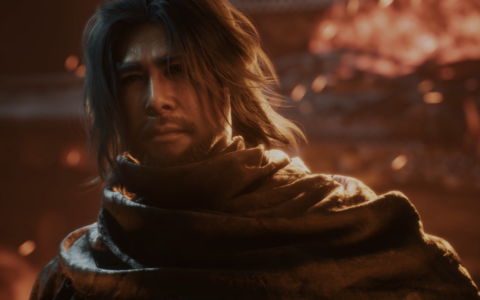
Remedy recently announced that *Control: Resonance* has surpassed one million copies sold worldwide, setting the fastest sales record in the Finnish studio’s 31-year history. Previously, the record was held by *Alan Wake 2*, which took about two months to reach that milestone.
Based on estimates using the Standard Edition price of $59.99, the Deluxe Edition price of $69.99, and actual pricing in different regions,revenue from 1 million copies of *Control: Resonance* would be approximately $45 million to $52 million, equivalent to over 300 million yuan.
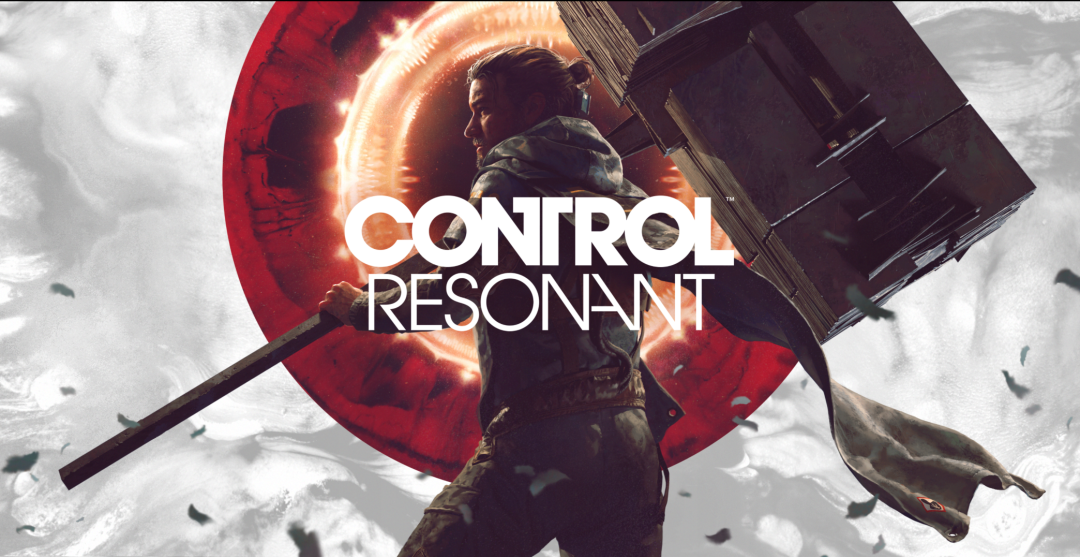
The game has received Metacritic scores ranging from 81 to 84 across various platforms, and since its release, its global “Positive” rating on Steam has remained between 87% and 91%. Players in different regions have different perspectives on this sequel, but most of the discussion centers on how it builds upon the series’ legacy:
How did Remedy take *Control* in a new direction while preserving the series’ original essence?
At this point in time, this issue deserves extra attention. Over the past few years, the gaming industry in Europe and the United States has experienced massive layoffs, project cancellations, and extended development cycles.As the investment required for AAA games continues to rise, any shift in a project’s direction can rapidly increase both the time and costs involved. Under heightened commercial pressure, sticking with proven franchises, gameplay mechanics, and market segments has become the more straightforward choice. In contrast, *Control: Resonance* has opted for a more pronounced change in direction.
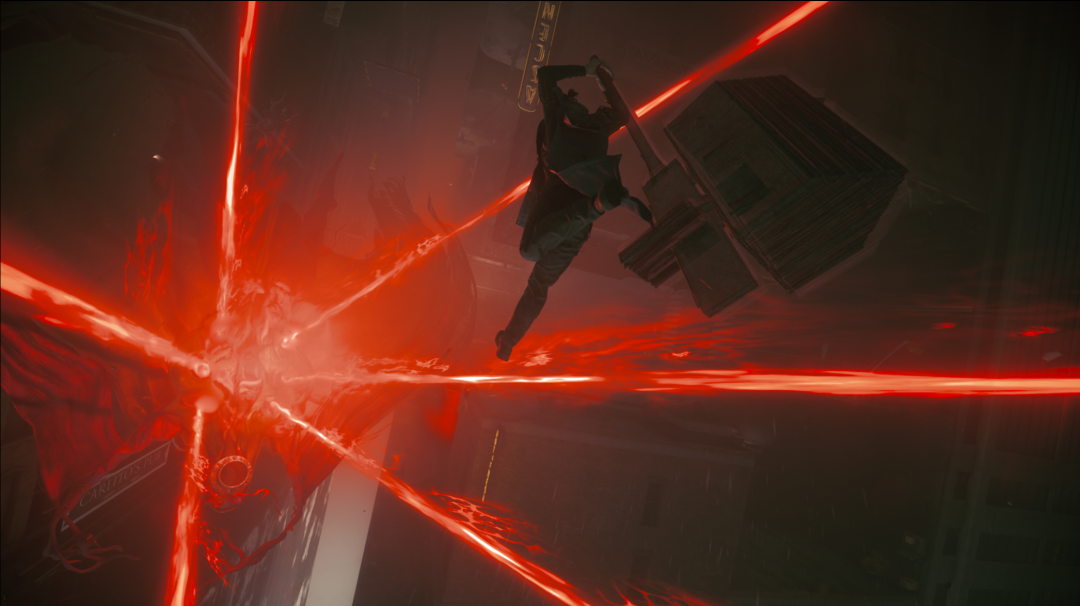
These changes are most evident in the game itself: the protagonist has shifted from Jesse Faden to Dylan Faden, combat has shifted from shooting to melee, and the main setting has moved from Taiguya to Manhattan.A studio known for its first-person shooters is now re-exploring how to execute close-quarters combat effectively; at the same time, Remedy has also taken on the responsibility of self-publishing *Resonance*, a buy-to-play single-player game.
So what makes *Control: Resonance* worth discussing isn’t just its sales figures, but also how it was made.
Previously, during a talk in Cologne, Juha Vainio, executive producer of *Control: Resonance*, described the production process of the original *Control* as “crazy.” During the final year, the team was constantly in a state of panic and had to constantly put out fires; some of the features they had originally planned to include were ultimately cut due to budget constraints.
When discussing *Control: Resonance*, Juha presented a set of results that were almost the opposite. According to him, each stage gate was passed quite smoothly, the quality certification process didn’t involve any back-and-forth, and the release date came earlier than the internal timeline set during pre-production.In employee surveys, the team scored higher than both the company average and the industry average on every metric.
This is not a sequel with fewer changes and a safer approach.
“We wanted to do something different, rather than a ‘safe’ sequel,” Vainio said. For Remedy, the challenge was how to maintain creative freedom while ensuring these new experiments had a more solid production foundation.
His explanation focused first on pre-production. Remedy used a small team—about 20 percent of its full staff—to spend more time validating the core gameplay and fine-tuning the production pipeline before scaling up to begin full-scale production. This is how melee combat was repeatedly refined and confirmed to be viable. For a studio with no prior experience developing melee-based games, this risk was identified and validated as early as possible.
However, not all issues can be resolved during pre-production.
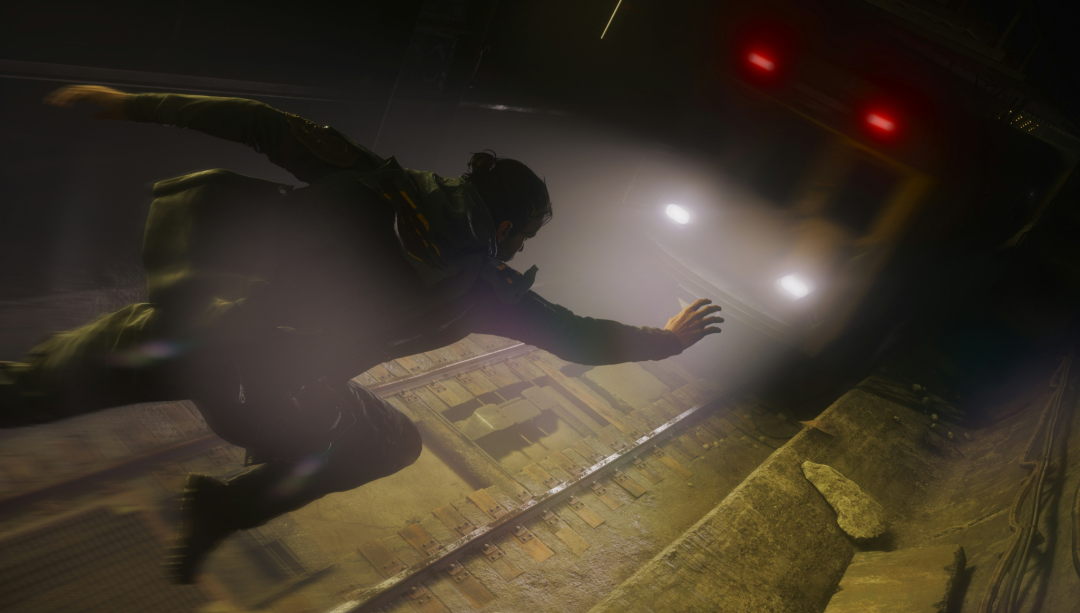
The “gravity anomaly” that allows Dylan to walk on walls and ceilings was still being tested right up until the official production phase. The initial version caused severe motion sickness, but the team felt this feature couldn’t be cut: as Juha put it, if they abandoned it, the entire game would fall apart.They tried at least four or five different solutions and spent several years before finally arriving at the current version, which causes almost no dizziness.
As a result, “risk management” is no longer just a procedural issue. Which questions must be answered early on, and which can be carried over to the next phase? When a feature isn’t fully developed yet, how does the team determine whether to continue investing in it? Phase gates, checklists, and production pipelines can provide guidance, but ultimately, someone still needs to participate in the discussion and make the decision.
At the TapTap Game Festival, we had the opportunity to chat with Juha about the development process of *Control: Resonance*.This interview took place prior to the game’s release. Building on the production changes Vainio discussed in his presentation, we asked further questions about how prototype validation, stage sign-offs, team collaboration, and user testing worked in practice.
This discussion focuses on how Remedy established a more reliable production framework for creative changes in a bold sequel.
The following is the edited transcript of the interview.
01
Don’t Make a Safe Sequel
Q: This installment features a new protagonist, a revamped core combat system, and new main settings. For a sequel to a highly acclaimed title, these are quite radical choices. How did you weigh these decisions at the time?
Juha: We wanted to do something different, rather than a “safe” sequel.One of the core pillars of the *Control* series is called “The World of Control,” and it has guided us from the very beginning—starting with the fact that the first game was titled *Control* rather than being named after the protagonist, “Jesse Faden,” like *Max Payne* or *Alan Wake*.
In all “Control” games, the world is the key element, and most changes are driven by it: the protagonist was changed so that “Control” wouldn’t be solely about Jesse Faden; the characters left the ancient house to more vividly showcase the world of “Control”; and the shift from shooting to melee combat was made to distinguish Dylan’s gameplay from Jesse’s.
Q: Now that the game has shifted to melee combat, what new experiences does it offer that the previous games didn’t?
Juha: Melee and ranged combat are completely different experiences. With ranged combat, you keep your distance from enemies and don’t get as deeply embroiled in the thick of battle; melee combat, on the other hand, is true “hand-to-hand combat.”One feature we added specifically for melee combat is the visually striking “execution”—something you won’t find in shooter combat: when an enemy’s health is very low, pressing the left stick on the controller allows you to execute them in a spectacular fashion.
Another important point is that we use supernatural abilities to complement melee combat: you can still create distance using abilities like “Throw,” and then close in for melee combat. This takes the strategic depth of combat to a whole new level.
Q: Some players believe that a closed indoor environment is better suited for creating a sense of tension. Why did you still choose to leave the old house?
Juha: First, we approach the issue as “two sides of the same coin”: the original and the sequel—one set indoors, the other outdoors;one is the older sister, the other the younger brother; one is a shooter, the other a melee game… Almost everything is built on this contrast, so stepping out of Taiguya and into Manhattan felt very natural to us.
Second, this actually gives us more tools to create a sense of tension. In Manhattan, you can still enter the building; it’s not entirely open-air. By starting with some slower-paced outdoor sections before entering an extremely tense underground space, the atmosphere can build up layer by layer.
Q: For many players, what they love most about *Control* is actually its setting, world-building, and storyline. Internally, how do you prioritize gameplay and content?
Juha: We still place a great deal of emphasis on storytelling—it’s the foundation of Remedy. We make narrative-driven, story-driven games; it’s in our DNA. When it comes to storytelling and world-building, I’d say *Resonance* is at least on par with the original—if not better.
What we particularly wanted to achieve with *Resonance*—and what is the goal of the entire series—is to elevate gameplay to the same level as the narrative. To that end, we assembled the largest gameplay team in Remedy’s history, included a wider variety of enemies than in the original game, and overall, the gameplay has indeed taken on greater significance.
As for the order of things, in traditional Remedy projects, the gameplay was generally shaped by the writing and narrative. Now it’s the other way around: gameplay priorities drive the narrative and determine what goes into the script.
02
Use a smaller team to address all issues early on
Q: How long did the early validation phase of *Resonance* last? How large was the team at that time?
Juha: Our pre-production phase was quite long—almost as long as the entire development period for the first game. The idea was to use a small team and take more time to address all the issues that arose during pre-production before expanding the team and moving into full-scale production. That’s exactly where we fell short with the first game.
The pre-production team is currently about 20% of full capacity, with slight fluctuations depending on the phase.The advantage of a small team is the ability to iterate quickly and find answers to questions such as “Can we implement melee combat?” or “How exactly do gravity anomalies work?”… In addition, there are a number of relatively simple supernatural abilities that we also hope to prototype as early as possible. That way, once we actually begin production and the team expands to full capacity, everyone will no longer need to ask questions—they’ll just need to execute.
Q: Before scaling up and moving into full-scale production, what is the key question this small team must answer?
Juha: It all comes down to the basics: What are the biggest unknowns and risks we’ll face? How can we minimize the probability of these risks occurring? We also need to figure out the appropriate production pipeline and pace so we know exactly how much content we can handle within the given budget and timeline.
Q: Melee combat is one of the biggest risks in the early stages of the project. How did you validate it?
Juha: For a studio known for its shooting games, developing a melee-focused game is risky, so we put a lot of effort into it right from the start of pre-production, using prototypes to test the feel of the melee combat, and we really spent several years polishing it. From the outside, it might seem simple—”Hey, let’s make a melee game”—but in reality, it’s not that easy.
We only move on to the production phase once we’re satisfied with the melee combat and are confident we know what to do. If we leave the iterative development of melee combat until the production phase, the costs will be much higher, and it will lead to a lot of last-minute firefighting.
Q: Many of the creative ideas in the *Control* series are difficult to explain using existing works. The vision that designers, artists, and programmers have for the same line of dialogue can be completely different. Have you ever encountered this kind of misalignment in understanding?
Juha: That’s true. Most of our concepts are quite abstract, so it’s hard to find existing examples to compare them to. A typical example is gravitational anomalies: Dylan can walk on walls and ceilings. It’s easy to write on paper, “We have gravitational anomalies,” but everyone understands it differently.
So during the pre-production phase, we created a large number of prototypes to gradually clarify exactly what this concept meant for different disciplines, such as programming, game design, visual effects, and sound design. Take “gravity anomalies” as an example: What sound should play when gravity switches to the wall? Which areas are walkable, and how should they be visualized?What would it look like to walk along a wall under abnormal gravity? We iterated on the design repeatedly and finally made a decision: any surface that looks walkable is actually walkable, so we no longer use any special effects to indicate this—if it looks like you can step on it, you really can.
Simply put, the answer is plenty of prototyping and repeated iterations.
Q: Were there any particularly memorable difficulties or challenges during this process?
Juha: When I first started working on gravity anomalies, I was very prone to motion sickness—it was really bad at first.
We also conducted extensive prototyping and user testing; it took several years of development to arrive at this version, which causes virtually no motion sickness. We conducted multiple rounds of motion sickness testing specifically targeting gravitational anomalies and tried at least four or five different methods to improve the experience.
Gravity anomalies are one of the most important features of this game, so this issue was a major concern for us. If we couldn’t resolve the motion sickness problem, we wouldn’t be able to release the game—because we couldn’t possibly cut this feature; doing so would ruin the entire game. We had no choice but to solve it, so we invested a great deal of effort and resources into it.
Q: Were “Gravity Anomaly” and “Close Combat” designed from the start as a pair of complementary gameplay mechanics? Which one supports the other?
Juha: These were separate ideas. The first thing we decided on for this game was “we’re going to make a melee game”—that was the foundation for everything. Of course, as I’ve said, we can’t cut either the gravity anomalies or the melee combat; we have to get both right.
The difference is this: Although melee combat was a risk for Remedy, we always knew—especially after pre-production—that we could pull it off. It already felt solid during pre-production, and there was never any risk that we wouldn’t be able to make it work;Gravity Anomaly, on the other hand, was still undergoing extensive testing and refinement during active development, and even once we entered the production phase, the question of “whether we could pull it off” remained a constant source of anxiety.
03
Use a door to determine whether you can go down
Q: From early exploration to pre-release polishing, how are release schedules and milestones planned?
Juha: We use what’s known as the “stage-gate” model. We had a very simplified version of it when we were working on the first generation, but since we made a full transition to managing multiple projects in parallel, we’ve placed much greater emphasis on it. Because a delay at any one stage can have a ripple effect on other projects, we must set very clear criteria for each stage.
Taking pre-production as an example, it is divided into several stages: concept development, proof of concept, and production readiness, each with its own set of standards. A project must pass the “production readiness” stage before it can move on to production.
During the concept development phase, the game’s overall concept must first be finalized; during the proof-of-concept phase, a large number of prototypes are created, such as gravity anomalies and various supernatural abilities; once satisfied with the prototypes, the project moves into the pre-production phase, whose main goal is to ensure that all production pipelines are fully operational so that production doesn’t hit any snags during the official development phase. By that point, the team is quite large, and if production stalls, the costs will be far higher than during the early stages of development.
Q: If a release has all the planned features but the user experience falls short of expectations, how should the team decide whether to release it, continue refining it, or adjust the scope?
Juha: There are checklists for each phase, and sometimes it’s simply not possible to complete them all. In those cases, the most important thing is to identify where we fell short and make it a priority for the next phase.For example, suppose a phase lasts five months. If a prototype isn’t completed during the proof-of-concept phase, we’ll make it the top priority for the first month of the production-ready phase and work on it in parallel with other important tasks in that phase to ensure it’s resolved, thereby avoiding delays.
In theory, if a phase fails badly, we could extend the deadline, but we usually don’t, because that would mean delaying the entire project and affecting other projects. So we prefer a “conditional pass”: first, we identify the most critical issues that must be resolved as soon as possible; only if even those aren’t resolved will we reconsider the schedule.However, *Resonance* passed every stage gate quite smoothly.
Q: In the original *Control*, the variety of enemies was reduced due to budget cuts, but the new game features more factions and more variants. What has the team improved upon to move from “a one-time effort” to “consistent mass production”?
Juha: The prototypes and iterations for all enemy factions and types were completed during the early production phase, with the highest-risk ones tackled first and the simpler ones left for later. By the time we reached the production-ready stage, we had reliable data on production rates, knew how many variants we could create, and had a general idea of what they would look like.
At that point, we were already very confident in the scope we could deliver, and we had a clear understanding of the size of the world as well as the overall requirements for different enemy types and variants. For us, scope management is an ongoing process; we dynamically take everything into account and adjust it to fit the project parameters, striving to reduce the scope as early as possible to avoid waste.
Q: This project was completed ahead of the internal schedule. Looking back, what do you attribute this to?
Juha: There are many factors that contributed to this. Compared to the first game, one of the key factors was that we made sure all open questions from pre-production were answered during that phase, rather than waiting until the production phase—when the team is larger and everything is more expensive—to find the answers. This, in turn, led to faster decision-making during production; the planning was more solid, and naturally, there was less last-minute firefighting down the line.
04
Provide support rather than lead the project
Q: *Resonance* is Remedy’s first major title since the company shifted to a multi-project approach and began self-publishing. What has been the biggest change within the company as it transitioned from a single-project model to a multi-project one?
Juha: Moving from a single project to multiple projects has undoubtedly been a journey filled with learning. A key change at Remedy following *Control* has been the development of a better holistic view of all projects—such as personnel dependencies across projects. Today, the studio is better equipped to meet the needs of each project and make better prioritization decisions across them.
Q: I’ve heard that you have a Project Management Office (PMO) that took two or three years to shift from “leading projects” to “supporting projects.” What did it stop doing, and what did it start doing?
Juha: When we transition from a single-project (or dual-project) company to a multi-project company, we need an organization to manage the entire project portfolio—which is why I discussed the establishment of a PMO in my presentation. For Remedy, this has been a learning curve: how to transform from a highly project-centric organization into one with a dedicated department that specifically handles the relationships between projects.
Initially, the PMO’s role was to lead projects. However, when all responsibilities—such as delivering results and ensuring a return on investment—fell on the project teams, this structure didn’t work very well, so it had to evolve into a support organization. Now, projects operate independently, but they turn to the PMO to resolve conflicts.
The most common issue is personnel conflicts—for example, when we need a visual effects artist, and another project needs one as well. The PMO is the party we turn to; it facilitates discussions to determine which project needs the artist more—or whether we should hire another one. That’s how it’s set up now: the PMO doesn’t lead projects; it supports them.
Q: Can we choose a cross-discipline feature to see how it progresses over the course of an iteration? Who is responsible for the final gameplay experience?
Juha: Most of our features span multiple disciplines; let’s take a “weapon variant” as an example. This work spans the entire process, from the early stages of pre-production to the end of production, and depending on the situation, some phases may overlap.
First, the gameplay design team decides what to create, develops an initial design and prototype, and refines it to a point where it’s roughly ready for implementation; they then ask the gameplay programmers to implement the various supporting features required for implementation.Concept artists are responsible for the weapon’s visual design, which is then brought to life by hard-surface artists and character artists. Animators create the animations showing Dylan using the weapon. Once the weapon is roughly finalized, the audio team designs the various sound effects associated with it; the visual effects team then finalizes the weapon’s visual appearance in all its states, including all abilities that might affect its appearance.
Iterations take place within each team’s individual development cycles, as well as at a higher level, to ensure that all components fit together seamlessly. The gameplay experience is the responsibility of the gameplay designers, while the Creative Director is ultimately responsible for it as part of the overall creative experience.
Q: So how are decisions communicated from leadership to the team? Is there a bottom-up mechanism?
Juha: Most of the time, it depends on the specific situation. However, the project has a core leadership team that typically makes high-level strategic decisions. In the creative realm, the Game Director communicates with the leads of each creative discipline—such as the Lead Level Designer, Lead Game Designer, and Lead Environment Artist—who then communicate with their respective team members.On the production management side, the Development Director communicates with the various producers, who then oversee the implementation of production tasks.
There is certainly a bottom-up mechanism in place: as long as it’s not a particularly high-level strategic decision, we typically involve the team in any decisions that pertain to them directly, and their input can be escalated to the leadership team and then fed back to the team. Moreover, each team tends to operate quite independently.For example, the team responsible for creating enemies develops the enemies themselves; we review the final results, and all decisions are made by them—we simply provide feedback as reviewers.
05
Use Testing to Disprove Unreasonable Designs
Q: The number of users in this round of testing was significantly higher than in previous iterations. Were there any test results that were particularly unexpected—or even overturned a design we were originally very confident in?
Juha: We conducted a lot of user testing and learned a great deal, but most of it just confirmed what we already knew.
A good example is the “melee-supernatural ability resource mechanism,” which forms the foundation of the entire combat system. We didn’t want players to rely solely on supernatural abilities and turn the game into a ranged experience, so we designed a resource system where successful melee hits recharge supernatural abilities.
Originally, this system was bidirectional: players had to use supernatural abilities to engage in melee combat, and they had to use melee combat to use supernatural abilities. But for some reason, players felt that this didn’t feel right and wasn’t as fun. Later, we conducted an A/B test: in the other version, melee combat could be used freely, and only supernatural abilities required resources.After extensive player testing, we found that this one-way resource mechanism was more fun and felt more like a typical ARPG. This is an example of how we revised our original design based on user research findings.
Q: Team well-being has been identified as a key metric. Aside from confidence in the work itself, what specific changes have actually taken place in our day-to-day work practices?
Juha: The internal communication structure within the team has matured significantly. Team members now have a clearer understanding of the decisions made by leadership and the reasoning behind them, which has led to greater overall satisfaction.On the other hand, there’s the production model: we now have much better control over the production schedule and no longer have to constantly “put out fires.” This also means that the project’s direction and what the next phase will look like are more predictable—unlike the chaos we experienced with the first game. Compared to the first game, everyone is much more satisfied with this project.
Q: Since we started self-publishing, the marketing and development teams have been working more closely together. Has this had any practical impact on product decisions?
Juha: We work very closely together—especially the leadership team and the marketing team—on aspects such as positioning and how to communicate the game. This hasn’t affected the game itself on a creative level; the game team still makes all decisions with a high degree of independence. However, it has certainly influenced “how we talk about” the game.
Take the first game as an example: many people who played it later didn’t pick it up at first precisely because the marketing message at the time was “this game is weird,” but after playing it, they all said they loved it. This is undoubtedly one of the lessons we’ve learned from the marketing team.The game is still weird, and *Resonance* is still weird—that’s in Remedy’s DNA. But the way we talk about it now is that it’s so much more than just “weird.”
原创文章,作者:游茶妹儿,禁止转载:https://youxichaguan.com/en/archives/220311