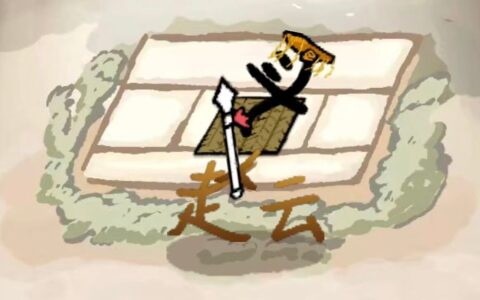
Recently, Haoteng Chuangxiang (Crazy Games) launched another new game, and this time they are once again targeting the 2-in-1 genre.
As the leading player in China’s mini-game market, Crazy Games has achieved remarkable success: not only did it create “Pirates Are Coming,” the first WeChat mini-game to generate over 100 million yuan in monthly revenue, but it also sparked successive waves of “loot box-like” and ““Xianyü-style” development trends, laying the groundwork for the emergence of even more popular titles.
In the "2-in-1" market segment, where many leading manufacturers have deployed significant resources, they have also charted their own course, leveraging their original "Fat Goose" IP to carve out a distinctive, cute-themed niche.
In 2022, as the global "2-in-1" market was about to enter a new phase of explosive growth, the forward-thinking Crazy Games took decisive action by launching a major update to its simulation management game, *Fat Goose Gym*, officially entering the "2-in-1" market.
As soon as the revamped “Fat Goose Gym” was launched, it quickly captured a large player base in China, with monthly revenue soon surpassing the 10 million mark.Between 2023 and 2024, the game accelerated its expansion into global markets and achieved outstanding performance in Japan. According to statistics from DianDian Data, the game’s cumulative revenue since launch has exceeded 460 million yuan, with the domestic market accounting for over 65% of total revenue and the Japanese market ranking second at 21.8%.
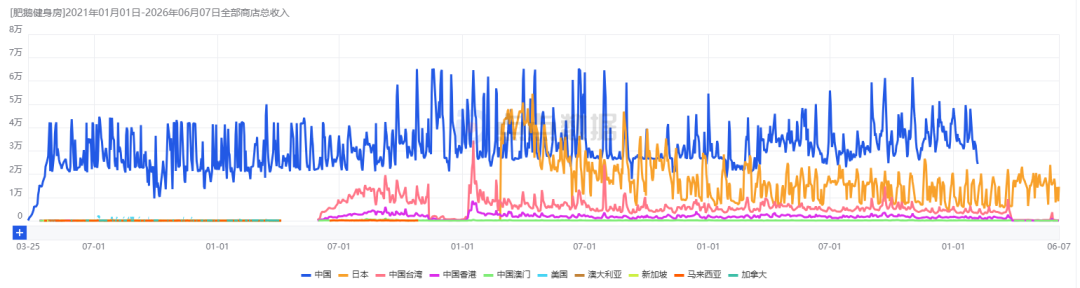
Revenue Trend Chart for "Fat Goose Gym" Since Its Launch; Image Source: DianDian Data
Now, building on their already well-established “Fat Goose” IP, they have launched a new title in the same genre: *Fat Goose Food Street*.Currently, the mini-game version has climbed to No. 20 on WeChat’s Top-Selling Chart and No. 34 on Douyin’s Top-Selling Chart. On June 1, the day it launched, the mobile game version also successfully topped the iOS Free Chart at No. 1.
This naturally raises the question: given the success of its previous title, what makes Crazy Games' new release so compelling that players will continue to buy it?
01
Original IP + New Gameplay Experiments
With the rapid growth of the 2D animation market, this sector has inevitably seen a certain degree of homogenization, particularly as European and American-style cartoon art and stories featuring strong female protagonists making a comeback have almost become standard features of hit products.
But Crazy Games didn’t fall into that trap; instead, using a chibi-style hand-drawn art style, it created a heartwarming and endearing “chubby goose” character.In *Fat Goose Gym*, the diverse character designs of the Fat Goose characters and the rich animation give the game a distinctive visual identity, while also laying the foundation for the IP’s long-term development.
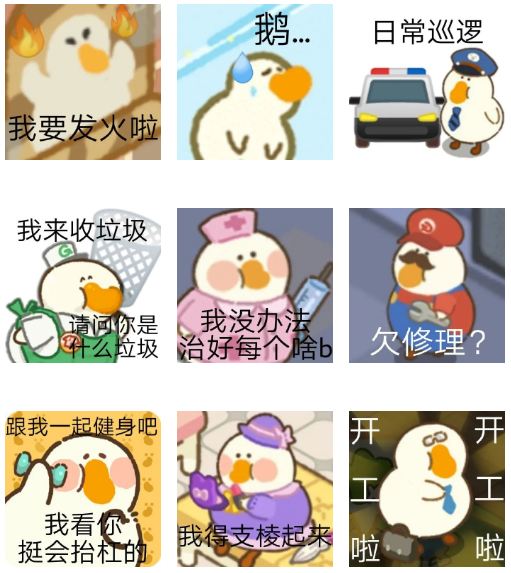
Previously, fan-made "Fat Goose" memes had already gone viral and gained widespread popularity among netizens.
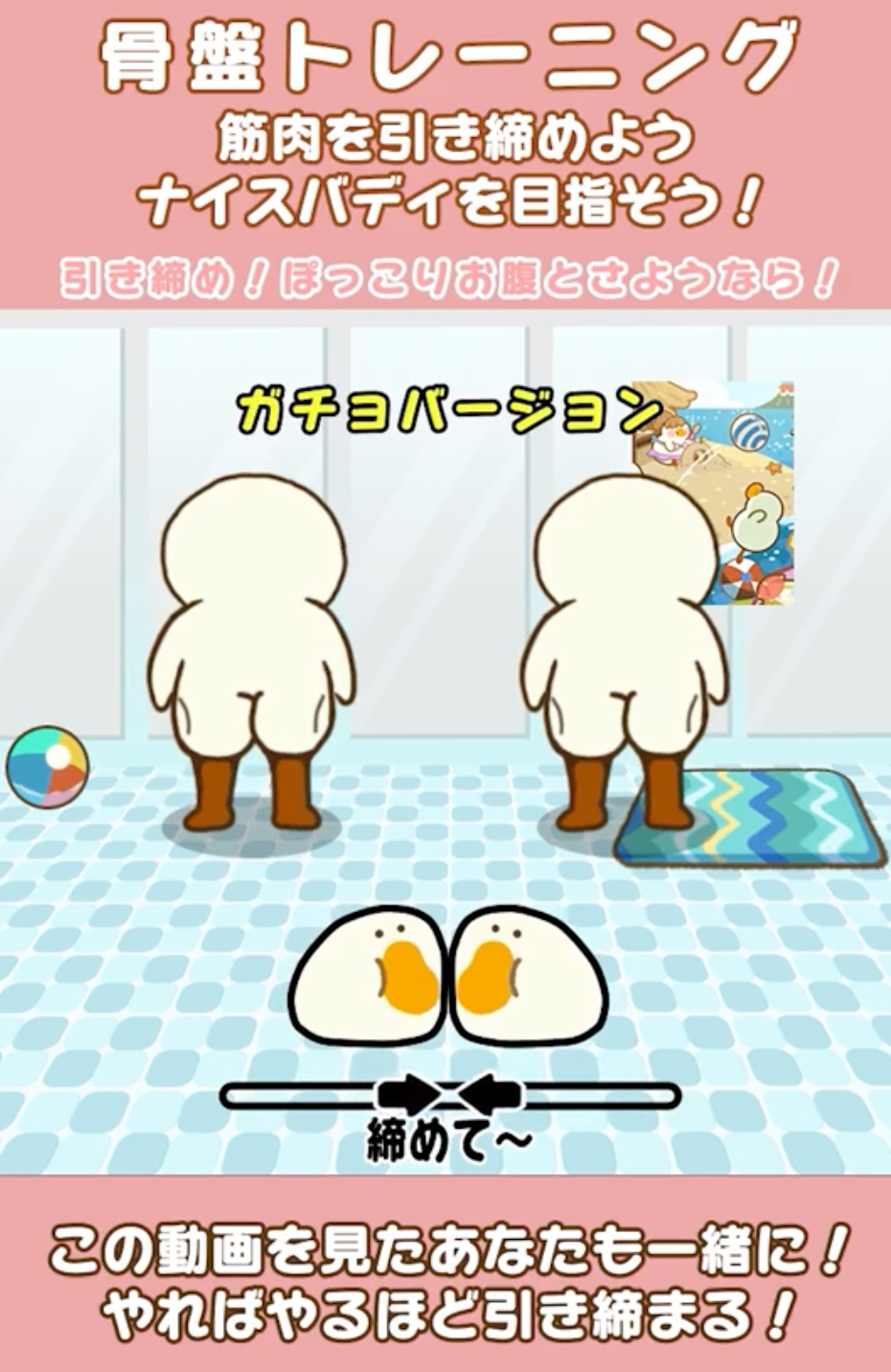
According to App Growing Global statistics, a large number of animated clips featuring the “Fat Goose” character in ads for *Fat Goose Gym* have achieved strong exposure metrics and are particularly well-suited to the preferences of female players.One video featuring a "Kegel exercise" routine, in particular, garnered extremely high exposure in the Japanese market thanks to its vivid "Fat Goose" model and practical exercise theme.
When creating *Fat Goose Food Street*, the development team continued to utilize the original art style and IP assets, maintaining the game’s cute and heartwarming aesthetic, and built a series of storylines centered on the Fat Geese, all revolving around the theme of “rebuilding the food street.”
Unlike games such as *Gossip Harbor*, the story in this title doesn’t serve as the main plot driver but rather acts as a backdrop.The mysterious food street worker A Tao, the sugar-loving lost girl Ya Ya, and the down-on-his-luck but loyal Old Fan… These vividly portrayed characters make their appearances one after another, not only enhancing the game’s immersive experience but also deepening the character development, allowing players to form a closer emotional connection with this IP.
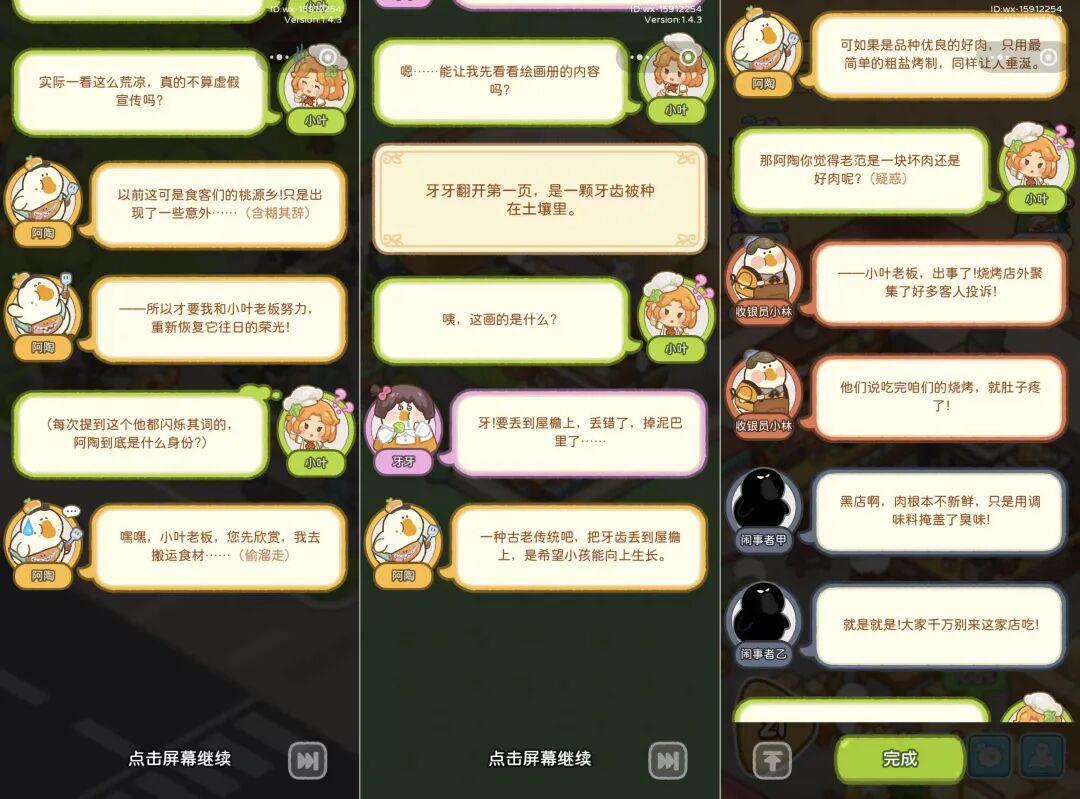
In terms of gameplay, the focus returns to the “combination-management” cycle.The main storyline progresses based on the number of days you manage the food court. Each day features specific orders to complete. Players simply combine the corresponding ingredients on the game board to cook the food required by the order. Submitting the order earns you rewards, which can then be used to repair and expand the food court, thereby unlocking more orders.
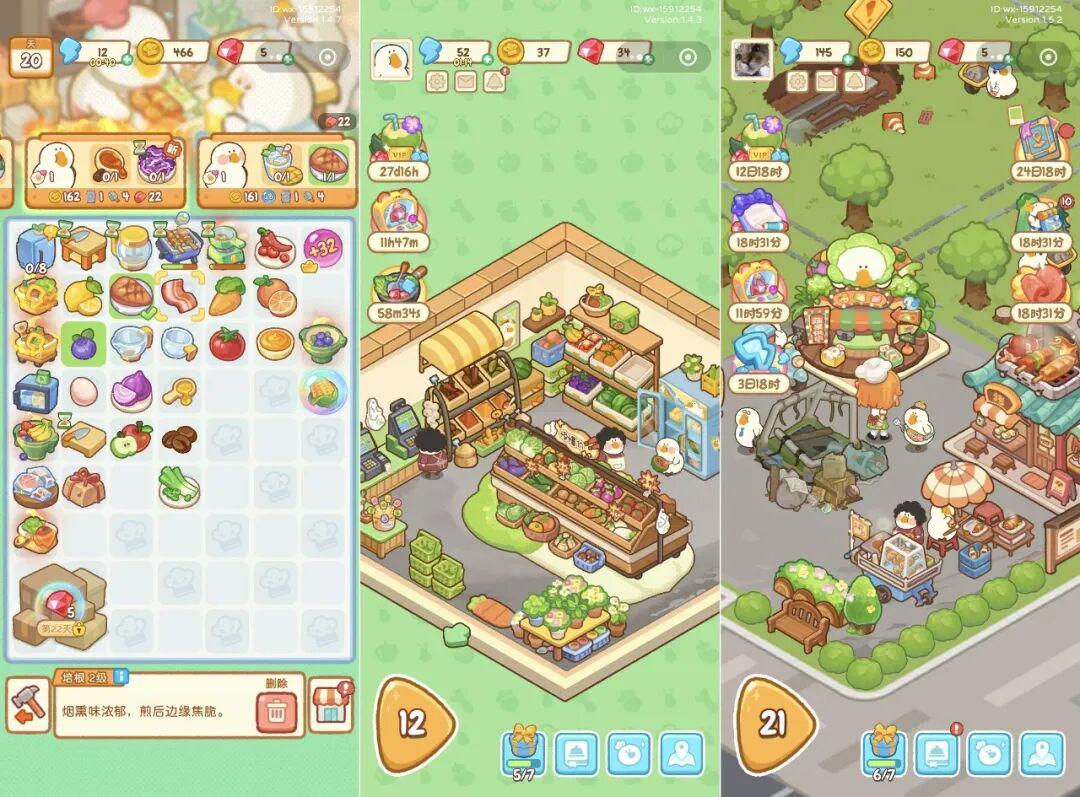
Like the hit games *Merge Cooking* and *Flambé: Merge and Cook*, *Fat Goose Food Street* adopts the food and cooking theme that’s currently all the rage in the merge-and-management genre, while incorporating cooking elements into the merge-and-management loop.Some dishes cannot be obtained directly through merging; instead, players must place the corresponding ingredients into a cooking utensil and wait for a period of time before the dish is complete.
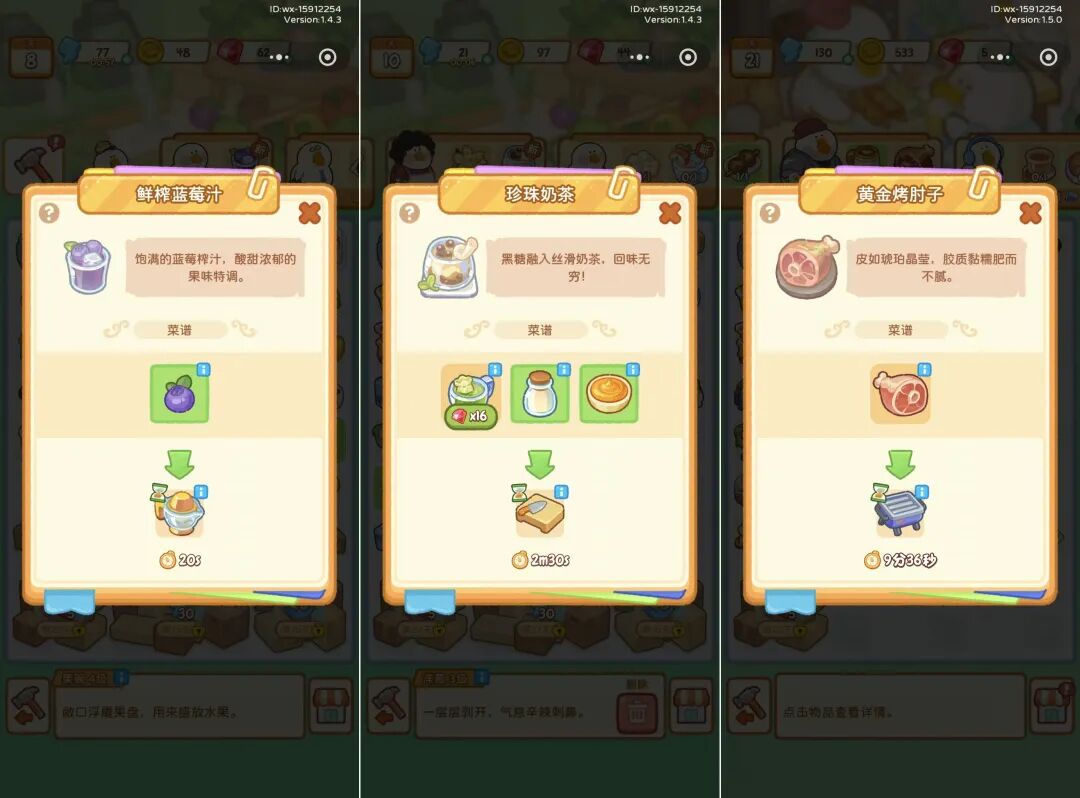
For example, placing a sausage on the grill makes grilled sausage; combining two sausages creates bacon; combining two pieces of bacon creates meatballs; combining two meatballs creates beef brisket; and placing the beef brisket on the grill creates smoked beef brisket.
The addition of the cooking segment has transformed “food street management” from a simple thematic gimmick into an interactive gameplay experience, greatly enhancing the alignment between the theme and gameplay as well as the sense of immersion.
More importantly, the core logic of the synthesis gameplay has been reimagined. The cooking process introduces a strategic choice between “synthesizing or cooking.” When players obtain an ingredient and are faced with multiple concurrent orders, they must decide whether to continue synthesizing higher-tier ingredients or to first process some of the ingredients in the kitchen equipment to prepare dishes.This breaks the traditional "mindless upward synthesis" pattern found in many match-3 games, turning grid management and order prioritization into active strategic choices for players.
The cooking wait time creates an additional "cooldown window" between crafting and order submission, which—along with stamina recovery and generator cooldowns—helps control the game's pacing.This not only extends the time required to complete a single order but also reduces the sense of emptiness players might feel from depleting their stamina too quickly, making the idle waiting period more rewarding.
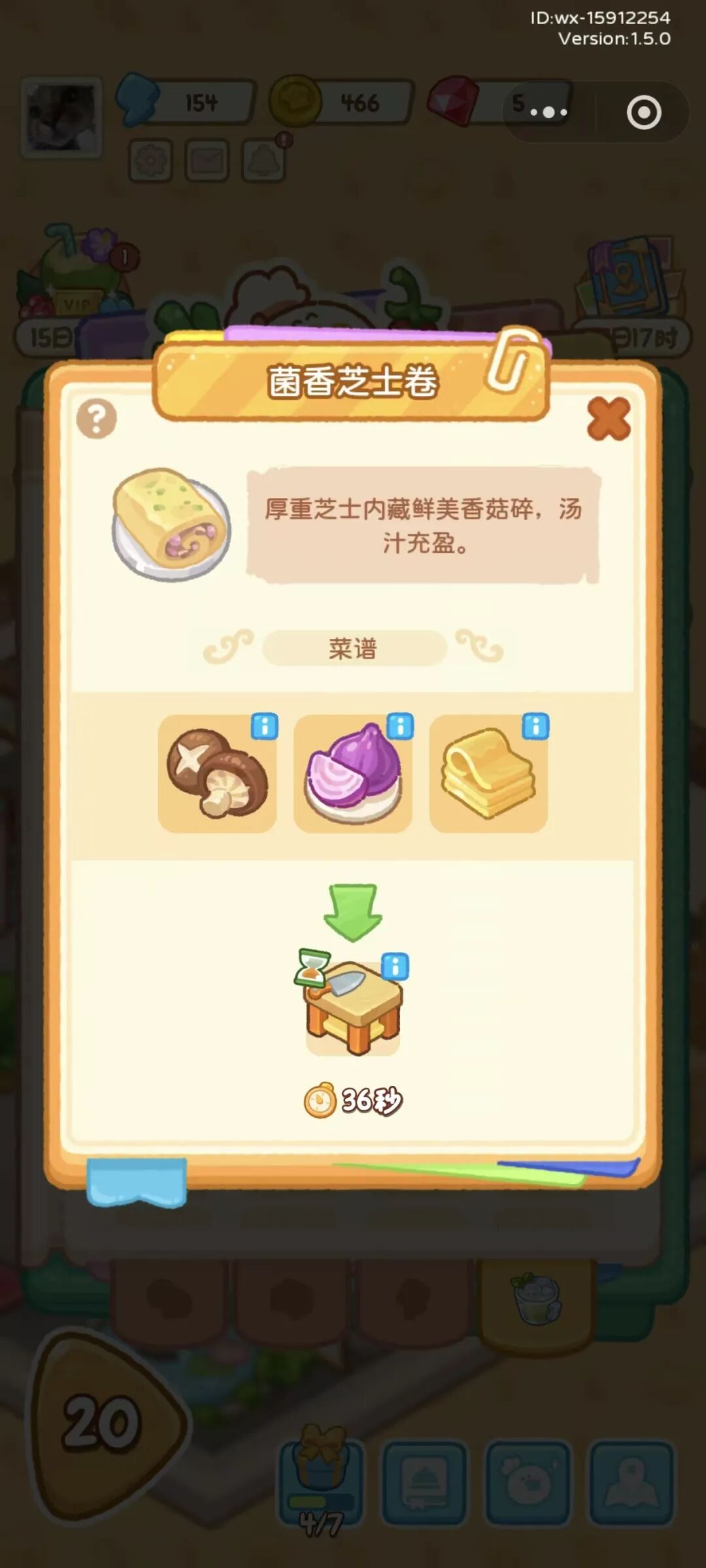
Furthermore, certain high-level dishes often require multiple high-level ingredients. Take the Mushroom and Cheese Roll, for example: players must first craft mushrooms, onions, and cheese slices separately, then process them on the prep station.This means that cooking orders consume far more resources than simple synthesis orders. Players are forced to use Stamina and Generator uses more frequently to obtain basic ingredients, which in turn drives demand for additional resources such as Stamina and Speed-Up Tickets, thereby increasing the game’s monetization potential.
At the same time, to alleviate pressure on the game board, *Fat Goose Food Street* also makes significant use of nested quest design. Multiple items produced by the same generator can often be matched to different orders being processed in parallel.
Taking orders placed on the same day as an example, the base ingredients required for the three food items—cheese slices, coffee, and tea—ordered by different customers are all produced by the same generator; meanwhile, the base ingredients for pork knuckle and chicken legs are produced by another generator that shares the same recipe.Once players craft these items and submit them to different quests, they free up space to proceed with new quests. This significantly reduces the difficulty of managing inventory space, allowing players to immerse themselves more fully in the crafting and cooking process.
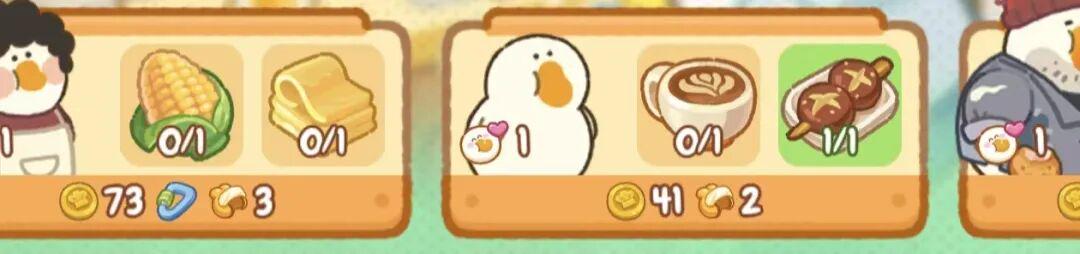
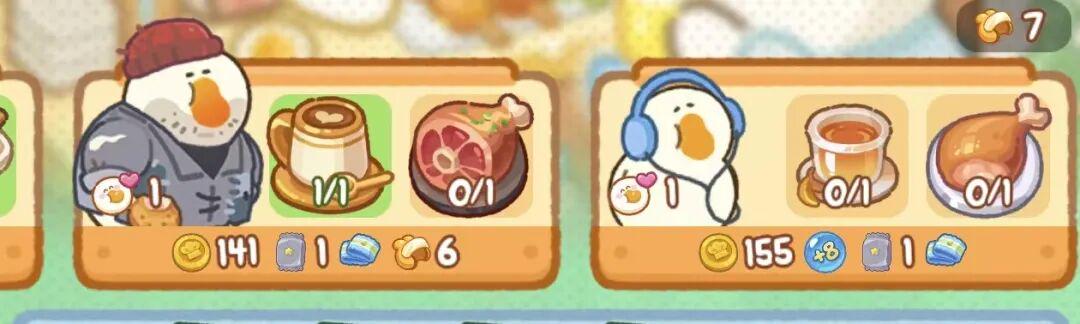
Therefore, when compared side by side, *Fat Goose Food Street* is by no means a simple rehash of its predecessor, but rather a systematic attempt at upgrading the IP and expanding gameplay possibilities.
02
More Frequent Limited-Time Events and Paid Packs
Beyond its IP differentiation and refined core gameplay, one of the most notable features of *Fat Goose Food Street* is the introduction of numerous “time-limited” mechanics, which use time pressure and limited-time rewards to continuously drive player engagement and in-app purchases.
This time-limited content can be broadly categorized into three types: short-term, medium-term, and long-term.
Short-term gameplay lasts anywhere from a few tens of minutes to less than a day, and typically takes the form of “completing specific orders within a time limit to earn rewards.”For example, “Stir-Fry Time”: Players accumulate flames while completing orders; once they reach the target value, they enter “Stir-Fry Time,” during which the corresponding generators can fire an unlimited number of times within the allotted time. Another example is “Limited-Time Gift Box Rewards”: By completing the target orders before the countdown ends, players can open the gift box to receive extra rewards.
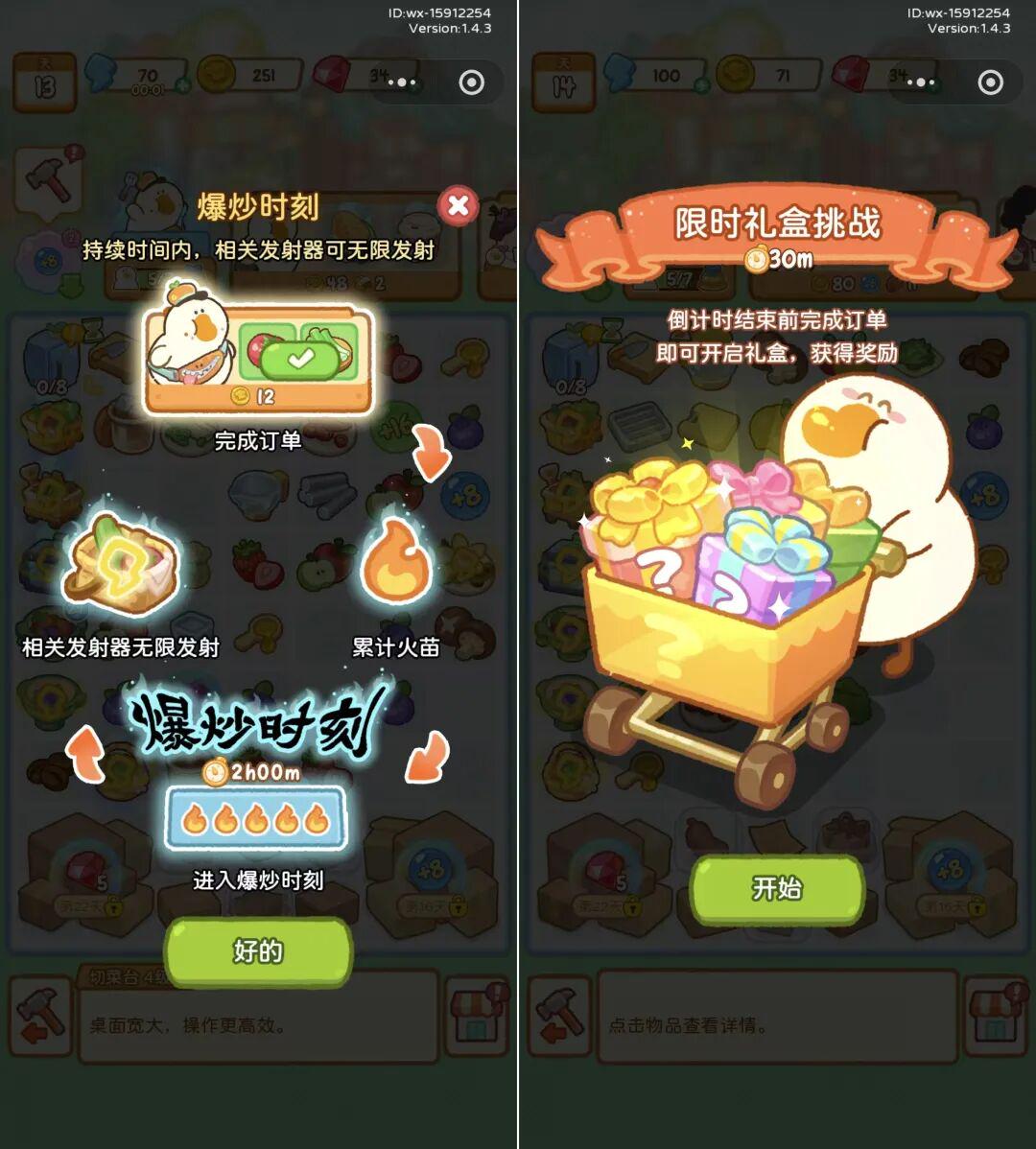
Stir-Fry Time and Limited-Time Gift Box Rewards
Frequently introduced short-term events can, by setting clear order goals, strongly incentivize players to focus on synthesis within a short period of time, accelerating the consumption of resources such as stamina and speed-up coupons, and thereby creating a concentrated peak in “grind intensity” and monetization conversions.

More Short-Term Activities
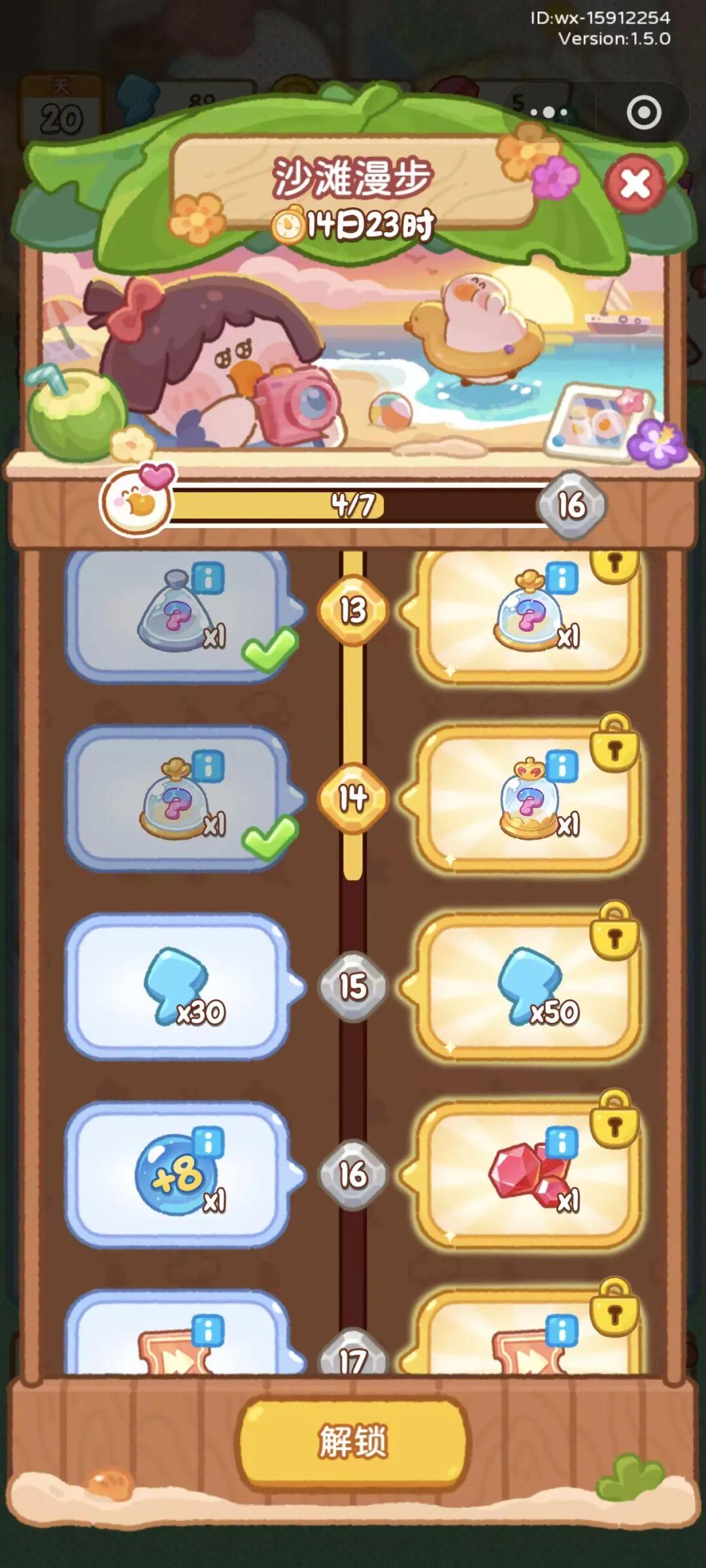
Mid-game events typically last from a few days to a week, and their formats have expanded to include a wider variety of activities, such as card collecting, synthesis mini-games, and milestone achievements. With longer durations, a greater volume of tasks, and more generous rewards, these events use multi-stage rewards to encourage players to maintain a steady online presence and synthesis pace. This is an effective way to cultivate players’ gaming habits and enhance user retention.
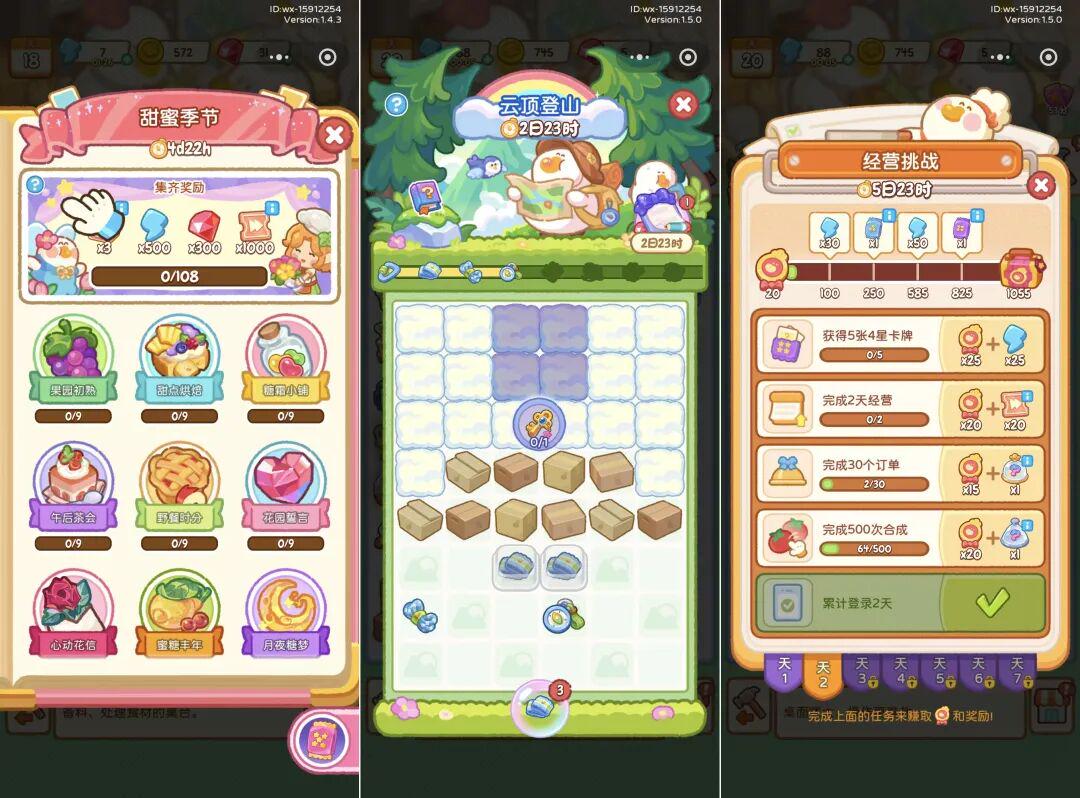
Long-term events often last for more than half a month, and common formats include card collecting and passes. Their core function is to establish medium- to long-term goals for players. By offering continuous chains of tasks that span weeks and months, along with phased rewards, they maintain stable player engagement and are key to supporting long-term retention and deepening monetization.
Similarly, to meet players’ resource needs at different stages and during various events, the game has also introduced a large number of limited-time paid bundles. When a player’s energy runs out, the system will pop up a 20-minute limited-time value-packed energy bundle; during specific quests, resource supply bundles required for those quests will also appear.
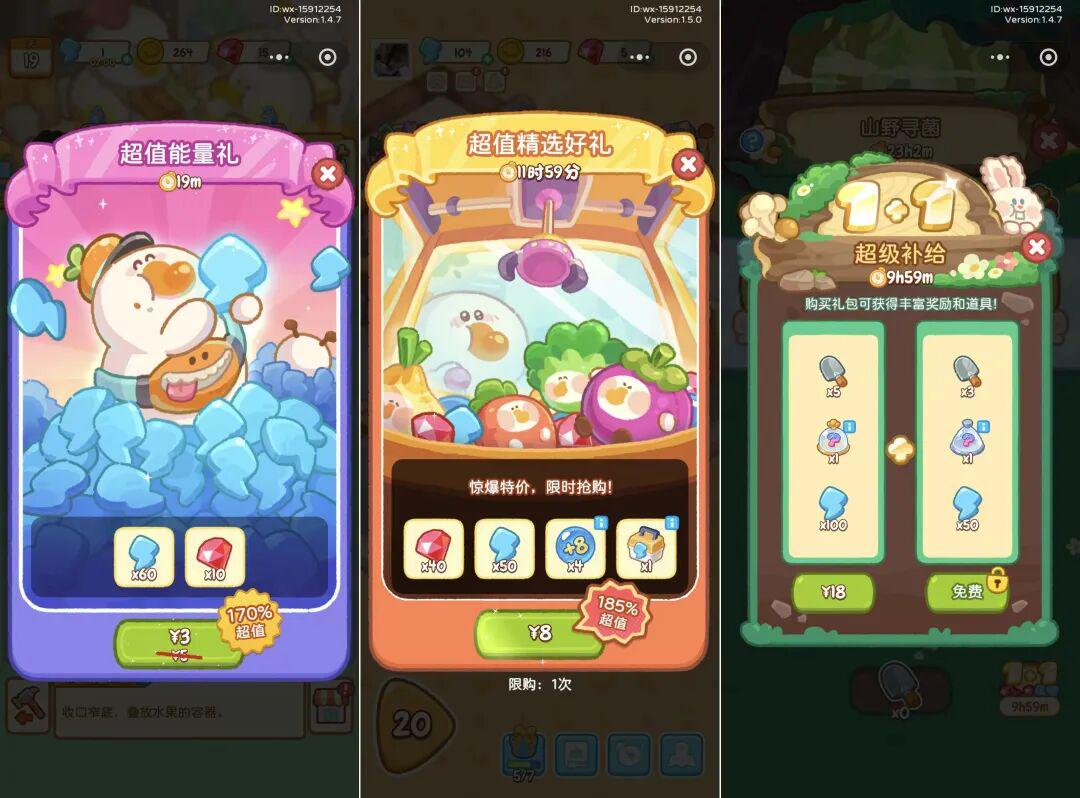
A wide variety of limited-time paid gift packs
Therefore, from an overall perspective, the core of *Fat Goose Food Street* is actually a time-driven resource cycle.
A series of time-limited events keeps players constantly “racing to complete the next objective,” effectively accelerating the game’s pace.And just as players are fully immersed and their resources are rapidly running out, limited-time paid bundles and discounts appear at just the right moment. By offering small-denomination bundles priced at 3 yuan and 8 yuan, these promotions tap into users’ impulse-buying tendencies, smoothly guiding players to make their first purchase and facilitating the transition from free users to paying users.
Short-term, low-cost gift packs are designed to break the ice with small transactions; medium-term Battle Passes and collection events sustain ongoing engagement; and long-term collection systems secure long-term retention.These three elements correspond to limited-time events at the short-, medium-, and long-term levels, respectively, gradually guiding players through a complete conversion funnel: “initial engagement → developing a habit of spending → medium-to-heavy IAPs.”
As a result, the commercial depth of *Fat Goose Gym* has been further enhanced; one could even say that, based on the logic of “time pressure driving paid subscriptions,” the game has undergone a comprehensive transformation—from gameplay to business model.
END
Over the past two years, the match-3 game market has experienced rapid growth. In this increasingly crowded competitive landscape, the food-themed genre has emerged as one of the most closely watched segments in this category shift, thanks to the natural compatibility between “cooking” gameplay and match-3 mechanics, as well as its strong sense of immersion.
For example, *Merge Cooking*, published by Happibits, has seen its revenue growth continue to climb since its launch in 2022, with monthly revenue surpassing $18 million in May of this year (Source: DianDian Data);Another example is *Flambé: Merge and Cook*, which officially launched in the U.S. market in 2025 and has achieved monthly revenue of $12 million (Source: DianDian Data), becoming Lemon Microfun’s third major revenue driver.
Now, with the emergence of *Fat Goose Food Street*, a new growth path has been opened up for the food and cooking genre—specifically, the “IP-driven” segment.
From a broader perspective, the “merge-and-build” genre is also undergoing a profound evolution: in terms of themes, it has expanded from simple simulation management and construction/decoration to include a wider range of genres such as food, travel, mystery, and horror;In terms of gameplay, the genre has evolved from the early single-loop “merge + management” mechanics to today’s multi-layered, composite design featuring “merge + management + cooking.” As the boundaries between themes and gameplay continue to expand, the genre itself has become increasingly diverse and specialized.
It is foreseeable that future “2-in-1” products will no longer be a simple competition based solely on gameplay, but rather a comprehensive contest across multiple dimensions, including IP assets, commercial design, theme selection, and user experience. As for what the next new product to stand out in this competition will look like—and which company will ultimately emerge victorious—we’ll just have to wait and see.
原创文章,作者:游茶妹儿,禁止转载:https://youxichaguan.com/en/archives/208049