
July hasn't even arrived yet, but the gaming industry is already sensing the smoke of a new round of the battle for traffic.
For game developers, the upcoming summer is not only one of the most important traffic windows of the year, but also a critical marketing milestone that directly determines the performance trend for the second half of the year. According to Teahouse, many industry peers have already begun reviewing past advertising data, preparing creative assets and advertising budgets, and gearing up in full force to capitalize on the summer traffic boom and achieve a new round of growth.
However, as evergreen titles take the lead in driving revenue in the gaming market, the rules of the game for attracting users this summer will also undergo new changes:The approach of simply pursuing short-term user acquisition to boost volume is now outdated. The core challenge facing developers—and the true deciding factor in this battle—will be how to balance short-term growth with the simultaneous cultivation of a sustainable user base and content assets to achieve long-term success.
Shifts in market trends are often accompanied by iterative updates to methodologies.Teahouse observed that at the recently held “2026 Gaming Industry Summer Growth Exchange,” ByteDance’s advertising platform, ByteEngine, specifically addressed the urgent needs of game developers by introducing a brand-new “Brand, Effectiveness, and Retention” business strategy. Going beyond the traditional “Brand-Effectiveness Synergy,” this strategy fills a critical gap in long-term business operations.
01
The Trinity: “Brand, Effectiveness, and Retention” Reconstruct the Business Cycle
“Engagement, Effectiveness, and Retention” is not a brand-new concept that emerged out of thin air, but rather the result of years of evolution and refinement in the gaming industry’s marketing logic.
Looking back at 2020, the market was still in a phase of growth driven by traffic dividends. At that time, the “brand-effectiveness synergy” model—widely recognized across the industry—allowed manufacturers to meet their basic needs for user acquisition and new user acquisition simply by balancing brand exposure with advertising conversion (ROI).
However, the gaming marketing industry has now officially entered the “post-mobile gaming era,” with the focus of market growth shifting entirely toward the operation of long-lasting titles and the maximization of user lifetime value. A binary marketing model that covers only exposure and conversion can no longer meet the needs of developers seeking sustainable business operations. Consequently, the “Brand, Effectiveness, and Retention” model has emerged.
Based on the O-5A Audience Asset Management Model from Juyou Cloud, the three key stages—"Brand," "Effectiveness," and "Retention"—each play their respective roles while working in tandem from start to finish, thereby establishing a sustainable, self-sustaining business cycle.
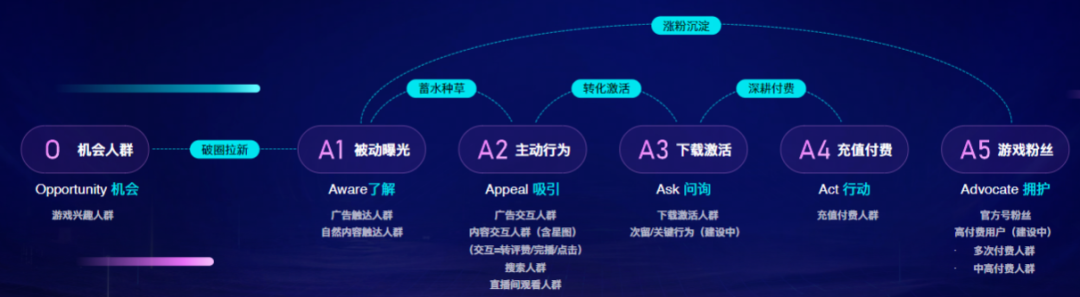
Juliang Cloud's "O-5A Population Asset Management Model"
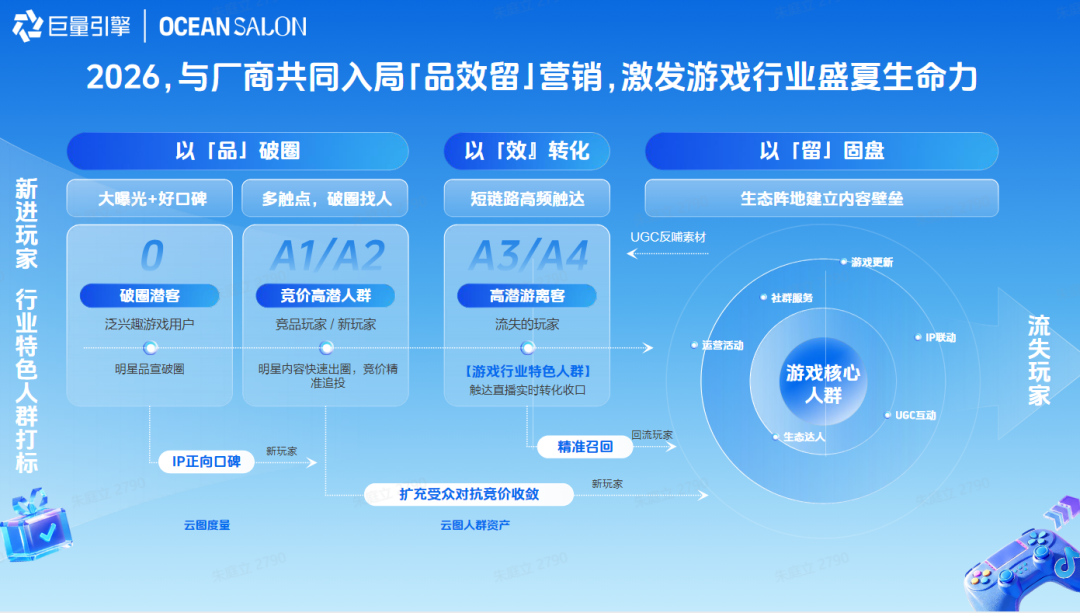
In particular, the “Brand” initiative targets the O-A1/A2 general-interest audience. Through collaborations with top IPs, celebrity partnerships, and diverse content touchpoints such as live streams and short videos in the broader entertainment sector, it breaks through niche boundaries,significantly raising anticipation among the general gaming audience, precisely targeting potential high-intent users, continuously expanding the brand’s core user base, and building a robust pool of potential customers for future conversions.
The “Effect” phase capitalizes on the traffic accumulated from front-end content discovery by using short videos and live streams featuring new content and exclusive deals,frequently engaging inactive veteran players and users wavering between our game and competitors’ to establish a streamlined “watch-to-download” conversion path. This approach rapidly activates A3 users and drives A4 paid transactions, ensuring short-term ROI while efficiently achieving commercial monetization.
"Retention" refers to a comprehensive set of capabilities for building up ecosystem assets,Once users complete a paid conversion, developers can leverage the game enterprise account and creator ecosystem to build exclusive competitive barriers. This transforms one-time traffic into three types of reusable operational assets—audience assets, content assets, and platform assets—which continuously fuel the game’s full-lifecycle operations and drive the long-term prosperity of both in-game and out-of-game ecosystems.
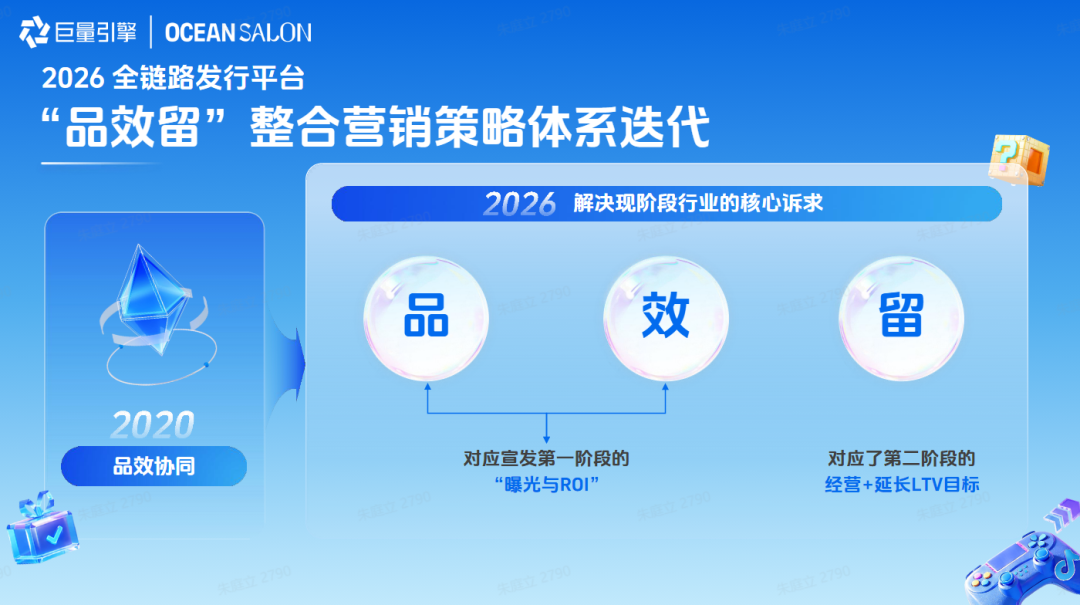
Compared to the industry’s well-known concepts of “brand” and “effectiveness,” “retention” is a new element in this business model—and it serves as the core pillar enabling game products to achieve long-term growth.Furthermore, it is understood that numerous products have already demonstrated the value of “retention” through real-world application. For instance, a certain MMORPG mobile game successfully achieved a virtuous cycle of user base growth and user acquisition conversion by deeply investing in live-streaming operations over the long term and continuously building up its asset base. Ultimately, this extended the game’s user acquisition lifecycle by a factor of two,expanding its user base sixfold and increasing its content assets by 2.6 times.
Throughout the entire business process, “Brand” is responsible for expanding the user base and reaching new audiences, addressing the issue of growth sources; “Performance” is responsible for bid-based traffic acquisition, ensuring short-term ROI from ad campaigns;“Retention” focuses on ecosystem retention, building up reusable ecosystem assets that further fuel game operations. These three elements are interlinked, ultimately driving the maximization of every marketing budget and truly achieving a balance between short-term growth and long-term product vitality.
02
Putting Theory into Practice: From Breaking Through Barriers to Building Long-Term Value
More importantly, “Brand, Effectiveness, and Retention” is not merely a theoretical conceptual upgrade. Currently, by leveraging the mature content ecosystems and business tools provided by platforms such as Douyin, game developers can now fully execute a complete, end-to-end business cycle that encompasses breaking into new audiences and generating buzz, efficiently converting traffic, and building long-term ecosystem assets.
Live streaming is an excellent medium for driving this closed-loop process. Data from ByteDance’s advertising platform shows that live streaming accounts for as much as 76% of unique users. Compared to short videos, live streaming users demonstrate significant improvements in user retention, paid ARPU, and advertising ROI, and the fan base it builds is five times larger than that of video channels.This means that live streaming not only attracts more high-value new users but also transforms “casual visitors” into loyal fans who can be nurtured over the long term.
To effectively capitalize on this advantage, the key lies in building a scientifically designed live-streaming matrix. During game operations, developers can use a combination of "large-scale celebrity streams" and "tailored daily streams" to attract both general traffic and targeted potential customers, thereby establishing a sustainable, integrated "user acquisition, conversion, and retention" flywheel.
Among these, large-scale live streams featuring celebrities and light-hearted entertainment themes target A1 andA2 general-interest audiences in the O-5A model. By leveraging the star power of celebrities and engaging general-entertainment content, these events can break through the game’s established player base, rapidly build mass recognition of the product IP, and boost brand visibility across the entire internet. This approach not only reduces customer acquisition costs but also broadens the traffic base, building up a massive pool of potential users for future conversions—aligning with the goal of expanding the brand’s reach and acquiring new customers.
Regular small-scale live streams capture highly engaged audiences directed from larger events. Through tailored content—such as in-game demos, version updates, and exclusive perks—these streams guide users through the download, activation, and payment conversion processes, consistently ensuring a stable ROI on ad spend and achieving the goal of effective commercial conversion.At the same time, the livestream will continue to build up core assets—such as game fans and edited livestream clips—extend players’ time spent consuming content outside the game, and continuously expand the game’s content ecosystem, thereby fulfilling the requirement to “retain” these accumulated assets.

Large-scale platforms continue to expand outward to tap into new sources of traffic, while small-scale platforms focus inward on immediate monetization and asset accumulation. By strategically combining these two approaches—one focused on expansion and the other on consolidation—the full value of live streaming within the “brand awareness, effectiveness, and retention” closed-loop can be fully realized.
If live streaming is the operational hub that drives "brand awareness, effectiveness, and retention," then content assets are the fuel that powers the sustained operation of these three pillars. Today, by leveraging the rich content management capabilities provided by Douyin, game developers can quickly build up and maximize the impact of their content assets.
First, the natural advantages of Douyin’s content ecosystem provide a fertile ground for gaming brands to break into new audiences.Here, games are no longer limited to single-channel ad exposure; instead, they can leverage the platform’s trending memes, celebrity interactions, and fan engagement—along with the high-impact influence of celebrity endorsements—to produce a large volume of high-visibility brand ads and rapidly boost the game brand’s visibility.
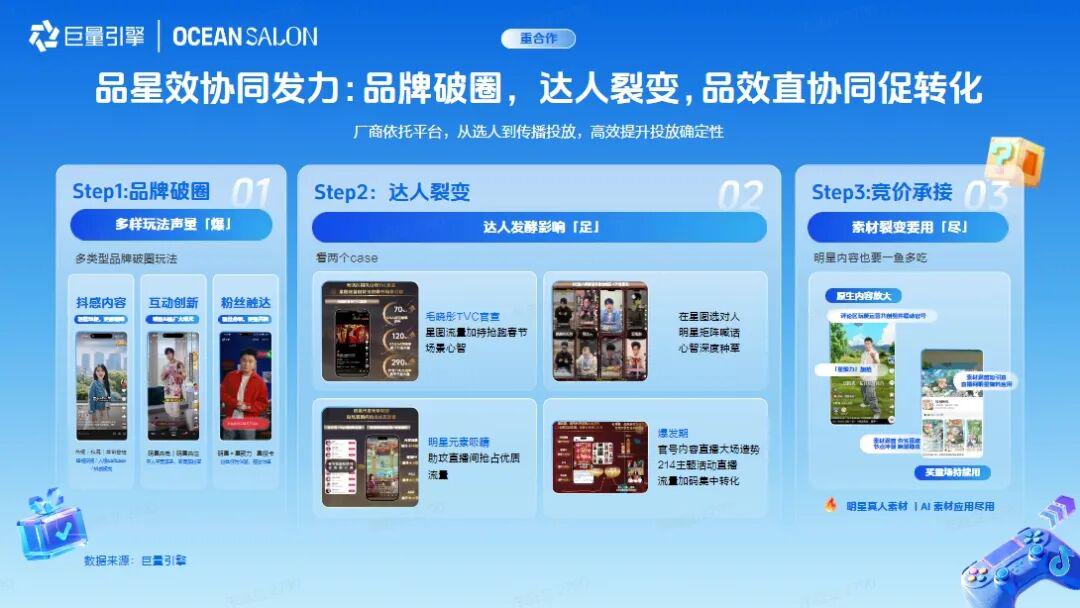
After generating buzz around the game, the influencer network can continue to build on that momentum, converting brand buzz into user interest. Through content re-creation by StarMap KOLs and KOCs, celebrity footage will be re-edited into a variety of content formats—such as story-based product placements, hands-on reviews, and gameplay guides—to precisely reach A3’s high-intent audience.The inherent trust associated with influencer content also shortens the decision-making path for users—from “hearing about it” to “wanting to play”—thereby converting celebrity buzz into tangible conversion results.
For brands seeking maximum ROI or operating on a limited budget, AI-powered celebrity endorsements offer a brand-new approach to content creation. After obtaining a celebrity’s authorization and leveraging AI technology, brands can complete filming without the celebrity being physically present, significantly reducing production costs. It is reported that certain gaming projects have successfully reduced celebrity licensing fees by 50% to 70% using this method.At the same time, this celebrity footage and AI-generated content can be deployed directly or re-edited into feed ads and live-stream clips, serving as a steady supply of high-quality assets that feed back into paid advertising campaigns—truly achieving “produce once, reuse throughout the entire cycle.”

In addition to content assets, audience assets serve as another “stabilizing force” for the game’s long-term operations.In-game audience assets serve as the bridge connecting “retained players” with “content-consuming users.” To encourage more users to continue making in-game purchases and achieve a qualitative shift from “traffic” to “assets,” the key lies in conducting detailed segmentation analysis of the audience and gaining insights into their content preferences.
First, before launching a campaign, advertisers can use Douyin’s “Nine Key Gaming Audience Segments” framework to segment and analyze gaming users, observe the penetration rates of various audience segments within the O5A model, identify gaps in their target audience, and pinpoint core and opportunity audiences—all of which provide a data-driven foundation for developing advertising strategies.After the campaign launches, they can continue to track changes in audience size to gain a clear, visual understanding of the actual marketing results.

Image source: *Douyin White Paper on Nine Distinct Demographic Groups in the Gaming Industry*
Second, game developers can leverage Jumi Cloud Map’s audience insights and "Thousand Faces" creative segmentation to systematically analyze audience interaction patterns and identify which content themes, gameplay mechanics, and narrative styles are most likely to encourage target users to engage longer and convert.By translating these preference signals into specific creative directions, they can make the leap from “creating content based on intuition” to a data-driven approach.
In addition, audience assets can be used to optimize the ad delivery process in reverse. During the influencer selection phase, brands can use target audience penetration rates to match KOLs in reverse, combining multi-dimensional data—such as influencer follower profiles, video viewers, and engaged users—to precisely select creators who are highly aligned with their products, ensuring that the "right influencers" reach the "right people";During the bidding phase, combining industry-specific interest segments with bid adjustments can maximize campaign efficiency.
Ultimately, when each user segment can be accurately tagged, segmented, and continuously tracked, players will become a valuable audience asset that can be repeatedly engaged, thereby continuously fueling the long-term growth of the game ecosystem.
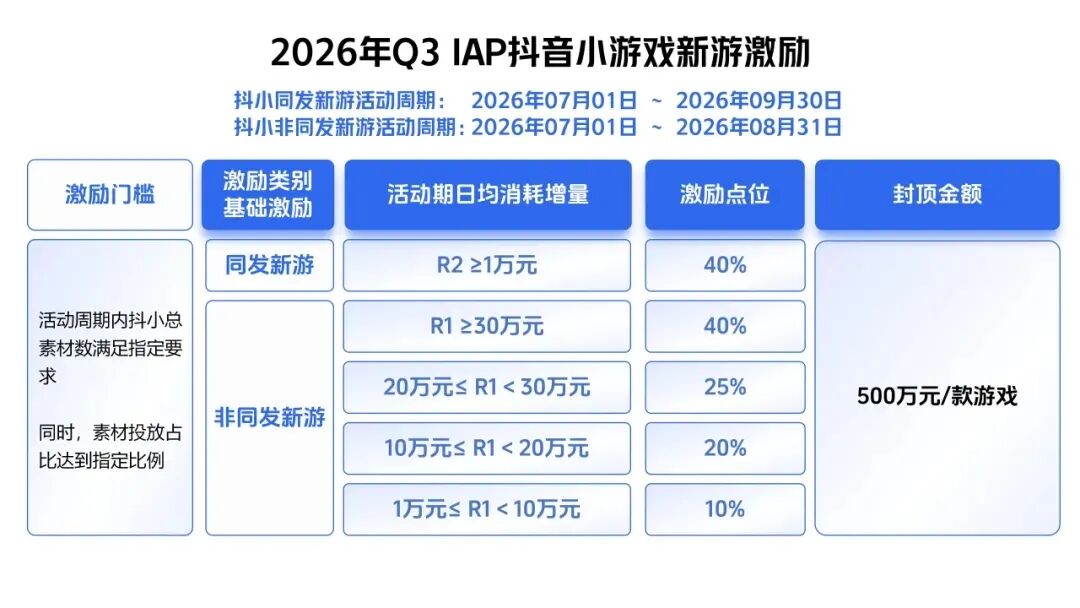
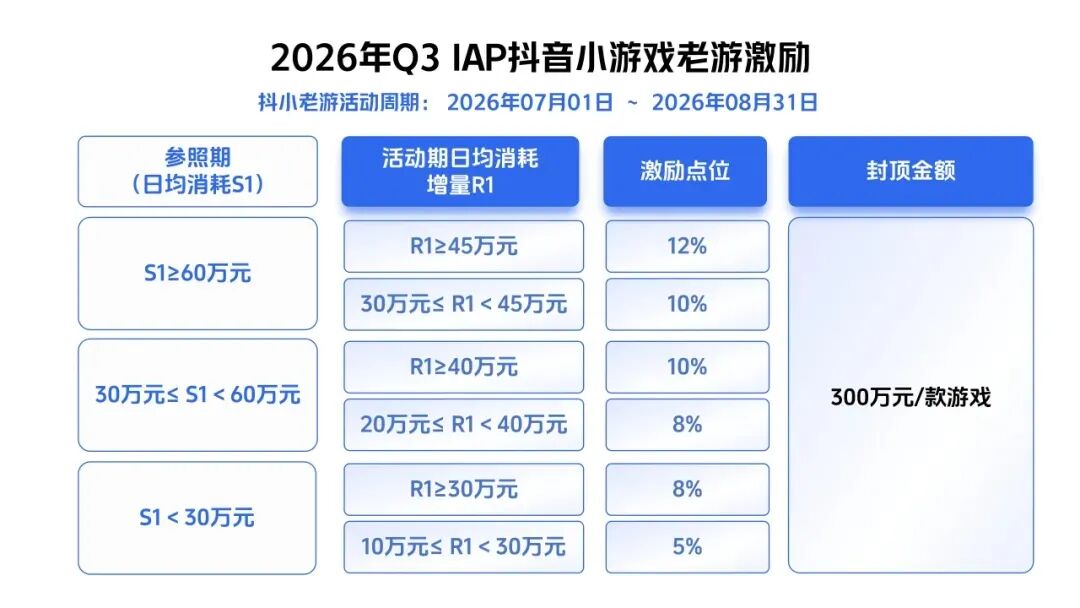
In addition to the "Quality, Effectiveness, and Retention" long-term business methodology, ByteDance's advertising platform and Douyin Mini Games recently launched an unprecedented limited-time incentive program: On the advertising side, new games with in-app purchases (IAP) are eligible for up to 40% ad spend rebates, with a maximum incentive of 5 million yuan per project;on the content side, special task funds of up to 100,000 yuan per title are available to developers.This comprehensive package builds upon the “Brand, Effectiveness, and Retention” methodology by providing game developers with an additional layer of tangible safety net. By offering real financial support, it gives developers the confidence to focus on long-term growth and helps more teams gain a competitive edge in this summer’s race for user acquisition.
END
Overall, the “Brand, Effectiveness, and Retention” framework proposed by Juyou Engine essentially addresses a collective challenge faced by game developers: With the traffic boom having peaked, how can they break free from their reliance on “one-time traffic”? The core of its solution lies in shifting the mindset from “competing for short-term traffic” to “long-term asset management.”
The underlying value of this shift lies in redefining marketing from a “cost center” to an “asset investment.” Under the traditional advertising model, every expenditure on user acquisition and promotion was likely a one-time cost; once the budget ran out, it often meant a sudden drop in traffic. As a result, companies had no choice but to continuously bid higher to maintain growth, leaving them trapped in a cycle of escalating costs over the long term.
Within the “Brand, Effectiveness, and Retention” business ecosystem, every live-streaming campaign, celebrity collaboration, and content placement is transformed into reusable audience and content assets.Marketing investments are no longer merely costs to be spent; rather, they serve as a long-term operational foundation that continuously fuels user re-engagement, helps new products break into new markets, and enables consistent customer acquisition—fundamentally addressing the challenge of relying on “one-time traffic.”
Teahouse also believes that the summer marketing battle of 2026 is just the beginning. In the future, the “Engagement, Effectiveness, and Retention” business model will continue to reshape the marketing landscape of the gaming industry, guiding more developers to break free from the short-term race to acquire users, focus on developing reusable assets, and truly chart a sustainable path that balances short-term growth with long-term viability.
原创文章,作者:游茶妹儿,禁止转载:https://youxichaguan.com/en/archives/208073