In 2019, a game titled *Control* burst onto the scene, sparking a “new horror” craze among players with its eerie and captivating new horror universe and exhilarating superpower-based combat.The game won 23 Game of the Year awards and received 11 BAFTA nominations, becoming the single title with the most BAFTA nominations in gaming history.
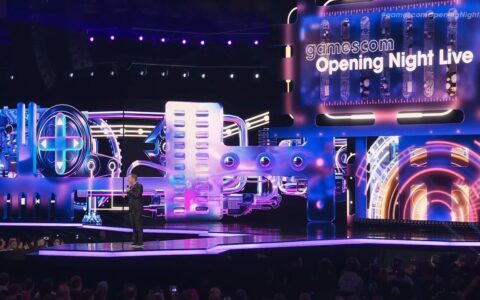
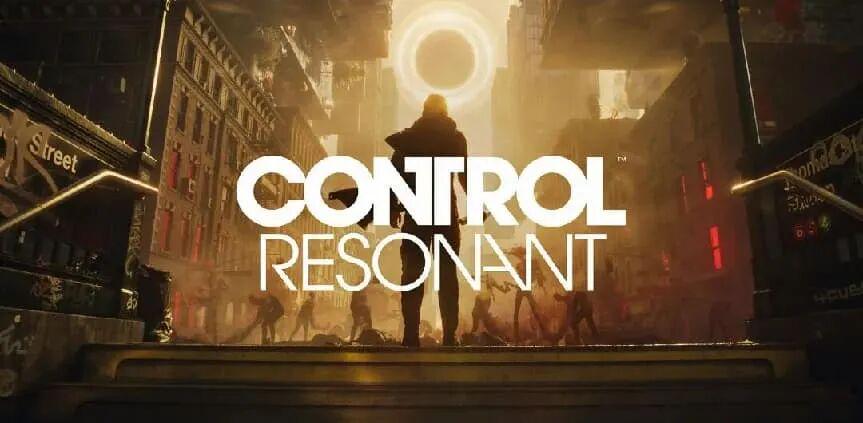
Seven years later, the official sequel, *Control: Resonance*, has finally been confirmed for release on September 24, 2026.On the eve of the release, Juha Vainio, executive producer at Remedy Entertainment—the series’ development team—took the stage at the Gamescom Dev conference. Over the course of an entire hour, he broke down the series’ complete evolution from the first game to the sequel, covering topics ranging from the “Three Dimensions of Joy” to the “World-First” approach,from the complete overhaul of the development pipeline to the comprehensive upgrade of the publishing strategy, he meticulously dissected the entire evolutionary process of the *Control* series from the original game to its sequel. The following is a transcript of his presentation, edited for clarity.
The Journey of a Hit Game Producer
First, let me introduce myself. I wasn’t an executive producer from the start. In my early career, I was a programmer working on projects completely unrelated to games; I was responsible for server-side development related to firewalls.
I graduated from the Helsinki University of Technology with a Master of Engineering degree—commonly referred to as a “diploma engineer”—and also hold a Master of Science in Technology.While still a student, I participated in my first game project as a game producer. Like almost all engineers in Finland, I also worked at Nokia. I joined Nokia at the height of its success, when it held a 60% share of the smartphone market; by the time I left, its glory days had come to an end.
After that, I joined Provio, where I worked on *Angry Birds* spin-offs and *Star Wars*-related projects. I also contributed to some version updates for the original *Angry Birds* and worked on a few really cool next-generation projects—unfortunately, they were all canceled in the end, which left my colleagues and me feeling pretty down. So we teamed up to start our own startup.Our journey as entrepreneurs wasn’t exactly smooth sailing, but it wasn’t a complete failure either. One of the games we developed remains highly profitable 11 years after its launch and continues to support the publisher from back then. Unfortunately, our team didn’t receive a single penny, and the company eventually went under. Such is life—there are gains and losses.
I joined Remedy in 2017, and I’ve been working on the *Control* series ever since I started.
The original *Control* was officially released on August 27, 2019, marking Remedy’s first simultaneous multi-platform launch. The team subsequently released several free updates and two paid DLCs, as well as an Ultimate Edition, porting the game to a wide range of platforms.The game was released on Stadia and Luna—with two porting efforts completed for the Luna platform—after which the project entered a period of inactivity. The team later completed a port for Mac and subsequently released an iOS version.
The game ultimately won 23 Game of the Year awards and received 11 BAFTA nominations—a record number—though it ultimately won only one BAFTA award.
In 2017, when I first joined Remedy, the original *Control* was in the middle of development, and taking over the project midway presented significant challenges. After the original game’s release, the team began gradually building out the *Control* franchise through DLCs; at that time, *Control: Resonance* was known internally as “Nemperon.”Around the same time this title launched, the team also began development on *FBC: Firebrand*, and with multiple tasks proceeding in parallel during the same cycle, the development pressure on the team was immense.
The purpose of making games is to bring people joy.
After the first game was released, we asked ourselves repeatedly: How can we improve *Control*? What areas should we optimize? How can we refine a game that’s already excellent? We engaged in extensive philosophical discussions, which ultimately led us to one question: What is the true purpose of making games? Objectively speaking, I believe the answer is: to bring joy to people.
Based on this, I proposed three dimensions for measuring happiness—a set of criteria that has guided the entire development process from the original *Control* to *Control: Resonance*—namely, the players, the development team, and management.Making players happier means making the game more enjoyable and improving the quality of the experience; making the development team happier means streamlining the production process and fostering a more positive team environment; and making management happier means controlling costs and increasing sales and revenue.
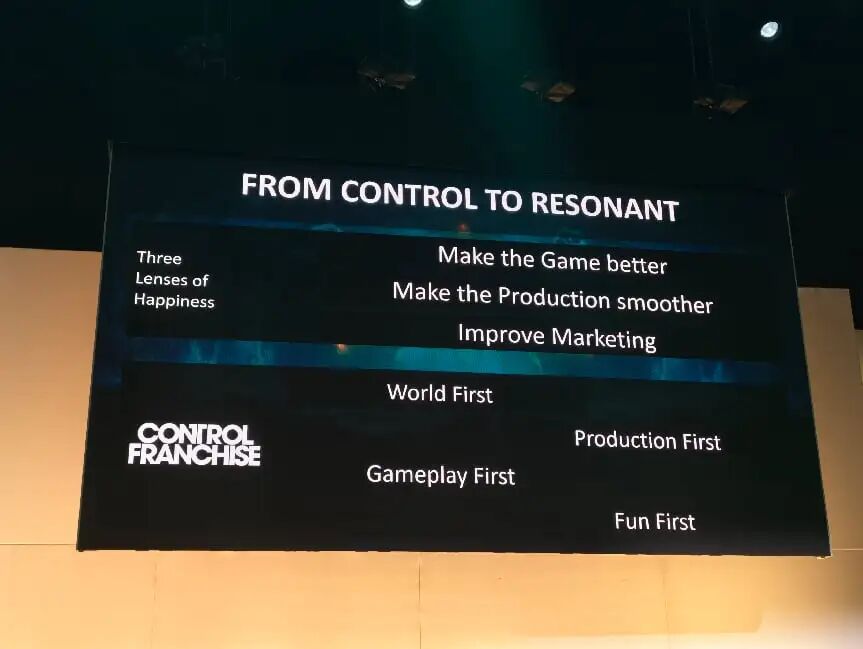
Another lesson I’ve learned is not to force changes on something that isn’t broken. The original *Control* was a pivotal title, even though its initial sales weren’t particularly impressive. We chose to preserve its strengths and established several guiding principles for strategic decision-making from an IP perspective: prioritize the world-building, prioritize gameplay, prioritize the production process, and prioritize fun.
Some people might wonder, “Why is everything labeled ‘priority’?” My answer is: don’t get hung up on the wording—this is a set of guidelines at the product level.
At the product level, the team’s guiding principles are equally clear: build the right game for the right market and create a winning business model. And remember—money matters.
A Comprehensive Upgrade to the Gaming Experience
With these considerations in mind, we worked with internal and external partners to conduct extensive research, project review sessions, and in-depth reflections on the *Control* project from the perspectives of game development and marketing. This process took approximately six to twelve months as we explored how to improve our work.
We’ve identified numerous issues with the original game and proposed corresponding solutions. First, the pacing at the beginning was too slow.In the original *Control*, the first 10 minutes featured too much narrative and too little action, causing some players seeking an action-oriented experience to lose interest. In the sequel, players obtain their first weapon as early as the 5-minute mark, and the tutorial focuses primarily on action, significantly reducing the narrative load in the early stages.
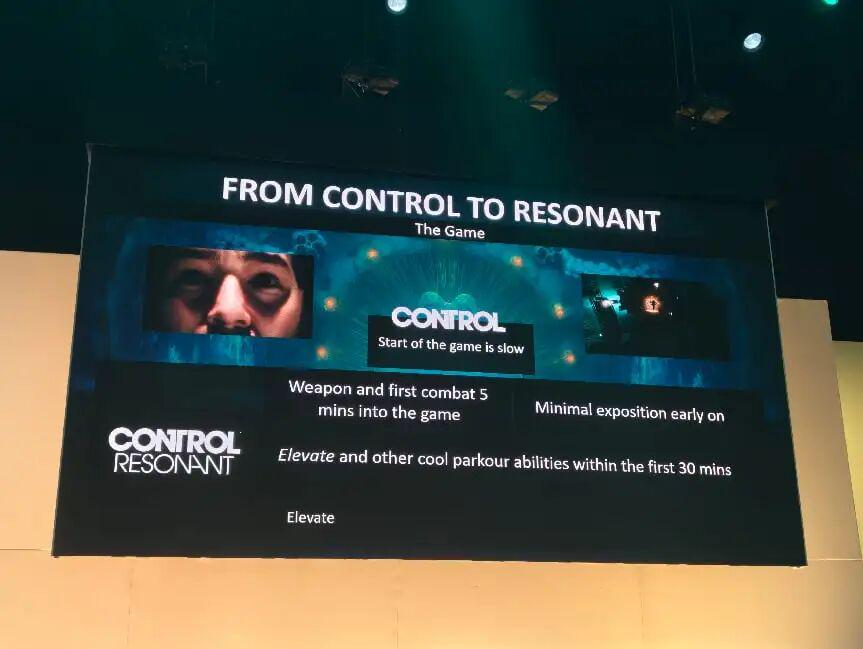
Second, the core abilities are unlocked too late. The “Levitate” ability—a player favorite—isn’t available until the latter half of the game, meaning the most enjoyable part doesn’t kick in until 7 to 10 hours in, whereas in the sequel, levitation and parkour abilities are available within the first 30 minutes.
Third, there were too few enemy types. This was a difficult decision made during development; due to budget constraints, the design team had to drastically cut back on the enemy concepts they had envisioned, which ended up backfiring on them. The sequel introduced more factions, enemy types, and enemy variants, as well as large, intricately designed bosses.
Last but not least, the most challenging issue: the combat was one-dimensional, and the combination of weapons and supernatural abilities failed to deliver the desired depth of gameplay. The team’s solution was to shift to a melee-based combat system as the core of the game.
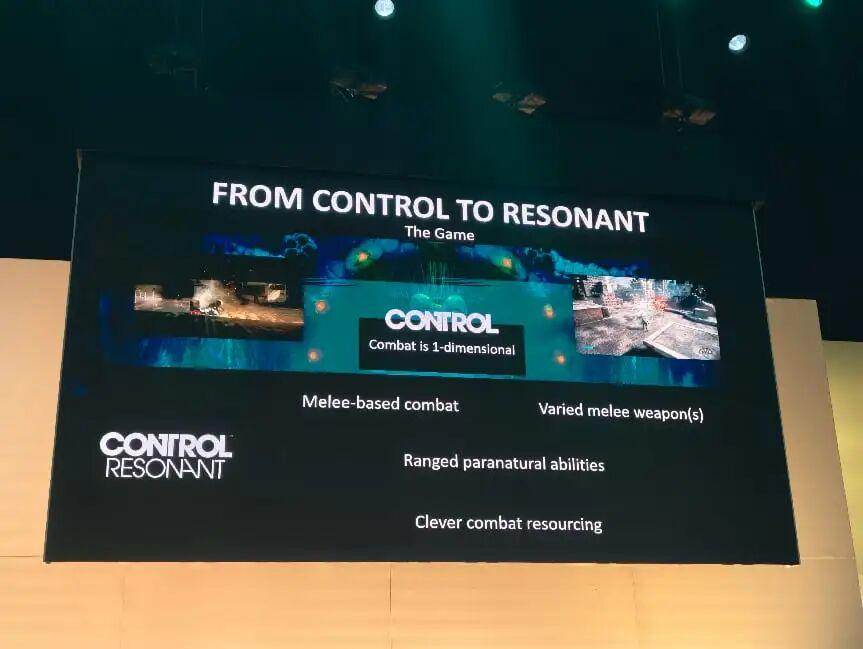
This is the first time in Remedy’s history that we’ve developed a game with a focus on melee combat, and we had many reservations about making this decision. The company lacked experience in developing polished melee games, which was one of the biggest risks in the early stages of the project. That’s precisely why we devoted a great deal of effort to exploring a high-quality melee experience that was uniquely our own.
In the sequel, we’ve also designed a wide variety of melee weapons with distinct styles; the synergy between these weapons is even better than what was achieved in the original game’s weapon system. At the same time, we’ve retained some long-range supernatural abilities, allowing players to freely combine long-range attacks with close-quarters combat—and the sophisticated combat resource system encourages them to do so.Players can’t simply stand at a distance and fire mindlessly; often, they must close in for close-quarters combat.
Gameplay First, World-Building First
That covers the game’s content; now let’s talk about “gameplay first.” This title features the largest gameplay team in Remedy’s history. Although Remedy has long been known for narrative-driven games, within the studio, the “Control” series is an IP that prioritizes the gameplay experience. Of course, the narrative won’t be missing—rest assured.
Next is “World-First.” As far back as the conceptual phase of the original *Control*, the core of this IP has been its world, and all the stories in the series revolve around it.
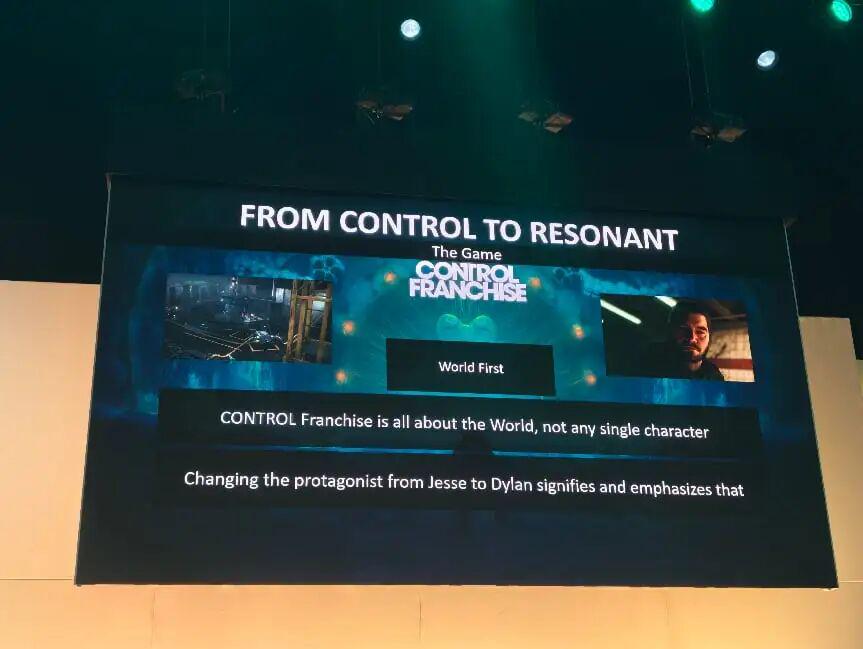
Remedy’s titles, such as *Max Payne* and *Alan Wake*, are deeply tied to their characters, whereas the *Control* series aims to explore the same universe from different perspectives. That’s why we changed the protagonist—even though this posed a huge risk for us.
But if we continued with Jesse’s story, the series would become entirely about Jesse Faden. Our original goal, however, was to present this world from multiple perspectives: the first *Control* was the story of the newly appointed FBC Director from Jesse Faden’s perspective, while *FBC: Fireline* tells the story of the frontline Rangers, and *Control: Resonance* reveals more facets of this world through the perspective of the antagonist, Dylan Faden.
At the same time, we hope to move beyond Taigu House. Taigu House is a completely enclosed game space, making it difficult to convey the contrast between the real world and the supernatural realm. In Manhattan, however, everyone is familiar with the city’s landscape, so the contrast between supernatural phenomena and everyday urban life becomes immediately apparent.
We won’t know how the game actually performs until its official release on September 24. However, the project has already undergone more than 20 rounds of player testing, and the overall feedback on the final product has been very positive. We’ve also made significant adjustments to the content based on that feedback, which is fantastic.Now that the demo has been released, media reviews have generally been positive, and I remain optimistic about this.
From a “Chaotic” to a Controlled Development Process
Next, let’s talk about production. The development process for the first-generation console version can be summed up in one word: “crazy.”
Although the PlayStation and Xbox versions barely passed platform certification, their actual performance on consoles is terrible. I genuinely feel sorry for Xbox One launch customers, and the PS4 version is equally disappointing.
Looking back, the fact that the first game’s launch sales weren’t exactly spectacular was, in a way, a good thing: once the subsequent patches were released, the players who stuck around got to experience the refined version. For the entire final year of development, the team spent almost every day “putting out fires” and saving the day.
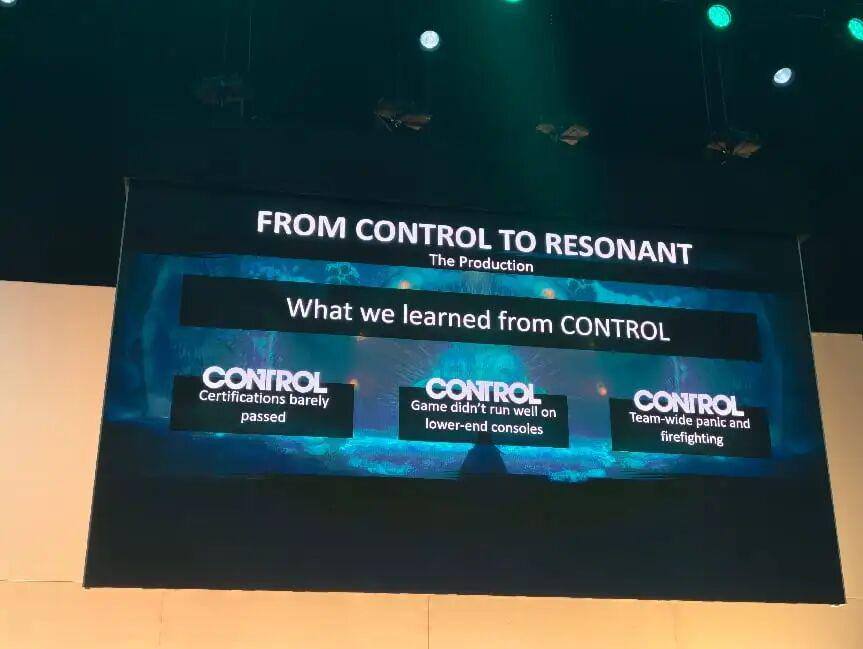
So how did we solve these problems? We restructured the project’s operational model and implemented a stage-gate process studio-wide. At the IP level, we adhere to the principle of “production process first.”
Let’s start with the operational model. The first *Control* employed a dual-lead structure consisting of a Game Director and a Lead Producer: the Game Director oversaw creative direction, while the Lead Producer managed production, timelines, quality, and the project. While this model keeps the team running, it can lead to ambiguity regarding the allocation of responsibilities.
Creative matters fall under the purview of the Game Director, while budget and production matters fall under the Producer. However, since projects span multiple areas—including creative, product, production, and technology—there must always be one person who takes ultimate responsibility for everything. That person is me.I oversee the Game Director, Technical Director, Product Director, and Development Director. The core principle is a single point of accountability: if the project fails, the responsibility lies entirely with me; if the project succeeds, the credit goes to the team.
Let’s now discuss the stage-based gatekeeping process. This mechanism takes effect from the very beginning of pre-production, and the project is divided into four major development phases: pre-production, Alpha, Beta, and release production. At the end of each phase, there is a review stage; the project is only allowed to move on to the next phase once it has been confirmed that all deliverables meet the required standards.
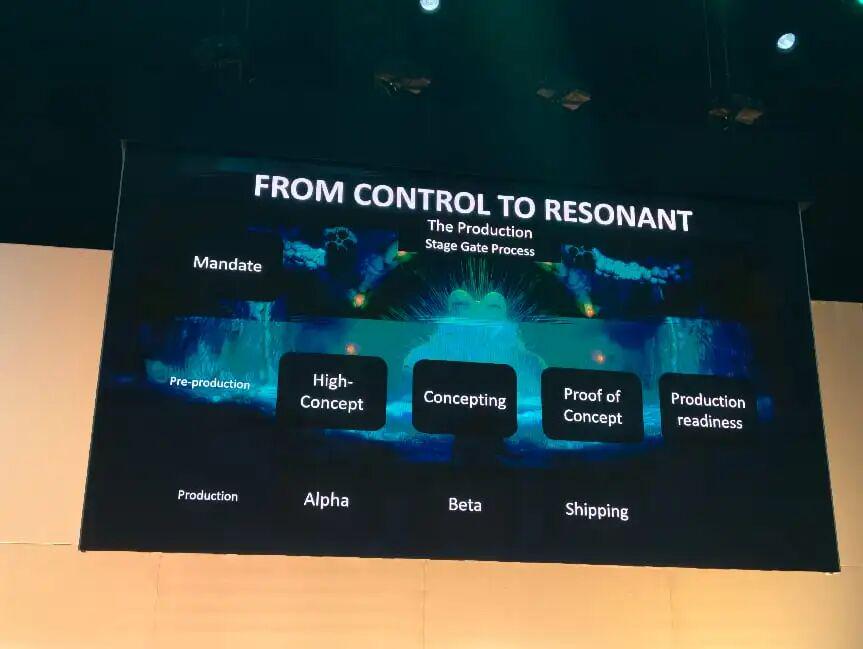
The most critical component of the entire system is the project sandbox agreement reached between the studio management and the executive producer.Within the project vision, objectives, budget, and timeframe agreed upon by both parties, the executive producer has full autonomy in decision-making; however, should additional resources be required, the producer must relinquish the current authorization and return to management to renegotiate. Within the boundaries defined by the sandbox, the producer is free to make decisions but must also bear all corresponding consequences.
The key to stage-based gatekeeping is this: the executive producer, as the project lead, holds the sandbox authorization and must demonstrate to management at each gatekeeping checkpoint that all mandatory tasks for that stage have been completed. In Remedy’s past, people would often say, “We’re pretty much ready—let’s just move forward with this.” But now, it’s my strict responsibility to prove that all work has been completed, thereby ensuring that subsequent development proceeds smoothly. This is more of a shift in mindset.
We also established a Project Portfolio Management Office. It took two to three years of hard work to refine it until this organization truly served the projects rather than operating above them and dictating their direction.
What does “production-first” mean? Here, we introduce the concept of a “creative-production funnel,” which serves more as a conceptual framework.In the early stages of a project, the production team supports the creative process; the boundaries of the sandbox are sufficiently flexible, allowing the creative team to explore fully, while production is responsible only for ensuring implementation. As the project progresses into its latter half, the production side takes the lead. The scope of creativity begins to narrow, and we must focus on delivering a finished product that is consistent in quality and internally coherent.
A key method here is priority validation. We’ve all used the “must-have, should-have, could-have” framework, which can be applied to identify both core design pillars and specific features. The problem, however, is that creative professionals often label nearly everything as “must-have,” rendering such prioritization meaningless.
We iteratively refine this approach by breaking down the “must-haves” into two categories: “absolute must-haves” and “essential but negotiable requirements.” If we’re still not satisfied, we continue to break them down further and refine the list until we identify the single core feature that absolutely cannot be cut.
Here’s an example I really like—one that many people have probably heard of: in *Red Dead Redemption 2*, a horse’s testicles expand and contract with temperature changes.How do you prioritize details like that? If the budget were unlimited, we could do anything. But Remedy doesn’t have an unlimited budget—we have to make trade-offs. So *Control: Resonance* won’t feature any of these spherical physics effects.
Turning back to the production process, there’s also “Fun First.” Making games has always been hard work. We create joy for others, but the development process itself isn’t always enjoyable. The core value of the *Control* series is to make the act of making games fun in and of itself, and we’ve taken concrete steps to make that a reality.
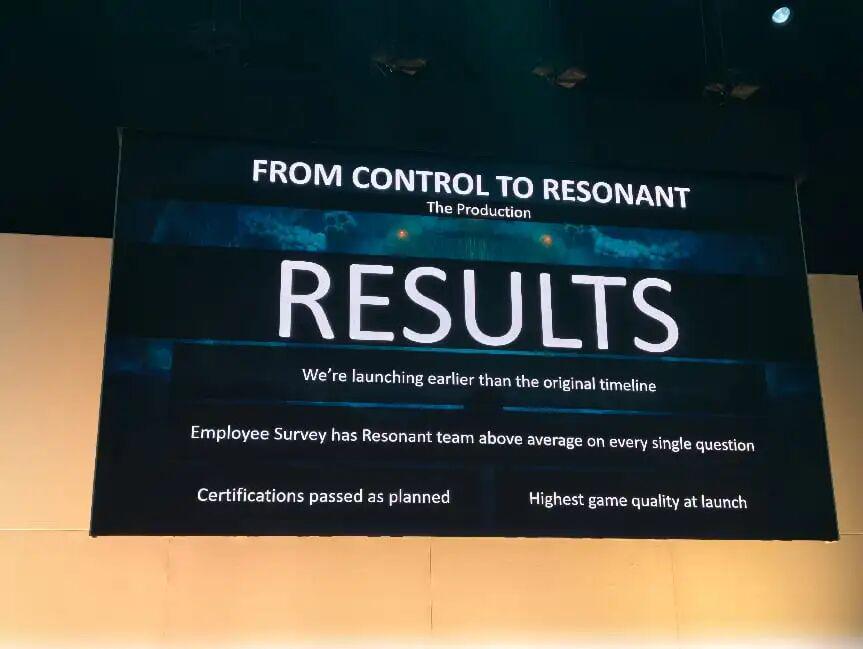
The results of this reform have been comprehensive: the sequel was released ahead of the schedule set during the pre-production phase. This is the first game in Remedy’s history that was not delayed but instead delivered ahead of schedule—something no one within the company had previously believed was possible.The latest employee survey results also show that the “Resonance” project team scored higher than both the industry average and the company-wide average on every survey item. Of course, there is still room for improvement, but at the very least, this indicates that we are heading in the right direction.
Certification across all platforms was completed in one go as planned, without the chaos of the first game—where we had to repeatedly fix bugs, resubmit for certification, and worry about introducing new issues. Based on statistics from the defect database, this title will be the highest-quality game in Remedy’s modern development history.
Spread the word about “Control”
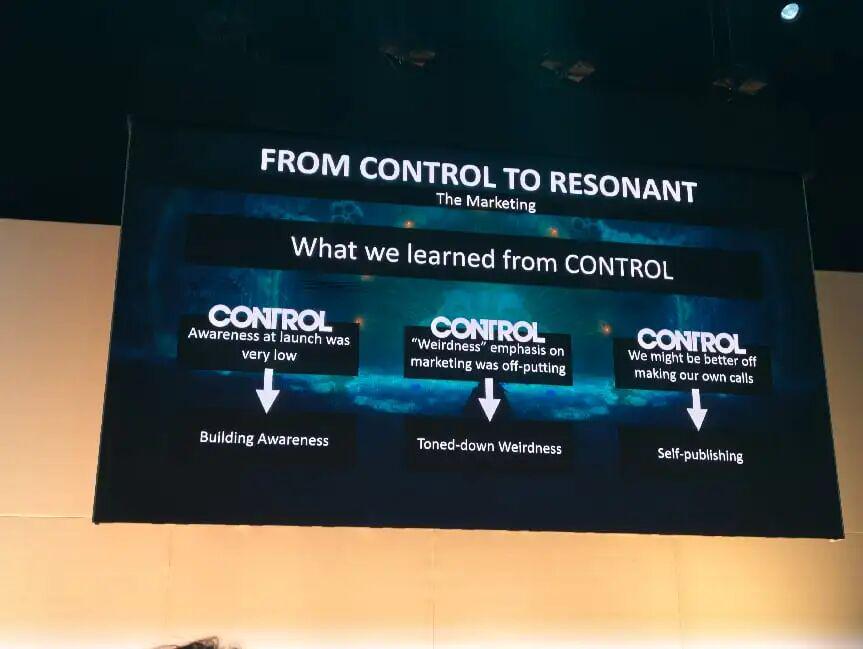
Next, let's talk about marketing. The original *Control* had extremely low awareness at launch.
In 2019, even among hardcore gamers, a large number of people had never even heard of this game. After waiting in line to try it out, many exclaimed, “This game is so great—how come I’ve never heard of it before?” Some players, however, chose to sit this one out at launch because the marketing gave off such a bizarre vibe, only to be thoroughly blown away after trying it later.Looking back, our marketing strategy at the time—which centered on “strangeness”—was a bit over the top.
In addition, we recognize the need to take control of our own narrative and ensure that our ambitions for publishing and marketing match the production ambitions of the game itself. We have always created large-scale titles, and now we intend to elevate our publishing and marketing efforts to a level commensurate with them.
As a result, we’ve allocated the largest marketing budget in Remedy’s history—though I can’t disclose the exact figure, it’s a substantial amount. Our publishing and marketing teams are directly integrated into the development team, gaining a deep understanding of the game’s details and feel to help them communicate its selling points more effectively.
The marketing no longer uses “This is a weird game” as its core tagline.The game’s core remains bizarre, though the marketing messaging has been adjusted. Of course, the trailer still ends with that half-joking, half-serious line: “It’s gonna get weirder.” At the same time, we’ve begun self-publishing, allowing the marketing team to work closely with the development team and take more control of the process.
Today, the number of trailers for new titles has doubled compared to the first game: while the first game had about four trailers, the sequel now has twice that number, and more will be added in the future; the scale of our presence at gaming conventions has also reached a new high in the company’s history. I hope that at this year’s Gamescom, I’ll run into fewer people who’ve never heard of *Control* than I did seven years ago.
Motion Capture: Saving Money While Improving Quality
Now let's talk about motion capture.
In terms of the cast, Courtney Hope returns to play Jesse Faden and Dylan Faden; Emily Pope, Casper Darling, Aries, and the rest of the cast are all back. Frankie Cavish plays Zoe, a major new character who has already won over a large fan base.
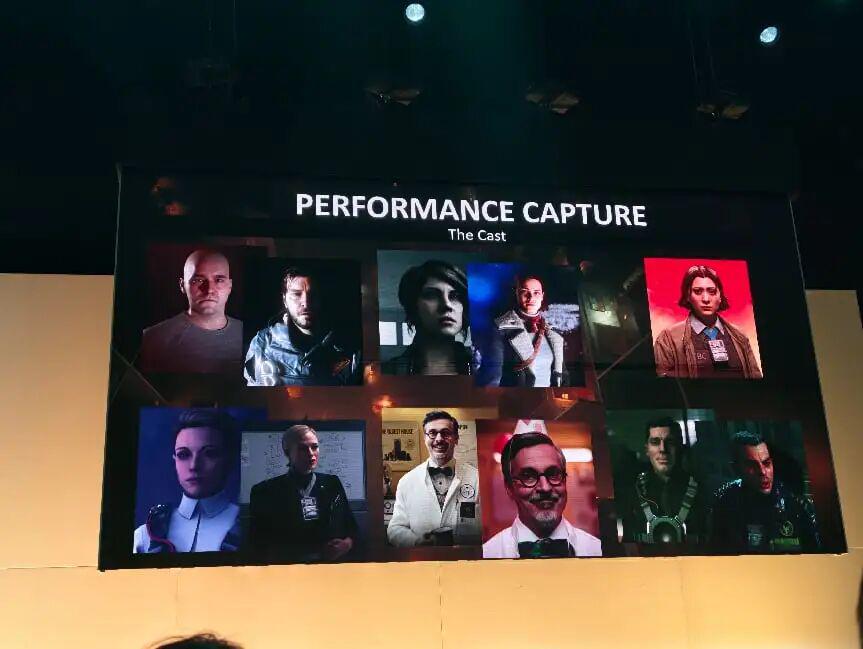
Remedy’s motion capture studio was completed in 2018 and, in terms of the number of cameras, was once the largest motion capture studio in Scandinavia. However, the studio had insufficient ceiling height.Due to the limited ceiling height, the studio was unable to directly film vertical stunts at great heights. Renting a professional facility off-site would have cost as much as 8 pounds per second. To address this, the team built an in-house cable suspension system, which not only saved millions but also allowed them to film high-altitude stunts—which would otherwise have required off-site production—right in their own studio.
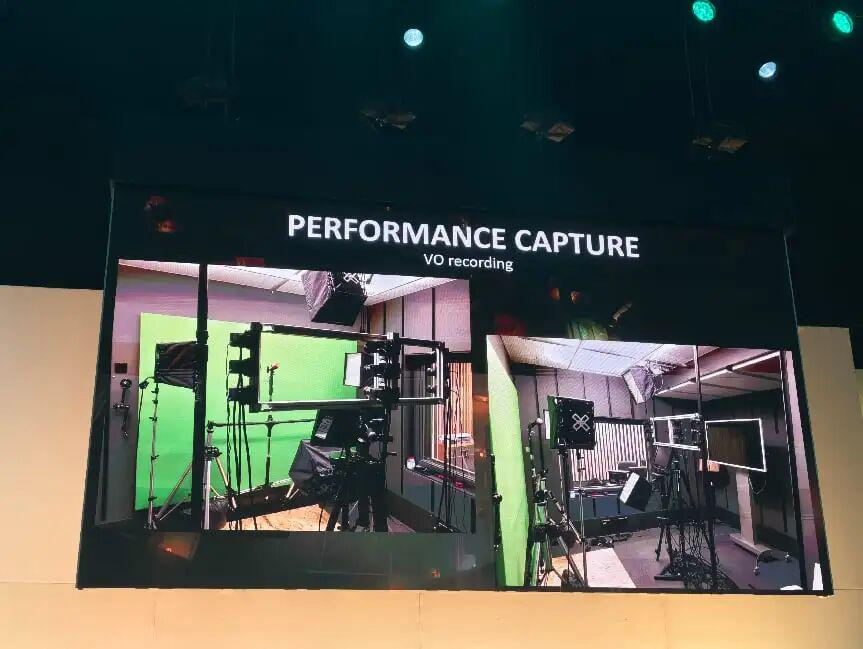
The facial video capture station is equipped with a total of nine cameras. A tennis ball must be attached to the back of the actor’s head for head tracking; while this setup significantly restricts head movement, the actor must still deliver a compelling performance.
The Origin of “Resonance”
Since time is limited, let’s move on to the final topic: Why is the subtitle of the new work “Resonant”?
The project management team initially came up with five candidate names, after which someone suggested soliciting name ideas from the entire team; we received a total of over 2,300 submissions. My personal favorite out-of-the-box suggestion was the pun-filled “Control: Dylan May Cry.”
We mixed our initial five candidates in with the vast number of proposals we received and screened them all together. Interestingly, the three names that made it onto the shortlist all came from those initial five internal options.
The logic behind the final naming: “Control” serves as the foundation, carrying forward the legacy of the series’ IP; the idea of numbered sequels was rejected early in the project. “Northlight” (the Northlight Engine) is our core engine and the DNA of our brand, running through the entire series. Bringing these elements together resulted in “Resonance.”
That concludes my presentation. Thank you, everyone.
Q&A Session
Q: You mentioned that the development process was “fun first.” You had originally prepared a few short stories, but ran out of time. Could you share one briefly now?
A: Then let's quickly go over the joke about the sheep.
It all goes back to 2018, when we were filming the live-action scenes for the first *Control*. The set was lit entirely with red lights. I was standing there with another producer, and he asked me to smile for the camera, so I did. He ended up using that photo to make a sheep meme.
At first, I wasn’t really happy about it and even urged everyone to “focus on work and stop messing around.” But the joke just wouldn’t die down—it spread throughout the entire company; some people put googly eyes on it, and others turned it into memes.By the time we were working on *Control: Resonance*, I started bringing up that sheep at every team meeting to drive what we called “ultimate discipline” and ensure the project stayed on track.
The most interesting part is that there’s actually a scene in the game where a manager is lecturing the team on “ultimate discipline.” When I saw that scene, I felt like the story had come full circle. So, to sum it up: Embrace the fun—it will eventually grow into something far beyond your wildest imagination.
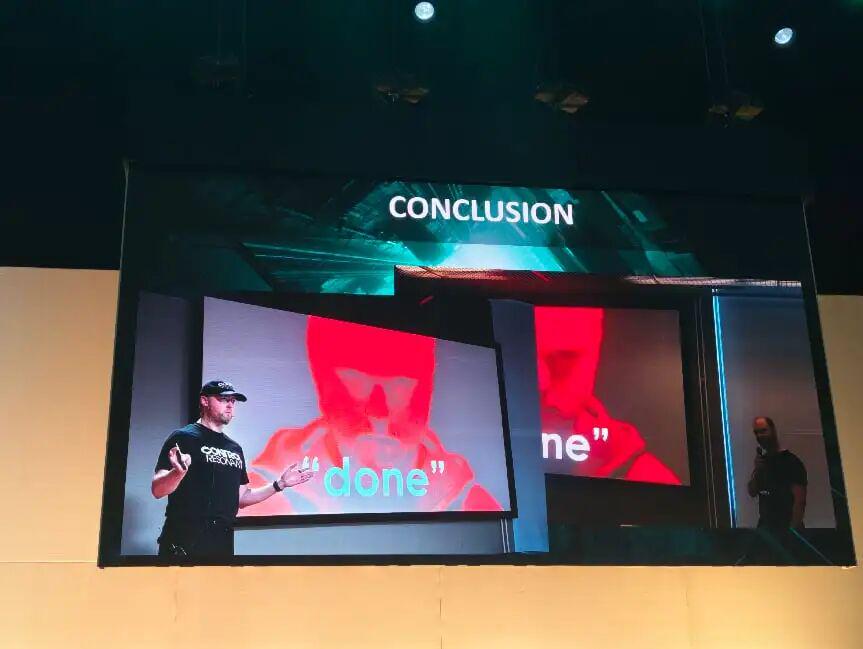
Q: I’m a big fan of Remedy. I’d like to ask about Sam Lake—he had a profound influence on the narrative style of the original *Control*, but he wasn’t directly involved in *Control: Resonance*. Were there any changes to the creative process?
A: This is a topic worth exploring in depth, but since time is limited, I’ll try to keep my answer brief. Nicole is the Game Director and Creative Director for the *Control* series and this title; she and Sam are both co-creators at the company level. Although Sam wasn’t directly involved in the development of *Control: Resonance*, the two have maintained close communication.Simply put, Sam focuses more on storytelling, while Nicole focuses more on gameplay—Nicole draws narrative inspiration from Sam, and Sam incorporates Nicole’s gameplay ideas to enrich the *Alan Wake* series.The division of labor is clear: Sam focuses on the *Alan Wake* line, while Nicole leads the *Control* line.
原创文章,作者:游茶妹儿,禁止转载:https://youxichaguan.com/en/archives/219668