Early this morning (the 26th), Ubisoft unveiled *Might and Magic: Heroes III Remastered* (hereinafter referred to as *Heroes III*) at the Gamescom in Cologne. This legendary strategy game, originally released in 1999, will be reimagined in 3D using modern graphics technology.
When the news broke, the gaming community responded with relative restraint, hoping that “the classic won’t be ruined.” This cautious, somewhat pessimistic mindset is probably best understood by longtime players.The historical significance of *Heroes of Might and Magic III* needs no elaboration: it sold three million copies over its lifetime, received a 9/10 rating from both IGN and GameSpot, and its influence can be seen in later titles such as *King’s Bounty* and the *Total War* series.
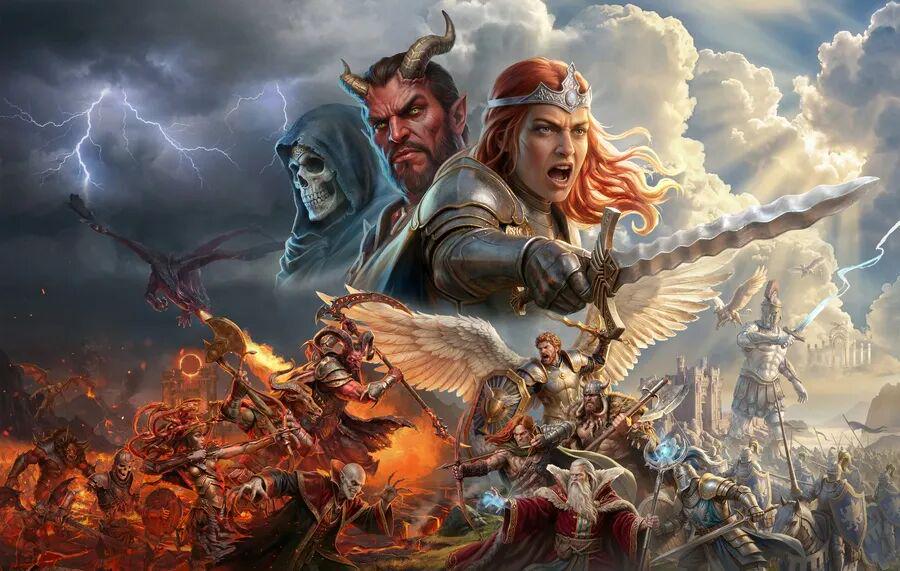
For me, *Heroes of Might and Magic III* represents those pleasant summer days when I’d huddle with friends in front of a CRT monitor, poring over challenging campaigns. We’d often end up playing all day long.
More than twenty years later, I sat in Ubisoft’s Chengdu office, watching the intricate visuals unfold slowly on a large 4K HD screen. Suddenly, a voice rose from deep within me: “Does it still have that same feel as back then?”
01
More Immersive Visuals, a More Familiar War
The trailer had already set my expectations for the graphics in *Heroes of Might and Magic III: Remastered*, but the moment I actually set foot in the Kingdom of Erathia, the three-dimensional, high-definition visuals still gave me a pleasant surprise.
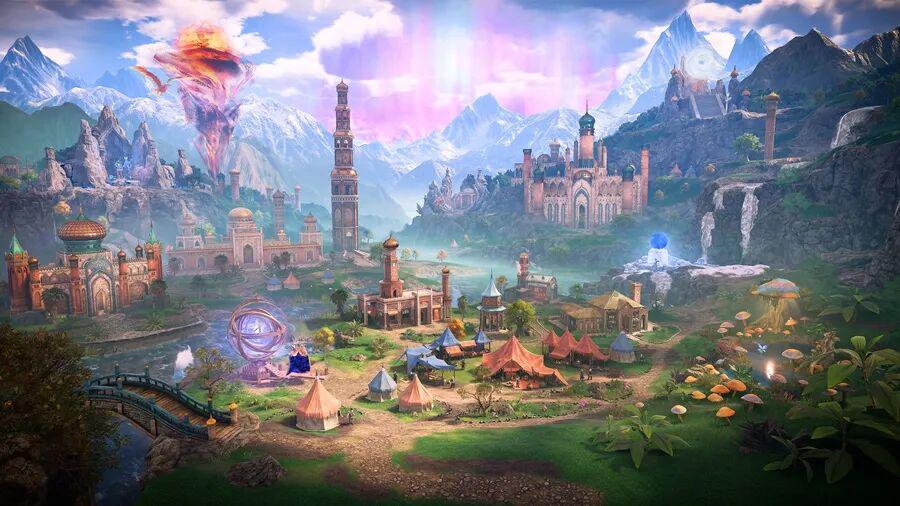
The original 2D top-down graphics have been completely redrawn in 3D; the castles, resource points, and forests on the map—along with the units scattered across the wilderness—all stand vividly before my eyes. No lengthy description was needed; I recognized it at a glance—it’s still the same style as back then.
High-definition 3D offers not only clarity, but also an immersive experience.
As the hero passes by the lumberyard, he can see wisps of smoke rising from the log cabins, and even the lights inside the houses are clearly visible;As they march past a stream, the water shimmers with ripples; the classic Tier 3 unit, the Griffin, features feathers rendered with meticulous detail. The deeper you delve into the demo, the more you feel your horizons expanding—whether building your main base or commanding battles, everything feels effortless.
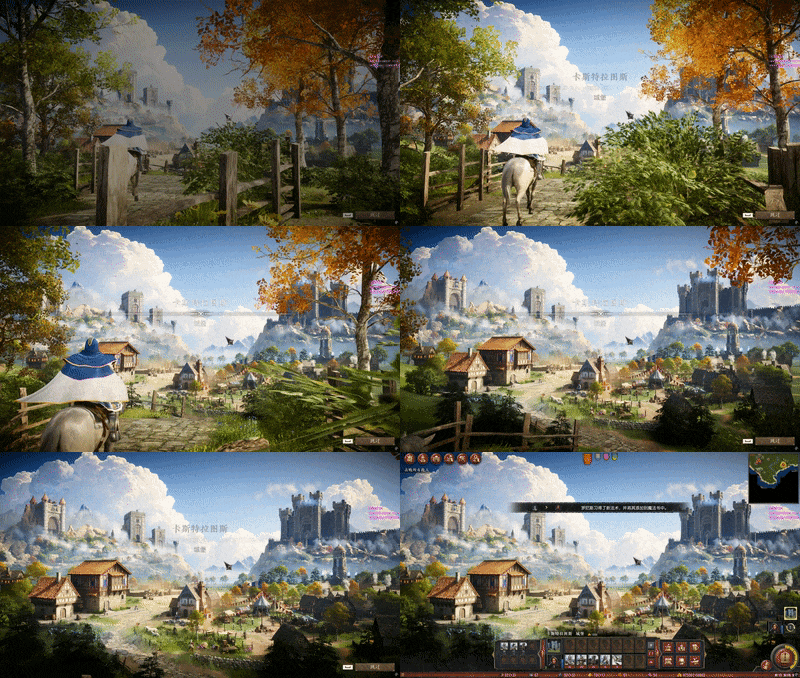
As a 2026 remake, the surprises go beyond just the graphics. When a hero enters the castle, it triggers an entrance animation that wasn’t in the original version. Each race has its own grand entrance, and the welcome feels truly ceremonial.
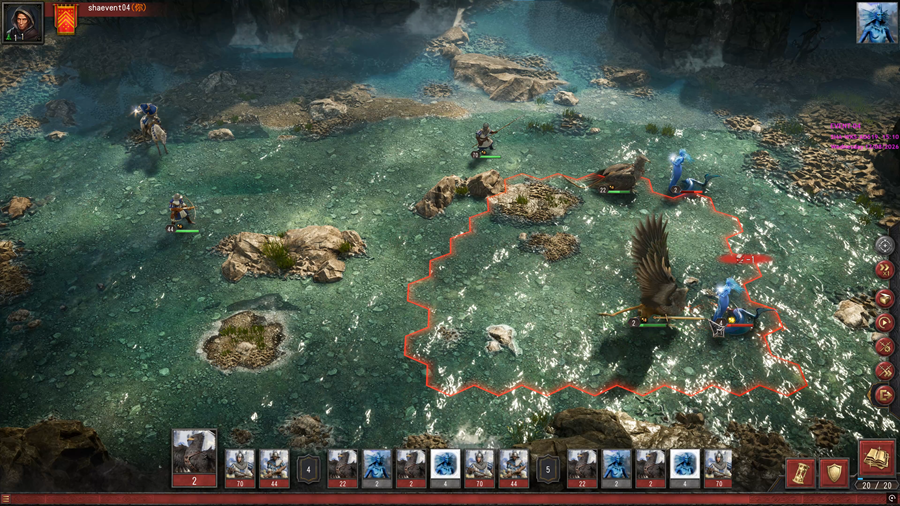
The combat visuals have also received a comprehensive upgrade. In the original version, casting spells was represented by a simple 2D icon floating above the unit, with rather basic animations. Now, the special effects are more elaborate, the impact feedback feels more substantial, and the visuals have a greater sense of the grandeur one would expect from a magical world.
However, veteran players can rest assured that in the 3D perspective, the combat controls still feel just like they did back in the day. For example, design elements such as ranged units dealing half damage in melee combat and attacks beyond range dealing half damage have been preserved exactly as they were.Naturally, the optimal strategy in combat hasn’t changed much either: you should still control the unit with the highest action points, quickly close in on enemy ranged units, and engage them in close-quarters combat.
While playing the demo, I also noticed that the designs of some unit types have changed slightly. The Archangel, a Level 7 unit from the Castle, looks much younger than in the original version; the Ghost Dragon from the Graveyard appears to have a layer of black skin draped over its translucent skeleton, giving it a more eerie feel than the original.
Producer Zhong Tao (Jet) told me that the character designs for the different classes follow the original appearance and personality settings, but the 3D modeling inevitably required modern updates. Throughout the development process, the team maintained constant communication with the community, solicited player feedback, and refined the character designs through repeated iterations.
No matter how much it changes, the essence remains the same—even with its revamped visuals, *Heroes of Might and Magic III: Remastered* still retains its original charm.
02
Play the classic maps again to dispel doubts about the quality
The fact that the visuals “retain their charm” is just the first step; actually playing through the campaign is the true test of *Heroes of Might and Magic III: Remastered*’s quality.
The demo I played was a remastered version of the classic map—"Pride Soaring to the Skies 2026"—which retained its dual-layer structure above and below ground.I chose to start at the Castle. Relying on my memories from back in the day, I set out to explore the map with almost no hesitation, taking my starting units with me. I captured the Wood and Stone mines; in the first week, I focused on building a nation to boost the economy, constructing fortifications to upgrade the castle’s defenses, and unlocking advanced unit types as quickly as possible.
I haven’t systematically practiced this set of strategies for twenty years, but when it comes to how to allocate heroes’ weekly action points, how to prioritize main city construction, and how to balance strategic resources, my fingers seem to move on their own—it’s all etched into my muscle memory.
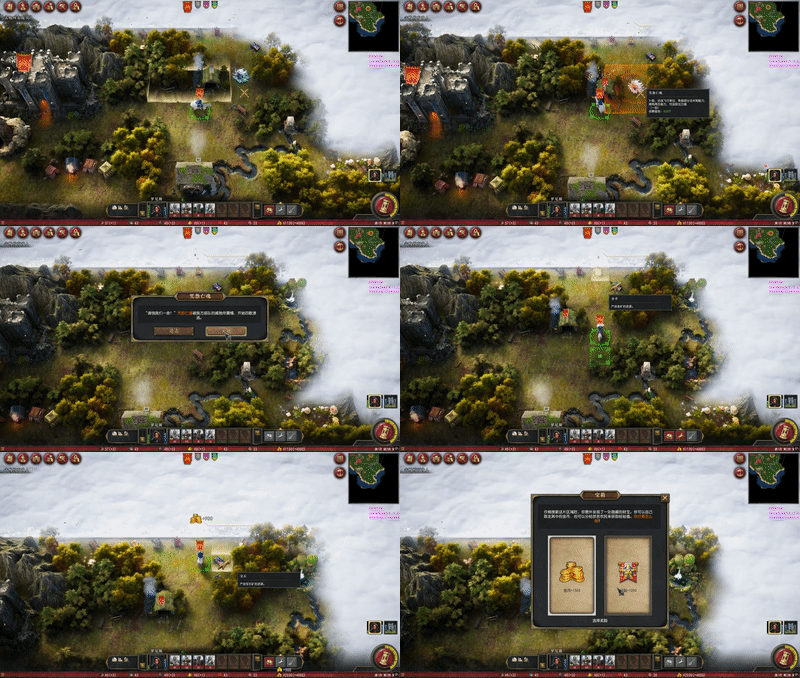
As it turns out, the strategies I used back then still work in *Heroes of Might and Magic III: Remastered*. There was virtually no learning curve throughout the entire campaign—everything from the pace of the turns to the positioning of unit formations matched my memories of the original game.
On Easy difficulty, the campaign progresses at a fast pace. I made my way from the top-left corner of the map all the way to the bottom-right corner of the lower map, capturing the castles of the four factions—the Tower, the Graveyard, and Hell—one after another.In practice, I found that the Titans in the Tower still pack a powerful ranged punch, and the Dread Knights in the Graveyard are just as formidable as ever—it’s just that Hell feels a bit lacking in comparison.
Veteran players probably already know that the Hell faction was pretty weak back in the day, and that’s still the case in the remastered version.
Actually, I strongly agree that the balance in *Heroes of Might and Magic III Remastered* should remain exactly the same as in the original version. It’s true that the original game had some races that were relatively weak, resulting in an imbalance. But perhaps, from the development team’s perspective, that very imbalance is a key part of the game’s legacy, making it easier for veteran players to jump right back into the game.Besides, *Heroes of Might and Magic III* isn’t an esports game, so faction balance isn’t that critical.
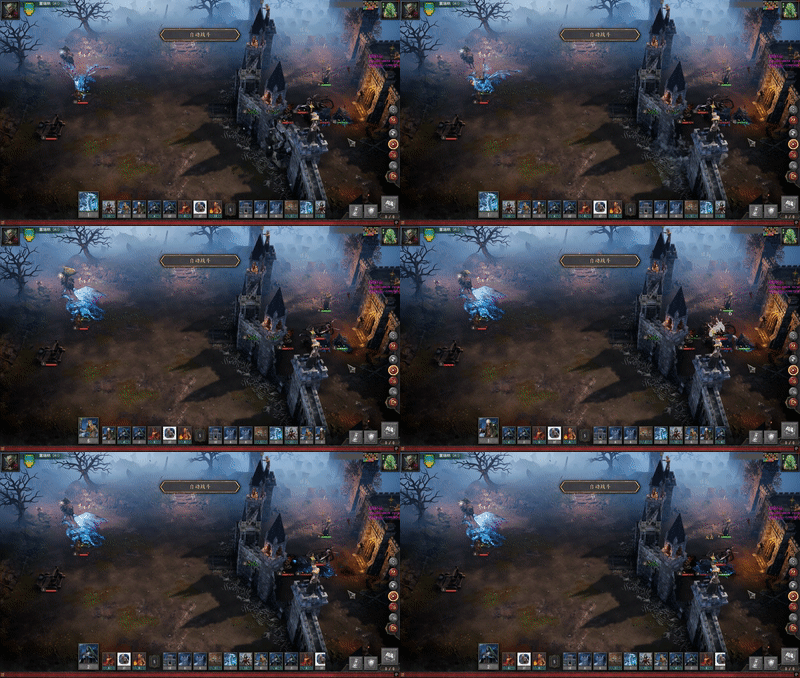
A remake can only succeed if it avoids making changes; instead, it requires the development team to have a deep understanding of the game.
The remastered edition is packed with content, featuring the three major expansions—"The Reclamation of Elasia," "Blade of Doom," and "Shadows of Death"—in their entirety, along with over 120 maps and a user-generated content (UGC) editor, ensuring plenty of gameplay for a long time to come.
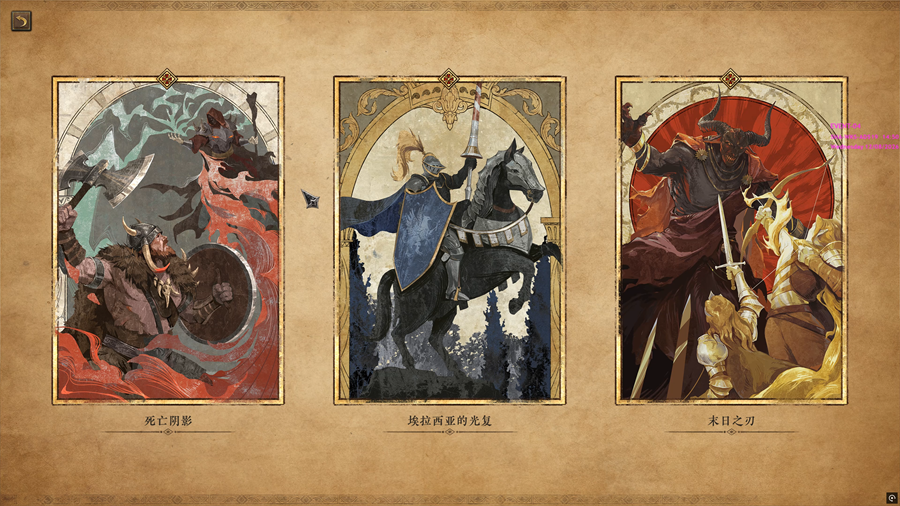
The 2015 release of *Heroes of Might and Magic III HD* only included “The Reclamation of Elaria” (the base game); the other two installments were not included. For many longtime players, this was a significant disappointment. This is especially true for “Shadow of Death,” which many players consider the best installment in the trilogy.Now that the trilogy has returned in its entirety, it further ensures the quality of the remastered edition.
After nearly an hour and a half of gameplay, *Heroes of Might and Magic III: Remastered* let me relive the thrill of building castles, upgrading units, and expanding my territory. For me, it’s a no-brainer.
03
A homemade map from 20 years ago was instantly converted into high-definition 3D
User-generated content played an indispensable role in making *Heroes of Might and Magic III* a classic strategy game with a deep-rooted community. When it was released in 1999, the editor was already integrated into the game itself, putting the power to create games in the hands of the players.
There was a time when I’d open the game not to play through the campaign, but just to use the map editor.I’d arrange terrain, hide treasures, and place units to design a map where the odds were completely in my favor. I’d spend days perfecting a single map; once it was done, I’d play it three times myself before inviting classmates to challenge me, savoring the pure joy that came from designing my own maps. Back then, I spent far more time in the editor than I did playing the actual game.
It wasn't until later that I realized there were quite a few players like me who "didn't stick to the main game."
For more than two decades, the content created by players both in China and abroad using the editor has been the driving force behind *Heroes of Might and Magic III*’s enduring popularity. *HotA* (Horn of the Abyss), developed by a Russian team, was of such high quality that players hailed it as “the third expansion pack.” Since the release of version 1.0 in 2012, it has continued to receive updates, independently introducing the Port and Factory factions;The Chinese community has also created campaign maps with a Chinese cultural flair, such as *Fengshen Bang* and *Xianjian Qixia Zhuan*, weaving local culture into the continent of Entagri.
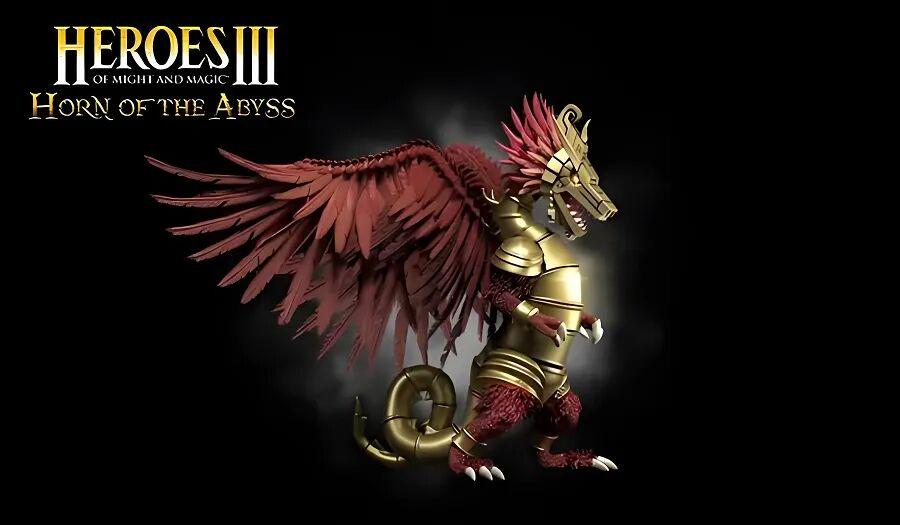
New Unit Types in the Fan-Made Expansion "Horn of the Abyss"
As recently as 2018, there were still content creators on Bilibili who sparked a new wave of activity with their “Heroes of Might and Magic III” match videos. It is rare in the history of gaming for a title released more than 20 years ago to demonstrate such enduring vitality.
This was another major disappointment with the 2015 release of *Heroes of Might and Magic III HD*—it didn’t even include an editor. Once players had completed the campaign mode, it was hard to find a reason to keep playing. For longtime fans, this was even more disappointing than the lack of expansion packs.
So when I found out that the remastered version would include a map editor and a campaign editor on launch day, I was definitely looking forward to it.
The development team behind this remaster has put a lot of work into the editor, allowing players to instantly convert their existing assets into high-definition, 3D versions in the new version, breathing new life into them. Producer Zhong Tao candidly told me that this was a clear goal they had set from the very beginning of the project.
Maps created by veteran players using the original official editor can be imported into the updated editor to complete a seamless 3D conversion with a single click. All conversions are performed automatically in the background, requiring no development resources from the players.
This means you won’t have to redraw the custom maps you stayed up late to create back then. Just open the remastered version, import the map, and it’ll instantly be in 3D—ready for you to start playing.
04
Why are Chinese studios taking the lead?
*Heroes of Might and Magic III: Remastered* was developed in collaboration between Ubisoft Chengdu and Ubisoft Shanghai, and is one of the few projects within Ubisoft led by a Chinese studio. In the past, Chinese studios have often served as partner studios in the development of AAA titles such as *Assassin’s Creed*, *Ghost Recon*, and *Rainbow Six*.
Why was *Heroes of Might and Magic III*—a classic created by Americans and rooted in Western fantasy culture—entrusted to a Chinese studio?
I understand that many members of the remake’s development team have previously worked on spin-offs of the *Might and Magic* and *Heroes of Might and Magic* series, with experience ranging from browser games to PC games, and they have a deep understanding of the series.It was precisely this accumulated experience and passion that led the two Chinese studios to join forces, drive the project forward from the ground up, and ultimately win over the group’s senior management.
On the other hand, against the backdrop of Ubisoft’s global efforts to cut costs and improve efficiency, the development efficiency of its Chinese studios has also earned them more opportunities.
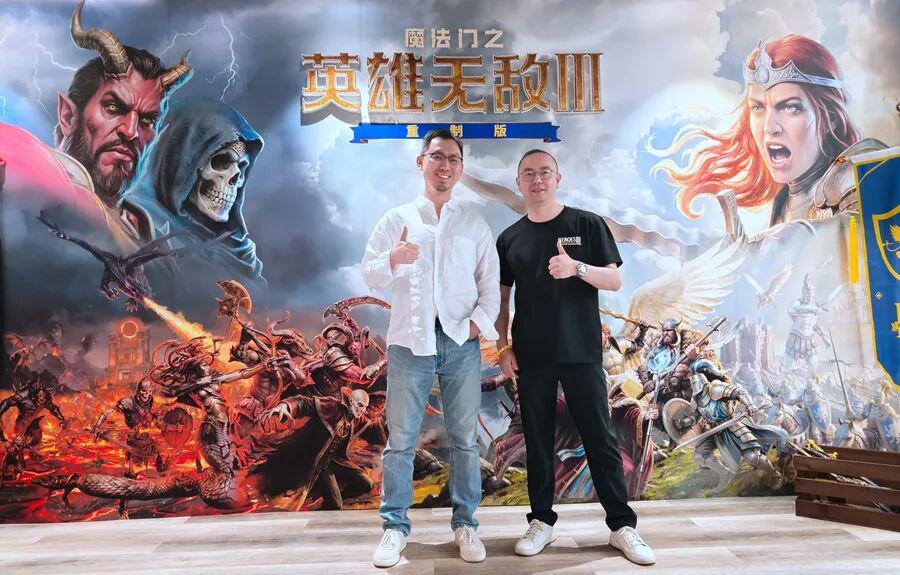
Shu Xinyu (left), General Manager of the Chengdu Studio, and Zhong Tao (right), Producer of the Remake
Shu Xinyu, General Manager of the Chengdu Studio, told me that while the group has indeed become more cautious in approving the studio’s budget than in the past, the Chengdu Studio’s high development efficiency and high-quality output over the past few years have earned it greater support for core business initiatives.
One notable detail is that even as Ubisoft’s headquarters strictly controlled costs across the board, it still approved funding for the renovation of the new office in Chengdu. Last October, Ubisoft Chengdu opened a new single-floor office, bringing together teams that had previously been scattered across different office locations into a single building.
“Headquarters still highly recognizes the Chengdu studio’s potential for growth within the company’s internal ecosystem,” explained Shu Xinyu. He added that Ubisoft Chengdu currently has about 400 employees, a number that has remained stable over the past few years.
Of course, the remake isn’t just the work of two Chinese studios operating in isolation. The development team has had in-depth discussions with veteran creators from the original developer, New World Computing. No wonder I think the current demo hits the mark.
05
I'm tapping my fingers in anticipation, waiting for the game to come out.
Even before the demo ended, *Heroes of Might and Magic III: Remastered* had already made it onto my “must-buy at launch” list.
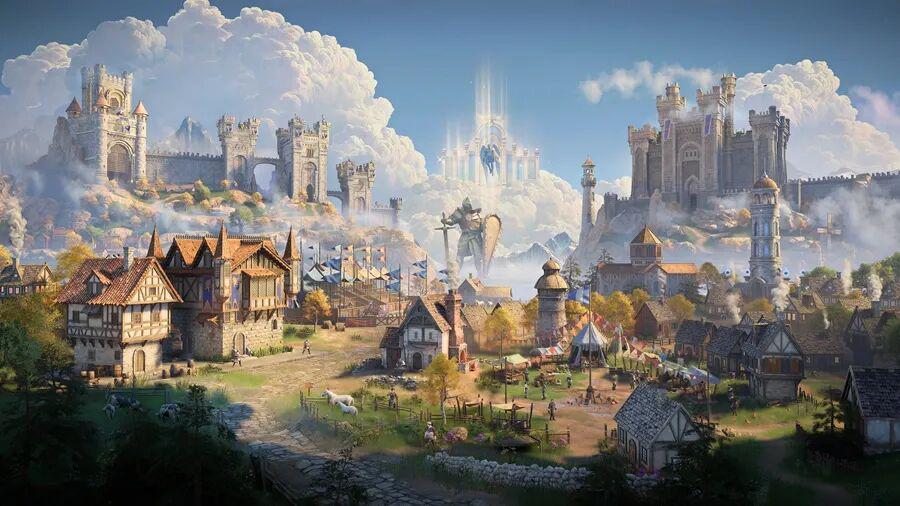
The remastered version is undoubtedly recommended for veteran players looking to revisit the game, but it’s also perfect for newcomers. With its completely upgraded graphics, you can step into a magical world, expand your territory, and experience the classic “explore-build-battle” loop—even playing solo, you’ll find yourself immersed for hours on end.
We believe the upgraded UGC editor will also unleash the imagination of a new generation of players, giving rise to even more imaginative maps and gameplay.
I hope that through this remaster, I can share the joy I experienced playing *Heroes of Might and Magic III* in front of a CRT monitor more than twenty years ago with today’s players.
原创文章,作者:游茶妹儿,禁止转载:https://youxichaguan.com/en/archives/219752