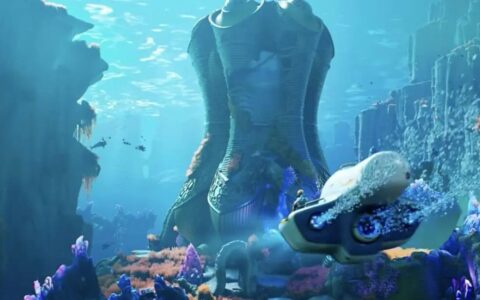
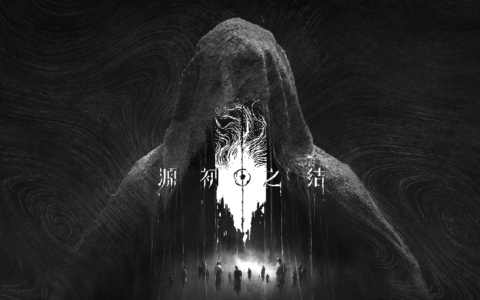
In the early hours of August 26, miHoYo unveiled its new title, *The Knot of Origin*, during the opening night of Gamescom 2026. As the first trailer shown that evening, it showcased realistic fantasy art, a world inspired by diverse mythologies, and multiplayer cooperative gameplay.Before the Hoyoverse logo appeared, it was hard to tell that this was a Mihoyo title.
Liu Wei, co-founder of miHoYo, later described it on his WeChat Moments as the company’s “first realistic fantasy MMORPG featuring large-scale boss battles and multiplayer co-op combat.”
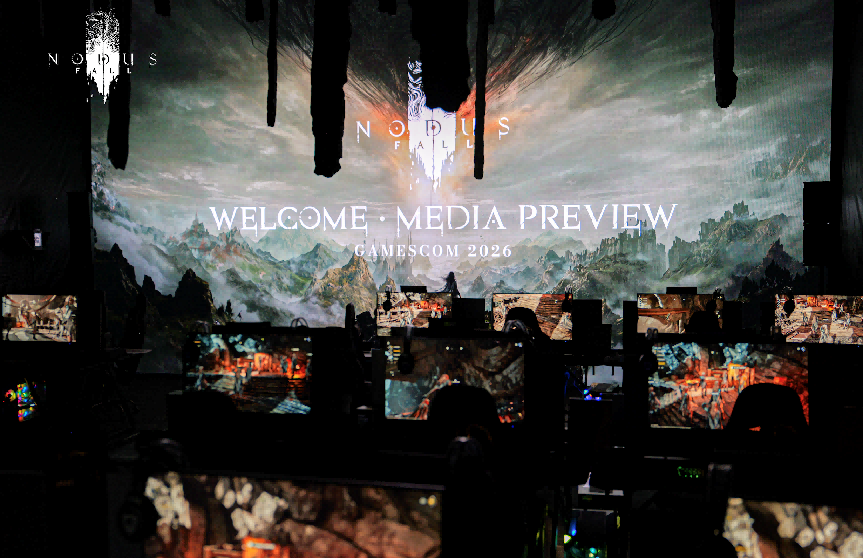
The day after the first reveal, Teahouse was invited to participate in an offline, closed-door hands-on demo hosted by miHoYo in Cologne. The demo focused primarily on combat: players formed teams of four and took on three consecutive boss battles, with the entire session lasting about half an hour. After the demo, the development team engaged in further discussion with the attendees.
After playing the demo and talking with the development team, I truly felt that Mihoyo is really stepping out of its comfort zone this time.
01
Three Boss Battles: Mythical Creatures and an Epic Feel
If I had to name the most memorable aspect of this demo, I’d say it’s the “epic feel of the boss battles.”
The story of *The Primordial Knot* takes place in a world where divine power has fallen and order has collapsed. Players take on the role of a Weaver who, having lost their power for unknown reasons, has fallen into the mortal realm. They must defeat mythical foes lurking throughout the land, seize the power of the gods, and restore order.According to the development team, the theme of “multiversal mythology” stems from the creator’s childhood dream; even as a student, he had envisioned an adventure story where the mythologies of different worlds intertwined.
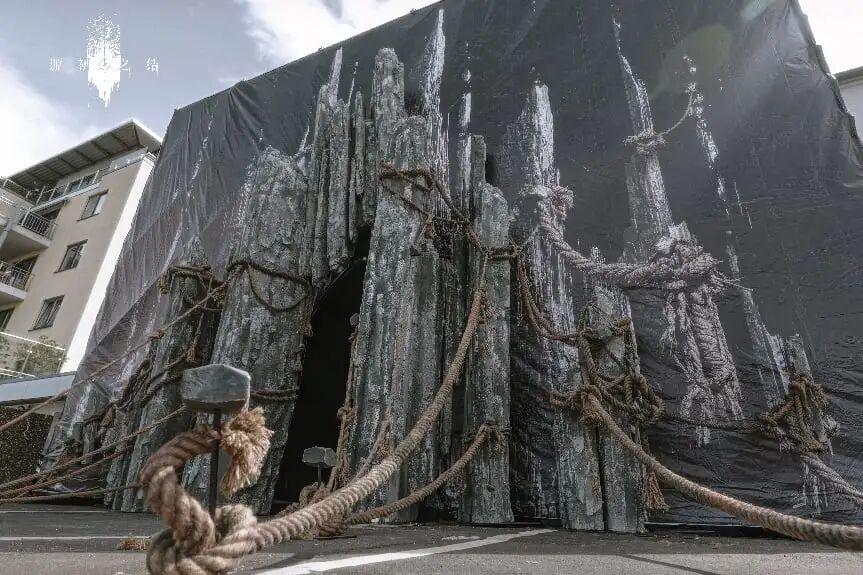
The three boss battles in the demo correspond to the legendary beings in this world that embody the old order and ancient legends.
Before the boss battle begins, players first enter the same open hall to form parties freely, and then the party leader selects a dungeon to teleport into. There isn’t much exploration within the dungeon; after riding a short distance, players come face-to-face with the boss. The focus of this version is primarily on combat.
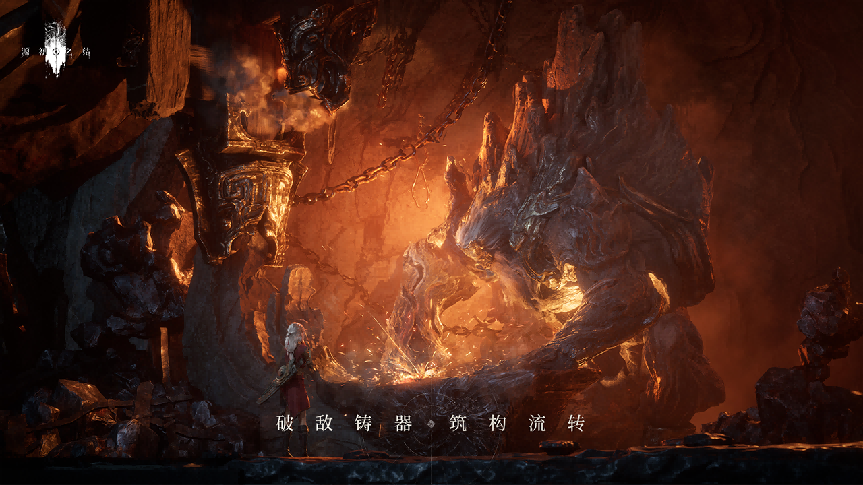
The first boss battle pits you against a stone golem; this fight is designed as a tutorial and is generally fairly easy.
The second battle against Qiongqi was the most challenging of the entire campaign. Based on the *Classic of Mountains and Seas*, this creature has the body of a tiger, two horns, and massive wings—though the original text describes it in just a few brief sentences.Regarding their source material, the project team explained that they chose to start with mythological systems that are highly recognizable and widely known, extracting stories and characters that embody both established traditional imagery and dramatic conflict. The gaps left by the classical texts serve as the starting point for their reinterpretation, with the goal of achieving an expression that feels “familiar yet entirely new.”
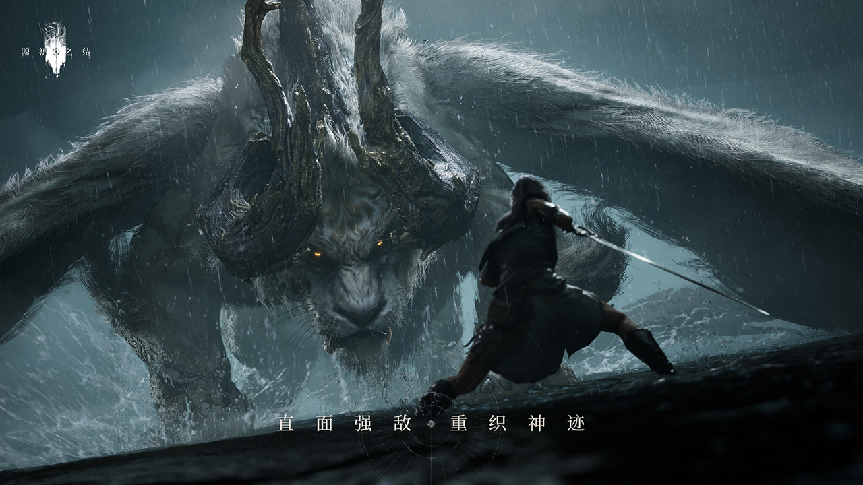
In combat, it inflicts a debuff that causes players to lose health over time, directly testing the healers’ reaction speed. Many teams in the raid didn’t fall to its regular attacks, but gradually lost members due to failing to handle the mechanics in time. The only wipe my team experienced during the entire raid occurred in this very fight.
The third battle features the most variations: the opponent is a knight fighting from the back of a dragon. At certain stages, the knight will dismount from the dragon’s back and fight on foot, and there is even a section where you must simultaneously fend off attacks from both the dragon and the knight.In the game’s lore, this pair of dragon and knight is collectively known as “The Omen,” drawing inspiration from Norse mythology and the German epic *The Nibelungenlied*.
The action in this battle is incredibly intense: a giant dragon raises its head to breathe fire, with the flames nearly engulfing the entire screen. A knight summons a massive sword from his hand and brings it crashing down, sending up a cloud of debris and dust that’s clearly visible. Throughout a single battle, the target shifts multiple times as the combat phases change, placing relatively high demands on the player’s ability to divide their attention and adapt their strategy.
A Stance Bar mechanic runs through all three boss fights: In addition to their health bar, each boss has a Stance Bar that the entire party works together to deplete. Once the Stance Bar is empty, the boss enters an Execute state, and multiple teammates can trigger a Joint Execute by responding within a time limit:Against Qiongqi, the party must work together to summon an axe-wielding spirit to deliver a downward blow to its head; against Huozhao, two players must jointly wield a giant spear to stab it in the head.
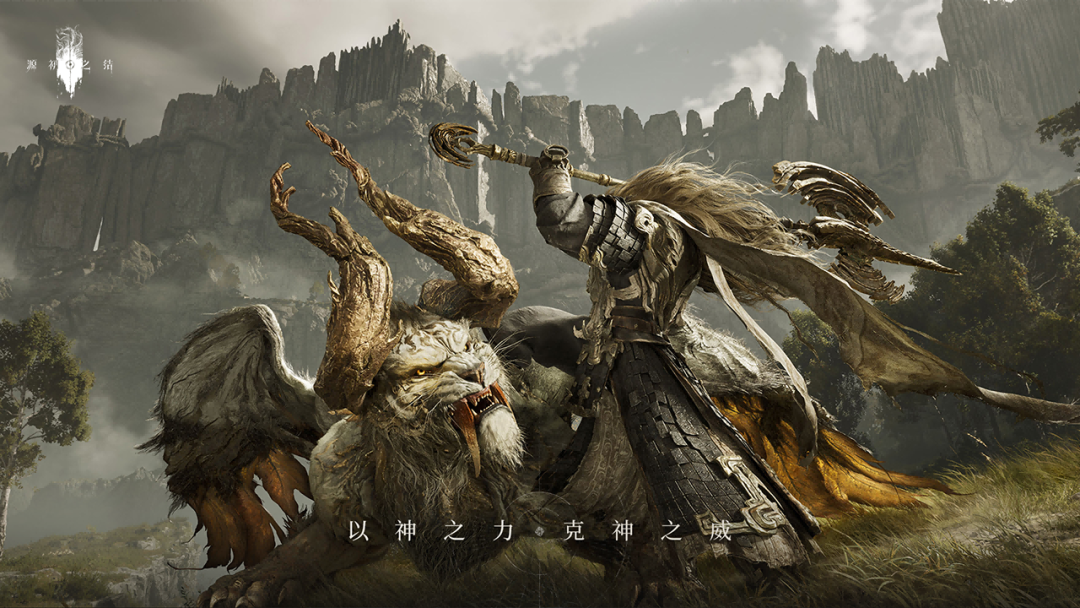
Executes deal significant damage and, in some cases, apply debuffs to the boss. These sequences represent the most intense moments of the half-hour experience and subtly provide a central focus for teamwork. If you’ve ever played an MMO raid, you’ll be familiar with this logic of the entire team coordinating their combat strategy around a single mechanic bar.Additionally, most boss attacks lack red-circle area-of-effect warnings; players must rely entirely on reading the attack’s wind-up animation to react. Basic action-game skills—such as dodging, blocking, and not overcommitting to attacks—remain highly valuable.
The development team said they wanted to create a sense of pressure and accomplishment in these core boss battles—specifically, the feeling of “working together to defeat a mythical boss”—and, based on the demo version, they’ve largely achieved that goal.
02
Careers and Collaboration: What Truly Determines Success or Failure Is the Right Combination of Roles
As a multiplayer co-op action game, while individual skill is certainly important, teamwork and coordination are undoubtedly the top priority. The development team says it encourages diverse class combinations and has adopted a “wide funnel” design for the game’s difficulty: “A low barrier to entry to accommodate new players, and a high ceiling to satisfy hardcore players.”
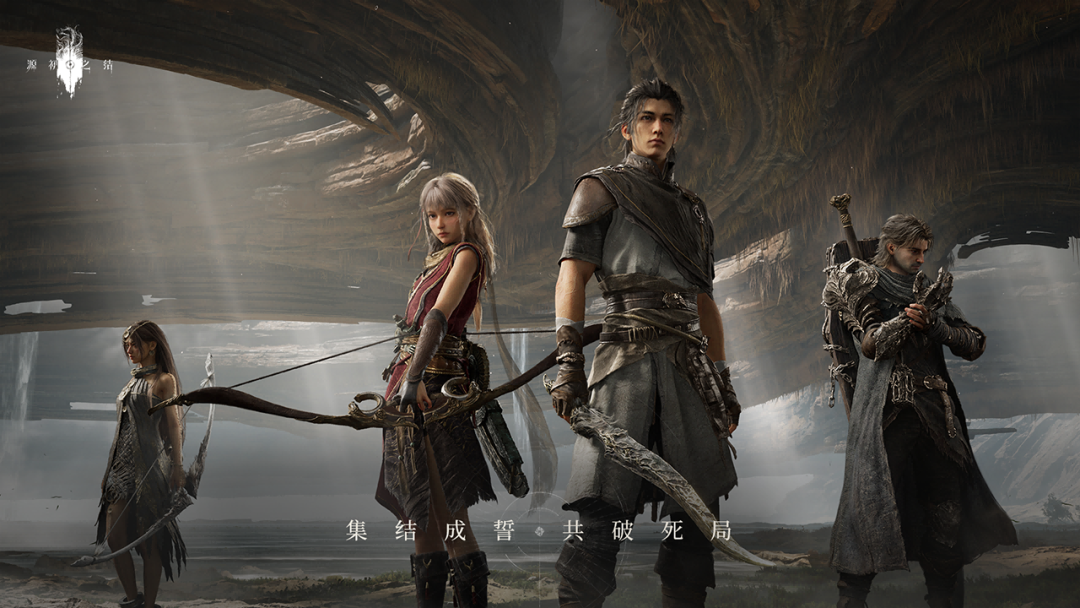
Based on my experience so far, *The Bond of Origin* features a basic role system that follows a “tank—healer—damage dealer” structure.The demo features four characters: the protagonist, who can switch between the Swordsman and Healer classes; a Warrior wielding a greatsword; and two Archers with distinct playstyles—one specializing in rapid, multi-shot attacks, and the other focusing on charged shots. Including the protagonist’s dual-class ability, there are effectively five distinct classes.
Since it was a live demo, my group hadn’t coordinated beforehand and ended up with a composition of three healers and one one-handed sword DPS, lacking both damage dealers and a tank. Our progress was a bit slow, but aside from that one wipe against Qiongqi, the group managed to grind through all three matches thanks to the healers’ sustained healing.
Since the players who came to try out the game tended to be hardcore gamers, several teammates of mine generally felt that the healing role offered relatively limited depth during combat; most of their attention was focused on managing health bars and status effects, and the sense of involvement in terms of action wasn’t as strong as with melee classes.However, this aligns with the development team’s statement: by offering characters with different playstyles, they hope to ensure that both players who prefer challenging mechanics and those who prefer a more casual experience can find their place on the team and contribute to the group’s success. They may also introduce characters requiring a higher skill ceiling in the future.
The differences in functions within a team are specifically reflected in the role mechanics; let me use the two melee classes I’m most familiar with as examples.
One-handed swords follow a clear damage rotation: normal attacks build up energy, and once energy is full, you unleash an enchanted attack. In addition to increased damage, the final hit of the combo triggers a downward strike that deals significant damage and reduces the target’s resilience.There are also two combat skills: one is a quick dash for movement, and the other deals direct damage. When fighting bosses, you’re constantly reading their moves, dodging, and timing your attacks—your hands are practically never idle for a single moment during the half-hour battle.
The greatsword offers a different feel, with heavier movements, and is geared toward tanking damage and crowd control: the basic attack button combines a standard attack with a charge attack that can be broken into segments.The button typically used for enchanted attacks on the one-handed sword is assigned to blocking here; a precise block can trigger a counterattack. This character is responsible for drawing aggro and also has decent resilience-reducing capabilities.
In addition to basic attacks and skills, each character is equipped with a signature move and a selectable Divine Ability. Divine Abilities are obtained by defeating powerful foes and seizing their power; some temporarily alter a character’s appearance and attack style. The developers summarize this concept as “using the enemy’s own tactics against them.”This not only echoes the setting in which Weavers seize divine essences but also merges content updates and gameplay updates into a single system: every time a new mythic foe is introduced, it’s as if all players have been given a new skill—defeating the boss itself expands your arsenal of abilities.
Judging from the demo version, the Divine Abilities are still in the early stages, with a limited number of options available; however, as the design that most distinctly bears the game’s unique stamp, it at least holds up conceptually.
In terms of teamwork, the three battles feature a variety of mechanics that require specific strategies. For example, when a boss is charging up a powerful attack, players must spread out and take cover; when afflicted with a damage-over-time effect, players can interact with health orbs in the environment to restore health; and when a black orb appears above a teammate’s head, others must help destroy it…
Taken individually, these mechanics aren’t complicated; once they’re identified and roles are assigned, the difficulty of the battle drops significantly. Conversely, when no one handles these mechanics, it often leads to casualties or even a wipe.Overall, individual skill determines the margin for error, while success in clearing the stage depends on how the team handles the mechanics. According to the development team, the goal is for the four players to form a natural bond through role specialization, mutual support, and coordinated actions.
03
Beyond the Trial Version: Product Logic Without Gacha Mechanics
After the demo, the project team also answered some questions unrelated to combat.
The development team told us that it has been over two years since this project was greenlit. Most members of the core team are long-time players of action games and online games, and their original goal was to create a game that “combines the high-quality action combat of today’s era with the ability to play online with friends.”
The product is set to adopt a free-to-play (F2P) model for long-term operation. Based on the current design, characters are not obtained through gacha draws but are unlocked through continued gameplay, with cosmetic items being a key focus for monetization. PvE co-op forms the foundation of the experience, while PvP and PvPvE are already in the planning stages and will serve as long-term additions.Players can experience most of the core content solo, and the social aspect is positioned as “non-coercive and stress-free” casual social interaction.
When you put these details and the demo content together, a generally coherent product logic emerges: characters are unlocked through gameplay, so playtime becomes the core resource driving the game, and combat content must hold up to repeated playthroughs.The difficulty is rooted in mechanics rather than gameplay execution, which makes it easy to continuously refresh the experience with new bosses, new mechanics, and the random systems mentioned by the developers—such as entries, weather, and ecology.
Appearance is the primary area where players can spend money, provided that players can see one another; the open lobby and natural encounter scenarios are designed to facilitate this. The fact that single-player mode retains most of the core content is intended to accommodate players who are not accustomed to online play.
The release schedule for miHoYo’s past titles has largely revolved around new character gacha pools—whether in *Genshin Impact* or *Honkai Impact*. With *The Primordial Knot* breaking away from this model, based on what we’ve seen in the demo, the focus will shift entirely to gameplay and long-term content.Regarding more specific gameplay details, the team stated, “More details will be revealed in the future.”
However, the demo did offer some clues about certain systems and features. For example, a blacksmith’s shop appeared in the scene, and characters carried one weapon and three attachments, along with multiple sets of interchangeable appearances—suggesting the presence of an equipment and character progression system. Judging by the demo map, the area currently available represents only a small portion of the game world.
Conclusion
Based on my half-hour hands-on experience, I could tell that *The Primordial Knot* has already established a solid foundation for its combat: the production quality and action mechanics of the boss battles are above average, and the role-based division of labor and teamwork mechanics ensure that the four-player coordination feels authentic—rather than just four people fighting on their own in the same arena.
However, many questions remain unanswered: How will the single-player mode handle mechanics designed for four players? What level of depth will the progression system offer through gear and stats? And at what pace will new characters be introduced? None of this could be verified during this test. In the official release, striking the right balance between action mechanics and numerical progression will also be a key challenge the game faces in the long term.
"The Knot of Origin" combines the gameplay feel and presentation of an action game with a cooperative mechanics system typical of team dungeons.However, for a co-op game that doesn’t rely on gacha mechanics for long-term sustainability, whether this approach will succeed depends on whether the long-term content and monetization strategies can build upon the foundation laid by the combat system. Overall, though, the hands-on demo at Gamescom was a promising start.
原创文章,作者:游茶妹儿,禁止转载:https://youxichaguan.com/en/archives/219824