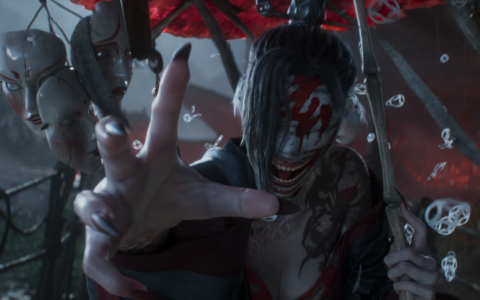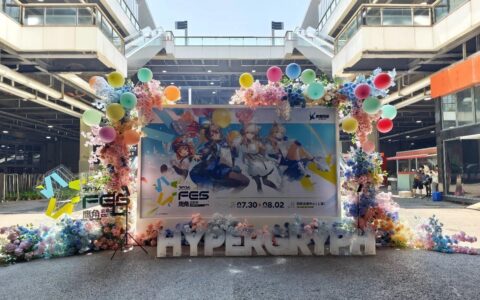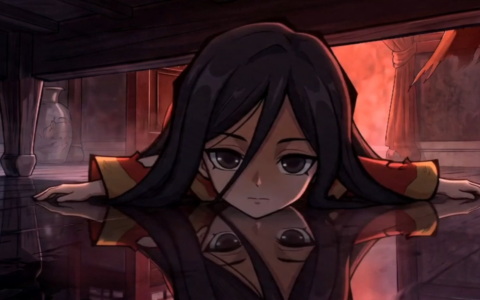
On July 30, the beat-'em-up game *Mist Shadow Hunter*, produced by Chaoxi Guangnian, was released worldwide.
As the first buy-to-play title incubated from scratch and launched globally following ByteDance’s restructuring of its gaming business, *Shadow Hunters* delivered exceptionally impressive results on its first day of release: it ranked No. 1 on Steam’s China Best-Sellers chart,third globally, with a peak of over 44,000 concurrent players on Steam. To date, the total number of players across all platforms has exceeded 1 million.
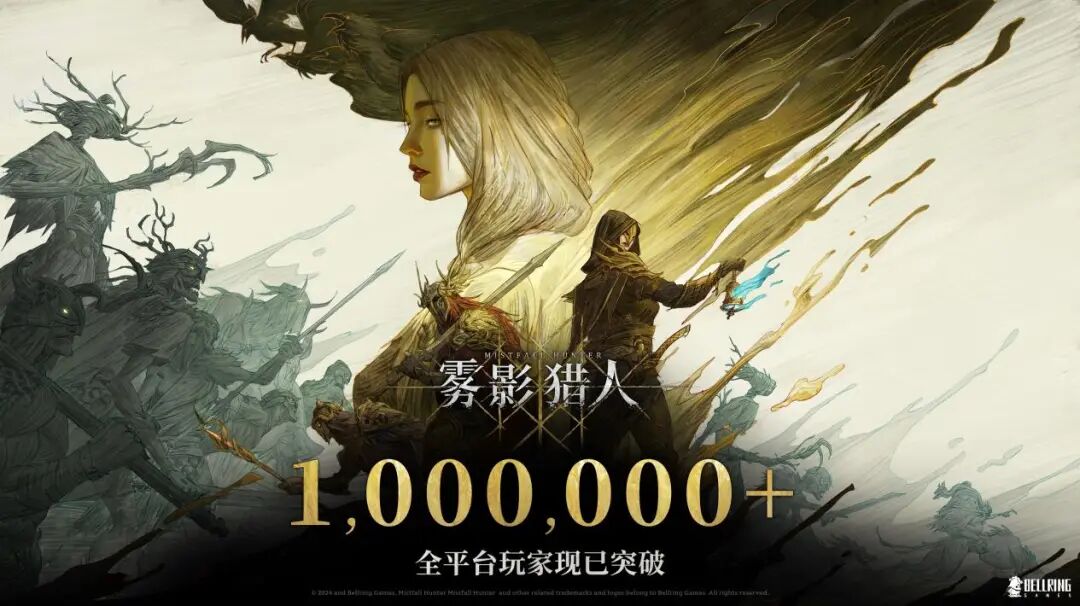
HAO, the producer of *Shadow Hunters*, told me that a large number of players come from overseas; in terms of player demographics, overseas players make up the majority.
It’s hard to imagine that the success of *Mist Shadow Hunter* today stems from a small team of just 20 people back in 2023.At the time, Zaixi Lightyear was undergoing a period of business contraction. *Mistshadow Hunter*, incubated internally at Oasis Studio, survived thanks to a strategy of “validating the concept on a small scale before proceeding with formal development,” and more than two years later, it became ByteDance Games’ first product to truly go global following the company’s restructuring.
Recently, Game Teahouse sat down with HAO, the producer of *Mist Shadow Hunter*. From the project’s inception and product design to global distribution, he has adhered to one overarching principle: “When making a game, don’t worry about others doing it better than you; instead, ask yourself if you can find a direction where you can be the best.” This is also the survival strategy that has allowed this “search, attack, and retreat” development team to carve out a niche for itself.
01
Surviving in a Narrow Gap
Teahouse: How was Bellring Studio founded? Where do the core team members come from? What is its current size and structure?
HAO: We are the Beijing Oasis Studio at Zhaoxi Guangnian. We’re primarily working on the project *Fog Shadow Hunter*, which was originally incubated internally at Oasis. The core team members are mostly from within Oasis and were assembled by reassigning key personnel from some of Oasis’s previous projects.Our team wasn’t very large in the early days. I remember we conducted our first small-scale player test in September 2023, and at that time, there were only 20 participants.
At the time, we created a proof-of-concept demo using relatively simple assets and a short development cycle, and invited players to try it out in person to validate some of our early ideas.The earliest demo was purely combat-focused—it lacked the “search, fight, retreat” loop entirely. It was simply a third-person PvPvE combat experience with no in-game retreat mechanism; we only implemented a basic combat loop, and in terms of gameplay, it actually resembled a battle royale game more closely.However, the action framework, camera angles, and the “3Cs” were essentially finalized back then.
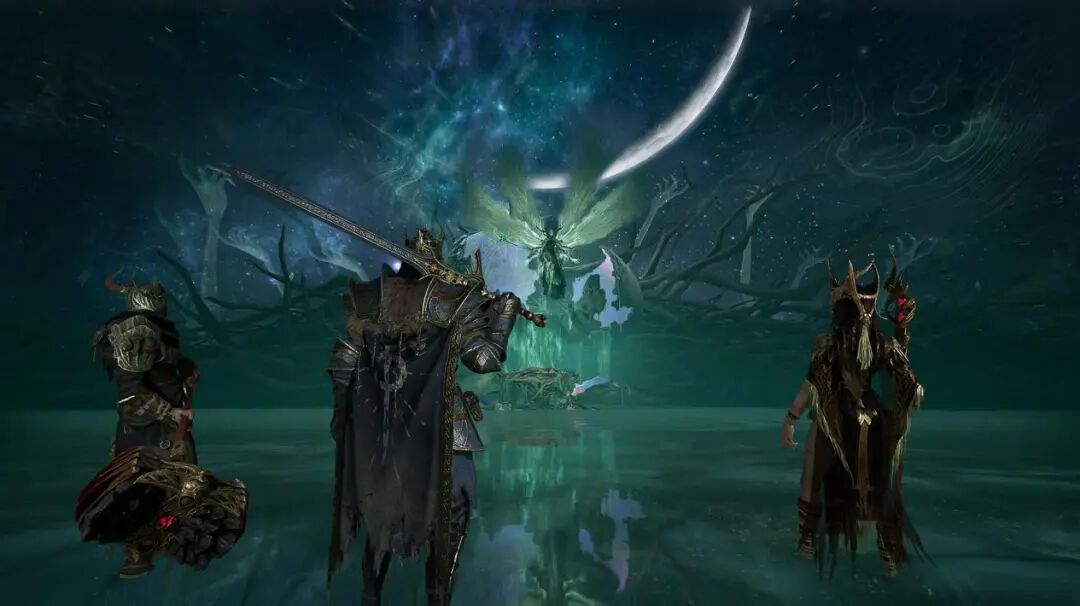
Our main goal was to test whether players would accept our core design concepts, given that there aren’t many action-based PvP games like this. At the time, players who tried it in person gave it pretty good reviews and found it enjoyable.I didn’t tell the players that this was a “search, fight, retreat” game; in fact, some players even suggested that it would be more fun if it weren’t a pure battle royale but rather a “search, fight, retreat” game with progression outside of matches.
Currently, our core team of designers, artists, and programmers consists of about 70 to 80 people, and we also have many colleagues providing back-end support, including audio, technical artists, external operations, and publishing. But the core team is indeed small—it’s always been that way.
Teahouse: Against the backdrop of Light-Year Games scaling back its operations in 2023, how did this project manage to secure approval?
HAO: This has indeed been a difficult journey. As members of the media who frequently interact with major tech companies, you should know that their decision-making logic is often very ruthless and strict. When we lobbied the company leadership at the time, we had several advantages:
First, it was quite innovative. At the time, “Escape from Tarkov” was the hottest “search-and-fight” game on the market, and while other competitors hadn’t emerged yet, we already had a vague sense that the “search-and-fight” shooter genre was heading toward a red ocean—we could already see early signs of other “search-and-fight” shooter projects in the works.On the one hand, we believed that the “search-and-eliminate” genre offered a lot of potential as a gameplay framework; on the other hand, the entire team—myself included—was more skilled at developing action games, so there was no need to go head-to-head with others in the shooter space. We knew we could create an action “search-and-eliminate” game ourselves, and since there was indeed a gap in the market, it represented a blue ocean. Therefore, this choice of market segment held significant potential, with less intense competition.
Second, our team has a track record. We’ve used the Unreal Engine before and have developed action games, so we’ve built up some experience.
Third, we adopted a strategy of small-scale validation. We didn’t start by making grand promises to our boss, saying we’d invest 1 billion yuan and build a project with annual revenue in the tens of billions.We first ran a small-scale pilot, gathered user feedback, and then approached the company to formally launch the project. Essentially, we proved and validated the idea first; since the company saw that the risks and costs were low, they gave their approval.
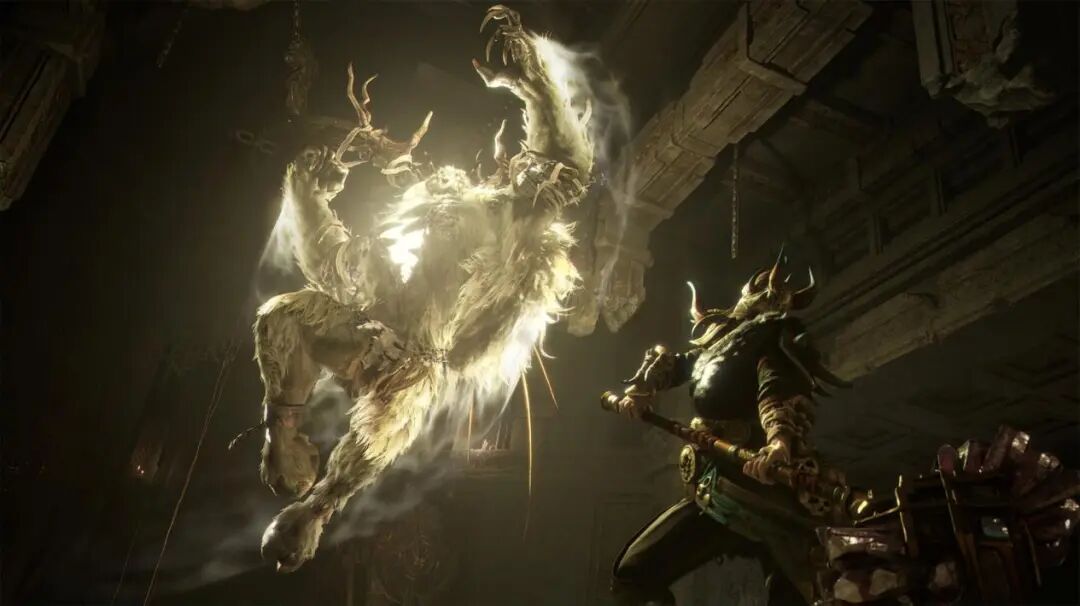
Teahouse: Were you worried at the time that the reason no one else had succeeded in this market was because it was inherently difficult—or even impossible—to succeed in?
HAO: There are definitely concerns. You can’t possibly be the smartest person in the field, and it’s impossible to discover something that only you know and no one else does. If something isn’t on the market, there’s definitely a reason for it—either no one would use it if it were created, or it’s so difficult that it’s impossible to build at all. Both are possible.
We chose action combat games partly because, although there aren’t many on the market, there are still some available. Aside from fighting games, there was *Eternal Return*, which was very well-made; *For Honor* has enjoyed a long lifespan; and *Mount & Blade* also has many players who love its melee combat.We’ve always believed that while this market isn’t particularly mature or booming, it’s not insurmountable either. Some developers have already come up with their own solutions and achieved some success, so we can build on their achievements to innovate further. This was a comprehensive assessment: we saw an opportunity, and we felt the challenge wasn’t too difficult for us to handle.
Teahouse: Why did you choose the dark fantasy genre?
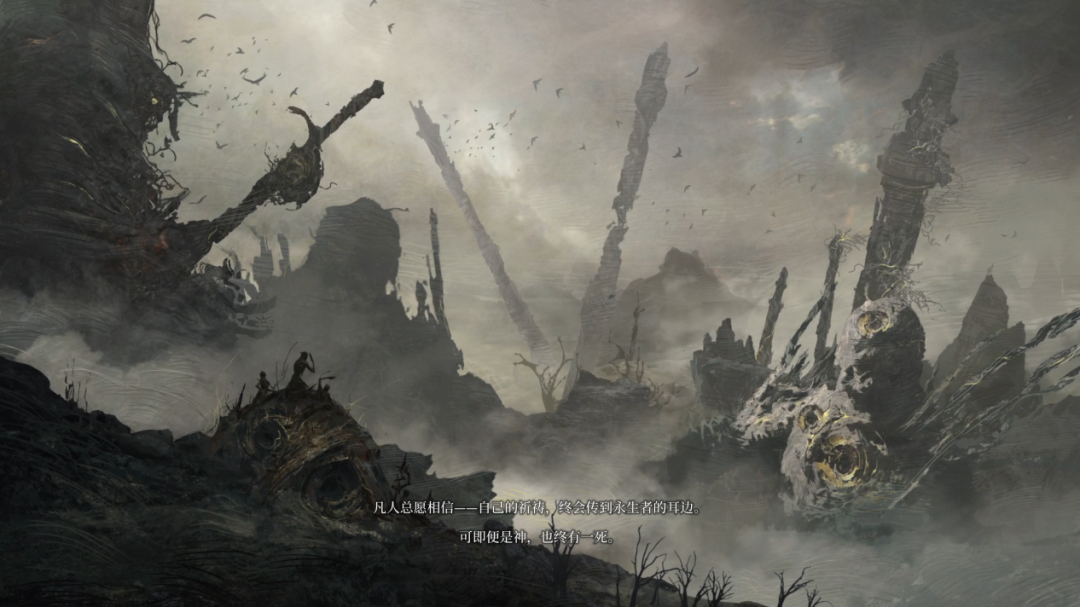
HAO: Right from the start of the project, we set a core goal: we didn’t want to make a one-on-one action game. We wanted more varied matches, with team-based multiplayer combat, because teamwork is more fun, and multiplayer tactics offer greater depth.After exploring various options, we found that Western fantasy was the genre that best suited an action game. It’s incredibly diverse—featuring both magic and swords—and can support the wide variety of combat designs we want to create.
It’s also because we play these kinds of games quite a lot ourselves. When I was in school, I was the president of the science fiction club—we did both science fiction and fantasy—and I even organized tabletop role-playing games for people at school. I’ve always been quite interested in this area and have followed it closely.
Teahouse: When making this decision, did you intentionally avoid areas where major companies might be clustering? Because after “Mistshadow Hunter” launches, a number of similar products are set to follow.
HAO: There are many reasons behind this decision, but the most fundamental one is this: our core philosophy in game development is that worrying about others doing better than you is a losing battle—there will always be teams that are more talented. You can’t get anything done if you’re constantly fretting, “What if someone else does this?”
So our overarching logic is this: Don’t overthink it at first. Start by choosing a direction where we can do our absolute best—one that allows us to leverage our capabilities and experience to 120% and ignite the team’s passion to 120%. Only when these conditions are met can our team ultimately deliver a product of the highest quality.We must ensure this first, and only then consider whether it will have a place in the market.
Of course, part of the reason was that there were no such products on the market at the time. If there had already been a leading product on the market back then, we would have hesitated, because we weren’t sure we could do better than them. But there really wasn’t one at the time.
There’s also a secondary, somewhat speculative observation: Major Western studios aren’t actually very good at making PvP games—especially those that specialize in action games. They aren’t particularly skilled at creating service-based PvP games; they’re much better at developing AAA single-player titles, an area where we definitely can’t compete with them;But when it comes to service-oriented, combat-focused, long-term games, they may not necessarily do a better job than we do.Another observation is that major domestic studios may be more inclined to choose themes with higher DAU and broader appeal, and they may not be able to delve as deeply or thoroughly into this kind of dark fantasy theme. This is the advantage of a small team—if we were a team of a thousand people, we wouldn’t be able to refine the aesthetic tone and the game’s unique character to such an extreme degree.
These two perspectives represent a niche we’ve identified: since no one else is currently active in this niche, we have a certain advantage here. But these are all secondary reasons; the main reason is that we’re truly passionate about this direction and believe we have the capability to do it well.
Teahouse: It feels like you had the right timing, location, and circumstances. Your assessment from 2023 still holds true in 2026. If you had gone with an FPS at the time, it would have been impossible to predict the market three years down the line; but with an action game, even three years later, you’d still be the first of its kind in China and able to reap the benefits of that market.
HAO: Here’s my take: The gaming industry has now reached a very mature stage and is evolving at a rapid pace. New developers and new games are getting increasingly impressive, so you can’t just launch a new project and expect it to automatically lead the industry. A few years ago, when mobile gaming was just taking off, the competition was all about who got in first—the early movers had the advantage.But now we’re in a saturated market where everyone is exceptionally skilled. At this stage, I believe the most important decision is to identify your own competitive advantage—and to deeply cultivate it. Our team is committed to a long-term approach; we’re not here for a quick win. We love making games, so we need to find a niche where we excel, continuously build on our expertise, and develop our own unique characteristics and competitive edge.
02
Find a Place to Belong
Teahouse: "Mist Hunter" is currently the top-selling game in the Chinese market and ranks third globally. Does this performance meet or exceed internal expectations? Does Zhaoxi Guangnian place greater emphasis on sales, DAU, or retention when it comes to this game?
HAO: We think it’s in line with our expectations—things are going pretty well across the board. While it hasn’t been a massive hit in the short term, as the first to take the plunge in this space, the fact that we’ve launched it and so many players enjoy it proves that innovative gameplay can hold its own.
Looking further ahead, we hope to maintain a long-term perspective. Our greatest hope for this project is that it will become a long-term endeavor.We chose the “search-strike-retreat” genre and gameplay with strong PvP elements precisely because it has the potential to become a project that can operate sustainably over the long term. We hope to carve out a niche for ourselves in the action “search-strike-retreat” genre, establish a lasting foothold, identify our core player base, and retain them over time. It’s still too early to discuss this—we’re just getting started.
From the company’s perspective, the most straightforward consideration is revenue. Sales, DAU, and retention all ultimately lead to revenue.The company’s expectation of us is to ensure the game’s sustained and stable growth over the long term—the larger the scale, the better, of course. But the first step is to establish a solid foothold and retain our core players over the long term; once we’ve done that, we’ll certainly have the opportunity to grow bigger and better.
Teahouse: As the first game to actually be released following Zhaoxi Guangnian’s restructuring, aren’t you guys nervous at all? Is the pressure getting to you?
HAO: Of course we’re nervous, but this nervousness stems less from the company and more from ourselves. This is our first time developing a game for Steam and consoles. While most of our team members have worked on PC games before, their main experience has been with mobile games.This is also our first game to launch simultaneously worldwide. We have to communicate with players from all over the globe, and even during developer livestreams, I’ve been forced to stream in English—all of which are challenges for us. We were definitely pretty nervous before launch—there were so many “firsts.” But as it stands, we’ve successfully made it through this first launch, and we’re really happy about that.
Teahouse: *Mist Shadow Hunter* is positioned as a trinity of “ARPG + explore-fight-escape + dark fantasy.” Given that there are already many competing titles in the explore-fight-escape genre, what do you consider to be your core competitive advantage?
HAO: First of all, I believe that every "search-hit-retreat" game currently on the market has its own unique features. Therefore, compared to other "search-hit-retreat" games on the market, our core experience is defined by two key dimensions.
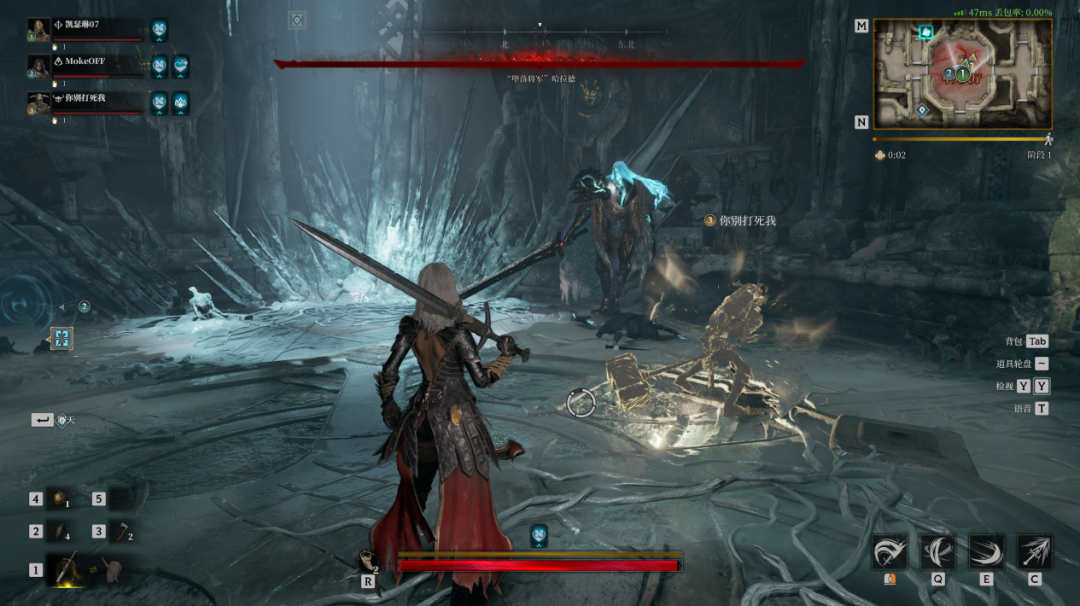
The first dimension is action gameplay in multiplayer team settings—not gun-based, but focused on melee combat, skill-based tactics, and teamwork.Our Time-to-Kill (TTK) is much longer than in shooter games, which allows for richer strategic interactions and teamwork between squads. On the surface, players do similar things—searching areas and then retreating—but the in-game thinking, decision-making, and overall experience are very different from those in shooter games.We have many players who’ve previously tried the “search, fight, and retreat” gameplay in shooters but didn’t particularly enjoy them, so they assumed they didn’t like that genre. After playing our game, however, they’ve come to find this genre quite interesting. That’s the result of a unique experience.
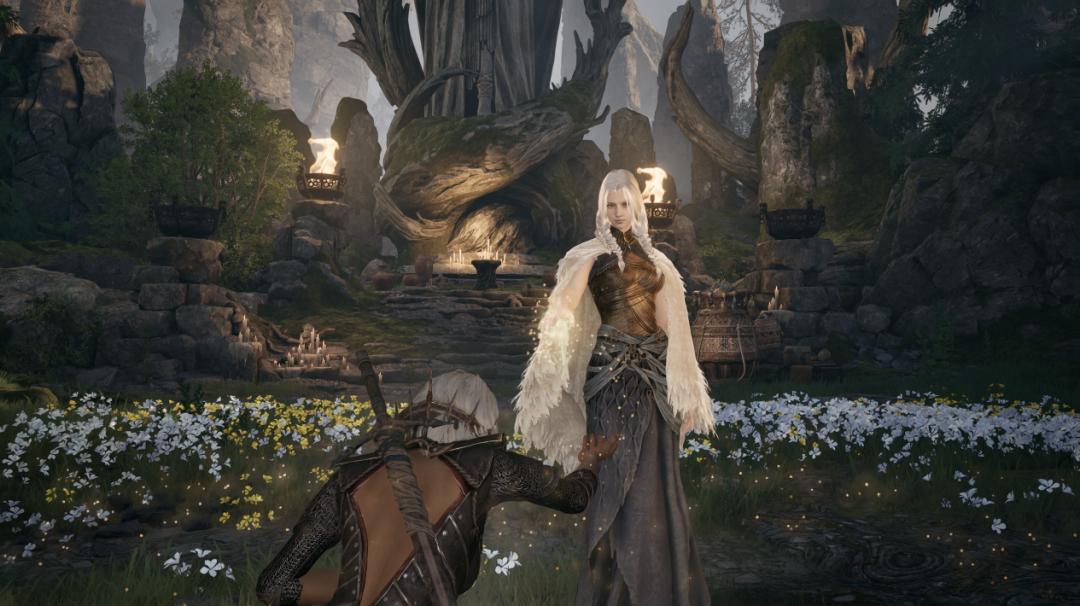
The second dimension is the dark fantasy theme and the RPG experience.Many MOBA games focus on hero selection, much like competitive games, where you choose a different hero for each match. But we want to create a stronger RPG experience: you choose what kind of role to play in this world, customize your character, and, by learning about the world’s story and background, become more immersed in this universe with every playthrough.
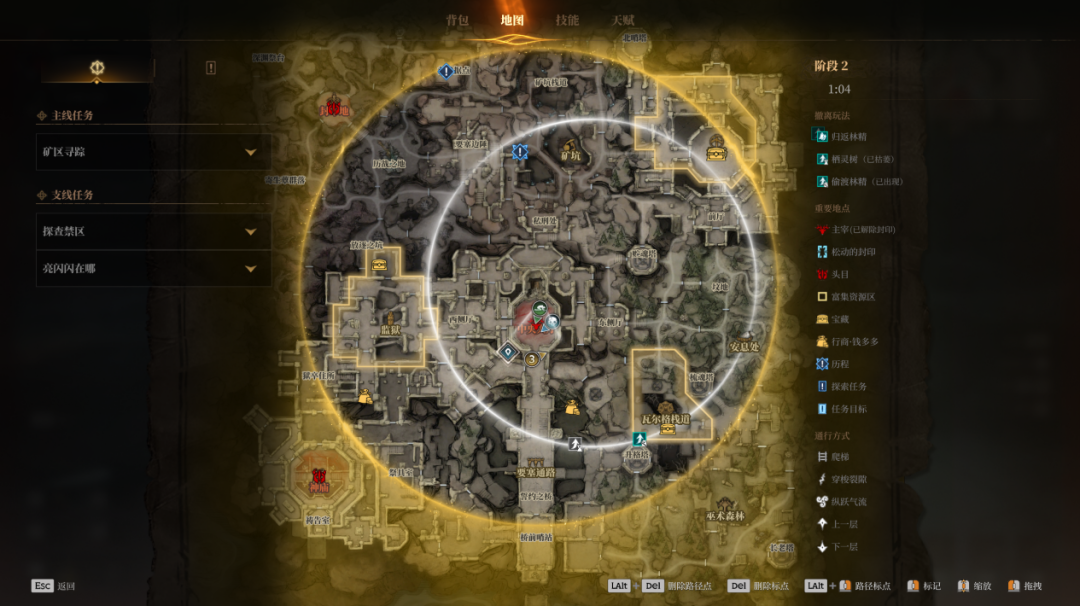
So, whether in terms of art or theme, we’ve put a lot of effort into creating iconic buildings and designs on the map, and we’ve experimented with fragmented storytelling. In future seasonal updates, each season will also feature a strong narrative-driven theme, all with the goal of providing players with an RPG-style experience.We don’t want players to feel like they’re just fighting in the game; instead, we want them to truly immerse themselves in the post-apocalyptic world and take on the role of a hero striving to save the world.
Teahouse: In this process of differentiation, what do you think has been the most challenging?
HAO: The hardest part of creating this content is integration. Making a game isn’t like putting two puzzle pieces together—you can’t create something new by simply combining two old elements. This is especially true for “Search, Attack, Retreat”; the entire experience is incredibly intricate and interlocking. If any one link breaks, the overall flow of the game becomes very disjointed.Combat, level mechanics, the equipment system—every single element is tightly coupled. You might think one thing is good and another is good, but when you put them together, they just don’t fit. This is an issue we’ve continually encountered throughout the development process. Simply put, the various challenges we face stem from the need for gameplay innovation.We often opt for an approach of blending gameplay elements, but figuring out how to organically integrate them once combined requires us to devise many solutions on our own.
Teahouse: *Mist Shadow Hunter* uses a one-time purchase model, but many mobile games these days are free-to-play with in-app purchases. Why did you choose to stick with the one-time purchase model? Was there any internal debate about whether to go with a paid or free model?
HAO: There’s definitely some internal debate. When domestic game developers create games, their first instinct is to make them free-to-play, but we’ve chosen a one-time purchase model based on several factors.
First, we believe our game is driven by gameplay, not monetization. No matter how it turns out, we will not include any monetization features that allow players to purchase in-game advantages. The foundation of the game is fair play, and all in-game purchases will be limited to cosmetic items that serve purely as status symbols. With this as our guiding principle, the most important thing is to get the gameplay right first—only then can the game stand on its own.
Second, our team size has always been relatively small—growing gradually from just over 20 people to the current 70 to 80—and this has consistently been a slow process. As a project focused on innovative gameplay with a long-term operational goal, we must concentrate our efforts on making the gameplay as good as possible first. Therefore, one of the main reasons we chose the buyout model is to stay focused—focused on getting the gameplay right.
Here’s something that might seem counterintuitive: the development costs for free-to-play games are often higher because they require more design work tailored to free users and a broad user base. In fact, just to keep the team afloat, developers often have to incorporate a significant amount of monetization design, which ultimately leads to higher development costs and longer development cycles.However, we favor projects that prioritize gameplay innovation. We want to get the core gameplay right first and, after validating it in the market, gradually add peripheral features. Therefore, under this approach, a one-time purchase model is more suitable.
Moreover, if your gameplay is engaging enough, users who appreciate it won’t mind the learning curve. There are plenty of long-term games on Steam that combine a one-time purchase with in-game purchases—this is by no means uncommon.This allows us to focus our energy on game design without having to spend too much time figuring out monetization strategies—we can even skip large-scale monetization testing for now.
03
Keep players engaged first
Teahouse: One of the standout features of *Shadow Hunter* is its wide range of character classes and peripheral progression systems. How were these initially planned?
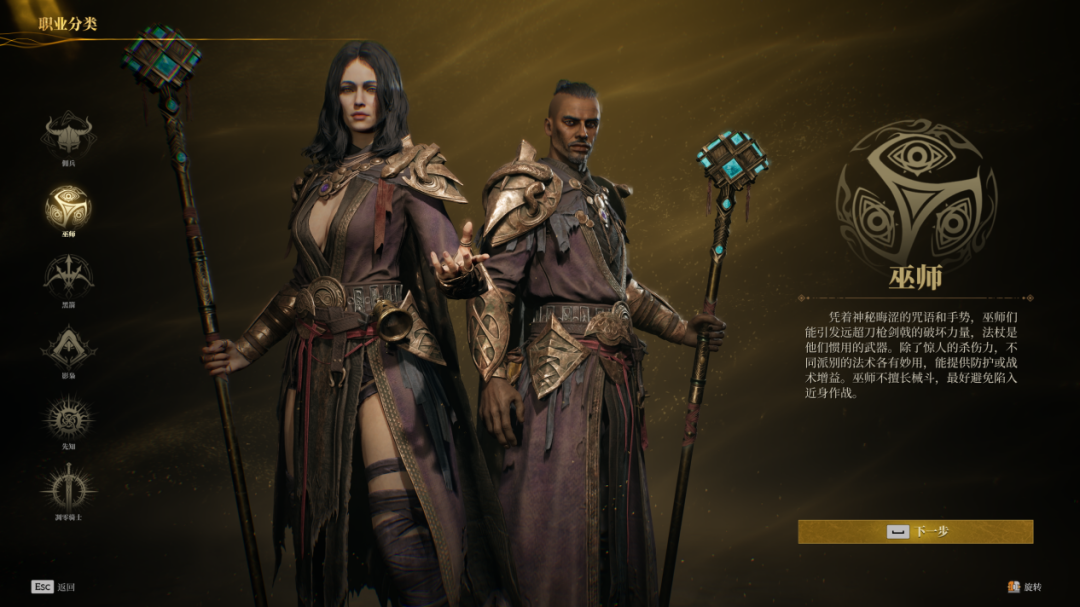
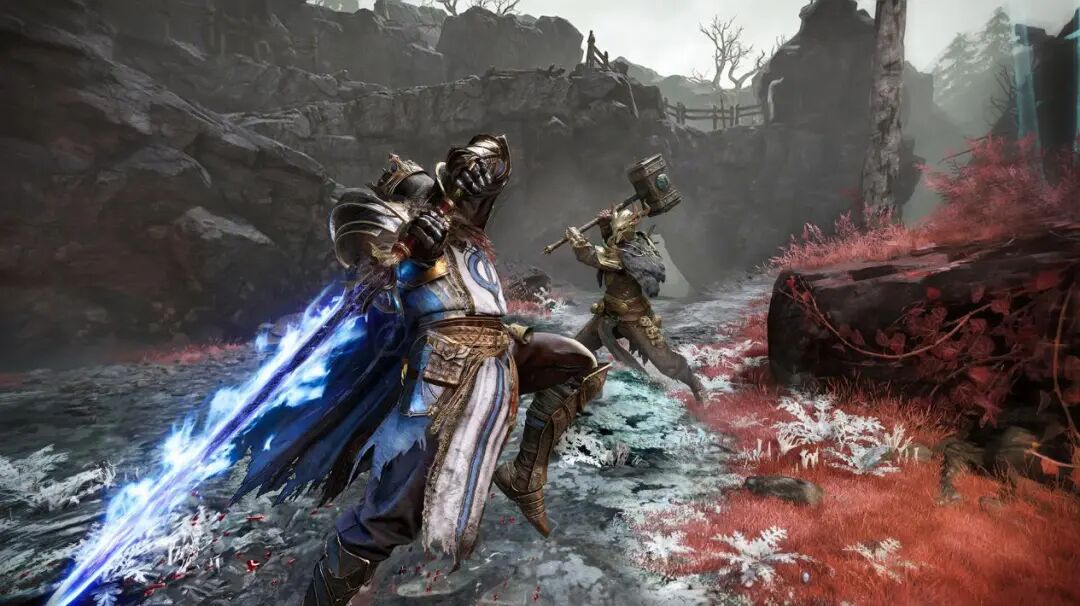
HAO: When designing multiple classes, we have one overarching principle: diversity. We want each class to offer as many playstyles as possible, so we’ve created multiple weapon types and skill builds for each one. For example, the Prophet class has two roles: one is melee-focused, and the other is support-oriented.This ties into the RPG experience we want to create—you choose a class and have the freedom to build it however you like. So, on one hand, we want each class to have very distinct characteristics, whether in terms of gameplay mechanics or action design; on the other hand, we want each class to offer a wide variety of playstyles, rather than having a Mercenary, for instance, be limited to fighting on the front lines.
Players who use "search, attack, and retreat" strategies don’t rely on a single approach; sometimes they want to launch a fierce assault, and other times they want to slip past enemies. We strive to ensure that every class has a variety of options. This diversity also leads to more versatile team compositions.
Teahouse: Soda Che players usually don't care much about the storyline. Why do you place such a heavy emphasis on it?
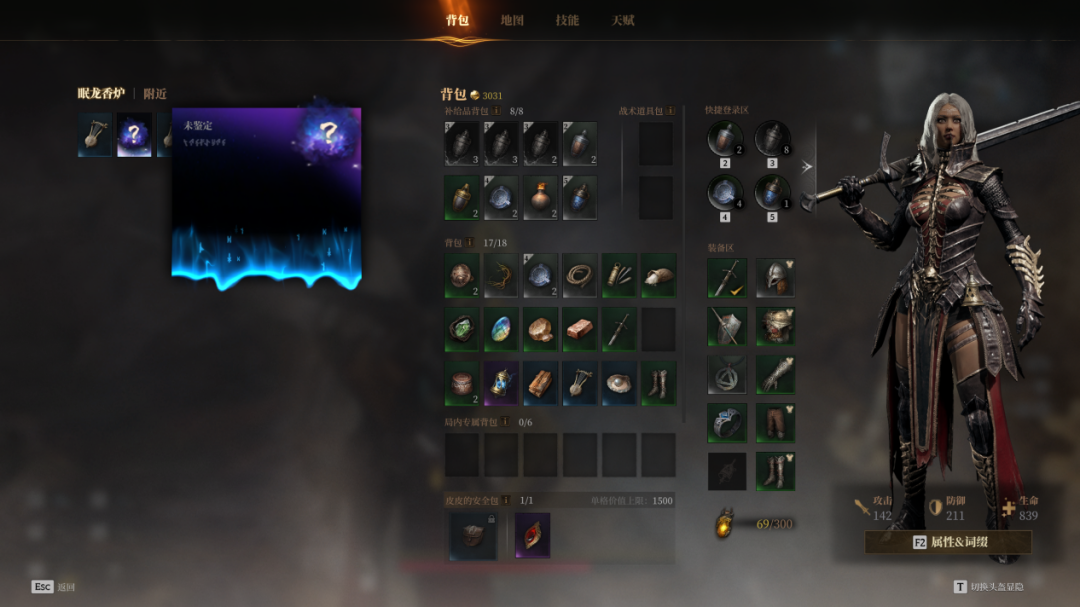
HAO: On the one hand, as I mentioned earlier, we want players to have a strong sense of being in an RPG.It’s not about “playing a couple of matches today just for the thrill of battle and logging off when you’re tired”—it’s about feeling like there’s a real version of yourself in this world, someone who really wants to come back and check it out. Even if you don’t start a match when you log in, just strolling around the camp and hanging out with NPCs gives you a sense of belonging.So, unlike many common search-and-fight-and-retreat games that only have a lobby, we’ve specifically created a 3D main city camp where players can freely wander around and even discover some hidden Easter eggs—all to give you that “coming home” feeling.The “Search, Fight, Retreat” levels are high-pressure and exhausting, so every time you evacuate, it feels like coming home—where so many friends are waiting for you. We’ve also designed quests and stories for each NPC, so over time, players will develop emotional bonds with them.
On the other hand, I personally enjoy fantasy literature and films, so I’d like to see more storytelling in the game. In many of our designs, we’ve adopted an approach similar to the “iceberg principle”: when you encounter a small quest or read the description for a skill or weapon, it might hint at a little story—and behind the scenes, we’ve actually crafted a very comprehensive narrative framework and character structure.Eager players can piece together much of the truth behind the story on their own. Both myself and some of our writers have thoroughly enjoyed this creative process, and some players have picked up on it—they feel it’s worth exploring.
Teahouse: Could you share a small example related to the plot?
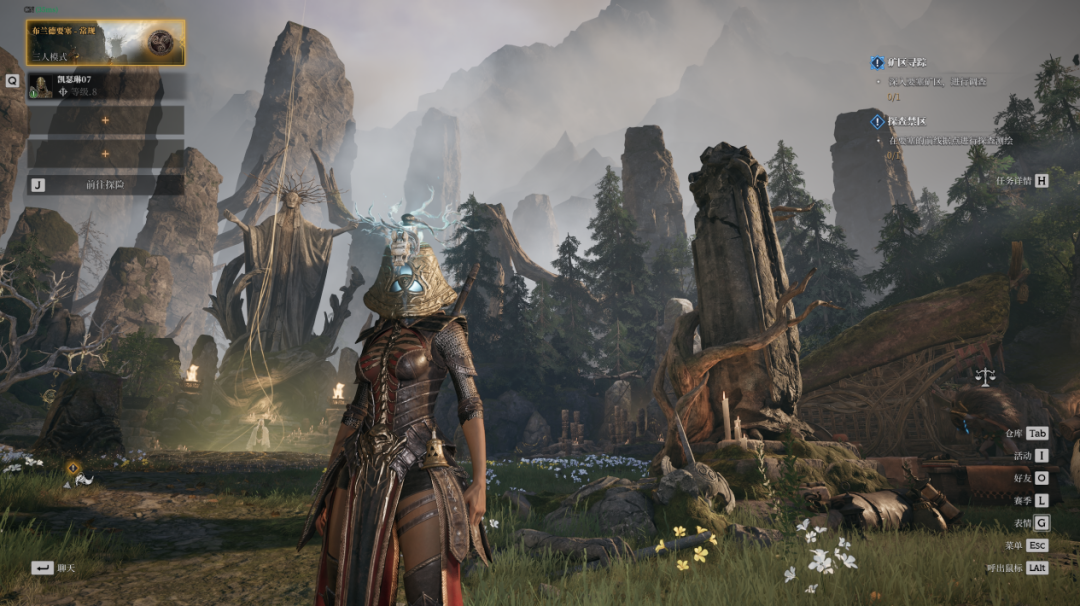
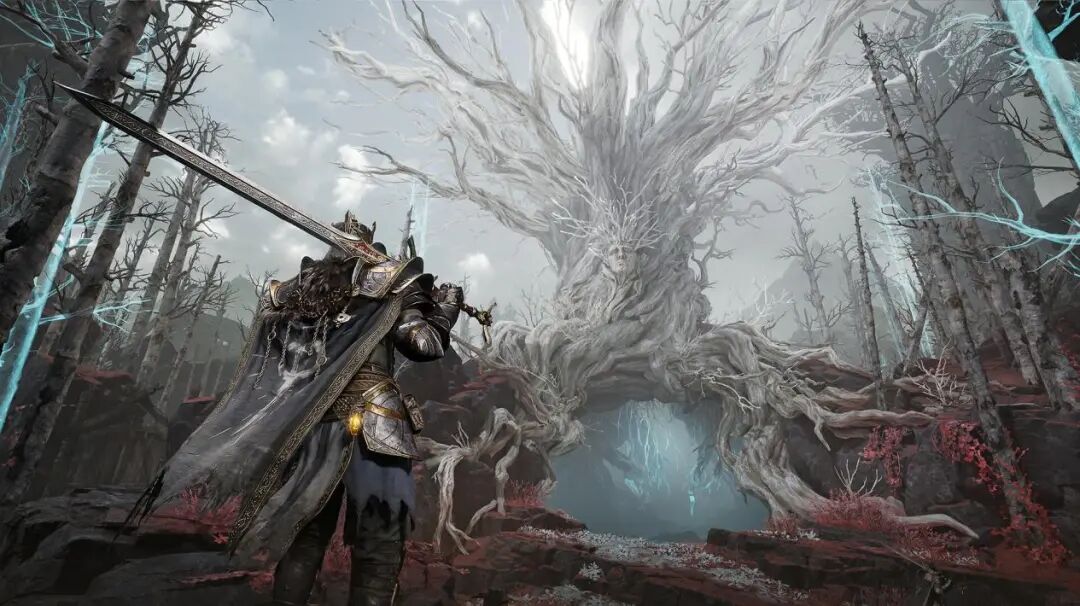
HAO: Here’s a hidden example: There are two statues at the entrance to the main city camp—one intact and one broken.If you find a way to jump onto the top of the intact statue and then turn around to bow toward the goddess statue behind it, you’ll trigger a hidden quest that tells you a story about the forest spirits and the World Tree. Many players have already discovered this.
Teahouse: PVE mode is still in the planning stages. What are the specific plans? Would a purely PVE experience dilute the tension and sense of accomplishment in PvP combat?
HAO: PVE is indeed in the works, but it’s still in the early stages, so we can’t share any specific details about the gameplay just yet. What we can confirm is that we won’t let the PVE mode interfere with the main PvP gameplay.These two modes offer distinct experiences, and we don’t want them to blend or interfere with one another, forcing players to engage in both modes. We intend to keep the PVE mode more focused and dedicated to meeting the needs of players who prefer that experience.
To be honest, many of our team members also enjoy PVE. But due to time constraints, this isn’t our top priority.As we continue to develop the game, we’ll definitely explore this area—I believe our game is well-suited for PVE, both in terms of gameplay and world-building. Of course, it won’t be worth developing until we have more PVE-related content. If we were to implement it now with only a small number of monsters and maps, players’ playtime would be very short.
Teahouse: After the game launched, peak concurrent users exceeded 44,000—and that number rose steadily from just over 10,000 to just over 20,000. What do you think was the main reason for this? Currently, reviews are mixed. How do you view the negative reviews? Where exactly do you think the problems lie?
HAO: On the bright side, more users are really getting into the game. One thing about our game is that many users play while complaining. Their complaints definitely stem from aspects of the experience that aren’t satisfying, and we acknowledge that much of the criticism is valid and makes perfect sense. So why do they keep playing even while complaining? Because the core gameplay is fun and unique enough.Some players might say, “This is so frustrating—I’m done with this game,” but a couple of days later, they realize that no other game offers a similar experience—only this one does. So they might come back, keep complaining, and keep playing.
We will definitely respond very proactively to all player issues, including bugs, lag, crashes, and sudden exits.Our team isn’t particularly large, and this is our first time developing for PC and consoles—not to mention a simultaneous global release across all platforms. The complexity has far exceeded our expectations, and many issues stemming from our initial underestimation of the scope have surfaced since launch. All we can do now is resolve them as quickly as possible.
The issues currently reported by users mainly center on latency, server lag, and low frame rates. In particular, overseas players have noted that server deployment density is insufficient, leading to excessively high latency in some regions. These are the primary reasons for negative reviews.Multiplayer online games present extremely high levels of complexity and challenges; if the design isn’t rigorous enough, it’s impossible to deliver a satisfying experience to players. We will continue to work hard on this going forward.
Fortunately, we believe that most players appreciate the core gameplay. Although the players who have stayed are complaining about these issues, their reviews of the core gameplay and core experience remain positive. We are currently working hard to address and resolve these issues. It’s been less than a week since launch, and we’ve been working nonstop all weekend to tackle and fix them one by one. As a domestic team, we’re working just as hard as anyone else.
04
"After 'The Little Horse Crosses the River'"
Teahouse: With “Mist Shadow Hunter” opting for a global release this time, the company is continuing the global expansion strategy that Zhaoxi Guangnian has pursued in the past. From a practical standpoint, what is the biggest challenge of a global release?
HAO: The biggest challenge was that we were doing a lot of things for the first time: our first time releasing a full-price game, our first time launching a full-price title on Steam, our first time launching simultaneously in all regions worldwide, our first time launching simultaneously on PlayStation and Xbox platforms, and we also launched on Xbox Game Pass. The complexity of all this exceeded our expectations—each task might not have been that difficult on its own, but when combined, they became incredibly complex.We faced significant challenges in both game development and operations—for example, finalizing builds, pushing updates, and conducting QA testing—all while dealing with the issues I just mentioned.
The second challenge is that global distribution means players in different regions have different needs and face their own unique issues. We need to seize this opportunity to deepen our understanding of players in different regions and address their pain points in a more customized and targeted manner for each region. In practice, the differences between regions are quite noticeable, which also poses a challenge for us.
Teahouse: What percentage of players are currently from overseas? What is your perspective on the overseas market?
HAO: When we first launched this project, one of our main goals in choosing this theme and gameplay was to create a global product—we hoped this project would help us hone our capabilities in the R&D, operations, and publishing of global products.That was our goal at the project’s inception, and to some extent, it was also the vision we presented to our executives—as competition in the gaming industry grows increasingly fierce, developing global products is the only way forward.
Currently, overseas players make up the majority of our user base (across all platforms). On one hand, we conducted extensive research on overseas markets while developing the product; on the other hand, we’ve been very proactive in collaborating with players worldwide. Within our community—including through offline meetups we’ve held in the U.S.—we’ve listened to player feedback, which has been incredibly helpful for the product.We also have many very loyal players on Discord who consistently provide feedback and suggestions. They’ve been with us from the project’s inception to the present, which we find truly touching. Overall, the current situation overseas is in line with our expectations, and the project’s goal from a global distribution perspective has, at least for now, been achieved.
Teahouse: In a previous interview, you mentioned that your team was in a “Little Horse Crossing the River” situation. Now that the game has been released, do you have any new insights?
HAO: “The Little Horse Crosses the River” is definitely still in progress. We’ve launched the platform now, so in a sense, we’ve crossed the first river, but there are still many more rivers ahead of us that we need to cross.Our understanding of “The Little Horse Crossing the River” has become much clearer: In the fable, the river is neither as impossible to cross as the squirrel claimed, nor as easy as the old ox suggested; the little horse itself overcame great hardships and struggled its way ashore.The process of working on our project is the same. Although we’ve conducted all kinds of research and kept trying, there are many problems that we can only figure out how to solve by wading through them ourselves—and there are many lessons we simply have to learn the hard way.
So my current take is this: when working on a project, you need to have a clear understanding of yourself and be able to assess the river ahead—it may not be as difficult as you think, but it certainly won’t be as easy as you imagine.There’s bound to be all sorts of obstacles in the river, so we still need to proceed cautiously, feeling our way from stone to stone. We must neither be overly ambitious and assume “we’ll definitely make it,” nor give up by thinking “this path is too difficult; we can’t do it.” This is what we’ve learned so far.Of course, there are still many rivers ahead of us, all of which we’ll be crossing for the first time. But with the experience of our launch under our belt, we’re more confident about our future operations and the rivers that lie ahead. After crossing the river, Little Horse has grown up a bit, becoming a slightly bigger horse, confident enough to tackle even more challenging rivers.
Teahouse: With so many search, display, and retargeting platforms now on the market, what are your thoughts on the current search, display, and retargeting landscape?
HAO: Regarding the “Search, Fight, Retreat” market: First of all, I’ve always believed that “Search, Fight, Retreat” isn’t a particularly narrow label. It’s like “Roguelike”—there are all kinds of Roguelike games out there now. It’s an element, not a fixed gameplay genre. It has enormous potential to become an organic element that can be integrated into a wide variety of game designs.I believe its scope is even broader than that of “Battle Royale,” because the Battle Royale model is essentially a strong PvP-focused model, whereas “Search, Fight, and Retreat” includes both PvP and PvE, offering immense possibilities—it can be designed as purely PvP or purely PvE.So even though the “Search, Fight, Retreat” market is currently thriving with a wide variety of titles, I still believe there’s plenty of room left to innovate—the possibilities remain vast. We can be bolder in broadening our thinking and create some truly interesting new experiences within this mode and loop.
I actually don’t really agree with a certain line of thinking—where people immediately label a game as “just another search-hit-retreat” the moment they see it, assuming it must be bad. Of course, some games may be made purely to ride the wave of popularity, and we certainly don’t like those either; but that doesn’t mean all new products developed along the “search-hit-retreat” model offer a homogeneous experience.On the contrary, several successful “search-attack-retreat” games released in recent years have all offered distinct experiences; no single game’s experience can be substituted for another’s. This is also why I believe this genre still holds a great deal of potential for the future.
Teahouse: What other updates and plans are in store?
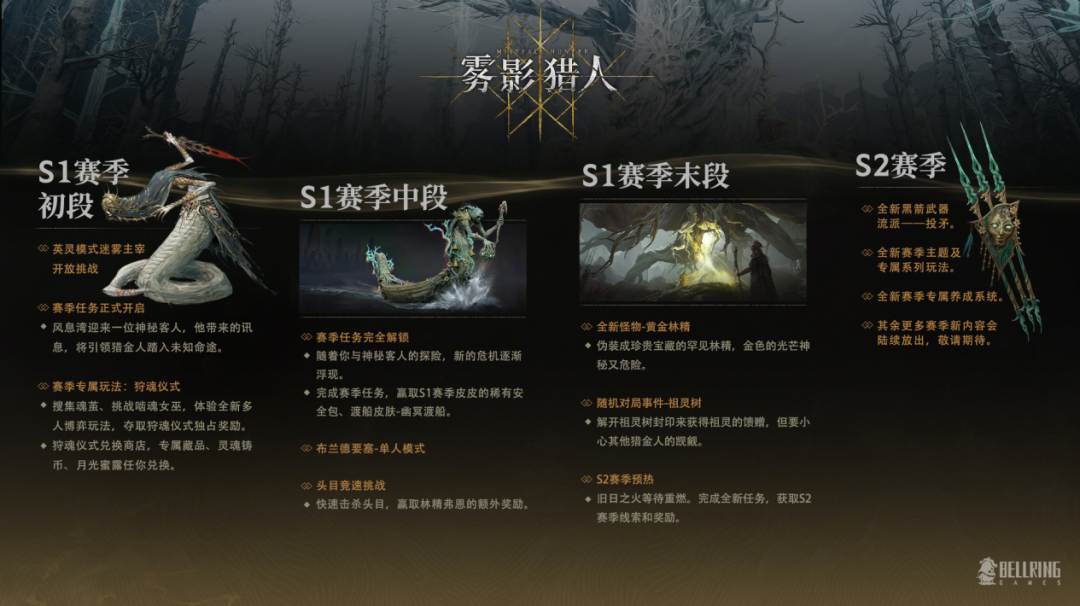
HAO: We have already released the update roadmap for upcoming seasons. We plan to update content on a seasonal basis, with each season lasting approximately three months. Every season will feature new content related to combat classes, new level gameplay mechanics, and new character progression systems. Additionally, each season will have its own unique story theme, along with related storylines, quests, and challenges.We’ll also experiment with some season-exclusive, more engaging exploration features—for example, certain mechanics will be available only during that season and will be removed once the season ends, to be replaced by new mechanics in the next season. We plan to make bold and exciting experiments in some of the upcoming seasons.
Teahouse: Do you see *Mistshadow Hunter*’s positioning in this market as a starting point?
HAO: It’s hard to say. I wouldn’t go so far as to say we’ve started a trend—we’re not quite there yet—but we were definitely the first to take the plunge. While we were working on this project, there were actually a lot of people saying, “Motion-based search and recognition is a dead end; there’s no future in this field.”At the very least, the fact that we’ve now brought this product to market proves, to some extent, that they were wrong—there’s definitely a market here. One role we can play is to show everyone that this is a viable direction to pursue.
We’ve put in some effort and explored new avenues in this field, and we hope to inspire other developers in the industry. I believe this is also a major value of our game—we’ve taken a small step forward on this path ourselves, and we hope this small step will spark more ideas and inspiration for everyone.There are so many incredibly talented developers in this industry, and I’m sure they’ll draw inspiration from us to create even more and better products in the future. From that perspective, we’d be very happy, because when it comes to making games, we’re always hoping to create something better and more innovative. Of course, given the current market conditions, we don’t have the bandwidth to overthink things right now—the most important thing is to do our best first.
原创文章,作者:游茶妹儿,禁止转载:https://youxichaguan.com/en/archives/208826