In 2025, the “Search, Attack, Retreat” gameplay took the global gaming market by storm, becoming the hottest trend in the industry.
Leading giants such as Tencent, NetEase, and ByteDance have thrown significant resources into the market, with flagship titles like *Operation Delta*, *Dark Zone Breakthrough*, and *Firefly Assault* continuously breaking records and reporting success after success; the indie game sector has also seen dark horses like *Escape from Yakov*, which has broken through strongly thanks to its unique design;even titles in other genres, such as *Naraka: Bladepoint* and *Unlocker*, have introduced new gameplay mechanics to capitalize on this market opportunity. Overnight, virtually everyone—from major studios to small and medium-sized teams—has begun staking their claim, giving rise to the saying that “everything can be turned into a ‘search-fight-retreat’ game.”
With such a hot trend, mini-game developers certainly wouldn’t want to miss out. According to reports, as the “Search, Tap, and Escape” craze took off, many mini-game developers began working feverishly on launching and testing related projects.Recently, Teahouse has observed that a number of standout “Search, Tap, and Escape” mini-games have emerged at the top of the charts on platforms like WeChat and Douyin. Among them, *Hook Escape: Giant Crisis*, published by Shenzhen Tianshan Lisi Technology, successfully claimed the top spot on WeChat’s Popularity Chart and ranked in the top 22 on the Fun Play Chart.while *Virus Battle Royale*, developed by Hunan Atomic Force Network, has also broken into the top 20 on Douyin’s Top-Selling Chart.


With more and more hit games emerging, are mini-games finally entering the "search, play, and quit" era?
01
"Fix Hook: Escape from the Giant Crisis": A Game Built on Memes
Compared to mobile game users, mini-game players tend to have shorter attention spans and play in more fragmented sessions. With this in mind, many games entering the mini-game market tend to evolve toward a more streamlined and eye-catching style, and “Search, Hit, Retreat” is no exception. The two “Search, Hit, Retreat” mini-games that have already been released exemplify this approach perfectly.
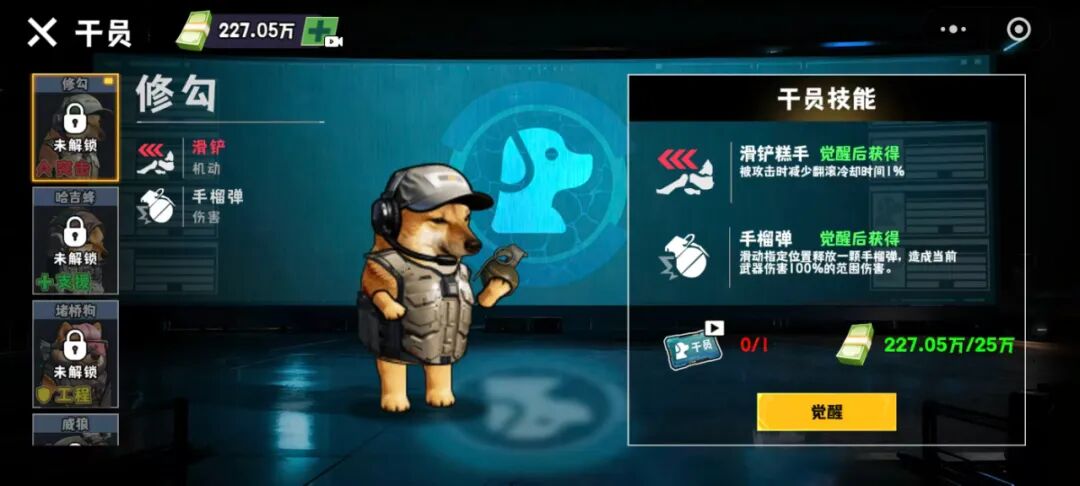
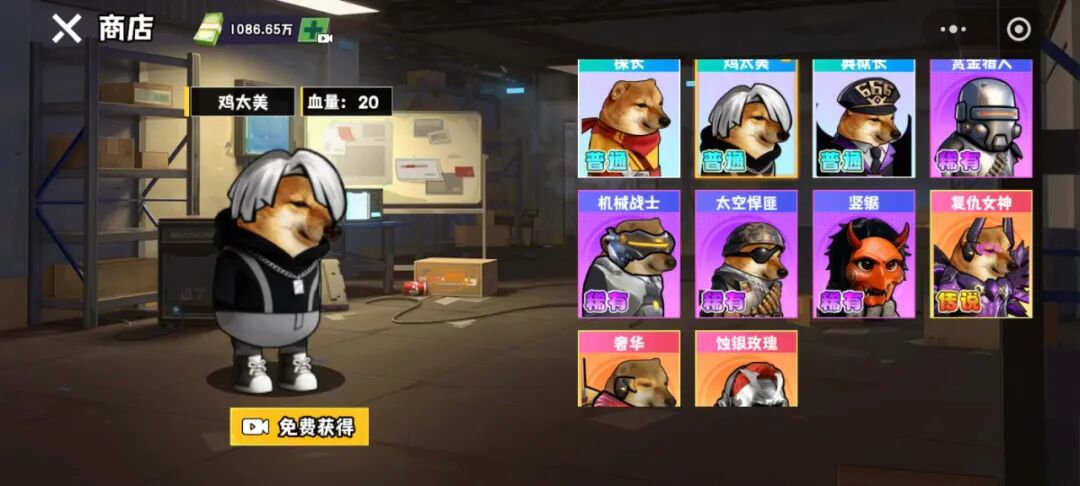
The visual design of *Repair Hook: Escape from the Giant Crisis* is somewhat rough, but the internet memes woven throughout the game make it uniquely memorable.
The game’s protagonist is the dog character well-known to netizens, and the unlockable operator characters are named “Xiu Gou” and “Haki Bee.” The in-game store also sells the classic “Ji Tai Mei” skin.Even once you’re in the game, players are constantly bombarded with inside jokes. When you loot worthless items, the system pops up a sarcastic prompt saying, “Crash,I’m really crashing” appears. When you finally find a high-value item, the infectious “Golden Legend” sound effect blasts in your ears. Combined with the ubiquitous cat-head emojis, it gives players the feeling of being completely surrounded by internet memes.
While this simple, no-nonsense packaging may lack some texture and refinement, the high-density, down-to-earth content resonates deeply with users in lower-tier markets—who have long been immersed in the internet—and actually conveys an instantly relatable, familiar feel.This unique, approachable quality not only lowers the cognitive barrier for users but also provides natural talking points for virality, making it easier for the game to generate a ripple effect in the traffic landscape.
In terms of gameplay, the game also takes a minimalist approach, focusing on the core mechanics of “shooting + treasure hunting” within the “search, fight, and retreat” genre, with simple rules and clear objectives.
Once in the game, players must search the map for various supplies, each with different weights and values. Since the backpack has a limited carrying capacity, players must weigh their options and ultimately select the best supplies within their weight limit before successfully evacuating to the safe zone.It’s important to note that there are patrolling guards on the map; if a player fails to evacuate, their backpack and all equipment and supplies they’re carrying will be completely wiped out, greatly heightening the game’s tension and strategic depth.
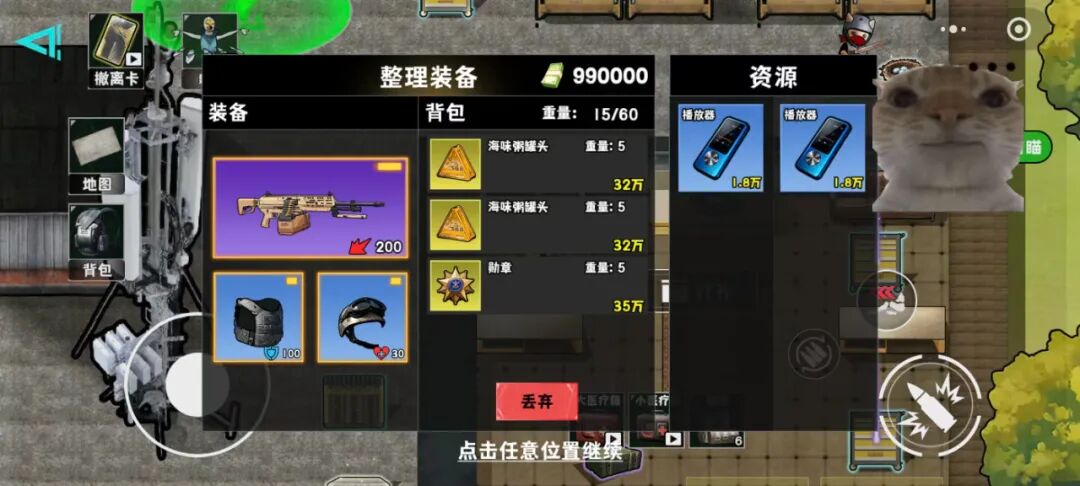
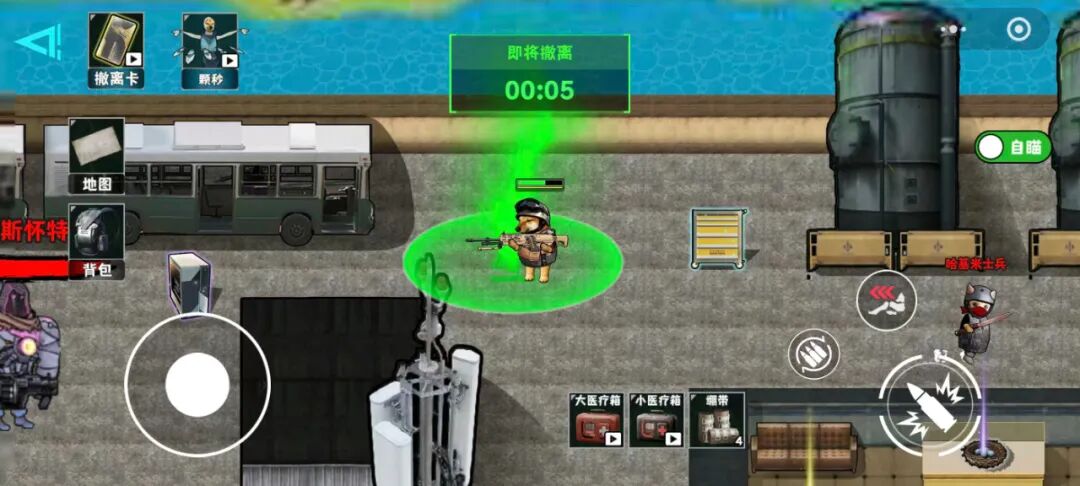
After a successful evacuation, players can sell the loot they’ve gathered to earn currency, which can be used to purchase more powerful weapons, armor, and other gear, continuously improving their offensive and defensive capabilities to prepare for future matches.In addition, each map features a boss; only by defeating the boss can players unlock the next map. Map difficulty progressively increases from Beginner, Normal, Hard, and Very Hard to Hell, with higher difficulty levels corresponding to higher loot drop rates.
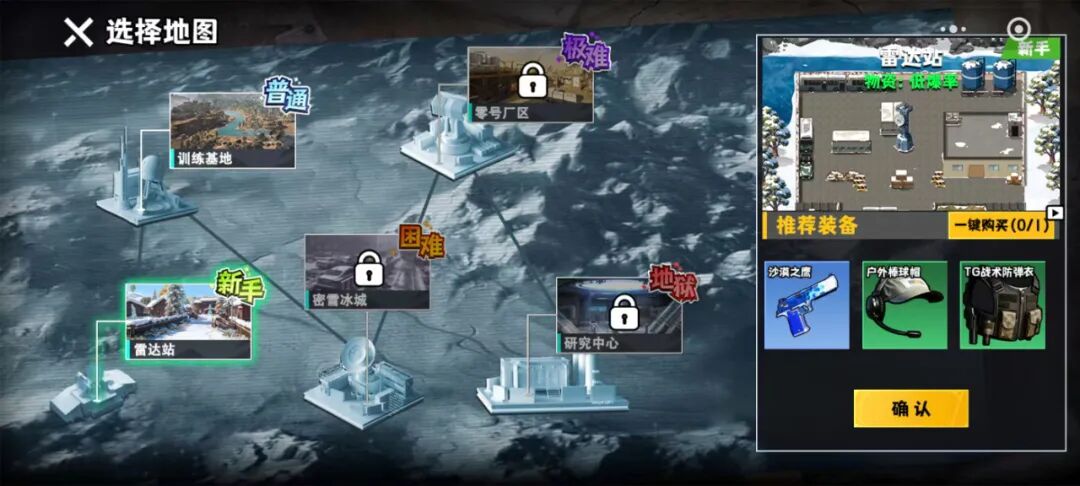
Overall, the game does not feature any separate progression systems outside of gameplay; the entire gameplay loop revolves around the cycle of acquiring supplies, selling them for profit, purchasing gear, and continuing to acquire even better supplies. The game is primarily designed around the “high-risk, high-reward” principle, which drives players to continually take on more challenging tasks in order to earn greater rewards.
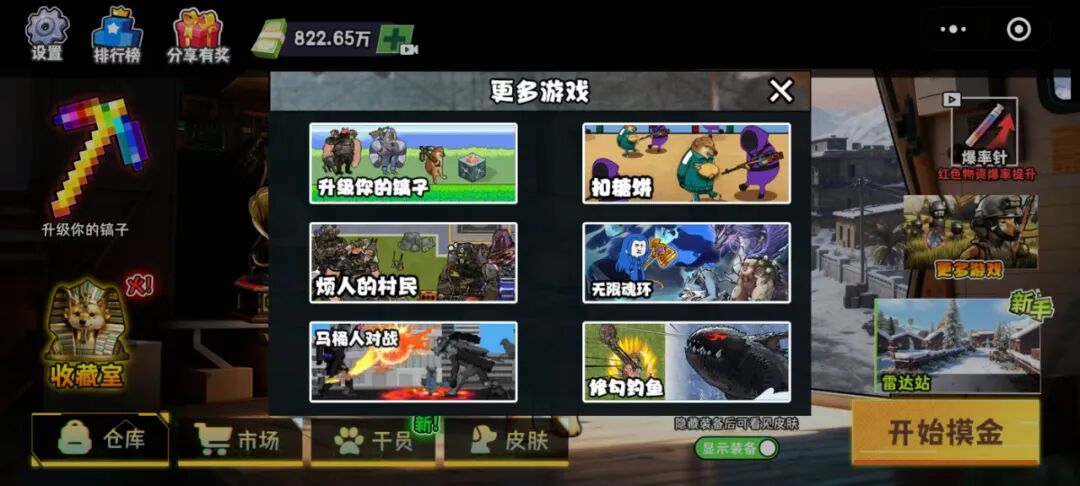
As for side content, the game also takes the most straightforward approach to enhance its variety: in addition to the main treasure-hunting storyline, it introduces a variety of different gameplay modes, such as “Upgrade Your Pickaxe,” the puzzle game “Pick the Candy Cookie,” the PvP mode “Annoying Villagers,” and “Fishing with a Hook.”
Despite its simple gameplay, this product achieved solid monetization results by integrating rewarded ads at key points—such as reviving or retreating immediately, obtaining advanced weapons, unlocking skills for different new operatives, and unlocking new skins (which provide health bonuses).
02
"Virus Battle Royale": A "Model" for Low-Intensity Horror, Search, Combat, and Retreat
If *Escape from the Giant Crisis* simply condenses the “search, fight, and retreat” mechanics of an FPS into a mini-game format, then *Virus Battle Royale* is a game that blends roguelike, shooting, and puzzle-solving elements, incorporating “search, fight, and retreat” mechanics into a standard mini-game structure.
First, in terms of art style and theme, the game has opted for the “mild horror” genre, which is particularly popular in the casual gaming market. The dark art style, eerie music, and spooky settings—such as old mansions deep in the mountains, silent hospitals, and dilapidated schools—combined with ghosts relentlessly chasing players from behind, all contribute to the game’s tense atmosphere.
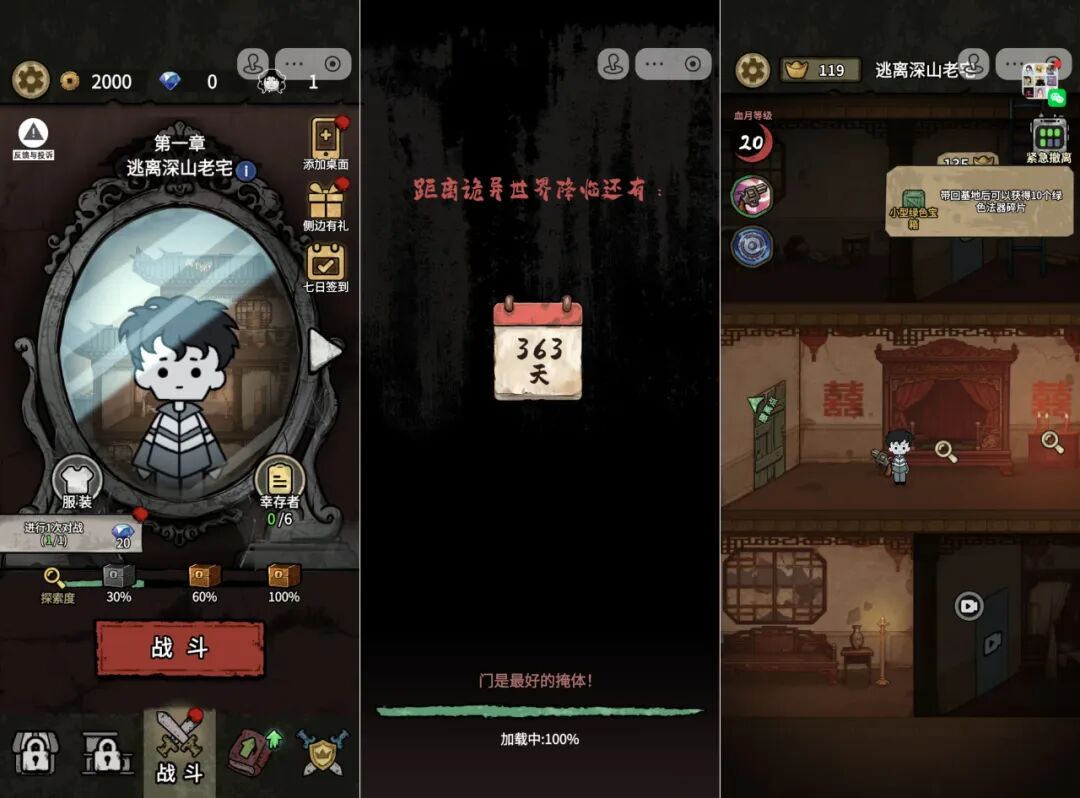
In terms of gameplay, the game’s main story follows a level-based structure, with each level featuring a new scene with a complex layout. Players must explore these scenes, search for various supplies, and rescue survivors; ultimately, they must successfully evacuate to complete the level.
Unlike typical "search, fight, and escape" games, this game offers an exceptionally wide variety of items to discover. In addition to treasure chests and artifacts that can be converted into resources for character growth, you’ll also find health potions, ingots, and skill orbs.The purpose of health pills goes without saying—when a character’s health is critically low, finding just one can turn the tide of a desperate situation. Like health pills, ingots can also be used directly within levels and serve as the key to unlocking certain paths.
Skill Orbs, on the other hand, will directly trigger the familiar "Roguelike" options, where players can choose to learn a new skill or enhance their character’s skill attributes to boost their attack and defense stats.This also means that in the later stages of the game, characters with fully built skill sets will see a significant boost in stats. Spectacular skills and impressive damage output will provide players with the exhilarating sensation of “mowing down” enemies.
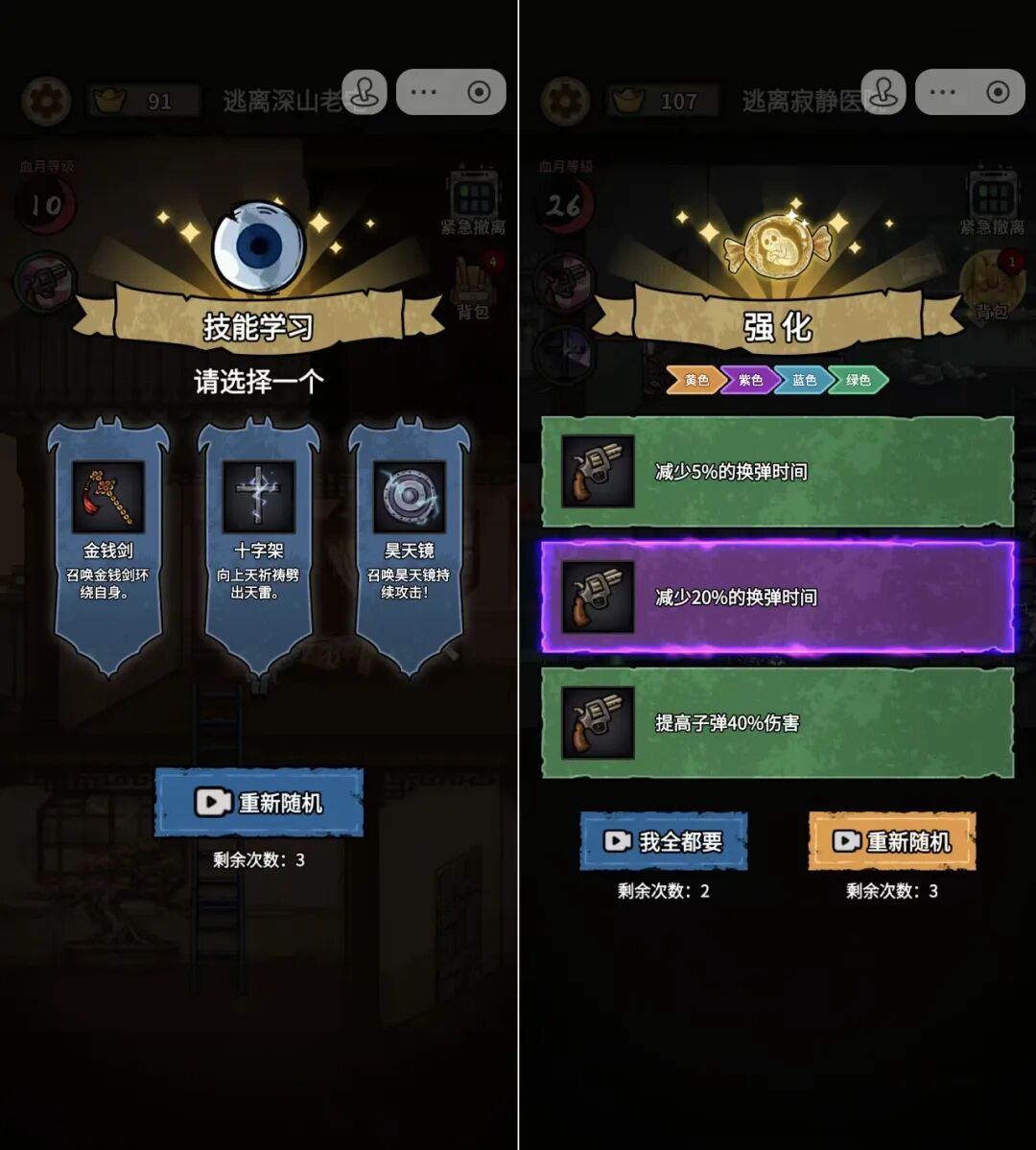
The "fighting" aspect of the game involves using in-game progression built through skill development to fend off wave after wave of enemies. The game also features many detailed designs for the "searching" and "retreating" aspects.
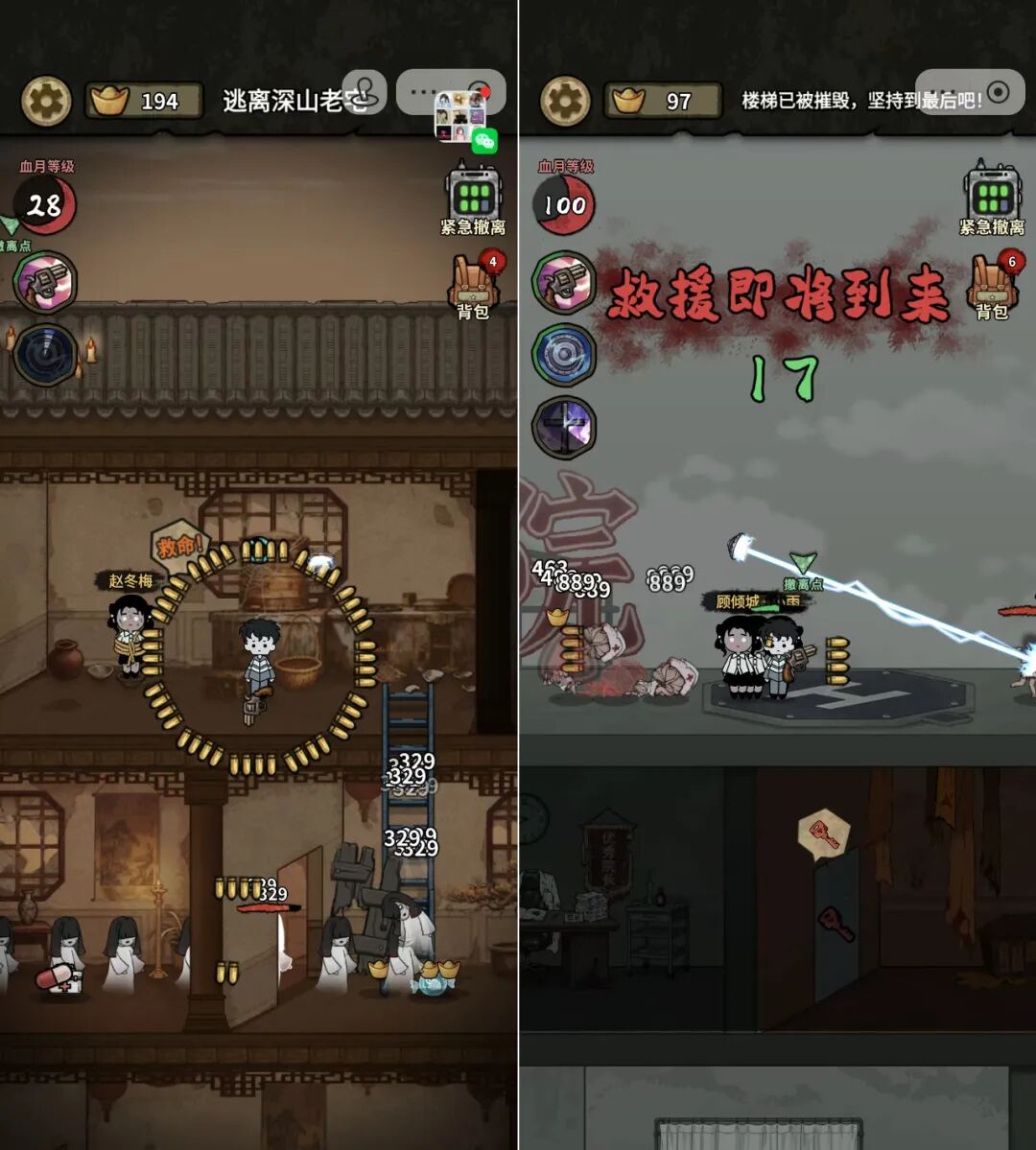
Although arrows appear in real time to indicate the location of the evacuation point during the level, the path from the starting point to the evacuation point is often more complex than it seems. Additionally, entering certain rooms requires meeting additional conditions, such as having a sufficient number of ingots or a key of the corresponding color.Therefore, even players who aren’t particularly “greedy” and simply want to evacuate quickly will have no choice but to thoroughly explore each search point early on.
Furthermore, during their exploration, players will encounter many moments when they have no choice but to pause: they must wait while searching for supplies, wait to rescue survivors, and wait to use ingots to unlock a new room.To ensure they have enough time to escape and successfully break free from the swarm of ghosts closing in from behind, players must not only build up sufficient firepower but also make full use of the crucial “door” mechanic.There is usually a broken door between different rooms; simply standing next to it will automatically repair it and increase its defense rating. In the most desperate moments, a door with sufficient defense can be the key to survival.

Even the backpack system commonly found in looter-runner games has been transformed into a grid-based “backpack-like” system in this game. Players must strategically arrange and organize the various resources they’ve looted within a limited number of backpack slots in order to successfully carry as many supplies as possible out of each level.
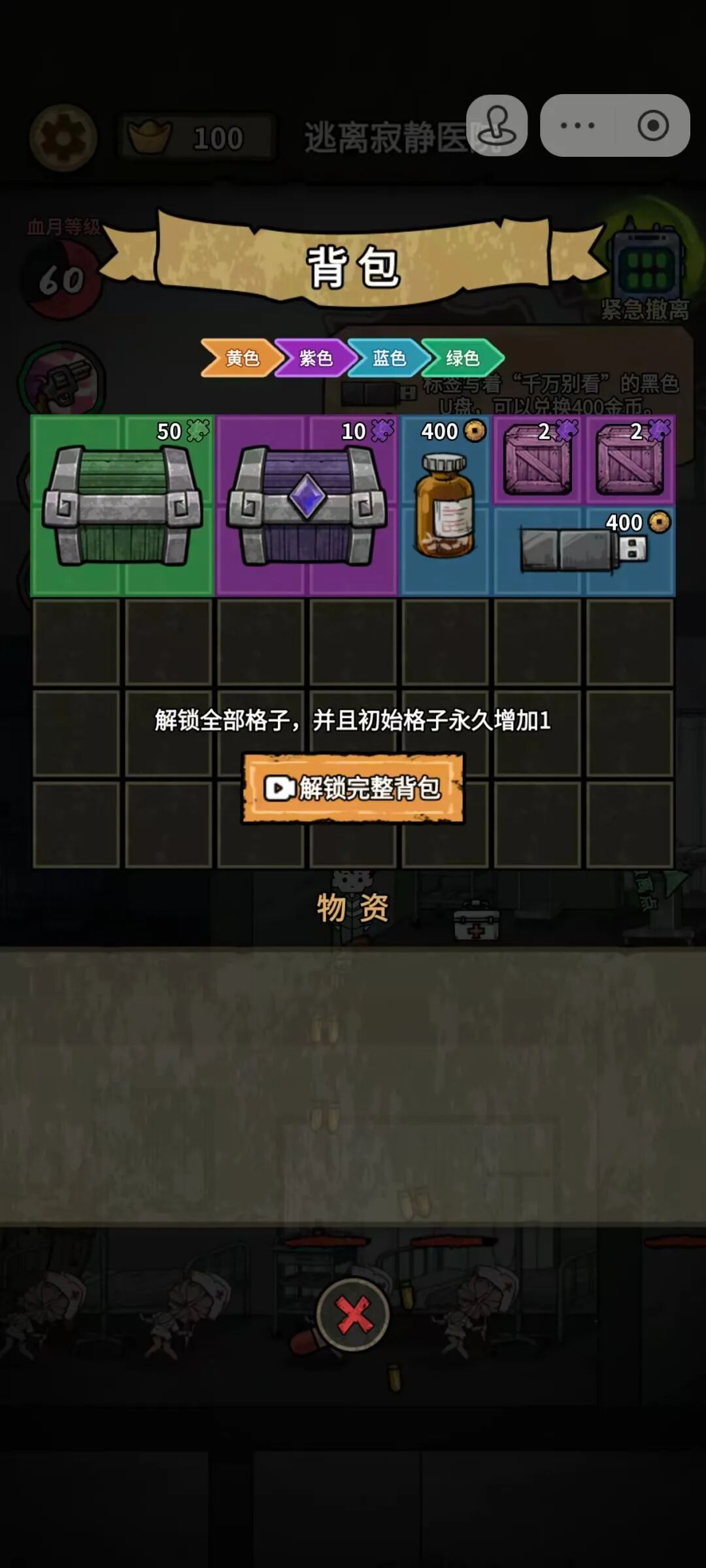
After a successful retreat, players can use key resources—such as magical artifact fragments, gold coins, and relics—that they’ve successfully collected to level up their magical artifacts (skills) and camp (character stats), thereby boosting their overall attributes. They can then proceed to the next level or re-explore the same level to delve deeper into the map and obtain more treasures.
After playing it, it’s easy to see that *Virus Battle Royale*’s core gameplay seamlessly blends a variety of elements, including mildly scary puzzles, roguelike hack-and-slash action, and search-and-fight-and-escape mechanics.In the game, players can experience just the right amount of puzzle-solving fun while exploring routes and collecting relics (magical artifact components); at the same time, they can maximize the tension and sense of accomplishment by fighting their way through layers of ghostly enemies and making a thrilling escape.This intense, high-tension experience naturally generates viral appeal, making it a perfect fit for short-video platforms like TikTok. Many players have spontaneously created fan-generated content—such as gameplay streams and artifact-collection guides—providing a natural source of traffic that fuels the game’s viral spread and exponential growth.
Even the dungeon gameplay design in the game is quite ingenious. Take “Lu Ban’s Trial,” for example—this dungeon mode, which blends elements from Tetris and tower defense games, has become a huge hit with players and has even become a popular topic in TikTok live streams.

"Virus Battle Royale" topped the TikTok Live Mission Trending Chart
After a comprehensive hands-on experience, the Tea House believes this game serves as an excellent example of how to blend “Search, Hit, and Retreat” mechanics with popular mini-game elements. It retains the core characteristics of mini-games—low barriers to entry and quick feedback—while fully showcasing the strategic fun of the “Search, Hit, and Retreat” gameplay.For casual game players, it’s easy to pick up and allows for quick immersion.
03
The Craze for "Search, Hit, and Clear" Mini-Games Shows No Signs of Slowing Down
Judging from the “Search, Attack, and Retreat” games currently flooding the market, it’s clear that this gameplay style offers tremendous potential for expansion.As Li Zeyang, founder of Liangyu Games, put it: “Search-Fight-Retreat” is not essentially a game genre, but rather—much like Roguelike—a highly adaptable content framework. As long as a game fulfills the cycle of betting, gambling, and reaping excess returns, any game can adopt the “Search-Fight-Retreat” model.
Therefore, for casual game developers, creating “Search-Attack-Retreat” games doesn’t necessarily mean replicating the blockbusters from major studios. As long as they capture the core appeal of this genre—namely, the allure of reaping big rewards with small investments and the strategic tension of success or failure when retreating—they can enhance gameplay enjoyment and even stabilize retention through a “high-risk, high-reward” closed-loop design——which undoubtedly leaves developers ample room for creative expression.
Currently, in addition to *Escape from the Giants* and *Virus Battle Royale*—which are the main focus of this article—4399 recently tested a post-apocalyptic zombie-themed SLG game titled *Lightning Assault*, which has also sparked widespread discussion and attention within the industry.
All signs point to the fact that the potential of “search-and-tap” mini-games has only just begun to be realized, and more high-quality titles are sure to emerge in the future. Teahouse also looks forward to seeing more imaginative “search-and-tap” mini-games make their mark in this space and inject new vitality into the market.
原创文章,作者:游茶妹儿,禁止转载:https://youxichaguan.com/en/archives/213067