For a game that has been in operation for many years, keeping a gameplay mechanic fresh and engaging is a more challenging task than releasing a single piece of new content.
Yingjiao has responded to this issue with a strategy it calls the “Integrated Strategy,” and this summer, it has unveiled its seventh theme.
There are quite a few PhDs who are fans of Integrated Strategy. Ever since the start of summer, these people have been “eating from one bowl while thinking about the next,” eagerly awaiting news about the new issue of Integrated Strategy—even a teaser for a teaser is enough to get everyone excited for hours.
And so, after much anticipation, the Big Dog arrived, and the Black Current Forest was drawing near.In July, when the entire internet was abuzz with talk of “Big Dog,” the new integrated campaign “The Black Stream Forest of the Fallen” made its grand debut alongside *Arknights*’ very own “Big Dog.” (Hereinafter referred to as “Black Stream Forest”; other themes mentioned later will also be described using their corresponding abbreviations.)
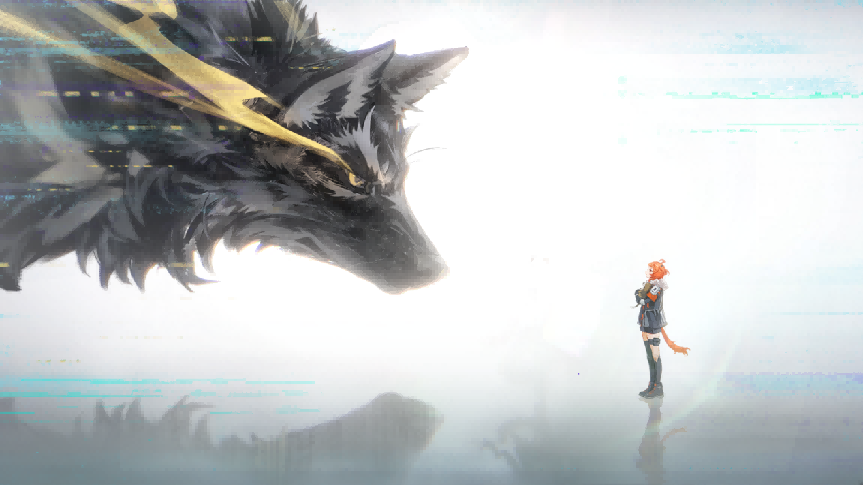
It really is a big dog.
This integration strategy has been in the works for some time. During the anniversary preview, Eagle Corner revealed some details about this integration strategy, as well as news of major updates to the map design; even earlier, at last October’s appreciation celebration, the backstory for the Black Stream Forest had already been set up.
The success of the integration strategy in recent years is evident to all. However, no one can rest on their laurels forever.
Given that "Integrated Strategy" has been a staple game mode with five updates to date, it may be difficult to introduce further design innovations. The operational complexity and depth of "Jieyuan Roguelike" have already deterred many players, making a major overhaul of "Integrated Strategy" urgently needed.
And so, amid players’ discussions and anticipation, “Black Flow Forest”—this “new era” of integrated strategy—has arrived. At the same time, it raises a question that seemed to have been settled long ago: What exactly should our integrated strategy look like?
01
The "Pinnacle" of Integrated Strategy
There’s a joke circulating in the *Arknights* community: “If you don’t really know *Arknights*, you’re just playing the ‘Integrated Strategy Launcher.’” Although this statement is meant as a joke, it actually reflects an important phenomenon: Integrated Strategy has evolved into a distinct ecosystem of gameplay experiences separate from the game’s daily content.
In the content structure of *Arknights*, the main story, SideStories, and various resource missions make up the daily content; Crisis Contracts, Vector Breaks, and other content provide high-difficulty challenges; while gameplay modes such as Fusion Competition and Garrison Agreements offer a more diverse range of experiences.
Meanwhile, the integration of strategy and life-and-death calculations may serve as the backbone of the endgame gameplay.
Among these, the "Integration Strategy" mode has gradually become one of the most iconic gameplay features in *Arknights* thanks to its high strategic depth and replay value.
However, for any long-term game mechanic, success itself does not mean you can rest on your laurels.
As multiple themes continue to evolve, integration strategies are gradually facing new challenges: How can we continue to provide new design possibilities while preserving the core experience?
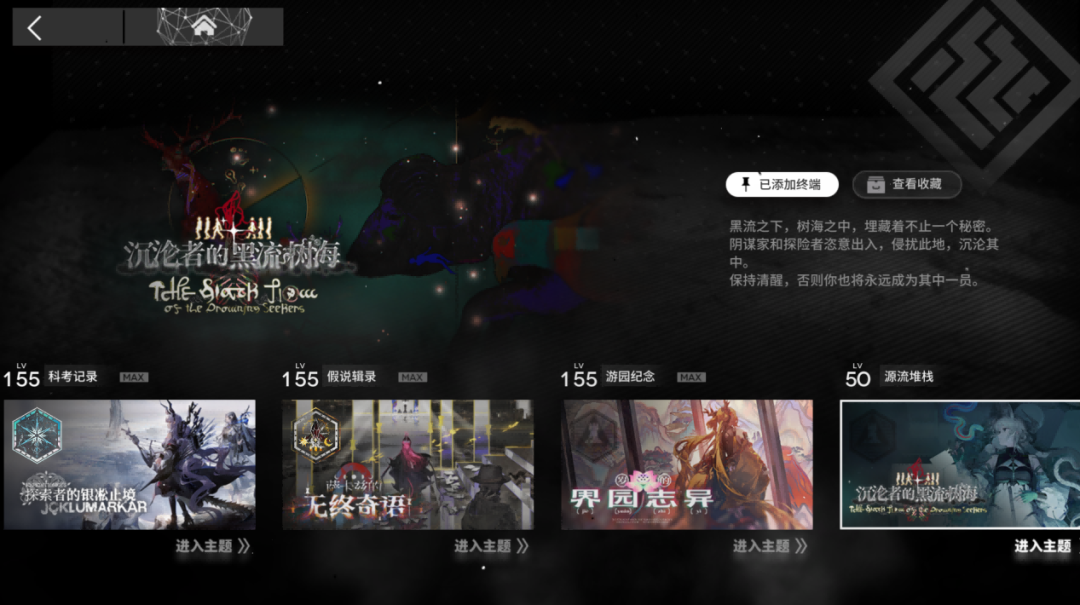
The Many Themes of an Integrated Strategy
This is actually a problem that all games with long-term operations face.
In the early stages, Crisis Contracts served as a vehicle for exploring high-difficulty gameplay in *Arknights*. However, as a limited-time challenge, it faced an inherent issue: players’ primary goal was typically to overcome the difficulty itself. Once players achieved that goal, their motivation to replay the content dropped significantly.
For long-term operational products, the real challenge lies in creating endgame content that is both challenging and capable of supporting repeated play over the long term.
It was against this backdrop that the integration strategy emerged.
By combining "tower defense" and "roguelike" elements, it aims to transform high-difficulty challenges from one-time objectives into a new type of content that players can continuously explore and repeatedly attempt.
However, the integration strategy has an inherent characteristic that sets it apart from the day-to-day modules—that characteristic is the “integration” in its name.
The term “collection” here refers not only to a compilation of content but also to a fusion of design philosophies. It combines the strategic depth of tower defense gameplay, the unpredictability of roguelike mechanics, and the need for ongoing content updates characteristic of long-term operations.
It is precisely because of this dual nature that the integration strategy has given rise to a rather unique model of renewal.
它并没有通过不断叠加数值、增加系统复杂度延长生命周期,反而采用类似独立游戏 DLC 的主题化扩展方式。每一个主题既保持核心玩法的一致性,又拥有独立的美术、叙事和机制设计。
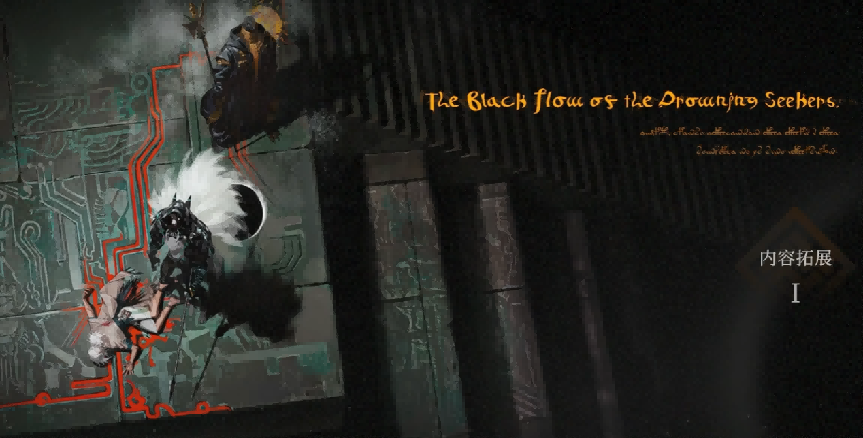
本次夏日嘉年华特别通讯中,也公布了黑流树海的第一次内容拓展
在众多主题当中,黑流树海自然是目前最与众不同的那一个,我觉得“连面相都变了”。
尽管如此,深度体验后我很快就发现,黑流树海称不上是一个另起炉灶的作品;相反,他是前面所有主题优秀设计的集合,是集成战略的“集大成者”。
这个说法完全不过誉。因为黑流树海的许多好设计都能找到往日之影。
想要讲清楚黑流树海的进步之处,离不开集成战略的发展史。
肉鸽游戏的正反馈来源于玩家用灵活的策略来战胜随机性,由此带来更高的游戏性与重玩价值。但它并不是一开始就适合这款塔防二游,在两者磨合的过程中,如何围绕既定的局内玩法设计肉鸽、尝试控制随机,都是迷人的难题。
集成战略的发展史就是《明日方舟》和肉鸽玩法磨合的历史。
最初的集成战略不是很多新博士以为的傀影肉鸽,而是刻俄柏的灰蕈迷境,也就是集成战略测试版本的小刻肉鸽。
小刻肉鸽刚刚推出的时候就获得了许多玩家的喜爱。那个时候的集成战略还只是个限时活动,玩家可以使用的干员也非常有限,但是新奇的游戏体验还是让大家眼前一亮。
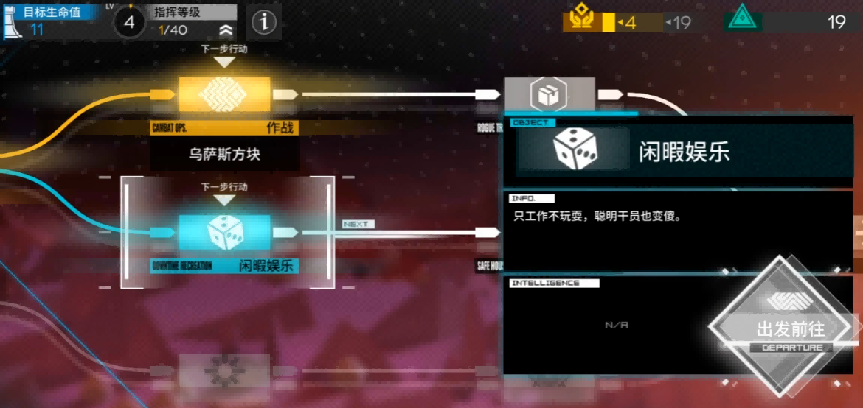
小刻肉鸽时,风味已经初具雏形
不久前的开拓芯对谈上,RUA牛提到了自己最喜欢的两款肉鸽游戏,一个是《以撒的结合》,一个是《杀戮尖塔》。我们也能在集成战略中看到这两个游戏的影子。
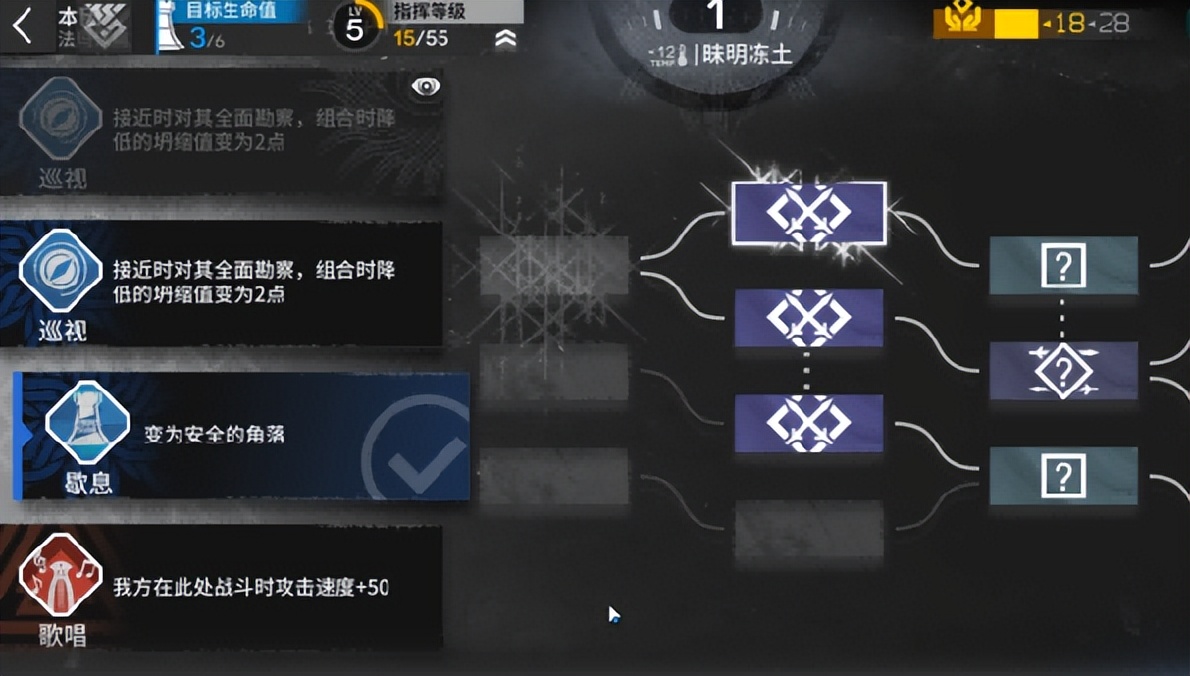
集成战略从一开始采用的是类似于《杀戮尖塔》的路线选择设计,玩家开始一局游戏后要在进入关卡前选择自己探索的路线,之后在这条路线上不断探索,增强自己的实力,解锁结局,直面关底BOSS。
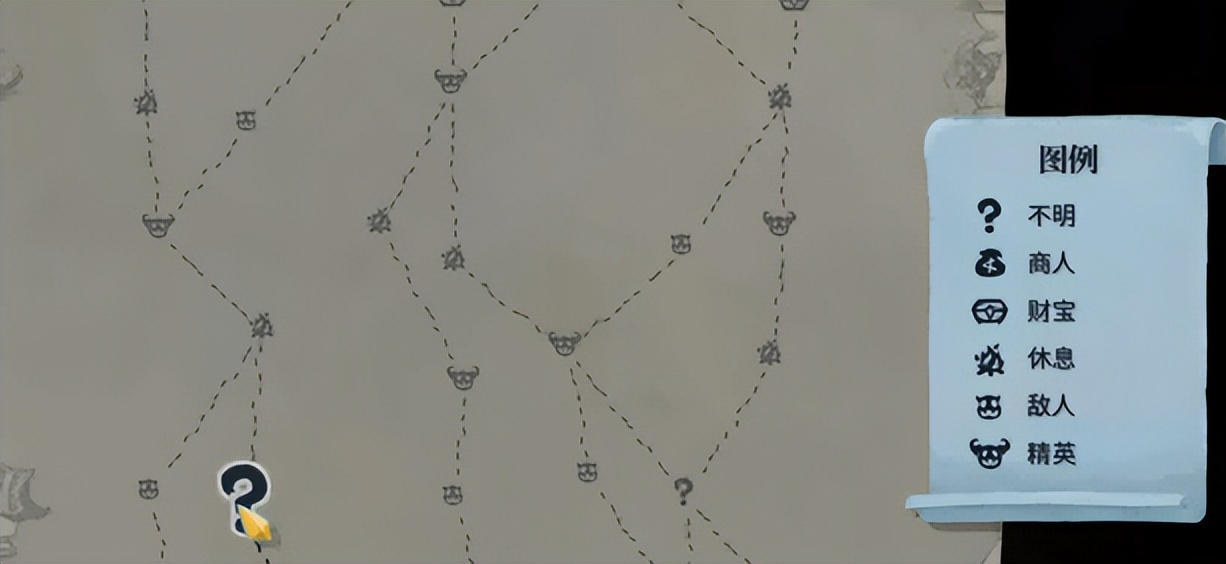
《杀戮尖塔》路线图
这种设计能够提供明确的策略选择,但与之对应的是,当最优路线逐渐被总结出来后,玩家的决策空间会缩小。表面上玩家是在选择路线,实际上是在寻找设计者预设的最优解。
这种逻辑与其说是战略游戏逻辑,不如说是解谜游戏逻辑。《杀戮尖塔》的策略深度来源于牌组构建,不在于道中运营;而《明日方舟》的肉鸽,如果要进一步追求策略深度,则要更多考虑道中运营的部分,于是充满深度的藏品与资源循环系统也被发掘出了更多潜力。

《以撒的结合》中的主要资源
集成战略一开始的方案,是水月肉鸽的钥匙。后来被萨米肉鸽设计成抗干扰指数而被更广泛地使用。这种资源是用来在特定情况下更改路线的,相当于让玩家可以消耗一些资源在选择题中获得更多选项,扩大了不少策略空间。
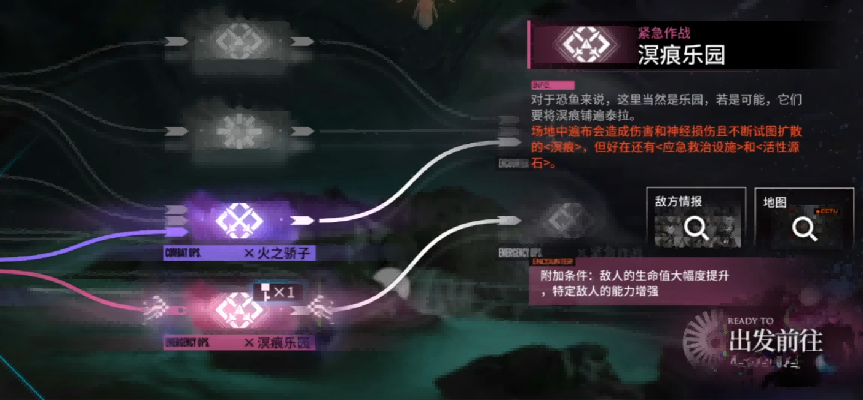
水月肉鸽中的钥匙提供了更多可选择路径
同时,路线图上出现了更多链接两条路线的通道,玩家消耗相应的资源就可以更换路线,更多的选择开始被发掘。加上“误入奇境”、“树篱之途”这样的额外房间设计,玩家的选择比原来更多了,策略也更丰富了。
仅仅提供更多选项是不够的,资源循环系统也要跟上。萨卡兹肉鸽对萨米肉鸽中密文版宣告和钥匙这种资源进行了第一次融合设计,将这两种资源合并为一种资源,“思绪”。这种资源以“构想”的名称整合进了思绪系统中,并第一次参与了资源转化。
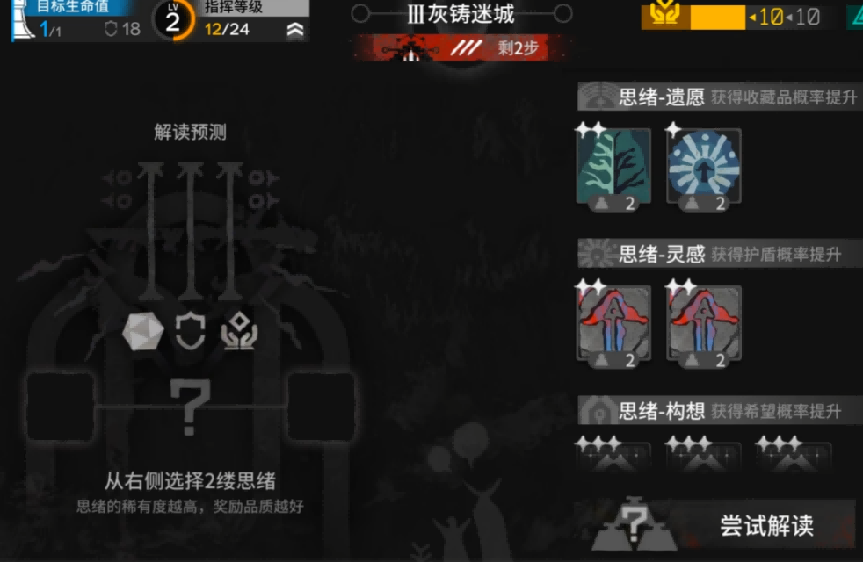
萨卡兹肉鸽的思绪系统
来到界园肉鸽,这种资源以票券的形式存在并更深入地嵌进了资源转化系统中,在保留原本功能的情况下成为了类似希望的资源点数。至此,集成战略的运营深度和难度都已经相当高,玩家在道中要考虑非常多的因素,保证每个节点决策的盈利成为了运营关键。
而路线系统也在多年的改造中量变达到质变,终于在界园肉鸽得到了蜕变。“岁兽残识”这种地图玩法给集成战略带来了更多可能。
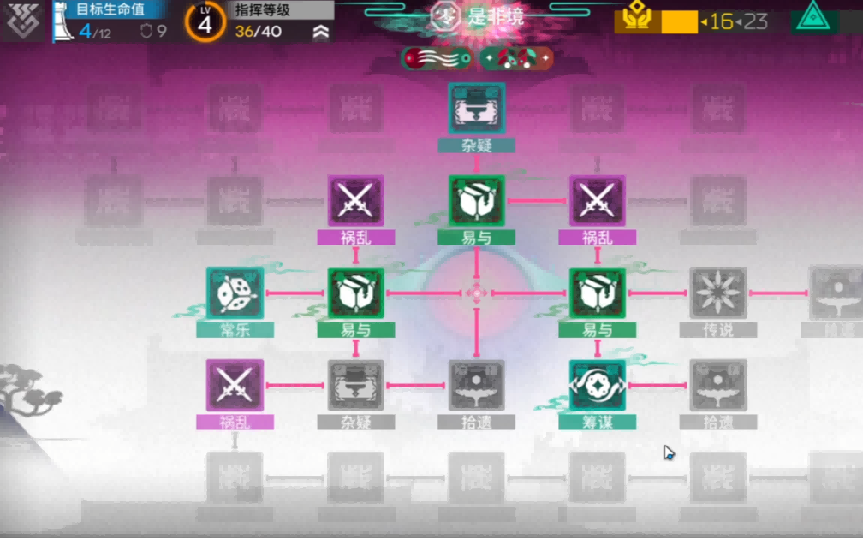
界园肉鸽的岁兽残识地图
对于策略玩法而言,真正重要的并不是提供多少选项,让玩家感受到自己的选择正在影响结果才是最重要的。
众所周知,试卷的选择题没有简答题分数高,就是因为选择题考察深度相对浅显;游戏也是一样,玩家总是在被迫做选择题,就感受不到策略带来的乐趣,因为最优解是设计好的,玩家感受到自己不是决策者只是执行人,体验就会大打折扣。
因此改变这种线性的路线选择,提高自由度就成为了设计方向,地图玩法作为最合理的修改方案自然被用在界园肉鸽中,既是作为玩法扩充,也是一次设计测试。
但即使界园的地图玩法反馈还不错,想把这种设计推广到整个主题的玩法中去,难度也非常大。
界园的岁兽残识在设计层面上很难推广到全局。岁兽残识是一张地图反复游玩多次,虽然在宏观上各个分队的运营思路差异化做得很好,但是在同一分队内部的运营思路没有太多选择空间,如果按照这个思维惯性进行设计,黑流树海必然会变成公式化的肉鸽。
对于这个问题,黑流树海并行实施了两套方案。
第一个方案是节点设计。
我们发现相比岁兽残识,黑流树海的地图充满了许多空节点。这个设计看起来不起眼,其实解决了许多问题。
为什么会出现公式化运营?因为路线收益不平衡;为什么会觉得收益不平衡?就是因为玩家选择的自认为的最优解实现不了。
岁兽残识的问题其实在于设计得太满。或许是因为担心玩家没有引导无所适从,所以把地图铺满任务节点,反而让设计挡住了玩家的一部分决策。
文学与绘画都有一个概念,叫留白。一部艺术作品,虚实相生、阴阳调和才是最美的。设计也是一样的道理。
与其让干扰决策的节点填充空白,不如就让该空的地方空着,让地图从解谜玩法升级为战略玩法,把制定策略的权力交还给玩家。这就是设计留白。
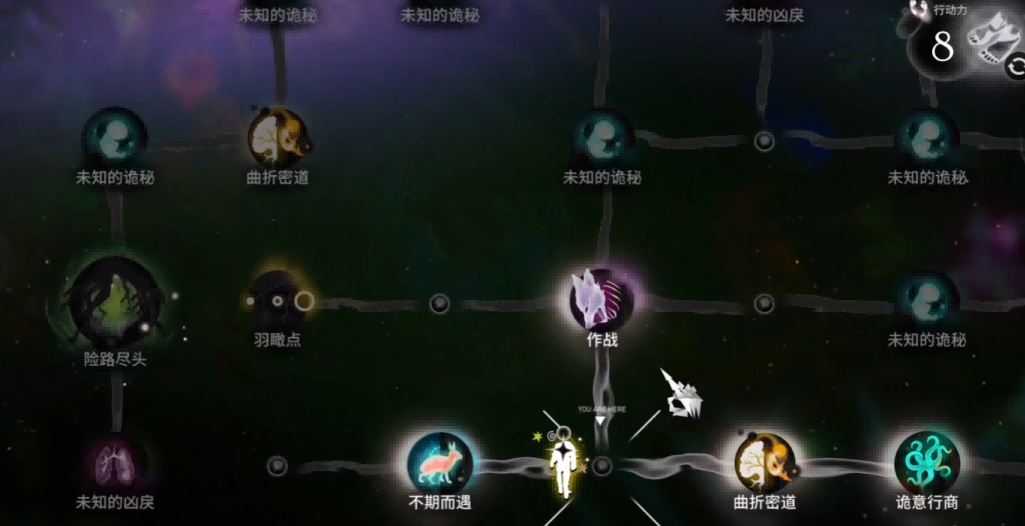
黑流树海肉鸽中的地图与空节点设计
而让黑流树海的地图设计留白活起来的,则是非常不起眼的“零件”。
这一机制包含“概念体”“加工品”和“自然物”三类资源,其核心目标并不是简单增加新的玩法变量,而是在降低理解成本的同时,保留肉鸽玩法最重要的策略空间。
其中,概念体参考了萨米肉鸽密文版的收益部分并做了简化,目前将收益简单分为藏品、攻速与护盾值。由于没有刷新节点的需求,所以概念体激活的机制变成了搭配加工品在特定节点类型激活,同样也是一种策略上的减负。
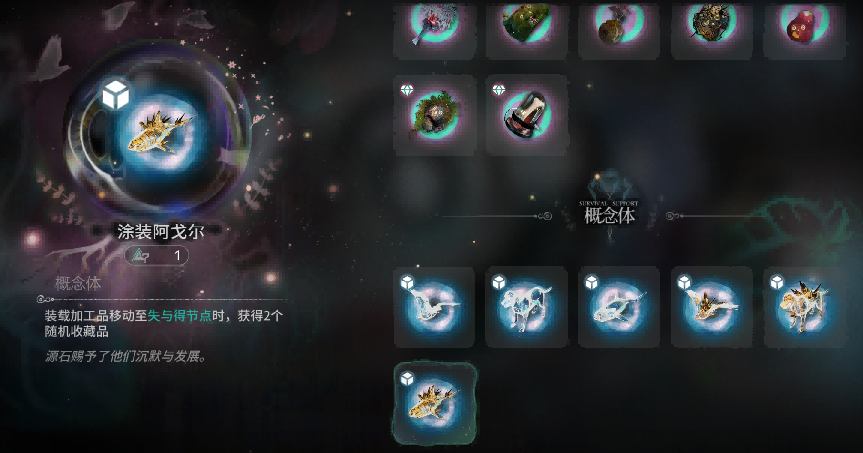
概念体示例
加工品和自然物则是让黑流树海得以成为集大成者的重要设计。
前文说过,集成战略发展到界园肉鸽为止,可用的设计增量空间已经非常少了。所以,集成战略的主要矛盾不再是设计深度不够,而是游戏系统需要“减肥”。
零件的设计就是在考虑保证运营深度的前提下,对这套系统进行简化。于是设计者对这套系统进行了重新分配。票券的货币属性被分离出来成为自然物,钥匙属性则被设计成了加工品。
加工品肯定不只是钥匙这么简单。一方面,设计者对零件设计了三个价值等级,让不同的加工品的灵活度与功能性都有所差异,同时也没有脱离资源转化系统;另一方面加工品也补全了概念体的激活需求,实现了类密文版设计在黑流树海的应用。
比如黑流树海中“老妈妈的融雪”这个加工品。玩家可以装载这个加工品到达任意一处非战斗节点,并获得两点希望。
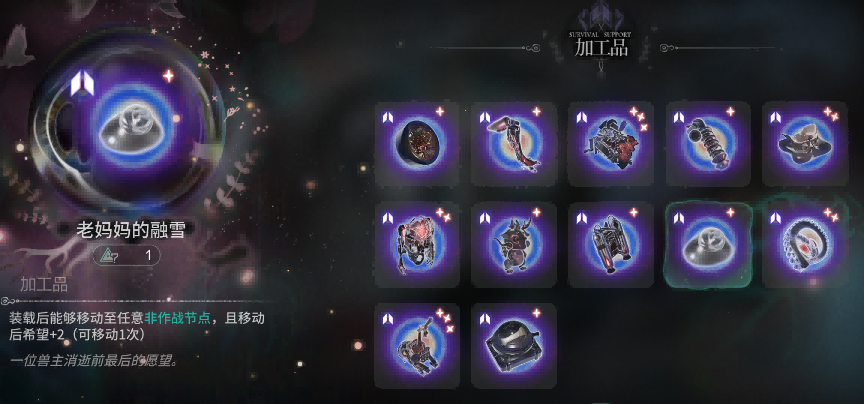
老妈妈的融雪
结合这个资源,玩家就既不必像在路线图时期一样,急头白脸地为了找一个非作战节点花费巨量资源;也不必像在旧的地图时那样,对着一堆堵路线的杂疑无能狂怒,体验感和策略性都非常好。
At the same time, natural resources play a key role in maintaining the depth of the game’s strategy. Closely tied to the game’s universal currency, Source Stone Ingots, natural resources further expand the possibilities for resource management.
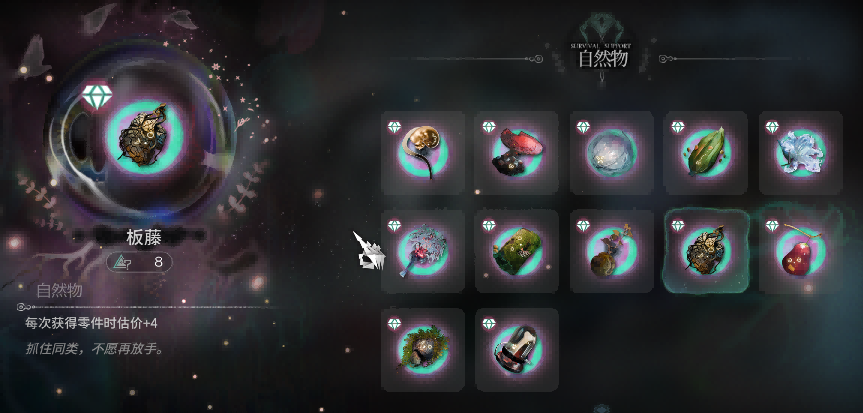
The Legend of the Reversing Electric Meter: Natural Objects Board—Feng
At the same time, the design of the Concept Entity has achieved an unprecedented balance in node returns, making the Black Stream Forest the most flexible integrated strategy currently available.
Players are no longer merely passive recipients of random events; instead, they must actively assess the value of resources and weigh the trade-offs between acquiring, converting, and using them.
This design expands the game's strategic depth and allows players of different styles to find a strategic path that suits them.
With that, the task of streamlining the Black Current Forest has been completed through a reorganization of resource design. It’s clear that the parts mechanism is a prime example of a streamlining design that combines a high ceiling with a low barrier to entry, and when paired with the map’s gameplay, the two are a perfect match.
Design is, in essence, the mastery of a gameplay mechanic. While the design of "Black Current Forest" appears vastly different from other themes, this is not a case of the designers straying from convention; rather, it is the result of incorporating design insights from previous themes, where a gradual accumulation of changes has led to a qualitative transformation.
One of the reasons for the enduring success of the integrated strategy is its continuous self-improvement and renewal—it does not stop at merely tinkering with existing mechanisms. As a result, each theme provides valuable insights for the design of subsequent themes and allows for significant improvements to address issues identified in previous themes.
Throughout this process, the "Meat Dove" gameplay style and the design of *Arknights* itself have continually clashed and blended, becoming increasingly harmonious.
Today's integration strategy continues to scale new heights and has even provided solutions to many inherent contradictions in the user experience.
Bold combinations open up even more possibilities—that’s the allure of roguelikes, and it’s also the design philosophy behind Eagle’s Corner.
02
It's more than just fun
The value of the "Meat Dove" gameplay lies not only in its randomness and replayability.
Unlike traditional linear storytelling, "Roguelike" games place greater emphasis on players gradually coming to understand the world through repeated playthroughs. Through a process of failure, exploration, and retrying, fragmented pieces of information accumulate, ultimately forming a complete understanding of the story.
Therefore, for games designed for long-term play, roguelike mechanics are not only a gameplay structure but also a content framework that conveys the game's world-building.
This is precisely what makes *Black Stream: Sea of Trees* so valuable: it blends gameplay and narrative into a single experience, aiming to have both elements work together to deliver a complete, immersive experience.
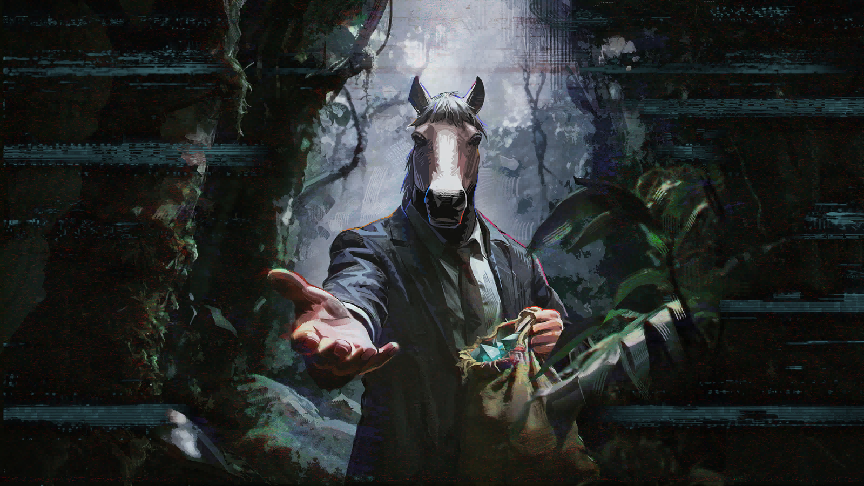
First is the music design. Music has always played a vital role in the content ecosystem of *Arknights*. The term “Music Enthusiast” used within the player community reflects players’ appreciation for the game’s musical quality.
More importantly, music in *Arknights* does not simply serve to set the mood; rather, it has gradually become a key medium for storytelling.
One characteristic of fragmented storytelling is that the more you reflect on it, the more it lingers—the phrase “chilling upon reflection” perfectly captures this.A key feature of roguelike gameplay is replayability. Every time you start a new game, you hear the same music. On one hand, this requires the music to be compelling enough to withstand repeated playback; on the other hand, it makes the melody more memorable.As a result, players can easily recall these melodies in their daily lives when their minds are at rest, and this also provides a real-world foundation for them to reflect on the deeper meanings behind the music.
So, how does *Black Stream Forest* tell stories through music? The theme song for the third-floor boss battle, “Reconquista?”, is a great example.
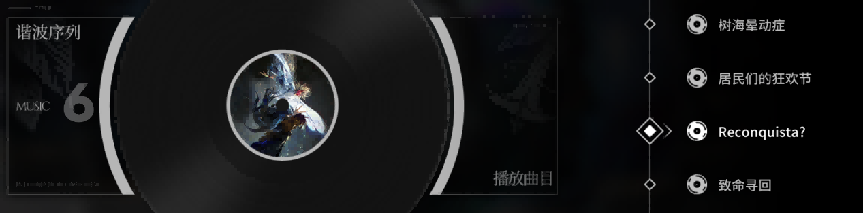
Reconquista?
First of all, this song is a remix of the famous Spanish “Torero’s March.” The original song is known almost everywhere in the world and is wonderful in its own right; after being reworked using modern music production techniques, it has been completely transformed by Eagle Corner, which has imbued it with rich meaning.
Beyond simply creating a "sense of battle," this track further enhances the player's understanding of the game's world through the connection between musical elements and the story's backdrop.
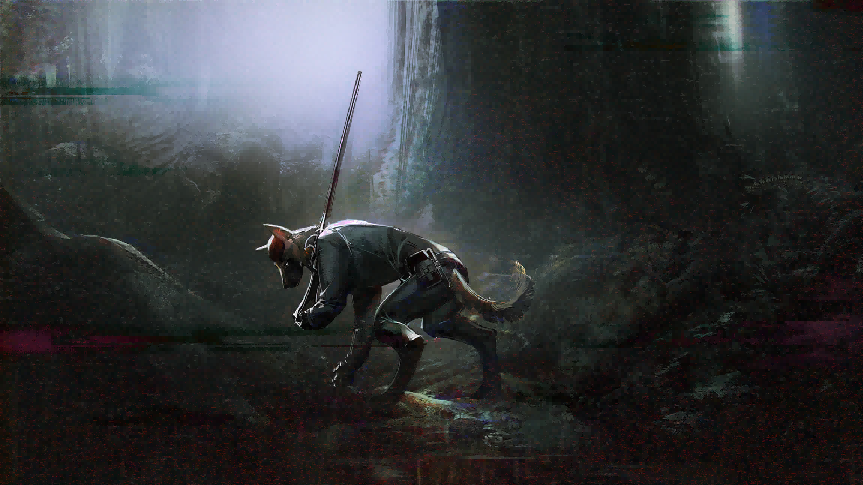
As a colonial region, Latin America was first colonized by the Spanish and later treated as the United States’ “backyard,” yet the struggle of the Latin American people for independence and self-determination has never ceased. The same is true for Bolívar in the game: coveted by major empires, his country was engulfed in war.
鹰角对这首歌曲进行了同主题适配的恐怖化改编。在这首歌曲中,除了经典的旋律,改编加入的鼓点、弦乐和Trance电子乐是最为突出的。密集而整齐的鼓点时刻提醒玩家,自己正处在一场宏大的战争中,死亡时刻扼住自己的咽喉;而空灵的弦乐又仿佛在给玩家下蒙汗药,悄悄给玩家植入一种不安与朦胧感;Trance电音则用不和谐音摩擦玩家的骨头缝,将一种“克苏鲁”式的不和谐感提供给玩家,暗示着一种隐秘的内幕。
这种感受不仅是音乐艺术性的展现,在叙事层面上也有自己的独特目的。《明日方舟》剧情的叙事维度是文明与宇宙,因此在宇宙冷漠的注视下,人类的许多行为意义并没有人类自己想象的那么宏大,个人命运的挣扎、民族苦难的煎熬在这种维度都显得十分渺小。
因此在音乐里,叙事者就在传达一个信息,这场战役的背后,可能隐藏着一个和战争目的毫无关联却比战争背后的矛盾更为宏大的危机。这正是弦乐和电子乐的迷幻与朦胧想要表达的东西,即黑流树海在民族矛盾和战争冲突之外,还蕴含着有关整个泰拉大陆存亡的秘密。
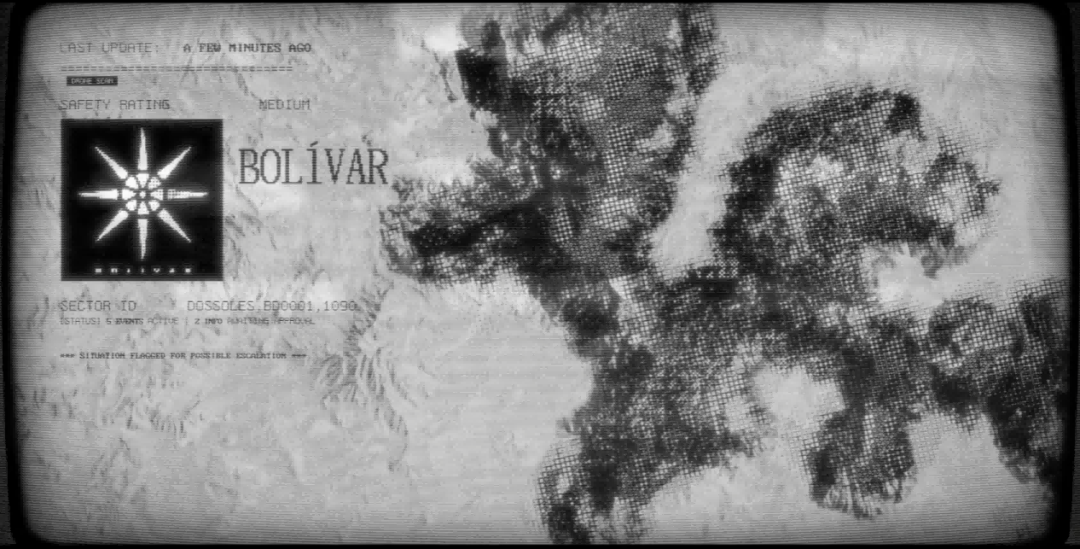
有关这个信息,其实不一定需要音乐来传达,但这种叙事效果只能由音乐做到。鹰角最值得关注的点就在这里。假如京剧可以做特效,那戏班子也未尝不能变成好莱坞;所有人都知道理论上音乐能够做到叙事,但鹰角能够进行实践,并且成功达成了预期的效果,这就成就了鹰角在音乐上的深刻理解。
叙事的另一层维度是美术。在这方面黑流树海同样给我们带来了新的方案。
如果说音乐负责建立情绪,那么美术则负责塑造玩家对于世界的第一认知。
黑流树海在视觉设计上的特点,不在于简单复现拉美文化符号,寻找更加独特的文化切入口才是最值得关注的。
这次的一个重要切入点,就是《伏尼契手稿》。
《伏尼契手稿》堪称拉美《山海经》,里面记载了303种奇幻植物,大部分在现实中并不存在,只有小部分可以辨认出原型;并且这篇手稿用一种特殊文字书写,至今无人能够阅读。
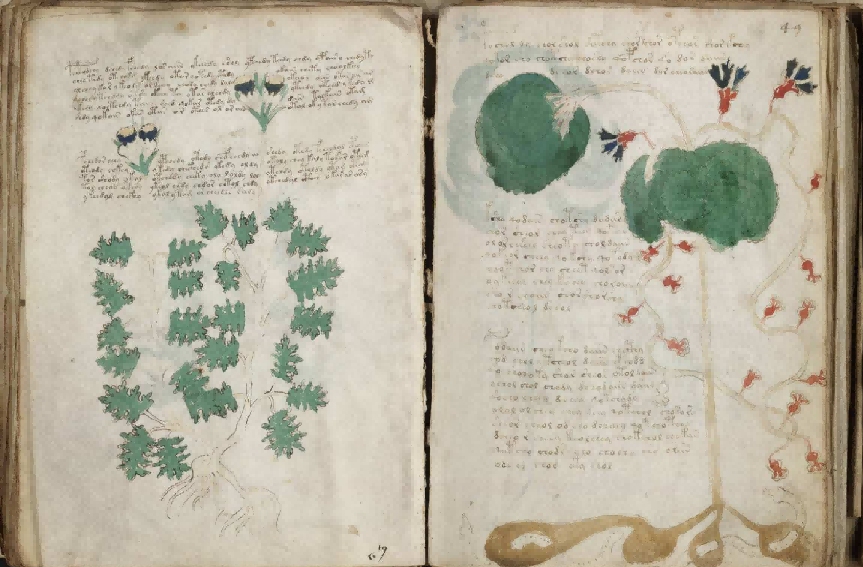
《伏尼契手稿》
黑流树海本身就是一片充满未知生命形态的巨大森林,而《伏尼契手稿》中那些无法被完全解读的植物与文字,恰好提供了一种“未知但真实存在”的视觉语言。鹰角选择它,不只因为它的文化符号,还因为这种神秘感与黑流树海的世界设定天然契合。
这期肉鸽的字体大量参考了《伏尼契手稿》,许多符号也源自其中。玩家看着这种风格的英文字符,一直保持着“看得懂但不多”的状态,既不影响阅读体验,也不影响神秘美感。不得不说这种兼顾游玩体验和审美价值的设计方案确实值得点赞。
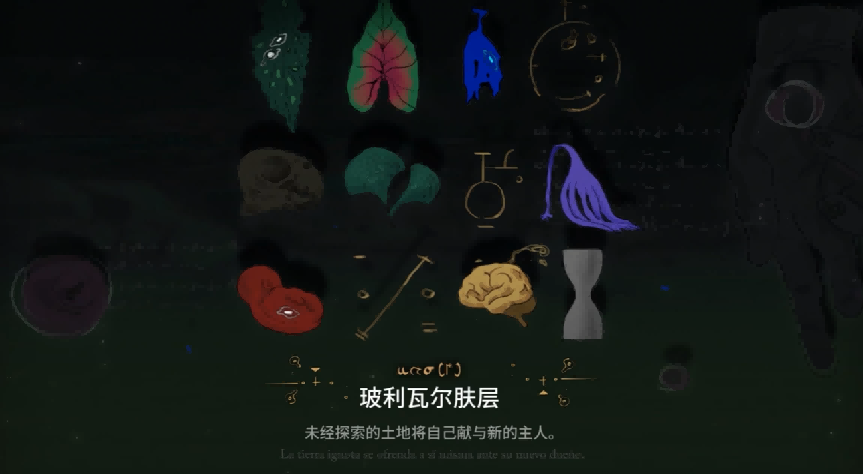
可以看到很多与手稿风格类似的元素
《伏尼契手稿》风格构成了整个黑流树海之旅的骨架,医学场景绘画则承包了全部的氛围细节。这种设计最典型的体现,是黑流树海的科技树。
表面上,它只是玩家成长系统的一部分;但在视觉呈现上,科技树实际上承担了世界观补充的功能。
在设定里,黑流树海是一只巨大狗兽主的身体化成的森林,因此我们的旅程其实就是在兽主的体内进行的;更深层的剧情告诉我们,在玻利瓦尔中正在进行惨无人道的人体实验,这些器官,既是狗的,也是人的,更是这个悲惨国度的畸变血肉。
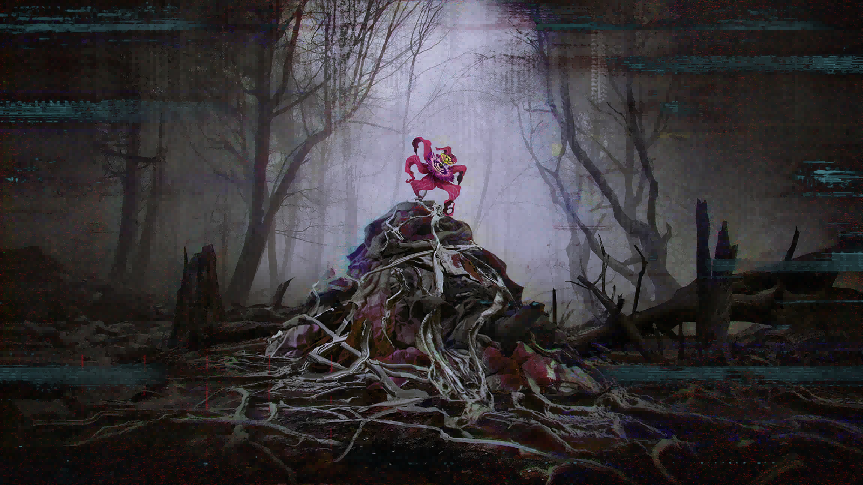
如果说视觉和声音塑造了玩家对于环境的感知,那么文案则进一步补充了这个世界背后的社会结构与文化隐喻。
魔幻现实主义不仅盛行于拉丁美洲文坛,也影响着现当代中国文学,拉美有马尔克斯,中国也有莫言等一系列作家,可见其影响深远,可以说是必读文学类型了。
对于拉美文化而言,魔幻现实主义是无法绕开的文学传统,而黑流树海也尝试将这种表达方式融入游戏文本。
鹰角这次的文案也比较成功地演绎了魔幻现实主义的韵味。
我们可以从一些比较典型的文案中来感受一下。
Take, for example, the unexpected encounter with “The Heavy Contract.” A rabbit stands next to a stone mill, whipping a sloth. The rabbit explains that they have a contract requiring the sloth to turn the mill a certain number of times. A senseless act of oppression, two absurd and ridiculous protagonists—this is “magical realism.”
A defining feature of this type of text is that it uses absurd imagery to reflect real-world issues.
The animal fables in the game not only create a spectacle but also use “absurd” plotlines to help players reinterpret war, oppression, and social relationships. In the real world, colonies are rife with exploiters like rabbits and slaves like sloths, who likewise maintain inefficient productivity through these distorted production relations.A moment’s reflection is enough to make one chuckle—and that is “realism.”
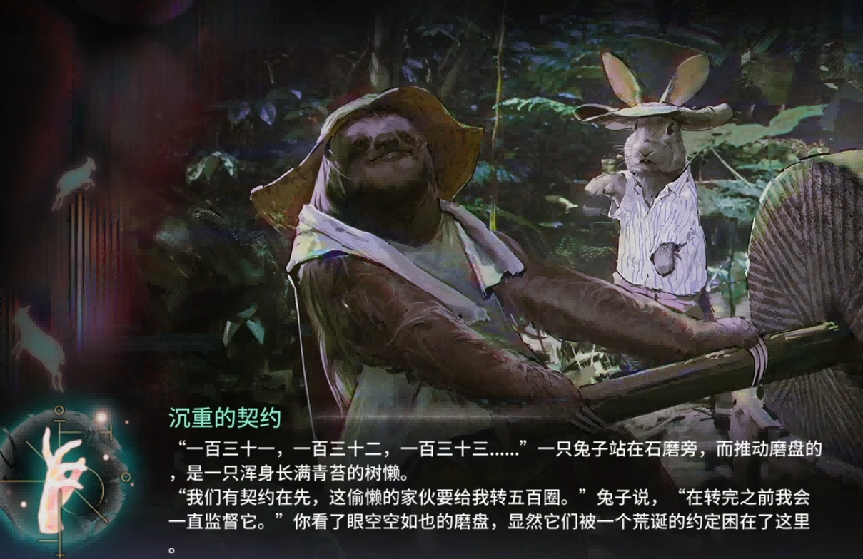
Original Copy
In one of our previous articles, we mentioned the concept of “gameplay intertextuality”: while gameplay and narrative may run parallel in terms of presentation, they can complement and enhance each other in terms of the player experience.*Black Stream Forest* is a concrete example of this philosophy in action: the roguelike gameplay provides fertile ground for fragmented storytelling, while the rich atmosphere created by that fragmented narrative, in turn, encourages players to explore ever deeper. This synergy creates a positive feedback loop where 1 + 1 > 2.
Black Flow Tree Sea has once again proven through action that an integrated strategy is never just for fun.
Conclusion
After discussing gameplay and narrative, we ultimately have to return to one question: What does “Black Flow Forest” mean for integrated strategy—and even for the long-term operation of *Arknights*?
It is not a disruptive revolution, but rather the mature implementation of a design methodology.
Compared to *Black Flow Forest* and other titles, Eagle Corner has chosen to take a step back and reevaluate its approach rather than continuing to layer on systems to increase content complexity. From level design to the resource system, and from randomized gameplay to strategic depth, *Black Flow Forest* has effectively consolidated and optimized the lessons learned from past experiences.

The most challenging aspect of long-term operation isn’t the continuous addition of content; it’s managing the learning curve for players while the content keeps expanding and maintaining the game’s sense of novelty.
The value of "Black Current: Sea of Trees" lies in the fact that it proves one thing—permanent gameplay can also serve as a long-term content asset.
When gameplay can be continuously iterated, the game world can be constantly expanded, and art, music, and text can all work together to enhance the experience, a game mode is no longer just supplementary content in version updates—it can evolve into a vital component that supports the product’s lifecycle.
Therefore, when gameplay depth nears its limit, the best course of action is to redesign the system, giving players back the freedom to choose and allowing players of different skill levels to find their own comfort zone within the same system. This path is difficult, but it is extremely valuable.
In the future, competition in the gaming industry may not just be about who can release more content. More importantly, it will be about who can ensure that content has a longer lifespan.
A great game mechanic shouldn't just be a fleeting presence within a version cycle; it should continue to evolve over time and foster lasting connections among players.
The Black Stream Forest may be just one scenic spot along the long journey of *Arknights*, but the vitality of its gameplay will continue to thrive on this land.
原创文章,作者:游茶妹儿,禁止转载:https://youxichaguan.com/en/archives/208493