After playing games for so many years, *Arknights* is the only one that makes me feel like I’m constantly celebrating a holiday—there’s the Thanksgiving Festival in the fall, the Lunar New Year event in the winter, the anniversary event in the spring, and the Summer Carnival in the summer.Actually, for me, the rhythm of these past few years has been pretty much the same: claiming rewards, pulling for characters, playing through the story, getting stuck on a level for a while, playing some mini-games, and finally saying goodbye to these events—and to my own vacation.
But the Summer Carnival is always the most memorable episode of the year—it features both “the hatred of the Age of Blood Feuds” and “the graffiti of the Age of Hope.”
Looking back on the game’s entire history, this marks the eighth summer that the Doctors have spent together. Along the way, the Doctors have witnessed Rhodes Island grow stronger bit by bit, seen many Operators come of age, and observed the changes in *Arknights*.
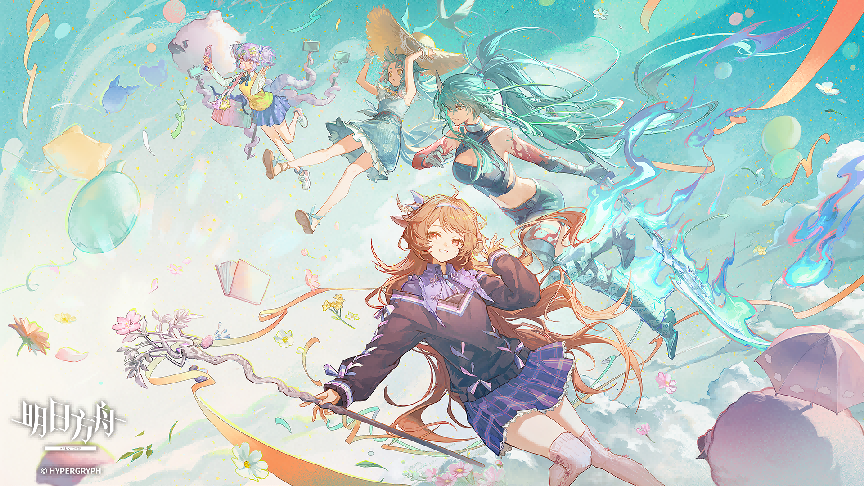
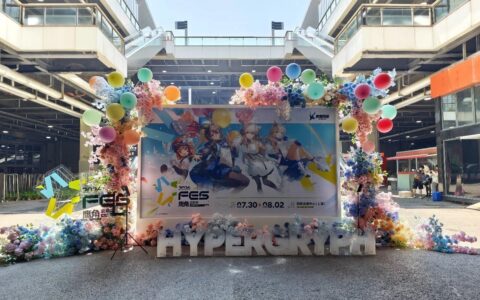
The Summer Carnival has always been referred to by the doctors as “Summer Fun”—Summer Fun, Summer Fun; as is customary, there’s always something going on in the summer; but this time, Eagle Corner has something a little different in store.
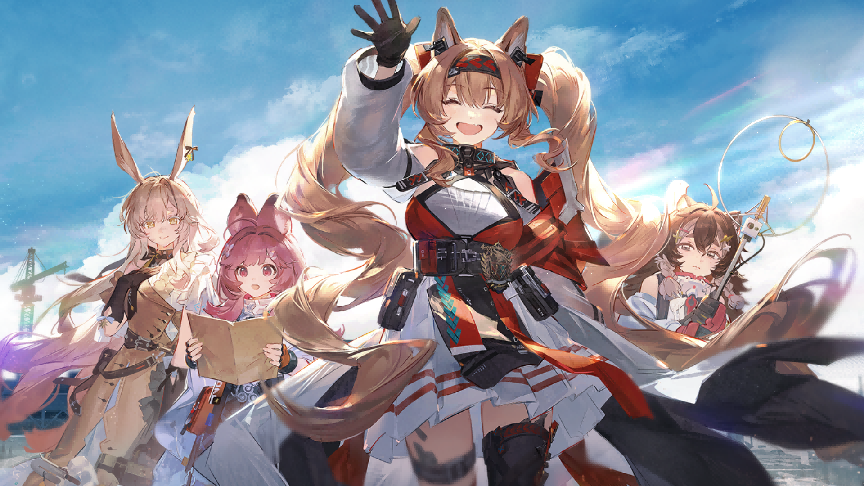
Following the launch of the Summer Carnival on August 1, new event storylines, limited-time recruitment events, and a series of accompanying features went live simultaneously. Veteran Operator Angelina’s “Heterogeneous” variant and her Skywalker’s intriguing abilities also became hot topics of discussion within the community, causing the entire continent of Terra to “take off” overnight.
Judging by market feedback, once the summer event began, *Arknights* skyrocketed to the top three on the iOS Top Grossing chart that same day and remained near the top of the chart for several days afterward, demonstrating through its commercial success the influence it has built up through long-term operation.

However, if we view this success merely as a short-term surge driven by a single update, we may be underestimating the true challenge of long-term operation: giving players a reason to keep playing over the course of several years.
As we all know, the stories told in *Arknights* have never been particularly lighthearted or cheerful; the people of Terra are all masters at coping with pressure, and each character has a somewhat tragic backstory.As a result, the annual summer event serves more as a showcase of Terra’s other side, allowing players to see that beyond war and suffering, this land also offers beaches, music, festivals, and the everyday lives of ordinary people.
After seeing so many “hateful comments,” this heartwarming “handmade hot cocoa” feels all the more precious. There’s a saying that “happy lives are all alike, but every unhappy life is unique.” But if you think about it the other way around, it’s precisely because of this that people can’t truly empathize with each other’s suffering—yet they find it easier to relate to one another’s happiness.
This lightheartedness isn’t a departure from the main storyline. The heartwarming memories players build during the summer event are often the very reason they still remember the game years later.
This emotional connection not only propelled this summer event to new heights commercially but also marked a breakthrough for *Arknights* on a narrative level.
01
Like a lime
When Angelina’s heterochromia was revealed this time, I actually felt a bit uneasy.
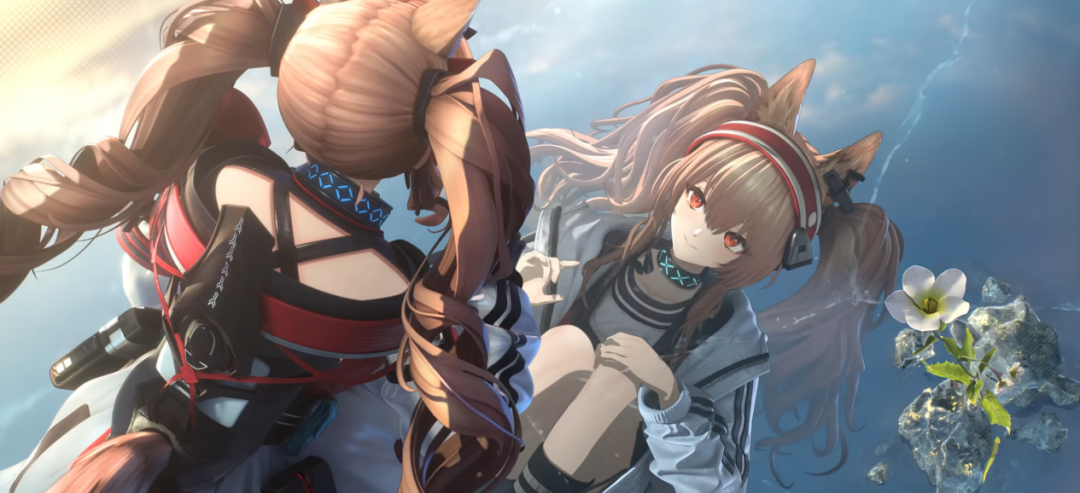
Angelina is a very popular veteran player from the game's early days, and players know her very well.
Players know her backstory, her history as a courier, and her Source Stone skills like the back of their hands, so relying solely on new lore is unlikely to provide enough freshness. For many characters, “Heterogeneous” adds a new layer of lore by revealing previous plot threads, but for a character like Angelina—whom players are already very familiar with—adding more lore is actually the least effective approach.
As for *Until the Earth Becomes a Lime*, the solution it offers can be described as one that achieves “great results with minimal effort.”During a period of uncertainty in her life, Angelina finds herself in an unfamiliar environment. Through a series of coincidences, she is tasked with leading three girls she has never met before to the southern border of Rembituo, and thus begins the girls’ journey along the first highway to traverse this land.
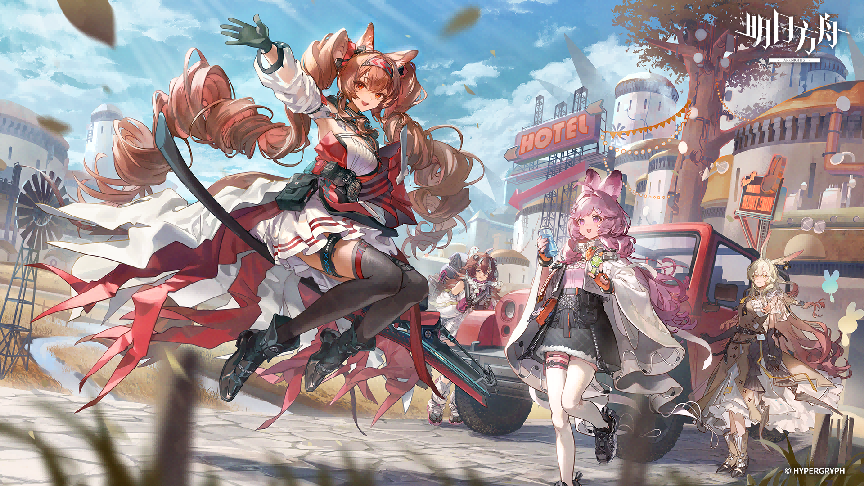
When a group of people who were once strangers are brought together by a journey, the journey itself begins to transform their relationships—and it is these relationships that truly provide the fertile ground for new facets of the characters to emerge. Throughout the story, Eagle Corner skillfully places these diverse characters within various relationships, revealing their personalities and growth to the players.
Take Amelia, for example. She’s in charge of second-generation long-distance communication technology—a professional role that seems distinct enough on its own—but as the story unfolds, cracks soon begin to appear in that identity. This person, whose job is to “connect” other people’s worlds, doesn’t even have a place within her own company where she can truly represent herself.
When Angelina first met Amelia, all she knew was that Amelia had set out to repair a communications tower. As they spent more time together, she and the others gradually discovered that this young woman in charge of communications technology had actually been struggling with her own identity all along.The Great Disconnection, the telecommunications company, and new technology—several events that were originally completely unrelated—slowly became intertwined through their journey together.
As a mentor, Angelina didn’t try to “lecture” Amelia; instead, she simply accompanied her as she made choices along the way. This approach—non-interfering yet supportive—actually made Amelia’s transformation more consistent with the logic of her character’s growth, allowing everything to unfold more naturally.
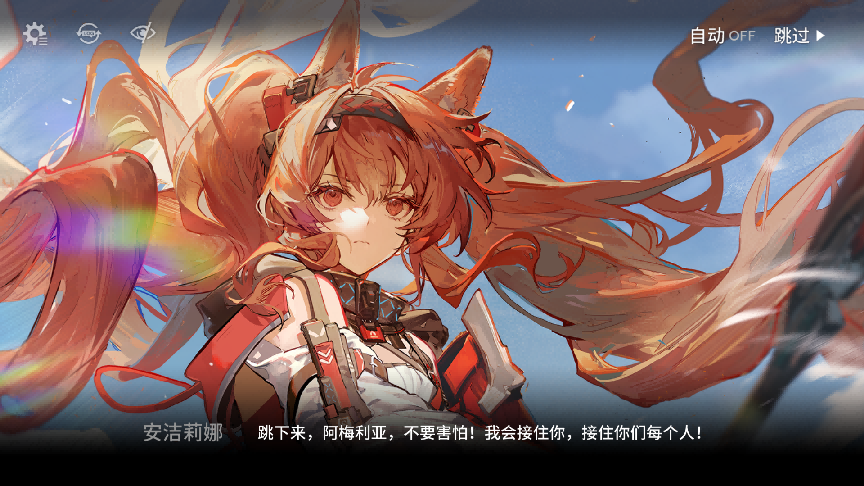
Similarly, Angelina also grew as a person through this process.
This is the power of relationships. When a character enters a new relationship, her previously established personality, experiences, and values form new combinations; and when the same character enters different relationships, the narrative function she fulfills also changes accordingly.
Angelina’s journey with Shanbi is that of a seasoned adventurer guiding a newcomer; her journey with Jacinta is one of mutual understanding gradually developing between two people suffering from ore sickness; and her journey with Amelia becomes a relationship between a messenger and a communications technician—two workers from different eras in the same field.One Angelina—in these three relationships, she is three different “Angelinas,” yet each facet is still her.
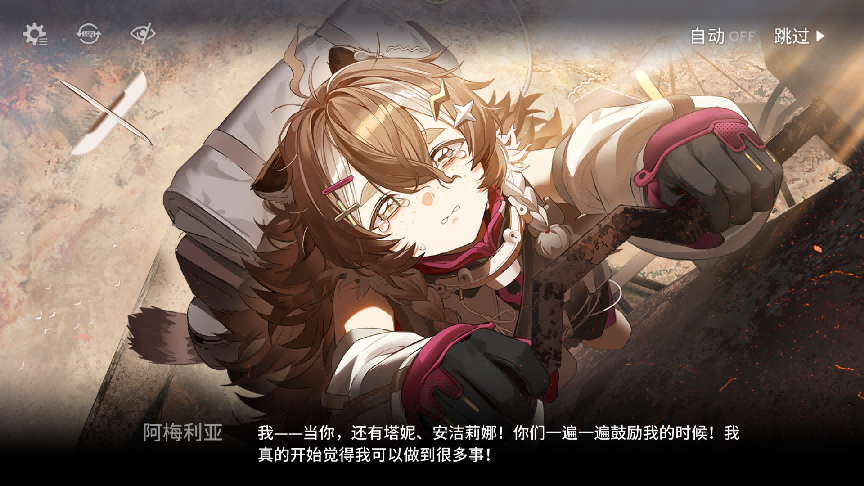
From the top of the communication tower, Amelia expressed her heartfelt gratitude to her friends.
I believe that for a mobile game that has been in operation for many years, this approach to character development is almost an inevitable choice. When a new character first appears before players, their identity, personality, and background can create a sense of novelty during that “first encounter”;but once players have truly gotten to know her, simply piling on more information makes it difficult to maintain the same level of novelty. Moreover, as the number of characters increases, expanding each one’s background burdens players with an ever-growing amount of lore—a new character’s origins, faction, abilities, and relationships all add to the complexity.
Building relationships offers a more streamlined approach: screenwriters no longer need to pile on new plot elements; they simply need to have existing characters enter into new relationships, and new content will naturally emerge. The more difficult it becomes to continue expanding a single character’s story, the more naturally the relationships between characters become the new units for generating content.
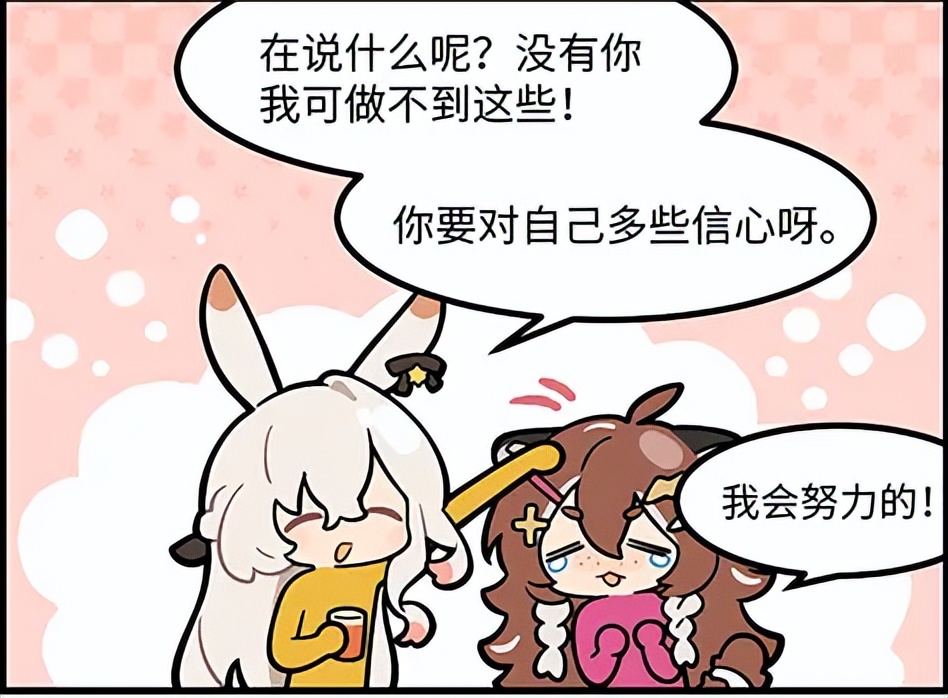
Character dynamics are always the best source material.
A lime has only one flavor on its own, but once it’s cut open, the flesh, juice, and aroma begin to combine in different ways—and the same goes for characters.In this story, four girls ride in the same car, heading south. Their journey itself isn’t particularly expansive, but the people in the car influence one another, and in the end, the player sees a world that is more complete than it was at the start.
The size of the world sometimes isn’t determined by how large a map is, but by how deep the connections between people are.
02
Beyond the Story
The ensemble narrative in *Arknights* has always had one very distinctive feature: the characters have their own wills, and both the characters themselves and their relationships with one another are constantly evolving.
"Until the Earth Becomes a Lime" also follows this approach; what truly drives the story forward in the game are the events that unfold among the four characters, while the Doctor remains largely on the sidelines, allowing players to observe the characters in a relatively comprehensive way.
What is truly worth discussing is precisely what lies “beyond the story.”
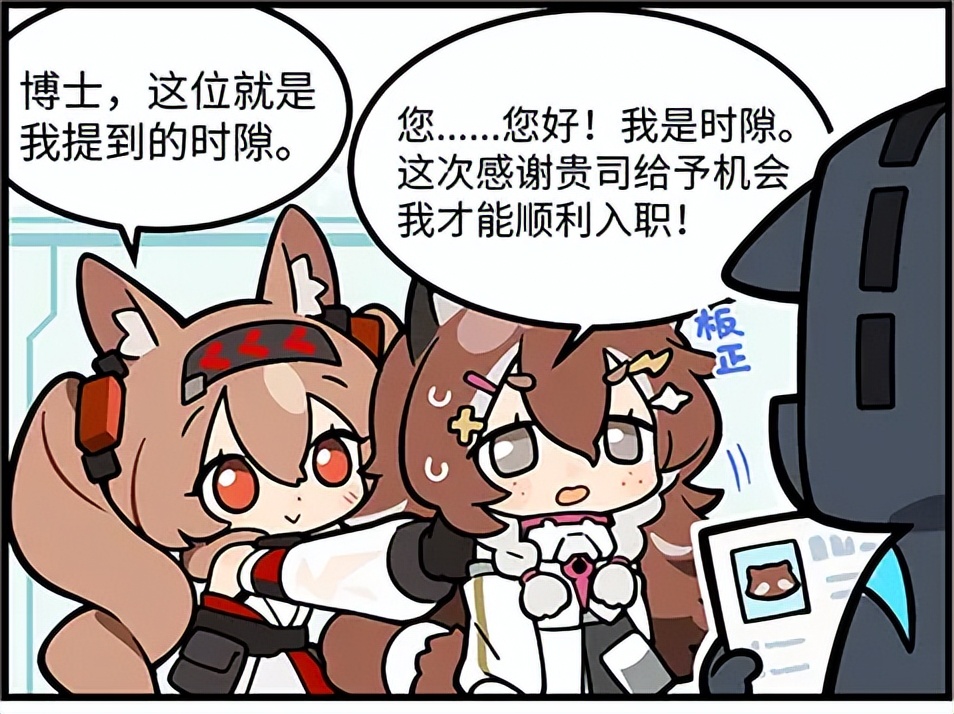
The most common way for players to build a relationship with a character in a mobile game is, of course, through interaction—allowing players to connect directly with the character. After a major upheaval, the character opens up to the protagonist and shares her experiences, while the protagonist responds to her questions and offers guidance;Later, when the character receives help from the protagonist at a critical moment, the player becomes immersed in the character’s story through these pivotal moments, ultimately deriving emotional fulfillment. This model delivers quick results and evokes intense emotions, making it the default solution in the vast majority of cases.
But for many years, *Arknights* has been trying to forge a different path: while players are the protagonists, the story unfolds dynamically, just like real life. The characters have their own wills; they make their own choices, take responsibility, and form relationships with one another —— This path is more difficult to navigate because it requires the characters themselves to be well-developed; but once it is successfully forged, what remains is far more enduring.
You might be able to see the potential of this path through the changes Gacinta undergoes in the story.When the young woman joins the journey, she carries a host of “predefined” labels—such as the Campbell family’s heiress, a patient with a severe infection who has lived in a rehabilitation center for a long time, and a girl who excels at studying but lacks real-world experience. Such characterization is easy to establish during her first appearance, but since players already know who she is, where can they continue to get to know her from there?
Eagle's Corner provided the answer through the funeral in Hongsha Town.
Facing those infected who were prepared to give up on life, Jacinta spoke openly about her own fears for the first time.Fifteen years of suffering from miner’s disease, the repeated notices of critical condition, and a life spent in isolation all converged in that moment. She admitted that she was afraid of death and afraid of leaving no trace behind. It was this heartfelt speech that inspired other infected people to begin sharing their own stories and allowed Jacinta to truly “make a difference.”
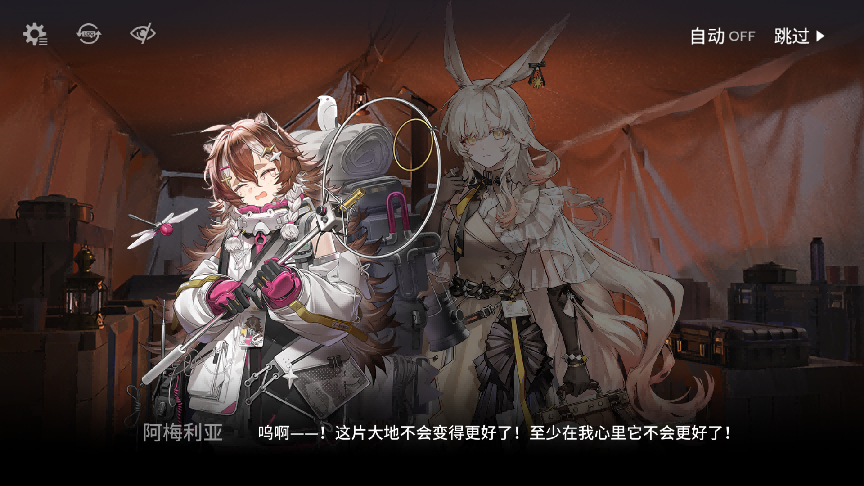
When Amelia learned that Jacinta didn't have long to live, she was deeply saddened.
At this point, a new layer of understanding emerges. Players initially knew her only as “the rich girl who wants to see the outside world,” but as they accompanied Jacinta on her journey of growth, they came to truly understand this young woman who could face death head-on and had begun to influence those around her.The character’s core backstory hasn’t fundamentally changed—she’s still that wealthy young lady, and she’s still an infected person—but her relationships and position have shifted. As a result, new facets of her personality have emerged, allowing players to see more layers beneath that same label.
Applying this logic to Angelina makes things even clearer. The Summer Event actually didn’t reveal as much new information about her as one might expect—players already knew who she was, that she was from Syracuse, that she used to be a messenger, what she had been through, and her connection to Rhodes Island.
But *Until the Earth Becomes a Lime* chooses to place Angelina in a new, continuous narrative, allowing players to observe her anew. In this way, what players gain gradually shifts from “I know who she is” to “I know how she’ll handle things.”
There is a fundamental difference between these two approaches: the former establishes a character profile, while the latter forms a judgment about the character.A character profile is static and can be listed in an encyclopedic manner—for example, background, experiences, abilities, interpersonal relationships, and so on; a character assessment, however, is dynamic. It arises from a player’s firsthand observation of the character’s choices in specific situations, leading to an internal expectation along the lines of “she’d probably do it this way.”
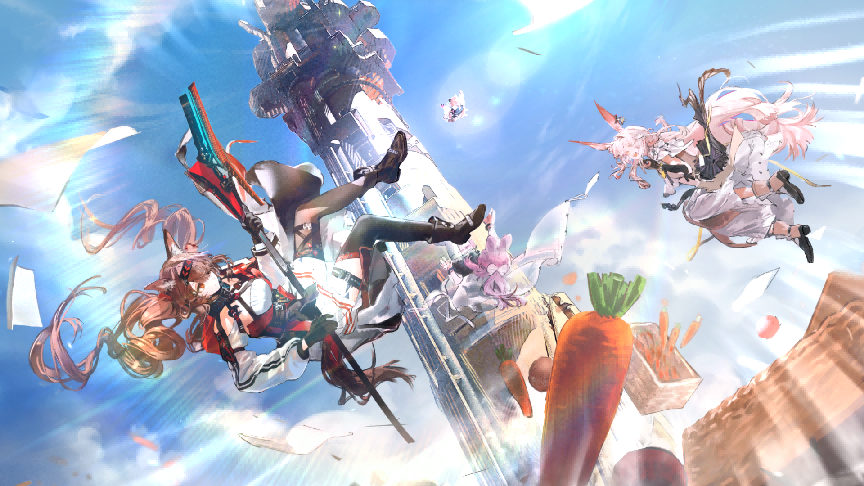
In contrast, the latter leaves a stronger impression because it is only when players have truly formed their own judgments that they will naturally draw on their past experiences the next time they see Angelina, and only then will they be able to anticipate her actions.
This is precisely the kind of experience that interactive relationships often fail to provide. When character choices are based on the player’s own observations, interactions between characters tend to more closely resemble real-life interpersonal relationships.
Once players begin to anticipate what Angelina will do next, the dynamic has already shifted—she is no longer merely a character defined by the plot, but someone players can predict.What matters to players shifts from “what she’s facing this time” to “what she’ll become next,” so whether Angelina undergoes two or three transformations, players will feel delighted by her changes rather than alienated by them.
03
See you next summer
This summer event attracted quite a few new PhDs. In fact, social media platforms also show that the number of PhDs returning to the game is equally substantial—and getting players to “come back” is, in itself, the most challenging yet most valuable task for a mature second-generation game.
There’s an interesting aspect to mobile games: the longer a game remains in operation after its launch, the more systems, content, and rules it accumulates. As a result, the barrier to entry for new players continues to rise, and veteran players’ expectations for the game grow ever higher. At the same time, however, the game’s past achievements gradually settle into its legacy, forming a history that is unique to it alone.
"Arknights" has always handled this contradiction very well. Take the Summer Carnival as an example: the event itself doesn’t involve any complex operational mechanics, but as this occasion recurs in various forms, it becomes a memory tied to a specific point in time—players experience the summer as it unfolds and also recall summers past.
This feeling is hard to “plan” because time marches on for everyone.When an event is launched for the first time, it’s simply something happening in the moment. But when it reappears the following year and the year after that, the traces accumulate, and the imprint it leaves becomes more pronounced with each passing year. As a result, the same operational milestone begins to take on a sense of sequence. For game developers, although memories cannot be quantified, these consistent patterns gradually accumulate over the course of the operational cycle.
This is also what makes mature IPs so special. Take a summer event, for example: when it first appears, it serves as a reminder of “what’s happening this year”; when it reappears later, it also serves as a reminder of “what happened before.”Players may recall a character who appeared one summer, remember a particular plotline, or even recall what their life was like at the time. These elements aren’t necessarily something the developers could have anticipated when designing the event, yet they gradually become an integral part of the product.
For example, at the start of this summer event, the event fonts and EP assets went viral on major short-video platforms. Although Eagle角’s artistic strengths are widely recognized in the industry, this kind of breakthrough into the mainstream was completely unforeseeable;Then there was the massive success of the “Peppe” EP track, and even the “Dorsales Wall Repair” event—which has become a classic prank among players. These opportunities, which lie somewhere between inevitability and serendipity, all require the accumulation of time.

Even now, players are still putting Peipei's EP on repeat in their playlists.
Ultimately, there’s no way to predict what players will remember.
A game can determine what happens this year, but it’s hard to predict which lines of dialogue, which characters, or which events players will remember years down the road. Players’ memories and the content produced by developers do not always align one-to-one. But once these elements become part of a player’s personal experience, the game gains an extra layer of value that cannot be created by version updates alone.

An image created by well-known content creator Yang Yan in the style of Angelina's "Yu Yuan" EP
When this accumulation continues over many years, the operational history begins to generate a value that is very difficult to replace.
Games can create one summer-themed set after another, introduce different characters, and develop new types of events, but memories of the past cannot be recreated—not even Ark itself can let players relive what has already happened.
This is actually an advantage that established mobile games often have over new titles—one that’s easily underestimated. While new games can quickly capture attention with their novelty, long-running titles have an increasingly rich history. As players return, their memories are rekindled—even if many years have passed.
Therefore, the significance of time for a game lies not merely in the number of years it has been in operation, but more importantly, in whether the game has left behind enough memorable elements during that time and whether the chemistry between relationships continues to evolve over time.

The development team also encourages players to create more wonderful memories.
That’s why I think the most interesting aspect of *Arknights*’ summer event ultimately comes down to those three words: “next time.” Players will continue to welcome new summers, and by then, this year’s story will have become a thing of the past, while the content from this year will become part of how they understand next year’s new content.
For a long-running free-to-play game, this is a rare feat. The game creates a sense of novelty by incorporating time itself into content creation. Content from a year, two years, or even longer ago will resurface and play a role again at some point in the future.
I think this might also be one of the reasons why so many players are willing to return to Rhodes Island time and time again.As players, we naturally want to see what “new content” this summer event has to offer, and we’re interested in new characters, storylines, and gameplay features. But at the same time, we might also feel that coming back here every summer has become a regular, established tradition. The power of this habit is perhaps the very essence of what a “festival” means.
This feeling can only be built up little by little over time; it can’t be created overnight with a single PV or character art. And once time becomes a factor in content creation, a mobile game’s past can become the foundation for its continued progress—and even the driving force behind its resurgence.
原创文章,作者:游茶妹儿,禁止转载:https://youxichaguan.com/en/archives/219572