An hour and a half into the interview, the conversation turned to that label.
“Many media outlets refer to you as the ‘Pride of China.’ What are your thoughts on that?”
Chen Weichen spoke first, with almost no hesitation: “I don’t like it because I don’t think it’s good enough.”
Yang Jintang, sitting next to him, also expressed his disapproval of this characterization. He Bin, who was the first of the three to start developing games and is the founder and CEO of Hunter Studio, took it in stride and didn’t let the label bother him too much.
The original *Lost Castle*, which three people described as “not good enough,” sold over 2 million copies across all platforms (excluding mobile) and received more than 24,000 reviews on Steam, earning a “Very Positive” rating;Its sequel, *Lost Castle 2*, launched in Early Access in 2024. Over the course of two years, its reputation rebounded from rock bottom, and sales have now surpassed 1 million copies. In the accounts of many media outlets, this studio—with fewer than 40 employees—is held up as a model of a “Chinese indie game that has successfully closed the commercial loop.”
But the three people sitting across from me told a different version of the story: no myths—just three people who learned as they went, turning a stroke of luck into a decade of perseverance.
01
Social Selection, Market Selection
During their junior and senior years, He Bin, Chen Weichen, and Yang Jintang interned together twice at the same major tech company.During their first internship, they developed two small games and a simple app; it wasn’t until their second internship that they were assigned to a proper game development department. After winning a university student competition hosted by a major tech company, they participated in the development of a traditional MMO mobile game—a project that served as the precursor to the mobile version of a well-known PC game.
When talking about that mobile game project back then, they described it as “looking very traditional” and said, “None of us really liked playing those top-down MMORPGs in the style of Diablo II.” He Bin said that toward the end of their internship, the three of them discussed it and ultimately decided not to stay on, choosing instead to leave the major studio to develop their own game.
Back in his sophomore year, He Bin publicly asked his classmates if anyone wanted to make a game with him. At first, he tried to recruit a classmate from the dorm next door who was great at drawing comics, but the student wasn’t interested. After looking around, he found Chen Weichen, who was good at drawing, and some time later, he brought Yang Jintang on board.
The three of them were classmates in the Software Engineering program at South China University of Technology, and each had their own reasons for choosing this path.
He Bin was the one who was absolutely determined. He had been teaching himself game development since high school, but when it came time to fill out his college application, he discovered that neither Sun Yat-sen University nor South China University of Technology offered a game development major, so he had no choice but to choose software engineering—the closest option available. Chen Weichen had a similar mindset; after enrolling, he felt a sense of disappointment and began experimenting with drawing on his own during his freshman year. “Back then, my mind was completely focused on making games.“Even if I had to think about my ‘future,’ it would be working at a game company making games.” Yang Jintang describes himself as having “switched tracks midway”; he originally just wanted to study computer science, so he chose automation as his specialization, and he “grew to love game development as he worked on it.”
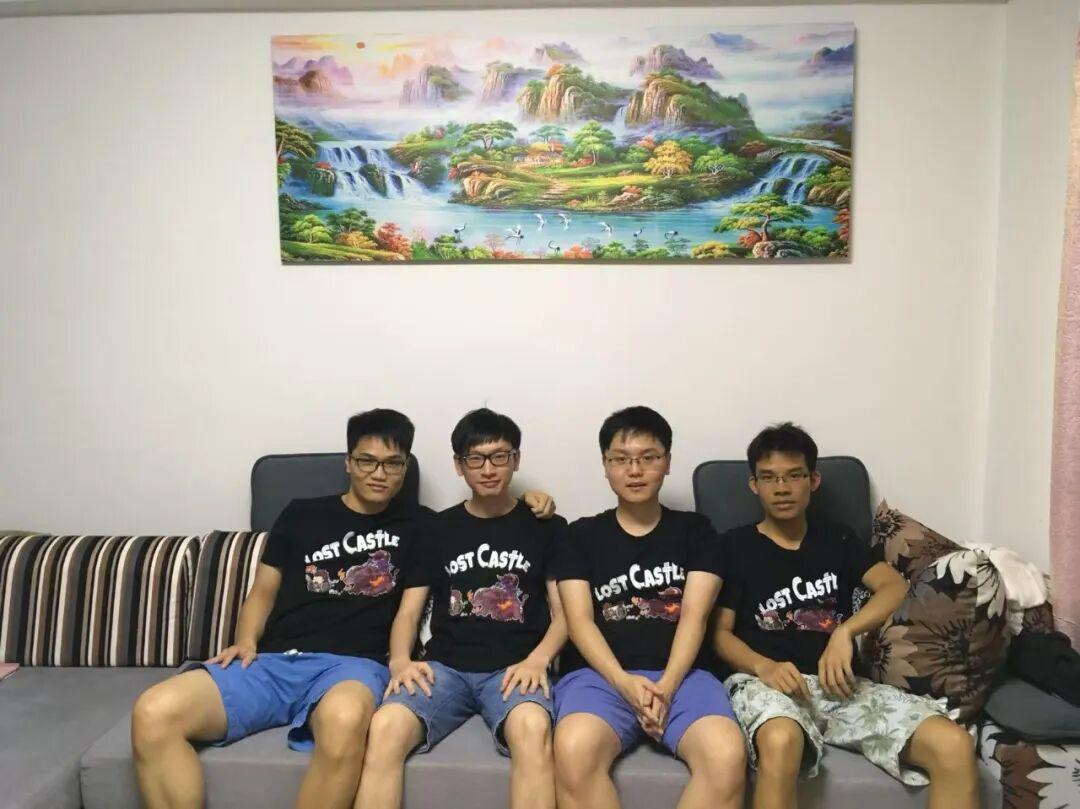
Old Photos of He Bin, Chen Weichen, and Yang Jintang
After forming a team, they developed several small Android games as practice projects, released them on the app store, and sold dozens of copies.
After returning to school following two internships, the three of them decided to seriously develop a product—a game that could be released and sold. To avoid spending any more time tinkering with their final projects, they simply treated this game as their graduation project.Out of the several hundred students in the entire School of Software Engineering, they were the only three to choose a game as their graduation project. During the defense, a young professor remarked with some emotion that it had been many years since he’d seen students choose a game for their graduation project.
Around 2015, there was a standard answer to the question of what a good student in the School of Software should do; everyone was more interested in algorithms, data mining, and hardware, and “not many people really wanted to make games.” Later, when it came time to graduate, many of my classmates still ended up joining game companies because the game divisions of large corporations were profitable during those years. He Bin referred to this as “social selection” and “market selection.”
02
Outbreak
After graduation, the three of them moved into a rented apartment and began what Yang Jintang called their “fifth year.”
We’d sleep until noon, and whoever woke up first would make lunch. We’d work until midnight, then play video games together until 2 or 3 a.m.—either aiming for our first win of the night in *League of Legends* or playing *Monster Hunter* online. There were no weekends or holidays, and we got by on just enough money for meals.Toward the end of the project, Yang Jintang began suffering from unexplained insomnia. “My family isn’t very well-off, and not having a job might be stressful, but I didn’t really feel that way while I was working.”
When it comes to lunch, the two have differing recollections. Chen Weichen says, “Whoever got up first would go prepare lunch,” while He Bin remembers that sometimes he was the one cooking, “and it was often just a hodgepodge of ingredients or congee.”
What they originally set out to create wasn’t what *Lost Castle* is today. The first concept was much more ambitious—a large map where players would enter a city and begin exploring. After working on it for several months, they realized they couldn’t handle it.Around that time, the three of them were playing *Dungeon Legends* and *The Binding of Isaac*, and He Bin realized that the roguelike genre was fun and “seemed like something they could make.”
None of the three had any formal training in game development; every aspect of the project was self-taught.Lead artist Chen Weichen wasn’t trained in the field; he couldn’t capture the intricate details of Japanese manga, and keyframing was too difficult, so he opted for Western-style cartoons, which had a lower barrier to entry. Since his foundational skills were lacking, he simply used solid-color fills for everything. To prevent colors from looking muddy, he learned to layer textures from artist Huke.
He once summed up this methodology by saying, “It’s okay for the drawing to be rough, but it shouldn’t look bad at first glance.”
The game doesn’t feature traditional classes; whatever weapon you pick up, you use its corresponding animation set—half of which is inspired by *Monster Hunter* and *Dark Souls*. As for the “slightly hardcore” feel, He Bin candidly admitted, “It’s more likely that the design wasn’t done well enough—it wasn’t smooth enough—which actually makes it feel ‘stiff.’”
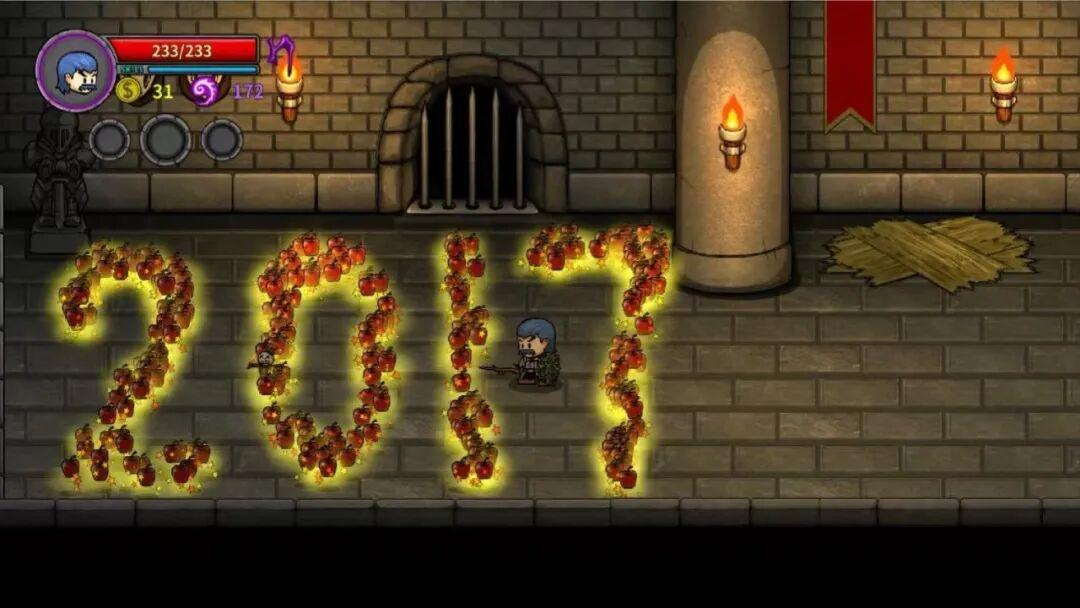
Screenshots from *The Lost Castle*
In February 2016, the game launched on Steam as an Early Access title. When it came to sales, the three of them had three different expectations. He Bin vaguely recalls telling everyone before launch that their goal was 50,000 copies, “but at the time, it was just to boost morale—I didn’t think we’d actually reach it”;Chen Weichen’s calculations were more pragmatic: based on a year’s worth of costs, selling around 2,000 copies would keep the team afloat—“enough to keep going for another year.” Yang Jintang had no expectations at all—“My mind was completely focused on fixing bugs.”
The sales exploded during the Spring Festival. Yang Jintang was still out shopping for a controller to fix the problem even during the holiday; Chen Weichen was dragged off on a family trip, and while at the hotel, he saw the other two discussing the sales surge in the group chat. He was completely baffled: “Since there was nothing I could do anyway, I just listened to the two of them chatting.”
The final figures far exceeded any of the three projections: nearly 130,000 copies were sold during the Early Access phase, and when the full version launched on September 1, 2016, it sold over 20,000 copies in its first week. Since then, *The Lost Castle* has become one of the first Chinese-developed games to reach one million copies sold on Steam.
“We were constantly feeling our way forward, never actually reaching the other side,” said He Bin, summarizing those years. After finishing the core game, they moved on to multiplayer; after multiplayer, they worked on porting; and after porting, they tackled updates. The three of them were constantly chasing deadlines, with no time for reflection or rest.
03
An Expensive Lesson
*The Lost Castle* came about through a series of unexpected events. The creation of the high-difficulty “Nightmare Mode” is a case in point: there was a streamer in the player community who constantly mocked the game for being too easy. Three of us watched his stream and grew increasingly annoyed, so we decided to create an extremely difficult mode.
In 2019, *The Lost Castle* was released on PS4, Switch, and mobile platforms, with the Chinese version of the mobile game published by Thunder Games;By that year, official figures showed that PC sales had reached nearly 2 million copies, while the mobile game’s downloads on TapTap had surpassed 2 million in just two months.
However, the experience of porting the game to mobile taught the team a lesson about “technical debt.” The engine version was so outdated that the toolchain could no longer run in a modern environment, and all the light sources that had been used indiscriminately without regard for performance back then had to be rewritten from scratch. From that point on, the mobile and PC versions of the game were developed separately.This learning experience was not in vain. In the subsequent *Lost Castle 2*, content across both platforms remained synchronized from the very start of development—whenever the PC version reached a certain stage, the mobile version followed suit.
It was also during these past few years of steadily rising sales that the phrases “the pride of Chinese gaming” and “three college students created a smash hit” began to take hold.Yang Jintang found this embarrassing, saying, “Our actual capabilities don’t live up to that name”; Chen Weichen’s reaction was even stronger. As seasoned gamers themselves, they knew exactly what level of work they had produced: “There were a lot of compromises, and a lot of rough design choices.”
In his view, the narrative of three college students creating a viral hit “is deceiving young people. We benefited from the advantages of our era back then, and this kind of success—which was driven to some extent by those advantages—is very difficult to replicate.”
That label, fueled by Chen Weichen’s anxiety that he “hadn’t done well enough,” carried over into his next project.
Around 2019, the team’s new project, the party brawler *Drill Party*, was nearly complete and, if all went well, could have launched that same year. However, at that time, regulations on game publishing licenses in China had tightened, and rumors were circulating in the industry that some teams had launched games without licenses and were forced to take them down after just a few months.The team decided to wait for the license and launch the game once it was granted. From the time the project neared completion in 2019 to the approval of the license in September 2022—a span of about three years—the team submitted two applications, with the official waiting period for approval exceeding one year.
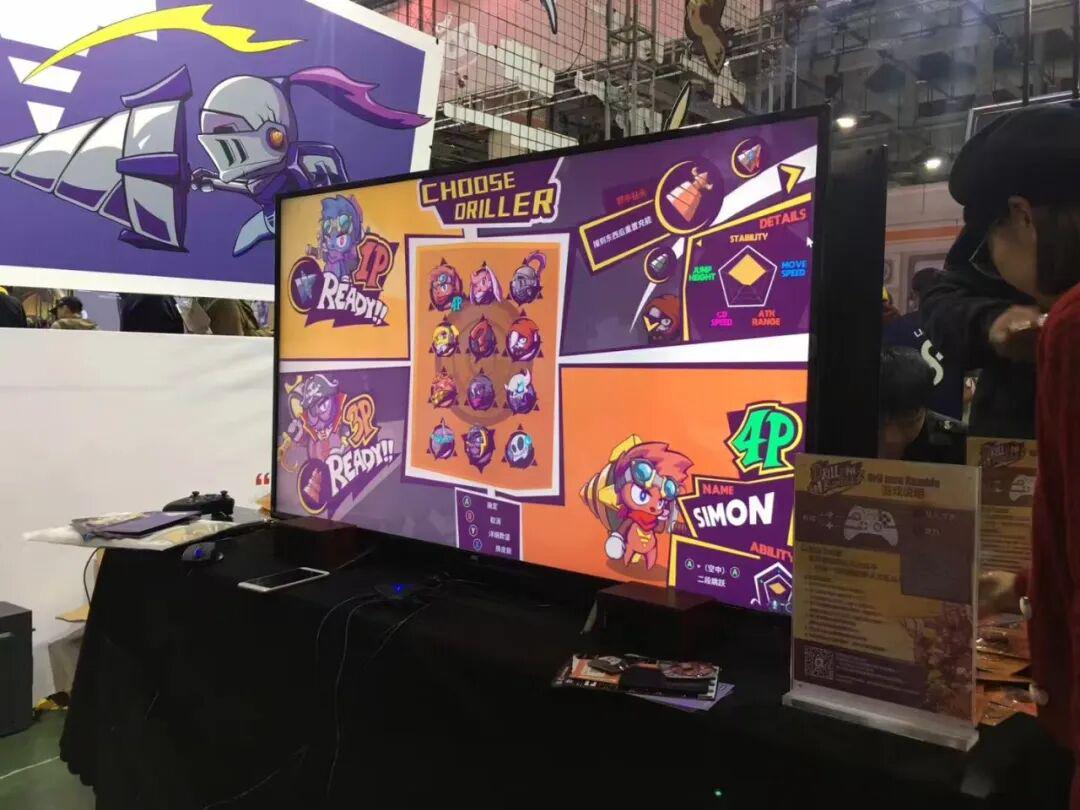
The Drill Party That Never Happened
During the waiting period, the project couldn’t launch, and the team couldn’t leave, so they began to “spin their wheels.” As He Bin put it, since there was nothing to do, they decided to add some features and gameplay elements.Chen Weichen put it more bluntly: the psychological burden after the success of the first generation was too heavy; they kept wondering if a party brawl “wasn’t enough,” so they kept adding features, causing the project to expand chaotically.
He blamed himself for this: “The phrase ‘Pride of Chinese Gaming’ made me desperately want to create a game that truly lived up to that description, and I fell into the trap of perfectionism—which may have been one of the reasons I ended up derailing the ‘Drill Party’ project.”
By the time the publishing license was approved, the team behind the “Drill” project had already disbanded; the members had been reassigned to other projects, leaving no one to maintain the game, so naturally, it couldn’t be released. This game, which had been three years in the making, was thus shelved indefinitely.
During the interview, Game Teahouse asked the three of them whether this was the biggest crisis the company had faced since its founding.He Bin nodded and reflected on the experience, saying, “If we had launched in 2019, player demand would have carried us forward—we wouldn’t have had time to worry about whether we were overburdened or not. Whatever the players wanted, we would have delivered. But at the time, we had to wait for the publishing license and couldn’t launch, so we were just spinning our wheels on this project.”
The cost of this lesson was three years and a shelved project—in exchange for a valuable lesson: games need to reach players as early as possible.Between 2020 and 2021, during Drill Party’s most uncertain period, He Bin called a company-wide meeting and emphasized that they couldn’t just sit around waiting any longer.The decision made at the meeting was to launch *Lost Castle 2* as a new project, reassigning part of the team to begin the design and development of the sequel.
04
Climbing a Hill
By the time Hunter Studio was developing *The Lost Castle 2*, it was no longer just three people working out of a rented apartment. The team had expanded to around 40 people, though the core members remained largely the same. In 2024, NoviCreation—part of the Gibit ecosystem—acquired a stake in Hunter Studio; the mobile game publisher Thunder Games is also part of the Gibit ecosystem.
Chen Weichen said that the investors didn’t interfere much with creative freedom, “and they gave us a huge financial boost at the time.” The three of them continued as before, all participating in management while also working on the front lines.
But the success of the first installment became a new burden; after so many years without a new game, everyone on the team knew that players’ expectations would only be higher. Before the EA version launched, Chen Weichen said he was in a “superposition of confidence and despair.”After reviewing the games released around the same time and the community sentiment, he grew increasingly anxious, and ultimately completed the Early Access version with the mindset that “the sequel is probably going to flop spectacularly.” All he could do was constantly instill a sense of crisis in the core team members—“whether that had any effect, I don’t know.”
The incident occurred during the first week after launch, and the problem did not stem from their own code. There was a bug in the cloud data backend logic of their online service provider: as soon as the number of concurrent game sessions reached a certain threshold, the entire server would crash. For three consecutive nights, as soon as the online player count hit around 17,000, the entire server went offline.It took the service provider three days to identify the cause and fix the issue. During those three days, the game’s approval rating plummeted below 50%. Meanwhile, the development team could only urge the service provider to act and pray for a swift resolution.
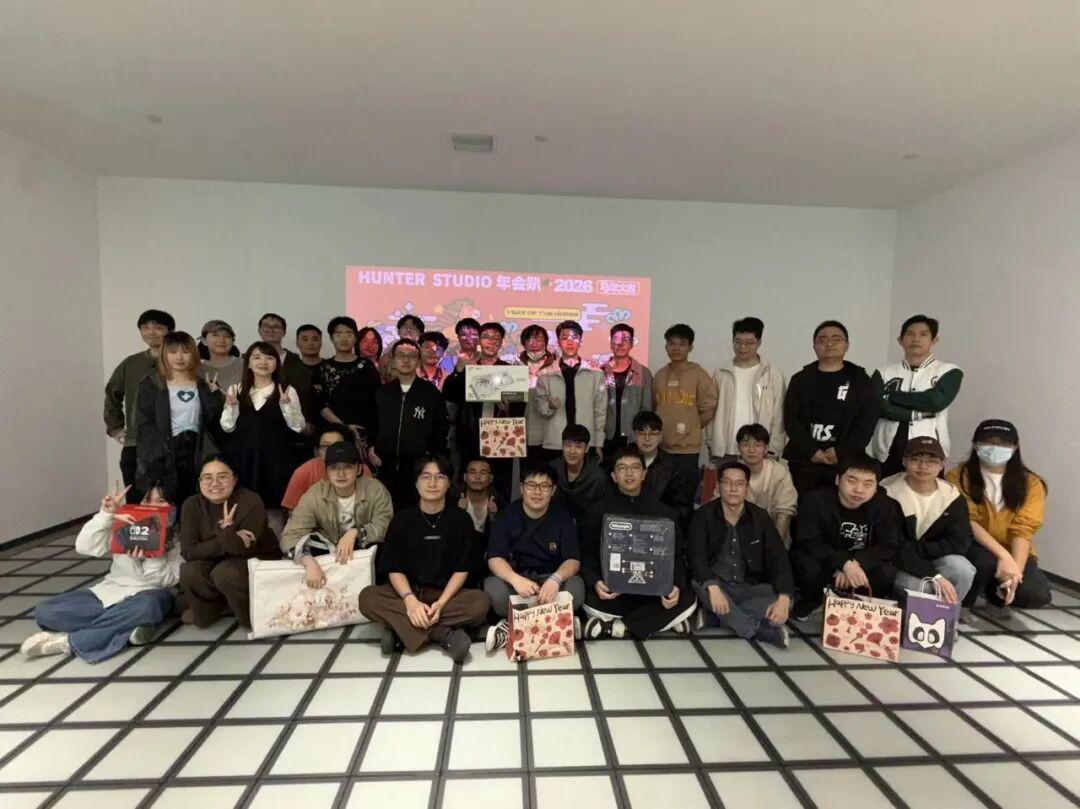
Hunter Studio Today
He Bin said that all they could do during that time was frantically moderate the comments section, replying to each post one by one; Chen Weichen would feel down for days after reading negative reviews, and later he simply started skimming them without clicking to read them. He Bin said it was nothing short of a “bolt from the blue”—a bug he hadn’t written himself, yet it had come crashing down on him.“Think about it—would a typical player buy the game if they saw a 40–50 percent positive review rate?” He believes this incident will have a significant long-term impact on sales.
What followed was a long, steady climb. From the Early Access launch in July 2024 to the official release in June 2026, the team rolled out more than 10 updates and mapped out six major phases in the roadmap.Chen Weichen believes the turning point came with the “Soul Imprint” system in February 2025; he specifically emphasized that he did not lead its development—it was designed by several other core members of the team.The game’s user rating climbed from just over 40% “Mixed” to nearly 80% “Mostly Positive.”
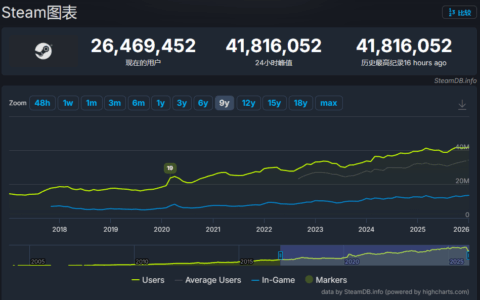
On June 11, 2026, Version 1.0 was officially launched. That evening, the number of concurrent online players surged to 21,326, and a few days later, the all-time peak reached 28,835.Chen Weichen said that the moment he saw the numbers climbing, he kept silently praying that there wouldn’t be any server bugs like the ones that plagued the Early Access phase.
This time, the server held up.
Around the time the official version was released, two developer friends told Chen Weichen one after another that they felt the first game was better than the second. One thought the mechanics of the second game weren’t “balanced enough,” and that the action elements grew weaker as the game progressed; the other felt that the second game seemed too polished at first glance, raising expectations too high, only to lead to a sense of disappointment once they actually played it.
External data paints a different picture: *Lost Castle 2* scored 83 on Metacritic, while the first game received reviews from only two media outlets at the time, with an average score of 65; in terms of sales, the team reports that *Lost Castle 2* has already sold over 1 million copies.
05
Ten Years Later
He Bin admitted that, from a business perspective, the current results “basically just cover costs—we haven’t made much profit. In terms of a closed-loop business model and return on investment, I don’t think things are going very well.” That said, the second generation is still being updated, the mobile port is nearing completion, and new projects are in the works.
Pricing is a microcosm of this business situation. When setting the Early Access price, Chen Weichen gathered feedback from the community indicating an expected price of 48 yuan, while He Bin, from a business management perspective, wanted to set it at 58 yuan. As they were at an impasse, Klei’s similar game, *The Forge*, launched in Early Access at a price of 37 yuan.Ultimately, *Lost Castle 2* settled on a compromise price of 53 yuan, which, after a discount, came out to exactly 48 yuan.
In their view, the relatively low pricing in the Chinese market stems from historical reasons as well as market competition. Yang Jintang believes that, provided the quality is up to par, players are actually willing to pay a price increase of over ten yuan.
Work on the current project is still moving forward. The mobile port of *The Lost Castle 2* is nearing completion and is currently in testing; it is expected to launch by the end of 2026. The lessons learned from the port of the first game have been turned into engineering best practices: content across both platforms has been kept in sync from the start of development, with the mobile version following the PC version’s progress step by step.
Moving forward, there are new developments. He Bin stated that there won’t be any new projects this year, but one might be greenlit next year—“it might be related to the Lost Castle series, but it won’t necessarily be a sequel.”Yang Jintang, meanwhile, said that developing online games is a bit exhausting and that he wants to return to single-player games; everyone is “eager to move on to new projects.” In response, Chen Weichen added, “I really enjoy creating new things and new content, but when it comes time for testing, I find it quite exhausting.”
The last question of the interview was a bit of a cliché: If you could say one thing to your past self—the person sitting in front of a computer in a rented room ten years ago, unsure of what the future held—what would you say?
None of the three could come up with an answer right away. Some said they hadn’t thought about it, while others said they didn’t know what there was to say. Then He Bin remarked, “I feel like nothing I say will really change what I want to do or the direction I’m heading in.” The conversation ultimately came to a close with Chen Weichen’s reflective comment: “It feels like, all these years, I’ve actually just been moving forward the whole time.”
However, in his written preparation materials for this question, he had written down another answer:
“Don’t get hung up on trivialities—just go for it.”
原创文章,作者:游茶妹儿,禁止转载:https://youxichaguan.com/en/archives/208520