“Dads, help me!”
As Bai Shan, the producer of *Hanchen: From Rotten Grass to Firefly*, typed those words in the developer chat, his team was at a dead end—they simply couldn’t afford to pay their salaries.

Hanchen: Rotten Grass Becomes a Firefly
In a moment of desperation, Bai Shan was asking his peers for help in the group chat while simultaneously sending a plea for urgent assistance directly to Ji Ling, the producer of *Starving: A Thousand-Mile Journey at the End of the Ming Dynasty*:
After completing their work on *Hanchen*, Bai Shan Zheng’s art team still had some capacity to spare. So Bai Shan Zheng asked Ji Ling if he could assign them some freelance art projects—at the very least, to help cover the salaries of two of his artists.
Ji Ling gladly agreed, completely unconcerned that Bai Shanzheng’s team was not a professional outsourcing firm; he even paid the full amount upfront, thereby relieving Bai Shanzheng of his immediate financial crisis.
Afterward, Ji Ling told Game Teahouse that Bai Shan Zheng hadn’t offered a price higher than the market rate because he was short on funds; instead, he had openly disclosed the artist’s salary, saying, “The offer was very reasonable.”
In fact, this isn’t the first time Baishan Zheng has received strong support from his gaming mentors.
At the end of 2024, Cheng Li, the lead developer of *Hanchen*, left the company. Since Bai Shan knew nothing about programming and lacked professional connections, the hiring process hit a snag. Upon learning of this, CG, the head of Hanjia Squirrel, and Fatso, the producer of *Next Stop: Jianghu*, not only helped recommend candidates and design test questions, but even assisted in screening resumes.
With the help of two experienced senior colleagues, *Hanchen* successfully secured a new lead programmer.
We’ve covered so many commercial mobile games in the past that hearing a heartwarming story of mutual support among game developers feels like a gentle spring breeze—it truly warms the heart. However, Game Teahouse has noticed that such mutual support among developers seems to occur mostly in the buy-to-play game community.
Liang Qiwei, the producer of *Shadow Blade: Zero*, recently shared a handwritten thank-you note in Chinese from Lee Jun-ho, the producer of *First Berserker: Kazan*. The letter is filled with mutual admiration for each other’s creative visions, and the two producers seem to feel they should have met sooner.
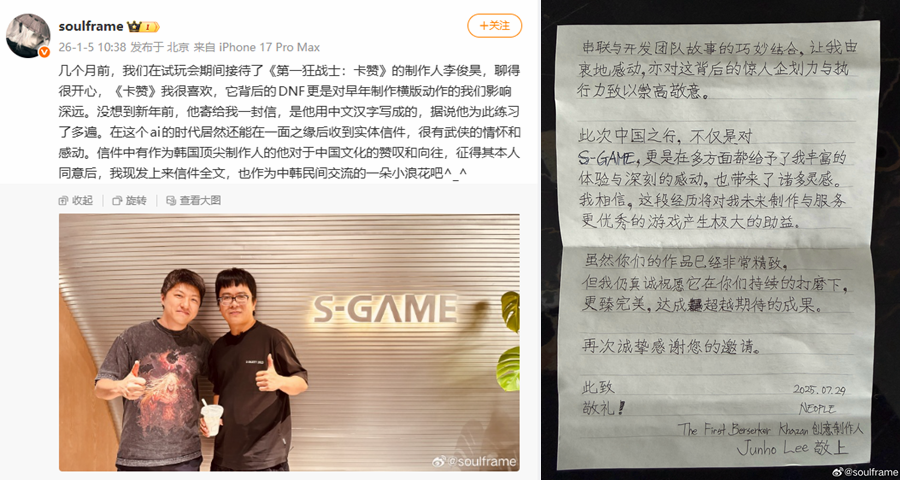
Prior to this, Liang Qiwei had frequently interacted with the team behind *Black Myth: Wukong*, with both sides promoting each other’s games—a clear demonstration of the openness and sincerity that exists among industry peers.
How did the spirit of mutual support in the buy-to-play gaming community come about? Is there really no competition among single-player game developers? Can such a warm and friendly atmosphere truly be sustained over the long term? With these questions in mind, Game Teahouse sought the insights of more game developers.
01
Sincere help without expecting anything in return
In the domestic gaming market, competition in the commercial online gaming sector has always been fierce. It is not uncommon for game developers to clash head-to-head in their quest to attract users and recruit top talent, and legal battles have become a routine occurrence.
After all, when two competing products in the same category come head-to-head in a do-or-die battle, how can there be any room for calm, mutual support?
In contrast, the ecosystem of the buy-to-play gaming industry presents a much warmer and more welcoming picture. The mutual support among peers is often entirely selfless, with no ulterior motives and no expectation of anything in return.
Jiang Lei, the head of 91Act, has a deep understanding of this.
The team led by him developed *BlazBlue: Chaos Effect*, and it wasn’t until the middle to late stages of the project that they decided to switch to a buy-to-play model and release the game on Steam. At the time, 91Act had no experience publishing buy-to-play games and was unfamiliar with the Steam platform. Experienced peers stepped in to lend a hand, generously sharing their “guide to avoiding pitfalls.”
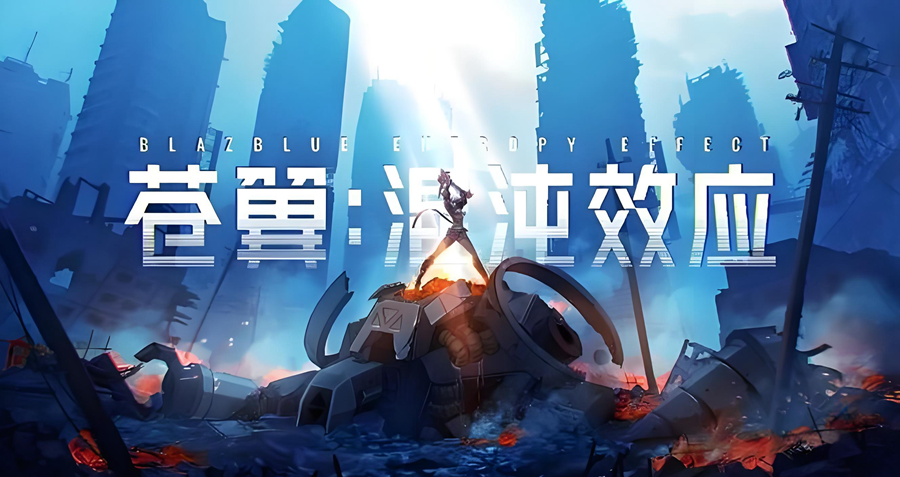
In particular, the plant manager expressed special gratitude to Thunder Games. “Even though we made it clear that we would handle distribution ourselves, Thunder Games still shared a wealth of advice and risk warnings with us without reservation, which proved extremely valuable.”
In early 2024, 91Act faced a financial crisis and was forced to downsize its team and initiate a restructuring. During this difficult time, many industry professionals reached out to the CEO with offers of support:
“We have some empty desks. Why don’t you move in and work with us? You’ll save on rent.”
“We still have openings. Why don’t the laid-off employees come by and see if any of them are a good fit?”
These simple acts of kindness were like a ray of sunshine on a cold winter day, warming the factory director’s heart.
After weathering the storm, *Chaos Effect* began work on its console port. A brand-new development environment, vastly different console platform review guidelines, and unfamiliar overseas store listing processes presented 91Act with a series of new challenges. This time, Astrolabe Games stepped up to provide 91Act with comprehensive guidance.
The plant manager didn’t want to always be the one asking for favors and hoped to maintain this friendship based on mutual interests. Taking this as an opportunity, the two sides successfully reached a partnership agreement for the console version’s distribution.
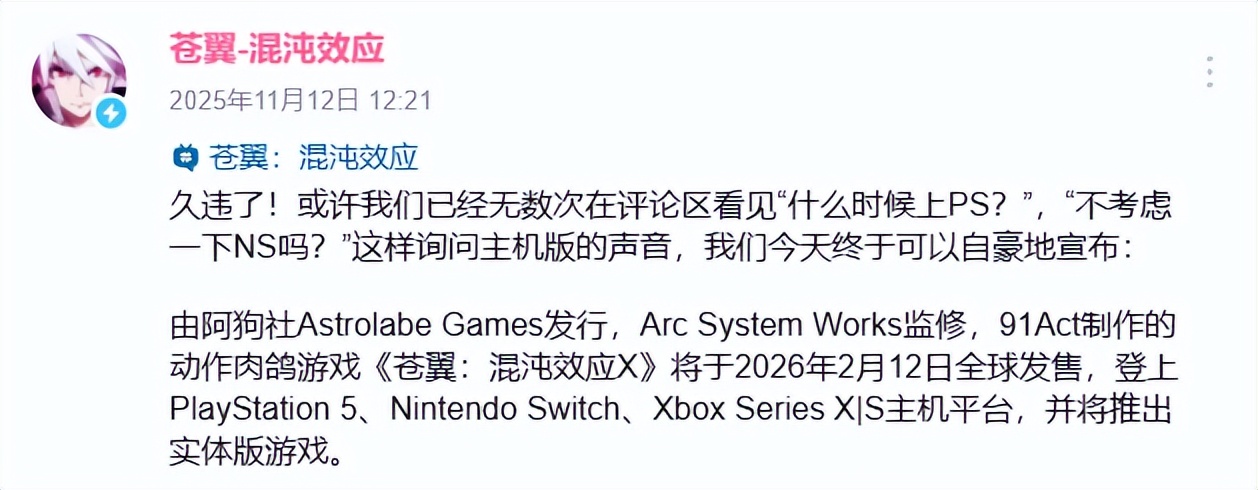
Recalling the details of the partnership negotiations, the factory director remains deeply grateful: “Even though we had disagreements over some of the contract terms at the time, Agou Society generously said, ‘It’s okay if we can’t reach an agreement; if you run into any problems in the future, you can always come to us.’”
Jokery, the current head of Agou Studio, was one of the early leaders of the "PlayStation China Star Program" and contributed significantly to the *Infinite Mech* project.
*Infinite Mech* was originally developed independently by Yang Bin (VISKEM) in 2016. In 2017, the project officially launched with the support of Shouling Technology (the development team behind *Mist Detective*).
In 2018, the project was discovered by Jokery and successfully selected for the second phase of the "China Star Program."
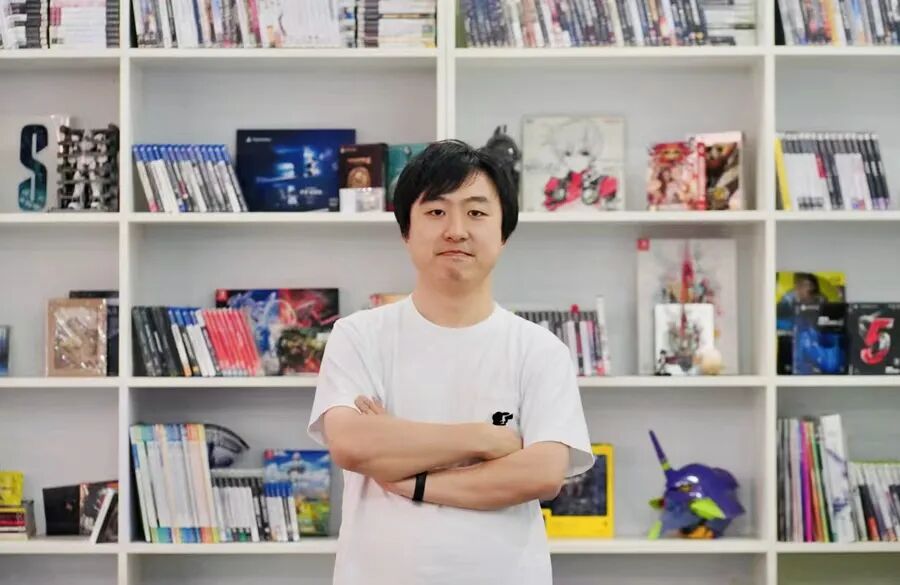
Yang Bin
Speaking about this experience, Yang Bin, producer of *Infinite Mech*, said, “The China Star team provided a great deal of support in technical areas such as project management and platform integration. In 2019, they also took us to overseas trade shows, which allowed many international players to discover *AI LIMIT* (the game’s international title) at an early stage.”
More importantly, China Star helped resolve the initial funding challenges.
Through Jokery’s connections, Whiz Partners was the first to invest in the *Infinite Mech* project, enabling the team to establish its initial structure. Subsequently, the project received additional funding from ZhenFund, which secured the necessary capital for mid-stage development.
“It’s all thanks to everyone’s help. Without the early support from Shouling Technology, the backing from the China Star Program, the assistance from ZhenFund, and the distribution support from China Electronics Boya, we don’t know when *Infinite Mech* would have been completed.” Yang Bin looked back on the journey with deep emotion.
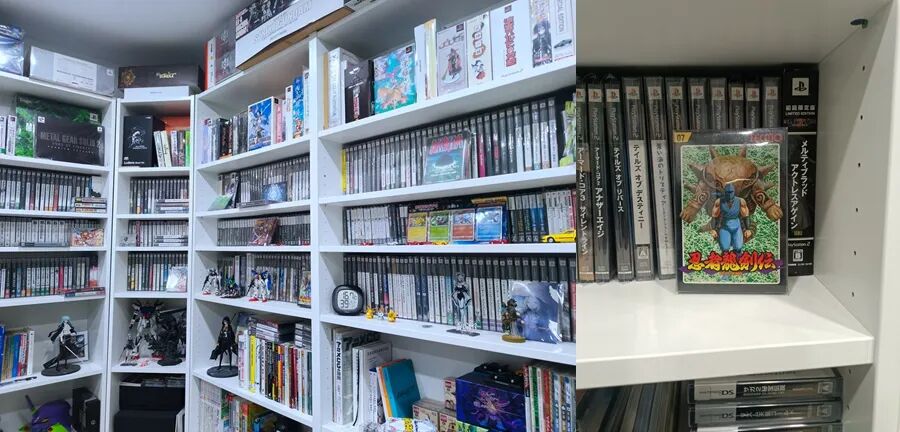
Old games from Yang Bin's office (including the Super Famicom version of the original *Ninja Dragon*)
02
Amidst warmth and mutual support, there are still boundaries regarding confidentiality
Unlike Factory Director and Yang Bin, who have been in the gaming industry for years, Ji Ling and Bai Shan Zheng are both newcomers to development who have come from other fields.
After dropping out of college, Ji Ling threw himself into the anime and manga industry to start his own business. Light novels, manga, film and television, and anime conventions… He tried his hand at nearly every aspect of the industry, yet he never managed to achieve the success he had hoped for. After hitting one roadblock after another, Ji Ling began to seriously consider a change of direction.
When he first started his business in the anime industry, Ji Ling had already played *Bubble Winter Scenery* and really enjoyed it. Through a comic convention, he met Gu Luo, the producer of *Bubble Winter Scenery*.
This warm-hearted producer takes special care of the younger generation.
Not only did Gu Luo share his game development expertise with Ji Ling without reservation, but he also candidly revealed key information such as the development costs and profitability of *Bubble Winter Scenery*. It was Gu Luo’s mentorship that ultimately drove Ji Ling to make the leap into the gaming industry.

A Winter Scene in Foam
Since even core data such as development costs and profits can be discussed openly, what other information would industry professionals never readily disclose to the outside world?
Ji Ling candidly told Game Teahouse that commercial secrets involving partners must never be disclosed to the public. For example, the costs associated with the voice acting and soundtrack for *The Starving Dead* should not be casually discussed publicly, as they directly affect the vital interests of our partners.
In addition to trade secrets related to the partnership, the developers also noted that key creative details regarding the game’s development cannot be disclosed.
Ji Ling stated bluntly that the team would never disclose any plot-related details about their upcoming title in advance. After all, for visual novels, the story is the core selling point.
In Yang Bin’s view, the 3C framework (characters, camera, and controls) for action games, as well as the approach to tuning gameplay mechanics, designing monsters and levels, and the creative logic behind the game world, all constitute the team’s core values and will be kept confidential to some extent.

In addition, many innovative gameplay features and new functions are only unveiled to the public at specific times. Yang Bin admitted that rather than revealing some key ideas too early, it’s better to wait until they are fully developed before sharing them with everyone.
03
Can this positive atmosphere of mutual support really be sustained?
The community of developers working on buyout-style games isn’t very large, and those based in Chengdu, in particular, are close-knit colleagues who know each other well.
Hu Tao, producer of Vitac's *The Ballad of the Pipa*, told Game Teahouse that at every game expo, developers always try out each other’s new titles, share their experiences, and offer constructive feedback.
However, there is always the possibility of borrowing ideas and imitating one another among similar games. So, can the positive spirit of mutual support within the buy-to-play gaming community truly be sustained in the long run?
In the plant manager's view, there is no real competition between single-player game rooms.
He explained that the amount of money and time players invest in a single-player game is ultimately limited; once they’ve completed it, they naturally turn their attention to the next great title. Moreover, the creative landscape of gaming is vast; as long as developers don’t deliberately follow trends or copy others, it’s rare for highly homogeneous products to emerge.
In interviews, several developers expressed similar views: unlike mobile games, single-player games do not need to engage in cutthroat competition to vie for players’ time or secure prime advertising slots; the benefits of collaboration far outweigh the costs of internal strife.
Ji Ling noted that bundle packages featuring *The Starving Dead*, *Journey Through Mountains and Rivers*, and other outstanding titles like *The Courtyard of Yog-Sothoth* have sold quite well and have further strengthened the bonds of friendship among developers.

Hungry Ghosts X Mountain River Travel Exploration Bundle
If we look at the history of the mobile gaming industry, we see developers poaching key talent from one another, CEOs publicly feuding, and disputes eventually ending up in court—leading to a complete breakdown of once-friendly industry relationships. Does this phenomenon of poaching not exist in the buy-to-play gaming industry?
In response, the developers gave a definitive answer: not only is there no trend of poaching at present, but it is also unlikely to emerge in the foreseeable future.
On the one hand, single-player games vary greatly from one another, and the skills required for each are quite different—it’s hard to imagine a team developing a hardcore action game poaching developers from the text-adventure genre. On the other hand, single-player game teams are mostly formed around a specific project; every member who joins the team genuinely believes in the game’s creative vision.
This genuine sense of identification has strengthened the sense of belonging and cohesion within the single-player game development team, and has increased the members' willingness to collaborate over the long term.
"Infinite Mech" was once on the brink of cancellation, yet not a single member of the core creative team left; at 91Act, 70% of the staff have been with the company for more than five years. These real-life examples serve as further evidence of the point made earlier.
Of course, indie projects in particular must embrace the spirit of “collaboration and mutual benefit” to establish a fair profit-sharing mechanism, ensuring that every developer can pursue their gaming aspirations while also reaping commensurate financial rewards.
04
I’ve been caught in the rain myself, so I hold an umbrella for others
Along the way, the studio head, Yang Bin, Ji Ling, and other developers like Bai Shan Zheng have faced their share of setbacks, but they have also been repeatedly supported by the warmth of their peers. Today, that goodwill has quietly been passed on—they are now, in their own way, providing a shelter from the storm for more people in the gaming industry.
· After the release of the "Battles and Home Life" PV, the development team buried themselves in work and neglected to communicate with players, leading to rumors of the project being "canceled" spreading like wildfire throughout the player community. Producer Huowa urgently needs to debunk these rumors in an appropriate manner.
With Thunder Games acting as the facilitator, Factory Director and Fire Kid—both experienced streamers—hosted a joint livestream that provided a clear explanation of the game’s development progress.
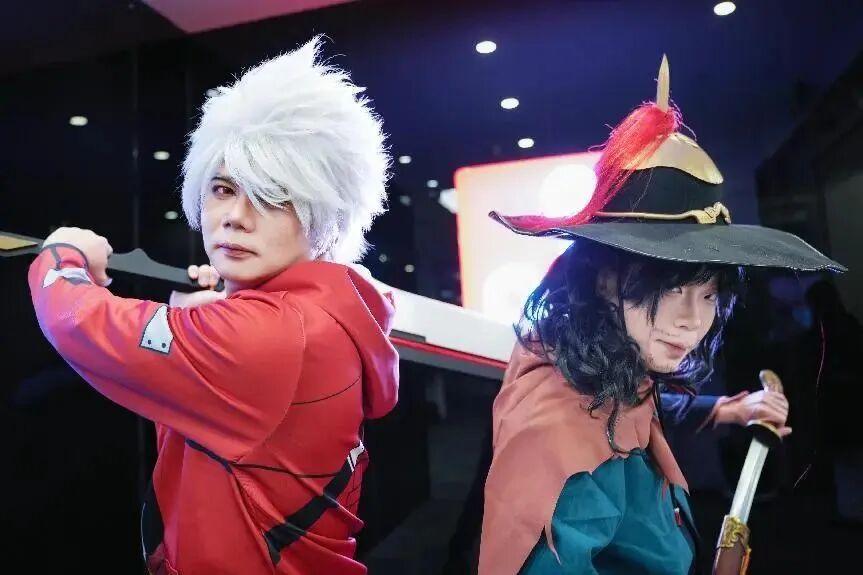
A prank segment featuring the Plant Manager (left) and Ji Ling (right) in a joint livestream
·Yang Bin, who entered the gaming industry as a server operations engineer and worked his way up to become a game producer, has faced countless challenges along the way—needless to say.
As a result, Yang Bin pays particular attention to independent full-stack developers, frequently engaging with them to share insights on key development priorities, financial planning, and strategies for bringing products to market.
· Ji Ling now frequently writes articles or answers questions about gaming on Zhihu, sharing his thoughts and, in doing so, offering some practical advice.
· Bai Shan Zheng is not only a game developer but also a well-known gaming content creator on Bilibili. He often receives messages from aspiring creators asking for his advice on whether they should pursue a career in game development.
At that moment, Bai Shan, the general manager, replied, “You can come work on-site at my project for a few days to get a feel for what game development is like. It’s not too late to make a decision after that.”
From receiving assistance to actively helping others, the spirit of goodwill in the buyout game community grows ever stronger as it is passed from one to the next.
When Game Teahouse asked the Factory Director the probing question: "Were you really acting without any personal motives while helping him?"
The plant manager smiled calmly and said, “I’m a professional in this field. When the industry is on the upswing, I’m bound to get better too.”
原创文章,作者:游茶妹儿,禁止转载:https://youxichaguan.com/en/archives/195258


![[Jialun Says] Why Have Indie Games Suddenly Become So Popular?](https://youxichaguan.com/wp-content/uploads/2017/04/14933692323005-1-480x300.png)