On April 21, miHoYo’s new life simulation game *Starry Valley* launched its second technical beta test.
Over the past week, in addition to playing the game, I’ve been keeping a close eye on all the related discussions.Several representative viewpoints have already emerged within the community: Some say this is miHoYo betting on the “hot trend” of life simulation games; others see it as miHoYo’s first “strategic pivot” beyond 2D games; still others suggest it’s intended to serve as miHoYo’s AI “testing ground” in preparation for the next generation of social gaming…
People are quick to define a "miHoYo product" through the lens of the company's narrative, always looking to discern the strategic goals and grand ambitions behind it. But after actually playing it, I can't help but feel that it doesn't quite align with what *Starlight Valley* truly aims to convey.
*Star Valley* is a very laid-back game—and this sense of calm stems not only from the relaxing, soothing atmosphere created by its cartoon-style visuals and planet-building mechanics.More importantly, its core gameplay progression cycle doesn’t encourage players to maintain a constant sense of “urgent purpose.” In the recent boom of mobile gaming, players have grown accustomed to skipping storylines, following walkthroughs to “cheat their way through,” quickly clearing the main story to claim rewards, and then grinding dungeons, refining characters, and racing through character development. Yet *Star Valley* often goes against this fast-paced mainstream trend.
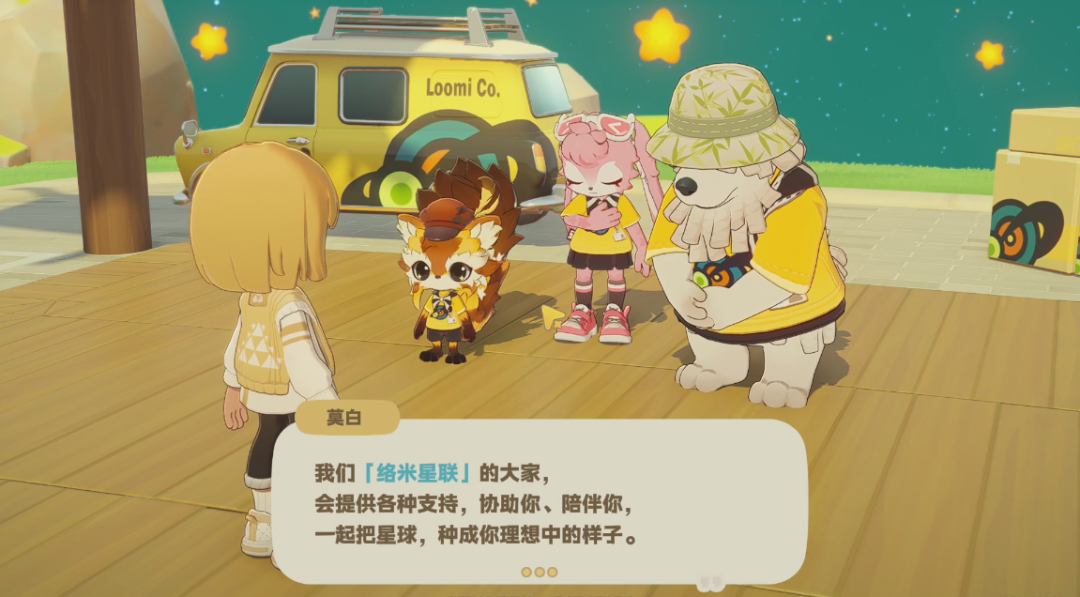
This leads me to believe that what they’re truly aiming for this time is a fresh approach that breaks away from the norm: finding a new long-term driving force for service-based games and creating an experience that better aligns with the essence of “farming” and everyday life.
In particular, when many of *Star Valley*’s gameplay features gained widespread popularity during the second beta test—and when its core gameplay mechanics withstood the retention test of the first beta and were carried over almost unchanged into the second—it made me wonder: perhaps *Star Valley* has truly tapped into a type of potential that the market has long overlooked?
01
Plant a planet, but don’t rush its growth
As mentioned earlier, in terms of the game’s overall framework, there aren’t significant differences between the second and first closed beta tests of *Star Cuckoo Valley*.
Players take on the role of a "Planet Grower" who travels through space in a Starry Sky Sedan and begins "growing" their very own planet.If you’ve played life simulation games like *Animal Crossing: New Horizons*, the experience of “planting a planet” won’t feel too unfamiliar: making friends with neighbors, growing crops, chopping down trees and picking fruit, catching bugs and fishing, foraging at the beach and mining, unlocking the bestiary, decorating your home… the experience is rich and relatively familiar.
Progress in “Planting the Planet” is represented by the “Luka Tree.” Completing various milestone tasks may reward you with Luka Bottles. Use these bottles to water the Luka Tree, gradually nurturing a small sapling into a towering tree. This tree unlocks a series of upgrades for players, including expanding farmland, unlocking celestial wonders, and altering the planet’s landscape.
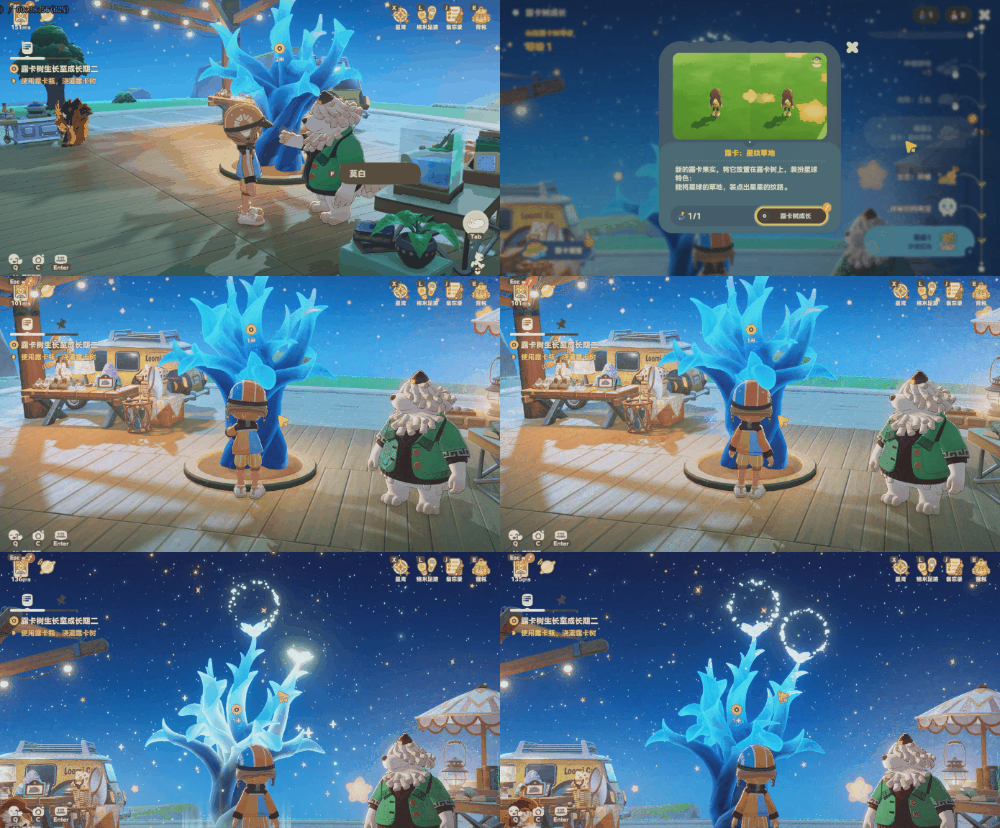
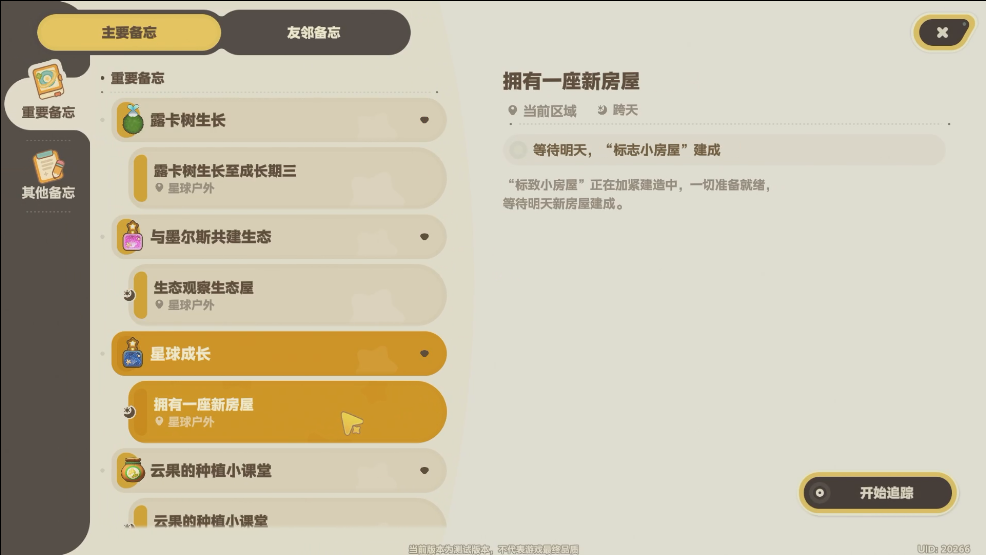
Time in the game progresses in sync with real-time, and day and night cycles follow the same pattern as in real life. For many players new to *Star Valley*, this may take some getting used to, as the game features numerous mechanics that unlock progress on a daily basis.Inviting new neighbors to move in requires waiting a day after setting up a tent; the fertilizer system, newly added in the second beta, also requires a 24-hour wait to complete; and many NPC questlines often cannot be continued until the next day.
In fact, almost every day, we find ourselves in a situation where “none of the tasks can be completed.” It’s as if, all of a sudden, the game has lost its sense of direction.
But in fact, this is precisely the time the game has set aside for you to explore freely—when you wander through this world with curiosity, you’ll easily find yourself entering a different state of flow.
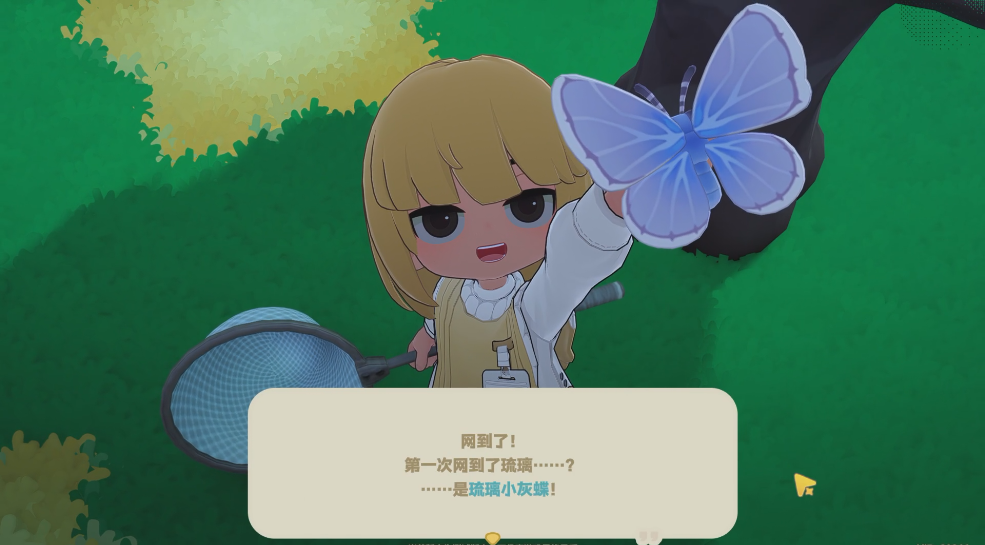
You can go bug-hunting or foraging along the shore to unlock the Creature Encyclopedia, then display your finds in the Museum of Wonders; or hop in a car for a few trips across the starry seas to explore islands that resemble “micro-ecosystems,” where neighbors can help you collect minerals, crop seeds, and rare materials—and you might even meet new neighbors along the way;You can also return to your own planet to tend your fields, arrange your furniture, and take apart the driftwood you just found to see if a piece of clothing or a decorative item you like might drop from it.
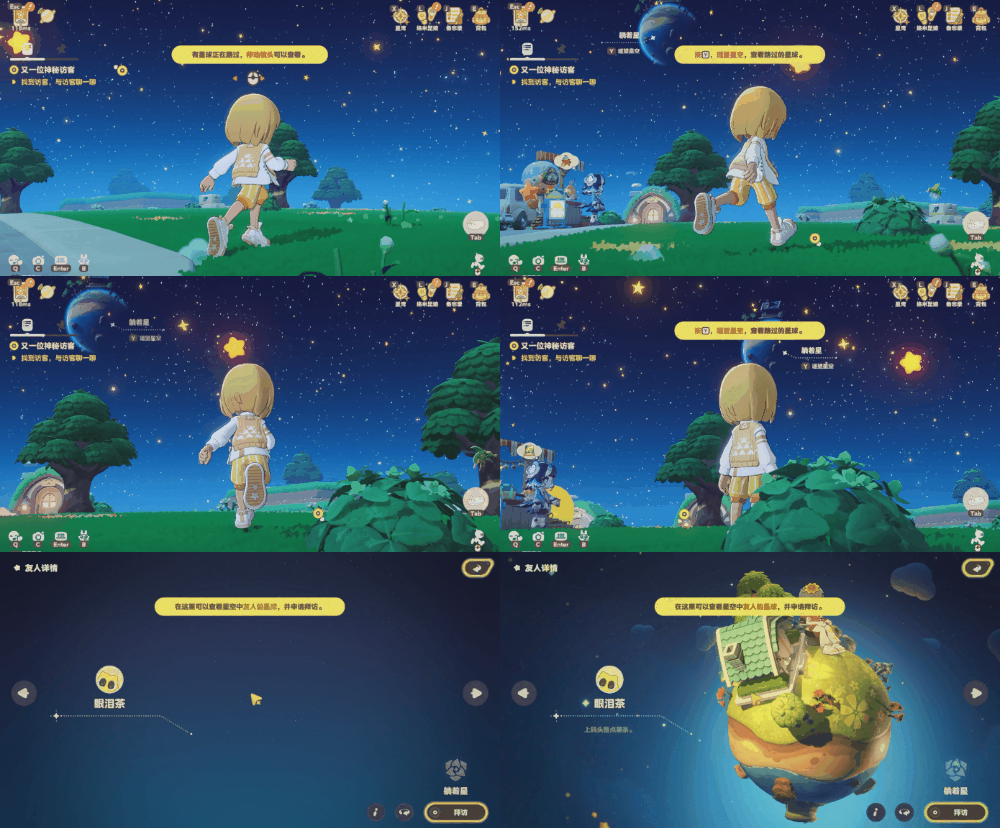
Or, you could just do nothing at all. Sit on the beach, quietly gazing at the night sky, listening to the sound of the waves lapping against the shore through your headphones, and occasionally watching other players’ planets glide slowly across the sky. The main storyline may have come to a halt, but there’s still plenty to do.
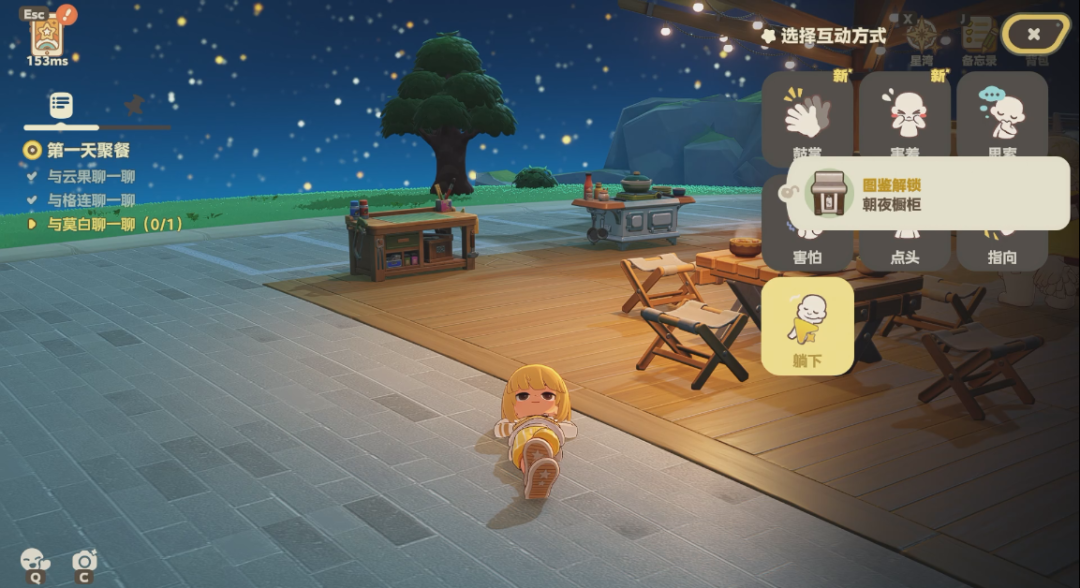
This is precisely where the contradiction mentioned at the beginning of the article comes into play. You might be wondering: since real-time synchronization and daily task unlocks have been common features in life simulation games like *Animal Crossing* for a long time, why single them out for discussion?
The key issue is that the significance of such designs is entirely different for long-term service-based games.
For service-oriented games, retention is always the top priority. Most products aim to quickly guide players into a strong goal-driven loop during the onboarding phase: progressing through the main storyline, receiving rewards, and unlocking new systems—before moving on to the progression, social interaction, competitive play, and monetization loops. The clearer the player’s path, the easier it is to evaluate the system; the more defined the player’s goals, the easier it is to retain them.
In contrast, *Star Valley* actively interrupts players’ main-story flow and loosens its tight guidance in order to draw out the “love” within them, encouraging players to linger in this world of their own accord. And this is a path that is bound to be fraught with challenges.
02
"Another Driving Force" in PVE Games
For a long time, when it came to PVE experiences, most games relied on heavy hand-holding and numerical metrics as their core driving forces.
An AI game developer once told me that he ventured into the field of AI because he felt that traditional games were too heavily reliant on numerical metrics, and that AI technology offered a potential way to break that mold. But more often than not, this is a matter of necessity. For game designers and the products themselves, KPIs such as second-day retention, third-day retention, long-term retention, and daily active users weigh heavily on their shoulders. And numerical growth is indeed an extremely effective incentive.
During the onboarding phase, the game offers intensive tutorials, ongoing main quests, currency incentives, and new system unlocks, constantly providing fresh content to stimulate players’ prefrontal cortex. In the long-term endgame phase, the game presents clear goals for power progression to keep players engaged. The RPG genre features character progression, dungeons, and leaderboards; the SLG genre features city expansion, alliances, seasons, and server-wide rankings.
As the gaming community grows and evolves, a culture of one-upmanship naturally emerges. One day, players compete over speed runs; the next, they vie for "nuke-level damage"; and the day after that, they compare their gear builds and strategic understanding. The ecosystem needs to stay competitive for users to keep coming back. However, this artificially created tension has also made "anxiety" the dominant theme in many gaming communities.
In a sense, miHoYo has already taken a small step forward in challenging the notion that gameplay is driven solely by numerical values by focusing on "content," using an experience akin to watching a TV series to keep players engaged over the long term. However, creating scenarios that allow players to test and validate these numerical values remains essential.
In *Star Valley*, this approach is taken even further. The game makes a significant portion of the core experiences—which could have been used to "hook" players—optional. And within these optional core experiences, the team has put a great deal of effort into adding depth.
The planet-building and farming systems are quite interesting. In the second beta test, farming introduced more gameplay options; by adjusting the placement and combinations of crops, players can grow exotic crops and the "Dream Fruit King." This adds more depth to the linear cycle of "planting—watering—harvesting—selling."
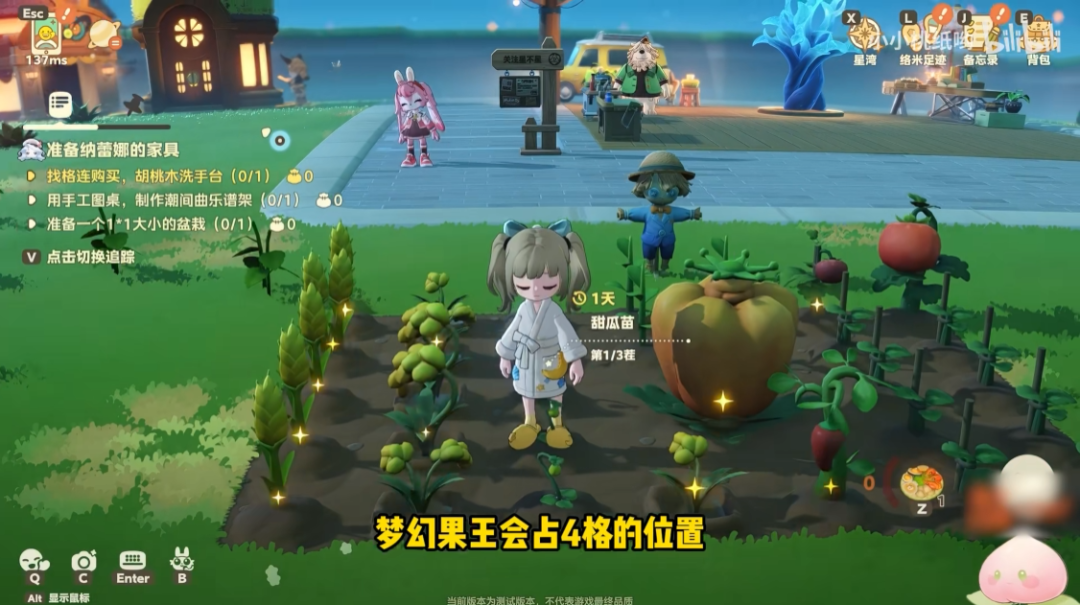
Image source: Bilibili creator "Xiao Xiao Tao Zhi Yo"
Exploring the island is also full of little surprises. Sometimes you’ll find driftwood containing furniture or clothing; other times, while chopping wood, picking fruit, or foraging by the sea, you’ll encounter new insects, fish, and marine life. In terms of seasonal content, the second beta test introduced a “Star-Planting Adventure Season” featuring a system of rare items.By completing daily light tasks such as catching insects, fishing, and decorating your home, players can earn currencies like “Lomi” and “Miracle Lomi,” which can then be exchanged for season-exclusive oddity furniture, outfits, and other items. The rewards are almost exclusively decorative.
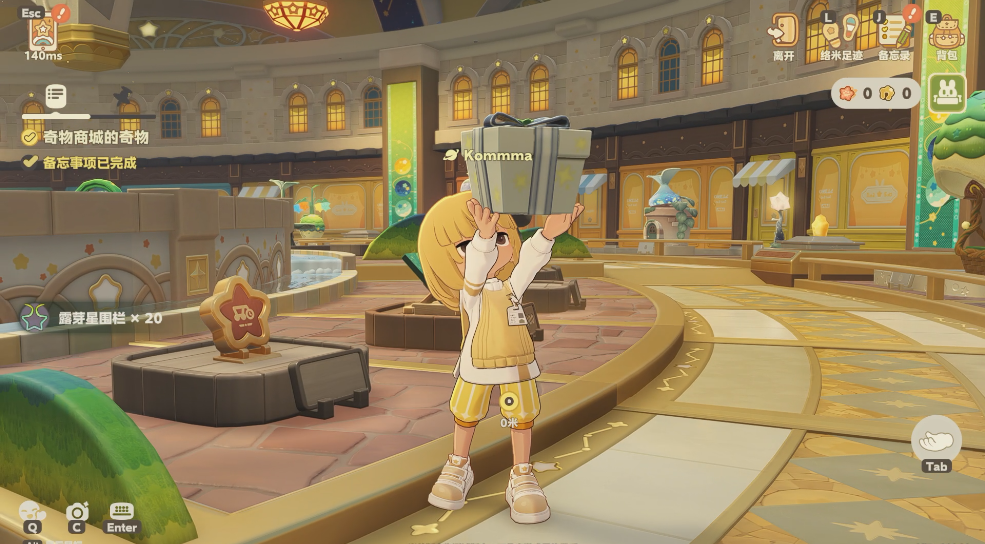
None of this is really about forced growth. It doesn’t push you to become stronger; it simply cares about whether you enjoy your planet more, enjoy your character more, and enjoy this space more. Often, you’re just happy because you’re doing these things—that’s all there is to it.
Its advantages are clear: as a farming game, it better aligns with our perception of a “slow-paced lifestyle.” Creating spaces within the community that encourage excessive competition for the sake of player retention would undermine this low-pressure atmosphere. If a player simply wants to water their crops, gaze at the ocean, and chat with NPCs after work, they shouldn’t be hounded by leaderboards, stamina management, and daily optimal routes.
But the drawbacks are just as obvious. It’s easy to get players to slow down, but it’s hard to keep them moving forward once they do. You need a strong enough design foundation to ensure that players can continually find new things to enjoy on their own over weeks or months—and stay engaged with the game.
But Mihoyo, having created so many hit games, understands this better than anyone.
03
Three longboards
The ingenuity of *Starlight Valley* lies in the fact that it isn’t merely a “reckless charge.” As players will quickly discover, miHoYo has actually incorporated a higher level of design density than similar games in many aspects, using this abundance of design elements to generate an abundance of motivation for players to engage with the game.
To sum it up, there are roughly three key areas—and, quite coincidentally, these are also the most noticeable changes in the second closed beta of *Star Valley* compared to the first.
First up is AI, which has been the focus of much attention. During the first beta test, Nalo, the AI owner of the café, became a massive hit. By the second beta test, miHoYo had clearly taken its AI approach a step further. It no longer relied solely on one-on-one interactions between a single NPC and a player, but began experimenting with the dynamic fun that arises from “multiple NPCs + multiple players.”
Reeve by the bonfire at Starry Sky Market. She organizes games like “Story Soup” and “Idiom Chain” for players. Take “Story Soup,” for example: players gather around the bonfire, with some asking serious questions, others making wild guesses, and still others cracking jokes, while Reeve sits in the middle, keeping the conversation flowing, judging the answers, and keeping the mood lively.As the game goes on, the story itself becomes less important; the simple act of everyone talking together turns out to be the more enjoyable experience.
Alai’s “Joke-Powered Buyout” has a more variety-show feel to it. Players must present a specified or similar item and use their quick wit to “package” it as a more valuable product. They must convince Alai through eloquence or by telling outlandish yet internally consistent stories to ultimately secure a higher buyout price. It’s like a lighthearted debate, or an impromptu stand-up comedy routine.Players can type their own lines or use AI to generate “made-up” scripts; the focus isn’t on accuracy, but on who can come up with the funniest jokes and best liven up the atmosphere.
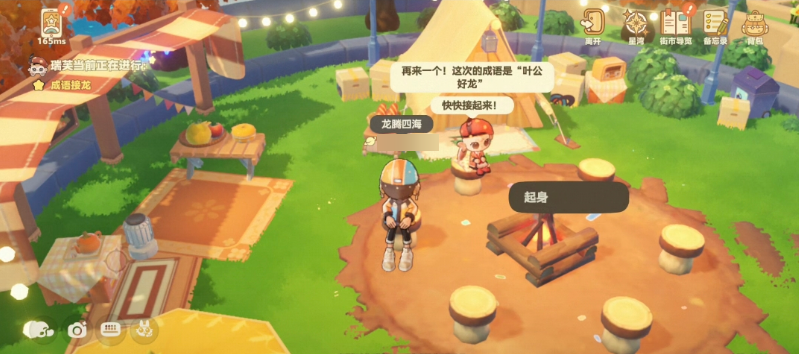
Many people are drawn to the AI in *Starlight Valley* because of its technological novelty. But I think what’s truly worth watching is whether miHoYo can turn that technology into a new paradigm for gameplay.
Of course, there is still room for improvement in the technical execution of these gameplay features. Often, the AI seems overwhelmed when handling multi-player Q&A sessions, struggles to consistently understand complex contexts, and occasionally experiences delays between input and response. However, the early signs of these emerging gameplay mechanics are already evident. On social media, many players are already sharing stories about spending entire afternoons playing games like Story Soup and Meme Power Acquisition.
Second is social interaction. The social experience in *Star Cuckoo Valley* has its own unique charm: it’s novel and rich, while also respecting players’ desire for voluntary participation.
The social design in *Star Valley* is “subtle” and restrained. When you look up at the night sky, you can see other players’ planets gliding by in the distance. If you want to visit one, you need the other player’s consent. Even in multiplayer areas like the Star Market, the game doesn’t flood the screen with messages; chat content only appears clearly when players sit together, enter a specific chat area, or become friends.
The second beta test further established a comprehensive hierarchy of friendship levels. Players and strangers can become friends in Starry Market by scanning a QR code, starting as “Starry Passersby.” Through continued visits, conversations, letter-writing, and gifting flowers, their starlight will gradually grow stronger, eventually allowing them to become Starry Friends and even Best Friends.In specific scenarios within the Starry Market, Best Friends can also participate in rituals, which will eventually grant them an exclusive memory space and a record of their interactions. However, if there is no further interaction, the starlight of this relationship will gradually fade.
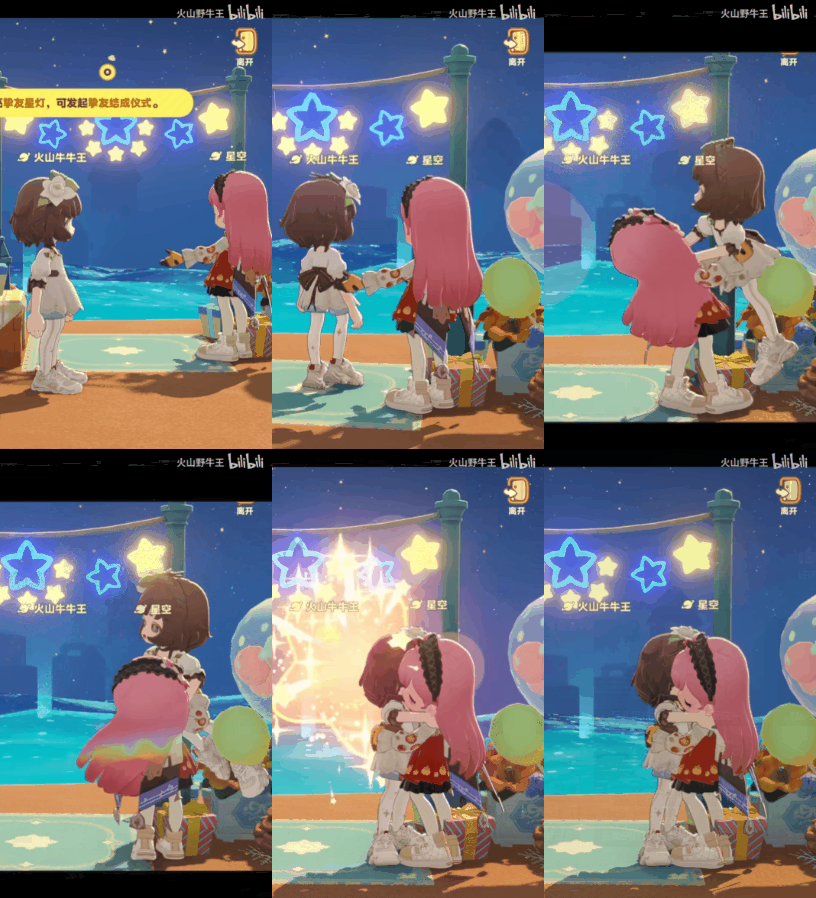
A Ceremony to Form a Deep Friendship | Image source: Bilibili creator "Volcano Wild Bull King"
There’s also UGC-based social interaction—in the “Little Street Corner” feature added during the second beta test, players can upload their own photos and submit them based on themes. They can also like and comment on others’ work, and posts with strong engagement will be featured in a carousel on the big screen at Starry Market. There’s also a feature called “Send and Receive Star Wishes,” which allows players to randomly receive letters written by others, much like a message in a bottle drifting through space.
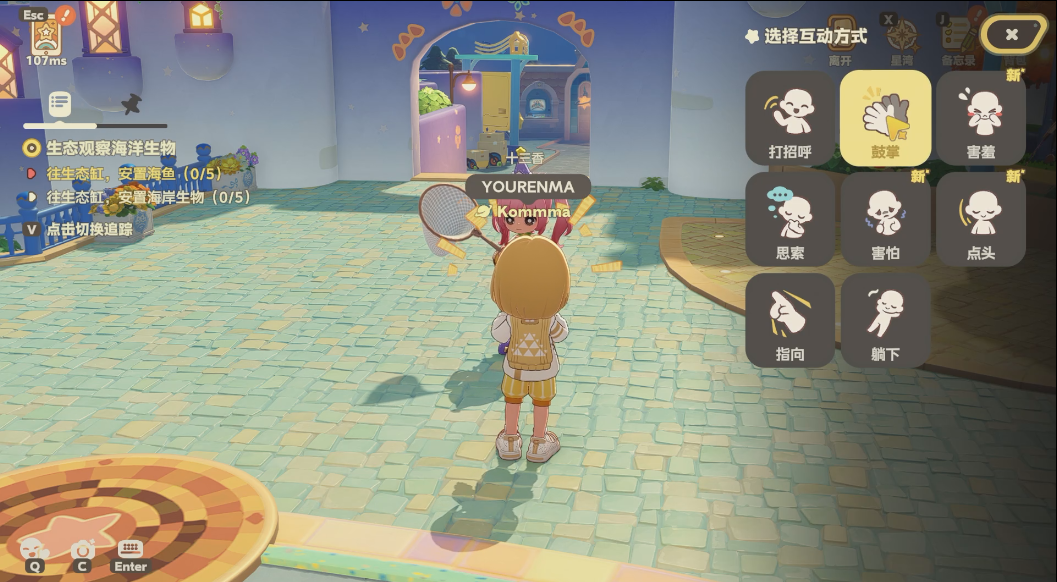
We don’t expect you to reply, nor do we want to turn socializing into a chore. We just want you to know that, out here in the vast expanse of space, there are indeed others living their lives at their own pace. *Star Cuckoo Valley* doesn’t rush players into a bustling but high-pressure hub; instead, it first gives players a safe, private planet, then offers a path to gradually connect with others.
The last point is perhaps the most important—and the hardest to master. That is, delivering genuine quality and maintaining strict control over product content.
The improvements in the audiovisual experience are immediately apparent. The overall color palette in the second beta is brighter and warmer, and the lighting and shadows are softer. The sound effects have also been enhanced compared to the first beta: shaking a tree produces a rustling sound, plums fall softly to the ground with a "thud," a few "Achi Bao" appear and crawl into your backpack, and the background guitar music is melodious and laid-back.
The neighbors in the second beta are much more vivid. The companions who had no voice acting in the first beta finally have voices in the second beta. They now have their own catchphrases and more detailed character profiles.Yungu, with her Sichuan accent, is a shy gardening expert who also happens to be a bit of a disaster in the kitchen. Not only is there a wider variety of furniture, but many of these items are now interactive—pressing the power button on a computer triggers an animation, and you can fill the bathtub for a relaxing soak. These little touches are sure to bring a smile to your face.
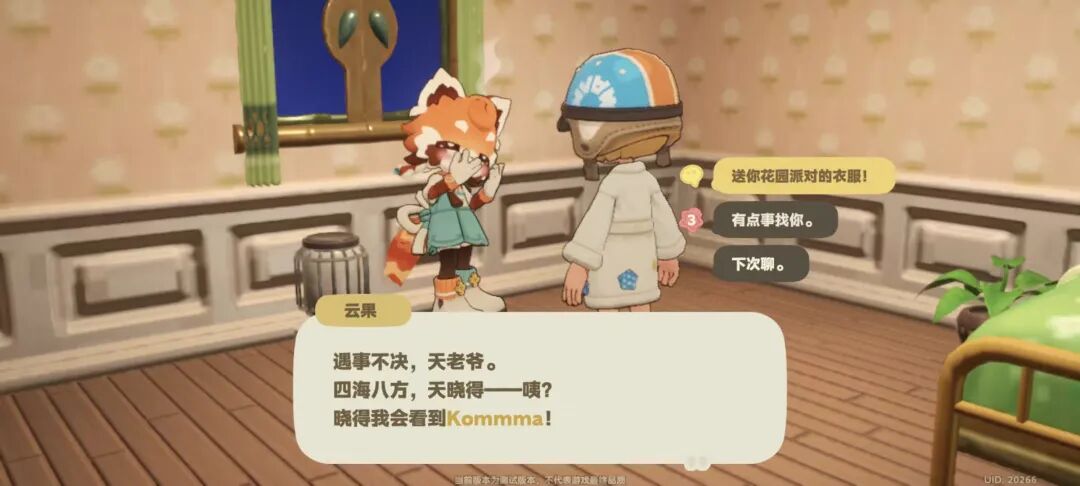
Taken individually, these elements aren’t earth-shattering, but when layered together—through a series of small, fragmented moments—they provide players with a sense of positive reinforcement. *Star Valley* doesn’t offer a heart-wrenching emotional roller coaster, but it’s hard not to feel a gentle sense of joy throughout the entire experience. Numerous details remind you that this world has been carefully crafted.
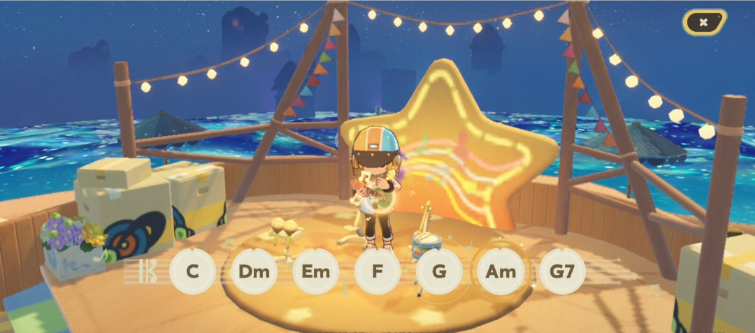
AI, social interaction, and quality—these three elements, layered together, form the true highlights of *Star Cuckoo Valley*’s second closed beta. Together, they point toward a single goal: shifting the long-term motivation in life simulation games from external pressure to internal emotional fulfillment.Players stay not necessarily to grow stronger, climb leaderboards, or clear quests, but because there is a tree growing here, a beach they’ve gradually decorated themselves, an NPC who remembers their coffee preferences, and people they might meet again.
The challenge with this line of reasoning is that it cannot stand on concepts alone. It must be repeatedly substantiated by a wealth of details. While the second beta test of *Star Cuckoo Valley* hasn’t provided all the answers yet, it has already demonstrated the potential of this approach.
04
"The 'Small Studio' Mihoyo"
There are high expectations for *Star Cuckoo Valley*.
To a large extent, during these years of explosive growth in the mobile gaming industry, people have come to expect one “spectacle” after another: whenever a new game is released, its world must be even more expansive, its details must be rich enough, and its technology must be sufficiently advanced. The ultimate measure of success lies in whether it can become the next massively popular phenomenon.
This is especially true for miHoYo. The company has set so many technical benchmarks in the past: multi-platform support, global reach, high-quality content updates, and consistent character development and narrative storytelling. As a result, people naturally have high expectations for *Starlight Valley*—expectations that may not be entirely justified. But this might actually obscure the game’s true value.
In recent years, the market has seen many groundbreaking “blockbuster games,” but “slow games” have, conversely, become a neglected area. This gap is by no means small. *Light: Encounter*, released a few years ago, serves as a prime example. It set an excellent precedent in terms of low-pressure gameplay, non-compulsory social interaction, emotional companionship, and ritualistic design, and has long demonstrated the commercial potential of this type of experience.
However, even though *Sky: Children of the Light* occasionally makes it back into the Top 10 of the iOS sales charts, it’s hard to directly associate Chen Xinghan’s game with terms like “huge DAU” or “blockbuster.” Its value lies not in winning over everyone, but in continuing to touch the hearts of a select group of people.
The same goes for *Starry Valley*. Just the other day, Mihoyo’s founder, Dawei, mentioned in a speech at Shanghai Jiao Tong University: “We’re not a big studio; I really hate big studios, and I have no idea what would happen if Mihoyo became one.” This remark sparked a lot of discussion at the time. And *Starry Valley* largely demonstrates that unique “small studio” aspect embedded in Mihoyo’s DNA.
The advantages of large companies are clear. They have more abundant resources, more mature industrial pipelines, and stronger technical capabilities, and they can afford to undertake R&D projects with longer timelines and higher costs. However, the limitations of large companies are equally evident: they naturally seek certainty, so creativity tends to play it safe, and product initiatives are repeatedly scrutinized based on market size, category validation, and ROI. The larger the organization, the more likely it is to be led by the “right answers.”
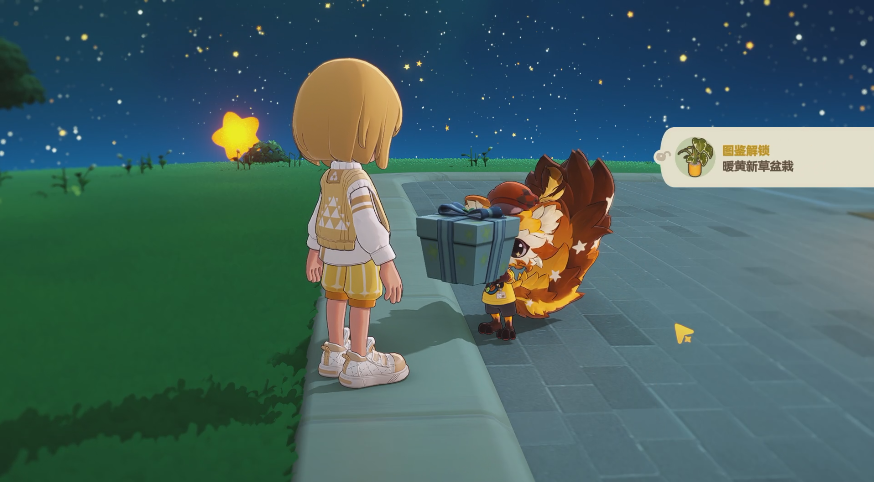
The advantage of “small startups” lies at the other end of the spectrum. They are better able to pick up on subtle market needs, are more willing to take a chance on experiences that haven’t yet been fully validated, and are better equipped to iterate rapidly around the core idea itself. They don’t necessarily have to prove from day one that they can accommodate the largest user base; instead, they focus first on demonstrating whether they can deliver a fresh, viable, and irreplaceable experience.
The most intriguing aspect of *Starlight Valley* is that, while it is backed by miHoYo’s robust industrial infrastructure, it channels those capabilities into a goal that doesn’t appear particularly “grand”: allowing players to live at their own pace, gradually cultivate a planet, and slowly build relationships with neighbors, strangers, and friends.
Of course, it’s far too early to pass final judgment on *Star Valley*. There’s still significant room for improvement in its mobile performance optimization, and it remains to be seen whether its core gameplay will hold up over the long term—month after month. But at least based on the second beta test, its direction is clear.
It may not be a one-size-fits-all solution that appeals to the widest audience, but it is a solution with enough unique features to set it apart. In today’s highly competitive gaming market, such a maverick approach is actually quite valuable.
In an age when new ideas are scarce, I think that’s enough.
原创文章,作者:游茶妹儿,禁止转载:https://youxichaguan.com/en/archives/195727