"Organizing an exhibition"—three simple words. It sounds like nothing more than renting a venue within your budget, gathering a group of people to set up shop, and securing some equipment sponsorships.It’s as if the details of setting up the event—like posters, copywriting, and on-site logistics—are naturally overlooked. Whether it’s a gaming expo, an art exhibition, or a food and beverage trade show, they’re all events, yet we can still distinguish them based on factors beyond their content. They all take place at a specific time and place, addressing a specific need.
Zhihu has always been known as an online Q&A community, where questions, answers, and comments unfold in layers of discussion on the screen. Opening that text-heavy webpage, one can’t help but wonder: what would a gaming expo hosted by Zhihu look like?
Although Zhihu’s “Yan Salon” was already a fairly active content brand by 2017—and perhaps even earlier—Zhihu had previously organized a “Game Jam” in the gaming sector, bringing together developers and beginners to foster communication through collaborative creation and gameplay.
Small-scale gatherings certainly have their advantages; when a small group of people sits down together, as long as they break the ice successfully, the discussion quickly becomes lively. However, they hope to welcome more people—gamers, passersby, and even those who are just a little curious. They want to broaden the conversation so that more people interested in games can join in the discussion.
Zhihu always felt like something was missing. Small-scale salons certainly have their merits—with fifty or sixty people gathered together, the atmosphere is intimate, and it’s easy to have in-depth conversations. But they wanted to broaden the scope of these exchanges, moving beyond just small-group chats to include more people interested in games. Indeed, how could they create a “Plus” version that combined an exhibition with a salon? An idea was born. They decided to organize their own game exhibition.
01
Thanks for the invite. I just got off the plane.
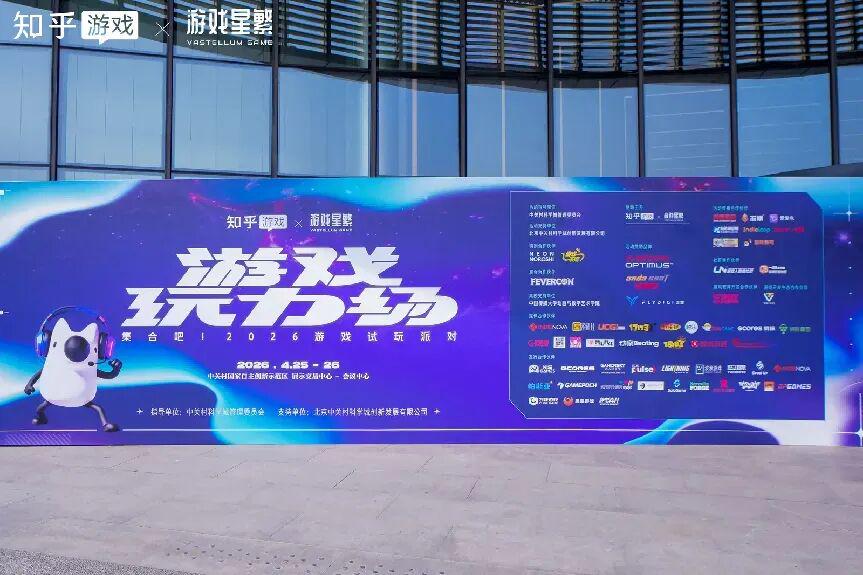
The Zhongguancun National Independent Innovation Demonstration Zone is nestled amidst the lush greenery of Haidian Park. In the mid-20th century, this area served as a key experimental site for agricultural and forestry research on the outskirts of Beijing. With the emergence of “Electronics Street” in the 1980s, it underwent a transformation from a traditional research hub into a global source of technological innovation.The conference center was officially completed in 2011. Today, serving as a dialogue platform for China’s participation in global science and technology governance, the center continues to uphold its founding vision of driving institutional change. With the support and assistance of the Zhongguancun Science City, this group of young people from Zhihu has been given the opportunity to take on new challenges.
But there’s a group of people who’ve set their sights on this place.
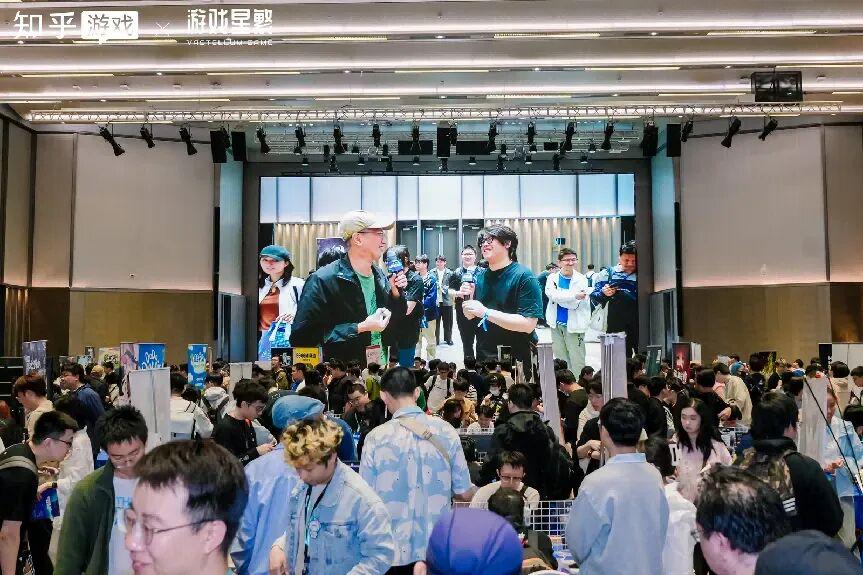
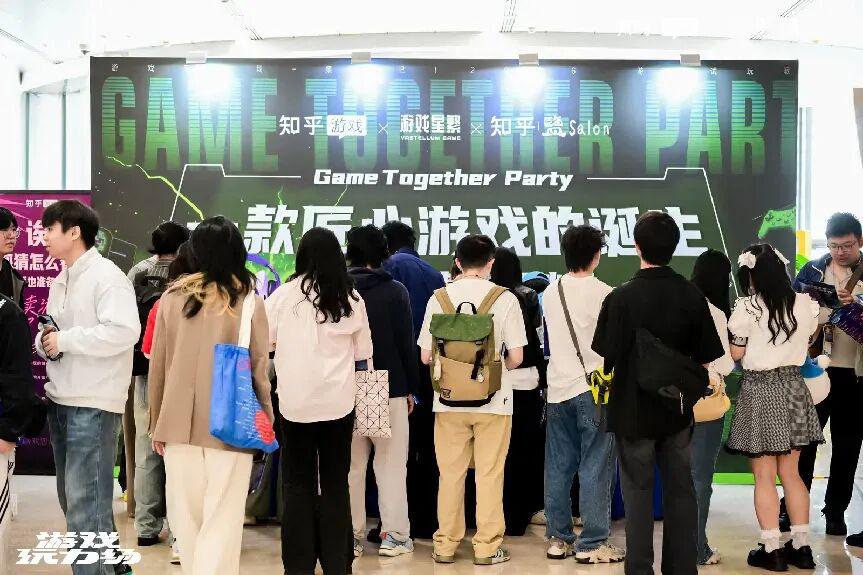
From April 25 to 26, Zhihu and Game Xingfan hosted the “Game Playground” right here.They combined an exhibition, panel discussions, and investment roadshows into a single event. The venue offered hands-on demos for over 100 games and hosted panel discussions featuring industry professionals such as Jeff, producer of *Escape from Yakov*; Chen Zhen, producer of *Mountain River Travelers*; Yang Bin, producer of *Infinite Mech*; and Curry, producer of *Millennium Dream*.Over the course of two days, players, developers, investors, media, publishers, platform operators, and other stakeholders from across the gaming industry’s entire value chain were brought together under one roof.
Attendance exceeded initial expectations; while the crowds weren’t exactly overwhelming, there were lines at every booth and every talk was packed with listeners. The large turnout gave this event—which had originally been a tentative experiment—a real sense of vitality.
An exhibition needs its own narrative and flow. It doesn’t necessarily have to follow the structure of a novel—with a beginning, a climax, and an ending—but it must give visitors a clear sense of why they’re there, what they’re seeing, and what they’ll take away with them when they leave.
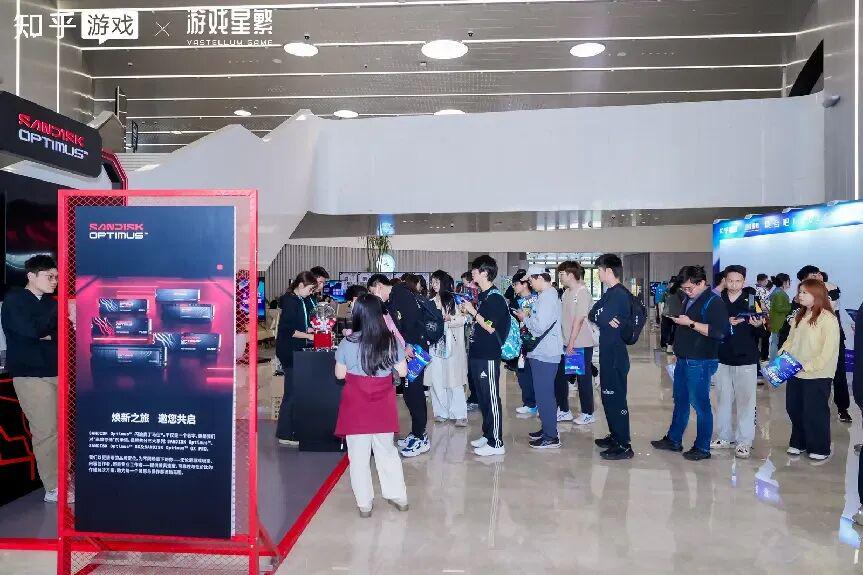
At this Zhihu event, the venue was roughly divided into two smaller halls, A and B.Inside the venues, visitors could see established titles that had been released the previous year, as well as games that were either unreleased or about to be released. Meanwhile, different types of panels were held on the first and second floors, while the central area was reserved for networking and relaxation. These included presentations by producers, discussions among publishers, investors, and media representatives, as well as direct exchanges between players and developers.
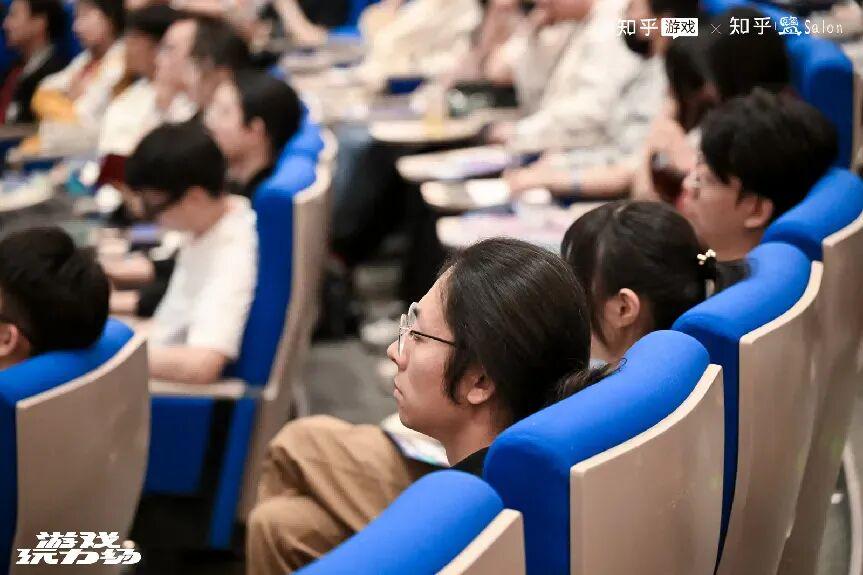
The two-day event was divided into two tracks. On the first day, the salon focused on the theme “The Birth of a Masterfully Crafted Game,” featuring four panel discussions with ten game developers. Topics ranged from deduction and puzzle-solving to millennial nostalgia and the art of storytelling, and even touched on the pressures faced by game producers.
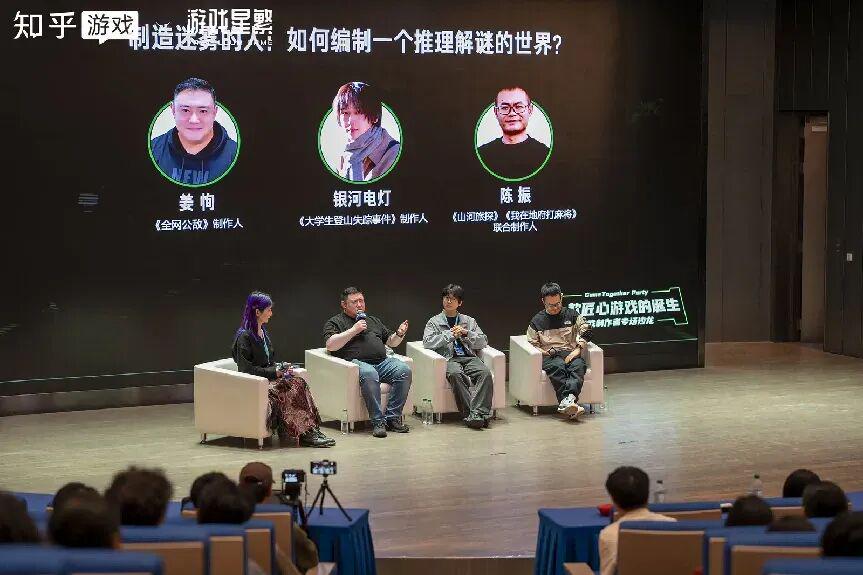
During the first salon, attendees gained insight into the process of creating a game from scratch. They learned about the design, research, narrative trade-offs, and the frustrating uncertainty that developers face on a daily basis. Take Chen Zhen, the producer of *Mountain River Travelers*, for example: to accurately recreate the details of steelmaking at the Hanyang Ironworks, he spent a great deal of time researching materials and visiting museums.Tian Tian, producer of *Animal Maze*, brought NPCs to life through extensive casual conversations. Wang Zibing, producer of *Doroko Town*, discussed using compressed storytelling—concealing most of the content and leaving only clues that point to the truth, allowing players to piece together the story from the fragments.
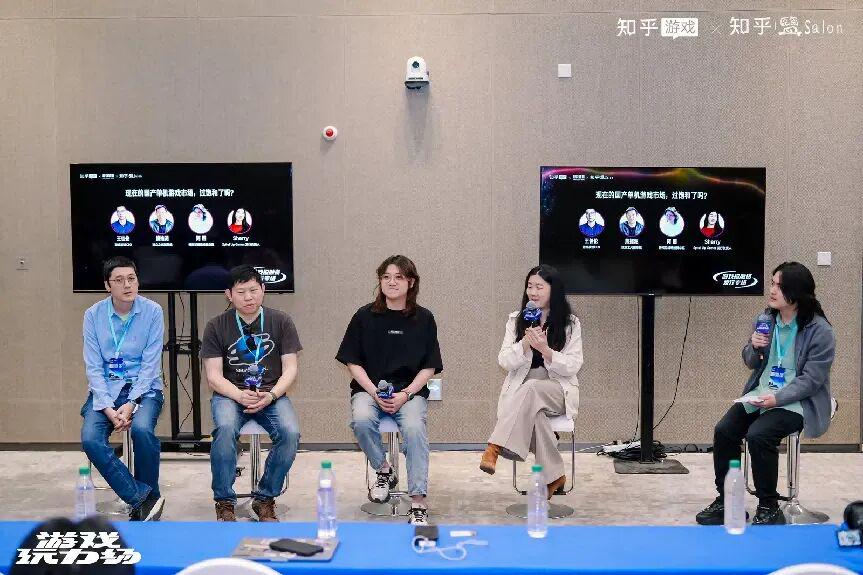
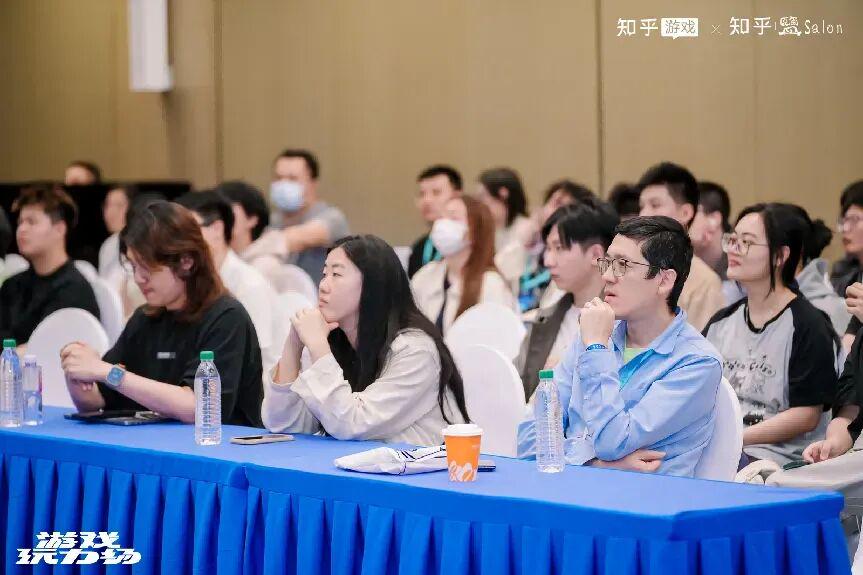
The next day’s salon focused on the topic of “How Good Games Can Gain Visibility and Sustain Themselves,” drawing an audience curious about the next phase of game development. The completion of a game does not mark the end of the process; rather, it signals the beginning of a new set of challenges. The panelists discussed common issues such as expanding into international markets, securing funding, gaining exposure, and monetization, addressing the challenges independent games face from development through to commercialization.
At what stage is a demo ready to attract investment? How can a project continue when there’s no funding? What barriers has AI lowered, and what illusions has it created? Why are media outlets willing to promote certain games for free?
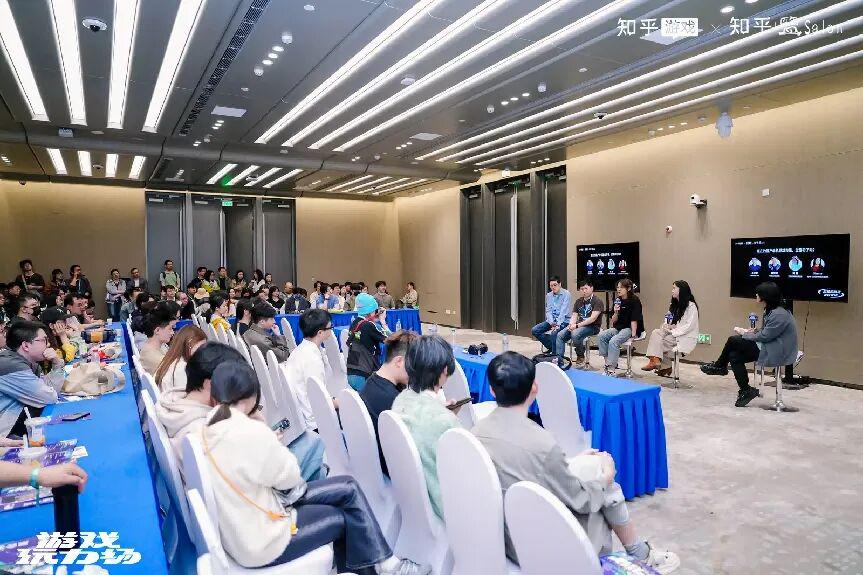
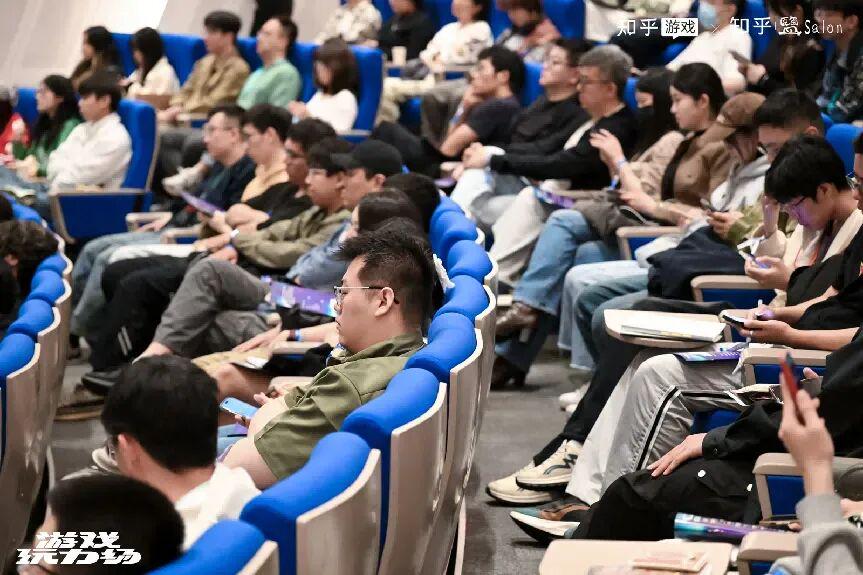
Together, the two events not only gave the audience insight into the game development process but also allowed those interested in the industry to see the costs, anxieties, trade-offs, and methodologies behind the final product. Both events were essentially sold out, and after they concluded, the producers were surrounded by attendees from both inside and outside the industry, continuing the discussions from the stage or using the opportunity to explore future collaborations.
02
At long last, Zhihu has finally organized an exhibition.
That said, at first glance, it’s hard to compare this conference center to the typical video game expos we’re used to seeing. It looks just like any other venue used for large conferences, and standing outside, it’s hard to imagine that so much is actually happening inside.
This isn’t a massive, highly centralized venue, nor is it simply a single conference hall crammed with everything. It’s essentially a space with no single focal point, allowing visitors to roam freely throughout the interior. Some head straight for the games that catch their eye, while others simply wander around, stopping at activities that pique their interest. Still others might develop an interest in game development after attending a panel discussion.
Overall, the spatial structure of this exhibition actually feels a bit like browsing Zhihu. As everyone knows, what makes Zhihu so unique has never been simply the fact that people post questions and receive answers (that’s what Baidu Zhidao is for). Many platforms have content: Bilibili has creators, Xiaohongshu has notes, and Weibo has trending topics. But Zhihu’s fundamental structure consists of questions, answers, and comments.A question is posed, numerous answers unfold side by side, discussions continue to grow beneath the answers, and every participant can find their own place within it. This logic has been transposed into this physical space, transforming into the concept behind the offline event and its layout.
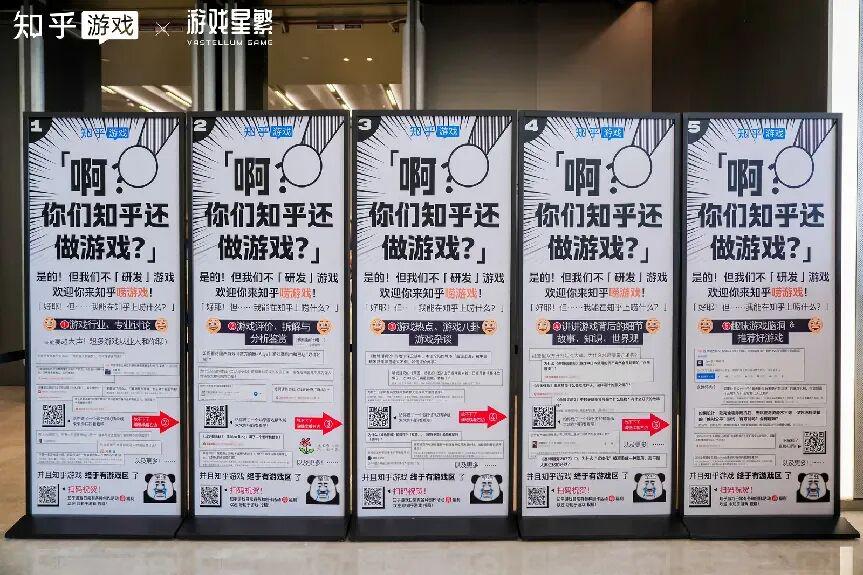
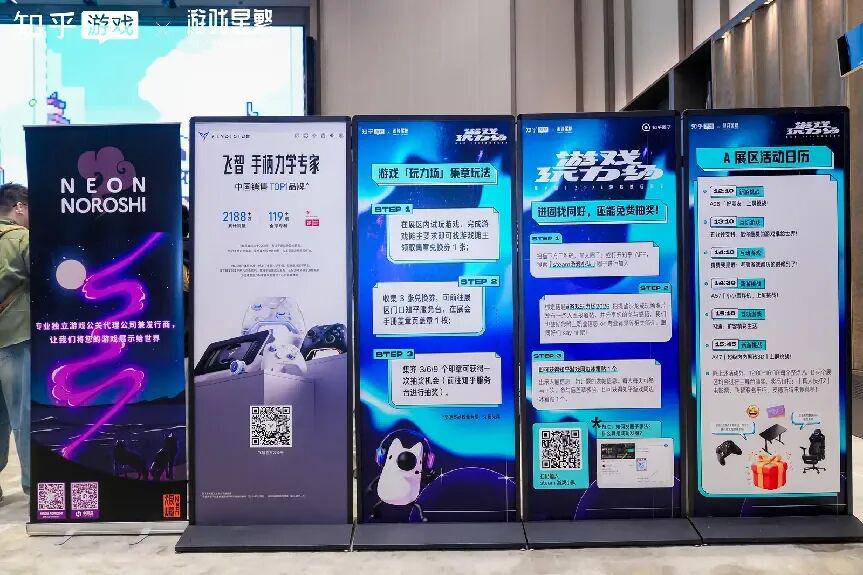
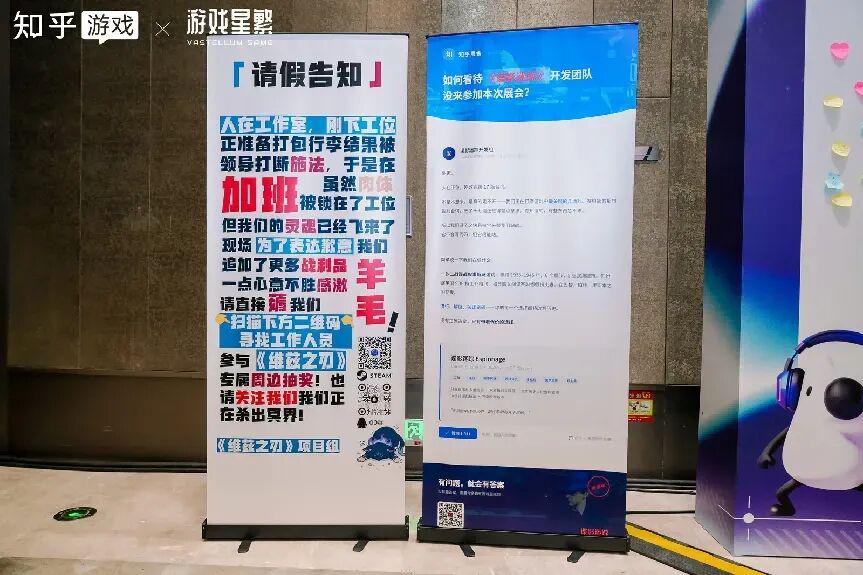
I don’t know if anyone noticed the roll-up banners inside the venue, but when I first walked in, the lively wording and little inside jokes made me chuckle. “Huh? Zhihu makes games now?” I actually said that to some friends from Zhihu at last year’s demo event, and looking back, it feels like a bit of a callback.

Those little mini-games are also really fun. For example, the puzzle on the big screen in Hall A gives the audience up to three clues to guess which game it is.1. The game features a middle-aged man and a young girl as the main characters. 2. The male protagonist gradually develops a fatherly, protective bond with the girl. 3. However, in the end, the girl kills the male protagonist with her own hands. So, which game is this? Of course, there were many other interactive activities on-site, but I won’t go into further detail here.
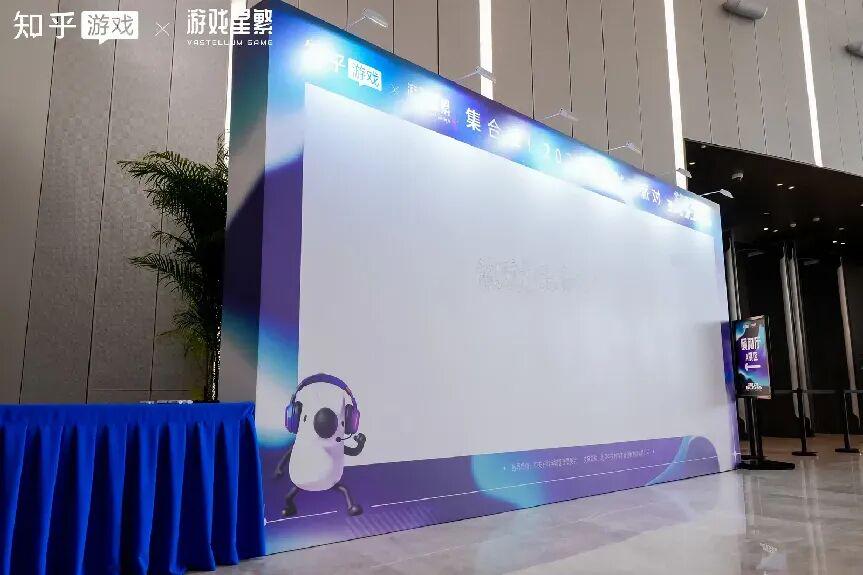
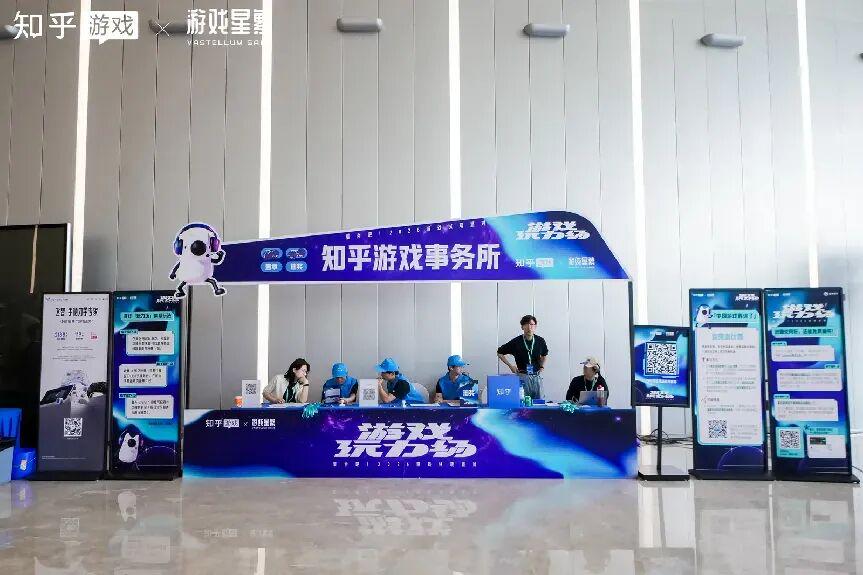
For a new exhibition, these details—visible to the naked eye—serve to fill in the gaps, yet they are also crucial. The tone of an exhibition is not defined solely by the large-scale main visuals, the exhibited content, or the lineup of guests; it also stems from smaller elements such as the signage at the entrance and the directional cues along the visitor flow.When used effectively, these elements define the exhibition’s texture and help strike the right balance in the atmosphere—ensuring that the “Game Power Field” neither becomes a stuffy conference nor a mere bustling marketplace. By employing them in a thoughtful and appropriate manner, they preserve the essence of knowledge dissemination while making the experience far less tedious.
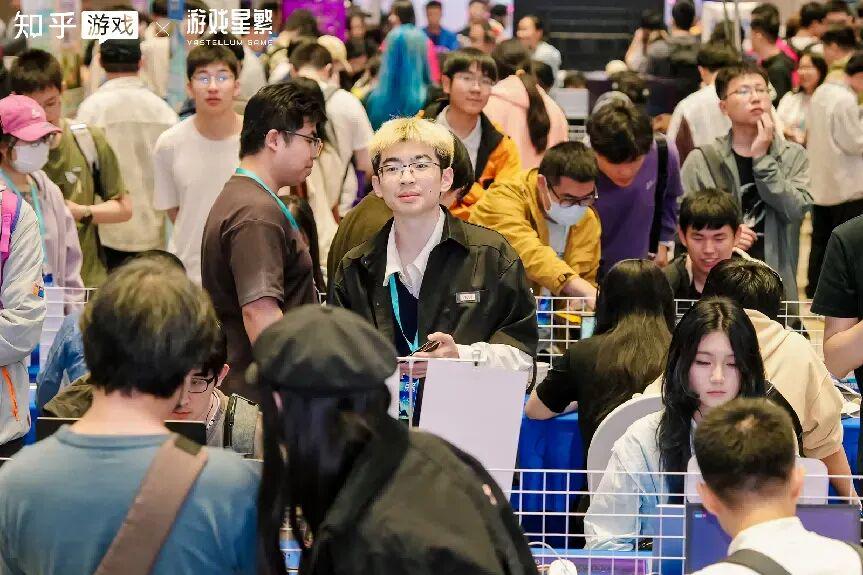
When Zhihu launched its game expo, it didn’t start out by focusing on scale. Its strengths certainly don’t lie in building the largest exhibition halls, inviting the most developers, or selling the most tickets. There are clearly more established expos that have been doing these things for many years. What Zhihu truly brings to the table is a platform culture that evolves from questions into deeper discussions—a culture that could also be described as Zhihu’s unique character.
As mentioned earlier, this exhibition essentially translates Zhihu’s brand identity into a spatial concept. How is a game made? The answer to this question gave rise to and shaped the exhibition, while also meeting the expectations of diverse audiences.
Casual gamers, developers, and investors—or simply people interested in the gaming industry. Some come to try out games, some to scout for projects, some to hear developers talk about their creative process, and some to seize opportunities. This means the exhibition can’t offer just one way to experience it, which is why, in addition to promoting games, the salons play such an important role.
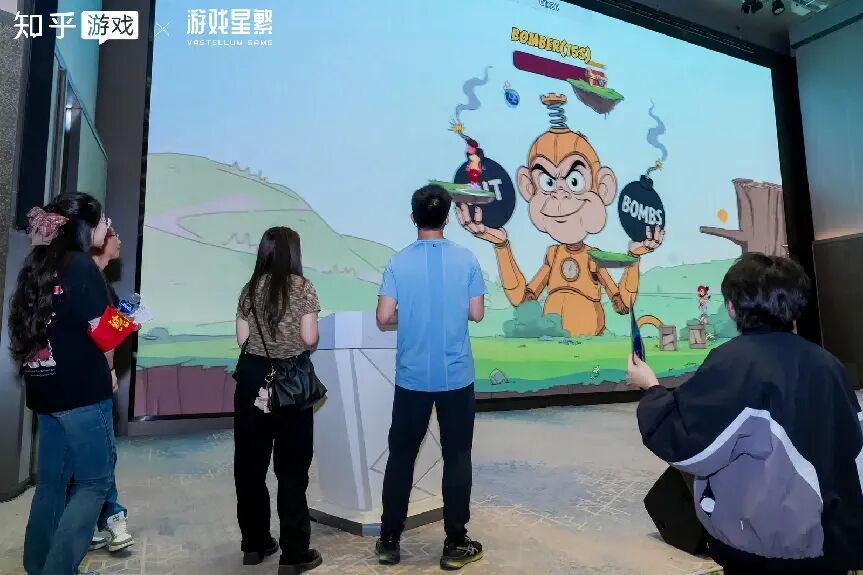
Halls A and B address the issue of game presentation: players can sit down, pick up a controller, and immediately play through different stages of the game. The salon addresses the issue of game knowledge; while not all attendees may be game developers, they can gain an understanding of why a puzzle is designed a certain way, or why a historical era cannot be recreated solely through a nostalgic lens. The roadshow, meanwhile, addresses the issue of resources. These different activities are interconnected and interact conceptually with one another; they are not completely isolated silos.
To me, this exhibition feels a lot like a market in an oasis. Some people set up stalls, some chat, some haggle over prices, and others just stop by to take in the scene. Although it isn’t as vast or diverse as a city market, and the goods aren’t of the highest quality, information flows more freely here, and the connections and conversations between people have become the most valuable commodities.
“Game Playground” doesn’t necessarily have to become another large-scale expo; it can occupy a space between small salons and major expos, emerging as a new form of gaming event. Simply providing a structure that facilitates easier interaction—and offering such a venue—is in itself highly valuable.In a setting where the overwhelming noise doesn’t drown out the experience, developers can quietly listen to media feedback, and investors can take a serious look at demos. This sense of just the right atmosphere might be the oasis marketplace that games need amidst the jungle of capital and traffic.”
03
Are you thinking about putting on an exhibition too?
We’ve all gotten used to scrolling through Zhihu on our phones, marveling at how enthusiastically experts jump right into answering questions the moment they step off the plane. But when these experiences actually move offline—even taking the form of an event like the Oasis Market—we naturally tend to overlook what we can’t see, focusing instead on what’s right in front of us. The journey from concept to exhibition isn’t just about the countless miles that lie beyond the screen; it’s also marked by countless trade-offs and the anxiety that comes from unresolved decisions.
Chenqi, Kexin, and CC from Zhihu are facing precisely these challenging aspects.
One of the biggest challenges was the budget; they didn’t have much funding to support a large-scale exhibition. For an event of this scale, outsourcing the visual design to an external team would cost anywhere from 30,000 to 50,000 yuan—or even more. With limited funds, they had to make more trade-offs, and tasks that could have been outsourced had to be handled by their own team. Zhihu took on the responsibility for the overall planning, design, and a host of other details.The upside is that they understand better than any external team exactly what kind of on-site experience they want to create.
Those roll-up banners featuring inside jokes, the tickets, the posters, and most of the visual content visible to the live audience all became countless files on their computers, screenshots in group chats, and endless late-night edits that made them lose track of time.
As for the visual aspects, I can handle those myself with a little effort. But how do we decide on the guest list? This is our first time, and if we don’t get it right the first time, it’ll be hard to pull it off again in the future. Who should we invite for this first event? And will they actually come?
Just because a good game has been made doesn’t mean enough people have seen it. Chenqi’s first thought was of those titles that have already proven themselves within the industry. They have sales figures, a solid reputation, and a dedicated player base, but to the broader public, they may still be something new.
“They really are great games,” Chenqi said, recalling his initial motivation with a tone that was both sincere and somewhat urgent. “Since they’re so good, why not keep promoting them so more people can discover them?” Not all great games naturally find their way to players; he believes that a spotlight—one that’s appropriate yet not too intense—is exactly what everyone needs.For those titles that haven’t yet been discovered by a wider audience, an event like this might offer a small, low-risk opportunity to test the waters.
But everything—except for the visuals—has to start somewhere. Where would the booths come from? Where would the guests come from? And where would the first group of people willing to believe in this exhibition come from? At the very beginning, there were no clear answers to these questions.
Without experience, you just have to learn as you go by asking those with experience for advice.
Gu Yue, who had organized the BIG Game Expo in Shenzhen, was the one who stepped in to help at this critical moment. Many issues can only be anticipated by those who have actually organized an event before. So, he did his best to share with them, bit by bit, the pitfalls he had encountered and the experience he had accumulated. With his help, what had originally been a confusing mess gradually turned into a list of manageable tasks.When An Shao from Youmin Xingkong learned that Zhihu was planning this initiative, he didn’t ask for compensation or negotiate terms. He quickly stepped in to help with promotion and networking, and even organized a video conference specifically to discuss how Youmin Xingkong could contribute. To him, it seemed like a minor matter—so minor that it didn’t warrant any consideration of costs.
Chen Zhen, co-producer of "Mountain and River Travel," offers a different kind of support.He and Chen Qi have long shared a relationship that is part mentor, part friend. Upon hearing that Zhihu was organizing this exhibition, he quickly agreed to participate and was eager to attend the salon to meet with players face-to-face. For Zhihu, this kind of support is more than just adding another name to a list. Whether it’s An Shao, Gu Yue, or Chen Zhen, their support resonates with Zhihu’s original vision for the exhibition—it’s not just something they personally believe is worthwhile.
From a tiny twig to a flame that reaches the sky—perhaps it is the countless people behind it that make this possible.
As the show gains more and more supporters, the guest list is slowly growing. Chen Zhen has joined us with *Mountain River Travel Exploration*, and Jiang Xun from *Public Enemy No. 1* is here,Yinhe Dian Deng, producer of *The Missing College Climbers*; Curry from *Millennium Dream*; Deng Buran from *A Perfect Day*; Huai Hongwen from *Loulan: The Cursed Sands*; Yang Bin from *Infinite Mech*; Tian Tian from *Animal Maze*; Wang Zibing from *Doloko Town*; and Jeff from *Escape from Yakov*.One by one, the guest list was filled with names already familiar to audiences through their works.
As for the booths that hadn’t yet been filled, they needed an experienced partner. They were well aware that their strengths lay in setting the agenda and curating content, but when it came to more specialized areas such as exhibitor outreach, industry matchmaking, and investment roadshows, they required a partner with deeper expertise.Game Star Fan, with its deep understanding of startup game development teams, was brought on to handle exhibitor invitations and management; Game Tea House was enlisted to assist with investment and financing roadshows and industry resource coordination. Initially, Zhihu had anticipated around 50 exhibition booths. Later, thanks to the tireless promotion by all parties and the enthusiastic response from the industry, this number gradually expanded to over 100.
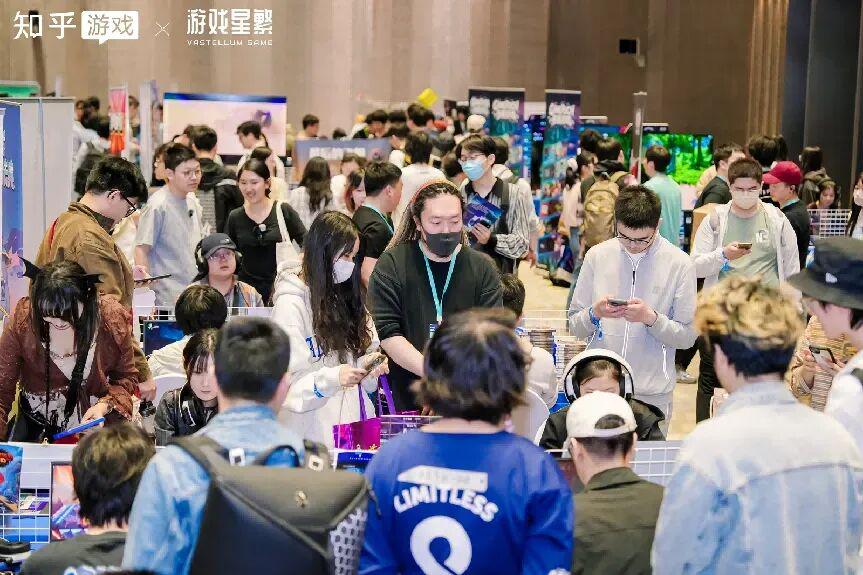
Chenqi later recalled that some aspects of the exhibition were actually put together on the fly. Take the large-screen interactive display, for example: at first, she asked for contributions in the group chat several times, hoping exhibitors would provide content to display on the screen, but the initial response wasn’t very enthusiastic. The reason was easy to understand: exhibitors didn’t know how effective it would be, nor whether the effort they put in would pay off. Once the on-site results were visible and people saw that it was drawing crowds, many more signed up the very next day.
During those preparatory days, they secured every booth in the venue and fine-tuned the details of the salon. Those visions that had initially seemed like pie-in-the-sky ideas gradually took shape through a series of finalizations, confirmations, and handshakes.
And so, this exhibition took shape, growing from a bare framework into something fully realized.
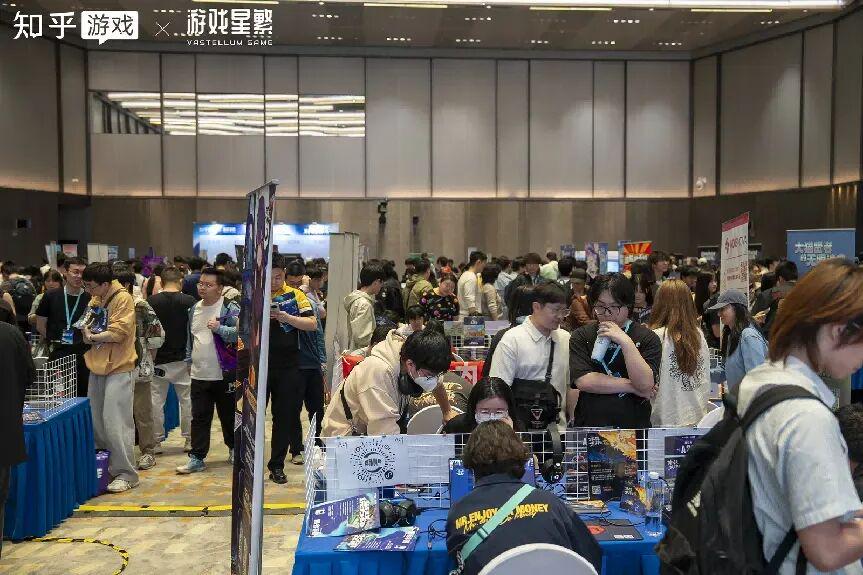
Behind the scenes, there are countless tedious details to manage. When will the materials arrive? Are there any missing exhibitor graphics? How will the guest schedule be arranged? Will the venue allow us to hang banners? How will we handle on-site queues? Is there enough power at the booths? … And so much more—there simply isn’t enough space here to list it all. None of these details are suitable for inclusion in their promotional copy, but each one could become a critical issue on the day of the event.
During that time, there were no costs associated with getting an outsourced team up to speed, nor were there any mistranslations that failed to convey the intended meaning—just the most direct connection between the mind and the hands. These tasks were incredibly tedious and far from romantic. Yet many parts of the exhibition were held together by precisely these unromantic elements.
Conclusion
Generally speaking, exhibition titles are closely linked to the participants and the nature of the event as a whole. As one of the most crucial elements of the event, a title serves not merely as an explanatory label but, more importantly, embodies the tone the organizers intend to convey. A title is by no means a mere label; rather, it is a form of creative expression. This is the view of renowned curator Hans Ulrich Obrist, and it seems to apply to any exhibition.
Different events have different naming conventions, and there is no absolute right or wrong when it comes to names. To some extent, an event’s name reveals what the organizers truly aim to achieve. So the name “Play Power Field” is actually quite fitting. It’s neither a “Game Expo” nor a “Developer Conference,” but rather a “field.” Within this field, people influence one another, works and audiences interact, and information, experiences, and resources flow freely.
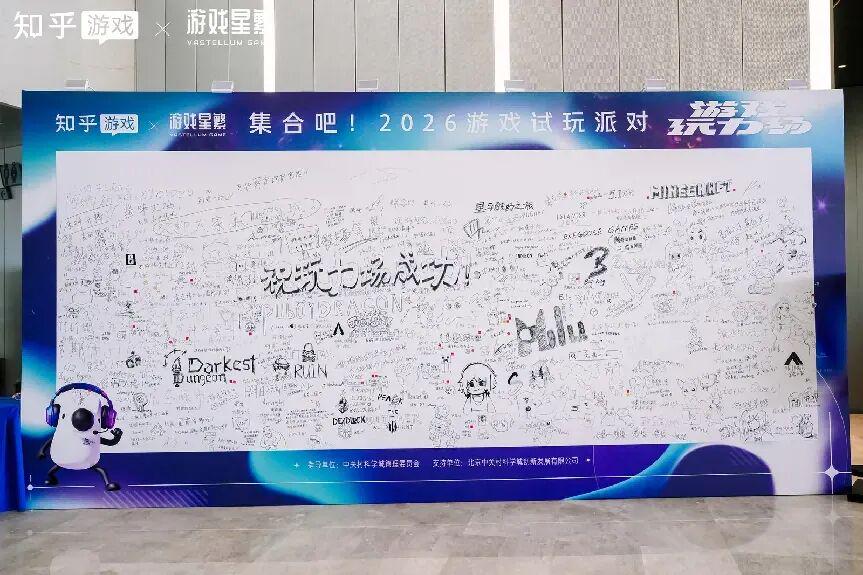
The answers presented in this exhibition may not yet be the best Zhihu can offer. As a first-time event, it’s inevitable that there were some rough edges and minor regrets (such as not creating more ticket designs). But at the very least, it successfully brought everyone together. For Zhihu, this new possibility offers greater hope; all that remains is to reflect on the experience and try again.
An exhibition doesn’t necessarily have to start with a grand vision or on a large scale; sometimes, it can begin with a simple idea: that we should meet in person.
By the way, the answer to the guessing game earlier was *BioShock: Infinite*.
原创文章,作者:游茶妹儿,禁止转载:https://youxichaguan.com/en/archives/195735